• Skip to primary navigation
  • Skip to main content

International Salsa Magazine

  • HOME
  • Previous editions
    • 2026
      • ISM / August 2026
      • ISM / July 2026
      • ISM / June 2026
      • ISM / May 2026
      • ISM / April 2026
      • ISM / March 2026
      • ISM / February 2026
      • ISM / January 2026
    • 2025
      • ISM / December 2025
      • ISM / November 2025
      • ISM / October 2025
      • ISM / September 2025
      • ISM / August 2025
      • ISM / July 2025
      • ISM / June 2025
      • ISM / May2025
      • ISM / April 2025
      • ISM / March 2025
      • ISM / February 2025
      • ISM / January 2025
    • 2024
      • ISM / December 2024
      • ISM / November 2024
      • ISM / October 2024
      • ISM / September 2024
      • ISM / August 2024
      • ISM / July 2024
      • ISM / June 2024
      • ISM / May 2024
      • ISM / April 2024
      • ISM / March 2024
      • ISM / February 2024
      • ISM / January 2024
    • 2023
      • ISM / December 2023
      • ISM / November 2023
      • ISM / October 2023
      • ISM – September 2023
      • ISM – August 2023
      • ISM July 2023
      • ISM Edition June 2023
      • ISM – May 2023
      • ISM April 2023
      • ISM March 2023
      • ISM February 2023
      • ISM January 2023
    • 2022
      • ISM December 2022
      • ISM November 2022
      • ISM October 2022
      • ISM September 2022
      • ISM August 2022
      • ISM July 2022
      • ISM June 2022
      • ISM May 2022
      • ISM February 2022
      • ISM January 2022
    • 2021
      • ISM December 2021
      • ISM November 2021
      • ISM October – 2021
      • ISM September 2021
      • ISM August 2021
      • ISM July 2021
      • ISM May 2021
      • ISM April 2021
      • ISM June 2021
      • ISM March 2021
      • ISM February 2021
      • ISM January 2021
    • 2020
      • ISM December 2020
      • ISM November 2020
      • ISM October 2020
      • ISM September 2020
      • ISM August 2020
      • ISM July 2020
      • ISM June 2020
      • ISM May 2020
      • ISM April 2020
      • ISM March 2020
      • ISM February 2020
      • ISM January 2020
    • 2019
      • ISM December 2019
      • ISM November 2019
      • ISM October 2019
      • ISM Septembre 2019
      • ISM August 2019
      • ISM July 2019
      • ISM June 2019
      • ISM May 2019
      • ISM April 2019
      • ISM March 2019
      • ISM February 2019
      • ISM January 2019
    • 2018
      • ISM December 2018
      • ISM November 2018
      • ISM October 2018
      • ISM September 2018
      • ISM August 2018
      • ISM July 2018
      • ISM June 2018
      • ISM May 2018
      • ISM April 2018
      • ISM March 2018
      • ISM February 2018
      • ISM January 2018
    • 2017
      • ISM December 2017
      • ISM November 2017
      • ISM October 2017
      • ISM September 2017
      • ISM August 2017
      • ISM July 2017
      • ISM June 2017
      • ISM May 2017
      • ISM April 2017
      • ISM March 2017
      • ISM February 2017
      • ISM January 2017
    • 2016
      • ISM December 2016
      • ISM November 2016
      • ISM October 2016
      • ISM September 2016
  • Spanish
  • Download Salsa App
    • Android
    • Apple

Search Results for: violinist

Venezuela violinist and former musician in El Sistema Ali Bello has many interesting things to say

Venezuelan musician Alí Bello has become one of the best Latin music violinists in New York, so we could not miss the opportunity to talk to him and learn as much as we could about his fascinating story. The young man has given his best to become a true icon of Latin Jazz in his current city of residence, so do not miss this great conversation.
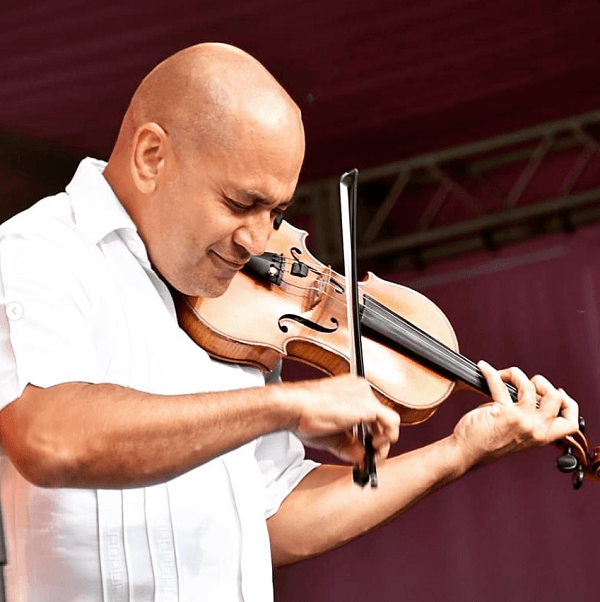
Ali playing the violin
Venezuelan musician Ali Bello playing the violin live

Alí’s beginnings in the world of music thanks to El Sistema

From a young age, Alí became interested in music, which led him to join the National System of Youth and Children’s Orchestras and Choirs of Venezuela, where he studied classical music as an extracurricular activity. This in order for Alí and his classmates to be busy in any activity until their parents came to pick them up after work.

This was when an orchestra or school of music was formed clase to his father’s work, so Bello was enrolled in these classes from 2 to 5 p.m. after school. So it went for him since he was in kindergarten, and he learned to play the xylophone and the recorder. When the boy was seven years old, the school orchestra located in La Rinconada, Caracas, was officially created, but due to how small Ali was, the only instrument the school could assign him according to his size was the violin, which he keeps playing diligently to this day.

After many years of being part of the National Youth Orchestra, he got ahead with his musical career and decided to go to the United States to continue his university studies and train as a professional musician.

Other instruments besides the violin

In addition to the violin, Alí also plays a lot of percussion, since he considers it very important. He thinks every folk and Latin musician must handle percussion as efficient as possible and each of its rhythms in order to internalize the style they want to play on any instrument.

“Percussion and singing have always fascinated me, so I try to devote myself to both even a little bit, but it is undeniable that the violin has always been my main instrument. I’ve tried to focus all styles and everything I work on towards the violin to turn it into the main element,” the musician added on this subject.

Ali and Gustavo
Ali Bello, his son and maestro Gustavo Dudamel

How the opportunity to study in the United States came about

Initially, Alí was supported by his violin teacher Margaret Pardee, who taught at the Juilliard School and went to Venezuela to give master classes. It was Pardee who encouraged Alí to continue his education in New York, which he finally achieved thanks to the Gran Mariscal de Ayacucho scholarship fund and the Simón Bolívar Musical Foundation.

This is how the Venezuelan artist obtained his bachelor’s degree, master’s degree, and PHD.

At college, he met Johnny Almendra, thanks to whom he discovered genres other than classical music, in which he was not only the performer of melodies but could also create his own music. He then discovered styles of Venezuelan and Latin music that inspired him to explore more varied rhythms different from what he had known before.

He played regularly with Johnny Almendra and his modern charanga group Los Jovenes del Barrio for a time and subsequently played for La Típica Novel and other orchestras. As Alí gained experience in the world of charanga and Latin music in general, he started having opportunities to learn and explore other genres such as Brazilian music, Afro-Cuban music, Latin jazz, and many more. 

Collaborations with major artists in the industry

All this hard-won ground gave Alí the opportunity and the honor to collaborate with great artists in the industry such as Tito Puente, Eddie Palmieri, Johnny Pacheco, Rudy Calzado, Pedro Cortés, José Fajardo senior, Pupi Legarreta, and many more. All these figures helped him not only to have a better understanding of the Afro-Cuban style and tradition, but also of the influence of New York on music.
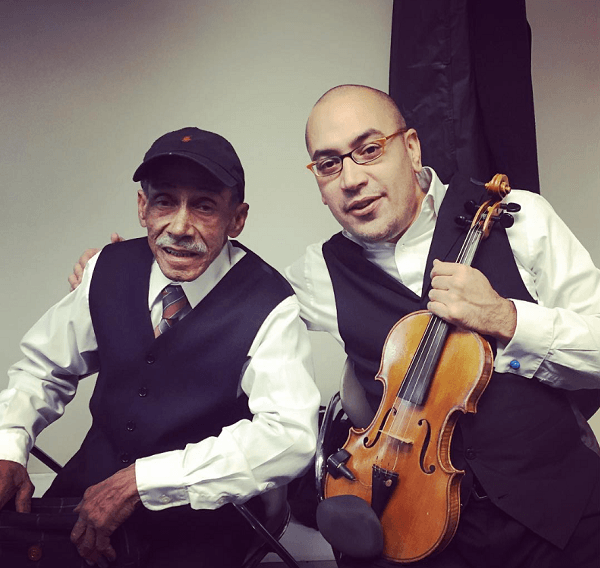
Ali and Pupy
Maestro Pupy Legarreta and Ali Bello

Thanks to this knowledge base, he had the courage to release a record album, La Charanga Syndicate, in which, as the name suggests, he uses charanga and all the influences coming from the musicians he has known and continues to know. For this reason, he feels he now has something to say and bring to the style. 

Another important thing for his career was his participation in Jay-Z’s concert to celebrate the anniversary of the release of his first album. The rapper wanted to mark the occasion by playing with a symphony orchestra, so hired many musicians of all kinds to make a great show at Radio City Music Hall in New York. Fortunately for Ali, he was well-known in the music scene at the time, so he was contacted to participate in the event.

In that sense, the violinist is very happy to be in New York, as the world’s greatest artists always take this city into account for their concerts, which gives musicians like him the opportunity to have access to these great figures in the industry.

Ali as an arranger

In addition to being a percussionist and violinist, Ali has also ventured into musical arrangements quite successfully thanks to all the academic training he had received up until then. However, as he became a more experienced professional, he began to notice that his own ideas and thoughts came to life in his work. So, having the theory in his head, he could take those ideas he had had and develop them within the rhythmic and stylistic elements which are willing to use on each occasion.

In addition to that, the artist also works on production and mixing a bit to achieve the necessary sound. He even has his own studio where he plays for his own productions and other artists’ records as a freelancer.
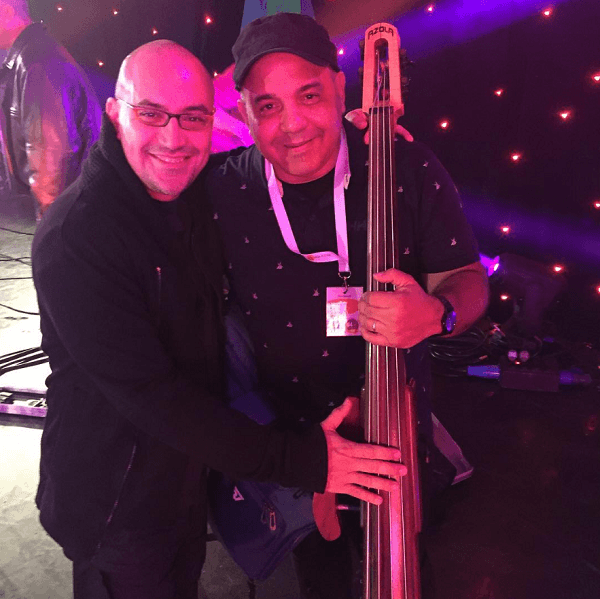
Ali and Juan
Ali Bello and Juan Carlos Formell from Los Van Van in Poland

Read also: Omar Ledezma Jr. shares with us the new from his project with Azesu

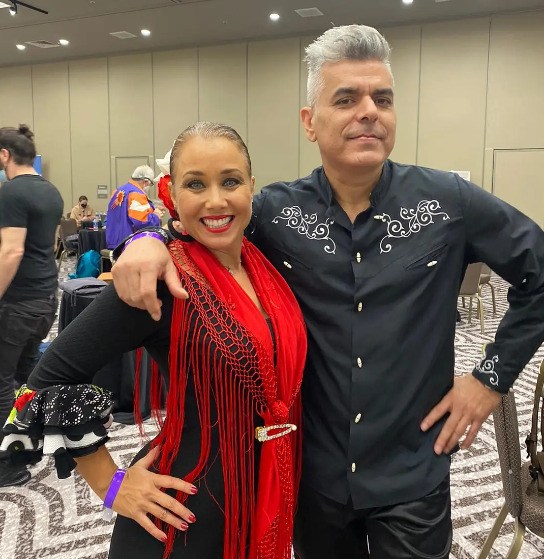
Cuban-American dancer and actress Jessica Pacheco presents us her own dance company Flamenco Tropical

The talented and beautiful Jessica Pacheco graces us with her pleasant presence in our July edition, which makes us very happy and delighted. The Cuban-American actress and dancer has given us the great honor of talking for a while about her extensive and varied artistic career and how she has built it over the years.

With the Cuban flavor of her heritage, she shared the most important moments of her story and how she went from one facet to another to become the complete artist she is today

Jessica Pacheco posing
Dancer and actress Jessica Pacheco posing for the camera

Jessica’s beginnings in the world of entertainment and her inspirations

Jessica tells us that she was initiated into the world of entertainment while she was “still in her mom’s womb.” Her mother was a dancer in Cuba and had always been closely linked to art, so not much time passed before she enrolled her little daughter in ballet, drama, and piano classes. Being a very young girl, her parents constantly led her to travel to Spain, where she became so fascinated by flamenco tablaos that she stayed up late just to watch these kinds of shows on TV. 

When returning home in Miami, the city she was born and raised in, she was enrolled in her first Spanish classical dance classes and was introduced to genres such as flamenco and rumba. Being just a 15-year-old teenager, she was hired by her first professional dance company, Ballet Español Rosita Segovia. From there, she is grateful that her professional career has not stopped even since. She has also worked for the dance companies “Ole Ole” and “Flamenco Express.”

As all of this was taking place, she studied psychology at Florida International University in Miami and thought she would work with elderly individuals; in fact, she had her internship at a nursing home. However, she started receiving dance contracts and soap opera projects continuously, so she had to leave her university profession to the point that she never practiced it. 

Mario,Jessica, Marcela, and Jose
Musician Mario Oretea, dancer Jessica Pacheco, dancer Marcela Rodriguez, and musician Jose Oretea

When the work was scarce as in the time of the pandemic, Jessica decided to create for herself, which is when the 13-episode series “Cuban Tales” came about. Her mother has always told her not to leave for until tomorrow what can be done today, so when she realizes that there is not much work in dancing or acting, she seeks to create for herself without waiting for opportunities to fall into her lap.

Theater

Our of all the facets Jessica has worked in, she admits that theater is what he finds most fulfilling as an artist because of the applause from the audience and the importance of getting everything right the first time, not like in soap operas or TV series where she had the opportunity to repeat a scene that did not go well. Among the works in which she appeared are ‘‘La Traviata’’, ‘‘Turandot’’, ‘‘Carmen’’, and ‘‘El Gato Montés’’. She also had the opportunity to work with the opera companies Florida Grand Opera and Los Angeles Opera, which was directed at the time by Plácido Domingo.

Regarding soap operas, she appeared in “Los Teens,” “Lotería,” “Decisiones,” and “Dame Chocolate.” The dynamics in this type of production were radically different from those in theater, since “hurry up and wait” applies here, so she had to remain in her dressing room waiting to shoot her scenes. The wait was so long that, during an eight-hour day, Jessica would only shoot about half an hour or an hour.

Jose Junco and Jessica Pacheco
Dancer and dance teacher Jose Junco, and Jessica Pacheco

All that wasted time was what bothered her a little about working on soap operas, although there are still nice experiences she will remember, such as the opportunity to work on shared projects with great figures like Carlos Ponce, Genesis Rodríguez, and Riczabeth Sobalvarro, among many others.

Flamenco Tropical

By creating her own dance company, “Flamenco Tropical,” Jessica felt she had connected to her roots and found the circle of musicians and dancers with whom she truly identifies. Even the name is a representation of what the artist wanted to portray through her project, as she does not believe in musical puritanism and enjoys experimenting with all kinds of genres. For example, she and the team of musicians and dancers who accompany her love the Gipsy Kings’ rumba, but also Cuban and Caribbean rhythms like the bolero and iconic Cuban songs from other times.

When the artist started the company, she was living in Los Angeles, but she knew musicians she had worked with in Miami for years, and they agreed to collaborate on this project. Some of them were the brothers Mario and José Oretea from the duo Duende Camarón, whom she describes as fantastic musicians, singers, guitarists, and guitar craftsmen. In fact, their guitars are made of such high quality that they have even been played by the Gipsy Kings.

At first, the group just included the two guitarists and Jessica dancing, but as the company grew, she was able to hire a percussionist who plays the cajón, bongos, and congas. Over time, she also hired a violinist, who adds a spectacular touch to what was in the band. In addition to the Oretea brothers, the group features Grammy-nominated composer and singer Fito Espinola, arranger and guitarist Andrés Vadin, percussionist and vocalist Joel Matos, and dancer José Junco.

Jessica and Fito
Jessica Pacheco and composer and singer Fito Espinola

Read also: Gafieira Rio Miami brings the best of Brazilian music to Miami

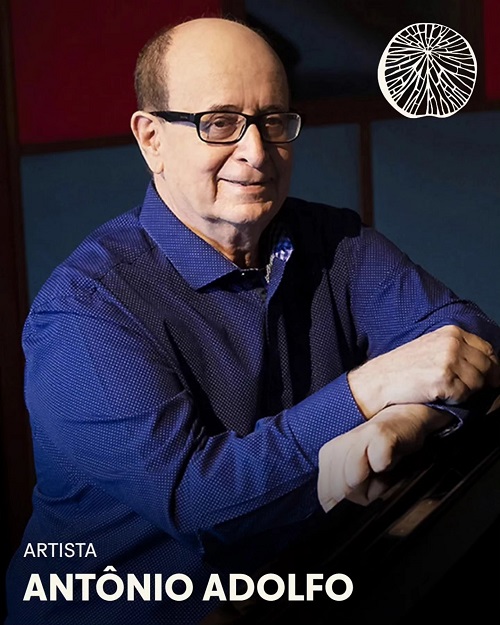
Antonio Adolfo: The Indelible Master of Brazilian Music

From Classical Cradle to the Jazz and Bossa Nova Revolution

That musical heritage is essential to understanding the greatness of Antonio Adolfo.

Being born into a home where the violin from the Rio de Janeiro Municipal Theater orchestra was part of the daily landscape shaped his sensibility from the cradle.

Although he grew up surrounded by the classical discipline of his father, his destiny lay within the keys, jazz, and the revolution of Brazilian popular music (MPB).

De la Cuna Clásica a la Revolución del Jazz y la Bossa Nova

The son of a classical violinist, Antonio Adolfo was born in the bohemian neighborhood of Santa Teresa, Rio de Janeiro, under the sign of Aquarius in 1947. At the young age of 16, the young pianist was already part of the exclusive bossa nova club brewing in the famous Beco das Garrafas alley, leading ensembles that stood at the forefront of the scene, such as Conjunto Cinco and the Samba Trio 3-D.

Shortly after, he participated in the iconic musical Pobre menina rica by Carlos Lyra and Vinicius de Moraes, beginning to make a name for himself in the industry.

Starting in 1967, by forming a creative partnership with lyricist Tibério Gaspar, Adolfo became one of the great catalysts of modern melody in Brazil, composing massive hits like “Sá Marina” and “Juliana.”

Antonio Adolfo El Maestro Imborrable de la Música Brasileña

At the same time, leading the group Brazuca, he established an electronic pop tone that was highly sophisticated for its time (with tracks like “Teletema” and “Ana Cristina”), culminating in the blistering musical highway of “BR-3″—a song that sparked great controversy and shook the core of the era’s music festivals.

A Pioneering Spirit and International Acclaim

After playing as a member of the backing band for the legendary Elis Regina on two European tours, and refining his technique in Paris with the renowned classical maestro Nadia Boulanger—in addition to studying in Brazil under masters Guerra-Peixe and Esther Scliar Antonio Adolfo was ready to take another giant leap.

In 1977, in an act of bravery and pioneering spirit, he released the album Feito em Casa (Homemade) under his own record label, Artezanal.

This was the opening kickoff for a liberating movement: the independent record industry in Brazil, triggering the rise of artistic dynamics that diverged from traditional market rules. Under this self-managed system, Adolfo recorded both original material (including children’s music that promoted free play) and foundational revisions of pianeiro classics, transforming the works of Ernesto Nazareth and Chiquinha Gonzaga for the contemporary piano.

This versatility proved that, as a performer and creator, Adolfo had achieved a rare distinction: mastering contemporary language from a place of timelessness.

Since 1985, the maestro has focused much of his energy on his music school, the Centro Musical Antonio Adolfo, while also participating in international events as an educator, without ever setting aside his stage career.

His profound work with the music of Chiquinha Gonzaga and jazz has earned him prestigious awards and nominations. Furthermore, he is the author of seven textbooks on Brazilian music published by Lumiar, a video lesson, and two books published abroad. For eight years, he proudly served as the Latin American representative for the IAJE (International Association for Jazz Education).

In recent years, Antonio Adolfo has returned to the stage more frequently, performing either in a solo piano format or with a group. From one of his performances at a U.S. university alongside his daughter, singer Carol Saboya, came an acclaimed live album released both in Brazil and abroad: Antonio Adolfo & Carol Saboya Ao Vivo / Live. This success has been followed by recording productions highly praised by international critics, such as Here and There / Aquí y Allá.

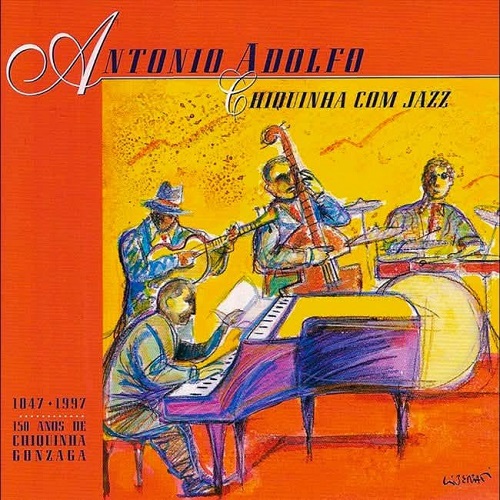
Chiquinha Com Jazz (1997)

Discographic Gem: “Chiquinha Com Jazz” (1997)

A perfect example of his genius for fusing Brazilian roots with the freedom of jazz is his 1997 album dedicated to the pioneer Chiquinha Gonzaga.

Tracklist:

Atraente

Cordão Carnavalesco

Lua Branca

Angu

Gaúcho (Corta-Jaca)

O Forrobodó

Corte Na Roça

Satan

Ismênia

Faceiro

O Abre Alas

          Personnel:

Antonio Adolfo: Piano and musical arrangements

Gabriel Vivas: Double bass

Ivan Conti: Drums

Claudio Spiewak: Acoustic guitar

Contributor:

L’Òstia Latin Jazz

Dj. Augusto Felibertt

Also Read: Carlos “Nene” Quintero comes from a family of musical prodigies

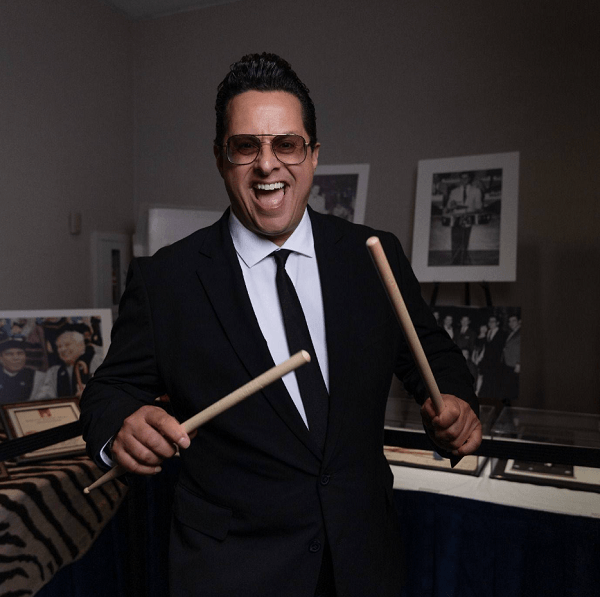
Tito Puente Jr.: perpetuating a legacy with its own rhythm

In International Salsa Magazine, we cannot contain our joy for the conversation we had with the son of one of the greatest legends of Latin music, who is now writing his own story of grandeur thanks to the education he has received practically since birth. This is none other than New York producer, composer, and percussionist Tito Puente Jr., who shared about 40 minutes of his time to answer some questions exclusively for Augusto Felibertt and yours truly, Karina Garcia. 

Tito puente jr. smiling
Producer, composer, and timbalero Tito Puente Jr. smiling for the camera

The burden of Tito Puente’s iconic legacy

Having a successful father is a great blessing, but sometimes, it can become a veritable martyrdom for a son who wants to follow his path, as comparisons between them will always be inevitable. Being able to share with Tito Puente Jr., son of the legendary King Of Timbales Tito Puente, gives us the opportunity to get his perspective on this interesting and important subject. 

Fortunately, the artist does not see this legacy as a burden, but quite the opposite. Although he admits that his father is one of the greatest masters and ambassadors Latin music and our culture in general have ever had, and that it is not easy to fill his shoes, he proudly bears his father’s surname and promotes his music.

Moreover, he sees the surname “Puente,” as well as the Spanish word implies, as a union among several generations because many young people this day do not know Tito Puente, Celia Cruz, and many other exponents of that salsa’s golden era. Tito Jr. wants to be part of that “bridge” between generations so that people of all ages can learn about these prodigies, including, of course, his father.

Childhood with Tito Puente as his father

Regarding his childhood and adolescence, Tito emphasized that he always saw his father play all types of instruments such as timbales, marimba, saxophone, percussion, and many others, which inspired him and made him want to imitate him from the beginning. Today, his career is largely influenced by everything he saw at home, and he plays his father’s arrangements and compositions, which are divided between a total of 186 albums. 

Everything learned within his family has taken him so far professionally, to the point that he now has seven Latin Grammys and 14 nominations, all thanks to the legacy he carries. 

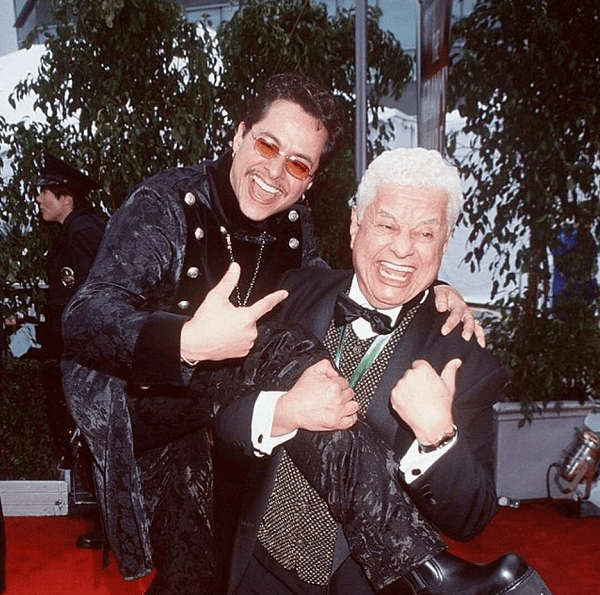
Tito Puente and Tito Puente Jr.
Tito Puente Jr. and his father Tito Puente on the 1998 Grammy Awards red carpet

The Puente family today

On the more personal side, Tito is the youngest of his brothers, among whom he is the only one who works on music as a profession. To some extent, this has made him take upon his shoulders Tito Puente’s legacy through his own art.

The musician currently resides in southern Florida, specifically in Miami, although he works with orchestras from different cities and countries. He is married and has two children who are Miranda, 18, and Tito Puente Jr. Jr., 17. Miranda studies marine biology at university, while her younger brother is in high school but travels constantly with his father and enjoys composing and playing the guitar.

He also told us a little about his wife, who loves salsa but is not in music. On the other hand, he spoke lovingly of “the boss,” his mother Margarita Puente, who is currently in charge of royalties, record labels, publicity, and the documentary on Tito Puente’s life.

He also has two siblings: Audrey Puente, 55, who is a television meteorologist, and Rony Puente, 77, who is also a musician like his father and younger brother. 

Other musical influences besides that of his father

In addition to salsa, mambo, and guaguancó, Tito really enjoys English rock and several bands such as Metallica, Slayer, Iron Maiden, Black Sabbath, and others into this style. These tastes of his have led him to the idea of, at some point, blending heavy metal with mambo to see which result he gets.

As well as he can really enjoy the music of Bon Jovi and Ozzy Osbourne, he is also fascinated by El Gran Combo de Puerto Rico, which he finds to be a very interesting mixture of genres that he would like to experiment with someday. 

He also said laughing that his father did not share his musical tastes and that the only rock band he liked was Santana, and that was because they did their own version of the hit “Oye Cómo Va” in psychedelic rock and Latin rock. 

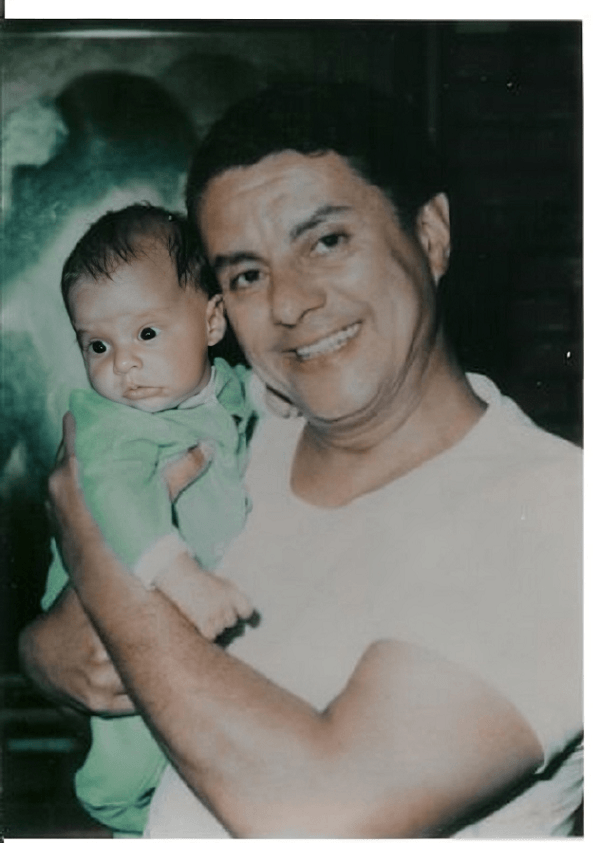
Tito Puente holding his son
Tito Puente carrying his son Tito Puente Jr.

Current singers

Today, Tito works with various singers, including Aymee Nuviola, Lucrecia, Yolanda Duque, and his great friend, “La Princesa de La Salsa” La India. His father worked with great vocalists such as Tony Vega, Michael Stuart, Oscar D’León, José Alberto “El Canario,” Miguel Ángel Barcasnegras Díaz “Meñique,” and many more. 

Tito’s latest album, “The King And I,” also features other big voices such as Domingo Quiñones, Frankie Negrón, José Alberto “El Canario,” Tony Vega, Sheila E., Pete Escovedo, and many other salsa superstars of today and yesterday. 

The timbalero has worked with many figures who also worked with his father in the past, so it is clear that they see him and respect him as the continuation of his musical legacy.

Tito’s views on academic training in music

On the important issue of academic training in music, Tito pointed out that there are not enough educational programs aimed at teaching Afro-Cuban music in schools and universities, which in his view needs to change as soon as possible.

In fact, he noted the importance of promoting programs in educational institutions around the world so that their students learn much more than just symphonic music and become more rounded professionals. Although he recognizes the importance of knowing Beethoven and Tchaikovsky, he also believes that aspiring musicians should know about Eddie Palmieri, Charlie Palmieri, Larry Harlow, Pupi Campo, and other artists in this style. 

The artist believes that the above mentioned artists and many others related to jazz and salsa are part of a very important era of music in the world, which is why he believes that teachers must take them into account during their classes. For him, it is a mission to promote both his father’s music and that of other exponents of his kind in the academic field.

Tito Jr. and his family
Audrey, Margarita, Tito, and Tito Jr.

Upcoming tours

For our research, we could notice that Tito has several performances and tours scheduled for the rest of the year, more specifically for November. In this regard, he told us that in the first week of September, he went to play his father’s music on his weekly show Mambo Mondays, which is held to delight dancers eager to keep enjoying Tito Puente’s music.

About international tours, he plans to go to Germany in February next year and Spain next summer. He is also close to release a documentary in 2026 and a new album with the Los Angeles Symphony Orchestra, which has 77 musicians and instruments such as violins, violas, harps, bagpipes, flutes, French horns, among others.

Tito Puente Jr. and his son
Tito Puente III and his father Tito Puente Jr.

Final comment

We still cannot believe we had this great conversation with the talented Tito Puente Jr. and it has been a great pleasure to share this time with him. Those who wish to contact him can do so through his social media channels, which are as follows:


Facebook: https://www.facebook.com/TitoPuenteJr/

Instagram: https://www.instagram.com/titopuentejr/

X: https://twitter.com/titopuentejr

Tik Tok: https://www.tiktok.com/tag/titopuentejr 

Spotify: https://open.spotify.com/intl-es/artist/2ROkqvVDXj5JgmN6z2uFrM

Read also: Venezuela violinist and former musician in El Sistema Ali Bello has many interesting things to say

The Albuquerque Latin Dance Festival

North America / USA /

The Albuquerque Latin Dance Festival, Aug 24-27, 2017

The Albuquerque Latin Dance Festival - 2017
The Albuquerque Latin Dance Festival – 2017

Performances films Lectures Dance Workshops

What better way to enjoy Albuquerque’s warm summer nights than with Latin dancing!

The Albuquerque Latin Dance Festival is three days of instruction, workshops lectures and dancing under the stars. Learn at multifaceted workshops the many Latin dance styles, or for beginners the Salsa Dance Bootcamp. Music’s and concerts make it an unforgettable event.

Know the directors!

John E. Mancini:

John E. Mancini
John E. Mancini

Music and Arts have been a part of Mr. Mancini’s life since a young age, Performing in Musicals such as The Sound of Music as Maximilian Detweiler, Bubble Trouble, and in Camelot with the Albuquerque Civic Light Opera now Musical Theater Southwest. Mr. Mancini has participated in choral singing again since his youth, from elementary school through high school and college and was a member of the New Mexi-cords, the Barbershop Chorus.

He also studied professional voice with David Majoros professional Baritone from New York City. Within the past 3 years Mr. Mancini began to study dance at the Arthur Murry Dance Studio in ABQ, including smooth and rhythm forms. Mr. Mancini was introduced to Latin Club dancing about 3 years and has become an avid enthusiast. As a result of this he became actively involved with the formation and operation of Guanabana Productions, Inc. DBA the Albuquerque Latin Dance Festival.

Julie Brovko (Treasurer and Volunteer Coordinator):

John E. Mancini
John E. Mancini

Julie began dancing as a child but did not discover Latin dance until her freshman year of college. After her first salsa class, she knew she was hooked. Julie moved to Albuquerque in 2009 to start a doctoral program in clinical psychology at the University of New Mexico and immediately sought out the dance community. Her work with the ABQ Latin Dance Festival started in 2010 when she volunteered to run he registration table and she has been increasingly involved ever since.

Wellington Guzman (Vice President):

Wellington Guzman
Wellington Guzman

Wellington hails from Santo Domingo, Dominican Republic. He loves music, dancing and people. He has been involved in multiple aspects of Latin music offering in Albuquerque and New Mexico. Since moving his family to New Mexico in 1995, he’s been promoting and producing salsa and merengue music events here for the love of the genre ever since. He is a well-known radio personality on KUNM and has been DJing for over 18 years. If you haven’t had the pleasure of meeting Wellington [yet], you will soon! He is just ½ a degree of separation from anyone and everyone here in New Mexico.

Kari Leiting (Secretary):

Kari Leiting
Kari Leiting

Kari began with vaious forms of dance at the age of four. This love of dance led to teaching in Chicago and Minnesota. While teaching dance, she discovered her interest in Latin dance. Kari moved to Albuquerque in 2009 to start the clinical psychology doctoral program at the University of New Mexico. She has enjoyed the fact that the Latin dance community is so much broader in Albuquerque than in the Midwest. Her work with the ABQ Latin Dance Festival started in 2010 when she volunteered to help monitor classes and her involvement has increased each year since.

Idalia Lechuga – Tena:

Idalia is in her second year volunteering with the ABQ Latin Dance Festival and focuses on the Marketing/PR and Government Affairs strategy. A few of Idalia’s passions are music, dance and art. She dances salsa, flamenco and Tango, which she believes are three of the most passionate dances.

She has degrees in Economics, Political Science and International Politics and is fluent in four languages: Spanish, French, Italian and English, and has traveled to fifty four countries around the world. She has studied in several countries such as Chihuahua-Mexico, Pamplona-Spain, Paris-France and at the University New Mexico, to name a few.

Idalia Lechuga - Tena
Idalia Lechuga – Tena

During her undergraduate career, she wrote an electronic academic research bool on “The Positive Effects of the Immigration Spectrumin the United States in the Economic and Political Sector, with a concentration in Latino immigration” which she has written in Spanish, French and English and has presented in coferences at Universities throughout the U.S.

Idalia loves classical music, opera, mariachi music and is an avid violinist. She has played with the Albuquerque Philharmonic when she is not too busy with the many organizations she is also a painter, mostly oil and she describes her art style as early DaVinci and late Picasso. She loves spending time with her family and her Chihuahua dog Kochinada.

Idalia is the owner of ILT International, LLC a consulting firm that offers services in Government and Political Affarirs and Marketing and PR in English, Spanish, French and Italian. She also started a winery in Chihuahua, Mexico in partnership with her father. Idalia currently serves as Communications Director with the State Programs. She has served in high level administrations and is heavily involved in local and statewide politics, international groups, and in her local community, she serves as president of her neighborhood association in the International District in Albuquerque.

Santiago Candelaria:

Santiago Candelaria sits on the board of directors of the Albuquerque Latin Dance Festival as a representative of the National Hispanic Cultural Center (NHCC).

Santiago Candelaria
Santiago Candelaria

He has been a very proud staff member of the NHCC’s Performing Arts program for more than 11 years-an organization he’s proud to serve, humbled to represent, and grateful to be a part of.  It is part of the NHCC’s work ethic and organizational culture to encourange staff to work with the community and with presenting partners in this capacity.

Service on other organizational boards by NHCC staff members in an important part of the Center’s work culture because it strengthens community bonds, continues to raise the bar for programming quality, and allows the Center to be of service to the community, both locally and at-large.

Santiago has an extensive history with social styles of dance. Previously, he was ballroom dance instructor at Strictly Dancing in Santa Fe, now the Dance Station. He worked as an instructor with High Altitude Swimg, teaching swimg and Lindy Hop and was a founding member of The Santa Fe Social Club, teaching salsa and training instructors. In Albuquerque Santiago has worked with Salsa Baby and Salsasana. He has choreographed for Fright Night, 5$ a Day, and Disco Gravy on film as well as for numerous theatrical performances.

Jessica Montoya (Director of Programming for Dancers/Performers)

Jessica is a native New Mexican born and raised in Taos, NM. She began dancing at the age of 4 years old at the Betty Winslow Dance Studio. At the age of 16, Jessica studied abroad in Valencia, Spain, where she studied Flamenco.

Jessica Montoya
Jessica Montoya

Upon returning, she performed dinner shows at the Historical Taos Inn and festivals around New Mexico. She also continued studying Flamenco with Maria Benitez summer programs in Santa Fe, and later with Eva Enciña & Pablo Rodarte at the University of NM. Continuing her education at UNM, she also studied Jazz (Contemporary and lyrical) and Hip Hop with the renowned Loren Fletcher Nickerson.

After graduating from UNM with a BA in Psychology / Communications and an endorsement in Performing Arts, she decided to get back into her Latin Roots and put her energy into Salsa, Bachata, Cha Cha Cha and Reggaeton.

You can also find Jessica teaching Salsa skills and drills classes at Defined Fitness (Riverside) and Maple Street Dance Studio in Albuquerque, NM.


  • Page 1
  • Page 2
  • Page 3
  • Interim pages omitted …
  • Page 8
  • Go to Next Page »

International Salsa Magazine (ISM) is a monthly publication covering salsa activities around the world and has been publishing since 2007. It is a worldwide network of volunteers coordinated by ISM Magazine. Together, we work to strengthen salsa events around the world.