From the Baseball Diamond to Venezuela’s Musical HeartVenezuelan popular music preserves one of the most cherished and iconic pillars of its urban identity: Los Antaños del Stadium.
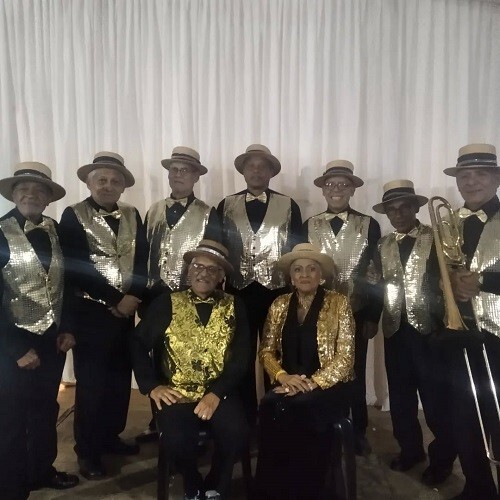
Emerging in the mid-20th century, this ensemble not only rescued the musical traditions of early 20th-century Caracas, but also transformed merengue caraqueño, guasa, and pasodoble into a living bridge between the city’s colonial past and the nation’s modernity.
Origins: Born on the Baseball Field
The group’s history dates back to 1946, when musician and athlete Jacobo Espinoza decided to assemble a group of instrumentalists to liven up baseball games at the former San Agustín Stadium home to the legendary Cervecería Caracas team.
It was in that setting, where a passion for sports met a festive atmosphere, that the group was born under its original name: Los Cañoneros del Estadio.
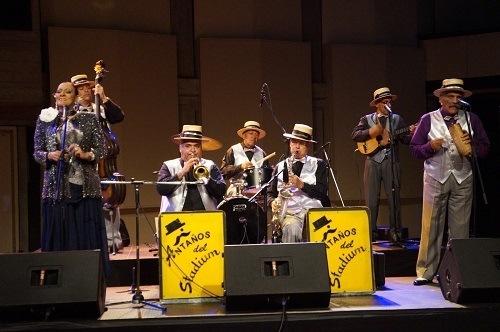
The ensemble adopted the aesthetic and sound of the old cañonero bands, which swept through the streets, plazas, and dance halls (mabilas) of Caracas in the early 20th century, announcing local festivities to the beat of the bass drum, cymbals, saxophone, and snare drum.
What began as an initiative to entertain fans in the stands took deep root in Venezuelan popular culture.
Evolution: Consolidating the Cañonero Sound
Over the decades, the group expanded from sports stadiums to radio airwaves, television, and studio recordings. Under the musical direction of the distinguished saxophonist Aníbal Escobar who defined the group’s signature melodic style for over 50 years—and the leadership of Jacobo Espinoza, the ensemble forged an unmistakable sound.
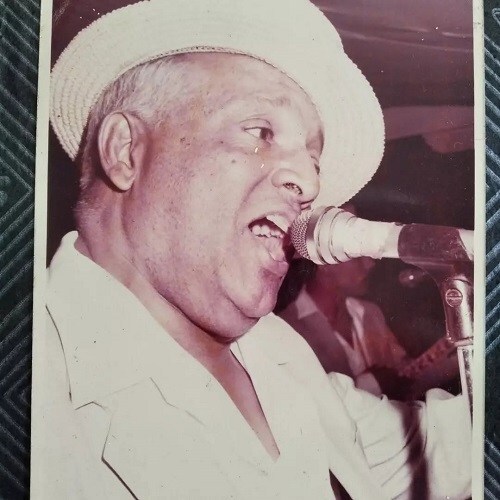
Traditional genres that were at risk of fading into obscurity—such as merengue rucaneao (characterized by its infectious 5/8 time signature), the pasodoble criollo, guasa, polka, and waltz—found in Los Antaños del Stadium a vehicle for their preservation and renewal.
Following the founder’s passing, his children, Enrique and Nicol Espinoza, took over the reins, staying true to the iconic acoustic and instrumental format that defined the group.
Significance: Guardians of Venezuelan Heritage
The legacy of Los Antaños del Stadium lies in having immortalized the soundtrack of “The Caracas of the Red-Tile Roofs” (La Caracas de los Techos Rojos). With a discography spanning more than 20 albums, they immortalized essential pieces of the national songbook, such as “Carmen la que contaba 16 años,” “El Norte es una Quimera,” and “Alma Cumanesa.”
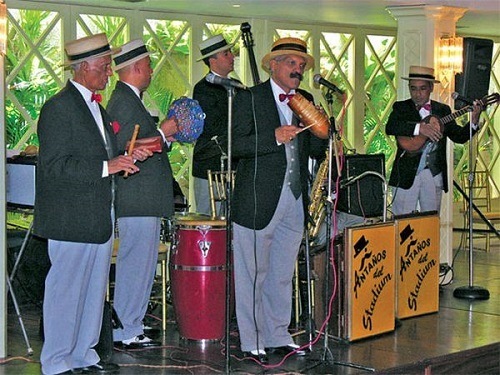
llevan el sonido caraqueño al
Centro Cultural BOD
Escrito por Team Aliado
Publicado 26 Jul 2019
In 1996, marking a half-century of uninterrupted artistic work, the group was declared Musical Cultural Heritage of the City of Caracas.
Their legacy goes far beyond mere performance: they serve as a historical and methodological benchmark for all generations and música cañonera ensembles formed in Venezuela over recent decades.
Today: A Living Legend in the 21st Century
With over seven decades of continuous history, Los Antaños del Estadio remain active as one of the longest-running groups in Venezuelan music.
Although the urban landscape of Caracas has changed, the group continues to perform at festivals, cultural centers, and heritage events, proving that merengue caraqueño retains its vitality and festive charm.
.
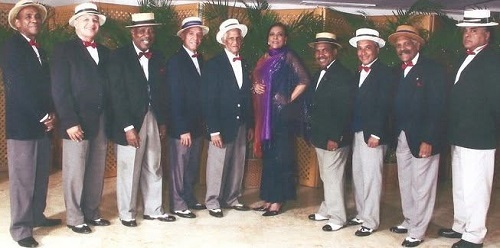
From left to right:
Rafael Escobar: Bajo
Prof. Carlos Espinoza: Bombardino
Maestro Aníbal Escobar: Saxofón y Director Musical
José Gregorio Ascanio, “Melao”: Tumbadora
Miguel La O Álvarez: Cantante
Sra. Nikol Espinoza Mata: Cantante
Juan Ramón Pedrón: Batería
Luis Alfredo Planas: Cuatro
Enrique Espinoza Mata: Cantante y Percusión
Andrés Romero, “Tapón”: Trompeta
Today, the Espinoza family’s legacy stands as a testament to cultural resilience and popular joy. Los Antaños del Stadium represent far more than mere nostalgia for the past; they are living proof that a city’s musical memory can remain vibrant, energetic, and resonant across generations.
This live performance of the group playing their classic merengue rucaneao perfectly showcases the style, festive energy, and traditional sound that have defined them throughout their long and storied career.
Also Read: Porfi Jiménez The Master of Rhythm Who United Two Nations