• Skip to primary navigation
  • Skip to main content

International Salsa Magazine

  • HOME
  • Previous editions
    • 2026
      • ISM / May 2026
      • ISM / April 2026
      • ISM / March 2026
      • ISM / February 2026
      • ISM / January 2026
    • 2025
      • ISM / December 2025
      • ISM / November 2025
      • ISM / October 2025
      • ISM / September 2025
      • ISM / August 2025
      • ISM / July 2025
      • ISM / June 2025
      • ISM / May2025
      • ISM / April 2025
      • ISM / March 2025
      • ISM / February 2025
      • ISM / January 2025
    • 2024
      • ISM / December 2024
      • ISM / November 2024
      • ISM / October 2024
      • ISM / September 2024
      • ISM / August 2024
      • ISM / July 2024
      • ISM / June 2024
      • ISM / May 2024
      • ISM / April 2024
      • ISM / March 2024
      • ISM / February 2024
      • ISM / January 2024
    • 2023
      • ISM / December 2023
      • ISM / November 2023
      • ISM / October 2023
      • ISM – September 2023
      • ISM – August 2023
      • ISM July 2023
      • ISM Edition June 2023
      • ISM – May 2023
      • ISM April 2023
      • ISM March 2023
      • ISM February 2023
      • ISM January 2023
    • 2022
      • ISM December 2022
      • ISM November 2022
      • ISM October 2022
      • ISM September 2022
      • ISM August 2022
      • ISM July 2022
      • ISM June 2022
      • ISM May 2022
      • ISM February 2022
      • ISM January 2022
    • 2021
      • ISM December 2021
      • ISM November 2021
      • ISM October – 2021
      • ISM September 2021
      • ISM August 2021
      • ISM July 2021
      • ISM May 2021
      • ISM April 2021
      • ISM June 2021
      • ISM March 2021
      • ISM February 2021
      • ISM January 2021
    • 2020
      • ISM December 2020
      • ISM November 2020
      • ISM October 2020
      • ISM September 2020
      • ISM August 2020
      • ISM July 2020
      • ISM June 2020
      • ISM May 2020
      • ISM April 2020
      • ISM March 2020
      • ISM February 2020
      • ISM January 2020
    • 2019
      • ISM December 2019
      • ISM November 2019
      • ISM October 2019
      • ISM Septembre 2019
      • ISM August 2019
      • ISM July 2019
      • ISM June 2019
    • 2016
      • ISM December 2016
      • ISM November 2016
  • Spanish
  • Download Salsa App
    • Android
    • Apple

December

Yma América

Yma América “Every time I go out to play, to sing, I show my training and above all I put the name of Venezuela up and without speaking much.”

Yma América, she reaffirms that; We have done a good job, making our Latin music and culture known.

The trace that many Venezuelan artists, who have decided to settle abroad, are leaving behind is passing through the world, because they distinguish themselves by their achievements and place the name of Venezuela in a big way, making their fellow citizens proud of their successes, such is the case of Yma América Martínez, born in Caracas and based in Germany for almost 30 years.

With a musical vein that he inherited from his parents who points us out, they were the fundamental pillar in his training and career, and why not, for having grown up in one of the most musical parishes in Caracas, the San Agustín del Sur neighborhood, Marín sector, from where great characters have come out including his uncle the choreographer and dancer Carlos Enrique Orta (+), who traveled with his dance company, “Coreoarte” great stages throughout the world.

His musical beginnings were with a group created by his father “Los group created by his father “Los Azulitos Juveniles” where he sang aguinaldos with his sisters and neighbors, and then entered the San Agustín Choir at Don Pedro School “Fe y Alegría”.

(Yma América) She received her academic preparation at the “José Ángel Lamas” School of Music and the “Simón Bolívar” National and Youth Orchestra, to continue her cello studies in Paris at the “Ecole Normale de Musique de Paris” and song and composition at the CODARTS of the World Conservatory of Music in Rotterdam.

Yma América
Yma América

Yma América is a singer, musician, songwriter, arranger, plays the violoncello and the cuatro. It’s clear and powerful voice makes it very popular throughout Europe. He has worked with different groups; Kimbiza, Latin Sampling, Francisco Zumaqué, Connecting Latina, Mirta & The Goalgetters, Duo Ymaya, Cubop City Big Band, among others. He has participated in major jazz and classical music festivals, such as the Ruhr Guitar Festival, the North Sea Jazz Festival, the RuhrTriennale, the MusikTriennale Köln and the Elblandfestspiele. In 2004 his record made her the winner of the international competition “Voice and Guitar” in Saarbrücken – Germany, obtaining the first prize with the Colombian guitarist Andrés Mendoza Villamil.

Another relevant fact in the life of this artist can be seen in the song “Play it”, a song that he composed and sang for the commercial of the Bacardi company, which became a success in the summer of 1998 and 2000. He participated in the musical “King of The Lions” with WDR Big Band in the main role of Lilipuz’s children’s concert “Die schlaue Mama Sambona”; and has performed more than 30 times with the production “Adventure Weltumrundung” of the Fly & Help Foundation.

She has on her shoulders the responsibility of a great project that he has in Germany and wishes to perform in his native country, to make music with percussion for deaf people called “FEEL SOUNDS”, due to this proposal in 2010 he was awarded La Disability Policy of the Cologne Innovation Award (KIB).

He assures us that; “The language of music is the same throughout the planet,” with this phrase we enter to discover the virtues, dreams and desires of the interviewee.

How is Yma América defined?

“It is not easy to answer this, but I think I am a very patient and calm person, I would say too much. I do not give myself a bad life, fortunately I have done what I wanted, thanks to the support of my parents and family in general”. “I am a character who, thanks to the gods, things and opportunities have been offered to me, some have taken advantage of them, some have not, there are some that I have not realized in time that they have been there waiting for me and I have lost.

But I can say that I have lived my life, with the ups, downs, good and bad, without involving anyone and thus I have been leading and learning.”

Part of his training was obtained through the Conservatory of Music “José Ángel Lamas” and the National and Youth Orchestra “Simón Bolívar”

What do you thank and how he gives back his training with them?

“I thank you for part of my training as the musician that I am, because the other part I owe to my family and my people where I come from.” “-Retribute-“, I think that every time I go out to play, to sing, I show my training and above all I put the name of Venezuela up and without speaking much”.

What do you think of the phrase “Nobody is a Prophet in his Land”?

“-Sincerely do not know what you mean-“. “I don’t think I would have started singing professionally if I had stayed in Venezuela. I was quiet there, I played Violoncello in the National and Youth Orchestra of Venezuela, I played and made substitutions for cellists in the Philharmonic Orchestra of Venezuela and in the Municipal Orchestra of Caracas, I sang solo of vacilón in each party and family celebration, and Actually I was very calm in my house. ”

“I don’t think I’m a” prophet “where I am, I always do my best and people value it and often criticize it, of course.”

Why did you choose Germany and not another Latin American country? How many years have you lived in German Colony?

“I left Caracas in 1986 to Paris-France, thanks to my grandmother working in a wealthy family home and they offered to help a family member to study abroad, specifically in France because they had relatives there. First my uncle Carlos Enrique Orta – Choreographer-dancer with a lot of international professional career – left, many years before and then I wanted to “take the floor” after a while ”.

“Actually I wanted to study violoncello for 1 year in Paris and return to Venezuela, but at the end of my 1st year of study at the “Ècolle Normale de Musique de Paris”, they offered me to stay and I did not refuse. The last year of studies in Paris I did not have much money to live and in Köln-Germany lived the musicians of ‘COREOARTE’ (Dance company created by my uncle Carlos Enrique Orta with dancers and musicians of San Agustín), at that time I was leaving every weekend, on Fridays after school, from Paris to Köln and I returned on Monday at 6 am and arrived directly to classes in the afternoon.

I did that because we played; Renis Mendoza, Felipe “Mandingo” Rengifo, Charles Peñalver, Orlando “El Diablo” Blanco and I was in the street to collect some money and brighten the streets and faces of the Germans, and with that I could buy food for the whole week in Paris until the following Friday that I was returning to Köln … and so for many months until after finishing my studies, I decided to move to Köln and the first months I lived at the home of Renis Mendoza who shared his apartment with another ‘Coreoarte’ boy and then I got my room sharing an apartment with a German girl. ”
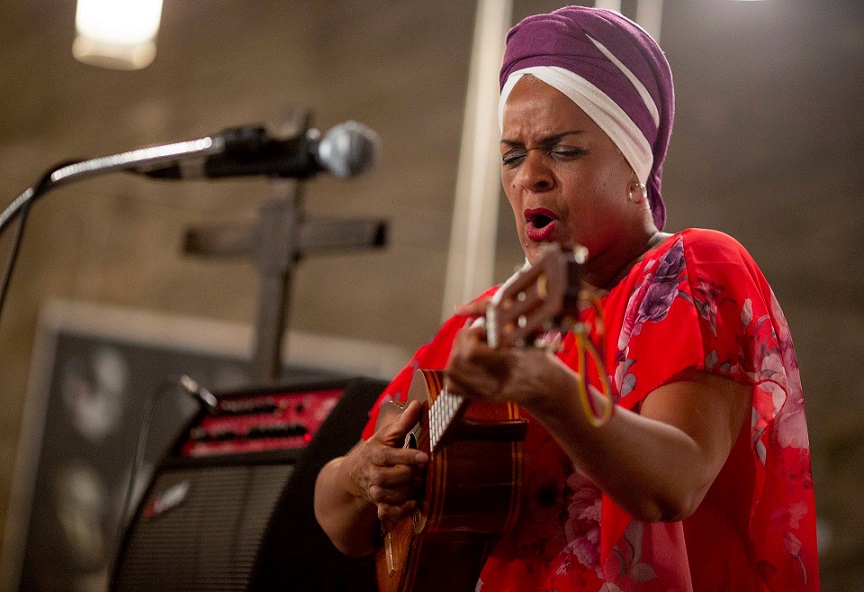
Yma América
Yma América

“I lived first in Paris from 1986 to 1990, 4 years and from 1990 to the present day in Köln, next year I am 30 years old based in Germany, I say “I have my bed in Köln “, because in reality I am almost never in my home, thanks to the music and the life that has given me so much ”

“I never thought, nor have I imagined living in another country in Latin America, I think that from here, I’m going to my house … Pa ‘Venezuela (to Venezuela)!”

How has been the receptivity of the German public with Latin rhythms, there was no resistance?

“At this moment there is a stagnation in the development of activities with Latin music, but in the same way there is more and more receptivity, I know we have done a good job, making our Latin music and culture known, there are several Salsa bands with German musicians, there are more and more dancers, more dance classes, many have understood the message and others interpret it to its wave but there is a lot of atmosphere and places with Latin music, with Dj of Salsa-Merengue and the crap they call Reggaeton music”.

“I must say that some years ago there were more Salsa orchestras with German musicians and there were more Salsa Festivals that unfortunately has been reduced by the phenomenon” Salsa Dj “I think and I am almost certain, because it is cheaper and people dance the same. That has done a lot of damage to live music. ”

What memories do you have of being under the baton of these great maestro Abreu, Aldermaro Romero, Carlos Riazuelo and Yehudi Menuhin?

“I don’t really remember at this moment any particular experience or directly with them. Although I had more contact with José Antonio Abreu, the experience was the same as with many of the ONJV members. But of all of them, the security with which they could dominate and control the amount of musicians an Orchestra has, and especially that in style and classical pieces, the feeling that is transmitted is that of the conductor and not that of the conductor musician or performer. Of course they were wonderful experiences. ”

How many compositions have you performed?

“Honestly, not many, about 12 but arrangements have been made, played and recorded, only 4.”

Your parents have been promoters of your career, how do you thank them?

-Chacha! –

“My parents are the reason for my profession, from them is that this Yma America that you are interviewing for my work has come out. Thanks to their way of being, their offspring, their education, I thank them for what I am and what I have done … My life. ”

Are you constantly growing anecdotes of your time at the “Normal School of Music in Paris” and the “Conservatory of World Music”?

“In Paris, I think, having to change the mentality of learning everything little by little and without hurry like in Venezuela, to the need to charge the “batteries” because here they do not wait, I have to go for it and comply daily, in addition to that that impelled me to learn the French language faster ”.

“And in Holland, going from being a student to being the singer of the Cubop City Big Band of the Prof. of the conservatory Martin Verdonk (percussion), Leslie López (bassist) and directed by the drummer Prof. Lucas van Merkwijk that was strong, especially at the beginning that it was to understand how they interpreted Latin music that is something other than Latin Jazz, there we started with Mambo of one, and as Leslie López was the bassist of Puerto Rico there was a balance and there we were learning and obtaining experiences all alike. ”

How do you feel about working alongside the Dutch percussionist and producer Lucas Van Merwijk and being the vocalist of the hit band “Cubop City Big Band”?

-Chévere! – assures us

“Working with Lucas and with those wonderful musicians, people with an extraordinary musical level, is very relaxed, zero stress, there we have all learned, failures and successes have gone hand in hand with everyone. Next year (2020), with CUBOP CITY Big Band we will be 25 years old together and surely something good will be done, something wonderful is being cooked, with maestro Edy Martínez – Colombian pianist, composer and arranger -, of course, also thanks to the Lucas’s wife, Roosje who does a great job, is the organizer/ manager of that crowd and all the tours. ”

Have you surrounded yourself and trained with musicians who, due to their quality and career, are considered the best, what do you think you still have to do?

“I have done and learned many things from life, both personally and musically, I believe and I know that I am missing a lot, now I have to do and learn.”

Hasn’t language been an obstacle?

“No, musically speaking, no, the language of music is the same on the entire planet.” “The French language I had to learn quickly because I came from Venezuela directly to the Conservatory of music, in Holland the classes are in English and I did not have to learn Dutch and the German language has been strong in other daily situations or life in general.”

In which festivals have you participated in both Europe and Venezuela?

– Oh! – “How many exactly I cannot tell you, but in these 30 years living in Germany and making music professionally there have been many, in almost all of Europe.”

There is a project with deaf people in Germany, which we hope can also be carried out in Venezuela. Tell us about that musical project and why did you decide that this topic should be precisely?

“TO FEEL (FEEL) – SOUNDS (SOUNDS), but as my name I put” FEEL SOUNDS “in view of the fact that the sense of touch is much more developed in deaf people and my work is based on making music with percussion, so that the vibration of sound is what they feel. ”

“It is a project that I have had in mind for many years, 1980, when I was studying” Hospitality and Tourism Administration “at the University College of Caracas and doing a field job in San José de Río Chico, at the end of my activity and visiting people, they gave me a party, drums and fulías until dawn, there were 5 drummers, dad and 4 children and in the end dad tells me that one of them was deaf. And the young man played very well, I never imagined he could be deaf, he played perfect and we even danced salsa. And from there I had the idea of working and teaching percussion to the deaf. ”

“After all that time, it was that in one of those turns that gives life, I had the courage and I started studying” German Sign Language “and I planned my workshops, I went to the deaf schools in Köln, many percussionist friends helped me Renis lent me his drums and plays with us each presentation at the end of the workshops, other friends lent me his rehearsal room to teach, my Sign Language teacher supported me looking for money to move on … and so…

This year I will be 10 years of having developed it here in Germany and the experience has been wonderful, every day I learn more and more of that world that I cannot imagine, but seeing everyone’s face when they feel the vibration of the sound when they play a drum – event listeners, people without hearing problems – that feeling is uniquely Fascinating! ”.

Yma América
Yma América

Working with children and adults with special conditions is a great challenge. What do you feel when you see that experience come true?

“I feel that I must move on, I have already been invited to several cities in Germany, the Netherlands and Poland and I want to continue doing it, take it to my country and fulfill my desire to develop it there, carry it out, execute it and make it known in my Venezuela.

Although several years ago I attended a conference held by FEVENSOR Federation of the Deaf of Venezuela, with the assistance of several Latin American countries, Spain and Australia, I made an exhibition and presentation of several deaf young people who attended, with the participation and collaboration of Naifer Hernández and Juan Carlos “El Indio”, Betancourt percussionists from San Agustín / Marín, but everything remained there. Of course, I must always be present in order to move forward, it is like that.

I lack the financial support because the program, project, the subjects, the desire, the yearning and the cravings are already there, but I keep moving and insisting, searching and “cursing” until I find the support itself. ”

What new projects are coming?

“We recently started with a new project for the Latin American Music Trio, from Mexico to Argentina, with Prof. Thomas Böttcher, German pianist, Renis Mendoza Venezuelan percussionist, also from San Agustín / Marín and I singing and playing Violoncello, we are in the preparations, making videos, propaganda, looking for program and composing, also in conversations and looking for an agency to sell it and move it forward. The 25th anniversary of Cubop City Big band next year, has finished looking for the musical program for those celebratory concerts. ”

“Continue with my musical project“ FEEL SOUNDS ”, teaching my classes and music workshops to groups of children, youth and deaf adults and from January 1st, start giving talks on this new proposal to students of” Education and Special Pedagogy “to keep moving forward with this and carry it forward until it reaches Venezuela and the entire world. ”

What does the San Agustin parish mean to you?

“It is the neighborhood where I was born, there is all my childhood and adolescence, I love it and I respect its inhabitants very much, besides there is my family whom I love with all my being, there have always been many valuable people, thanks to that work that artists have been doing and all that cultured and fighter generation that lives and has always maintained that training and information contact with the new generations. San Agustín is the good people who live there, the rest is everywhere in the world”.

Yma América
Yma América

Venezuela in one word?

“-MUSIC-” in capital letters.


Eiling Blanco Latin America Correspondent 


José Mangual Jr.

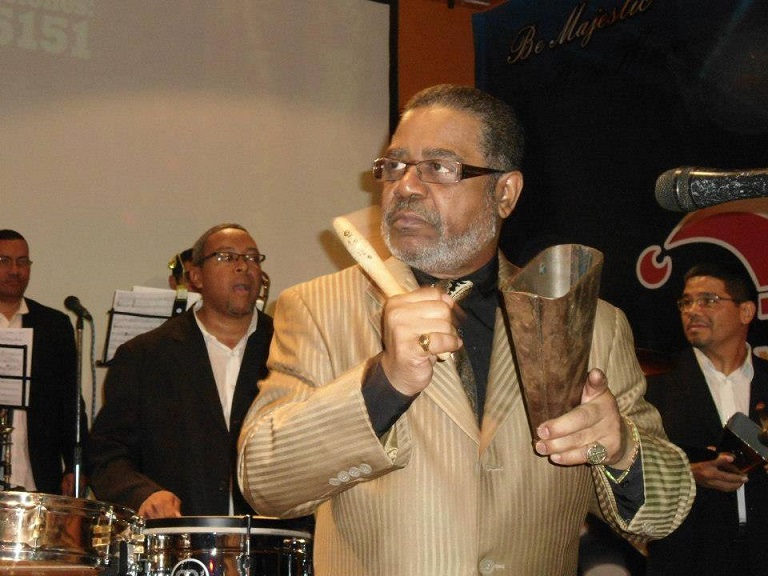
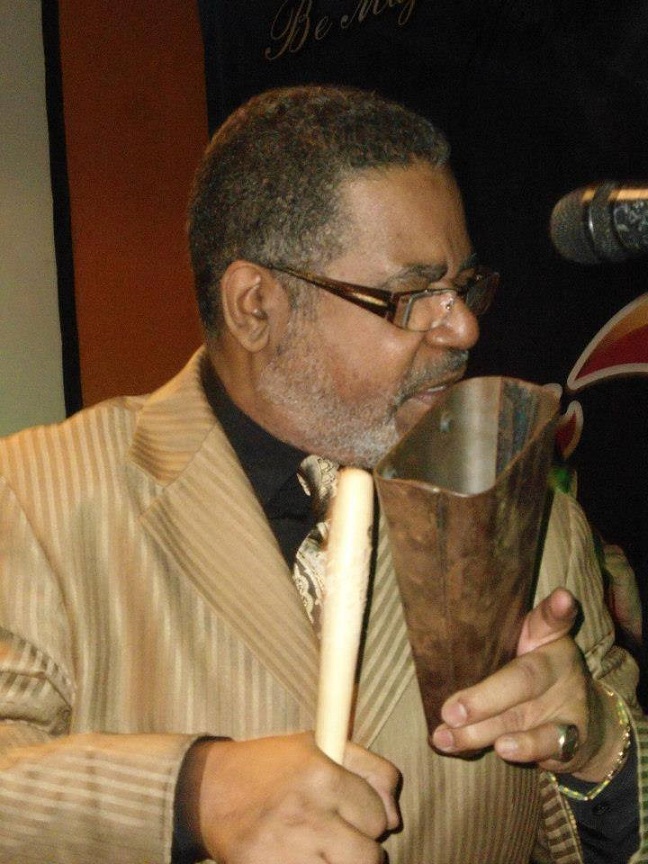
The son of the master and pioneer of Bongó, José Mangual “Buyú”

The son of the innovative and pioneering bongo musician, José Mangual Sr., aka “Buyú”, José Mangual Jr. was born and raised in East Harlem, the Spanish Quarter of New York City   known as “El Barrio”. By the age of fifteen, José Jr. was already playing in local groups.

In 1968, Mangual Jr. was invited to play bongos and sing background vocals for a fledgling orchestra led by a young man named Willie Colón.

The lead vocalist for this group was also a young singer named Hector Lavoe.

Along with his perennial rhythm section “compadre”, legendary percussionist Milton Cardona, Mangual would become a part of history, as they made some of the most important recordings in the annals of salsa music.

Mangual Jr. showed his skill as a composer, author, and lead vocalist with Colón’s orchestra.

José Mangual "Buyú"
Photo of José Mangual Jr in concert

With Kent Gomez in 1973, Mangual co-authored the song “San Miguel” for Tony Pabón y la Protesta. This song featured him as a lead vocalist.

After Willie Colón and Hector Lavoe parted ways to pursue different ventures, it was José Mangual Jr. who took over the musical direction of Lavoe’s band.

Shortly after this in 1977, Mangual formed his own record label, True Ventures Inc., and released A Tribute to Chano Pozo.

This album features the classic recordings, “Campanero” and “Cuero ‘Na Ma”. It also established Mangual as a lead vocalist to be reckoned with, and a serious record producer.

Live Jose Mangual Jr
Photo of José Mangual Jr on stage

The 1980’s saw José Mangual Jr.’s fame grow even more, as he became a premier artist for Velvet Records, and further solidified his fan base in South America, Europe and the Orient.

His skills as a percussionist, vocalist, composer, and musical director were sought out by many including Juan Luis Guerra, Rubén Blades, Herb Alpert, Dizzy Gillespie, David Byrne, Celia Cruz, Ramon Orlando, Mario Bauza, Mongo Santamaria, The Fania All-Stars, Junior Gonzalez, Ismael Miranda, Louie Ramirez and many others.

Perhaps the most fascinating aspect of Mangual’s career is his ability to evolve and refine the sounds of his music.

The 1990’s saw him forming and leading his band Sarabanda, while still pursuing the projects he always wanted to do.

In 1995, Mangual released his long-awaited Tribute to Chano Pozo Volume II. This album ranks among his finest, and gives listeners a glimpse into the mind of a master musician who grew up during the golden age of modern Latin music.

In 1998, Mangual produced and musically directed Caiman Records new salsa and Latin jazz release, “Son Boricua”, by his band of the same name.

This session features his original composition, “El Jibarito”, which pays homage to the island of Puerto Rico, and his Boricua heritage. The album and group was the recipient of the New York Latin Critics’ ACE Award as Best New Latin Release for 1998-1999.

Mangual’s recent new release with “Son Boricua”, entitled Homenaje a Cortijo y Rivera is a moving, swinging homage to the music of Rafael Cortijo and “El Sonero Mayor” Ismael Rivera.

What makes this work so noteworthy is that it marks an even deeper trip, not only into Latin jazz, but into the panorama of what the sounds of a Latin New York are: the sounds of the streets of  “El Barrio”.

Photo by Jose Mangual Jr
José Mangual Jr on stage

Here, Mangual displays all of the attributes of his professional career, from being the musical director and a lead vocalist, along with the “Smooth One”, Jimmy Sabater, to being a composer with his original composition, “Boricua Blues”.

With this release, Mangual, Sabater, and “Son Boricua” captured their second ACE Award in 2002.

A third ACE Award would follow in 2003 for “Son Boricua’s” 2002 release, Mo!

His most recent participation as a vocal leader in the production of the Quinteros, Quintero’s Salsa Project entitled Our Home, nominated for the Latin Grammy 2019.

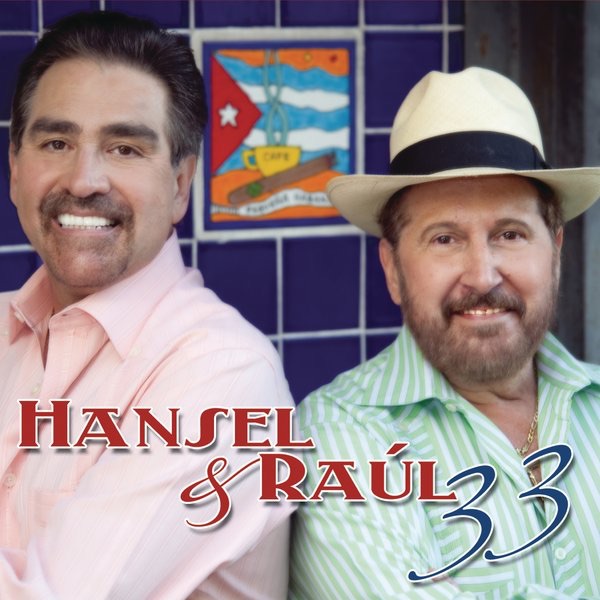
Hansel and Raúl, The Charanga Legend duo

Hansel and Raúl, The Charanga Legend duo

Hansel and Raúl is a charismatic and transgressive Charanga duo of the line of romantic lyrics of the time. They positioned the Cuban “Charanga” rhythm on the top of global popularity, a danceable genre that they imposed on each stage they were invited to and which incorporated their unique Caribbean essence.

This particular duo with three decades of trajectory was born in Miami in 1984 after breaking from the orchestra “Charanga 76”, where they were co-founder members and their main vocalists. With this New York orchestra, born in Brooklyn, they won international recognition and their first Grammy for the album “Encore” in 1978.

Photo of Hansel and Raúl
Hansel and Raúl – The Charanga Legend duo

“Many of the artists who recorded with them during their stay in “Charanga 76” include the renowned pianist – for many years – by Héctor Lavoe, Gilbert Colón and the first Jewish-American flutist woman, Andrea Brachfeld.”

Very pleasant memories come to Hansel‘s mind during this interview, especially his first composition “Si no te encuentras tú” for Charanga 76, his voice took a turn and he showed nostalgia as well as pride in remembering it: “I don’t sit to write a song with a guitar or piano. The Inspiration comes to me alone, there is nothing personal”.

Each anecdote that he tells us is remembered as facts that have led to their musical maturity. Each fun fact has been defined as part of their career, such was the case of the great master, Israel “Cachao” López, who with all his musical wisdom and mastery of his instrument, the Double Bass, taught the rhythmic base to the orchestra. “The conguero and the timbalero even the güirero he taught them to play well. He was a teacher of all, including us who learned a lot from him. R.I.P, he was a glory of music”, Hansel said to us.

But that wasn’t all he told us about the legend of Cuban music, “Cachao”, who was the Double Bassist of the “Charanga 76” orchestra for 12 years, also he told us that every time they wen a tour the “Inventor of Mambo” had them buy a plane seat to his Double Bass, he sat it next to him and even put the belt on the string instrument, as is dictated by airline regulations.

The funniest thing would come later when the Double Bass received the same attention as each member of the orchestra. Amazing! The Double Bass also had its portion of food during each trip as each musician of the orchestra, and when the flight attendant brought it was when the offer was presented by each musician for that fabulous portion, although the end was always the same, the trumpeter won!

Hansel y Raúl - Photo
Hansel y Raúl concert
Photo in concert - Hansel and Raúl
Hansel and Raúl – Photo behind the scenes

Each experience with Charanga 76 made them evolve in music and although with this orchestra they made themselves renowned professionally, as a duo they flew the fence. They have received multiple musical awards, their sympathetic lyrics, and in some cases, satirical or burlesque have won the applause, admiration, and respect of colleagues in the music industry and the general public on three continents: America, Europe, and Asia.

“The Jersey Boys” was their first youth musical group with only 5 members and although the musical instruments they played were the basics of Rock, their rhythmic concept was Cuban music.

“María Teresa y Danilo” was one of the compositions that brought many satisfactions to this duo. Nowadays it’s still preferred by the fanatical public of the genre. Many debates and speculations were made about this song, but here we tell you the true story. “María Teresa y Danilo” dates its beginnings to the 80s when soap operas like “Dallas” were in fashion.

Hansel came up with the idea of diving and writing on this topic. He magically composed the lyric during the plane trip with San Francisco – Miami trajectory and the rest we already know, multiple copies sold, and hundreds of awards granted to them for the feeling that caused this popular theme.

Photo of Hansel and Raúl

Photo of Hansel and Raúl in their beginnings

After such overwhelming success as a duo, Hansel and Raúl decides to separate in 1988. What was the reason?

Everyone wanted to make another kind of music. Each one followed a different path, for his part, Hansel recorded five solo albums including metals, more trumpets and trombones, and in three of these albums, he included neither the violin nor the flute, assuming almost completely the end of the Charanga rhythm in his music. However, a short time later he realized that this Caribbean rhythm was what identified with his audience and two years later he joined Raúl again to continue their successful career.

Hansel and Raúl has a total of 330 songs recorded and on December 31 this Charanga duo will have a performance in Los Angeles, CA and you may be lucky and they play your favorite single and if don’t you can ask for it. Classics such as “Soy”, “Se me nota”, “El ayer”, “María Teresa y Danilo”, “Kukucha kucha”, “Balancea mi corazón” (Yordano), “Ojos Verdes” (Alfredo Gutiérrez), among many others, will be present at this 1: 45min show.

Hansel and Raúl
Cover of Hansel and Raúl, Discography 33

Purchase your Tickets quickly before it´s sold out

https://www.facebook.com/events/crown-plaza-hotel-and-casino/new-years-eve-2020-the-great-gatsby-presents-hansel-raul/271515257093512/

We hope to see them there singing each of their hits and if you later travel to New York, don’t be surprised to see Hansel in that city because he and his family will be celebrating their daughter’s sweet sixteen, on the second day of January 2020.

Is Hansel a stage name?

Although some may consider that Hansel is a characteristic name of the children’s story “Hansel and Gretel”, this name comes from Germany and it’s of Jewish origin. Hansel Enrique is the name of this singer and songwriter “Charanguero” and he is named so to differentiate himself from Hansel Horacio (father). In Cuba, the tradition is maintained that every male child must bear the name of his grandfather; this is the reason for all his cousins are called Hansel.


More Details visiting:

http://www.HANSELYRAUL.com

Social Channel:

https://www.facebook.com/pg/HANSELYRAUL/

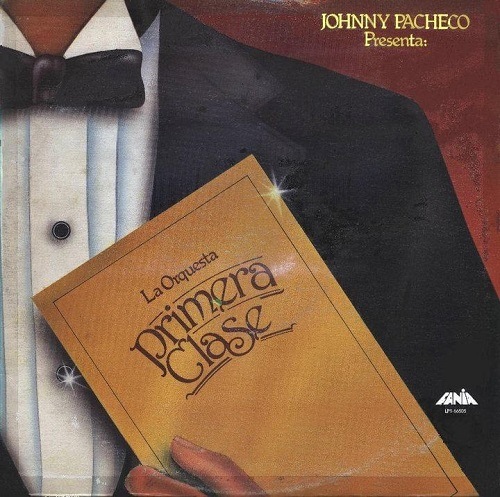
Johnny Pacheco, presents “Orquesta Primera Clase” from Maracay-Venezuela

The title of this album speaks for itself; the hand of the transcendental Dominican musician is introduced in this album.

El Zorro de Plata Pacheco appears as executive producer of the album, although we do not discard that he also participated in part of the musical production, due to the way the orchestra was structured and the style in which the arrangements were given; it is something that we can hardly notice when listening to the album, it is evident the great similarity to “Pacheco y su Tumbao”; four excellent trumpets with sonorous arrangements.

Johnny Pacheco, presents "Orquesta Primera Clase" of Maracay-Venezuela
Johnny Pacheco, presents “Orquesta Primera Clase” of Maracay-Venezuela

The predominance of Teo Hernandez (R.I.P)’s vocal style and register in the nasal coros, fits perfectly with the “Tumbao Añejo” that we have always been accustomed to from maestro Johnny Pacheco (R.I.P).

Although the album was backed by the Fania label and is loaded with a cheerful and swinging flavor, we think that it went somewhat unnoticed by the music-loving public.

The reasons could be several, we must remember that in those times in the 80’s the merengue rhythm was beginning to penetrate with a lot of strength.

Johnny Pacheco, presenta la Orquesta Primera Clase

Although we could also add the little interest that the public of the capital (Caracas) had for the groups of the regions or interior of the country, and although it seems ironic to say it.
Another possible reason could be linked to the inclusion of only unpublished songs (it is well known that in those times, they supported copies more than creativity); these are only conjectures of this server, however, they do not escape the reality of that time.

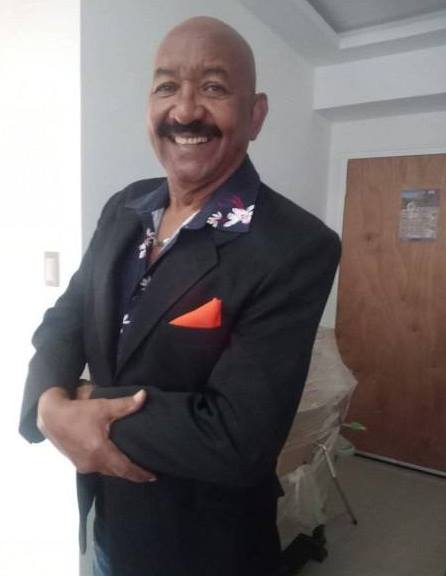
Teo Hernández (R.I.P)

As for the musical themes, we have already pointed out that all of them are original and very well compensated with their arrangement; In particular there are two songs that I like very much, one of them is “Negro Nací”, written and sung by Orlando Sanoja, is a very happy song dedicated to our black race of the danceable in his music, “Si negro nací nací nací, blanco no puedo ser”, The other song of my predilection is “El Sabio”, composition and lyrics by Jorge Compres and vocalized by Teo Hernández, with great diction, good phrasing and those tasty choruses that accompany him.

Orlando Sanoja
Orlando Sanoja

It is worth mentioning that the excellent La Orquesta Primera Clase is still in force with a musical staff of the new generation maintaining its original sound with its lead vocalist Orlando Sanoja.

It is another good Venezuelan album that you should have in your personal CD library.
Johnny Pacheco presents “La Orquesta Primera Clase” (1982) Fania LPS-66506

SIDE A

1.- NEGRO NACÍ (Orlado Sanoja) Sings: Orlando Sanoja/ Arrangements: Nicomedes López
2.- ME SIENTO MUY FELIZ (Al mMaro Ríos) Sings: Orlando Sanoja/Arrangements: Bolívar Javier
EL ANIMAL (Jorge Compres) Sings: Teo Hernández/Arrangements: Jorge Compres
4.- TODO TIENE SU FINAL (Bolívar Javier) Sings: Teo Hernández/Arrangements: Bolívar Javier
5.- LLEVAME CONTIGO (Almaro Ríos) Sings: Teo Hernández/Arrangements: Bolívar Javier

SIDE B

1.- EL SABIO (Jorge Compres) Sings: Teo Hernández/Arrangements: Jorge Compres
2.- A MARACAY (Orlando Sanoja) Sings: Orlando Sanoja/Arrangements: Jorge Compres
3.- EXTRANJERA (Phorto Jacquez) Sings: Teo Hernández/Arrangements: Jorge Compres
4.- VIVA MI GUAGUANCO (Jorge Compres) Sings: Teo Hernández/Arrangements: Gilberto Riera
AY QUE HUMANIDAD (Orlando Sanoja) Sings: Orlando Sanoja/Arrangements: Jorge Compres

Personnel:

Pastor Rodríguez (1st Trumpet)
Henry Kamba (2nd Trumpet)
Gustavo Nieves (3rd Trumpet)
William Fermín (4th Trumpet)
Armin Kail (Piano)
Carlos Fagúndez (Bass)
Harold Josef (Congas)
Edgar Aponte (Timbal)
Félix Benítez (Bongo)
Teo Hernández/Orlando Sanoja (Singers)
Bolívar Javier/ Nicomedes López/ Jorge Compres/ Gilberto Riera (Arrangements)
Teo Hernández/Orlando Sanoja/Edgar Aponte (Chorus)
Johnny Pacheco (Executive Producer)
Carlos Guerrero (Recording Technician)
Luis Arismendi (General Recording Supervision)
Recorded at Fidelis Studios
Alejandro Pérez (Art and Design)

How Jacira Castro and Salsa Power changed the Latin music scene

How did Salsa Power start?

Latin culture, specifically the musical part, has had a large group of unconditional allies who have promoted it worldwide through their work and platforms, being Chilean-American Jacira Castro one of the best known. Jacira is a salsa casino-style salsa teacher and web designer who had the dream of spreading the typical rhythms of our countries, but she did not figure out how until she came up with a revolutionary idea: Salsa Power. 

Salsa Power was born in 1999 as part of an initiative created by Castro and graphic designer Julian Mejia, who practically became her partner until the moment when the page stopped working. From that year on that the dance instructor began to generate contacts and develop human networks with people inside and outside the world of music, especially from the salsa genre. A particularity of this system devised by Jacira was that it was fed by the information received from people from anyqhere in the world about everything related to concerts, festivals, press conferences, autograph signings and much more.

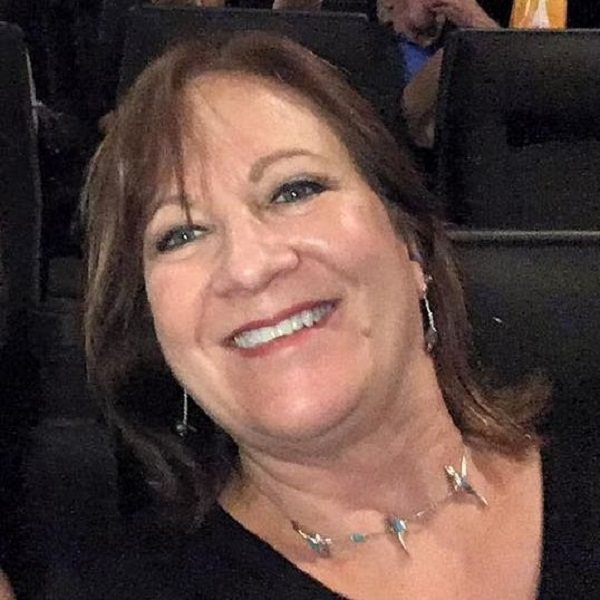
Jacira Castro - Salsa Power
Dance instructor and web designer Jacira Castro – Salsa Power

How did this project work?

Thanks to the technology that was advancing little by little in all this time, there were many more contact ways and social media came along to facilitate these activities. The website grew to such an extent that it came to have more than 300 correspondents in over 60 countries, many of whom did not even have professions or occupations related to music, but wanted to strive to make the initiative successful and Latin artists and orchestras have a dependable space to promote their work.

Contrary to what many readers may have thought, everyone involved in this project never received a single cent or publicity in return for all the work being done. In fact, it was Jacira herself who had to pay for all the expenses related to Salsa Power such as plane tickets, travel, lodging, food, wardrobe, among other things. Not to mention the website maintenance and other hosting costs for the domain to work properly.

Fortunately, all that effort and money were worth it because Salsa Power rose to become the largest salsa website on the internet and a true reference for any independent media planning to do anything remotely like that. Much of the fruits harvested by this beautiful project can still be found on the internet and consist of articles, interviews, event coverage, videos and many other things.

The name Salsa Power was so respected that you could not talk about the Latin salsa scene in the United States without mentioning it, especially in South Florida, a place where competition for the first places was at its higuest. This competition was not only between artists and musical groups, but also between media, associations and academies, triggering some inconvenience and regrettable situations like the one experienced by Jacira and Julián a few years ago.

Jacira paid for all the expenses related to Salsa Power

Controversies

Jacira has had run-ins with some important personalities of the Latin music community in Florida because of her political positions, which went against the current of a large number of Latin artists and dancers at that time, especially those who are part of the Cuban exile. Her attitudes towards the political situation in Cuba have been highly controversial, mainly those related to the U.S. economic embargo on the Caribbean country and the limitations on free cultural exchange between both nations. Both Castro and other leaders of the entertainment industry were opposed to the decades-old blockade, which has been maintained until today.

This caused the dance teacher to make some enemies in the Miami music scene, which led to the hacking of Salsa Power with the caption ”This is a communist website” in big red letters along with a message whose author calls Jacira ”communist” and ”pro-Fidel Castro”. Obviously, she got worried and immediately called Julian to bring down the page.

As they began to diagnose the issue and its possible causes, they concluded that those responsible were part of an association composed of a dozen dance schools in Miami and its sorroundings called Salsa United. Around the same time, this organization had just created its own website, which published content very similar to that of Salsa Power, so much so that its principal spokesperson Jolexy Hurtado and Jacira came to have some arguments and run-ins due to how much alike the interviews were in both websites. The conflict reached at such a level that Jacira states that Hurtado told her she was messing with the wrong guy.

Undoubtedly, this whole situation was a big headache for the web designer, but has never let any of this daunt her or make her feel inadequate. On the contrary, she has grown before adversities and has faced them with the gallantry that has always characterized her, since she knows what her work is worth in terms of quality and globality.

However, there comes a point when the effort and time invested are not enough, so it is time to be realistic and assume that everything has its end, as the great Héctor Lavoe would say.

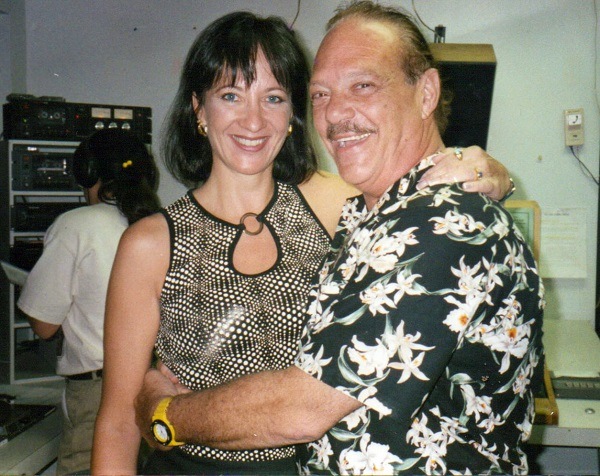
Jacira and Larry
Jacira Castro with producer, composer, and pianist Larry Harlow

Farewell to Salsa Power and Jacira’s current life

After 22 years of operation of the Salsa Power project, many of the correspondents who provided information for the page got married, had children, studied, moved and pursued other professional opportunities that did not allow them to continue their work. For the same reason, Jacira had no choice but to terminate the project that was her life for more than two decades and publish a farewell message thanking all her readers for their support over the years and assuring that she will continue to travel and enjoy salsa and dance.

In spite of abandoning her duties as administrator of Salsa Power, the great impact of the Chilean-American’s work on those who have come to know her and collaborate with her cannot be denied. On her LinkedIn profile, there plenty of favorable reviews about her professionalism and commitment in every activity she makes.

From International Salsa Magazine, we wish her the greatest success in every project she undertakes and that she enjoys all the stages that are to come.

Read also. Pacifica Radio, history, shows and controversy

  • « Go to Previous Page
  • Page 1
  • Interim pages omitted …
  • Page 10
  • Page 11
  • Page 12
  • Page 13
  • Page 14
  • Go to Next Page »

International Salsa Magazine (ISM) is a monthly publication about Salsa activities around the world, that has been publishing since 2007. It is a world network of volunteers coordinated by ISM Magazine. We are working to strengthen all the events by working together.