• Skip to primary navigation
  • Skip to main content

International Salsa Magazine

  • HOME
  • Previous editions
    • 2026
      • ISM / July 2026
      • ISM / June 2026
      • ISM / May 2026
      • ISM / April 2026
      • ISM / March 2026
      • ISM / February 2026
      • ISM / January 2026
    • 2025
      • ISM / December 2025
      • ISM / November 2025
      • ISM / October 2025
      • ISM / September 2025
      • ISM / August 2025
      • ISM / July 2025
      • ISM / June 2025
      • ISM / May2025
      • ISM / April 2025
      • ISM / March 2025
      • ISM / February 2025
      • ISM / January 2025
    • 2024
      • ISM / December 2024
      • ISM / November 2024
      • ISM / October 2024
      • ISM / September 2024
      • ISM / August 2024
      • ISM / July 2024
      • ISM / June 2024
      • ISM / May 2024
      • ISM / April 2024
      • ISM / March 2024
      • ISM / February 2024
      • ISM / January 2024
    • 2023
      • ISM / December 2023
      • ISM / November 2023
      • ISM / October 2023
      • ISM – September 2023
      • ISM – August 2023
      • ISM July 2023
      • ISM Edition June 2023
      • ISM – May 2023
      • ISM April 2023
      • ISM March 2023
      • ISM February 2023
      • ISM January 2023
    • 2022
      • ISM December 2022
      • ISM November 2022
      • ISM October 2022
      • ISM September 2022
      • ISM August 2022
      • ISM July 2022
      • ISM June 2022
      • ISM May 2022
      • ISM February 2022
      • ISM January 2022
    • 2021
      • ISM December 2021
      • ISM November 2021
      • ISM October – 2021
      • ISM September 2021
      • ISM August 2021
      • ISM July 2021
      • ISM May 2021
      • ISM April 2021
      • ISM June 2021
      • ISM March 2021
      • ISM February 2021
      • ISM January 2021
    • 2020
      • ISM December 2020
      • ISM November 2020
      • ISM October 2020
      • ISM September 2020
      • ISM August 2020
      • ISM July 2020
      • ISM June 2020
      • ISM May 2020
      • ISM April 2020
      • ISM March 2020
      • ISM February 2020
      • ISM January 2020
    • 2019
      • ISM December 2019
      • ISM November 2019
      • ISM October 2019
      • ISM Septembre 2019
      • ISM August 2019
      • ISM July 2019
      • ISM June 2019
      • ISM May 2019
      • ISM April 2019
      • ISM March 2019
      • ISM February 2019
      • ISM January 2019
    • 2018
      • ISM December 2018
      • ISM November 2018
      • ISM October 2018
      • ISM September 2018
      • ISM August 2018
      • ISM July 2018
      • ISM June 2018
      • ISM May 2018
      • ISM April 2018
      • ISM March 2018
      • ISM February 2018
      • ISM January 2018
    • 2017
      • ISM December 2017
      • ISM November 2017
      • ISM October 2017
      • ISM September 2017
      • ISM August 2017
      • ISM July 2017
      • ISM June 2017
      • ISM May 2017
      • ISM April 2017
      • ISM March 2017
      • ISM February 2017
      • ISM January 2017
    • 2016
      • ISM December 2016
      • ISM November 2016
      • ISM October 2016
      • ISM September 2016
  • Spanish
  • Download Salsa App
    • Android
    • Apple

Interviews

Jimmy Rodríguez ”El Salsero Mexicano” talked to ISM about his career

El Salsero Mexicano 

Jimmy Rodríguez ”El Salsero Mexicano” is a talented singer born in Mexico City, but spent a lot of his childhood in the city of San Luis Potosí, where he took his first steps as an artist. 

Thanks to his brother and manager, Daniel Rodriguez, we had the opportunity to talk to him and learn more about the interesting career he has had in the world of entertainment. Meet Jimmy Rodriguez and the kind answers he gave to our questions.   


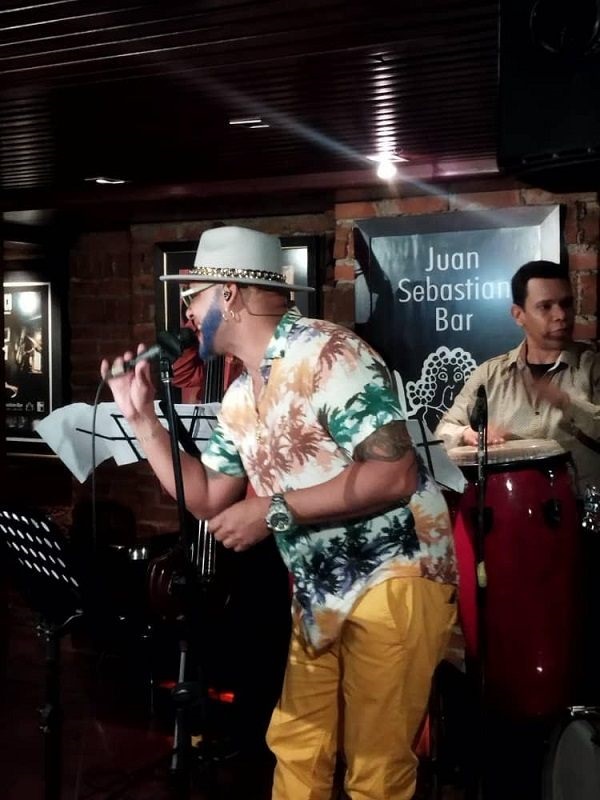
Jimmy on stage
Jimmy Rodríguez singing on stage

Beginnings of Jimmy Rodriguez in music   

By the time he got to high school, his talent for singing and charismatic personality made him the ideal candidate to participate in a talent contest, in which he would come in second place the first year in which he participated.    

Jimmy told us that he entered the contest to live a new experience, but he did not expect to achieve such a high place, so he felt very excited and motivated because of what he could achieve thereafter.    

The following year, he managed to get the first place in the same contest because he had spent a whole year studying and getting ready for that important moment. The previous time, he had only rehearsed the days prior, so he decided to take much more time on this occasion and the effort invested paid off.   

As a result of this achievement, the Group Alfa Omega saw the potential in this young man, so they contacted him and offered him to join them. This would be his first paid job in music, which began to teach him how this business worked. 

He began to play with Alfa Omega in events like weddings, and baptisms, which taught him how to entertain and charm an audience, and he is very grateful for this opportunity he had. Unfortunately, it didn’t last long.   

In the end, Jimmy had to leave the group due to his move to Mexico City to continue his studies.   

During his learning process, he developed their skills in playing the guitar and dancing in order to perform better on stage, keeping inmind that singing was his thing and that was not going to change.   

When Jimmy arrived in the United States, he began taking singing lessons for more than nine years to improve his voice. Today, he continues with his vocal learning, as there is always something new to learn in this field.   

Jimmy and Tito
Jimmy Rodríguez and Tito Nieves

Musical genres   

It is not common to find a Mexican who sings salsa professionally, and more if we take into account that many of the most famous Mexicans sing ranchera, norteño music and corridos tumbados. So, we wanted to know why he chose salsa as the genre he wanted to pursue.   

Jimmy explained to us that the first time he sang with a salsa orchestra on stage, half the musicians were Colombian and the other half were Mexican. At that moment, I felt like I had found my soulmate and I knew that’s what I wanted to do. Besides, dancing is very important in salsa and I have always loved to dance,” Jimmy said.   

He finished by saying ”salsa combines my three most important talents, which are singing, dancing and charisma”.   

When asked whether he would enter more typical genres of his country, he pointed out that he loves ballads and would have no problem in performing fusions and collaborations, but his north is still salsa for the moment.   

The Voice and proceeds from the show 

Being in The Voice has always been one of Jimmy’s biggest dreams, which he finally achieved a few years ago and whose judges were Luis Fonsi, Carlos Vives, Alejandra Guzman and Wisin. The best of all is that he made it to the final and he says that his secret to achieving this feat is to always be focused, to give the best of himself, to have a good relationship with show’s production and his colleagues and, above all, to choose a genre that was not typical for a Mexican.    

This particularity made people call him ”El Salsero Mexicano”, a nickname he has continued using to this day with pride in what has been achieved so far.    

Jimmy and Carlos
Jimmy Rodríguez and Carlos Vives

While he was still participating in the contest, Adolescent’S Orquesta contacted him to have him in the group, which Jimmy accepted and became the first Mexican to be part of this Venezuelan orchestra. In addition to that, Jimmy kept releasing new music in order to stay alive in the public spotlight, as the singer understood that the fame that came La Voz was momentary and he had to take advantage of it.    

Today, he continues touring with Adolescent’s Orquesta, working on an album with Marc Anthony‘s producer and taking singing lessons to further improve his vocal technique.   

And speaking of Marc Anthony, this Puerto Rican artist has been one of the greatest inspirations for the Mexican, who wishes to one day reach that level of talent and fame, although he knows it will not be an easy way. 

In addition to the already mentioned salsero, Jimmy has also been inspired and influenced by the styles of Rubén Blades and El Grupo Niche.   

He has also had the opportunity to share the stage with Tito Nieves, Willie Colón, Jerry Rivera and many others.    

Salsa and comparisons with other genres   

When we wanted to know what Jimmy feels with the current situation of salsa, he says that he is well aware that this musical genre is not going through a good moment due to the popularity of trap, reggaeton and, more recently, corridos tumbados.   

However, he ensures that he does not see this fact as something negative, but as a challenge of bringing salsa back to the place it occupied for years in past decades, so he gives his best every day to offer a fresh sound that appeals to new generations, and not only to fans aged 30 and older. 

Jimmy and Gilberto
Jimmy Rodríguez and Gilberto Santa Rosa


It is what has led the artist to make modifications in regard to the technical aspects, arrangements, lyrics and other details. In the specific case of lyrics, he has opted for simpler words and phrases that can be understood by anyone who listens to them. He continues to maintain the quality and heart that salsa should have, while taking into consideration what new generations are looking for. 

Jimmy understands that everything happens very quickly nowadays due to social media, so he has had to adapt his style to what young people are looking for on digital platforms. That is why when he shows his music on his social networks, he always tries to communicate what he wants from the first second so as not to lose the public’s attention.   

End 

The conversation concludes with a thank-you to all the people who still support the salsa genre and a recommendation to new talents to never give up on their dreams and to work continuously to achieve all what they want. 

Jimmy used his case as an example, remembering that he started singing on buses to help his family and now he assists international awards and reach the level that he has today, so he ensures that dreams come true and we must not lose heart until we achieved them. 

Read also: Life, Career, and death of Juan Carlos Formell 

We spoke with Andrea Chaparro from Lulada Club

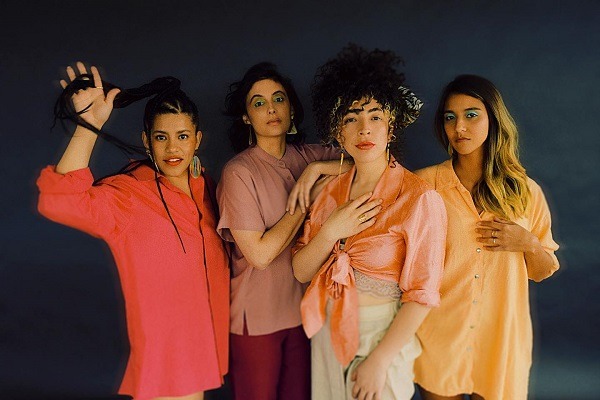
Lulada Club is a group composed entirely of women that plays a good number of Latin music genres such as salsa, bolero, cha cha chá, boogaloo, among others. These girls have a very interesting concept that caught our attention as soon as we checked their social networks, so we decided to get in touch with their director, Andrea Chaparro, who kindly agreed to talk to us and give us more details about the group she leads.   

Andrea Chaparro from Lulada Club
Andrea Chaparro, bandleader of Lulada Club

Name of the orchestra ”Lulada” and how it emerged   

We found the name they chose for the group very curious, so Andrea went on to explain that Lulada is a Colombian drink, specifically Cali (the capital of salsa) that comes from the lulo fruit. She and her partner, who is also part of the orchestra, wanted to pay tribute to this city so important for their careers and for salsa in general.    

The idea came from several sessions and rehearsals in which they were deciding what name to use, but they always knew that they wanted it having to do with Cali. In the end, they thought that ”lulada” sounded very good and mixed the term with ”club”, which originated a result that they all liked.   

Why only girls? 

Andrea recognizes that having a Latin female orchestra is not a novel idea, far from it. In fact, she saw this concept in Cali in several all-female orchestras that have been around for decades, so she wanted to replicate that idea.    

About six or seven years ago, it was when she wanted to create an all-girl group and the opportunity was given to her in the framework of the pandemic. In Colombia, the artist had been playing with other all-male groups, but she began meeting other female musicians and instrumentalists and had the opportunity to organize a group for an event to which she and her saxophonist partner were invited. 

When we wanted to know more about the selection process of the members, Andrea noted that she did a sort of search on Instagram to see their work directly, but several of the girls were brought in and recommended by other members.   

Some of these girls had not had the opportunity to develop their skills because they were always underestimated in the Latin salsa scene for being female or very young, so Lulada Club has been a great opportunity for them to grow and evolve in music.   

Lulada Club and Andrea Chaparro
This is the whole group, Lulada Club

She considers that they have all fit together very well with the group and understand each other perfectly most of the time, which is why she considers that they have been very fortunate to find each other and join their professional lives.    

Andrea and Lulada Club in New York 

At the moment, all of the members of Lulada Club live in New York and have no plans to move to any other place, since their greatest opportunities have been given to them in this city. 

She does say that they are completely open to the possibility of touring both nationally and internationally whenever they find it possible. Indeed, at present, they already have many invitations to attend concerts and festivals in many other cities in the United States, but they will not base the orchestra anywhere else.   

Both Andrea and the rest of the girls feel that their biggest audience is there and many people in positions of power are seeing what they are doing and taking them into account. People, club owners and event organizers have received them with open arms and have taken them into account for events of all kinds.   

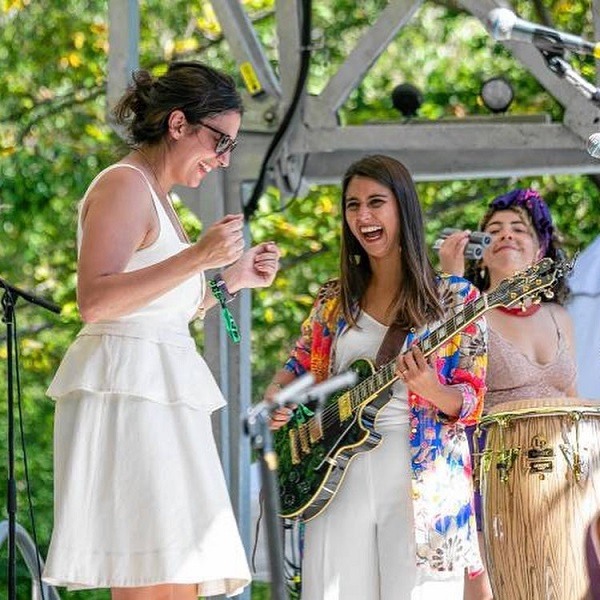
One such event is SummerStage on August 2, whose main attraction will be the maestro Eddie Palmieri, who will be offering one of the last concerts of his career after announcing his retirement. It is a great honor for the girls to be able to open for this world-renowned artist who has contributed so much to salsa and Latin music since his beginnings.    

The news about their participation in the event made them very happy and feel that all their hard work has paid off.    

Andrea Chaparro on stage with Lulada
Andrea Chaparro singing on stage

Genres played by Andrea and Lulada Club   

As we have mentioned at the beginning of this edition, there are several Latin genres played by Lulada Club such as salsa, cha cha chá or boogalo, but each one has its own audience. 

In that sense, Andrea said that they play a lot of hard salsa for dancers and classical music coming from the clubs in Cali. There are certain songs that can never be out of their repertoire such as ”Llorarás” by Oscar D’ León, ”La rebelión” by Joe Arroyo, ”Brujería” by El Gran Combo de Puerto Rico, among others.   

In cases where we get a quieter audience, we can play a bolero or cha cha chá, but everything will depend on the reaction of those present to our performance,” said Andrea on this subject. 

In terms of their original songs, they have two recorded and their names are ”La Palma” ”Lulada ya llegó”, which has been very well received by those who have heard it.    

Undoubtedly, Lulada Club has a lot to offer to the audience and fortunately festival organizers and club owners are realizing the great potential of this group, and every day that passes they are taking more into account in their lineups.    

Read also: Allyson Briggs ”La Rubia de La Salsa” 

Musical director of VibraSÓN Jake Jacobs is here

VibraSÓN is a musical group that makes life in the state of California, specifically in the San Francisco Bay Area, which has become one of the best options for festivals and nightclubs seeking fresh sounds in terms of salsa, swing and Latin music in general.    

I was pleased to know about this great orchestra, its members and sound thanks to its work at Charley’s LG, Bar and Nightclub where Eduardo Guilarte, our editor, was working and directing everything related to the lineups and musical programming for Latin music nights, more specifically on Tuesdays.   

When I made contact, the person who was kind enough to reply was musical director of VibraSÓN. Jake Jacobs, who at the same time works as a producer, percussionist and backing vocalist.    

Jake Jacobs from VibraSÓN
Jake Jacobs, musical director of VibraSON

Talk with Jake Jacobs from the group VibraSÓN   

Jake Jacobs comes from a very interesting background. His first contact with music took place with his father and uncle, both of whom were professional musicians, but Jake says he has always been interested in this world.   

He studied classical piano and music theory at the University of Illinois and took some jazz piano lessons in his passage through the University of California. During these years, the musical director spent roughly 13 hours a day practicing with this instrument to master it as well as possible. 

With time, he became interested in Latin music and dance, which also led him to take dance classes at university. With that knowledge acquired up to that moment, he went to visit New York and his trip coincided with the National Puerto Rican Day Parade (an event held annually in New York and other states to celebrate Puerto Rico and its traditions in the United States). 

This event inspired Jake so much that he returned to the Bay Area with the intention to switch his dance classes to salsa classes. He became so good that he began to teach salsa dance classes himself to numerous students interested in learning these rhythms, something he has been done for over 20 years in widely recognized clubs and dance studios.   

He used to provide these classes twice a week at the Cocomo Club, which was very important at the time and attracted more than 600 people every day. When bands performed live, the future leader of VibraSÓN began to know musicians, who, in turn, gave him music lessons and his first opportunities to play in bands.   


Jake Jacobs with VibraSÓN
Jake Jacobs and the other members of VibraSÓN

Apprenticeships and classes with great musicians 

One of the most impressive credentials that Jake can have is to have studied with some of the best musicians in the San Francisco Bay Area such as Edgardo Cambón, Karl Perazzo, Michael Spiro, Louie Romero, among others. 

Evidently, all these luminaries have taught the producer much of what he knows and applies today, but he ensures that it was not easy to learn from so many ”teachers” at the same time, in both dancing and music performance.   

Ensures that some of the most important things he learned have to do with technique and tips to be applied such as how to play the drums, the notes at the right times, silences and much more. 

He points out that they all taught him valuable and important things, which are still very useful to this day. One of those great lessons was to practice and practice until he achieved the sounds he wanted, especially in Latin music. 

VibraSÓN 

Finally, in 2014, Jake decided it was time to put into practice everything he learned and create his own musical group with his own original details. This is how VibraSÓN came about.    

The origin of his band’s name came from Luis Morales, one of its members. It is based on vibraphone, which is not widely used by the orchestras from the San Francisco Bay Area, but by the dancers and by this new group in their performances. As for the end of the name, it comes from ”son cubano”, a typical genre of the island Jake likes very much.   

Although Club Cocomo unfortunately closed the following year, that didn’t stop VibraSÓN from making its way and becoming one of the most demanded groups in the Bay Area in recent years.   

One of the things that Jake thinks makes his group unique is that there are very few people who use the vibraphone and, due to his training as a dancer, he is always looking to make the most appropriate music for that part of the audience for whom dancing is very important.   

Jake Jacobs in San Francisco
Jake Jacobs performing on stage in San Francisco

How Jake and VibraSÓN read the crowd   

For Jake and the rest of the band, it is very important to read the crowd and see how people react to the music they play at any time. They pay a lot of attention to the dance floor to see what works and what doesn’t with the people they play for that night.   

Having played at clubs such as Charley’s, Bar Fluxus, La Peña Cultural, The Cigar Bar and Space 500, they have prepared a very generous repertoire for each performance. Just as they have written original music, they have also dedicated themselves to perform covers of the most buzzed-about artists in recent times in certain contexts, something that worked out for several orchestras when they need to draw on these resources to entertain the audience.   

This wide repertoire that they now enjoy is what has allowed them to make diverse shows with lots of variety so that those present never get bored, even if they usually go to the same place.   

Another thing they tend to do is add new arrangements and change genres to the covers they do so that they do not sound exactly like the originals and they can inject some of their essence, even if they are not songs written or sung by them originally. ”Even if they are covers, we always try to add our original arrangements so that the dancers enjoy them that much more” said Jake.   

They have also learned to connect with the audience and know what the dancers and the general public want in order to give them exactly what they want. And they did not learn this overnight, but have observed in detail what other orchestras do to imitate what is good and useful.    

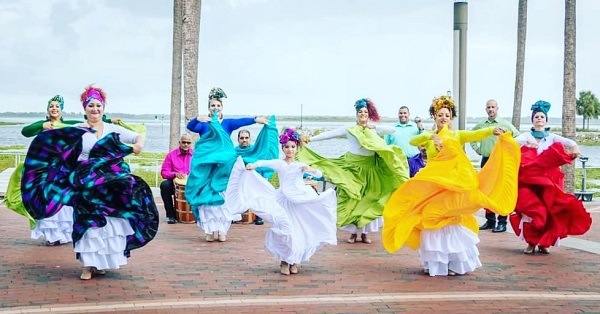
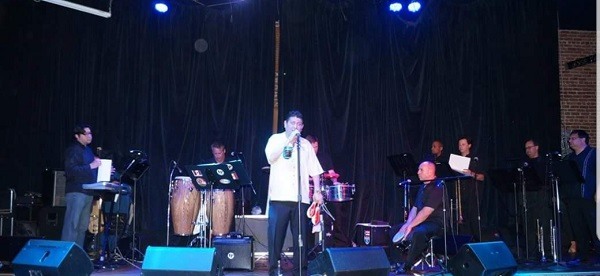
Jake and VibraSÓN on stage
VibraSÓN performing on stage

Tours and future plans of VibraSÓN

At the end of the interesting talk, Jake told us that, for now, they only plan to record new music and other activities that are comfortable for all the members, since many of the musicians are in other orchestras and record for other people, so it is too complicated for them to tour with VibraSÓN. In addition to that, several of them have small children to care for, so it is impossible for them to travel for a long time.   

He is so considerate because he always tries to keep the same members and preserve the unity of the group above all else. It has worked for them, as they have managed to made a name, which will continue to become popular over time. 

Read also: Fausto Cuevas Y La Moderna in International Salsa Magazine 

Carlos Medrano from Sabor De Mi Cuba tells us abut his long musical history

There is a tremendous amount of Cuban artists who have had to fight against economic adversity there is in their country, but this has not prevented them from getting ahead and fulfilling their dream of making a living from their art. One of them is the bandleader of Sabor De Mi Cuba Band, Carlos Medrano, with whom we had the pleasure to talk for this report.    

Carlos Medrano was born in the city of Havana, Cuba, and became interested in music when he was very young. The first instruments with which he began experimenting were the bongo and the conga, which had a huge importance in the training the artist would follow until he became the professional musician he is today. Here are some of the topics we cover in a long but pleasant conversation via Zoom.   

Bandleader Carlos Medrano
Carlos Medrano, bandleader of Sabor De Mi Cuba

Topics covered with Carlos Medrano 

When talking about his first experiences with music, Carlos told us he has always been surrounded by musical sounds since his childhood, which was spent in the neighborhoods of El Vedado and Old Havana.    

When he lived in El Vedado, his grandfather used to make poetry and do recitations, while he accompanied him with the drum, but he was in more direct contact with the musical world in Old Havana, a place where there were many rumberos and renowned musicians who were always playing in those parts.   

A very young Carlos always saw comparsas and street concerts from her home window and people always joined them making sounds with bells, pans or anything they had. 

During the decade of the 90’s, Cuba saw a big boom in tourism, resulting in the appearance of numerous traditional Cuban music groups and the cafes and clubs in the area were filled with sextets with professional musicians. They were looking to play in these places to get tips from tourists and have travel and employment opportunities,” said Carlos.    

I always looked at the work these artists were doing, especially tres players and bongos players. That’s how I learned to play the bongo: by watching and listening to what others were doing. I tried to imitate the sounds they made with a metal bucket or whatever I had at home to learn”, he continued.    

Carlos Medrano on stage
Carlos Medrano performing on stage with his band

Professional training of Carlos Md¡edrano and and limitations found 

After junior high school, he met a friend of his father who would be key in his training as an artist and his name is José Antonio Oviedo. Although his father saw no problem in this fascination of Carlos with music, he always told him not to drop out of school and to pursue a university career. 

When he began taking lessons with José Antonio, the level of demand was such that he felt he was in a formal school. He taught him to read music in a way that had nothing to envy to an art institute, which Medrano will always be very grateful for. 

In addition to that, near his home, there is a sector called ”Cueva De Humo” where there are excellent musicians and rumberos. It was there that Carlos got to meet Juan Ernesto Santana, Ernesto Gatel Coto from Rumberos de Cuba and many more. ”I was lucky that most people liked me and they always explained to me everything I needed to play as it should be” he added.   

With all these insights, there came a point when he decided to devote himself to the world of music and put aside other ambitions he had such as studying law, which was a shock to his family at the time. 

That is when his mentor José Antonio did the necessary procedure for him to present the Escuela de Superación Profesional de Arte “Felix Varela y Morales” admission exam, which he passed without major setbacks thanks to his training up to that point. 

Although his admission to the institution was relatively simple, it was not long before Carlos faced another equally difficult challenge: getting the necessary resources and instruments to receive a good training. 

”I didn’t have my own instruments until I started playing professionally with maestro Orlando Sánchez. I had my first bongo thanks to my father’s friends, who helped me to have my own things, but that never limited me” said the percussionist on this topic. 

In a time of so many shortages, it was clearly not easy to study, but Carlos was always looking for ways to fulfill his activities, whether it was raising money, borrowing instruments, practicing with other similar implements, sharing school instruments with his classmates, among other things.    

Carlos Medrano paying the drums
Carlos Medrano playing the drums on stage

Great inspirations and mentors   

One of his biggest inspirations was his cousin Stanley, who was a professional percussionist. He always advised Carlos to never classify himself in one instrument, but to always learn to play a little bit of everything to become a needed man, so that bands would always consider him for their tours and projects.    

Another of the great mentors he had has been Ignacio Jarabe, who has taught him many of the best ”tricks” a percussionist may need when playing one of these instruments. ”I still have solo sheet music that he wrote and some of his book manuscripts, which I don’t know if they were ever published, but they are still important reference sources for me”, said Carlos about Jarabe. 

We cannot forget to mention percussionist Eliel Lazo, with whom Carlos had amazing chemistry from the beginning. Lazo had contact with the best AfroCuban jazz musicians of the time and came to travel to many places thanks to his training in percussion instruments, which inspired Medrano to follow in his footsteps. After about one year of studying with this great musician, he was able to perform at La Fiesta Del Tambor and went on to be a finalist in several categories.   

Once he started plating professionally, the first person to call him was the maestro Orlando Sanchez, who in addition to offering him his first formal opportunity in this field, taught Carlos many other things which he had not learned so far. He has him up on a pedestal and thanks him for everything he has learned. 

Another person to whom the artist is very grateful is José Luis Quintana, better known as Changuito, who told him that ”the good conga player has to listen to the orchestra. You have to be able to hear the piano, the bass and the other instruments. You have to look for your space between the rest of the musicians”.   

Another important figure who cannot be left out is Yaroldy Abreu, a mmusician who spent hours rehearsing with Carlos at his house. They focused a lot on technical and creative resources during these classes. Medrano considers him one of the best percussionists and musicians in the world due to his extensive knowledge in every field of music.  

Carlos recording at home
Carlos Medrano recording music at home

Sabor De Mi Cuba   

It all started with a contest called ”Joyas” which specializes in promoting young Cuban talents who present their art to a qualifying jury and seek to carve a name for themselves in the industry.    

Carlos was fortunate that one of the judges told him and drummer Pablo Calzado ”you two shall go along with me”. The artist spent some time working with this person, who took him to play in other orchestras so that he could learn from the best until developing his own style.  

This happened after he moved to the United States and was still acquiring experience with other musical groups. That is when he realized he wanted to do things in a different way and get involved in other genres and rhythms that he had not tried before.    

There came a day when a bass player friend of his told him that if he wanted to come up with his original ideas, he had to embody them himself and not wait for others to do it. Carlos never saw himself creating his own band, but he decided to began composing his own music and he succeeded. 

Then, he started writing usic, contacting great arranger friends of his who helped him reassemble the idea of what he wanted to do. Once he had a repertoire, they advised him to record an album and give life to everything he had done, which gave birth to his first album ”Sabor De Mi Cuba”. 

The first song he wrote in his life was called ”La Habana” and was basically inspired by everything Carlos lived in his country and the longing he feels for not being able to be in his country, walk its streets, party with his friends, visit its special places, among other things. What he relates there is his life in the city where he was born and his desire to be able to go back there. 

His main motivation to make the album was the possibility of doing something different from anything he saw in the music scene around him at the time.   

Carlos does not think of himself as a professional composer, far from it, as he feels he still has a lot to learn in that field, but he hopes to reach the level of the artists who inspired him in his youth.   

Read also: Héctor “Rudy” Regalado and his great career 

Jerry Rivas, career, and support for the Spaha Salsa Gallery Museum

The Spaha Salsa Gallery Museum has been the recipient of a good number of objects donated by artists and their families after they had died. This time, it is the turn of Jerry Louis Díaz Rivas, better known as Jerry Rivas in the music scene, who is one of the main singers of El Gran Combo de Puerto Rico.   

We want to use his pleasant visit to our museum and his forty-sixth anniversary with El Gran Combo to talk a little about his great career and everything achieved in his long musical career over the past decades.   

Jerry with Johnny
El Gran Combo De Puerto Rico singer Jerry Rivas and Johnny Cruz

Life and career of Jerry Rivas   

Jerry Diaz was born in the city of Tampa, United States, on August 25, 1955 and his parents were of Puerto Rican origin, so it is undeniable that Puerto Rican heritage greatly influenced the path he would take later on.   

About five years later, Jerry and his family moved to the city of Bayamón, Puerto Rico, where he began to take his first steps in the world of music with the guitar, the Puerto Rican cuatro and the Cuban tres, counting on the support of professor Carlos Seguí to learn to play the latter. However, shortly after, he would decide that singing was his thing. 

While still a young teenager, he was part of various groups such as Grupo Complicación, Conjunto Cojoba and Grupo Chaney, being in all cases a very important part of the body of musicians who were in these bands.   

His big great came in 1976 when Don Rafael Ithier, who was interested in the artist to be part of El Gran Combo De Puerto Rico, after he was recommended by Don Quique Lucca, who thought of this boy as replacement of the legendary Andy Montañez, singer of the group for more than 14 years.   

Jerry signing a tres
Jerry Rivas signing the Cuban tres he donated

Although it was not believed that Jerry could fill the shoes of his predecessor, his talent, effort and support from the music director of the orchestra, made him consolidate in the institution along with the rest of his colleagues and become one of the longest-serving members of El Gran Combo. 

International fame came with the album ”El Gran Combo En Las Vegas” thanks to the song ”La Clave”, in which he proved his vocal abilities to new levels. After that, he achieved his consecration as an international star with the album ”Happy Days” thanks to the song ”El Menú”.   

After that, everything that followed for Jerry was success with the orchestra, which resulted in approximately 30 recordings in a span of 45 years with El Gran Combo de Puerto Rico, his musicians and the extraordinary team behind the group.    

Other details of his life and support to the Salsa Museum  

In addition to being a vocalist for El Gran Combo de Puerto Rico, Jerry also participated in backing vocals with other great musicians for their respective musical works such as Willie Rosario, Bobby Valentín, Yuri Buenaventura, Gilberto Santa Rosa, La Sonora Ponceña, Adalberto Santiago and many others.   

Jerry with Johnny and the tres
Jerry and Johnny with the tres and the jacket Jerry donated to the museum

In each of these projects, the Puerto Rican artist has always given his personal touch and his unmistakable vocal chords, so it is normal that he is considered a legendary voice within the salsa movement not only in his country, but also worldwide.   

Due to all of the above, it is a true honor for the Spaha Salsa Gallery Museum to receive this great musical luminary in its facilities, where he was welcomed by its president and founder, Mr. Johnny Cruz. 

Some photos on the Cruz’s official Facebook page, it is evident that both shared a very pleasant time remembering things from the past and talking about music. In addition, Jerry donated one of his shirts and a Cuban tres to the museum so that they can be exhibited to the public along with the rest of the objects in its collection.   

We thank Jerry for his kindness, generosity and great talent, which we hope will continue to accompany us in the years to come. 

Read also: Tommy Olivencia Jr’s career and support for the salsa museum 

  • « Go to Previous Page
  • Page 1
  • Interim pages omitted …
  • Page 41
  • Page 42
  • Page 43
  • Page 44
  • Page 45
  • Interim pages omitted …
  • Page 57
  • Go to Next Page »

International Salsa Magazine (ISM) is a monthly publication covering salsa activities around the world and has been publishing since 2007. It is a worldwide network of volunteers coordinated by ISM Magazine. Together, we work to strengthen salsa events around the world.