• Skip to primary navigation
  • Skip to main content

International Salsa Magazine

  • HOME
  • Previous editions
    • 2026
      • ISM / May 2026
      • ISM / April 2026
      • ISM / March 2026
      • ISM / February 2026
      • ISM / January 2026
    • 2025
      • ISM / December 2025
      • ISM / November 2025
      • ISM / October 2025
      • ISM / September 2025
      • ISM / August 2025
      • ISM / July 2025
      • ISM / June 2025
      • ISM / May2025
      • ISM / April 2025
      • ISM / March 2025
      • ISM / February 2025
      • ISM / January 2025
    • 2024
      • ISM / December 2024
      • ISM / November 2024
      • ISM / October 2024
      • ISM / September 2024
      • ISM / August 2024
      • ISM / July 2024
      • ISM / June 2024
      • ISM / May 2024
      • ISM / April 2024
      • ISM / March 2024
      • ISM / February 2024
      • ISM / January 2024
    • 2023
      • ISM / December 2023
      • ISM / November 2023
      • ISM / October 2023
      • ISM – September 2023
      • ISM – August 2023
      • ISM July 2023
      • ISM Edition June 2023
      • ISM – May 2023
      • ISM April 2023
      • ISM March 2023
      • ISM February 2023
      • ISM January 2023
    • 2022
      • ISM December 2022
      • ISM November 2022
      • ISM October 2022
      • ISM September 2022
      • ISM August 2022
      • ISM July 2022
      • ISM June 2022
      • ISM May 2022
      • ISM February 2022
      • ISM January 2022
    • 2021
      • ISM December 2021
      • ISM November 2021
      • ISM October – 2021
      • ISM September 2021
      • ISM August 2021
      • ISM July 2021
      • ISM May 2021
      • ISM April 2021
      • ISM June 2021
      • ISM March 2021
      • ISM February 2021
      • ISM January 2021
    • 2020
      • ISM December 2020
      • ISM November 2020
      • ISM October 2020
      • ISM September 2020
      • ISM August 2020
      • ISM July 2020
      • ISM June 2020
      • ISM May 2020
      • ISM April 2020
      • ISM March 2020
      • ISM February 2020
      • ISM January 2020
    • 2019
      • ISM December 2019
      • ISM November 2019
      • ISM October 2019
      • ISM Septembre 2019
      • ISM August 2019
      • ISM July 2019
      • ISM June 2019
    • 2016
      • ISM December 2016
  • Spanish
  • Download Salsa App
    • Android
    • Apple

November

Andrés Cepeda & Mike Bahia Artists in November of HTV

North America / USA/ Miami
Andrés Cepeda & Mike Bahia

With a history of over 15 years, Colombian singer- songwriter Andrés Cepeda and Mike Bahia, representative of the urban genre, exclusively relate their experiences with each of their productions and the musical genres for which they have traveled.

Andrés Cepeda

Andrés Cepeda
Andrés Cepeda

The Colombian singer Andrés Cepeda, has been one of the most renowned artists of Latin American music scene. This Latin Grammy winner has been wowing his audience with his successes year after year since he began his career. The Colombian began his single career in 1999 releasing a first album: “Sé morir” disc in just one month received platinum status, framing in nearby rhythms like pop, bolero and the ballad.

In 2001 he released his second production, “El Carpintero”, for which he received double platinum.

In 2002 he published “Para amarte mejor”. This production was the first of that kind in Colombia. In 2005 he presented his work “To better love”. This album received platinum disc for sales in Colombia.

1- Andrés Cepeda
1- Andrés Cepeda

In 2007 he released a remake of “Para Amarte Mejor” in which two new songs he composed with master Jorge Luis Piloto included: “Pronóstico” and “Si fueras mi enemigo” songs that gave him international recognition and won him Latin Grammy nomination for Best Male Pop Album … “Día tras día” became after its launch in 2009, one of the most successful albums of his career, receiving gold and platinum discs.

This gave rein to that was nominated this year in three of the most important categories of the Latin Grammy Awards: Song of the Year, Album of the Year and Best Male Pop Vocal Album.

2- Andrés Cepeda
2- Andrés Cepeda

In 2012 Andrés Cepeda presented to the public his seventh album “Lo major que hay en mi vida.” Cepeda received four nominations for this album by The Latin Recording Academy, taking for the first time Latin Grammy in the category “Best Traditional Pop Vocal Album”.

He was joined for this award three prizes that gave the Nuestra Tierra 2013 Awards in the categories Best Album of the Year, Best New Artist and Best Pop Performance. Additionally, he received double platinum. In 2015 he released his latest production, “Mil Ciudades” album that featured the participation of leading industry figures.

Andrés Cepeda flyers

Mike Bahia

Mike Bahia
Mike Bahia

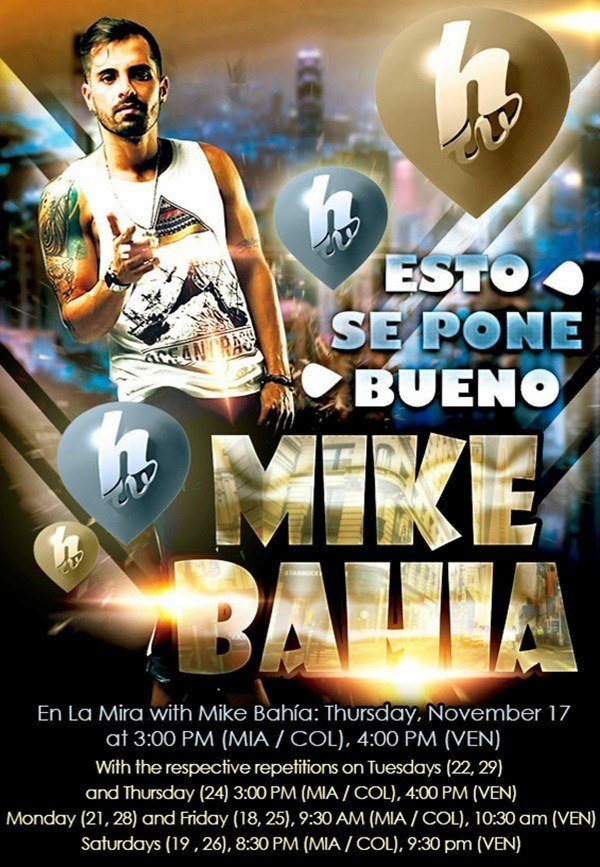
Meanwhile, in the second installment of HTV En La Mira of the month arrives on Thursday, November 17 the reggaetonero, Mike Bahia, one of the great musical promises of the moment.

1- Mike Bahia
1- Mike Bahia

Bahía had already begun his career by participating in the reality show “La Voz Colombia” (second edition), where he was a pupil of Fanny Lu. Then he debuted as a soloist in 2014 with the single ‘Buscándote’, a song produced by Montana The Producer (who worked for J Alvarez and Chris G), Juan Jhail (who collaborated on projects Kevin Roldan and alkylated) and Ronny Watts (alkylated and Hernán Saraza).

2- Mike Bahia
2- Mike Bahia

Later in his still brief career, Mike Bahía launched four singles: “Estar Contigo” (2014), ‘Buscándote (remix)’, ‘Tarde’ and ‘La Muñeca’ (all 2015). The latter will integrate the first album of Mike, which will be called ‘Soy Yo’. Mike himself wrote ‘La Muñeca’ in collaboration with Juan Jahil and Juan Gálvez, alkylated vocalist.

3- Mike Bahia
3- Mike Bahia

4- Mike Bahia
4- Mike Bahia

For his part, the director Nuno Gomez, who worked with alkylated in several videos, directed the clip in various locations in Venezuela. So you know, do not miss these two artists and enjoy their confessions in HTV because HTV it gets good!

Mike Bahia flyers
Mike Bahia flyers

Ismael Miranda

North America / USA / New York

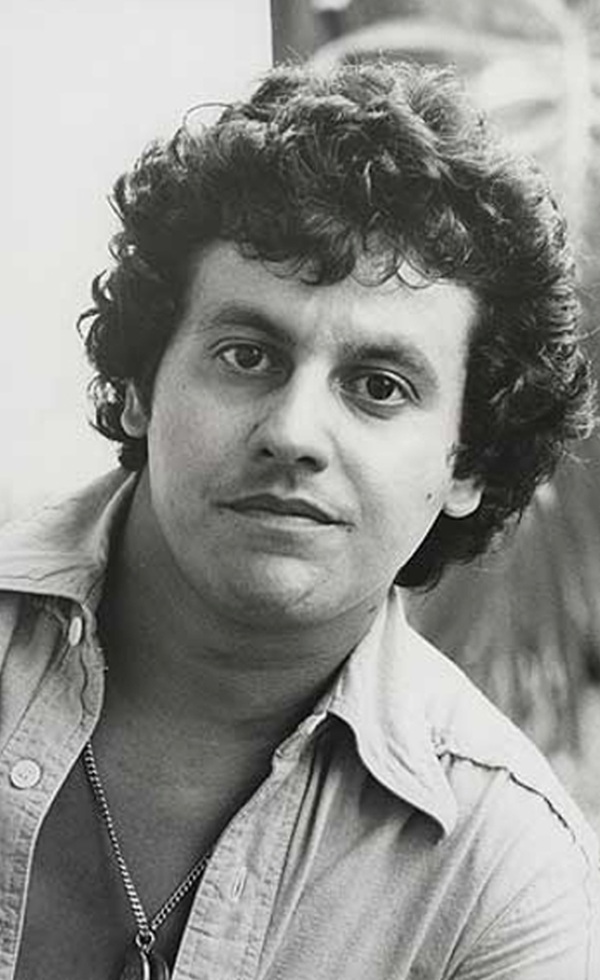
Ismael Miranda was born in the village of Aguada, Puerto Rico, on 20 February 1950. At an early age he moved to New York, where he began his passion for music. In 16, he recorded his first hit song “Rumbón melon” with Joey Pastrana. Then, he became part of the Orchestra Harlow in 1967, with which he achieved success of the song “Abran Paso”.

Ismael Miranda
Ismael Miranda

Ismael Miranda - Photo
Ismael Miranda – Photo

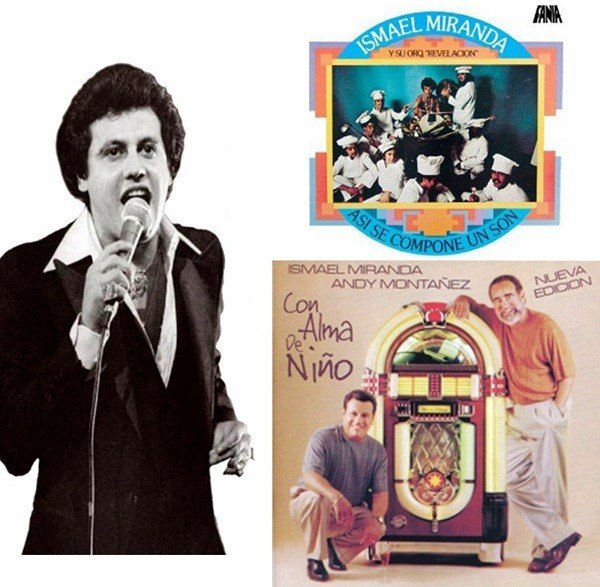
Ismael dabbled solo in 1972, with a new production called “Opportunity”. He also formed his own band called “The Revelation” and recorded another CD called “Así se compone un son”. In addition to having other notable songs, the title track was a resounding success in Latin America, the United States and Europe. The next year saw the light the album In Fa Menor, appearing again the song of the same title, “In Fa Menor”, among other successes.

Miranda continued producing hits, with songs such as “Borinquen tiene Montuno”, “La Cama Vacía”, “La Copa Rota”, “Como Mi Pueblo” y “Las Cuarentas; all were widely broadcast radio media. His compositions also achieved success with pieces like “Señor Sereno”, “Abren Paso”, “Lupe, Lupe” and “Pa ‘Bravo Yo” song made famous by the Cuban salsero, Justo Betancourt.

Ismael Miranda - Collash
Ismael Miranda – Collash

In 1974, the founders of the Fania, Jerry Masucci and Johnny Pacheco, asked Ishmael to form part of the Fania All Stars, where he was dubbed “El Niño Bonito de la Salsa” by being the youngest of all members. In the 80’s, he found success with the Fania, such as “No me digan que es muy tarde” and “Galera tres.”

Also, Ismael created his own label, under which he recorded several productions, including “Por el buen camino”, of which the theme “Careta” was a hit in 1985, plus two holiday productions. The early stage salsa enjoyed its best, and the debut of Miranda with his own band, Orquesta Revelation, could not be timelier.

Ismael Miranda - Photo 1
Ismael Miranda – Photo 1

For 2000, Ismael recorded several productions under the direction of Gilberto Santa Rosa, titled “Vengo con todo”, “Tequila and ron” (which was nominated for a Grammy in 2003), and “Special Edition”. At 2005, reached #1 on the Billboard chart, with the theme “Se fue y me dejó” with Andy Montanez and Cheka, produced by Sergio George. In 2007, he recorded his first Christian production called “Buscando el Camino” in which the theme “Como el Águila” achieved great success. In 2008, he launched the production called “De regreso al son”. For 2011, Ismael recorded his second Christian production “Aferrado a ti”, which issues “Francotirador” and “Sabes que te amo” were big hits.

Ismael Miranda - Photo 2
Ismael Miranda – Photo 2

In 2014, after a successful tour to mark its 45th anniversary in the Salsa, Ismael met with Victor Manuelle, to whom he delegated the production of his latest album “Son 45”. This production is very modern, but retains the classical influence of salsa, and has proven to have the support of the whole public salsero. From his first days on the market, this new album, started climbing positions in the lists of the prestigious music magazine Billboard, with the theme that gives the name to the album “Son 45”.

Ismael Miranda - Photo 3
Ismael Miranda – Photo 3

Entered 2015, The Pretty Boy of Salsa positioned in the first place with the same subject, under the category “Air Play” magazine, the second member of the Fania All-Star to reach the #1 position for the second time, place before conquered only by the Guarachera del Mundo, Celia Cruz. Ismael made history again when launching his second promotional theme of this production, “Bajo, piano and bongo” again ranked at #1 on the Billboard charts in the same category, becoming the most #1’s has reached among members of Fania. As if that were not enough, this production has also been nominated for a Latin Grammy in the category “Best Salsa Album”.

Ismael Miranda - Photo 4
Ismael Miranda – Photo 4

During the course of his great career, Miranda has recorded more than 20 albums and has performed with notable artists such as Nicky Marrero, Hector “Bomberito” Zarzuela, Reinaldo Jorge, Ismael Quintana, Willie Colon, Ray Barreto and Luis ‘Perico’ Ortiz.

Ismael Miranda - Flyers
Ismael Miranda – Flyers

Subrosa

North America / USA / New York
Subrosa - Photo 1
Subrosa – Photo 1

Greetings to our loyal readers. This time we bring you an excellent nightclub that is well worth visiting. It is located in the city of New York and is open daily at the following times: Monday – Friday from 18:00 to 23:00 and Saturday-Sunday: 18:00-03:00

Subrosa besides having a magnificent location, its recreational areas are unsurpassed. It has an eclectic listening room dedicated to raising awareness of the music, art and culture. Also has live music every night with the best Latin and international artists and similarly has an intimate atmosphere for musicians and fans alike.

Subrosa - Photo 2
Subrosa – Photo 2

The main features of this nightclub are:

Subrosa besides having a magnificent location, its recreational areas are unsurpassed. It has an eclectic listening room dedicated to raising awareness of the music, art and culture. Also has live music every night with the best Latin and international artists and similarly has an intimate atmosphere for musicians and fans alike.

Subrosa - Photo 3
Subrosa – Photo 3

Capacity to accommodate 150 people. Special creative cocktails with names of different cities in South America and Europe that will give you an extra sensory journey of flavors. The decor is industrial and modern. Magnify state of the art sound and lighting.

So you know if you’re in New York City and do not know where to go dancing Latin music, decide by Subrosa. You will not regret!

And finally, a varied food service. They Have an extensive dinner menu from the popular Bocata Beefsteak (Sirloin Steak Sandwich, Swiss Cheese, Charred Onions, Tomato, Spicy May) with a Salad of Palm (Salad, Carrots, Hearts of Palm, Avocado, Corn with Lemon Dressing) to one delicious Dessert (Chocolate Mousse Flan or Spanish)

Subrosa - Photo 4
Subrosa – Photo 4
  • Address: 63 Gansevoort Street, New York, NY 10014
  • Social Menu: subrosanyc.com
  • Twitter e Instagram: @SubrosaNYC
  • Facebook: Subrosa

70th Anniversary of the Sonora Ponceña at the Roberto Clemente Coliseum

Major guests joined the historic Sonora Ponceña concert, which was held on Saturday, November 1, 2025, at the Roberto Clemente Coliseum in San Juan, Puerto Rico, to mark the 70th anniversary of the musical career of one of the most important orchestras in the salsa scene.

The concert kicked off with a performance by the virtuoso timbalero, singer, and orchestra director Manolito Rodríguez. His orchestra, La Zónika, set the venue on fire with refreshing versions of ‘Encántigo’, ‘Sin tu cariño’ (Without Your Love), ‘Nina’, ‘Antillana’, ‘Maestro de rumberos’ (Master of Rumba Dancers), and ‘Piano man’. It’s worth noting that Manolito was part of “La Ponceña” from 2004 until the end of 2007.

Once La Zónica had warmed up the coliseum stage, the Sonora Ponceña began to deliver its repertoire, which included ‘Prende el fogón’ (Light the Stove), ‘Ñáñara cai’, ‘Ramona’, ‘Boranda’, ‘El rincón caliente’ (The Hot Corner), ‘Tumba Mabó’, and ‘Las mujeres son de azúcar’ (Women Are Made of Sugar) sung by Daniel Dávila; ‘Como amantes’ (Like Lovers), ‘Como te quise yo’ (How I Loved You), ‘Sigo pensando en ti’ (I Keep Thinking of You), ‘Timbalero’—which allowed the timbal player to dedicate himself to the instrument with a spectacular solo, ‘Fuego en el 23’ (Fire in ‘23), and ‘Luz negra’ (Black Light) performed by Darvel García. In fact, shortly after Darvel performed ‘Como amantes’, he was in charge of welcoming the pianist, composer, arranger, and director of the Sonora Ponceña, Papo Lucca, who enjoyed the concert from the stage in a wheelchair.

Omar Ledée, uno de los invitados de la Sonora Ponceña Foto By Conrado Pastrano

The rotation of the repertoire allowed for a dynamic interspersing of performances by the guests whom the concert production granted access to the celebration.

With 90 years of sabor (flavor/soul) and salsa, Luigui Texidor, who left the Sonora Ponceña in 1973, returned smiling and grateful. Texidor, who recently received the welcomed honor of seeing his name mark the street leading to Colonia Las Flores in Santa Isabel, his hometown, sang ‘El pío pío’, ‘Bomba carambomba’, and ‘Noche como boca de lobo’ (Night Like a Wolf’s Mouth / Pitch-Black Night).

Sharing that same celebratory vibe, one of the most remembered voices of “Los gigantes del sur” (The Giants of the South), Yolanda Rivera, who was part of “La Ponceña” until 1982, was heard. Rivera proudly recalled her seven years as a member of the orchestra while thanking the invitation to the historic concert, where she performed ‘Hasta que se rompa el cuero’ (Until the Skin Breaks), a track that featured a powerful bongo solo.

Omar Ledée performed ‘Remembranzas’ (Remembrances), originally recorded in the voice of his father, the late and ever-remembered Toñito Ledée, whom Omar represented in a heartfelt posthumous tribute.

Another fan favorite of the Sonora Ponceña followers is Pichie Pérez, who joined the group in 1983 “in substitution of Miguelito and Yolanda.” The singer performed ‘Te vas de mí’ (You Leave Me) and the updated version of an emblematic track, which for the celebration was titled ‘Jubileo ‘70’ (Jubilee ‘70), and which Pichie himself describes as “one of ‘La Ponceña’s’ iconic tracks and the first unreleased track I recorded.” The vocalist was associated with the orchestra for three decades, from 1983 to 2013. Since his departure, he has been promoting his solo career, making this the first time in 12 years he was heard live with his “alma mater” orchestra.

Orquesta La Zónika de Manolito Rodríguez, abriendo el espectáculo Foto By Conrado Pastrano

Wito Colón, who left the Sonora Ponceña 15 years ago, arrived ready to sing ‘Hachero pa’ un palo’, ‘Vas por ahí’ (You Go Around), ‘Yaré’, ‘Yambeque’which interspersed a powerful tumbadora (conga) solo, and ‘Sola Vaya’ (Go Alone), the latter song performed with Daniel Dávila and Darvel García. The vocalist was hailed by concertgoers as “the champion of the night” for his vocal power, as well as his charisma before the ardent audience.

Undoubtedly, it was an unforgettable night.

Bella Martinez Puerto Rico


Also Read: Bella Martinez, the irreverent Salsa writer

Spain is reborn in new Cuban music by Yalil Guerra

The immense Hispanic legacy is usually relegated to the background, while being a key part of our sound identity.

Reference Image about Spain
Reference Image
Yalil talking about Spain
Composer, bandleader, and Latin GRAMMY winner Yalil Guerra.
Image courtesy of RYCY Productions

By YALIL GUERRA

The birth of the Cuban nation, after gaining its independence from its former colonizer, Spain, marked a break that transcended political concerns and entered strongly in the cultural aspect. Cubans were “denaturalized” after the Treaty of Paris in 1898, leading to a profound metamorphosis of identity that was inevitably reflected in our music. Out of that process a fresh and powerful sound expression emerged: a vibrant fusion between European, African, and North American influences, something that had already begun in the 19th century but was driven by a growth music industry and the cultural magnet of its northern neighbor, the United States.

For years I have listened to, studied, and enjoyed Cuban popular music — both the old and contemporary— and what I notice is that most productions tend to highlight the folklore—especially the Afro-descendant roots and the imprint of jazz — while the immense Hispanic legacy is usually relegated to the background, while being a key part of our musical identity.

In Cuban music today, both on and off the island, the record business is committed to a modern and bold sound. Compositions explore contemporary harmonies, bitonality, and extended chords — resources that come from both classical music and jazz — entwined with surprising and refreshing harmonic cycles. In wind instruments, melodic lines and musical motifs reveal the virtuosity and creativity of a new generation of musicians and arrangers, who are raised in solid academic traditions but open to global influences. The percussion stands out for its polyrhythm and the number of sophisticated tutti that require a unique expertise, but the Spanish influence is quite absent or just present in the language.

In contrast, What caught my attention was the newest music of singer, composer, and multi-instrumentalist Alain Pérez on his new album Bingo, where Spain resonates powerfully and recognizably. I find this gesture very special, as it vindicates a Spanish legacy in Cuban music that is often forgotten or minimized. I also highlight the case of pianist and composer José (Pepe) Rivero and his new album Estampas y Raíces where he pays tribute to classical Spanish composers, mixing their works with his unique interpretive style, bringing it closer to the language of Cuban jazz that is so familiar to him.

What about the large mass of Cuban artists and musicians who do not pay homage to the mother country? It is that we lost our historical memory or has it been erased? Is the omission of certain elements of our Spanish traditions a symptom of what some call the “Spanish Black Legend,” a myth that has seeped into our musical history and present?

I remember when Juan Perón said:

“And through the figure and work of Cervantes, Argentina pays tribute to the mother country, fruitful, civilizing, eternal, and to all peoples who have emerged from its maternal womb.” “And through the figure and work of Cervantes, Argentina pays tribute to the mother country, fruitful, civilizing, eternal, and to all peoples who have emerged from her maternal womb.”

Cuba is no exception.

Over the years, in response to the previously exposed, I have tried to make Spain present in my work: incorporating harmonious colors, Andalusian cadences, and the Phrygian mode—so tied to the Iberian sound—creating compositions devoted specifically to Spanish culture, especially my new string quartet entitled “Noches de España”, following the line of our great composer Ernesto Lecuona, who knew how to bring to life both African and Spanish things. As for me, I seek to keep alive that heritage and project it onto 21st-century Cuban music, without forgetting our important African legacy.

Today, rescuing the Spanish heritage in Cuban music is not just an act of memory: it is also an opportunity to rediscover the richness of crossbreeding that continues to define who we are and how our history sounds. Contemporary Cuban music not only looks to the future: it sings to its African roots, but it also needs to reconnect with that other essential part of our identity. After all, we think, love, and communicate in Spanish. Every note, every guitar or lute that sounds, will evoke that heritage and bring us near to the fullness of what we are.

It does not matter the color our skin is, or whether our grandfather was from Asturias or the Congo: cultural fusion is what forged our identity and will remain the essence of Hispanic America. Mexican writer, philosopher, and politician José Vasconcelos said: “I am Hispanic, and nothing about Hispanic is alien to me.”

At this crucial time, Cuban music has the challenge—and the opportunity—to sing its entirety. And in doing so, it shows us that, beyond styles or labels, what unites us is the sound of a common history.

DMA Yalil Guerra

Read also: Yalil Guerra and the musical roots of his talent

  • « Go to Previous Page
  • Page 1
  • Page 2
  • Page 3
  • Page 4
  • Interim pages omitted …
  • Page 17
  • Go to Next Page »

International Salsa Magazine (ISM) is a monthly publication about Salsa activities around the world, that has been publishing since 2007. It is a world network of volunteers coordinated by ISM Magazine. We are working to strengthen all the events by working together.