• Skip to primary navigation
  • Skip to main content

International Salsa Magazine

  • HOME
  • Previous editions
    • 2026
      • ISM / August 2026
      • ISM / July 2026
      • ISM / June 2026
      • ISM / May 2026
      • ISM / April 2026
      • ISM / March 2026
      • ISM / February 2026
      • ISM / January 2026
    • 2025
      • ISM / December 2025
      • ISM / November 2025
      • ISM / October 2025
      • ISM / September 2025
      • ISM / August 2025
      • ISM / July 2025
      • ISM / June 2025
      • ISM / May2025
      • ISM / April 2025
      • ISM / March 2025
      • ISM / February 2025
      • ISM / January 2025
    • 2024
      • ISM / December 2024
      • ISM / November 2024
      • ISM / October 2024
      • ISM / September 2024
      • ISM / August 2024
      • ISM / July 2024
      • ISM / June 2024
      • ISM / May 2024
      • ISM / April 2024
      • ISM / March 2024
      • ISM / February 2024
      • ISM / January 2024
    • 2023
      • ISM / December 2023
      • ISM / November 2023
      • ISM / October 2023
      • ISM – September 2023
      • ISM – August 2023
      • ISM July 2023
      • ISM Edition June 2023
      • ISM – May 2023
      • ISM April 2023
      • ISM March 2023
      • ISM February 2023
      • ISM January 2023
    • 2022
      • ISM December 2022
      • ISM November 2022
      • ISM October 2022
      • ISM September 2022
      • ISM August 2022
      • ISM July 2022
      • ISM June 2022
      • ISM May 2022
      • ISM February 2022
      • ISM January 2022
    • 2021
      • ISM December 2021
      • ISM November 2021
      • ISM October – 2021
      • ISM September 2021
      • ISM August 2021
      • ISM July 2021
      • ISM May 2021
      • ISM April 2021
      • ISM June 2021
      • ISM March 2021
      • ISM February 2021
      • ISM January 2021
    • 2020
      • ISM December 2020
      • ISM November 2020
      • ISM October 2020
      • ISM September 2020
      • ISM August 2020
      • ISM July 2020
      • ISM June 2020
      • ISM May 2020
      • ISM April 2020
      • ISM March 2020
      • ISM February 2020
      • ISM January 2020
    • 2019
      • ISM December 2019
      • ISM November 2019
      • ISM October 2019
      • ISM Septembre 2019
      • ISM August 2019
      • ISM July 2019
      • ISM June 2019
      • ISM May 2019
      • ISM April 2019
      • ISM March 2019
      • ISM February 2019
      • ISM January 2019
    • 2018
      • ISM December 2018
      • ISM November 2018
      • ISM October 2018
      • ISM September 2018
      • ISM August 2018
      • ISM July 2018
      • ISM June 2018
      • ISM May 2018
      • ISM April 2018
      • ISM March 2018
      • ISM February 2018
      • ISM January 2018
    • 2017
      • ISM December 2017
      • ISM November 2017
      • ISM October 2017
      • ISM September 2017
      • ISM August 2017
      • ISM July 2017
      • ISM June 2017
      • ISM May 2017
      • ISM April 2017
      • ISM March 2017
      • ISM February 2017
      • ISM January 2017
    • 2016
      • ISM December 2016
      • ISM November 2016
      • ISM October 2016
      • ISM September 2016
  • Spanish
  • Download Salsa App
    • Android
    • Apple

October

The great ‘Soneros Summit’ in Barranquijazz – Courtesy of Radio Nacional de Colombia

Latin America / Colombia / Barranquilla

Courtesy of Radio Nacional de Colombia of the Barranquijazz  2018 for International Salsa Magazine.

This is how the great ‘Cumbre de Soneros’ was lived in Barranquijazz this 15th of Sep-2018.

In a special gala that included the participation for the first time of the Antonio Arnedo Quintet, a determining musician in the languages ​​of Colombian jazz, in which he magnificently managed to introduce the public on a journey through the traditional sounds of the different regions of Colombia under that concept that has come to be known as World Jazz, the atmosphere was warming up for the enjoyment of one of the most vibrant nights of Barranquijazz 2018.

Photo of The great Soneros Summit in Barranquijazz

The first of the protagonists of the summit to go on stage was Hermán Olivera, the so-called ‘Sonero of the 21st century’, who demonstrated that he is indeed “the bridge between yesterday and today”, as he says in one of his proclamations in ‘ The heir to flavor’, a piece included on his solo album ‘La voz del Caribe’, a nickname given to him some time ago by Eddie Palmieri, the leader of the orchestra in which Herman has been a member for more than 20 years.

Then it was Ray de la Paz’s turn, who raised the level of the public’s enthusiasm after performing the greatest hits of his career, achieved together with the late arranger and conductor Louie Ramírez. The New Yorker exhibited his powerful voice with the pieces: ‘Everything collapsed’, ‘Only you and I’, ‘Liar’, ‘Let’s go from here’ and ‘Being in love’.

Later, the ‘Pretty Boy’ Ismael Miranda was present. In his greeting to the public he mentioned: “We saw that they did some brutal Olympics and the world found out”, referring to the Central American and Caribbean Games recently held in the arena.
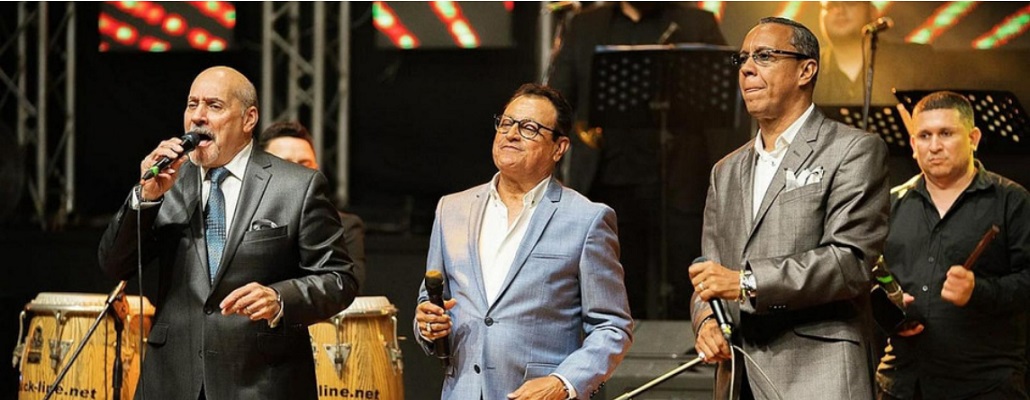
Photo of the artists at the great Soneros Summit in Barranquijazz

Miranda performed ‘Caretas’, ‘The corners are’ and ‘Don’t tell me it’s too late’. For the closing, Ismael Miranda called Ray de la Paz and Hermán Olivera to the stage, and together they inspired their best soneos, wasting their talent on the song ‘Abran Paso’.

With this show of the highest level, Barranquijazz closed its cycle of galas.

By: Robert Tellez.

More information:

https://www.radionacional.co/noticia/musica/asi-se-vivio-la-gran-cumbre-de-soneros-barranquijazz

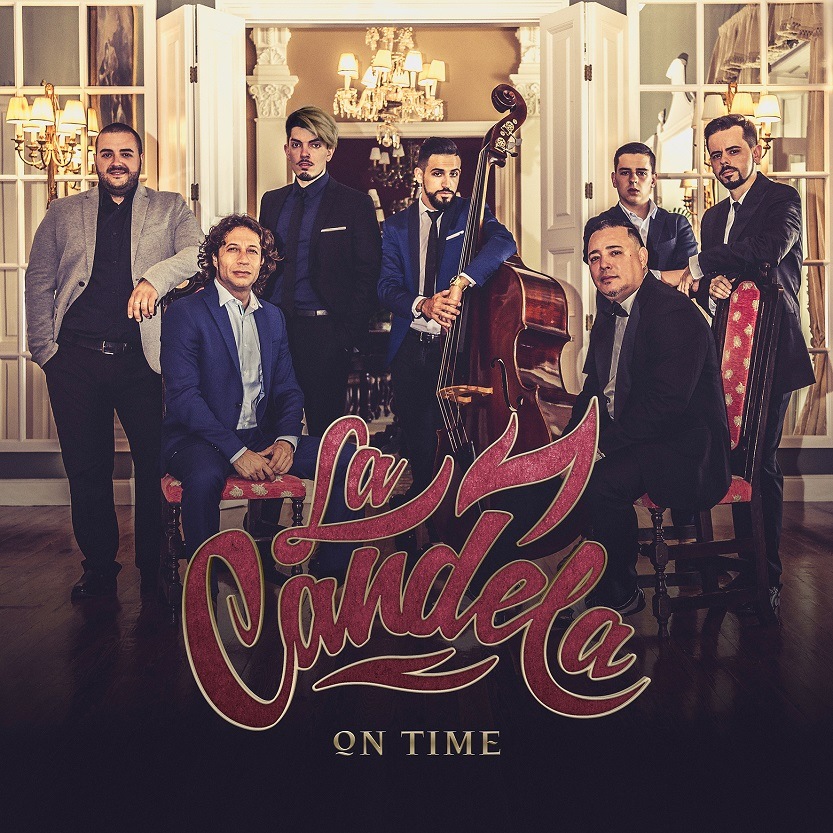
La Candela Salsa Orchestra has a new album titled “On Time”

Europe / Peru

After the worldwide success of their previous work on the best dance floors, the Candela Salsa Orchestra makes a new foray into the sound of legendary sextets like Joe Cuba’s, seasoned with the characteristic sound of the vibraphone. The DJs at conferences and salsa parties, who support Candela’s work worldwide, have had a lot to do with this success, such as:

Members of the new musical theme On Time - Candela Salsa Orchestra
Members of the new musical theme On Time – Candela Salsa Orchestra

DJ Pablo Bat (Spain), DJ Hugo Leite (Portugal), DJ Chino (Colombia), DJ Momo (Japan), DJ Lasse (Norway), DJ Antonio La Conga (NYC), DJ Mauri (Holland), DJ David Muñoz ( Germany), DJ Toni (Switzerland) or DJ Andrea Martini (Italy) among many others.

With this new work, La Candela promises not to leave lovers of a pure and authentic sound focused on the dancer, where there is no shortage of montuno, mambo, guaguancó, pachanga, boogaloo and danceable Latin jazz.

On Time - Candela Salsa Orchestra Members
On Time – Candela Salsa Orchestra Members

The album, which is produced by Batlei Productions and with the collaboration of Canarian musicians, such as Manuel Ángel Lorenzo “Mangüi” and the “Original Big Band”, makes a nod and at the same time a tribute to the great dance bands of the 50s, the golden age of the prestigious Palladium in New York.

After the success achieved in the last edition of the Benidorm Salsa Congress, the most important congress held in Spain, this year they repeated the visit once again last Thursday, July 13, where they officially presented this new album, which has been recorded at Arena Digital under the direction of sound engineer Juan Carlos Hernández.

Presentation "On Time" Benidorm (Photo by Alfil Photography)
Presentation “On Time” Benidorm (Photo by Alfil Photography)

In a very short time and leaving from the Canary Islands, La Candela has been able to carve out a niche for itself within the salsa scene worldwide. Their music can be heard from Australia to California, passing through such exotic places as Taiwan, Malaysia, India, etc. With the new album, they intend to establish themselves in this market and make different presentations that are already closing both in Spain and in the rest of Europe and America.

La Candela is made up of: Rafael “Richie” Rodríguez, voice; Fonsi Rodríguez, piano: Alejandro Fuentes, bass: Jordi Arocha, vibraphone; Fran Martín, congas; Alberto Martín, timpani; José Brito, bongo and bell. A band that mixes experience with youth, which provides a fresh and different sound for the dancer. Without a doubt La Candela is here to stay “On Time”.

The album is now available on the digital music platform CDBaby.com and soon on iTunes, Google Play, Spotify, etc. It will also be available very soon in CD and vinyl format at www.cucumpa.com

More information on Facebook: lacandelasalsa

Front Pagedisco On Time - Candela Salsa Orchestra
Front Page
disco On Time – Candela Salsa Orchestra

Papo Lucca. The Giant of the South

Latin America / Puerto Rico

Papo Lucca born in Ponce, Puerto Rico on April 2, 1946, Enrique ‘Papo’ Lucca began playing the piano at age 11 with his father’s orchestra. Initially, La Ponceña played versions of tropical hits of the moment by bands like Cortijo y su Combo and La Sonora Matancera.

Papo Lucca. The Giant of the South

In the late 1960s, Papo became the orchestra’s musical director, beginning a profound transformation that would eventually establish la Ponceña as one of the most progressive groups in the history of Afro-Caribbean music. Papo’s orchestrations were bold, experimenting with elements of jazz, rock, and Brazilian music. Representing the authentic spirit of Puerto Rican salsa, his piano solos were velvety, displaying elegance, restraint, and infinite swing.

During the mid-’70s, La Ponceña began to enjoy unprecedented success with critics and the public. The band recorded for the Inca label, which eventually became part of the Fania empire. Papo was invited to arrange and play on sessions for the company’s biggest artists, including Johnny Pacheco, Celia Cruz and Cheo Feliciano. He also recorded and toured with the Fania All Stars.

This compilation pays tribute to the art of Papo Lucca through 14 classic songs recorded between 1967 and 1981. Although Lucca has recorded as a solo artist and also collaborated with a multitude of salsa stars, it is his work with La Ponceña that best expresses the clarity of his vision.

The music we make has to make people happy, as well as make them dance. That’s what it’s all about, says Lucca from her home in Puerto Rico. When the public can dance, no matter how complicated the music is. The first theme that this genre had was to divulge the things that happened in the different communities, as if it were a newspaper.

Our journey begins with two fiery songs from the beginnings of La Ponceña: “Hachero Pa’Un Palo” and “Fuego En El 23” are versions of songs by Cuban Arsenio Rodríguez. La Ponceña always had a soft spot for Puerto Rican folklore, but she also found inspiration in the golden age of Cuban music.

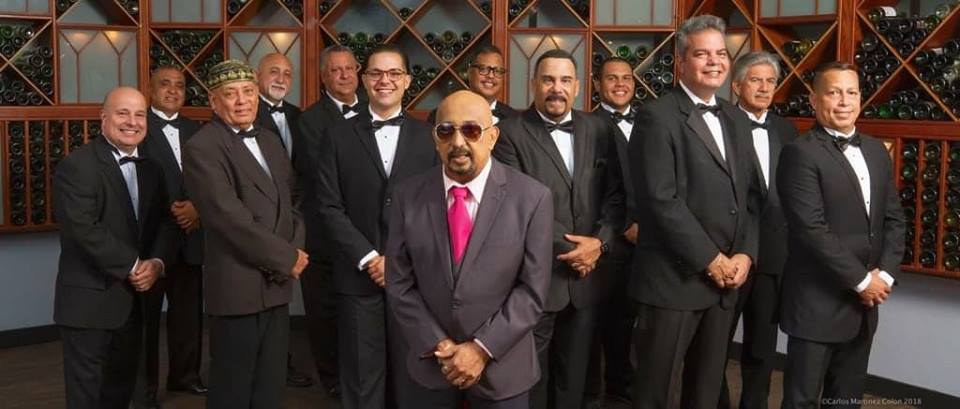
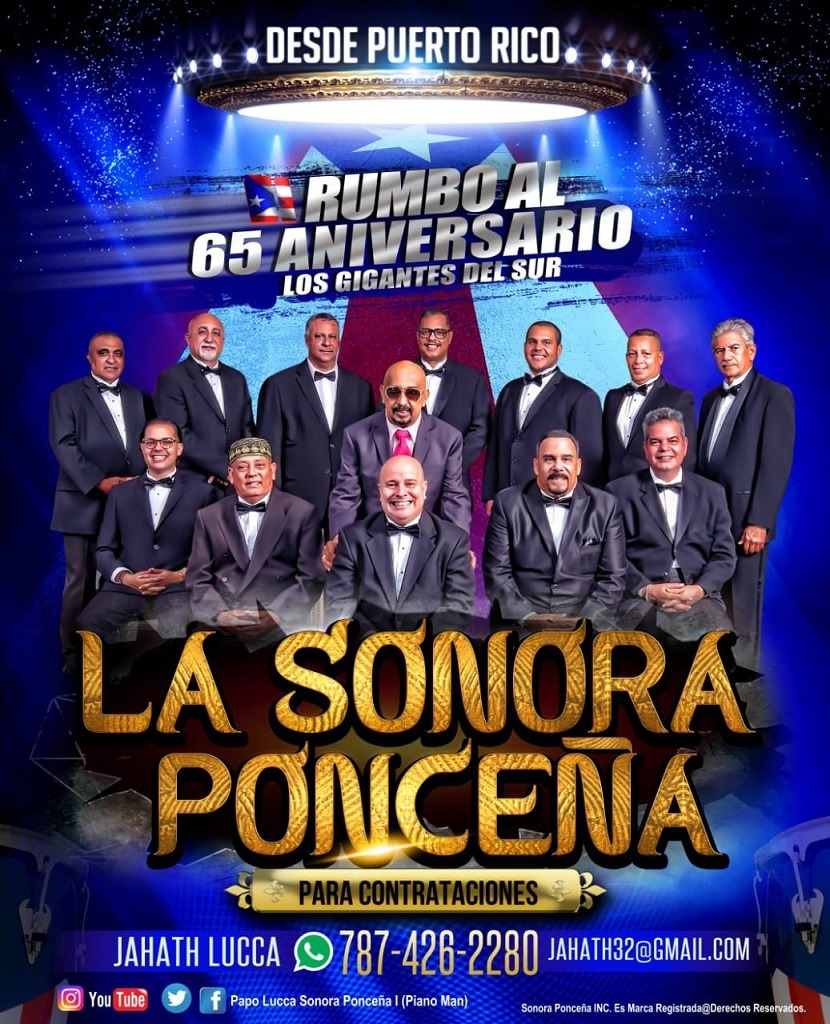
La Sonora Ponceña
La Sonora Ponceña

The precise moment in which La Ponceña becomes a mature orchestra in total control of its aesthetics can be found in the six songs from the Musical Conquest/Conquista Musical and El Gigante Del Sur albums. Launched on the market in 1976 and 1977 respectively, they represent the pinnacle of the salsa movement.

These songs combine a musical skill that approaches virtuosity with deep lyrics and a generous sense of humor. “Ñáñara Caí” is a hilarious narrative of pure magical realism, describing a world where everything is turned upside down (my favorite phrase: I saw a cow/Hit with Pacheco). Also included in Musical Conquest, “El Pío Pío” achieves the perfect cross between Afro-Cuban rhythm and contagious pop. This hit is a mandatory part of all La Ponceña concerts.

The opening theme of the El Gigante Del Sur album, “Boranda” seems to offer a salsa version of progressive rock. Its lyrics contain an important sociopolitical message, and the sophistication of its arrangement is a slap in the face for all those who believe that this music is only for dancing. “Soy Tan Feliz” combines bolero climates with an electric piano solo that recalls the psychedelic sound of jazz-rock from the ’70s. “Noche Como Boca ‘E Lobo” creates a tasty collision between salsa fever and Brazilian rhythms.

Lucca was not alone in his mission to reinvent the rules of Puerto Rican dance music. It was also benefited by the prowess of some of the best instrumentalists on the island. Furthermore, his instinct for choosing singers was always irreproachable.

Some of the vocalists of la Ponceña that appear here are Tito Gómez, who would later find fame with the Grupo Niche de Colombia; the inimitable Luigi Texidor, who gave a sense of placidity to all the songs he performed; and Yolanda Rivera, who added variety to the band’s sound with her unique timbre.

One of Rivera’s happiest moments is included here: Coming from 1980’s Unchained Force, Johnny Ortiz’s “Borinquen” is a soulful anthem to Puerto Rico, blessed with a sinuous melody and subtle instrumental arrangement–one of Rivera’s happiest moments. transcendental within the Ponceña canon.

The golden days of salsa are a distant memory in the new millennium, but Papo Lucca hasn’t stopped shining. Perhaps precisely because he continues to record new music, he refuses to idealize the past when I ask him what his favorite album with “La Ponceña.”

The last one, the most recent, he explained in his characteristically introverted tone. All the albums are very important in the career of the orchestra. They all fulfilled their mission at the time, which was to reaffirm the previous one. That’s the way to maintain a pool after 50 years.

Papo Lucca
Papo Lucca

The teacher was a little more direct when I asked him about his favorite concert of all time.

It was my first concert with the Fania All Stars at Madison Square Garden, back in 1974, he said. All the stars of the Fania were still alive. A few years later we played in front of 47,000 people in Cali. My knees always shake before I go on stage, but this time they shook a little more.

Anacaona Orchestra

Latin America / Cuba / Havana

Anacaona Orchestra. Women of Cuba Since 1932

Genesis Founded in 1932

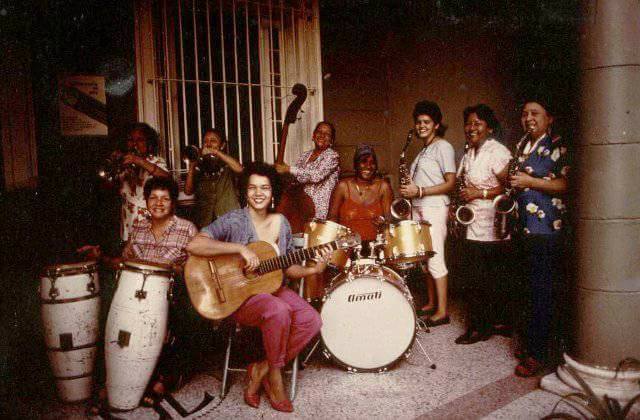
Anacaona Orchestra founded on February 19, 1932 by Concepción Castro Zaldarriaga and her sisters, being then the first female sextet of Son Cubano and in 1934 expanded to the Jazz Band and Charanga Típica format, projecting itself to the world from the famous ¨Aires Libres of the Saratoga Hotel. ¨ in the Havana Prado.

Anacaona Orchestra
Anacaona Orchestra

Between the 1940s and 1960s, these talented women toured throughout North to South America, the Caribbean and France.

In Mexico, one of the countries most visited by the orchestra at this stage, its images and sounds were recorded in some film of Mexican Cinema, such as: ¨the night is ours¨, ¨I do not deny my past¨ and ¨Women of theater¨ in which they alternated with film and music artists from that country. Also at that same time they recorded with the RCA Víctor label.

Anacaona Orchestra photo

The Aguirres

The sisters Giorgia and Dora Aguirre, with a solid musical background, specializing in Double Bass and Saxophone, recently graduated from the ¨Amadeo Roldan¨ Music Conservatory, joined the Anacaona Orchestra with its original founders in 1983, under the direction Alicia Castro, with whom they learned the most genuine genres of Cuban popular music, the rigor and discipline in this profession.

Anacaona Orchestra
Anacaona Orchestra

3rd Generation


After the retirement of the Castro sisters in December 1987, she assumed the direction of the Georgia Aguirre Orchestra, who, together with her sister and other young women who had also graduated from music schools, continued the work begun by the founders, consolidating a style that combines tradition with modernity, to preserve and enhance the history of Anacaona.

Anacaona Orchestra
Anacaona Orchestra

Tours

Internationally, they have traveled to more than 30 countries in Europe, Asia, Africa, America and the Caribbean, performing at important festivals and multiple stages, among which the most outstanding are:

Anacaona Orchestra
Anacaona Orchestra

The tour of 34 countries in the People’s Republic of China; his participation in the play ¨El Burgués Tropical¨ under the direction of Gerome Sabarì, inspired by Moliere’s classic, El Bourgeois Gentleman”; the tour made through some cities in the United States in which they also had a very emotional meeting with Graciela Pérez, singer and founder of Anacaona and the show “Sabor de la Habana” that opened the season of Cuban shows at the Cabaret Del Gran Casino Monte Carlo of the Principality of Monaco,

In addition to other important jazz and summer festivals in Spain, Germany, Belgium, Sweden, Holland, Canada, Jamaica, Aruba, Curacao, French Guiana, Guadeloupe, Martinique, Saint Lucia, Peru, Honduras, Venezuela and Mexico, among others.

Anacaona Orchestra flyer

Legacy of the Cepeda family after eight generations

As all our readers may know, this is a space devoted entirely to the promotion of salsa and other derivative styles, but that does not mean we should leave out other Latin genres that also deserve to be promoted and recognized worldwide. Such is the case of bomba and plena, which we are going to talk about in the next lines.  

Bomba and plena are two Puerto Rican musical genres that initially became popular at the local level, but little by little, they have received international notoriety thanks to certain groups of Puerto Ricans who have devoted considerable effort to take their culture to as many places as possible in the world. This is how we get to the theme of the Cepeda family and all that its members have done for bomba and plena.  

Bárbara and Margarita
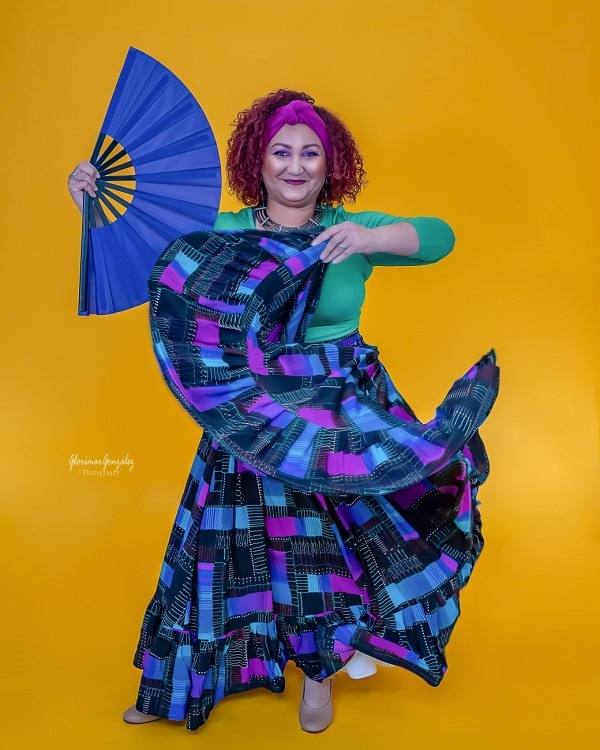
Bárbara Liz Ortiz Sánchez and his mother Margarita ”Tata” Cepeda

The Cepeda Family  

The Cepeda family is a cultural institution that has been given the task of promoting bomba and plena for eight generations, so that they can be heard and danced all over the world. Don Rafael Cepeda Atiles, a professional musician and composer with an extensive career who has left a great legacy thanks to his hard work during his lifetime, which keeps current thanks to his descendants. 

When he married Caridad Brenes Caballero, he involved her in all his artistic activities and became a fundamental support for the musician in his work. The lady became a professional bomba and plena dancer, costume designer, and choreographer, which made her shine with her own light in every project directed by her talented husband.  

During his career, Don Rafael created several musical groups and, over the years, he and his wife involved their children and other family members to collaborate in what would become a renowned family business. 

One of the artist’s greatest achievements was the development of a cultural movement around the rescue and preservation of local traditions related to bomba and plena, which were thought to be lost. He was also decorated with the Smithsonian Institute’s National Endowment for the Arts Fellowship for his contributions to music. 

All this legacy remained in the hands of Don Rafael’s family and one of the first to do something about it was his son Modesto, who founded the Escuela de Bomba y Plena Don Rafael Cepeda in Santurce, Puerto Rico. This institution was created in order to teach bomba and plena in the areas of dance and percussion. 

Those who would follow these steps would be Margarita ”Tata” Cepeda, granddaughter of Don Rafael and Caridad, and Barbara Liz Ortiz Sanchez, great-granddaughter of Don Rafael and Caridad. Margarita currently runs the Escuela de Bomba y Plena Doña Caridad Brenes de Cepeda and her daughter, Barbara Liz, runs the Escuela de Bomba y Plena Tata Cepeda in the state of Florida. It was precisely the latter with whom we had the pleasure to talk about this project and the plans she has for the future.  

Bárbara and her bomba custome
Bárbara Liz wearing her bomba attire

Barbara Liz from the Escuela de Bomba y Plena Tata Cepeda 

Barbara Liz belongs to the seventh generation of the Cepeda family and her children, who also dance bomba and plena, would belong to the eighth generation. She says that each family member has tried to endorse Don Rafael’s legacy in their own way. In her particular case, she has spent five years running the Escuela de Bomba y Plena Tata Cepeda in Florida, which she decided to baptize with his mother’s nickname, which is Tata, to pay tribute to her in life.   

Although the operation of her school and his mother’s are different, they usually work together in cases that require it. For example, if for some reason a student cannot pursue his education here because he is going to Puerto Rico, he can continue studying at the school located on the Island of Enchantment without any problem.   

”We didn’t have a curriculum or educational program to follow to teach bomba and plena, but my mom was responsible for creating one so that we could teach dance and percussion with a clearer methodology,” said Bárbara Liz. 

As a result of Hurricane Maria, many Puerto Rican families went to live in Florida due to the loss of their properties and material things, so the students of the school in Puerto Rico became able to enroll in the Florida school instead. It can be said that they are sister schools working together towards the same goal.   

Percussion and dance in bomba and plena  

Something Bárbara Liz wanted to highlight about this point is that many girls are enrolling in her school to learn to play percussion, something that did not happen very often. 

At other times, it was believed that percussion in bomba and plena was exclusively for men and dance for women. In more conservative versions of these genres, women only sang and men were responsible for dancing and playing instruments. 

That has been changing over time. Nowadays, there are many guys who are setting their sights on dancing and many girls are having an interest in the percussion part. Every day, the female part is becoming more and more relevant in the different areas of bomba and plena.  

In addition to all this, the institution’s teachers also teach quite a bit about the emergence and history of these two genres, so that their students are not just dedicated to playing and dancing, but also know the origin of everything they learn now.   

Differences and similarities between bomba and plena 

When we wanted to know a little about the differences and similarities between bomba and plena, Bárbara Liz explained to us that both genres were very different from each other. The rhythms, the instruments used and the ways of dancing have many differences in both.   

In the case of bomba, this is the oldest musical genre and dance in Puerto Rico and is born from a barrel-shaped instrument, which is one of its most representative elements. It is also known as the ”first sung newspaper”.  

Similarly, it is the dancer who sets the pace for the percussionist, not the other way around. The musician should be guided by the footsteps of the dancer, which often gives rise to completely new rhythms.   

Plena was born a few years later with certain variants of bomba and is called the ”second sung newspaper”. It was plena that inspired several of the Cepeda family members to create their own groups such as the Grupo Gracimá (a variant of bomba), which originated in the school owned by Margarita in Puerto Rico.  

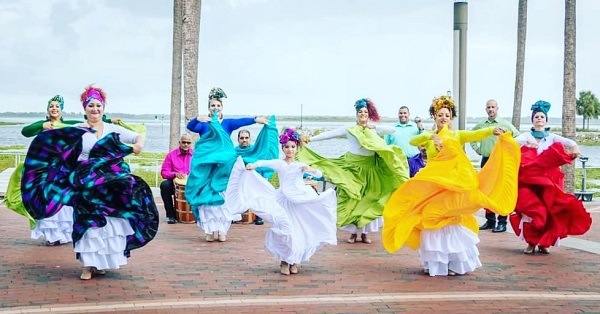
In contrast, Bárbara Liz named her professional group Kalindá in honor of one of the most popular variants of bomba. 

Bárbara and Kalindá
Bárbara Liz and her professional group Kalindá

Tributes 

Something that makes Bárbara Liz very proud is that both she and her mother had the opportunity to go to the Smithsonian National Museum in March to pay tribute to their ancestors and the genres that her great-grandfather promoted so much in life. 

At the time, Don Rafael donated some items related to bomba and plena such as barrels, a güiro and barrels However, some bomba costumes were missing to complete the collection, which were given by Bárbara Liz and Margarita to be exhibited in the institution, so anyone interested in learning more about Puerto Rican genres and musical culture can visit the place and cherish these valuables. 

Read also: Yani Borrell ‘‘El Elegante de La Salsa”

  • « Go to Previous Page
  • Page 1
  • Interim pages omitted …
  • Page 7
  • Page 8
  • Page 9
  • Page 10
  • Page 11
  • Interim pages omitted …
  • Page 18
  • Go to Next Page »

International Salsa Magazine (ISM) is a monthly publication covering salsa activities around the world and has been publishing since 2007. It is a worldwide network of volunteers coordinated by ISM Magazine. Together, we work to strengthen salsa events around the world.