 |
 |
 |
 |
 |
|
 |
|
 |
|
 |
|
 |
|
 |
|
 |
|
“We are the True Latin music world network” |
|
 |
 |
|
|
|
|
|
|
|
|
|
|
|
|
|
|
|
|
|
|
“We are the True Latin music world network” |
|
|
|
The main artists who put on a show always get the lead on stage, but nothing much is being said about the instruments accompanying them, which are a fundamental part of music as we know and enjoy it. One of these is the cajón, which has a most interesting and a little bit controversial origin, so there are certain considerations to express this regard.

The cajón, also known as the Paruvian cajón or flamenco cajón, is a percussion instrument consisting of a wooden box on which the musician sits and taps with his fingers and palms to produce the desired sounds, whether bass or treble. On certain occasions, it is used as a substitute for the drum kit and has gained popularity in jazz, flamenco, and some Latin genres.
One reason it is so popular is because of its versatility, transportability, and ease to be played, even if the musician does not have much experience. Therefore, many prefer it to the drum kit, which is bigger and more cumbersome in certain cases.
What is known about the origin of the cajón is that by the end of Spanish colonization, African slaves bound for America were not allowed to use their drums because the Catholic Church saw them as sinful and pagan tools. Not to mention that these prisoners also used these drums to communicate with each other, which is why the Spanish nicknamed them “talking drums.”
This led to the aforementioned instruments and several of their musicians being burned. Not to mention that slavers wanted to ban black songs that sent messages about slavery through their melodies.
By the early 1800s, there was absolutely no record that the drum had existed in what we now know as Peru, and any viceregal document mentioning it disappeared. However, there is evidence of the existence of the cajón from 1840, and it is believed that the first to use it were Afro-Peruvians.
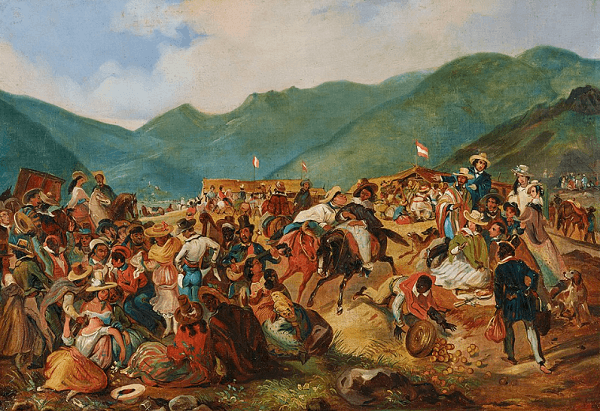
Afro-Peruvians encompass a collection of African ethnic groups who, unable to express themselves through music as they did before, had no choice but to find other instruments with which they could do so. They then saw wooden crates used to transport goods as a way to do percussion and thus continue to practice their sacred rites and play their music.
Initially, the cajones were used to play coastal and traditional dances to central and north Peru, which gradually popularized them. They also began to be used to play the “Fiesta de Amancaes,” which is a Limean festival held during the time of the Viceroyalty. This event usually brought together horse breeders, artisans, and bohemian musicians from the north and center of the country.
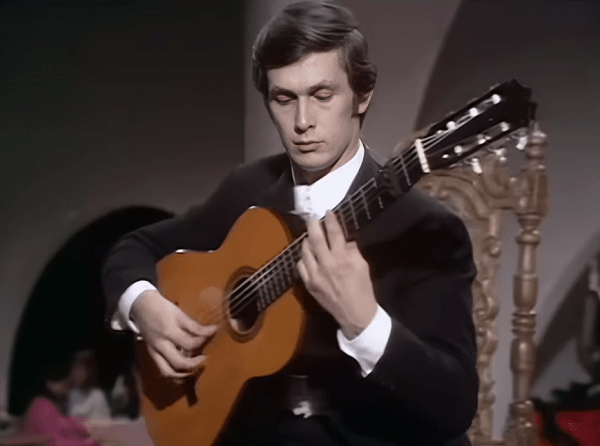
Many years later, specifically the year 1977, the cajón arrived in Europe. It was Spanish flamenco composer and guitarist Paco de Lucía who discovered the instrument during a tour of Latin America when he attended a reception hosted by the Spanish ambassador at the time. On that occasion, Paco heard Brazilian musician Rubem Dantas play it during a show by singer-songwriter Chabuca Granda, and he instantly realized that those sounds combined very well with flamenco percussion, which was always done with the palms, although it was not as consistent and precise as required. The cajón achieved this without a hitch.
It is for this that Paco decided to take the cajón to his country and only added some inner strings to adapt it and tinge its sounds, thus becoming one of the most important elements of a flamenco show today. Both Paco and Rubem decided to release it at an open-air concert at the Parque de Atracciones de Madrid of the Casa de Campo, and the Peruvian instrument was a resounding success, marking the beginning of its addition to flamenco guitarists’ shows.
At the time, Paco said that this contribution to flamenco culture in his country made him very proud and with good reason, as it was a great revolution that continues to bear fruit.
Today, the flamenco cajón has three screws that allow the musician to adjust the tone and a system of strings that gives the Peruvian version a different resonance and offers a range of many different sounds in which the musician’s body plays a very important role. The Peruvian version remains the most traditional of all because it gets no strings and its sounds are deeper, while the Spanish version incorporates strings or bourdons in order to make more tearing and vibrant sounds.
There are also more modern versions that include the use of drumsticks and pedals to expand their sound range a lot further.
Read also: Creator of Salsa Vida Takeshi Young graced us with his presence in International Salsa Magazine
Toña la Negra, passed away. She was a prominent Mexican singer and actress of African descent, famous for her interpretations of boleros and tropical songs by the composer Agustín Lara, who considered her “the greatest female singer of all time” due to her “highly personal style,” “the power of her expression, and the velvet of her privileged throat.”
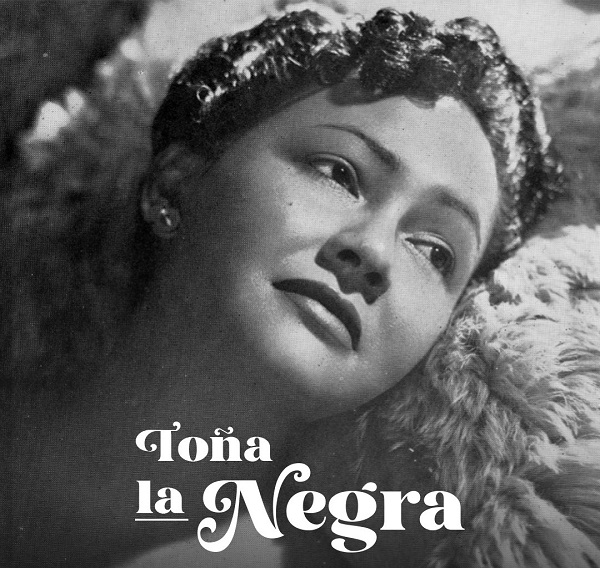
Antonia Peregrino was born in the city of Veracruz, in the La Huaca neighborhood, on November 2, 1912.
Her father, Don Timoteo Peregrino Reyes, played the guitar and worked as a freight opener for the crates arriving at the port; he was also one of the founders of the Veracruz Port Commercial Loaders and Openers Guild.
Her mother, Doña Daría Álvarez Campos, sang at family gatherings.
Her paternal grandfather, Don Severo Peregrino, was Haitian and had emigrated to Mexico in the 19th century.
By 1927, she had married Guillermo Cházaro Ahumada, who took her to Mexico City with their first child, who was only forty days old.
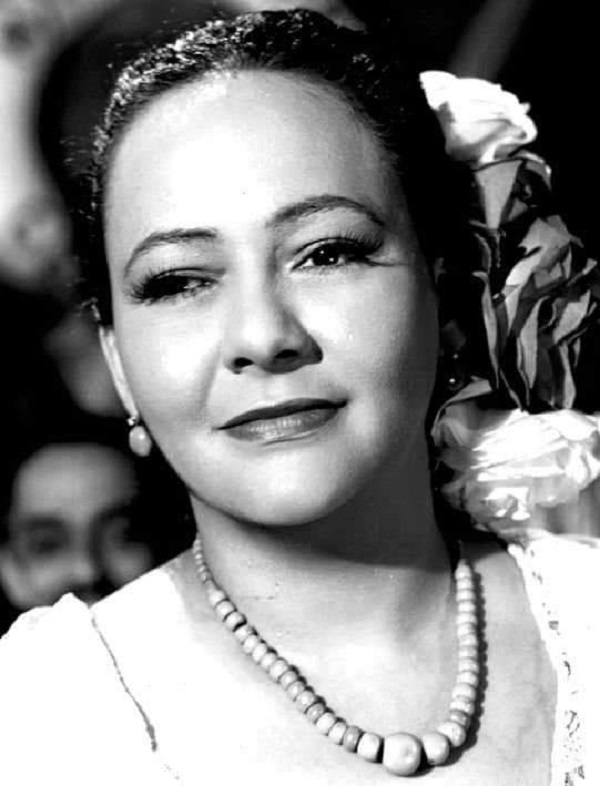
She began to gain recognition with her interpretation of the song “Enamorada” (In Love) by Agustín Lara. Lara also produced tracks for her such as “Lamento Jarocho,” “Veracruz,” “Noche Criolla” (Creole Night), “Oración Caribe” (Caribbean Prayer), “Palmera” (Palm Tree), “La Clave Azul” (The Blue Key), and “La Cumbancha.” They presented these together in a musical revue at the Teatro Esperanza in December 1932, achieving such success that they had to extend their performances for a long time.
Her voice tone was rather deep, with a velvety and rounded sound, and impeccable vocal techniquecharacteristics that became her interpretive signature.
Azcárraga added her to the cast of the XEW radio station, where she sometimes performed accompanied by Lara and other times by the Alfredo Girón orchestra.
Shortly thereafter, her spectacular performances began at the Teatro Politeama, across from Las Vizcaínas and next to San Juan de Letrán street.
Her recordings for the RCA Victor label constitute one of the most precious musical legacies in the history of the bolero.
In the mid-sixties, she signed an exclusive contract with Discos Orfeón, where she recorded the last albums of her career.
“Este amor salvaje” (This Wild Love), “Por qué negar” (Why Deny It), “Obsesión,” “Mentiras tuyas” (Your Lies), “Y sin embargo te quiero” (And Yet I Love You), “Noche criolla,” “Pesar” (Grief), “Vereda tropical” (Tropical Path), “Cada noche un amor” (A Love Every Night), “Angelitos negros” (Little Black Angels), “Lágrimas de sangre” (Tears of Blood), “Estás equivocado” (You Are Wrong), “De mujer a mujer” (From Woman to Woman), “Como golondrinas” (Like Swallows), “Diez años” (Ten Years), and “Cenizas” (Ashes) are some of her successful titles recorded on over 75 LP records, some of them for the Peerless label. Already famous for many years, she recorded two songs with the legendary Sonora Matancera in 1974.
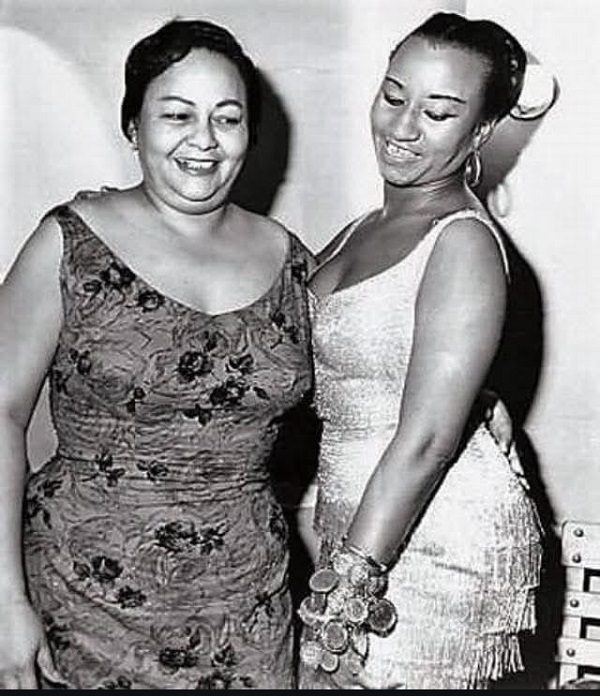
In her final years, due to some health issues, she gradually withdrew from the stage and recording.
Toña La Negra always maintained a very reserved personal life. With her first husband, the musician Guillermo Cházaro Ahumada, she had three children: Ramón (b. 1932), Guillermo (b. 1933), and Ernesto (1935–1979). Toña and Cházaro Ahumada separated in 1945.
Later, in 1955, she remarried the Veracruz-born bassist Víctor Ruiz Pazos, known as “Vitillo.” This marriage lasted until 1963. In an interview, Ruiz Pazos spoke about Toña’s artistic qualities:
Her commitment, her feeling when she sang, her style, the way she did it, how she expressed things musically; I have lived a long time, I have heard many fabulous singers, but none of them come close to Doña Toña.
Collaborators:
Los Mejores Salseros del Mundo
Also Read: Santa La Salsera and Diva of Mexico with her unique voice and style will continue to conquer us all
After finishing school, Malia dedicated herself to music. She worked as a waitress while organizing a backing band, singing ballads and classic jazz in London bars and clubs.
During a visit to New York, she heard a pop-jazz track sung in French by vocalist Liane Foly, produced by André Manoukian. She contacted Manoukian to ask for his help, and they began working on her 2002 debut album, Yellow Daffodils. Although the release included English lyrics, it achieved recognition in France and Germany.
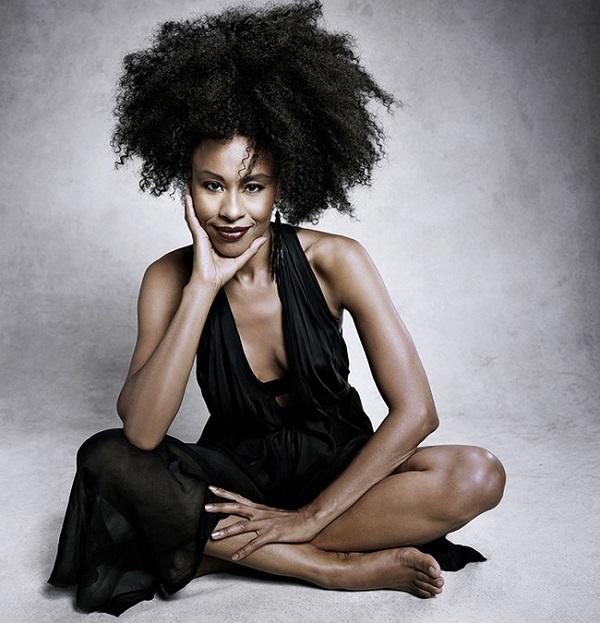
Her subsequent releases, Echoes of Dreams (2004) and Young Bones (2007), were highly acclaimed among jazz fans across Europe. Malia is known for her expressive voice. From the beginning, she found her way to the stage and her singing style flirted with sounds from the 1960s and 1970s.

“My heart beats for many things. I think that is because I come from a marriage of mixed heritage. I have never felt like I am one thing or the other; I am more of a fusion of both, and my music reflects that. I feel I am evolving as a human being, and although music is simply a medium for expression, I like the idea of resonating with it, if its rhythm suits me.
The blues has always been dear to my heart: it is a cathartic, precious, and profound experience, whether playing it or hearing it on the radio. When I first heard Billie Holiday sing ‘Blue Moon,’ I could feel it in every cell of my body.
She had a very powerful effect on me. Sentimental blues, originating in tragic situations, sometimes even reflecting my own experiences… No matter how bad family, friends, politics, lovers, governments, or society may be, they can never destroy the forces of good in this world.
And as time passes, I find more and more of the truth that is rooted in my soul. And I finally feel mature enough to understand this wonderful musical tradition, because the blues means life.”
And if the blues means life, Malia is the energy that allows the blues to have a soul, a voice. It has been a long time since a contemporary artist paid such a beautiful homage to the blues—a style that, in the year 2020, deserves to have the dust shaken off.

Hip-hop, blues, and jazz are evolving into hundreds of regional variants, far from their original roots. Malia’s music can undoubtedly be considered an impressive testament to this worldwide fusion.
After moving from the southern African republic of Malawi to London at age fourteen, the singer spent her adolescence in the UK capital (Note: the “Big Apple” is the nickname for New York, which contradicts having spent her adolescence in London. The original text was left, but the inconsistent use of the term is corrected).
Malia recorded three albums in France with André Manoukian: Yellow Daffodils (2002), Echoes of Dreams (2004), and Young Bones (2007), all created in Manoukian’s Parisian studio.
In 2010, she met Swiss producer Boris Blank, who, since the 80s as part of the avant-garde duo Yello (The Race, Bostich) with Dieter Meyer, has garnered great success. In 2012, Malia released a tribute to Nina Simone, Black Orchid, which won that year’s ECHO Jazz Award. In 2014, Boris Blank produced the eleven electronic-style songs for her album Convergence.
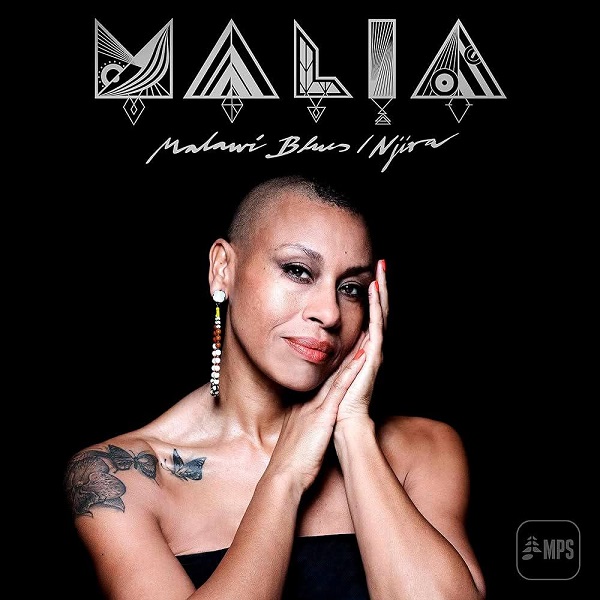
The album features thoughtful, mostly slow-tempo original tracks, with sparsely orchestrated piano, accompanied by guitar and percussion, including an almost minimalist version of the classic ‘Moon River.’ From the outset, with Malawi Blues/Njira, Malia recalls the sound of her childhood.
The local vibes of the Kwela and Kwasa-Kwasa traditions are felt not only in the moving “Love Is Holding Both Our Hands.” “I humbly consider it my duty to pass on the rich traditions and stories, just as my ancestors did, as my grandparents and parents did when we would sit around the fire in the evenings in Malawi, eating nsima with pumpkin leaves and peanut sauce.” Of course, that is only one aspect of her rich work.
Her songs are characterized by artistic experiences and experiments, an amalgam that has shaped Malia’s life and a lasting effect of her time in the London club scene, where she was able to sharpen her sense of rhythm in small bars in front of reduced audiences. Here, she could always adjust her sets live, night after night.
This musical diversity now benefits her, when, in Chipadzuwa (a southern African colloquial term for a beautiful woman), she alternates between the regional language, Chichewa, and the universal language, English, with a mellifluous ease.
Malia – Malawi Blues / Njira (2016)
Tracks:
Musicians:
About Malawi, The Warm Heart of Africa
Malawi, known as the “Warm Heart of Africa” for the kindness of its people, is a landlocked country located in southeastern Africa. It is famous for its stunning natural landscapes, highlands, and, above all, the vast Lake Malawi, which covers approximately 20% of its territory.
Culture and History
Tourism and Nature The main tourist attraction is Lake Malawi, the third-largest lake in Africa, known for harboring more fish species than any other lake in the world, including about 1,000 species of cichlids. The country offers an authentic travel experience and is considered one of the safest countries in Africa for visitors.
🎤 Personal Data on Malia
Collaboration: