• Skip to primary navigation
  • Skip to main content

International Salsa Magazine

  • HOME
  • Previous editions
    • 2026
      • ISM / March 2026
      • ISM / February 2026
      • ISM / January 2026
    • 2025
      • ISM / December 2025
      • ISM / November 2025
      • ISM / October 2025
      • ISM / September 2025
      • ISM / August 2025
      • ISM / July 2025
      • ISM / June 2025
      • ISM / May2025
      • ISM / April 2025
      • ISM / March 2025
      • ISM / February 2025
      • ISM / January 2025
    • 2024
      • ISM / December 2024
      • ISM / November 2024
      • ISM / October 2024
      • ISM / September 2024
      • ISM / August 2024
      • ISM / July 2024
      • ISM / June 2024
      • ISM / May 2024
      • ISM / April 2024
      • ISM / March 2024
      • ISM / February 2024
      • ISM / January 2024
    • 2023
      • ISM / December 2023
      • ISM / November 2023
      • ISM / October 2023
      • ISM – September 2023
      • ISM – August 2023
      • ISM July 2023
      • ISM Edition June 2023
      • ISM – May 2023
      • ISM April 2023
      • ISM March 2023
      • ISM February 2023
      • ISM January 2023
    • 2022
      • ISM December 2022
      • ISM November 2022
      • ISM October 2022
      • ISM September 2022
      • ISM August 2022
      • ISM July 2022
      • ISM June 2022
      • ISM May 2022
      • ISM February 2022
      • ISM January 2022
    • 2021
      • ISM December 2021
      • ISM November 2021
      • ISM October – 2021
      • ISM September 2021
      • ISM August 2021
      • ISM July 2021
      • ISM May 2021
      • ISM April 2021
      • ISM June 2021
      • ISM March 2021
      • ISM February 2021
      • ISM January 2021
    • 2020
      • ISM December 2020
      • ISM November 2020
      • ISM October 2020
      • ISM September 2020
      • ISM August 2020
      • ISM July 2020
      • ISM June 2020
      • ISM May 2020
      • ISM April 2020
      • ISM March 2020
      • ISM February 2020
      • ISM January 2020
    • 2019
      • ISM December 2019
      • ISM November 2019
      • ISM October 2019
      • ISM Septembre 2019
      • ISM August 2019
      • ISM July 2019
      • ISM June 2019
  • Download Salsa App
    • Android
    • Apple
  • Spanish

Search Results for: Dancing

Kizomba as a result of war and colonization

The fight for Angola’s independence was a long and difficult struggle that endured for several decades. The country was colonized by Portugal in the 16th century, and for centuries the Portuguese imposed their culture, language, and political system on the Angolan people. However, the Portuguese colonization also led to the exploitation of the country’s resources, the forced labor of its people, and the suppression of its cultural identity.

In the mid-20th century, there came a wave of anti-colonial movements across Africa and Angola was no exception. The Angolan people began to demand their right to self-determination and freedom from colonial rule. In 1961, the National Front for the Liberation of Angola (FNLA) conducted a guerrilla war against the Portuguese, followed by the People’s Movement for the Liberation of Angola (MPLA) and the National Union for the Total Independence of Angola (UNITA) in the following years. The struggle for independence was marked by heavy fighting, political instability, and international intervention, but in 1975, Angola finally got its independence, ending over four centuries of Portuguese colonial rule.

Kizomba Dancer

Angola, officially known as the Republic of Angola, is a country located in southwestern Africa. It is known for its rich culture, vibrant music, and stunning natural beauty. One of Angola’s most famous cultural exports is kizomba, a popular dance and music genre that originated in the country and has spread to other parts of the world.

Angola has a long and complex history, marked by centuries of colonization, slavery, and war. The country was colonized by Portugal in the 16th century and remained under Portuguese rule until 1975, when it got its independence. The legacy of colonialism and the struggle for independence have had a profound impact on Angola’s cultural identity, including its music and dance traditions.

Kizomba, which means “party” or “celebration” in Kimbundu, one of the Bantu languages spoken in Angola, emerged in the 1980s and 1990s as a fusion of Angolan semba music, Caribbean zouk, and other African rhythms. Semba is a traditional dance and music genre that originated in Angola and is characterized by its joyful tempo, complex rhythms, and energetic movements. Zouk is a popular dance and music genre that originated in the French Caribbean and is characterized by its slow and sensual tempo, soft melodies, and romantic lyrics.

Young woman dancing kizomba

Young woman dancing kizomba

Kizomba music, in contrast to semba, is characterized by its slow and sensual tempo, soft melodies, and rich harmonies. The lyrics of kizomba songs are often sang in Portuguese, the official language of Angola, and deal with themes of love, romance, and social issues. Kizomba dancing is characterized by its close embrace and smooth, flowing movements. It is often danced in pairs, with the leader guiding the follower in gentle steps and turns.

Kizomba became popular in Angola in the 1990s, especially in Luanda, the country’s capital. The dance quickly spread to other parts of the country and became an important part of Angola’s cultural heritage. Kizomba dance parties, known as “kizombadas,” were held in clubs, bars, and community centers, attracting people of all ages and backgrounds.

In recent years, kizomba has gained popularity in other parts of the world, particularly in Europe, where it has become a popular social dance. Kizomba festivals and workshops have been held in many countries around the world, attracting dancers and music lovers from different cultural backgrounds.

Kizomba is not only a dance and music genre but also a cultural expression that reflects the history and identity of Angola and its people. It is an important part of the country’s cultural heritage and a source of pride for Angolans around the world.

Alberto Beltrán “A mí me llaman el negrito del Batey” and Bailar medio apreta’o con una negra bien sabrosa

Alberto Amancio Beltrán (Palo Blanco, La Romana, May 5, 1923 – Miami, February 2, 1997) was a Dominican singer, known in the Latin American musical world as “El Negrito del Batey”.

Early years

Beltrán was born in the town of Palo Blanco, in the province of La Romana. As a child, he barely had a basic education because his family’s economic situation forced him to sell candy on the streets. At the age of fourteen he was attracted to music and debuted as an amateur singer on the radio. This first artistic incursion led him to take singing lessons.

Alberto Beltrán “A mí me llaman el negrito del Batey”

From 1946 to 1951 he belonged to several groups in his country, such as “Brisas de Oriente”. Later, he formed his own group called “Dominican Boys”.

International projection

In 1951 he emigrated to Puerto Rico. There, he recorded with “Los Diablos del Caribe”, a group led by Mario Hernández, the song “El 19”.

 He then traveled to Cuba, first to Santiago and then to Havana on July 15, 1954, to work with the Puerto Rican composer and singer Myrta Silva on Radio Mambí.

On August 16 of that same year, he was requested by the Sonora Matancera and recorded the composition Ignoro tu existencia by Rafael Pablo de la Motta and Aunque me cueste la vida by the Dominican Luis Kalaff. Both songs, in bolero rhythm, were recorded on the same 78 rpm disc.

On November 16, he recorded the merengue El negrito del batey composed by Medardo Guzmán, which catapulted him internationally as it became a sales hit.

From there came the nickname with which he became popular. That same day he also recorded the boleros Todo me gusta de Ti by Cuto Esteves, Enamorado de la inspiración by José Balcalcer and, for the second time, El 19 by Radhamés Reyes Alfau.

Beltrán nació en la localidad de Palo Blanco en Cuba

On January 18, 1955 he recorded his last pieces with the Orquesta Sonora Matancera. Then, he spent some time in Venezuela where he left phonographic records with the orchestras “Sonora Caracas”, Los Megatones de Lucho and the Orquesta de Jesús “Chucho” Sanoja.

Alberto Beltrán
Alberto Beltrán


Hired by the Dominican musician settled in Venezuela, Billo Frómeta, he participated in two albums recorded in Cuban studios: “Evocación” (1956) in which he performed as a soloist and “La Lisa-Maracaibo”, in which he shared credits with the Cuban singer Carlos Díaz.

What does El negrito del batey mean?

In the Dominican Republic the batey smells of black and the black often smells of batey. Both evoke in their generality misery and human abandonment, fruit of injustice and discrimination. This is so, although it pains us to say it


The Negrito of the Batey

They call me the little black man of the batey

Because work for me is an enemy

To work I leave everything to the ox

Because work was made by God as a punishment

I like the merengue apambicha’o

With a black woman who is a retrechera and a good girl

I like to dance de medio la’o

I like to dance half tight with a tasty black girl

Hey!

Get your ass out of here!

There!

They call me the little black guy from the batey

Because work for me is an enemy

To work I leave everything to the ox

Because God made work as a punishment

I like the merengue apambicha’o

With a black woman who is a retrechera and a good girl

I like to dance de medio la’o

I like to dance half tight with a tasty black girl

Hey, there!

And you tell me if it’s not true

Merengue much better

And you say if it’s not true

Merengue much better

Because that of working

It’s a pain for me

Because that of working

To me it causes me pain, it sounds!

The meek ox works hard

But he never gets dengue fever

The meek ox works hard

But he never gets the dengue

I’ll dance with a good black woman

I’ll dance to a good merengue

But I never get tired

To dance a good merengue, it sounds!

There, candela!

Finbroso, hey!

The gentle ox works hard

But he never gets the dengue

A lot of work the gentle ox works hard

But he never gets the dengue

But I never get tired

Of dancing a good merengue

But I never get tired

Of dancing a good merengue, it sounds!

There!

Dominicanize!

Alberto Amancio Beltrán

Sonora  Matancera

Read also: International Salsa Magazine presents Alexander Abreu and his Habana de Primera

Multi-Percussionist Carlos Navarro and his Son Y Clave Orchestra

Who is Carlos Navarro?

There have been many celebrities, orchestras, groups of all genres who played their part in the salsa cultural movement in the United States, but we cannot deny that bandleader Carlos Navarro and his Son Y Clave Orchestra played a very important role, since they achieved many goals in the Latin music scene in California, specifically in Los Angeles.

Carlos Navarro was a child of the couple formed by Rafael Navarro and Maria De Jesus Velasquez de Navarro, being at the same time the brother of Alexis Enrique (the famous singer Cherry Navarro), Manuel, Rene, Lelys and Audy. The whole family decided to move to Caracas, the parish of El Valle, where all the children continued their studies.

The first one to start an artistic career at a very young age was his older brother Alexis, who would later be known as Cherry Navarro in the artistic field. Carlos followed the same steps and also dedicates himself to music, but focused on salsa, mambo, merengue, and Latin jazz.

Producer, bandleader, percussionist and singer Carlos Navarro

Las Versalles

In the early 80’s, specifically in 1983, the artist served as co-founder and percussionist in one of the first and most important orchestras in Los Angeles, California, with styles of Salsa, Guaguancó, Merengue, cha cha chá, and Latin Jazz.

This group was called Las Versalles and hired many musicians based in the same city. Here you can see some of the main members and their instruments, Güiro: Carlos Navarro and Jorge Luis Balmaseda, Vocalist, Piano, Arranger: Fito Foster, Vocalist, Guitar, Flute, and Arrangements: Niño Jesús, Bass: Geraldo Zuldo and Luis López, Trumpets: Carleton Smith and Robert Hernández, Trombo: Arturo Velazco, Violin: Gene Hugo, Congas: Humberto Hernández and José “Papo” Rodríguez, Timbales: Héctor Andrade and Edwin Rolland, Backing Vocals: Fitto Foster, Niño Jesús, Bobby Rivas, Jorge Luis Balmaseda and Bass in ‘’Cama Y Mesa’’: Cuco.

Famous singer Cherry Navarro, Carlos Navarro's brother
Famous singer Cherry Navarro, Carlos Navarro’s brother

Son Y Clave

In 1999, the producer, percussionist and singer founded the Son Y Clave Orchestra and became a very important group in the nightlife of Los Angeles and surrounding areas.

One of the most attractive things for spectators of the places where they perform is the ease with which they dance and execute choreography, which are highly contagious, fast and elegant at the same time.

This diversity of performance styles is another one of the many things that has led this orchestra to the summit. In the same way, they have participated in all kinds of festivals, congresses, concerts and much more. They also had an important participation in salsa nights at venues in Los Angeles and the Bay Area such as El Floridita, where they played with Son Y Clave every Monday, until Carlos had to leave for a while and left talented musician Johnny Polanco in charge.

They have been so popular in the last few years that they have managed to open for world famous bands such as the Rolling Stones, who counted on the talent of the orchestra to grace their performances in one of their most important tours.

All members of the Son Y Clave Orchestra

God & Salsa and more

They have also been involved in major film projects such as ”Almost A Woman”, whose director has a long-standing friendship with Navarro. They participated in both the promotional trailer and various parts of the film, especially where there are parties and dancing.

Kaplan was so pleased with Carlos’ work in ”Almost A Woman” that she decided to contact him again to work hand in hand on a project titled ”UNO” which is based on one of the most famous Latin American TV hosts, the famous Renny Ottolina. Once again, Son Y Clave will join forces with the renowned filmmaker to put music to ”UNO”.

”Almost A Woman” had a lot of repercussion at the time, but the film for which they became known in recent years was ”God & Salsa”. Carlos Navarro himself was the main responsible for composing much of the original music that was part of the soundtrack of the film. In addition, they were also present at the filming, displaying their great talent and dedication to the audience.

Currently, Navarro has a lot of contacts, friendships and dealings with other figures and producers of the stature of classical guitarist Yalil Guerra, with whom he has participated in multiple musical projects both with his orchestra and at the production level.

He has also shared the stage with important talents in Los Angeles such as Tito Nieves, Luis Barbarán, Guillermo Canales, Ernie Valenzuela, Melissa Campos, Roosevelt Córdova, among many others.

Carlos Navarro, Luis Conte, Jorge Valmaceda, and the rest of the Siva Orchestra

The story of how Oscar D’León’s “La Salsa Mayor” came about

How Oscar D’ León’s “La Salsa Mayor” came about, is a story that has already been commented on, including the subsequent separation of musicians that the aforementioned orchestra had, which gave way to the formation of another well-known group (Nuestra Orquesta la Salsa Mayor), is also a well-known story, but one as a good music lover always wants to continue to investigate and whenever the opportunity arises to make a healthy discussion about the subject in question, one does so without any qualms.

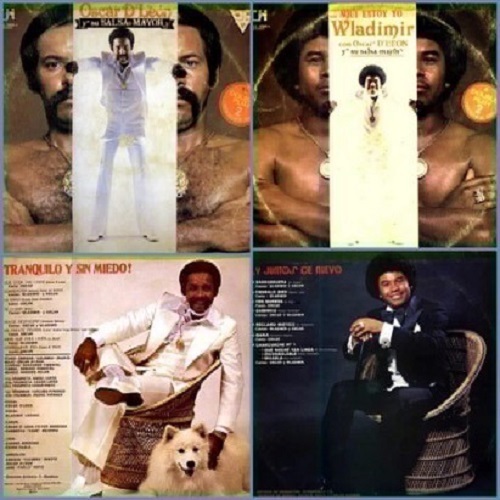
That is why it is never too much to remember some interesting facts that adorn this story, such as the headline that appeared on the front page of Swing Latino magazine in November 1977, which read: “KO a la Dimensión? OSCAR D’LEÓN after signing WLADIMIR.

In summary, the article said that Wladimir had intentions of leaving Dimension because of an alleged refusal of a loan request, a situation that induced the vocalist to want to sign with another orchestra. Another excerpt of the article says that Oscar D’León in his eagerness to have Wladimir in his orchestra, would have given him the money to satisfy his economic needs, but in exchange he would have signed a contract with the orchestra.

“La Salsa Mayor“de Oscar D’León

In short, by that time in November 1977, these were only speculations, of course, as it is also mentioned in the article in a jocular way “When the river sounds it is because it brings stones”.

The truth is that the year 1978 arrived and in the Swing Latino of March another headline appeared on the front page “¡LA DIMENSIÓN LATINA SE VA DE VENEZUELA! pero Wladimir se queda con Oscar”, which clearly shows that those speculations or rumors that were made in the salsa milieu at that time were a reality that quickly materialized.

“Last February 20, the bolerista presented his resignation to Dimensión Latina and began to work his notice period. In the meantime, he has already begun his rehearsals with Salsa Mayor and will soon be fully incorporated into this group that already threatens to become a real monster not only nationally but also beyond our borders, which we have no doubt he will now achieve with this valuable acquisition” (Swing Latino. March 1978).

Now, only a month had passed when another news about the orchestra of the dancing bass shakes the salsa milieu, “¡SE DISOLVIO LA SALSA MAYOR!”, headline that appeared in Swing Latino for May 1978 and stating: “Seven of the ten musicians that made up the prestigious group of Oscar D’León, left the orchestra for economic reasons”.

The rest is already known history, the negrito from Antimano reassembled his orchestra with some musicians from “La Critica” and others who came from the orchestra “La Renovación”, which at the same time also dissolved and the rumba continued.

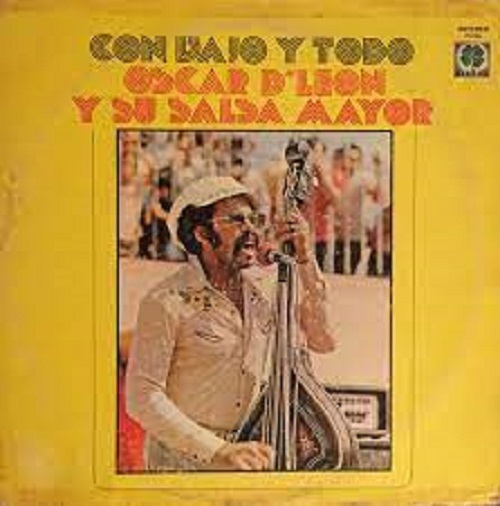
Con Bajo y Todo  Oscar D' León's "La Salsa Mayor"
Con Bajo y Todo  Oscar D’ León’s “La Salsa Mayor”

In August of that year 1978, Oscar D’León’s last album was announced under the name of “LA SALSA MAYOR”, a fabulous double LP, that just by looking at its cover you could already feel the strength with which the sonero from Caracas was coming along with the diminutive in stature but great with his voice, Wladimir Lozano.

The internal title of the album spoke for itself, “TRANQUILO Y SIN MIEDO”, this makes us think that the phrase had a double meaning, remember that the musicians who defected to form the other Salsa Mayor, recorded that famous song: “Fuimos Amigos”, where they throw a few puns at Oscar and this “calm and fearless”, returns them in the song: “La Mano”… “Why did not you follow me when I gave you my hand?”Now it weighs on you, you fell in the mud”… Chorus: “Que te vaaaya bien”.

The album is excellent as almost all the ones published by D’León in those past decades, all the songs are good, but I can’t help but comment and recognize that the song that I liked and still like the most from this double album is “MARIA”, maybe because in every man’s life there has always been a Maria…My respects and salsalutation to all of you.

Enrrique “Culebra” Irierte y Dj. Augusto Felibertt

Oscar D’León y su Salsa Mayor (double play) (1978) ths-1225

Disc 1 – Side A

  1. Que cosa tan linda (Oscar D’León) Singer: Oscar D’León
  2. Consentida (Alfredo Nuñez de Borbón) Singers: Wladimir and Oscar
  3. La mano (Sandy Omar González) Sung by: Oscar
  4. Te llamo (D.D.) Sing: Wladimir and Oscar

Disc 1 – Side B

  1. Dulce desengaño (Armando Beltrán) Sung by: Oscar and Wladimir
  2. De frente Panamá (L: Andrés Vega, M: José Zamora) Sung: Oscar D’León
  3. Mira que eres linda (J. Brito) Sung by: Wladimir Lozano
  4. Consígueme eso (Pedro N. Perez) Sings: Oscar D’León

Disc 2 – Side A

  1. Sandunguera (M. Guerra) Sung by: Wladimir and Oscar.
  2. Piénsalo bien (Agustín Lara) Sings: Wladimir Lozano
  3. Ven morena (R. Paz) Sing: Oscar D’Leó
  4. Ausencia (Rafael Hernández) Sing: Oscar and Wladimir

Disc 2 – Side B

  1. Reclamo místico (M. Matamoros) Sing: Wladimir y Oscar

María (Florentino Padrón) Sing: Oscar D’León

  1. Chancunche No. 1: Sing: Wladimir and Oscar

*Que noche tan linda (B. Diez, A. M. Romeu)

*Inconsolable (Rafael Hernández)

*Micaela (Raúl Guillaume)]

Musicians:

Enrique “Culebra” Iriarte (Piano).

Oscar D’León (Bass)

Rhadames Pimentel (Congas)

Edward Pimentel (Timbal)

Hungary Rojas (Bongo)

Ángel López (1st Trumpet)

César López (2nd Trumpet)

César Pinto (3rd Trumpet)

Tarcisio Piñango (1st Trombone)

Pedro Piñando (2nd Trombone)

Andrés Mendoza / Pedro Vilela (Tres)

Oscar D’León (Vocal)

Wladimir Lozano (Vocal)

Oscar D’León / Víctor Mendoza / Humberto “Tigre” Becerra (Backing Vocals)

Enrique Iriarte / Oscar D’León / José “Cholo” Ortiz (Arrangements)

Other Credits:

Intersonido C.A. Recording Studios.

Sound Technicians: Agustín Verde and Carlos Guzmán

Mixing: Rafael Hernandez

Art Direction: Víctor Mendoza

Idea, Design and Album Art: Drago Fernández

Photos: All Freddy.

Source:

José “Cheo” Guevara

Enrrique “Culebra” Iriarte

Enrrique “Culebra” Iriarte

You can read: Víctor Porfirio Baloa Díaz, more commonly known as Porfi Baloa

Carlos “Patato” Valdés one of the best percussionists in the history of Latin Jazz.

On November 4, 1926 in the Los Sitios neighborhood of Havana, Cuba, Carlos “Patato” Valdés was born. Known as Patato, he is, quite simply, one of the best percussionists in the history of music.

Patato was born into a very santera and very musical family, his father was a tres player of Los Apaches, the port germ of two illustrious sonera groups: the Sexteto Habanero and the Sexteto Nacional.

He learned to play the tres and the botijuela before turning to percussion, first on the cajones and finally on the congas.

He was an extraordinary percussionist of outstanding participation with the “Conjunto Kubavana”, “La Sonora Matancera”, “Conjunto Casino” and the “Orquesta de Tito Puente”, among other groups, both Son and Latin Jazz.

Formed in rumbero gatherings and carnival groups, Valdés became a professional in the early forties, after trying his luck as a boxer and dancer.

Carlos “Patato” Valdés uno de los mejores percusionistas en la historia del Jazz Latino

He played with Conjunto Kubavana, La Sonora Matancera and El Conjunto Casino. He accumulated nicknames: Zumbito (for his performances at the Zombie Club), Pingüino (for a dance he did on television) and Patato (for his small size), and in those days, dedicating oneself to music in Cuba guaranteed hardship. Besides, Patato wanted to experiment and that was not possible playing for dancers or tourists.

In 1954, he emigrated to New York, like his leather friends: Cándido Camero, Armando Peraza, Mongo Santamaría and the pioneer Chano Pozo (murdered there in 1948).

He immediately began working with Tito Puente. His first recording in the United States was the album Afro-cuban, by trumpeter Kenny Dorham, which opened with the intoxicating Afrodisia. Those were good times for tropical music.

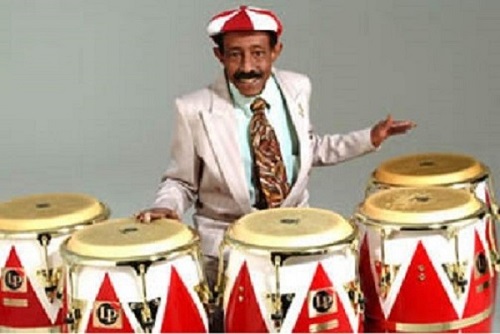
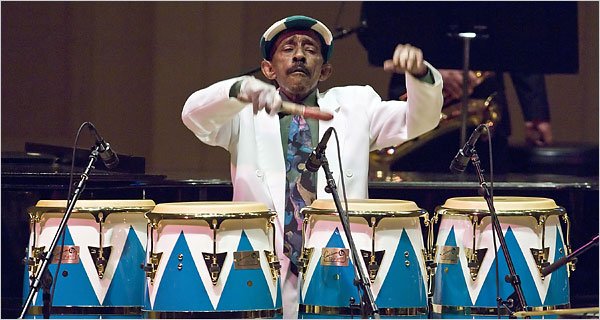
He was the first percussionist to improvise “Solos” with 3 or more Congas at the same time. In addition, he was the creator of the “Congas Afinables”, instruments on which he would ride to dance making them sound rhythmically.

Patato Valdes was an excellent musician, an unforgettable person. Nervous and diminutive, he spoke with an impenetrable Cuban accent; he dressed elegantly, hiding the necklaces and bracelets of Changó and other “orishas”. He looked like a living caricature, but when he hit the percussions he became a divine creature: he had power, spectacularity, sense of melody.

Those skills made him an ambassador of Afro-Cuban rhythms in the jazz world, although he will also go down in history for his extraordinary rumba recordings.

In 1956, Patato appeared in the film Y Dios creó a la mujer, teaching the dances of his homeland to Brigitte Bardot. A great moment, although an implacable Guillermo Cabrera Infante criticized the actress’s movements: “she seems to commit suicide by dancing a cross between mambo and chachachá, a really toxic cross between mambo and chachachá”.

A flexible musician, Valdés sounded as comfortable playing with Machito’s big band as with Herbie Mann’s group. However, he felt indebted to the “rumba de solar” and in 1968 he recorded a revolutionary album with his friend Eugenio Arango, alias Totico.

The exuberant Patato & Totico had genuine Havana flavor, but enriched the basic percussion instrumentation with Cachao’s contrabass and Arsenio Rodriguez’s tres.Patato expanded the creative possibilities for percussionists by playing with three or more congas.

He also made their lives easier by developing a tunable conga: fed up with the traditional method (heating the leather over fire), he installed a metal hoop and keys for tensioning.

Carlos "Patato" Valdés
Carlos “Patato” Valdés

The LP company mass-produced his model, which was to become the standard for conga players. To promote it, he formed the Latin Percussion Jazz Ensemble with Tito Puente, Jorge Dalto and Alfredo de la Fé, among others, an orchestra that would end up becoming Puente’s big band in the early 80s.

It was during this period with Dalto that the album we have chosen for today began to take shape. It was titled “Patato, Master Piece” and it synthesizes all of Patato’s genius.

“Masterpiece” is an album that travels first class through tango, jazz, descarga, guaguancó and bolero, always in a masterful way and with a luxury crew made up of names like Jorge Dalto, Artie Webb, Michel Camilo, Jerry and Andy González, Nicky Marrero, Ignacio Berroa, Joe Santiago, Néstor Sánchez, Vicentino Valdés, and Sabú Martínez, among others.

The Art of Flavor.

Unfortunately Dalto had already passed away when in 1993 the project was released by the venerable German label Messidor, the same label that had already financed some impressive sessions of Patato with Mario Bauzá or Bebo Valdés, with whom he would later record the famous El Arte del Sabor.

Jorge Dalton
Jorge Dalton

In fact, the great Argentine pianist had to be replaced for the last recording sessions that were made 6 years ago since his illness was too advanced, but he left us some incredible arrangements that were kept in the great majority of the themes.

Dalto left us in 1987 when he was only 39 years old. His replacement was nothing more and nothing less than a very young Michel Camilo.formed by 9 cuts among which we especially want to highlight the huge versions of Cute and Nica’s Dream, Masterpiece is an essential album for all lovers of Latin-jazz with capital letters and that is why we wanted to share it on a day as special as today.

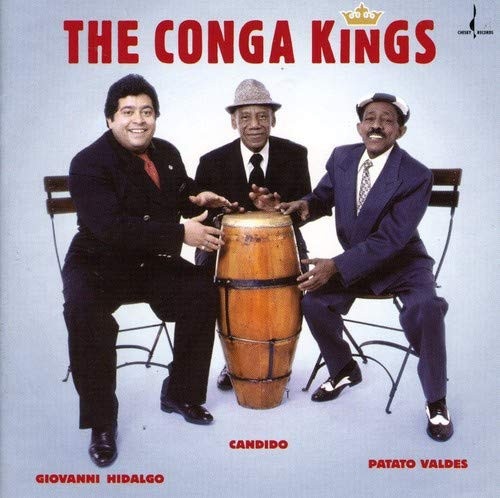
Already recognized as a legend, Patato became more visible in the last 25 years: he had his own band, Afrojazzia, although The Conga Kings, with Cándido and Giovanni Hidalgo, turned out to be more popular.

The Conga Kings Giovanni Hidalgo, Cándido Camero y Patato Valdez

He even made his way onto the modern dance floors, with a remix of San Francisco tiene su propio son. Just as he was returning from playing in California with the Conga Kings, his breathing began to fail.

The plane he was on had to make an emergency landing in Ohio to admit him to a hospital. The 81-year-old percussionist, a heavy smoker, was on his way to his beloved New York, but he would never get there. According to his relatives, he held out until December 4, the day of Santa Barbara, the Afro-Cuban equivalent of Changó, when the cables and tubes that kept him alive were removed.

Valdés died in Cleveland, USA, on December 4, 2007.

Fuentes: http://www.herencialatina.com/Patato/Patato_Valdes.htm

Imágenes: Martin Cohen de Congahead.com

Carlos “Patato” Valdés

You can read: Irakere was a Cuban group that developed an important work in Cuban popular music and Latin Jazz under the direction of Chucho Valdés

  • « Go to Previous Page
  • Page 1
  • Interim pages omitted …
  • Page 34
  • Page 35
  • Page 36
  • Page 37
  • Page 38
  • Interim pages omitted …
  • Page 65
  • Go to Next Page »

International Salsa Magazine (ISM) is a monthly publication about Salsa activities around the world, that has been publishing since 2007. It is a world network of volunteers coordinated by ISM Magazine. We are working to strengthen all the events by working together.