• Skip to primary navigation
  • Skip to main content

International Salsa Magazine

  • HOME
  • Previous editions
    • 2026
      • ISM / March 2026
      • ISM / February 2026
      • ISM / January 2026
    • 2025
      • ISM / December 2025
      • ISM / November 2025
      • ISM / October 2025
      • ISM / September 2025
      • ISM / August 2025
      • ISM / July 2025
      • ISM / June 2025
      • ISM / May2025
      • ISM / April 2025
      • ISM / March 2025
      • ISM / February 2025
      • ISM / January 2025
    • 2024
      • ISM / December 2024
      • ISM / November 2024
      • ISM / October 2024
      • ISM / September 2024
      • ISM / August 2024
      • ISM / July 2024
      • ISM / June 2024
      • ISM / May 2024
      • ISM / April 2024
      • ISM / March 2024
      • ISM / February 2024
      • ISM / January 2024
    • 2023
      • ISM / December 2023
      • ISM / November 2023
      • ISM / October 2023
      • ISM – September 2023
      • ISM – August 2023
      • ISM July 2023
      • ISM Edition June 2023
      • ISM – May 2023
      • ISM April 2023
      • ISM March 2023
      • ISM February 2023
      • ISM January 2023
    • 2022
      • ISM December 2022
      • ISM November 2022
      • ISM October 2022
      • ISM September 2022
      • ISM August 2022
      • ISM July 2022
      • ISM June 2022
      • ISM May 2022
      • ISM February 2022
      • ISM January 2022
    • 2021
      • ISM December 2021
      • ISM November 2021
      • ISM October – 2021
      • ISM September 2021
      • ISM August 2021
      • ISM July 2021
      • ISM May 2021
      • ISM April 2021
      • ISM June 2021
      • ISM March 2021
      • ISM February 2021
      • ISM January 2021
    • 2020
      • ISM December 2020
      • ISM November 2020
      • ISM October 2020
      • ISM September 2020
      • ISM August 2020
      • ISM July 2020
      • ISM June 2020
      • ISM May 2020
      • ISM April 2020
      • ISM March 2020
      • ISM February 2020
      • ISM January 2020
    • 2019
      • ISM December 2019
      • ISM November 2019
      • ISM October 2019
      • ISM Septembre 2019
      • ISM August 2019
      • ISM July 2019
      • ISM June 2019
  • Download Salsa App
    • Android
    • Apple
  • Spanish

Search Results for: Dancing

Berlin Salsa Congress Celebrates With The Salsera Family

Summer of Love’22 will be the main theme of the event that will paralyze the popular German capital

Berlin Salsa Congress invites you to celebrate the passion for Salsa during the summer.

Berlin Salsa Congress is back! Germany’s longest-running high-level social dance-focused event celebrates two decades with the Salsera family from Thursday, August 25th to Sunday, August 28th, and ticket prices range from €94.35 to €229. 65.

Berlin Salsa Congress in continuous operation since 2001 continues to unite dance lovers worldwide, and although in this edition they will not offer parties on the beach, sea, or pool, attendees will be able to enjoy amazing choreography Bootcamps for the Super Advanced level. To these pieces of training were added a series of workshops (during the day and outdoors) for those who want to improve their skills.

Likewise, they will also present the best Stargate shows at night-inside on three dance floors. The high-level social dance will take place from noon to midnight (and Saturday will be intensive), while on Sunday, they will present the results of the bootcamps and the winner of the Stargate Shows.

Also, during the weekend of this Salsero Congress, you will meet an incredible lineup of DJs from the world community in Berlin, who will rock the dance floor and keep you dancing until dawn.

And as usual, there will be Heroes of the Dance Floor. A group of the best social dancers gathered to make you learn some of the best dances of the moment.

The atmosphere will be incredible and just memorable!

Stargate Shows

Stargate shows offer the opportunity for student teams and any artist to showcase their talents to an international audience. The winners are chosen by the public and will be a winner every day. The winners of each day will be presented at the only showcase on Sunday at 9 PM.

Like last year, the Stargate Shows will be broadcast LIVE on the Internet. In 2021, they had about 1,200 daily viewers, and this year they will upload all Stargate shows to their official YouTube channel. Through this platform, an online survey will be conducted where they will select an additional Online Stargate Winner who will grant an extra chance to win. The winners of this online poll will get free access to the 2023 event.

Are you looking for your ultimate challenge?

On Sunday night will be a mixed final choreography of Salsa and Bachata

In Berlin Salsa Congress https://berlinsalsacongress.co/ will be single choreography training with Brenda Liew (Singapore) dedicated to Bachata for Ladies. This Bootcamp will give you energy, style, technique, and passion for eight intensive hours. The required level is Advanced.

The Price of this Bootcamp is €129, and it will take place from Friday, August 26th to Sunday, August 28th. The final rehearsal is on Sunday, August 28th from 7 PM to 8 PM, and the presentation will be at 9 PM.

Berlin Salsa Congress will take place in the Tempodrom (main venue) located in the heart of the city with a total of approximately 1,800 m2 of the dance floor and almost 3,000 seats for shows. Registration, social events from Friday to Sunday afternoon, some workshops, seminars, and discussion panels will take place here. Its address is Möckernstrasse 10, 10963 Berlin.

And the second venue will be Mövenpick. The rest of the workshops will be held in this hotel. Mövenpick – Siemenssaal (a 3-minute walk from Tempodrom) is located on the second floor and has a wooden floor and natural light perfect for the needs required. Its Address is Schöneberger Strasse 3, 10963 Berlin.


Home

Jazz, soul and rap singer Danay Suárez has an incredible talent

Cuban talent for the world

Danay Suárez (https://www.facebook.com/danaysuarezoficial) is a Cuban jazz, soul and rap singer who has achieved a lot of international notoriety in recent years thanks to her talent and dedication in each of her musical works. We are honored to talk to her and this is what we asked her:

Danay Suárez has given concerts in many cities of the United States and Europe

Questions for Danay Suarez

I have been able to see that you are a self-taught artist. Would you say that your musical progress was to do with ear or do you already have any formal education related to music?

I was trained as a lyric singer by one of the most important musical theater companies in Cuba (Opera de la Calle). My training involved rhythm, harmony, music theory and acting classes. Most of my musical progress is to do with living my career, improving my thoughts, stage, recording studios, reaching culture, entering various musical genres and meeting and collaborating with musicians from around the world.

You’ve gone into jazz, soul, reggae, traditional Cuban music and hip hop. However, it can be said that you started with socially conscious rap and were even called “The queen of Latin rap”. Did you experiment with all these rhythms and genres at the same time or in stages during your career?

I sing several genres because I am not static or orthodox, creativity inspires me, I need to move my ideas and explaining them with rhythm is a great and good challenge. Which is why I combine the freedom delivered by jazz gives to move the words and the possibility afforded by rap to create a speech with creating pleasant and danceable moments, perhaps alluding to reggae because this genre allows you to intellectualize while dancing. I listen to a lot of music and think I might go to new places and be inspired by new sounds.

Danay Suárez has been known as The Queen of Latin Rap

We saw a spectacular video of you singing your song “Yo Aprendí” with The Kennedy Center Orchestra. How can two seemingly different genres join in something so special? Tell us how was that experience, how they became interested in you for that project and how these musical elements came together. 

I don’t think two different genres came together, my arrangement for the symphony was very similar in its harmonic and melodic base. Making art and taking all the things we do to a level of excellence is what makes the worlds integrate and complement each other without being forced. For me the symphony is the complete picture, I place a high value on my words and I think many of them are divinely inspired, visual, parables, timeless most of the time. Sometimes I feel that only a symphony can support them at the highest level. Living my lyrics as I have imagined them is a dream come true, a dream fulfilled I want to repeat many times.

You have made music for Netflix and already some video games. How did they come to you? Why do you think they became interested in your music?

Together with my publishing company Kobalt Music, I was given proposals on synchronizing such as these video games, series, and some offers I’ve refused because I belive that they do not build anything of value that can be linked to the message of my songs. You never know what makes people connect with my music, but they can be the rhythm, the word, or the artist.

This Cuban singer has made music for Netflix and video games

Last year, you released your album “Vive”, which is very different from what you have been doing and come any closer to Christian music.

“Vive” is a thoroughly evangelical album because it was born in a period of deeped intimacy with the Lord, all my work is partly biographical and a portrait of the moment I’m living or I got over it, so I can already it. Those who know my work can see the sincerity through the music of each stage I’ve lived. At the end, the most honest approach I can offer to my music is my own testimony.

You have been in the United States and several European countries. How has been the responses of your music been in all these places? How are you perceived there?

The reception has always been extraordinary, people cry at my concerts and I know it’s because they listen to any advice that can transform their lives, they have a vivid and real moment, which is sealed with values that make good. That motivates me to always bring life to my people with the songs, I know that there is a thirsty world from which I’ve been part and that’s why I do not take lightly to make music, I do not even treat it strictly as a business. What I do is I finance my music through other businesses to allow me do things correctly. In the case of the non-Spanish speaking public, my answer is that music is a universal language that is felt and enjoyed in the same way when it’s genuine.

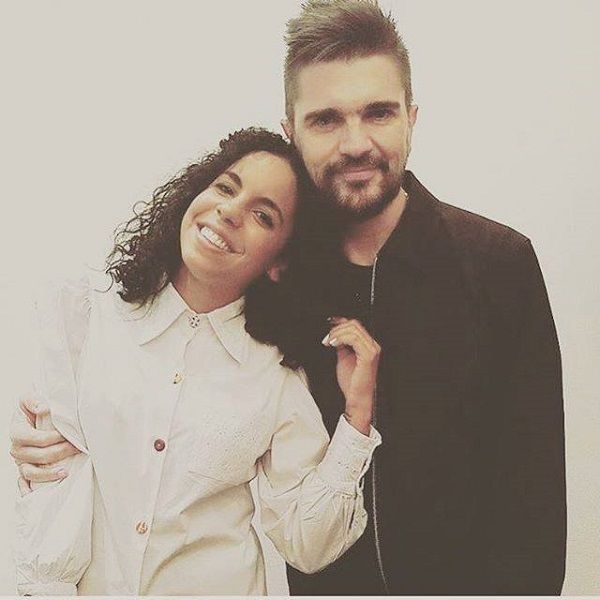
Danay Suárez next to Colombian singer Juanes


Home

Salsa En La Web also promotes Latin music around the world

Salsa En La Web

As our dear readers know, International Salsa Magazine is dedicated to promoting Latin music artists, especially those who sing salsa, but we also believe that it is of extremely importance to promote platforms that, like us, seek to spread this wonderful and colorful music everywhere.

Salsa En La Web is a salsa community on the internet, so there are members from all over the world. This site is devoted to promoting and spreading everything related to salsa and Latin music so that the new generations get to know the musical idols of their parents and grandparents. They also want this musical genre to keep growing and never go out.

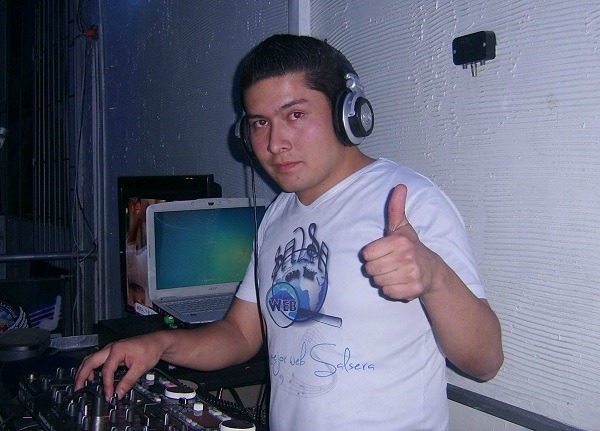
DJ Danny Salsa, director and programmer of Salsa En La Web

Interview

Today, we talked to the administrators of the website Salsa En La Web, which is devoted to promoting salsa worldwide, and our questions were as follows:

Who are we talking to? Please provide your name, occupation and direct or indirect relashionship with salsa.

You’re talking to DANNY SALSA, director and programmer of SALSAENLAWEB. I am also a chemist and DJ by profession. – Collector of romantic salsa.

According to what I read on your Facebook page, you have spread salsa culture at the global level for 11 years. How did everything start?

In 2011 we started sharing music on a blog where we spread LP, CD, ARTISTS, GROUPS, ORCHESTRAS. After that, we also shared gatherings of collectors and salsa events in Bogota.

To date, we have not failed to spread salsa culture that through this beautiful music, we want to make a better culture.

DJ Danny Salsa loves salsa and wants to promote it

What has motivated you to create a website of this style? Why are salsa and Latin music so important to you?

First of all, the taste for salsa music started from I was 13 years. From a very young age, I had contact with computers after school. In my spare time, I created my first blog and, after knowing the world of the internet, I created this website of salsa.

Salsa has brought me great friends, moments, live artists since I programme salsa at bars. I saw the happiness dancing and sharing after entering the world of collecting your albums for your own taste brings.

What part of the world is the largest part of your audience from?

Colombia is our biggest audience with listeners who always listen to our programming at any time of the day and from any time of the day and from any part of the planet where there is an Internet connection.

According to the map on your website, many members of your audience are in Europe and the southern United States. Where are you located? Are you in different countries?

The website is free on the platform www.salsaenlaweb.com.co and from the APP without any cost, listeners in these countries can listen to us from these countries send us their good comments and this motivates us to programme the best salsa music through our . We are in Bogota, Colombia but we have listeners all over the world.

In addition to salsa, what other musical genres do you promote?

We don’t do dissemination of other genres because we are select in salsa.

What goals have you set in the long run?

We want to be the salsa website of reference for its good content in the whole world and have great sponsors that allow us to keep working in favor of salsa.

Logo of Salsa En La Web


Home

This is Roger Danilo Páiz Pérez from Danilo Y Su Orquesta Universal

Why is he called Danilo?

We will start a conversation with bandleader, percussionist, and singer Roger Danilo Páiz Pérez. Pleased to meet you, how are you doing?

I’m fine thanks, Karina. Sitting here and ready to be interviewed by your magazine. I have a lot of information about what has happened in my life being a musician here in the Bay Area since the 70’s.

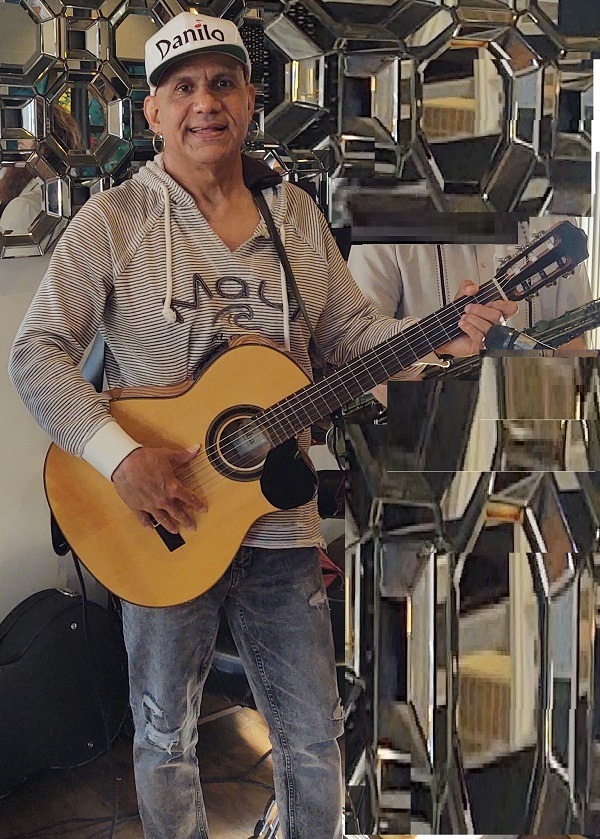
Danilo on guitar at one of his frequent restaurant performances

You are Francisco Pancho Perez’s grandson. Did your grandfather serve as inspiration for the path you would take in music?

Definitely he did. I remember being about four or five years old when I used to hear my grandfather play with his big band, which was composed of 15 or 14 musicians. I always listened to them practicing in our house and started dancing, so my grandfather used to call me cha cha chá. It was a great inspiration for me.

He played music similar to American jazz, and that’s where the inspiration for the music I play today comes from. The salsa that I write is inspired precisely by that kind of jazz.

Where does the name Danilo come from? Also, why is your orchestra called Danilo Y Su Orquesta Universal?

I have to make it clear that Danilo is my middle name since I was born. This is not a nickname as many believe. Some people even think that I have changed my name, but I didn’t. Roger Danilo Páiz Perez has always been my name.

Everyone called me Roger Páiz in the past, that is to say, people called me by my first and last name. In fact, when I played with Rubén Blades in 1989, the album we recorded has me in the credits as Roger Páiz. But when I founded my own orchestra in the 1990s, I thought Danilo was better suited to Latin music, so I started using my middle name to call my orchestra Danilo Y Su Orquesta Universal.

The word universal comes from the fact that I am a Buddhist. I practice the religion of Nichiren Daishonin (monk in Buddhism from Japan in the 13th century and founder of the branch of Nichiren Buddhism) for more than 30 years. That word is widely used in the Buddhist scriptures, and I am very involved in that.

Roger Páiz getting ready to hit with Josh Jones’ band

Your country of origin is Nicaragua. Is Nicaraguan salsa similar to Californian salsa? Are they different? Do you combine them?

Since I was very young, I listened to a lot of Cuban orchestras. I remember my dad tuning in to Celia Cruz, La Sonora Matanzera, among others. From that experience, I picked up all those things since childhood.

Here in the United States, the style was much more modernized. However, I grew up listening to El Gran Combo de Puerto Rico and many other orchestras in the ‘60s and ‘70s. My biggest inspirations were Héctor Lavoe, Oscar De León, Rafael de Jesús, Cheo Feliciano and many others from those years. I paid a lot of attention to how they sang and the melodies that they used.

What Danilo has learned from his musical references

You have made contact with Latin music stars such as Ray Barretto, Rubén Blades, Benny Velarde Y Su Super Combo, Andy Narell, Ray Obiedo, Cheo Feliciano, Oscar De León and many others. What did you learn from all these musical references?

For example, I shared a gig with Cheo Feliciano in Puerto Rico while I was with Rubén at a concert. (Luis Enrique was actually at that concert as well.) Cheo taught me how to phrase with the clave, since this is a very important detail in singing Salsa.

In the case of Héctor Lavoe, I learned a lot from the melodic part. When he sang, the melody was very interesting and appealed to me a lot.

Another singer I liked a lot was Rafael de Jesús, because his style tended to sound like jazz. Sometimes he sang some lines that sounded very jazzy, but he never lost his style as a Salsa singer. That’s one of the main things I liked about him.

Another singer I liked a lot was Rafael de Jesús because his style tended to sound like jazz. Sometimes he sang some lines that sounded very jazzy, but he never lost his condition as a salsa singer. That’s one of the main things I liked about him.

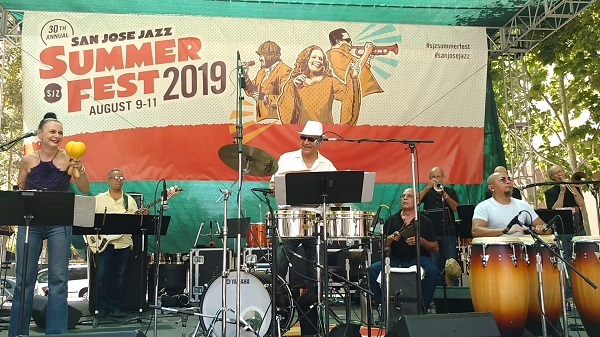
Danilo y Su Orquesta Universal at the San Jose Jazz Summer Fest 2019

Did he receive academic training in music?

I took classes  in Oakland, California, learning music theory, piano, singing, and much more. These studies helped me a lot to better prepare myself musically speaking.

Studying music is important because it enhances the way you perform, sing, and play on stage. That’s when people can tell whether you are a musician who has studied and analyzed music. I’ve met musicians who learned everything by ear and they never progress to the next level.

Of course, there were also things I learned on the stage, in the studio and in rehearsals. I’ve unified all this knowledge to do my job to the best of my ability.

I saw that you have some dates to perform in the Bay Area and other places, can you tell us a little bit about that?

In 1995, I got the opportunity to take a group to Singapore (to be the house band at the Hyatt Regency Hotel). What I did was to find the best six musicians who could play the music I was asked to play. We rehearsed, traveled to Singapore, and stayed there about three months, all expenses paid. It was an amazing experience and I was honored to present my music in that country.

Danilo with Tito Puente, Jr.

What about your current performances?

We just played at La Peña here in Berkeley. It was really good, a lot of people showed up there and they recorded the whole show. Fans sent me some videos as well, so I have to start editing them.

We also played at The Ramp, El Rio, The Turf Club, Kimbara, among others. Coming up, we will be playing at the Cigar Bar.

Let’s talk about your latest album Perseverando.

I decided to call this album Perseverando because of my experience of overcoming the difficulties of maintaining a music career.

Turning to Buddhism, the word perseverando is very important, because life puts barriers in your way and you have to persevere to overcome them. It was common for record labels to say that they were saturated and couldn’t sign me, but I kept writing and recording original music despite the difficulties. The first album is called Vivencias and the second one is called Avanzando. They are titles that have had a lot to do with my life experiences.

I made a video for one of the songs on this álbum, Rumberos de la Bahia, which is on YouTube: https://youtu.be/z3E7K_5SLJo

What other projects do you have pending?

I’m thinking about putting out an album that will be a combination of songs that have not been released yet with some remixes of songs on my albums. Although a dream of mine is to be nominated for a Grammy, that is not why I créate music. Music is my life and my passion.

Cover of the album Perseverando


Home

Europe July – 2022

  • « Go to Previous Page
  • Page 1
  • Interim pages omitted …
  • Page 39
  • Page 40
  • Page 41
  • Page 42
  • Page 43
  • Interim pages omitted …
  • Page 65
  • Go to Next Page »

International Salsa Magazine (ISM) is a monthly publication about Salsa activities around the world, that has been publishing since 2007. It is a world network of volunteers coordinated by ISM Magazine. We are working to strengthen all the events by working together.