

Directory of North American nightclubs |
||
|
|
||
|
|
|
|
|
|
||

CALIFORNIA |
|

ILLINOIS |

MICHIGAN |

NEW JERSEY |

NEW YORK |
|
|
|
|
|
|
|
|


Directory of North American nightclubs |
||
|
|
||
|
|
|
|
|
|
||
|
CALIFORNIA |
|
ILLINOIS |
|
MICHIGAN |
NEW JERSEY |
NEW YORK |
|
|
|
|
|
|
|
|



| DIRECTORY OF NIGHTCLUBS | ||
|
|
|
|
|
|
|
|
|
|
|
|
|
|
|
|
|
|
|
|
|
|
|
|
La Critica by Oscar D’León

It was about the defection of some musicians from the Orquesta La Salsa Mayor. Indeed, Leo Pacheco, Felipe Blanco, and other musicians had decided to leave for financial reasons.
The news caused a stir; Oscar had already achieved a very special sound. He had moved away from the trombones that characterized his style and had incorporated a brass section with trumpets that made a difference. Suddenly, he was without his powerful machinery. Leo and his group formed what was called Nuestra Orquesta La Salsa Mayor, and Oscar, without a second thought, reassembled his group alongside Enrique “Culebra” Iriarte.
No one should doubt that Oscar had a tough time, but the prestige he had gained and the popularity of the sonero allowed him to come out on top.

The project’s formation brought together pianist and arranger Mauricio Silva, percussionist Radamés Pimentel, and Teo Hernández, who would serve as vocalist.
Since 1978, La Crítica emerged as an exceptional group. The jazz influences infused by Mauricio Silva from the very beginning were crucial for the public to accept the band as a favorite. In that “beginning,” other significant names included “Cheo” Navarro and Gustavo Quinto, who were already known from their time with Grupo Mango.
There have been many setbacks and successes over 40 years.
The musicality of this successful group is to be celebrated this Saturday, June 16, at the BOD Cultural Center. The event is at 5:00 in the afternoon, when the salsa public will gather en masse.

Jorge Collazo, who was Oscar D’León’s press chief and now is La Crítica’s on their return, tells us that a spectacular night is being prepared, “an evening to remember, a show that no salsero should miss.

The prestige gained by La Crítica allowed it to accompany great international soneros such as Justo Betancourt, Héctor Lavoe, Ismael Miranda, Ray de la Paz, Daniel Santos, and the legendary Celia Cruz.
This is part of La Crítica.
Also Read: Cheo Linares is a Singer, Composer, Sonero, Poet and Caraqueño
Latin America / Venezuela / Sucre

Already established in the city of Guayana, in 1990 he began his musical career as executor of the first Steel Band piano in musical groups that cultivated and spread the aforementioned rhythms; and as time passed he gained more experience, excelling in Soca and Calypso which were the main rhythms of “Alfrid y su banda Acero”.
During his day he presented his new record production in the salsa genre, entitled “Salvemos El Amor” which was born from his 2nd salsa work; His first production was made in 2004, presenting himself as “Alfrid El Salsero De Oriente”, with his songs “Sin tu Amor”, “Hasta arrival at the Sea” and “Stay by my side”, which were recognized by the International Organization ” Cacique de Oro” as “Salsa Revelation Singer of the Year”. And with his record work he toured his country (Venezuela) together with several artists in the celebration of the 25 years of artistic career of Salsero Manuel Guerra, creator of the famous group “Salserin”.

In this new production there are 10 songs of which Alfrid expresses his lyrics and arrangements in 3 songs: “Salvemos el Amor”, “Traicionera” and “Amor en la menor”, in addition to making some tributes to the great singers of the decade of the 80s such as the Great Héctor Lavoe and Ismael Rivera, Alfrid is currently in Lima – Peru where he will launch this salsa material with the support of the record company Col-Discos and the media of that country.
One of the salsa songs to be released soon to its public is “Dudas” that will be launched in Lima, Peru for all of Latin America, if you want to listen you can listen through https://soundcloud.com/pana music/alfrid-el-rey -del-steel-band-doubts

For more information:
If there is something that we have seen in recent times is that Los Angeles, New York and Miami are not the only places Latin music has had great boom due to the huge number of Latinos in those areas, as our culture has permeated many other places in the United States. A great example of that is the Orquesta Afinke, based in the state of Connecticut, and its director Herminio ‘‘Tito’’ Planas, with whom we were able to talk about his career and band.

Tito was born in Puerto Rico and raised in the town of Ponce, the home of great luminaries of salsa such as Hector Lavoe, Pete ‘’El Conde’’ Rodriguez, Papo Luca, Jose ‘‘Cheo’’ Feliciano, Ismael Quintana, Yolanda Rivera, among many others. He even attended school with Keila Lucca, the daughter of one of the Luccas of La Sonora Ponceña, and is still in contact with her through social networks.
He studied at the Free School of Music in Ponce where he sang in a children’s choir and they traveled around the town to delight a variety of audiences with his voice. Building on the success of this program run by the school, there were many children from third through eighth grades who began taking lessons of solfeggio or any instrument they wanted.
In Tito’s case, he moved with his parents to the United States at age 13 in the eighth grade of the secondary education. His father had lost his job in Puerto Rico and the economic situation of the family was very precarious, so he made the decision to go first to find work and, in so doing, taking his children and his wife to live there.
In college, he started getting involved with salsa and had Jerry Perez as a trombone teacher, who taught him in this instrument for several years and offered him to form an orchestra together. They eventually did and toured with it in various parts of the United States.
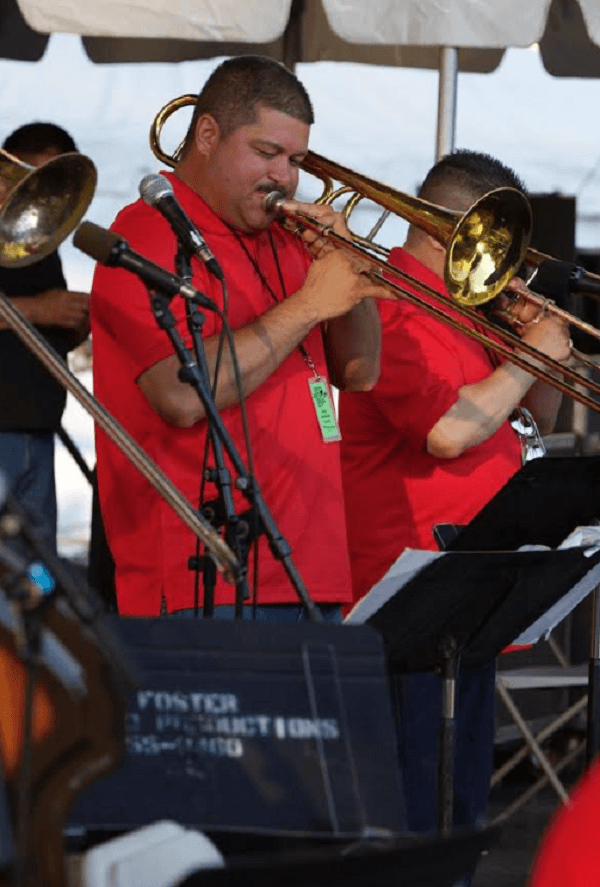
After being played the trombone for some time, many other musicians saw him and offered him to play with them in their orchestras. Many of these job opportunities came from New York, which was very close to him, which benefited him greatly because the clubs in that city closed much later, so they could play even till five in the morning. He combined all these activities with university and his private lessons in order to further improve his musical skills.
After the foundation of the orchestra, Tito and his musicians accompanied many great artists such as Hector Tricoche, El Grupo Guayacán, Viti Ruíz, Van Lester, Frankie Vázquez and many others.
Thanks to all these shows they were doing with other groups, Sammy Diaz, co-director of the orchestra, and Tito decided it was time to create a much more formal project that grouped together all the original members of the band. What brought them closer together was the fact that both Tito and Sammy had teenage children, whom they included in the group to keep them playing and in constant contact with music.

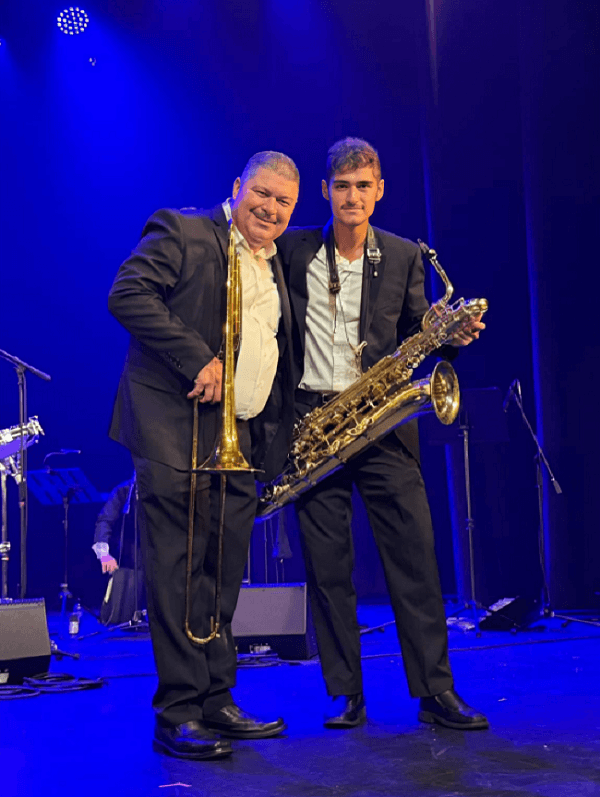
Today, Tito’s youngest son is 18 years old and is about to enter the University of Connecticut to study music in order to follow the same path as his father, with whom he has been working in the orchestra since he was about 11 years old singing backup and playing the saxophone.
They started with about three scores with which they managed to put on a show for as long as half an hour. Today, 16 years later, they have more than 80 scores and about 12 original songs, of which one was recently released and another is being recorded at the time of writing this article.
On the other hand, the core of the orchestra has been the same since its foundation and includes pianist Rafael Rosado, bassist Victor Planas, bongo player Sammy Diaz Jr. (co-director of the orchestra Sammy Diaz’s son), timbalero Sammy Tercero (another son of Sammy Diaz), conguero Luis Carrasquillo, singer Junior Travieso, singer Raquel Ramirez, Peruvian singer Jano Arroyo, trombonist Jerry Perez (the teacher who taught Tito to play the trombone) and Daniel Planas (Tito’s son).
Read also: Eduardo Ron and his Fondo Blanco Band liven up great events in Miami