






From 1940 to 1957, he was in charge of the arrangements, rehearsals, repertoire, hiring of the vocalists and that very particular sound, so imitated but never equaled that the “Dean of the Conjuntos” possessed.
All that sonority is due to this pianist, composer and arranger born in Matanzas, Cuba, on June 2, 1903.
Severino Ramos Betancourt was born on June 1, 1903 in Matanzas, Cuba. He was a composer, pianist, orchestrator and arranger, one of the great Cuban musicians, he worked as pianist and arranger in the Conjunto Sonora Matancera, later he founded the Sonora Cubana.

Since he was a child, music, musicians and instruments were his passion. In his family, grandparents and uncles, had to do with the bungas of Matanzas (a bunga was a small group that included piano, violin, clarinet and flute). As a child he met Cheo Jiménez and Eduardo Betancourt, trombonist of Miguel Failde’s orchestra.
Later he went to Havana where he worked successively as a tailor’s assistant, insurance collector, doorman in a cabaret, traveling salesman, substitute musician in theaters, radio stations, and a thousand other occupations that appeared along the way before becoming a professional musician, during that time he received lessons from Felix Covarrubias.
Sonora Matancera

Severino Ramos joined the famous Conjunto Sonora Matancera in 1942, as a pianist, after unsuccessful attempts to occupy positions in the Sexteto Mikito (later Conjunto Casino), replacing Enrique Rodriguez, and in other Havana groups.
Severino’s character does not go with the style of intense and nocturnal work of the group, presentations in radio stations, dances (preference of Rogelio Martínez its director), contracts in La Tropical, Cabaret Tropicana, regional Centers: Asturian Center, Galician Center and trips to provinces; so he decides at the request of the director of the Sonora to look for another pianist for the group and he stays to make the arrangements, rehearsals, preparation of repertoire, etc…, From that moment on, the star of the Conjunto Sonora Matancera really began to shine in the firmament of popular acceptance.
He became, in keeping with his calm character, an orchestra man performing all these tasks and some others, such as visiting radio stations, theaters and other places to obtain contracts for the group.
The fruits contributed by Severino Ramos between 1940 and 1957 are of extraordinary value, perhaps what makes his work more visible are his arrangements and the preparation of the regular and guest singers that accompanied the Sonora such as: Bienvenido Granda, Daniel Santos, Myrta Silva, Celia Cruz, Leo Marini, Bobby Capó, Nelson Pinedo, Estanislao Laíto Sureda, Carlos Argentino and Celio González, among others.
After the Sonora Matancera
The last days of Severino Ramos in favor of Cuban Music were as musical director of Radio Progreso since 1957, when he left the Sonora, simultaneously with the prolific and very important work at the head of the many record labels he created.
After 1959, in that first decade, 1960, many record labels emerged in Havana, plus those that came from before and he multiplied himself making arrangements, forming momentary groups, forming groups to accompany Orlando Contreras, Blanca Rosa Gil, Orlando Vallejo, Ñico Membiela, many more. He formed the Sonora de Severino Ramos and helped create the Conjunto Caney.

The following is a small sample of songs that were arranged by Severino Ramos for the Sonora Matancera:
El Tíbiri Tábara with Daniel Santos
Qué corto es el amor, with Mirtha Silva
Burundanga, Yerbero Moderno, Tu Voz, Luna sobre Matanzas, with Celia Cruz
Who will be? With Nelson Pinedo
Yo no soy guapo with Vicentico Valdes
Sujetate la lengua, with Bienvenido Granda
Aunque me cueste la vida, on the 19th, El negrito del Batey with Alberto Beltrán
El gallo, la gallina y el caballo with Manuel Licea
Piel Canela with Bobby Capó
Maringá, with Leo Marini
Who will it be? With Nelson Pinedo
Las Muchachas, with Carlos Argentino
Translated with www.DeepL.com/Translator (free version)
Severino Ramos died in Havana on November 2, 1969.
The only performance with Yolanda Rivera & Mario “Mayito” Rivera will be at the Lehman Center

The name “La Sonora Ponceña” is in honor of the Cuban band La Sonora Matancera and its hometown (Ponce – Puerto Rico)
La Sonora Ponceña “National Treasure of Puerto Rico” together with its leader Enrique Arsenio “Papo” Lucca returns to Salsa County (The Bronx) with the special guests Yolanda Rivera and the Cuban singer Mario “Mayito” Rivera (former member of Los Van Van) onstage at one of New York’s leading non-profit performing arts centers, Lehman Center.
This unique presentation, long-awaited by its fans, will be on Saturday, May 14th at 8 PM at the Lehman Center for the Performing Arts located at 250 Bedford Park Blvd West, Bronx, New York 10468 and the online price per ticket ranges from between $45 – $100. https://www.lehmancenter.org/sonora-poncena
La Sonora Ponceña gained popularity in 1960 during its trip to New York City to give a series of presentations and established itself as one of the most demanded orchestras among Hispanics.
The legendary band, for more than 65 years, has made uninterrupted performances and has been recognized as one of the best Salsa orchestras for its fusion of traditional Cuban sounds with the modern style of Latin Jazz.
In 1967, under the direction of Papo Lucca, they released the first LP Hachero Pa’ Un Palo with the Inca label (a subsidiary of Fania). This album was an overwhelming success in New York as well as its second record production Fuego en el 23 (1969). The famous band from Puerto Rico recorded 29 more albums for this record label, including eight with the singer Yolanda Rivera, La Ceiba with Cuban singer Celia Cruz (1979), and in 1980 New Heights from which they began to establish the internationalization of the orchestra.
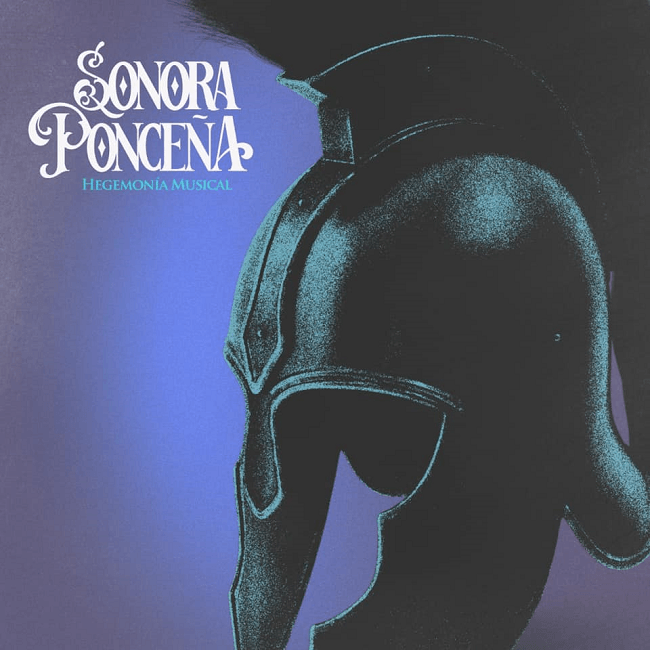
Musical Hegemony consists of 8 tracks including Caminando Con Mi Padre, Nadie Toca Como Yo, and Borrachera
This last year (2021), during the pandemic period, La Sonora Ponceña launched two new record productions: Hegemonía Musical (June 2021) and Christmas Star (November 2021).
The last one is the fourth Christmas-themed album in his career. “Thirteen years after our last Christmas production, we seek to present a record work that is a true reflection of the sound and musical quality that we always want to offer our audience”, Papo Lucca told digital media.
While “Salsa Que Cura To” is the first single taken from their most recent album Hegemonía Musical and whose authorship and interpretation is by Jorge Nicolai Avilés (vocalist of the band) with musical arrangements by Papo. Musical Hegemony, nominated in the Tropical Album of the Year category at the Billboard 2021 awards, was made with great dedication and professionalism as indicated on its official social media. “…We thank the public for the support they have been giving to this latest album that was worked with much love and dedication to the memory of our always remembered Enrique “Quique” Lucca Caraballo (RIP) and all our dear followers… And we will continue working as we have been doing for 67 years to place in your consideration what best of our music, soul, perseverance, and professionalism that seek to bring joy and enjoyment to all our dancers… Thank you very much!”

The song “Borinquen” (1980) with Sonora Ponceña becomes her a famous Salsa star
Yolanda Rivera will also perform at this event. She was born in Ponce (Puerto Rico) and moved to New York City with her family during her childhood. Her first opportunity as a singer was in 1969 in Willie Rosario’s band. In 1975 she returned to Puerto Rico and performed in several orchestras, including Joe Rodríguez’s La Terrifica. Her career reached its peak when she joined La Sonora Ponceña in 1977. The song “Borinquen” from the album Unchained Forcede (1980), a musical tribute to her native country (Puerto Rico), made her a Salsa star. Yolanda Rivera is considered one of the main and most famous singers of La Sonora Ponceña with songs like “Rumba en el Patio” and “Madrugador”. Her repertoire includes Salsa, Plena, Bolero, Guaguancó, Son Montuno, and Guaracha.

Mario “Mayito” Rivera (El Poeta de La Rumba)
The second special guest tonight will be Mario “Mayito” Rivera. His vocal skill and masterful interpretation of Cuban music in modern and traditional styles earned him the nickname “El Poeta de La Rumba”. Mayito was born in Pinar del Río (Cuba) and has training degrees from the National School of Art and the Higher Institute of Art. After his educational training in Cuba, he joined the band of the Cuban singer Albita Rodríguez and played bass in the Moncada group. From 1992 to 2011, Mayito was the lead voice and face of the successful Cuban band, Los Van Van, earning a Latin GRAMMY® and two nominations with them.
Greetings my salsa people, here again with you, wishing you the best. First of all, lots of health, prosperity and optimism from your friend professor MSc. Carlos Colmenárez, who, through International Salsa Magazine and www.SalsaGoogle.com, presents you in this opportunity to: Freddy Sanchez bastion of this genre that we are so passionate about, for your delight Enjoy them.
“You must always remember that to be a good musician you have to maintain three fundamental elements, such as: discipline, responsibility and respect … Many do not understand that.”
These recommendations come from perhaps one of the musicians with the greatest trajectory and hierarchy in Venezuela, such as: Freddy Alí Sánchez Carvallo, born on November 9, with his musical beginnings at 15 years of age.
In 1994, he participated for the first time in a group called “Sentir Caribeño”, from Mariara, Carabobo state, playing bass; He continued his musical career with the “Mangüe” orchestra of Maracay, Aragua state and from there he went to the “Alteración” orchestra, then to the Sonostars de Mañito Junior, having the privilege of accompanying Yolandita Rivera and Luigi Texidor.

At the same time, at the beginning of 2000, he participated in the orchestras of: Hildemaro, Erick Franchesky, Magia Caribeña, Puerto Rico es Salsa, Pasión Juvenil, Porfi Jiménez and Francisco Pacheco y la Pueblo de el.
Of course, Professor Carlos, thank God I have had the honor of playing for: Andy Montañez, Henry Fiol, Junior González, Domingo Quiñónez, José Alberto “El Canario”, Ismael Miranda, Adalberto Santiago, Wichy Camacho, Tony Vega, Willie González , Tito Gómez, Cano Estremera, Pedro Arroyo, Gabino Pampini, among others.
That’s right, my friend, I was the manager of Jimmy “El León” until 2005, when I joined the Oscar D’León orchestra “El Sonero del Mundo”, until 2013, visiting more than 32 countries.
Professor Carlos, in 2010, I founded “La Orquesta Son Colón”, with which I have accompanied figures such as: Joseph Amado, Rodrigo Mendoza, Hildemaro, Erick Franchesky, Paquito Barón, Néstor Rivero, Oscar Arriaga, Wílmer Lozano, Frederick El Coco, Wílmer Cano, Éukaris, Wiwi Buznego and Mariana “La Sonera de Venezuela”.

It should be noted that Freddy Sánchez is currently the musical director of the “Orquesta de Porfi Jiménez” and also tells us that in 2019, he participated with the orchestras “Los Melódicos” and “Billos Caracas Boys Internacional” of Amable Frómeta.
–Master Freddy, honestly, let me congratulate you for this trajectory that you have.
In addition to being a performing bassist, both for the baby and the chest, I am also a trombonist, arranger, director and music producer.
In Colombia I directed “La Sonora Matancera Internacional Siglo XXI” and I had the great experience, being very young, of accompanying, when I was only 21 years old, the legend of the Venezuelan salsa, Orlando José Castillo “Watussi”.
Likewise, I formed the staff of “Albóndiga y la Pandilla de él, being the arranger of some of his songs together with David González and where Gustavo Gerardo and Rodrigo Mendoza vocalized.
-Freddy, from what you have told us, your career is quite broad, what can you add to us? Ok teacher, I’m remembering that I was also in the ranks of “Osuna Banda Show” and “La Bigband de San Agustín”.
My friend, I practically studied alone. My uncle Elías Sánchez taught me the figures and I went that way, my story is very particular, my father showed me the bass notes and how it was played, since he is a guitarist, also my relatives, most of them are musicians and being next to of the braves of the time, I was learning and trying to get a sound out of the bass, but I never had a teacher, or anything ”.
Freddy told us that at 17 years of age he had already made his first musical arrangement and by asking Mañito Junior, he learned what harmony was; with the musician Pastor Rodríguez (Q.E.P.D.), regarding the reading of sheet music and with the teacher Gilberto Riera, also deceased, he explained to her how he should maintain the swing when there were percussion solos.
Oh and another musician, known as “Lopecito”, recommended that it is necessary to listen to music, because everything is not reading, but you had to read. Regarding the future projects of today’s guest in “Salsa Escrita”, through International Salsa Magazine, he told us that the second production of the “Orquesta Son Colón” is well advanced and the promotional “El Monstruo de la Calle ”, ”, Is already playing on radio stations and additionally on this album, national artists will be recording as special guests.

Finally, we asked Freddy Sánchez for some recommendations, as well as those made at the beginning of this review, for the new generations and he literally told us: “I would like to tell the musicians who are starting in these times, never forget where they came from and what that they were, and keep humility above all else, always thanking the opportunities given and do not forget that music is not a competition, because there is always someone who can be beyond you today and here tomorrow ”.
Finally, we would also like to add the following: “music must be learned daily, as it is an infinite world much adored and which is part of our lives.”
Humility and perseverance will make us great in every way. Congratulations Freddy Sánchez and we hope you continue to achieve success, inside and outside our country with your master’s degree.
Gerson Aranda Rodil was born on March 8, 1973, in the Concepción Palacios maternity hospital in the parish of San Juan, Caracas.
He is the son of Pedro Aranda and Ana Teresa Rodil. Gerson, welcome to the salsa column that is currently at the forefront of Afro-Caribbean music worldwide and in which our Venezuelan musicians make themselves known, project themselves and share their artistic life with our regular readers.
To begin with, we want to know how did you get started in music and who were your mentors? -Thank you Professor Carlos Colmenárez for this opportunity that you give me to share with my dear brothers from my country and other countries around the world. Well, I have been a musician since I can remember, thanks to my parents, brothers, cousins and uncles.
Since I was very young, my father Pedro Aranda, was the founder of the Sonero Clasico del Caribe, who recorded the first two productions of this famous group, which celebrated my birthday, since my father always brought them to my house.
I was raised in the parish of Catia, in Cútira and well, the whole neighborhood would come into my home to listen to the famous Sonero Clásico, and they would listen to the songs: Carmelina, Papá Montero, El enterrador and many more.
Well, since I was a child I had an interest in music, because at home they used to play those rumbas and I had the desire to play the congas and bongo.

But there was a tres player, a great friend of the family, who met a lot with my father, who was also a tres player, bassist and guitarist; then he saw my interest in percussion and took me to the Sarría school of the maestro Orlando Poleo, who saw me playing despite my young age, he told the tres player René Zambrano, let him always come, because he has interest and conditions and that’s when things started.
At that time those greats like Gerardo Rosales, José Martínez Viruta, Willian Troconis, Wladimir Rivero, Miguelito Urbina were studying and well in that concern I began to study theory and solfeggio with Professor Carlos Ramírez, in the “Tucosan” school and then I studied percussion with Professor Jesús Blanco, known as “El Totoño”. From there my musical career practically began and at the age of 13 I started playing professionally with “El Trabuco Venezolano”, Swing y Color, Magia Caribeña, Hildemaro, Trina Medina, Grupo Repicao, Los Incorregibles, Pasión Juvenil, Grupo Mango and many more orchestras.
Gerson, I understand that you accompanied Soledad Bravo musically and performed advertising jingles? Indeed Professor Carlos, I had the joy of playing with her and toured the world and let me tell you that at that time I did advertising jingles for products on television and radio.

Now then, tell us, which international artists have you accompanied? Well my friend Carlos, I had the honor of accompanying Celia Cruz, Cheo Feliciano, Luigi Texidor, Junior González, Larry Harlow, Marvin Santiago, Willie Colón; among many; thanks to the fact that Naty and his Orchestra and Magia Caribeña, were the base orchestras for those artists.
I also played with Silva and Guerra, of Mauricio and Manuel. Hey Carlos, I also accompanied Justo Betancourt, Adalberto Santiago, Ismael Miranda, Andy Montañez, Jhonny Pacheco y Casanova, Pete Conde Rodríguez and others.
Gerson, what are your current projects in Argentina? -Carlitos, in Argentina I am well thank God, because I have a big band called “La Salsa Brava”, I play a lot and now with the problems with the COVID-19, everything is paralyzed, but I have been very active for three years in all the “boliches”, name given to the night clubs and I have accompanied Los Adolescentes, Rey Ruiz, Charlie Sepúlveda, Jimmy El León, Charlie Aponte, among many others.
My band is made up of Venezuelan, Argentinean, Colombian and Cuban musicians. I have earned respect and they call me “maestro”; I am also giving classes to advanced percussionists, with techniques of different genres and rhythms, unknown to them, since here what is known is the Cuban timba and salsa brava.
Excellent Gerson, apart from the full band, do you have other smaller formats? Yes, I have a sextet called “La Crisis”, because when there is not much money, we make it available and play music by Joe Cuba, Conjunto Libre and others. With “Salsa Brava” I am about to record my production, which I suspended due to my accident before coming to Buenos Aires and the other thing is that my comadre Indira Velasquez came over there and I made a Sonora Matancera format, which is called “Sonora Consoltura” and we have made several presentations and people are very happy with that genre, since they are getting to know what a pachanga, a danzón, among others, is.

-Gerson, who are the members of your band of musicians in Argentina? Professor Carlos, it is made up of A Barquisimetana named Lauremys Vanesa on trombone, Catalina Keiti (trombone), Luis Sulbarán (trumpet), Bruno Espinola (trumpet), Ángel Vargas (piano), Bernardo Vásquez (bass), Esteban Leandro “El Puca” (singer), Felipe Figueroa (singer), Deiby Bandre (bongo), Martín Barrera (congas) and me on timbales; It’s my orchestra called “La Salsa Brava”, here in Buenos Aires.
Your social networks? My social networks are: [email protected]. Instagram: Orquesta La Salsa Brava. Facebook: Gelson Aranda Musician. Cell: +54 911 36244963.
Well friend Gerson, for me it was a pleasure to have had you as the protagonist of this installment of Salsa Escrita “La Columna Salsera de Barquisimeto”, through International Salsa Magazine, www.salsagoogle.com and at the same time we wish you the greatest success and continue to represent us worthily outside our borders, giving “tabla” to percussion. Thank you professor and friend Carlos Colmenárez for this opportunity that you give to all the artists of Afro-Caribbean music to project us worldwide in your prestigious salsa column and may God bless and protect you greatly and you know that you count on your brother Gerson Aranda.
