• Skip to primary navigation
  • Skip to main content

International Salsa Magazine

  • HOME
  • Previous editions
    • 2026
      • ISM / July 2026
      • ISM / June 2026
      • ISM / May 2026
      • ISM / April 2026
      • ISM / March 2026
      • ISM / February 2026
      • ISM / January 2026
    • 2025
      • ISM / December 2025
      • ISM / November 2025
      • ISM / October 2025
      • ISM / September 2025
      • ISM / August 2025
      • ISM / July 2025
      • ISM / June 2025
      • ISM / May2025
      • ISM / April 2025
      • ISM / March 2025
      • ISM / February 2025
      • ISM / January 2025
    • 2024
      • ISM / December 2024
      • ISM / November 2024
      • ISM / October 2024
      • ISM / September 2024
      • ISM / August 2024
      • ISM / July 2024
      • ISM / June 2024
      • ISM / May 2024
      • ISM / April 2024
      • ISM / March 2024
      • ISM / February 2024
      • ISM / January 2024
    • 2023
      • ISM / December 2023
      • ISM / November 2023
      • ISM / October 2023
      • ISM – September 2023
      • ISM – August 2023
      • ISM July 2023
      • ISM Edition June 2023
      • ISM – May 2023
      • ISM April 2023
      • ISM March 2023
      • ISM February 2023
      • ISM January 2023
    • 2022
      • ISM December 2022
      • ISM November 2022
      • ISM October 2022
      • ISM September 2022
      • ISM August 2022
      • ISM July 2022
      • ISM June 2022
      • ISM May 2022
      • ISM February 2022
      • ISM January 2022
    • 2021
      • ISM December 2021
      • ISM November 2021
      • ISM October – 2021
      • ISM September 2021
      • ISM August 2021
      • ISM July 2021
      • ISM May 2021
      • ISM April 2021
      • ISM June 2021
      • ISM March 2021
      • ISM February 2021
      • ISM January 2021
    • 2020
      • ISM December 2020
      • ISM November 2020
      • ISM October 2020
      • ISM September 2020
      • ISM August 2020
      • ISM July 2020
      • ISM June 2020
      • ISM May 2020
      • ISM April 2020
      • ISM March 2020
      • ISM February 2020
      • ISM January 2020
    • 2019
      • ISM December 2019
      • ISM November 2019
      • ISM October 2019
      • ISM Septembre 2019
      • ISM August 2019
      • ISM July 2019
      • ISM June 2019
      • ISM May 2019
      • ISM April 2019
      • ISM March 2019
      • ISM February 2019
      • ISM January 2019
    • 2018
      • ISM December 2018
      • ISM November 2018
      • ISM October 2018
      • ISM September 2018
      • ISM August 2018
      • ISM July 2018
      • ISM June 2018
      • ISM May 2018
      • ISM April 2018
      • ISM March 2018
      • ISM February 2018
      • ISM January 2018
    • 2017
      • ISM December 2017
      • ISM November 2017
      • ISM October 2017
      • ISM September 2017
      • ISM August 2017
      • ISM July 2017
      • ISM June 2017
      • ISM May 2017
      • ISM April 2017
      • ISM March 2017
      • ISM February 2017
      • ISM January 2017
    • 2016
      • ISM December 2016
      • ISM November 2016
      • ISM October 2016
      • ISM September 2016
  • Spanish
  • Download Salsa App
    • Android
    • Apple

Search Results for: La Sonora Ponceña

Willito and Japhet from La Sonora Ponceña

The stories of two great musicians

The island of enchantment, Puerto Rico, has been one of the places with the most talented musicians in Latin America, so it is always worth mentioning some of the most important names in the music scene in this beautiful land. Today it is the turn of talented musicians Willito López Vázquez and Japhet O. Rodríguez from the world-famous orchestra La Sonora Ponceña. 

Next, we will talk a little about both salsa exponents’ stories separately so that our readers can get to know these great personalities of the entertainment world who are not so famous for some.  

Willito López 

Wilfredo López Vázquez, artistically known as Willito López, is a famous percussionist whose career over time has been brilliant and has countless great collaborations with other exponents of the genre such as Tito Puente, Eddie Palmieri, Tito Nieves, Jerry Rivera, Luis Perico Ortiz, Lalo Rodríguez, Bobby Valentín, among many others.   

One of the instruments that makes this musician excel more than another is the conga and it is present in several of the greatest records of La Sonora Ponceña, the orchestra to which the artist currently belongs. 

Willito playing the conga
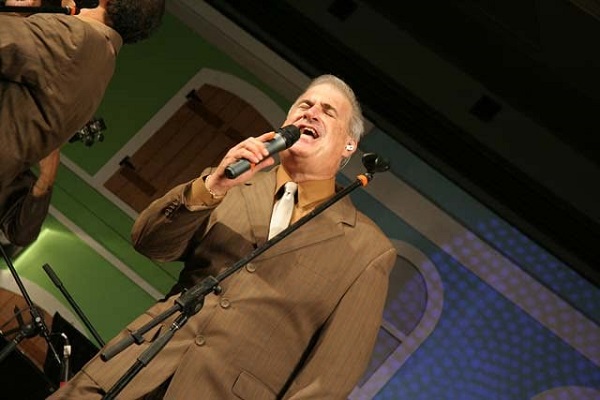
Willito López playing the conga during a performance

In one of his last interviews, he talked a bit about maestro Ángel ”Maldonado” Maldonado, of whom he cherishes fond memories after his unfortunate death a few years ago. He mentioned that the sonero lent his support to him when he needed it most and was very grateful for that, while regretting that he was already no more in this world. 

Undoubtedly, he is a pride to his family and the artists who have had the opportunity to feature his talents for any project in the past. He has always left everything on stage with each of his works and we have no doubt that he will continue to do so as long as his arms allow him to delight the audience with his talent.   

Japhet Rodriguez  

Japhet Rodríguez is also a talented Puerto Rican-born percussionist who has a very interesting career behind him.  

The artist was initially invited by La Sonora Ponceña to participate in some projects in 1998, but after having shown what he was really made of, he continued working with the orchestra for years to come.   

Japhet with his timbales
Japhet Rodríguez with his timbales

It was in 2007 that he became an official member of the group and thanks to which he became popular all over the world while serving as the timbalero of La Sonora Ponceña.   

While it is true that he has reached a huge popularity worldwide thanks to the aforementioned Puerto Rican orchestra, Japhet has been part of many other important names in Latin music such as Sabor Ponceño, La Terrífica de Ponce, Costa Brava, Moncho Santana, Los Hermanos Moreno, Willie Crespo, Camilo Azuquita, Impacto CREA, Raphy Leavitt Y La Selecta, Manix Martínez, Rafy Class, Conjunto La Perla, La Tropicana de P.R., and Homenaje Matancero. 

Something very interesting about the musical career of this great artist is that all these groups to which he has belonged have not only been from Puerto Rico, but also from countries such as the United States, Panama and Colombia. This shows that his talent has not only shone in his native country, but also in other latitudes. 

In next editions, we will be talking a little more about other salsa exponents who have left our music in high, so you can not miss the section of Johnny Cruz in coming months. 

Read also: Remmberin g Domingo ”Tito” Gutiérrez’s career 

Johnny Cru ISM corresponde in New York City

La Sonora Ponceña Returns To Salsa County

The only performance with Yolanda Rivera & Mario “Mayito” Rivera will be at the Lehman Center

The name “La Sonora Ponceña” is in honor of the Cuban band La Sonora Matancera and its hometown (Ponce – Puerto Rico)

La Sonora Ponceña “National Treasure of Puerto Rico” together with its leader Enrique Arsenio “Papo” Lucca returns to Salsa County (The Bronx) with the special guests Yolanda Rivera and the Cuban singer Mario “Mayito” Rivera (former member of Los Van Van) onstage at one of New York’s leading non-profit performing arts centers, Lehman Center.

This unique presentation, long-awaited by its fans, will be on Saturday, May 14th at 8 PM at the Lehman Center for the Performing Arts located at 250 Bedford Park Blvd West, Bronx, New York 10468 and the online price per ticket ranges from between $45 – $100. https://www.lehmancenter.org/sonora-poncena

La Sonora Ponceña gained popularity in 1960 during its trip to New York City to give a series of presentations and established itself as one of the most demanded orchestras among Hispanics.

The legendary band, for more than 65 years, has made uninterrupted performances and has been recognized as one of the best Salsa orchestras for its fusion of traditional Cuban sounds with the modern style of Latin Jazz.

In 1967, under the direction of Papo Lucca, they released the first LP Hachero Pa’ Un Palo with the Inca label (a subsidiary of Fania). This album was an overwhelming success in New York as well as its second record production Fuego en el 23 (1969). The famous band from Puerto Rico recorded 29 more albums for this record label, including eight with the singer Yolanda Rivera, La Ceiba with Cuban singer Celia Cruz (1979), and in 1980 New Heights from which they began to establish the internationalization of the orchestra.

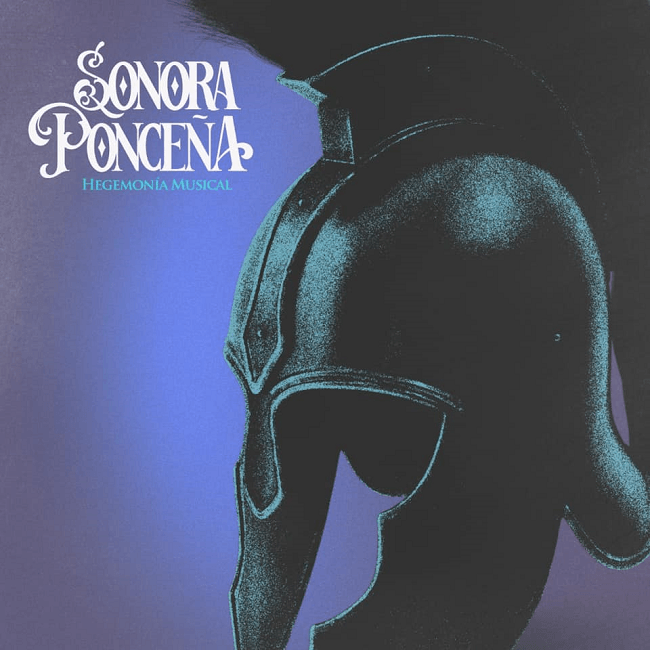
Musical Hegemony consists of 8 tracks including Caminando Con Mi Padre, Nadie Toca Como Yo, and Borrachera

This last year (2021), during the pandemic period, La Sonora Ponceña launched two new record productions: Hegemonía Musical (June 2021) and Christmas Star (November 2021).

The last one is the fourth Christmas-themed album in his career. “Thirteen years after our last Christmas production, we seek to present a record work that is a true reflection of the sound and musical quality that we always want to offer our audience”, Papo Lucca told digital media.

While “Salsa Que Cura To” is the first single taken from their most recent album Hegemonía Musical and whose authorship and interpretation is by Jorge Nicolai Avilés (vocalist of the band) with musical arrangements by Papo. Musical Hegemony, nominated in the Tropical Album of the Year category at the Billboard 2021 awards, was made with great dedication and professionalism as indicated on its official social media. “…We thank the public for the support they have been giving to this latest album that was worked with much love and dedication to the memory of our always remembered Enrique “Quique” Lucca Caraballo (RIP) and all our dear followers… And we will continue working as we have been doing for 67 years to place in your consideration what best of our music, soul, perseverance, and professionalism that seek to bring joy and enjoyment to all our dancers… Thank you very much!”

The song “Borinquen” (1980) with Sonora Ponceña becomes her a famous Salsa star

Yolanda Rivera will also perform at this event. She was born in Ponce (Puerto Rico) and moved to New York City with her family during her childhood. Her first opportunity as a singer was in 1969 in Willie Rosario’s band. In 1975 she returned to Puerto Rico and performed in several orchestras, including Joe Rodríguez’s La Terrifica. Her career reached its peak when she joined La Sonora Ponceña in 1977. The song “Borinquen” from the album Unchained Forcede (1980), a musical tribute to her native country (Puerto Rico), made her a Salsa star. Yolanda Rivera is considered one of the main and most famous singers of La Sonora Ponceña with songs like “Rumba en el Patio” and “Madrugador”. Her repertoire includes Salsa, Plena, Bolero, Guaguancó, Son Montuno, and Guaracha.

Mario “Mayito” Rivera (El Poeta de La Rumba)

The second special guest tonight will be Mario “Mayito” Rivera. His vocal skill and masterful interpretation of Cuban music in modern and traditional styles earned him the nickname “El Poeta de La Rumba”. Mayito was born in Pinar del Río (Cuba) and has training degrees from the National School of Art and the Higher Institute of Art. After his educational training in Cuba, he joined the band of the Cuban singer Albita Rodríguez and played bass in the Moncada group. From 1992 to 2011, Mayito was the lead voice and face of the successful Cuban band, Los Van Van, earning a Latin GRAMMY® and two nominations with them.

Enjoy the Tempo Latino 31st edition with the best of Latin music in Europe

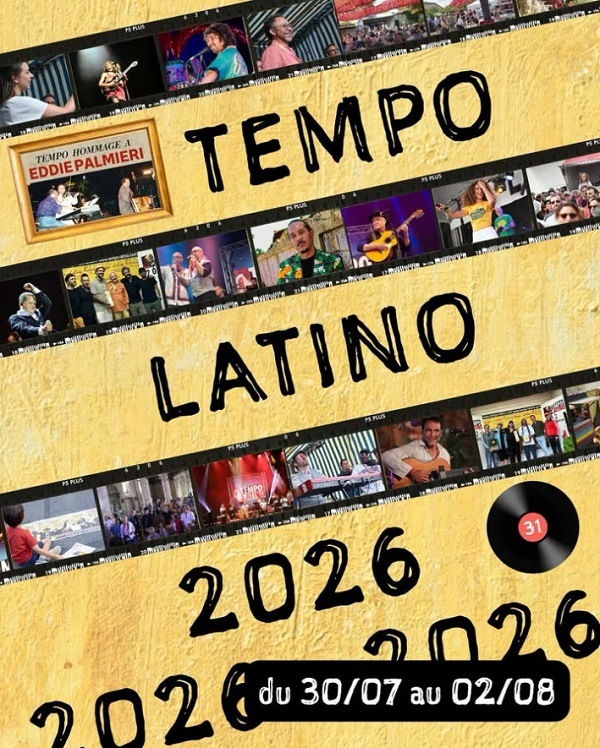
That has been a very long year waiting a new edition of the biggest Latin music event in Europe! This July, fans of our music will finally be able to enjoy the 31st edition of Tempo Latino, which is one of the largest international festivals of Afro-Cuban, Afro-Caribbean, and Latin music. During the four days of the festival, the audience can enjoy the best of salsa, Latin jazz, mambo, timba, and fused rhythms every year.

This festival is usually held in the small village of Vic-Fezensac in southwestern France, since 1994, which is when its first edition took place. Nowadays, the event is typically held during the last days of July and the first days of August. 

Tempo Latino 2026
One of the arts for Tempo Latino 2026

A little of the history of Tempo Latino

As mentioned previously, the festival began, and is still held, in Vic-Fezensac, a small village of around 3,700 inhabitants located in the Gers, which is well known for its bullfighting tradition. This association was founded in 1993 by music lover and Latin music DJ Eric Duffau, an artist who sought a different alternative to traditional commercial communities and aimed to bring traditional musical roots to the heart of Europe.

The first edition, which took place in the summer of 1994, aimed to transform the small French village into the mecca of salsa, Cuban son, and Afro-Latin jazz for four days a year.

An initiative that began as a small project has grown into one of the biggest salsa festivals of the world, which already enjoys the support of 500 local volunteers who organize into neighborhoods and homes. To this day, Tempo Latino has achieved a perfect balance between an ambitious production and a local and friendly atmosphere. It should also be stressed that it has been held on a regular basis since 1994, except for 2020 and 2021 due to the COVID-19 pandemic.

Evolution and golden age

The festival expanded so much thanks to its authenticity and freshness that it has come to be known as “The One” and has established itself as a mandatory stop for the greatest Latin music glories, including Celia Cruz, Eddie Palmieri, Rubén Blades, Willie Colón, Tito Puente, Los Van Van, El Gran Combo de Puerto Rico, La Sonora Ponceña, Oscar D’León, Cheo Feliciano, Ismael Miranda, Johnny Pacheco, and many others.

Maite Hontelé Y La Novia

Similarly, since its foundation, the festival has also served as a springboard for new musical talent, including solo artists and groups performing salsa brava, Latin hip-hop, Afro-Cuban funk, and other genres from places such as Cuba, Colombia, Venezuela, Puerto Rico, and New York. 

Activities beyond the concerts

Tempo Latino has come to a point where it is no limited only to stage performances, which are still the main attractions for attendees. They also offer dance workshops, which are designed for both amateurs and professional dancers interested in learning more about the roots and evolution of Latin rhythms.

Similarly, the festival also offers music and percussion workshops, introducing both amateur and professional musicians to important topics such as the clave, rhythm, and a bit of the history of Latin and Afro-Cuban music. In the case of percussion workshops, instructors teach students how to play the congas, timbales, bongos, and campana. As for wind instruments and musical combos, classes are given in trombone, trumpet, and saxophone.

We also cannot fail to mention the international market, where attendees can buy all sorts of things from our countries, such as instruments, clothing, traditional cuisine, handicrafts, souvenirs, and more.

Orquesta Akokan, which is going to perform in this edition

Stages and structuring of the festival

Another of the great attractions of Tempo Latino is its “geo-rhythmic” network of locations, where you can find both concerts and peripheral activities that can be enjoyed simultaneously. Below are some of those that will be available for the 2026 edition:

  • Tempo Arena: This stage is located in the Vic-Fezensac bullring, known for its open acoustics and intense energy every night of the festival. Among the top artists that will perform there are Maïté Hontelé Y La Novia, Orquesta Akokán (Friday, July 31), Matt Bianco, Rogê (Saturday, August 1), Alfredo Rodríguez, and Tony Succar (Sunday, August 2).
  • La Conga (Tempo Social Club): This other stage is also very popular because it has a beachy vibe with real sand and operates from early morning until late into the night. As for the artists who will be performing, we can mention the queen of Argentine electronic cumbia, La Yegros, DJ Çarava, and DJ Lafuriosa.
  • Camp Tempo: This open-air format is packed every year with new musical proposals, alternative fusions, brass bands, and street groups that give life to the village during the day. In the 2026 edition, some of the alternative bands will include Chicos y Méndez, Chicharrón, Pixvae, and Aguanomas. 
  • Saint-Pierre Church: This venue is solely and exclusively reserved to small, intimate acoustic concerts where, as a general rule, only pianists and Latin jazz artists perform in the festival’s most solemn format.

Read also: How Artificial Intelligence changed the music biz forever

The Senior Mulato Jerry Rivas and His Half-Century Legend with El Gran Combo de Puerto Rico

From the chords of the Puerto Rican cuatro to the eternal voice of “Los Mulatos del Sabor”

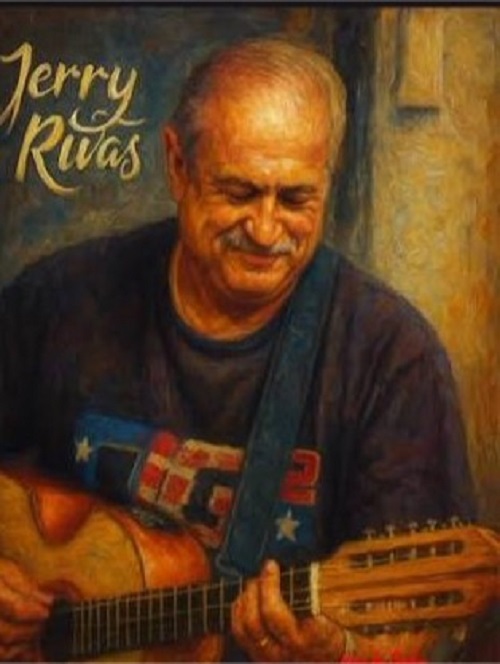
Few names resonate with as much power, respect, and relevance in the salsa firmament as that of Jerry Rivas.

Born in Tampa, Florida, but with his soul deeply rooted in the heart of Orocovis through his parents’ heritage, Jerry Louis Rivas Díaz has carved his name in letters of gold into the history of Caribbean music.

El Mulato Mayor Jerry Rivas y su Leyenda de Medio Siglo con El Gran Combo de Puerto Rico

Nearing 50 years as the lead vocalist for El Gran Combo de Puerto Rico, Rivas is more than just a singer; he is a living institution of salsa, a definitive sonero of his era, and the guardian of a legacy that continues to keep the entire world dancing.

Roots, Strings, and the Making of a Self-Taught Musician

Jerry’s history with Puerto Rico formally began in 1960, when his family moved back to the “Isla del Encanto” to settle in Bayamón.

There, the young Jerry began to breathe in the folklore and rhythms that defined the Boricua identity. What many do not know is that long before commanding microphones and international stages, Jerry was deeply passionate about string instruments.

As a fundamentally self-taught musician and singer, his first great love was the guitar. Over time, his musical curiosity led him to master the Puerto Rican cuatro, the island’s national instrument par excellence.

De los acordes del cuatro puertorriqueño a la voz eterna de Los Mulatos del Sabor

Not content with just that, he decided to delve deeper into the roots of Afro-Caribbean music, learning the secrets of the Cuban tres under the tutelage of the renowned professor Carlos Seguí.

This solid foundation as an instrumentalist not only shaped his ear but also gave him an impeccable sense of rhythm and timing that would later define his unique style for soneo (improvisational singing).

The Path to the Top: From Local Bands to a Historic Recruitment

Before the spotlight of El Gran Combo fell upon him, Jerry Rivas honed his craft throughout the island’s musical circuit, leaving his mark on every project:

  • Grupo Complicación: His teenage musical battleground, where he served as a guitarist for three years.
  • Conjunto Cojoba: A group he joined in 1972, sharpening his stage presence.
  • Conjunto Chaney (1974): Jerry was part of the select group of founding musicians of this project, which years later would become a powerhouse of romantic salsa.
  • Latin Brass (1976): The definitive showcase where his voice truly began to shine on its own.

It was precisely in 1976 when destiny knocked on his door. Following the shocking departure of the iconic “Niño de Trastalleres,” Andy Montañez who left the orchestra after 14 golden years to join Venezuela’s Dimensión Latina El Gran Combo found itself facing one of the most difficult transitions in its history. Replacing a legend seemed like an impossible task.

However, the keen eye of Don Quique Lucca (founder of La Sonora Ponceña) did not fail. Don Quique recommended the young Jerry to Don Rafael Ithier. After hearing him perform, Ithier didn’t hesitate: in 1977, Jerry Rivas officially joined the “University of Salsa.”

Nacido en Tampa, Florida, pero con el alma arraigada en las entrañas de Orocovis por la herencia de sus padres, Jerry Louis Rivas Díaz

Nearly 50 Years of History at “The University of Salsa”

Joining such a demanding institution in the midst of an era-defining shift was a monumental challenge. Audiences initially viewed the new member with skepticism, but Jerry, armed with unwavering humility and immense talent, never tried to imitate his predecessor; instead, he forged his own legend.

Across nearly five decades, his voice has immortalized anthems of the global salsa songbook. Essentials on any dance floor like “Azuquita pa’ el café,” “Ojos chinos,” “Y no hago más na’,” “El menú,” “Cupido,” and “La clave” carry his unmistakable stamp.

His elegant performance style, combined with his sharp wit and deep respect for the dancer, solidified the orchestra’s golden age and ensured the transition was a resounding success.

“Joining El Gran Combo was a tremendous school and responsibility. Replacing Andy was no easy feat, but Don Rafael Ithier gave me the confidence to just be myself on stage.” Jerry Rivas, looking back on his beginnings.

Pocos nombres resuenan con tanta fuerza, respeto y vigencia en el firmamento de la salsa como el de Jerry Rivas.

The Present and Vibrant Legacy of an Eternal Sonero

Now in 2026, the tropical music landscape has changed drastically, but El Gran Combo de Puerto Rico remains unshakeable at the top.

Jerry Rivas stays incredibly active, leading the vocal front of “Los Mulatos del Sabor” alongside the orchestra’s newer generations, Anthony García and Joselito Hernández. This blend of Jerry’s veteran wisdom and the energy of the new vocalists has injected a refreshing vitality into the group.

Jerry Rivas is not just a survivor of salsa’s golden age; he is the living bridge connecting the rich traditions of the 20th century with contemporary audiences.

From his days tuning strings in Bayamón to packed stadiums across Europe, Latin America, and the United States, his journey stands as a testament to discipline, passion, and love for his culture.

We wish lifelong health, inspiration, and continued success to this eternal maestro who, besides being one of salsa’s most beloved voices, has never ceased to be, in every sense of the word, a complete musician. Long live the music of Jerry Rivas, and let the drums keep rolling!


Jerry Rivas y Papo Rosario

Also Read: The Gran Combo of Puerto Rico “Los Mulatos del Sabor”

Timbalero Manolito Rodríguez Debuts a Fresh Sound as Musical Director of La Zónica

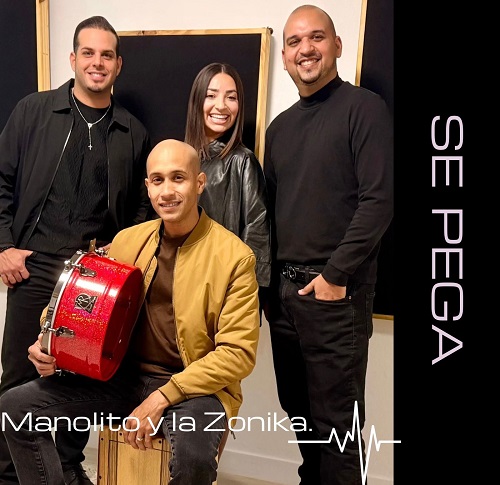
On Friday, March 27, 2026, Manolito Rodríguez and La Zónica performed at La Respuesta, a unique venue a hall where diverse musical genres blend, creating an atmosphere where a dance concert serves as the artists’ formal introduction to the public. The ensemble has been working together since August 2025, when the new orchestra was formed under the leadership of the virtuoso timbalero.

Timbalero Manolito Rodríguez arrives with a renewed energy as musical director of La Zónica

When Manolito began assembling the group, he sought out songs that resonated with him, such as “Gente Luminosa” and “A Mi Medida.” He has also been working with unreleased compositions by Anthony García and Leni Prieto. La Zónica marks a new chapter for the timbalero as the director of his own orchestra. Nevertheless, they continue to perform hits from Manolito’s previous era, now brought to life by the vocal front: Ángel Pomales, Joelis Crespo, and Gabriel Cotto. Manolito has promised to step back from singing to focus entirely on his instrument and musical direction.

The director of La Zónica hopes the dance concert at La Respuesta on March 27 marked a turning point for the band. “It’s an event we’ve been working on with great intensity,” Manolito says with enthusiasm. With energy and conviction, the timbalero adds: “I want to leave a legacy like El Gran Combo de Puerto Rico, like Sonora Ponceña, like Roberto Roena’s Apollo Sound, or Willie Rosario’s band. I want people to say in 25 years, ‘Look, that’s Manolito’s La Zónica.’ It’s a long road, but it’s possible.”

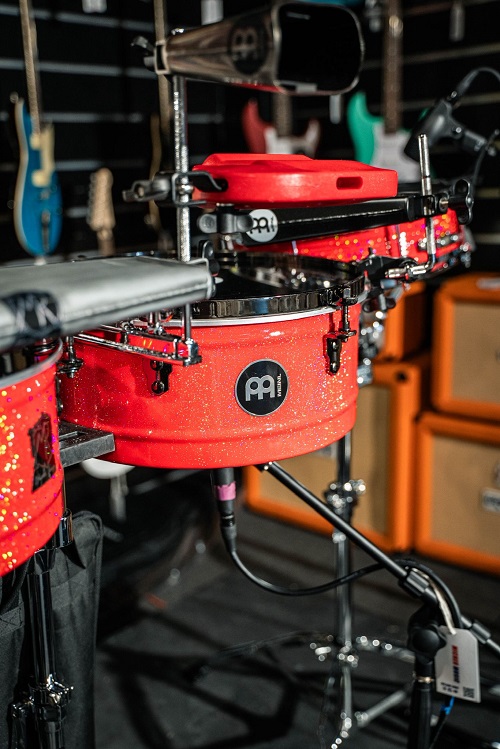
As if that weren’t enough, a new line of Meinl Percussion instruments, inspired by the young Puerto Rican timbalero, is now available.

The new line of instruments - from Meinl Percussion - inspired by Manolito
The new line of instruments – from Meinl Percussion – inspired by Manolito

A Prodigy’s Journey

The career of this salsa virtuoso began early. Manolito Rodríguez is a percussionist, musical director, singer, and dancer. While he was still in middle school, piano genius Papo Lucca invited him to record on the 45th-anniversary album, Homenaje a Tres Grandes del Teclado. “At that time, I was just entering the Escuela Libre de Música; I was in ninth grade,” the timbalero recalls. Four years later, upon graduating from the Ernesto Ramos Antonini ELM in San Juan, Manolito earned the timbalero chair with Sonora Ponceña on Papo Lucca’s recommendation. “Don Quique” accepted him, and the young musician remained with the group for four years.

Puerto Rico’s salsa stages watched Manolito Rodríguez grow up, flanked by musical institutions such as Sonora Ponceña, his now-colleague Willie Rosario, and Roberto Roena’s Apollo Sound.

His skill as a percussionist grew by leaps and bounds, and his versatility was tested on multiple fronts. In fact, his vocals were featured with the orchestra Del Sur al Norte, led by the renowned director, arranger, and producer, trumpet master Julito Alvarado. “Julito was the first one who gave me the opportunity to record as a singer,” Manolito acknowledged in an interview.

Manolito Rodríguez and La Zónica performed at La Respuesta, a different venue.

Thanks to his interactions with salsa veterans since childhood, Manolito served as musical director for various youth projects along the way. This included Revolución Juvenil in high school and Manolito y su Trabuco, an orchestra that performed every Wednesday at El Doble Seis in Caguas.

Legacy and Discipline

According to Manolito himself now a music professor—he owes much of his career to the support of his mother and grandmother, who nurtured his musical interests and encouraged him to pursue formal training. Today, the instrumentalist considers himself a “music worker” who approaches his craft with respect and maturity.

His new orchestra, La Zónica, finds him with a different mindset: he wants to concentrate on the timbales and direction. He considers Master Willie Rosario—who treats him as a protégé one of his greatest influences as a timbalero-bandleader. Rodríguez shares that when he read the authorized biography of “Mr. Afinque” (Willie Rosario, El Rey del Ritmo by researcher Robert Téllez) and saw himself mentioned, he was overcome with emotion. “My eyes welled up. I didn’t expect it,” he says. “Since I started taking things seriously, Willie has always mentored me.”

Despite his vast experience, the young musician felt deeply blessed to be chosen to fill in for the leader of “the band that delights” (la banda que deleita) on several occasions, and to perform at the Willie Rosario Centenary concert at the Coliseo de Puerto Rico. “I feel very fortunate because Willie is a very serious person, someone highly respected in the world of salsa with an impeccable career. He is a true role model.”

Following the passing of Roberto Roena, Rodríguez was also entrusted with the legacy of the Apollo Sound—a testament to the confidence and solidity he projects despite his youth. “Wow, yes. It was an honor,” he recalls nostalgically. “Roberto was the first person to give me a big break in Puerto Rico,” referring to his participation in the 1998 Día Nacional de la Zalsa at the Juan Ramón Loubriel Stadium in Bayamón.

The timbalero Manolito Rodríguez

On Sunday, March 22, 2026, Manolito Rodríguez returned to the Día Nacional de la Zalsa as the timbalero and director of La Zónica, a project that debuted last November during Sonora Ponceña’s 70th-anniversary concert. The current lineup includes: Airemyelisse Díaz (bass), Reinaldo Burgos (piano), Savier Díaz (congas), Manolito Rodríguez (timbales/director), Carlos Arroyo (bongo), Víctor “Yuca” Maldonado (baritone sax), Efraín Martínez (tenor sax), Rubén Díaz (trumpet), and Jan Santana (flugelhorn).

Manolito is well aware that “people pay to be entertained,” as he mentioned in a Zoom interview, and he views himself as a craftsman of music. He feels fortunate to be a full-time musician. “That’s what keeps me grounded. I get paid to make music. I am a music worker with great aspirations who trusts his talent and knows he must stay focused.”

Bella Martinez Puerto Rico

Also Read: Sessions from La Loma brings together salsa fans from all over the world in Puerto Rico

  • Page 1
  • Page 2
  • Page 3
  • Interim pages omitted …
  • Page 18
  • Go to Next Page »

International Salsa Magazine (ISM) is a monthly publication covering salsa activities around the world and has been publishing since 2007. It is a worldwide network of volunteers coordinated by ISM Magazine. Together, we work to strengthen salsa events around the world.