• Skip to primary navigation
  • Skip to main content

International Salsa Magazine

  • HOME
  • Previous editions
    • 2026
      • ISM / April 2026
      • ISM / March 2026
      • ISM / February 2026
      • ISM / January 2026
    • 2025
      • ISM / December 2025
      • ISM / November 2025
      • ISM / October 2025
      • ISM / September 2025
      • ISM / August 2025
      • ISM / July 2025
      • ISM / June 2025
      • ISM / May2025
      • ISM / April 2025
      • ISM / March 2025
      • ISM / February 2025
      • ISM / January 2025
    • 2024
      • ISM / December 2024
      • ISM / November 2024
      • ISM / October 2024
      • ISM / September 2024
      • ISM / August 2024
      • ISM / July 2024
      • ISM / June 2024
      • ISM / May 2024
      • ISM / April 2024
      • ISM / March 2024
      • ISM / February 2024
      • ISM / January 2024
    • 2023
      • ISM / December 2023
      • ISM / November 2023
      • ISM / October 2023
      • ISM – September 2023
      • ISM – August 2023
      • ISM July 2023
      • ISM Edition June 2023
      • ISM – May 2023
      • ISM April 2023
      • ISM March 2023
      • ISM February 2023
      • ISM January 2023
    • 2022
      • ISM December 2022
      • ISM November 2022
      • ISM October 2022
      • ISM September 2022
      • ISM August 2022
      • ISM July 2022
      • ISM June 2022
      • ISM May 2022
      • ISM February 2022
      • ISM January 2022
    • 2021
      • ISM December 2021
      • ISM November 2021
      • ISM October – 2021
      • ISM September 2021
      • ISM August 2021
      • ISM July 2021
      • ISM May 2021
      • ISM April 2021
      • ISM June 2021
      • ISM March 2021
      • ISM February 2021
      • ISM January 2021
    • 2020
      • ISM December 2020
      • ISM November 2020
      • ISM October 2020
      • ISM September 2020
      • ISM August 2020
      • ISM July 2020
      • ISM June 2020
      • ISM May 2020
      • ISM April 2020
      • ISM March 2020
      • ISM February 2020
      • ISM January 2020
    • 2019
      • ISM December 2019
      • ISM November 2019
      • ISM October 2019
      • ISM Septembre 2019
      • ISM August 2019
      • ISM July 2019
      • ISM June 2019
  • Spanish
  • Download Salsa App
    • Android
    • Apple

Search Results for: Latin Tribute

Oscar D’ León. Confessions by Oswaldo Ponte by William Briceño Part II

Latin America / Venezuela / Caracas

“Continuing the musical biography of Oscar D’ León. He moved on to new horizons, new learnings, difficult experiences, and decisions, as life always holds a wide variety of surprises over time. One of those changes was his breakup with Dimensión Latina due to various internal group problems.

Photo 1: Oscar D' León
Photo 1: Oscar D’ León

Oscar’s departure caused issues for the group, as several of their scheduled performances in other countries were canceled, and over time, they lost audience, leading most of their members to split up and leave. Nevertheless, the group managed to carry on successfully but without the unique touch or ‘sazón’ that Oscar D’ León provided.

After leaving Dimensión Latina, Oscar ingeniously created La Salsa Mayor in 1976 and was able to release his first discography with his new group, thanks to the record label TH, which provided it because they were very interested in his new project, naming it ‘Con bajo y to’.’ From that moment, Oscar knew that he could consolidate himself with this group or any other, as his exceptional and unparalleled talents, so much originality, had never been witnessed”

“In any generation of Venezuelan artists. He also created another group called ‘La Crítica’ with the purpose that if any member of the Salsa Mayor Group was absent, one of them would substitute. However, the orchestra ‘La Salsa Mayor’ lasted only 4 years due to a strong disagreement Oscar had with his band on stage because the songs played during those two performances ‘were not accepted,’ leading to the closure of ‘Salsa Mayor.’ From that moment, he began to practice with his orchestra ‘La Crítica’ before his performances in Curaçao, where his songs, ‘Suavecito,’ ‘No ha pasado nada,’ served as a way to allude that everything had been overcome.”

“With this group, he achieved significant success. From that era, Oscar D’ León was known as the leading artistic figure in the country and on the American continent, with his music being heard in various homes in Venezuela and other Latin American countries. During that time, he traveled throughout the Latin American continent, the Caribbean islands, and the United States. From that moment, he leveraged his figure as he ventured into artistic promotion. He did so with Daniel Santos, Héctor Lavoe, El Gran Combo de Puerto Rico, and Celia Cruz.

If we have to mention which country Oscar liked or idolized the most, it was Cuba, because ever since he was very young, he loved the music played there, which over the years underwent various transformations in different stages, such as ‘La inmortal guaracha Celia Cruz’ which brought glory to the island; ‘la sonora Matancera’ carried the name of Martí’s land around the world; ‘Dámaso Pérez Prado,’ among other artists who contributed to the origin of Cuban music.”

“When Oscar D’ León first visited Cuba, it was an unforgettable experience and held extraordinary significance not only for the young artist but for the country itself. Its magnitude was such that, first and foremost, the ministers of culture and foreign affairs welcomed him, and every time he performed, large numbers of fans awaited to see and hear him. The respect and admiration for him were immense. In fact, this book mentions that ‘Cuban music,’ among other things, made Oscar D’ León’s existence as an artistic figure and as a person possible.”

Photo 2: Oscar D' León presenting his bibliography
cccc

“For Cubans, Oscar D’ León’s arrival had a profound effect; it was the rebirth of existing music. In short, he rescued it, causing Cuban music, ‘son,’ the central show, and entertainment venues to become their activities for relaxation and fun.

Oswaldo Ponte, in his research, mentions that when he looked for everything related to Oscar D’ León, there was immense admiration for him. Everyone he interviewed, even if they knew he was his manager and his biographer accompanied him, always said incredible things about Oscar. He not only rescued Cuban ‘son’ but also taught them to dance Cuban music, opening the minds and perspectives of Cubans, as Cuban ‘son’ continued to be known internationally. Everyone mentions what a good musician he is, that they can’t believe he isn’t Cuban and has that ‘sazón’ (flavor/charisma).

He was famous not only in Cuba but also in other countries. An example of this was Oscar’s participation in the Rome Festival when he sang a song by Adalberto. Mr. Adalberto Álvarez passed backstage and commented: ‘Cuba will never be able to repay Oscar for what he has done for Cuban music. He has kept it alive; if it hadn’t been for him, for Johnny Pacheco, for Celia Cruz, for La Sonora Ponceña and others who took it upon themselves to keep ‘son’ alive outside our country’… ‘and of all of them, the fundamental leader was Oscar D’ León because he is the most connected to authentic Cuban musical roots.'”

“In short, every time Oscar goes out to sing and dance, he is representing Cubans. For Cubans, dancing is almost a ritual. In 1950, they danced ‘son,’ ‘danzón,’ ‘mambo,’ ‘chachachá,’ ‘rumba,’ and other dances, some of which lasted a very short time, such as ‘dengue,’ ‘monzambique,’ ‘pilón,’ ‘carioca’; and others transcended time, like ‘conga’ and ‘rumba.’ Salsa is the continuation of, or the same as, ‘son,’ which can be danced with the same style or with different styles.
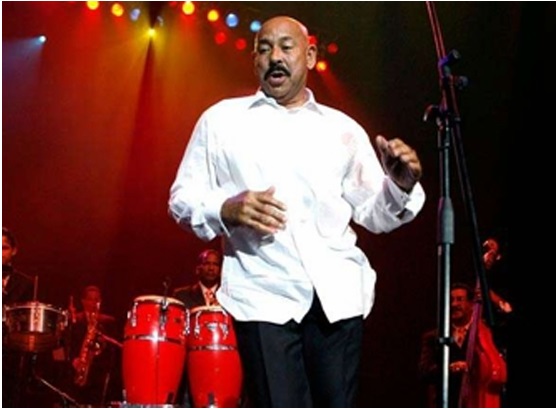
Photo 3: Oscar D' León in concert
Photo 3: Oscar D’ León in concert

Oswaldo Ponte began his promoter plan by hiring figures, among whom was Oscar D’ León. Becoming a serious entertainment promoter, he took the risk of doing it internationally (outside Venezuela) where he bought a contract from Guillermo Arena to present Celia Cruz with La Sonora Matancera. He also partnered with Juan Caravallo and managed to present the biggest show in Higuerote, Venezuela; with this great step, he was becoming a potential successful entrepreneur in international shows.”

“In 1983, he hired Oscar for 3 performances with ‘Roberto Blades,’ two at the Ávila Hotel and one at San Jacinto Park (both in Venezuela). At that time, Oscar was returning from Cuba, and with a new event, Oswaldo, upon seeing the show, pondered the difference between the two artists.

The Panamanian star was well-managed by his team. However, when it came to judging which was the better show, it was Oscar D’ León’s. When Ponte went to talk with him, he proposed becoming his manager on the condition that Oscar follow his instructions, as he always directed everything, which Oscar accepted. From that moment, many things changed not only artistically but also personally, offering the public not just Oscar D’ León and his orchestra, but Oscar D’ León himself, giving more charm and charisma to his audience.

One of the challenges he had to face was a stagnation in record sales. His new record productions weren’t taking off, so he decided to rely on television. Venezuela was both a recipient and a transmitter country, so his performances were broadcast on different television channels that gave great musical importance, such as ‘Siempre en Domingo,’ which covered the center and north of the American continent, and ‘Sábado Gigante,’ which covered South America, thus giving him international exposure.

One of his best and most unforgettable collaborations was with singer Celia Cruz, who was a great friend of Oscar’s. They participated in many events, one of which was in 1993, where Ralph Mercado did what he called ‘The Perfect Combination,’ which consisted of combining stars for public performances.

Participants included Oscar D’ León, Celia Cruz, Marc Anthony, La India from New York, Tito Nieves, Tony Vega, Cheo Feliciano, José Alberto El Canario, and Domingo Quiñones, of which the most recommended songs were ‘El Son de Celia y Oscar’ and ‘Vivir lo nuestro’ by Marc Anthony and La India. At that time, Oscar had left the TH label and was now with Ralph Mercado; his colleagues were Tito Puente, Celia Cruz, Sergio George, Cheo Feliciano, Tito Nieves, La India, José Alberto El Canario, and other significant stars.

There are many other details and more events up to the present day, but it would be too much to explain in one article. What is very clear is that Oscar D’ León has conquered countless goals in his life, and we can all do the same in the different areas in which we operate, if we set our minds to it with determination and an iron will.

Photo 4: Oscar D' León and his bibliography
Photo 4: Oscar D’ León and his bibliography

To learn more about this, we recommend reading ‘Oscar D’ León, Confesiones De Oswaldo Ponte’ by William Briceño, published by Fundación Simón Bolívar.”
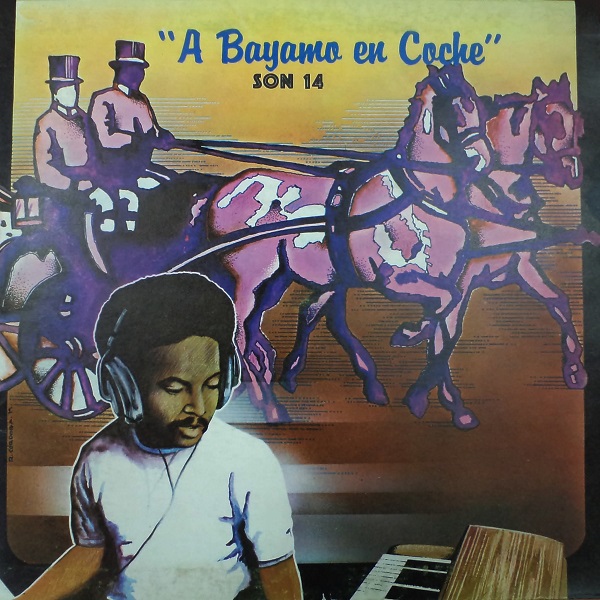
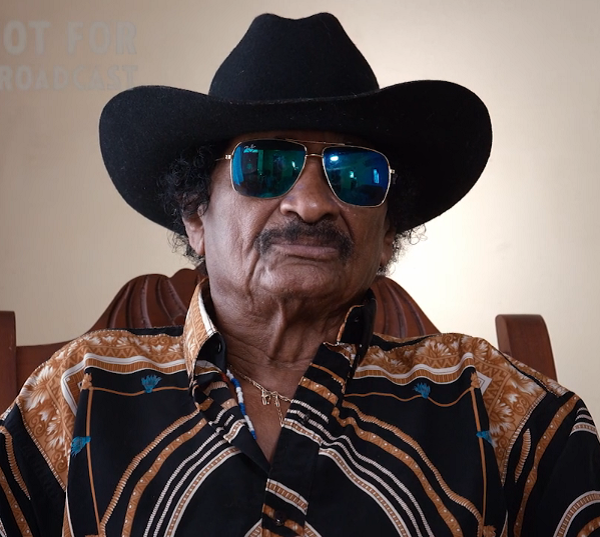
 

Son 14 The History of the Orchestra and the Success of “A Bayamo en Coche”

The Son 14 orchestra was founded in Santiago de Cuba in 1977 by vocalist Eduardo “El Tiburón” Morales (born in Cuba in 1935) and pianist and musical director Adalberto Álvarez.

As the name suggests, it is a 14-member ensemble dedicated to performing son, the national musical genre of Cuba. In 1978, Lázaro Rosabal (born in Santiago de Cuba in 1953) joined the group.

They quickly recorded several albums for the local EGREM label, many of which became bestsellers throughout Latin America, allowing them to undertake extensive tours across the Americas and Europe.

In 1992, co-founder Álvarez left the band to form his own group. Nevertheless, Son 14 continued its journey under the musical direction of Rosabal.

In addition to their continued success in the Latin market, the band began to gain international recognition, first with the song “El Son De La Madrugada,” included on the compilation Cuba – Fully Charged (Earthworks Records, 1993), and later with the release of Son – The BIG SOUND (Tumi Records, 1995), a compilation of their material from the Álvarez era.

Son 14 de «A Bayamo en Coche»

After introducing a modern, vibrant version of son and its variations (son montuno, bolero son, etc.) to non-Latin audiences, Tumi Records commissioned a new recording at Cuba’s EGREM studios. Released in 1996 as part of the Cuba Explosion series, the album Cubanía proved that the band had not lost an ounce of its musical talent and energy under Rosabal’s direction. Three years later, the group released La Máquina Musical, which incorporated Colombian tropical rhythms into their sound, promoting the album with a European tour that included a performance at the Cuba Presente Festival at the Barbican Centre in London. (Source: AllMusic)

Eduardo Morales Orozco Tiburón

 The Milestone of “A Bayamo en Coche”

The album A Bayamo en Coche (A Bayamo by Carriage) was released in 1979, with its biggest hit being the title track itself. The album’s opening song, composed and arranged by Adalberto Álvarez from Camagüey, instantly transformed him into one of the leading figures in popular Cuban dance music from that year on.

The song “A Bayamo en coche” not only revives traditional son and enriches it with new sounds but also artistically recreates a cherished tradition rooted in Bayamo, the cradle of Cuban nationality. In this city, coches (horse-drawn carriages) are used for pleasure rides and recreation, and the song’s lyrics narrate these moments.

The album contained other tracks that were hugely popular in Cuba between 1978 and 1980, such as “Calle Enramada” (a son elegy to that main Santiago street), “El Son De La Madrugada” (with a beautiful later version by Omara Portuondo), “Se quema la trocha,” and “Elena la cumbanchera,” which turned the record into a landmark within this genre of Cuban music. Most of the tracks were performed by Tiburón Morales, the group’s lead vocalist.

Tribute to The Gentleman of Son

Recently, Son 14 founder Adalberto Álvarez, known as “El Caballero del Son” (The Gentleman of Son), was honored with a concert at the Karl Marx Theatre. This event celebrated his 46 years in music and the 35th anniversary of his later orchestra, Adalberto Álvarez y su Son.

The concert was a memorable tribute to the work of the composer of “A Bayamo en coche.” Some of his best songs were performed by notable Cuban musicians:

  • Septeto Santiaguero (Son para un sonero)
  • Pancho Amat and Alain Pérez (Tu fiel trovador)
  • Alexander Abreu (Pura imagen)
  • Paulo F. G. (Fin de semana)

At other points, Frank Fernández performed a duet accompaniment with the voices of Adalberto Álvarez and Jorge Luis Rojas, “Rojitas,” on Santa Cecilia.

Additionally, Rojitas sang with Tania Pantoja (Vivir lo nuestro) and solo (Y qué tú quieres que te den). Robertón and Lele, vocalists from Van Van, performed Agua que cae del cielo, while the orchestra Adalberto Álvarez y su Son took on De Cuba pa’l mundo entero, Son de la madrugada, and Los caminos de Ifá.

En La Sala Show “El Saraito” Adalberto Álvarez (R.I.P) Fundador, Director. Arreglista y Pianista del Son 14 de Cuba, Dj. Augusto Felibertt y Vicente López

That night, Maestro José Luis Cortés highlighted Álvarez’s musical quality, focusing specifically on “A Bayamo en coche,” the song that, in 1979, announced the existence of a great artist to the public. Álvarez was capable of bringing son to Cuban art schools and has defended Cuban son with grace and artistry, all while staying true to the essence of one of the dance music genres that best represents Cuban identity. (Source: Joel del Río, Cibercuba)

“A Bayamo En Coche” Album Details (1980)

No. Track Genre Composer
01. A Bayamo En Coche Son Adalberto Álvarez
02. El Son De La Madrugada Son guaguancó Adalberto Álvarez
03. Se Fue Mi Amor Y No Lo Vi Partir Bolero son Adalberto Álvarez
04. Calle Enramada Son Pedro Gómez
05. Elena La Cumbanchera Son Gerardo Martínez
06. Se Quema La Trocha Bachata-Son Adalberto Álvarez
07. Tal Vez Vuelvas A Llamarme Son montuno Adalberto Álvarez
08. Gimen Las Rosas Por Una Triste Ilusión Bolero Adalberto Álvarez
09. Vamos, Háblame Ahora Bachata-son Adalberto Álvarez

Musicians who participated in the recording (1979):

  • Director, Acoustic Piano, Keyboards: Adalberto Álvarez
  • Vocals, Minor Percussion: Eduardo “El Tiburón” Morales, Héctor Wedderbron, Daniel Carmenates
  • Bass: Jorge Machado
  • Guitar: Efisio Barroso
  • Trumpet: Eduardo Sánchez, Guillermo Femández, José Fernández, Dagoberto Rodríguez
  • Trombone: Lázaro Rosabal
  • Tumbadora (Conga Drum): Ubaldo Canes
  • Bongó, Cowbell: Guillermo Viera

Recorded at: EGREM Studios (1979)

Collaborators:

L’Òstia Latin Jazz

Dj. Augusto Felibertt

Also Read: Luis Conte: The Cuban-American percussionist who fuses Cuban son with global music

Ángel Luis Canales is a renowned Puerto Rican singer and composer known as “El Diferente” (The Different One) for his particular and irreverent style

Angel Canales was born on June 29, 1950, in Santurce, Puerto Rico.

During his childhood, around the age of 8 or 10, he moved with his family to New York City, where he lived in East Harlem (Upper Manhattan). Musical influences indicate that from a young age, he was strongly influenced by the music of Cortijo y su Combo and Ismael Rivera.

Before or concurrently with his musical career, he worked in the jewelry business; he was a messenger and later learned to cut and polish diamonds, a skill that allowed him to self-finance his musical career and pay high salaries to his musicians.

Ángel Luis Canales is a renowned Puerto Rican singer and songwriter known as El Diferente for his unique and irreverent style.

Musical Career

His Beginnings: He started as a timbalero in Ray Jay’s orchestra, where he debuted as a singer, replacing the lead vocalist.

His first album (1970), titled “Brujería,” was released in 1970 and recorded under the Alegre Records label, with musical direction by Mark Dimond. Hits from this production include “El Barrio,” “Yo No Tengo Pena,” and the title track.

Notable Hits: Among his most popular songs are: “Nostalgia,” “Sol de Mi Vida,” “Perico Macoña,” “Lejos de Ti,” “Hace Tiempo,” “El Cantante y la Orquesta,” “Sabor de los Rumberos Nuevos,” “Bomba Carambomba,” and his celebrated rendition of the bolero “Dos Gardenias.”

His Unique Style is recognized for its unorthodox approach and distinctive vocal timbre, which earned him the nickname “El Diferente” (The Different One).

He was a highly independent artist who self-financed his albums and founded his own record label, Celanac Records.

Tours and Retirement

International Tours: He toured internationally, visiting countries such as Panama (his first), Venezuela (where he performed at the Poliedro de Caracas in 1982), Colombia, and Peru. It is said that he never performed with his orchestra in his native Puerto Rico.

He retired in the late 1990s, deciding to leave the stage.

Currently, he is reportedly battling Parkinson’s disease, which has limited him and led him to choose silence and retirement, although he occasionally attends private events. He is currently 75 years old.

Àngel Luis Canales, y el pianista, compositor y arreglista Gilberto el pulpo Colòn

50 Years Since the Launch of “Sabor” (1975)

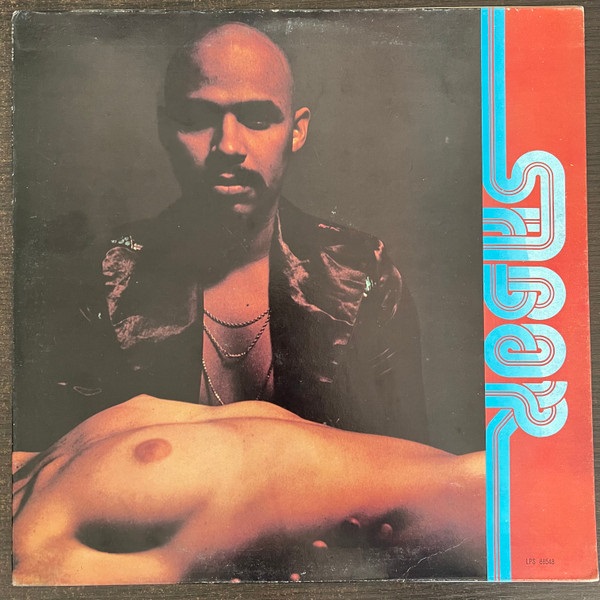
The Album: The album titled “Sabor” by Angel Canales was released under the Alegre Records label in 1975.

Only a boricua (Puerto Rican) who has been absent from their homeland knows what it’s like to be away from Puerto Rico when winter arrives in New York City. Or when you’re inside a taxi or walking the congested streets of the Bronx or the Latino barrio, and all you see around you are skyscrapers and more skyscrapers. The anxiety and sense of helplessness that overwhelm your spirit in the concrete jungle can only be calmed by memories.

50 years ago, on Monday, November 10, 1975, the unique voice of Puerto Rican singer Ángel Luis Canales consoled the thousands of boricuas oppressed by nostalgia with his composition “Lejos De Ti” (Far From You). It was a confession and affirmation of his Puerto Rican identity, in which he asserts that his love for his homeland will never die, even though he was raised in New York.

The song is a guaguancó with lyrics that evoke images of old San Juan, Villa Palmeras and its rich bomba heritage, Boca de Cangrejos, fried fritters on the grill, and the river that crosses through the old Ancón de Loíza Aldea, where his grandmother lived. “Lejos De Ti” remains the most remembered track from “Sabor,” an album produced by Joe Cain, recorded in late 1974, and released by Alegre Records on Monday, November 10, 1975.

Angle Canales Sabor 1975 Photography By Dominique

This album is considered one of the best salsa releases of the 1970s.

Canales’ Style: Canales favored a different style of interpreting Afro-Caribbean rhythms, combining elements from Héctor Lavoe, Ismael Rivera, Vicentico Valdés, and Paquito Pérez (the singer of the Orquesta Zodiac of Loíza). He extended the melodies with his nasal voice, challenging the poetry of the montunos, but going off-key and mispronouncing some words. His diction was far from perfect.

Production: The architect of Canales’ success was Colombian pianist Edy Martínez, who arranged seven of the eight tracks on this session, from cut #2 to #8. Due to a prior commitment with Mongo Santamaría’s band, he left his compatriot José Madrid in charge of the piano performance on this record.

Under Martínez’s direction, Canales embraced fame. “Sabor” was his second album between 1970 and 1971, he had recorded the “Brujería” session with pianist Mark Alexander “Markolino” Dimond, who founded Conjunto Sabor after spending several years with Willie Colón’s band.

Canales reappeared four years later with the Orquesta Sabor los Rumberos Nuevos with an arrangement by Louie Cruz. That same year, 1975, Larry Harlow produced Mark Dimond’s classic “Beethoven’s V” featuring vocalists Frankie Dante and Chivirico Dávila. “Sabor” was a huge hit.

Tours and Artistic Choices: The singer toured Europe, the United States, and South America, where Colombians, Panamanians, and Peruvians remember him fondly to this day, despite health issues forcing him to retire from the stage.

During the golden age of salsa, singers were expected to master all genres, and boleros were no exception. His vocalization on “La Hiedra” (a track written by Saverio Saratini and Vincenzo D’Acquisto) and “No Te Acostumbres” (a track belonging to Doris Aghian’s catalog) is notable for its theatricality, a trick Canales employed to mask the limitations of his voice.

Salsa dancers who thrive on piano, trombone, and percussion solos will be delighted with “Sabor Los Rumberos Nuevos,” “Sol De Mi Vida” (dedicated to his wife Brunilda), “El Cantante y La Orquesta,” and the hit “Hace Tiempo” (with its memorable chorus: ay, ay, ay, no me hagas padecer así – oh, oh, oh, don’t make me suffer like this).

Legacy: Before becoming a professional singer, Canales worked as a jeweler. A look at the covers of his first two albums is enough to conclude that he was a pioneer in the use of bling-bling in salsa. As a composer, Canales was a solid chronicler of barrio life. The story told in “Perico Macoña” is a good example: a man who smokes a joint and loses all self-control, insulting his own friends with his abrupt comments.

The re-issue of “Sabor” is a fitting tribute to the memory of the late Joe Cain.

Credits

  • Trombone: Juan Torres, Ricardo Montañez
  • Trumpet: Tom Malone
  • Baritone Saxophone, Flute: Emérito Benítez
  • Piano: José Madrid
  • Bass: Eddie Testo
  • Congas: Antonio Tapia
  • Timbales: Gadier Quiñones
  • Bongo: Aldemaro Luis Rivera
  • Producer: Joe Cain
  • Musical Director: Juan Torres
  • Recorded at: LE Studio NYC, December 1974
  • Engineer: Sandy Sina
  • Arrangements: Edy Martínez (except “Sabor Los Rumberos Nuevos” by Louie Cruz)

Torres, Montañez, Tapia, and Quiñones had previously collaborated with Canales on Markolino Dimond’s “Brujería” album.

Collaboration:

  • GonZalsa
  • L’Òstia Latin Jazz
  • Dj. Augusto Felibertt
  • Jaime Torres Torres
  • Fania Record
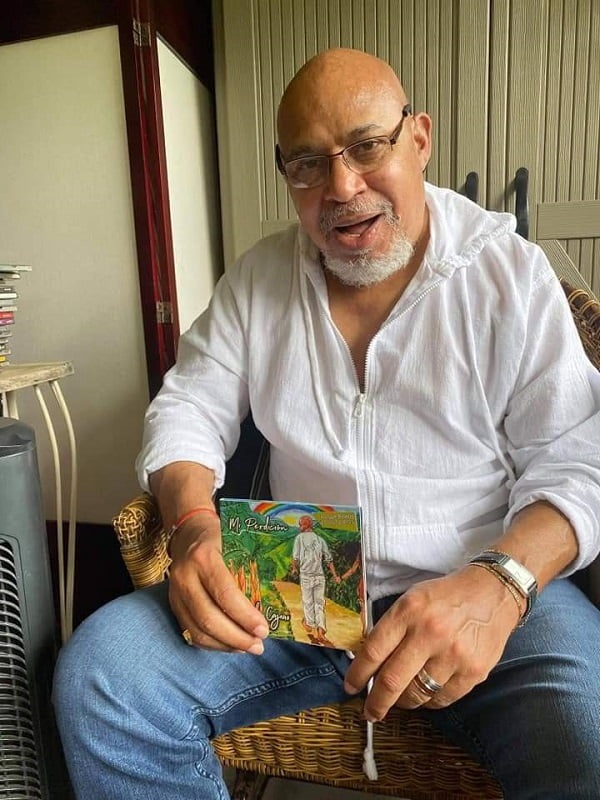
Angel Canales «El Diferente» recibiendo la produccion de Danilo Cajiao Titulada»Mi Perdicion» año 2020

Also Read: Angel Canales «El Diferente» receiving the production from Danilo Cajiao titled »Mi Perdicion» year 2020.

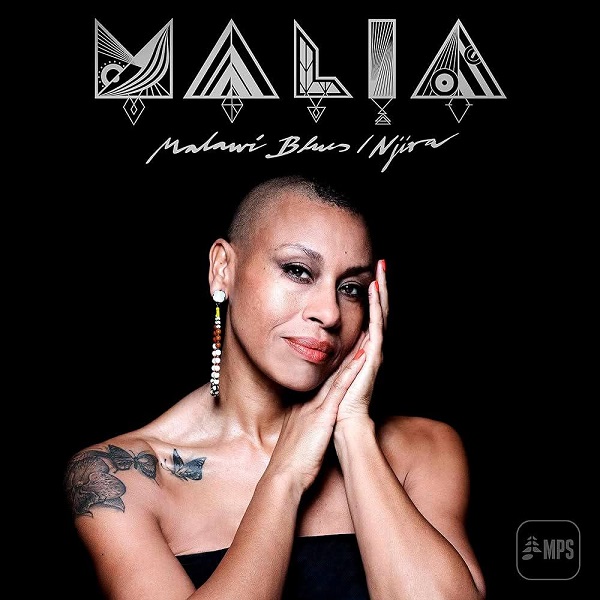
Malia The Energy That Allows The Blues To Have A Soul, A Voice

Malia (born in 1978) is a singer from Malawi. She has released seven studio albums. Her mother is Malawian and her father is from the United Kingdom. She moved to London in her teens.

After finishing school, Malia dedicated herself to music. She worked as a waitress while organizing a backing band, singing ballads and classic jazz in London bars and clubs.

During a visit to New York, she heard a pop-jazz track sung in French by vocalist Liane Foly, produced by André Manoukian. She contacted Manoukian to ask for his help, and they began working on her 2002 debut album, Yellow Daffodils. Although the release included English lyrics, it achieved recognition in France and Germany.

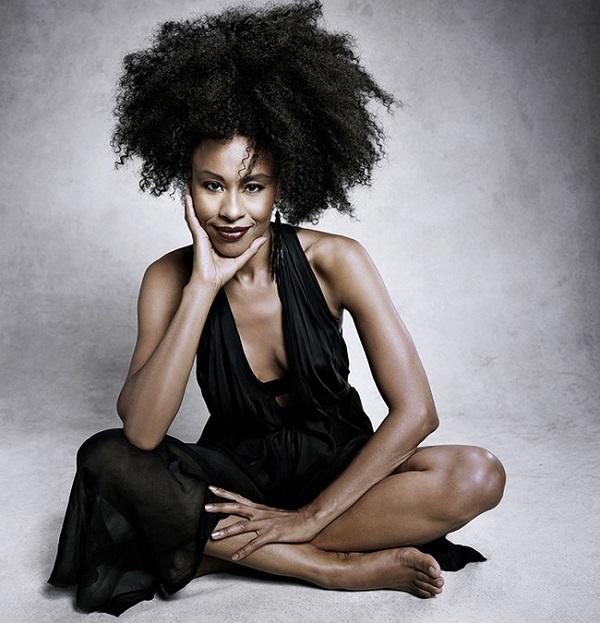
Malia (born in 1978) is a singer from Malawi

Her subsequent releases, Echoes of Dreams (2004) and Young Bones (2007), were highly acclaimed among jazz fans across Europe. Malia is known for her expressive voice. From the beginning, she found her way to the stage and her singing style flirted with sounds from the 1960s and 1970s.

Her role models include Billie Holiday, Sarah Vaughan, and Nina Simone. In 2013, she received the Echo Jazz Award for “International Female Vocalist of the Year.” She explored her African roots in the album Malawi Blues/Njira, released on MPS in 2016. In her 2018 release, Ripples (Echoes of Dreams), Malia offers another perspective on her previous album, Echoes of Dreams. Her latest release, The Garden of Eve, is dedicated to the blues.

Malia is the energy that allows the blues to have a soul, a voice

“My heart beats for many things. I think that is because I come from a marriage of mixed heritage. I have never felt like I am one thing or the other; I am more of a fusion of both, and my music reflects that. I feel I am evolving as a human being, and although music is simply a medium for expression, I like the idea of resonating with it, if its rhythm suits me.

The blues has always been dear to my heart: it is a cathartic, precious, and profound experience, whether playing it or hearing it on the radio. When I first heard Billie Holiday sing ‘Blue Moon,’ I could feel it in every cell of my body.

She had a very powerful effect on me. Sentimental blues, originating in tragic situations, sometimes even reflecting my own experiences… No matter how bad family, friends, politics, lovers, governments, or society may be, they can never destroy the forces of good in this world.

And as time passes, I find more and more of the truth that is rooted in my soul. And I finally feel mature enough to understand this wonderful musical tradition, because the blues means life.”

And if the blues means life, Malia is the energy that allows the blues to have a soul, a voice. It has been a long time since a contemporary artist paid such a beautiful homage to the blues—a style that, in the year 2020, deserves to have the dust shaken off.

Marshall McLuhan’s once-futuristic idea of the “global village” became a reality long ago. Only now, in pop music, are we learning and experiencing, in many ways, what the legendary media theorist formulated in the early 60s. Thanks to digital technological advancements, most pop genres have acquired a global dimension.

Her mother is Malawian and her father is from the United Kingdom. She moved to London in her teens.

Hip-hop, blues, and jazz are evolving into hundreds of regional variants, far from their original roots. Malia’s music can undoubtedly be considered an impressive testament to this worldwide fusion.

After moving from the southern African republic of Malawi to London at age fourteen, the singer spent her adolescence in the UK capital (Note: the “Big Apple” is the nickname for New York, which contradicts having spent her adolescence in London. The original text was left, but the inconsistent use of the term is corrected).

Malia recorded three albums in France with André Manoukian: Yellow Daffodils (2002), Echoes of Dreams (2004), and Young Bones (2007), all created in Manoukian’s Parisian studio.

In 2010, she met Swiss producer Boris Blank, who, since the 80s as part of the avant-garde duo Yello (The Race, Bostich) with Dieter Meyer, has garnered great success. In 2012, Malia released a tribute to Nina Simone, Black Orchid, which won that year’s ECHO Jazz Award. In 2014, Boris Blank produced the eleven electronic-style songs for her album Convergence.

Malia’s sixth studio album, Malawi Blues/Njira, sees her clear, incisive voice amplified again in a soul-jazz context. “An album I’ve always wanted to make… I feel like the time is right now… I wanted songs that reflected my consciousness and my ancestry,” she summarizes the essence of the ten tracks on Malawi Blues/Njira.

The album features thoughtful, mostly slow-tempo original tracks, with sparsely orchestrated piano, accompanied by guitar and percussion, including an almost minimalist version of the classic ‘Moon River.’ From the outset, with Malawi Blues/Njira, Malia recalls the sound of her childhood.

The local vibes of the Kwela and Kwasa-Kwasa traditions are felt not only in the moving “Love Is Holding Both Our Hands.” “I humbly consider it my duty to pass on the rich traditions and stories, just as my ancestors did, as my grandparents and parents did when we would sit around the fire in the evenings in Malawi, eating nsima with pumpkin leaves and peanut sauce.” Of course, that is only one aspect of her rich work.

Her songs are characterized by artistic experiences and experiments, an amalgam that has shaped Malia’s life and a lasting effect of her time in the London club scene, where she was able to sharpen her sense of rhythm in small bars in front of reduced audiences. Here, she could always adjust her sets live, night after night.

This musical diversity now benefits her, when, in Chipadzuwa (a southern African colloquial term for a beautiful woman), she alternates between the regional language, Chichewa, and the universal language, English, with a mellifluous ease.

With the support of the virtuoso pianist Alex Wilson, a sound that is both fresh and warm emerges. Malia has arrived in a global musical world for which she works and fights. “To all the silent warriors in this world,” Malia concludes, “Malawi Blues/Njira is for you!” (mps-music)

Malia – Malawi Blues / Njira (2016)

Malia - Malawi Blues Njira (2016)
Malia – Malawi Blues Njira (2016)

Tracks:

  1. Malawi Blues / Njira
  2. Love Is Holding Both Our Hands
  3. Chipadzuwa
  4. Let Me Breathe
  5. Disgrace
  6. The Seed
  7. Black Widow
  8. Moon River
  9. Friendship
  10. Wonder Of The World
  11. Let Me Breathe (bonus track)

Musicians:

  • Malia (Vocals)
  • Alex Wilson (Piano, Programming)
  • Dimitris Christopoulos (Double Bass)
  • Edwin Sanz (Drums, Percussion)
  • Ahmed Fofana (Guitar on track #2, Instruments on track #9)

About Malawi, The Warm Heart of Africa

Malawi, known as the “Warm Heart of Africa” for the kindness of its people, is a landlocked country located in southeastern Africa. It is famous for its stunning natural landscapes, highlands, and, above all, the vast Lake Malawi, which covers approximately 20% of its territory.

Culture and History

  • Culture: Malawi’s culture is rich and diverse, with various tribes such as the Maravi, Nyanja, and Tumbuka. Each contributes particular aspects to the traditional masks, dances, music, and clothing. The people are known for their friendly nature and relaxed pace of life.
  • History: The territory was a British protectorate called Nyasaland until its independence on July 6, 1964. Subsequently, it became a one-party state under the authoritarian rule of Dr. Hastings Kamuzu Banda for decades, until the transition to a multiparty democracy in the 1990s.

Tourism and Nature The main tourist attraction is Lake Malawi, the third-largest lake in Africa, known for harboring more fish species than any other lake in the world, including about 1,000 species of cichlids. The country offers an authentic travel experience and is considered one of the safest countries in Africa for visitors.

🎤 Personal Data on Malia

  • Birth Name: Not commonly used publicly; she is known simply as Malia.
  • Year of Birth: 1978.
  • Place of Birth: Malawi, East Africa.
  • Nationality: Malawian and British (United Kingdom).
  • Family Origin: Her mother is Malawian, and her father is from the United Kingdom.
  • Musical Career: She was exiled with her family to London when she was a teenager (around age 14) due to political reasons. It was there that she discovered jazz and was inspired by singers like Billie Holiday, Sarah Vaughan, and Nina Simone.
  • Genres: Jazz, Soul, Blues, Pop, with African influences.
  • Recognition: She won the Echo Jazz Award for “International Female Vocalist of the Year” in 2013 in Germany.
  • Notable Discography:
    • Yellow Daffodils (2002) – Her debut album.
    • Black Orchid (2012) – A tribute to Nina Simone.
    • Malawi Blues/Njira (2016) – An album where she explores her African roots.


Collaboration:

L’Òstia Latin Jazz

Dj. Augusto Felibertt.

Also Read: Dave Valentin considered one of the most important Latin Jazz flutists in history, thanks to his technique and rhythm.

Spain is reborn in new Cuban music by Yalil Guerra

The immense Hispanic legacy is usually relegated to the background, while being a key part of our sound identity.

Reference Image about Spain
Reference Image
Yalil talking about Spain
Composer, bandleader, and Latin GRAMMY winner Yalil Guerra.
Image courtesy of RYCY Productions

By YALIL GUERRA

The birth of the Cuban nation, after gaining its independence from its former colonizer, Spain, marked a break that transcended political concerns and entered strongly in the cultural aspect. Cubans were “denaturalized” after the Treaty of Paris in 1898, leading to a profound metamorphosis of identity that was inevitably reflected in our music. Out of that process a fresh and powerful sound expression emerged: a vibrant fusion between European, African, and North American influences, something that had already begun in the 19th century but was driven by a growth music industry and the cultural magnet of its northern neighbor, the United States.

For years I have listened to, studied, and enjoyed Cuban popular music — both the old and contemporary— and what I notice is that most productions tend to highlight the folklore—especially the Afro-descendant roots and the imprint of jazz — while the immense Hispanic legacy is usually relegated to the background, while being a key part of our musical identity.

In Cuban music today, both on and off the island, the record business is committed to a modern and bold sound. Compositions explore contemporary harmonies, bitonality, and extended chords — resources that come from both classical music and jazz — entwined with surprising and refreshing harmonic cycles. In wind instruments, melodic lines and musical motifs reveal the virtuosity and creativity of a new generation of musicians and arrangers, who are raised in solid academic traditions but open to global influences. The percussion stands out for its polyrhythm and the number of sophisticated tutti that require a unique expertise, but the Spanish influence is quite absent or just present in the language.

In contrast, What caught my attention was the newest music of singer, composer, and multi-instrumentalist Alain Pérez on his new album Bingo, where Spain resonates powerfully and recognizably. I find this gesture very special, as it vindicates a Spanish legacy in Cuban music that is often forgotten or minimized. I also highlight the case of pianist and composer José (Pepe) Rivero and his new album Estampas y Raíces where he pays tribute to classical Spanish composers, mixing their works with his unique interpretive style, bringing it closer to the language of Cuban jazz that is so familiar to him.

What about the large mass of Cuban artists and musicians who do not pay homage to the mother country? It is that we lost our historical memory or has it been erased? Is the omission of certain elements of our Spanish traditions a symptom of what some call the “Spanish Black Legend,” a myth that has seeped into our musical history and present?

I remember when Juan Perón said:

“And through the figure and work of Cervantes, Argentina pays tribute to the mother country, fruitful, civilizing, eternal, and to all peoples who have emerged from its maternal womb.” “And through the figure and work of Cervantes, Argentina pays tribute to the mother country, fruitful, civilizing, eternal, and to all peoples who have emerged from her maternal womb.”

Cuba is no exception.

Over the years, in response to the previously exposed, I have tried to make Spain present in my work: incorporating harmonious colors, Andalusian cadences, and the Phrygian mode—so tied to the Iberian sound—creating compositions devoted specifically to Spanish culture, especially my new string quartet entitled “Noches de España”, following the line of our great composer Ernesto Lecuona, who knew how to bring to life both African and Spanish things. As for me, I seek to keep alive that heritage and project it onto 21st-century Cuban music, without forgetting our important African legacy.

Today, rescuing the Spanish heritage in Cuban music is not just an act of memory: it is also an opportunity to rediscover the richness of crossbreeding that continues to define who we are and how our history sounds. Contemporary Cuban music not only looks to the future: it sings to its African roots, but it also needs to reconnect with that other essential part of our identity. After all, we think, love, and communicate in Spanish. Every note, every guitar or lute that sounds, will evoke that heritage and bring us near to the fullness of what we are.

It does not matter the color our skin is, or whether our grandfather was from Asturias or the Congo: cultural fusion is what forged our identity and will remain the essence of Hispanic America. Mexican writer, philosopher, and politician José Vasconcelos said: “I am Hispanic, and nothing about Hispanic is alien to me.”

At this crucial time, Cuban music has the challenge—and the opportunity—to sing its entirety. And in doing so, it shows us that, beyond styles or labels, what unites us is the sound of a common history.

DMA Yalil Guerra

Read also: Yalil Guerra and the musical roots of his talent

  • « Go to Previous Page
  • Page 1
  • Interim pages omitted …
  • Page 11
  • Page 12
  • Page 13
  • Page 14
  • Page 15
  • Interim pages omitted …
  • Page 64
  • Go to Next Page »

International Salsa Magazine (ISM) is a monthly publication about Salsa activities around the world, that has been publishing since 2007. It is a world network of volunteers coordinated by ISM Magazine. We are working to strengthen all the events by working together.