• Skip to primary navigation
  • Skip to main content

International Salsa Magazine

  • HOME
  • Previous editions
    • 2026
      • ISM / August 2026
      • ISM / July 2026
      • ISM / June 2026
      • ISM / May 2026
      • ISM / April 2026
      • ISM / March 2026
      • ISM / February 2026
      • ISM / January 2026
    • 2025
      • ISM / December 2025
      • ISM / November 2025
      • ISM / October 2025
      • ISM / September 2025
      • ISM / August 2025
      • ISM / July 2025
      • ISM / June 2025
      • ISM / May2025
      • ISM / April 2025
      • ISM / March 2025
      • ISM / February 2025
      • ISM / January 2025
    • 2024
      • ISM / December 2024
      • ISM / November 2024
      • ISM / October 2024
      • ISM / September 2024
      • ISM / August 2024
      • ISM / July 2024
      • ISM / June 2024
      • ISM / May 2024
      • ISM / April 2024
      • ISM / March 2024
      • ISM / February 2024
      • ISM / January 2024
    • 2023
      • ISM / December 2023
      • ISM / November 2023
      • ISM / October 2023
      • ISM – September 2023
      • ISM – August 2023
      • ISM July 2023
      • ISM Edition June 2023
      • ISM – May 2023
      • ISM April 2023
      • ISM March 2023
      • ISM February 2023
      • ISM January 2023
    • 2022
      • ISM December 2022
      • ISM November 2022
      • ISM October 2022
      • ISM September 2022
      • ISM August 2022
      • ISM July 2022
      • ISM June 2022
      • ISM May 2022
      • ISM February 2022
      • ISM January 2022
    • 2021
      • ISM December 2021
      • ISM November 2021
      • ISM October – 2021
      • ISM September 2021
      • ISM August 2021
      • ISM July 2021
      • ISM May 2021
      • ISM April 2021
      • ISM June 2021
      • ISM March 2021
      • ISM February 2021
      • ISM January 2021
    • 2020
      • ISM December 2020
      • ISM November 2020
      • ISM October 2020
      • ISM September 2020
      • ISM August 2020
      • ISM July 2020
      • ISM June 2020
      • ISM May 2020
      • ISM April 2020
      • ISM March 2020
      • ISM February 2020
      • ISM January 2020
    • 2019
      • ISM December 2019
      • ISM November 2019
      • ISM October 2019
      • ISM Septembre 2019
      • ISM August 2019
      • ISM July 2019
      • ISM June 2019
      • ISM May 2019
      • ISM April 2019
      • ISM March 2019
      • ISM February 2019
      • ISM January 2019
    • 2018
      • ISM December 2018
      • ISM November 2018
      • ISM October 2018
      • ISM September 2018
      • ISM August 2018
      • ISM July 2018
      • ISM June 2018
      • ISM May 2018
      • ISM April 2018
      • ISM March 2018
      • ISM February 2018
      • ISM January 2018
    • 2017
      • ISM December 2017
      • ISM November 2017
      • ISM October 2017
      • ISM September 2017
      • ISM August 2017
      • ISM July 2017
      • ISM June 2017
      • ISM May 2017
      • ISM April 2017
      • ISM March 2017
      • ISM February 2017
      • ISM January 2017
    • 2016
      • ISM December 2016
      • ISM November 2016
      • ISM October 2016
      • ISM September 2016
  • Spanish
  • Download Salsa App
    • Android
    • Apple

Search Results for: Music Awards

Sammy Figueroa is an exceptional percussionist known for his versatility and for playing in a multitude of musical styles

Sammy Figueroa, a percussionist with an excellent career.

Sammy Figueroa was born in the Bronx, New York, in 1948. He is the son of bolero singer Charlie Figueroa, whom he never knew, as his father passed away at the age of 32.

Sammy moved to Puerto Rico as a child to live with his grandparents and escape the Bronx’s gang violence.
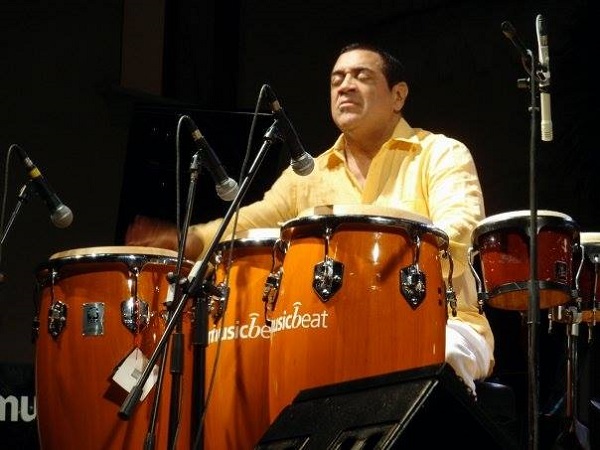
Sammy Figueroa is an excellent percussionist who has stood out for his versatility, playing in a multitude of musical styles

At 18, he started his professional career with bassist Bobby Valentín’s band. Throughout his career, he has stood out for his versatility, playing in a multitude of musical styles and contributing to nearly 400 albums, ten of which are platinum.

He has collaborated with major pop artists like David Bowie, Chaka Khan, and Mariah Carey, as well as with distinguished jazz musicians such as Miles Davis, Sonny Rollins, Quincy Jones, and George Benson. In 1977, he became a founding member of the Latin rock fusion group Raíces.

In 2001, Sammy Figueroa moved to South Florida and formed his own group, Sammy Figueroa and His Latin Jazz Explosion. His albums And Sammy Walked In and The Magician were nominated for a Grammy for Best Latin Jazz Album.

Sammy Figueroa, a percussionist with an excellent career

Sammy Figueroa, a percussionist with an excellent career

His 2023 album, Searching for a Memory / Busco Tu Recuerdo, is a tribute to his father. The project, produced by his wife, Rachel Faro, with whom he has also co-produced other albums, allowed Sammy to reconcile with his father’s legacy. On this album,

Sammy sings on a record for the first time and transforms his father’s classic boleros into modern Latin jazz arrangements. The album was nominated for a Latin Grammy in the “Best Jazz/Latin Jazz Album” category.

Sammy Figueroa has received numerous awards, including two Percussionist of the Year awards from the National Academy of Recording Arts and Sciences (NARAS), two Drummie Awards for Best Hand Percussion, and a Best Percussionist award from the Jazz Journalists Association.

Discovered by jazz flutist Herbie Mann, Figueroa became a well-known session and studio musician, touring and recording with The Brecker Brothers, Average White Band, Morrissey – Mullen, The Mahavishnu Orchestra John McLaughlin, and Miles Davis.

He has also appeared with Blondie, Sonny Rollins, David Sanborn, Quincy Jones, Dave Grusin, George Benson, Chet Baker, Stanley Clarke, Grover Washington Jr., Al Jarreau, Lena Horne, Joe Williams, Mark Murphy, Mike Mainieri, Néstor Torres, Chico O’Farrill, Mike Stern, Chuck Loeb, Bobby Watson, Dave Valentin, Arturo Sandoval, Paquito D’Rivera, Rubén Blades, Eddie Palmieri, Bobby Valentín, Tania Maria, Mariah Carey, James Taylor, Dr. John, Mick Jagger, David Bowie, Celine Dion, Blues Traveler, Natalie Merchant, David Lee Roth, Hall & Oates, Joe Cocker, Rickie Lee Jones, Annie Lennox, Whitney Houston, Anita Baker, Grace Jones, James Ingram, Diana Ross, Roberta Flack, Aretha Franklin, and many others.

Some of the R&B hits he is featured on include Sister Sledge’s “We Are Family,” Luther Vandross’s “The Night I Fell In Love,” and Ashford & Simpson’s “Solid (as a rock),” as well as most of Nile Rodgers and Bernard Edwards’ hits on the Chic and Sister Sledge record labels.

Michel Camilo wrote the song “And Sammy Walked In” in his honor, and it was also recorded by Giovanni Hidalgo. Two of his CDs, And Sammy Walked In and The Magician, have been nominated for Grammy Awards in the “Best Latin Jazz Album” category. Figueroa hosts a Latin jazz show on WDNA-FM in Miami, Florida.
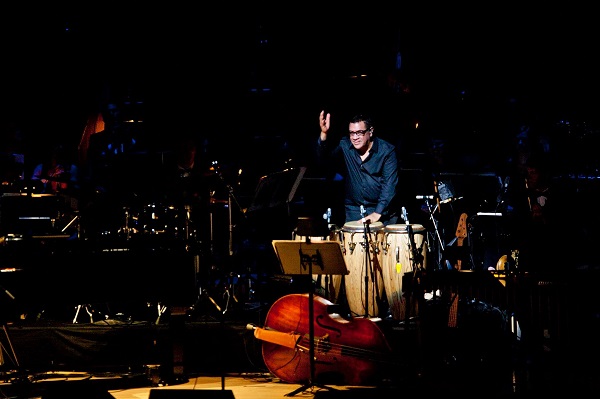
Sammy Figueroa was born in the Bronx, New York, in 1948

If you’re not very familiar with Sammy Figueroa’s work, you can try an experiment with this album: listen closely to see if you can guess what his instrument is. In a medium-sized combo, what instrument seems to take center stage? The answer: it’s impossible to guess, which says something about Figueroa’s maturity as a leader.

It’s also surprising to see how pared down his forces really are this sextet sounds like a big band. (Spoiler alert: he’s a percussionist.) It also says something about him that the term “Explosion” is a misnomer for his band. There are no pyrotechnics, no crazy tempos, and no wildly layered rhythms here.

But there are some very impressive horn arrangements (check out “Cha Cha Pa’ Ti” and the lovely “Cuco y Olga”), along with some of the sweetest, most tender ballads to appear on a jazz album of any genre in recent years (“Queen from the South” and “Zuliana” are the best examples).

For a percussionist acting as a bandleader, giving this kind of sustained, loving attention to compositions that only make a tenuous use of his talent is further proof of Figueroa’s taste and maturity. Let’s hope Figueroa keeps going in this vein. Rick Anderson.

Sammy Figueroa & His Latin Jazz Explosion – Urban Nature (2011).

Sammy Figueroa & His Latin Jazz Explosion - Urban Nature (2011)
Sammy Figueroa & His Latin Jazz Explosion – Urban Nature (2011)

Tracks:

  1. Gufillo (Silvano Monasterios)
  2. Urban Nature (Gabriel Vivas)
  3. Latin What? (Michael Orta)
  4. Zuliana (Silvano Monasterios)
  5. 7th Door From The Left (Silvano Monasterios)
  6. Cuco y Olga (Nicholas Martines)
  7. Cha Cha Pa’ Ti (Gabriel Vivas)
  8. Queen From The South (Silvano Monasterios)
  9. Funny Talk (Gabriel Vivas)

Musicians:

  • Sammy Figueroa (Percussion)
  • Silvano Monasterios (Piano)
  • Gabriel Vivas (Acoustic bass)
  • John Michalak (Sax)
  • Alexander Pope Norris (Trumpet)
  • Nomar Negroni (Drums)

Guest Musicians:

  • Ed Calle (Sax)
  • Mike Orta (Piano)
  • José Gregorio Hernández (Percussion)

Website: Sammy Figueroa

By:

Dj. Augusto Felibertt

L’Òstia Latin Jazz

Also Read: Carlos “Nene” Quintero comes from a family of musical prodigie

Israel “Cachao” López, a Cuban musician and composer, has been hailed as “the Inventor of Mambo”

Born in Havana on September 14, 1918, and passing away in Coral Gables, Miami, on March 22, 2008, Israel “Cachao” López, often known simply as “Cachao,” was a Cuban musician and composer.

Israel Cachao López musico y compositor cubano, ha sido definido como el Inventor del Mambo

He became a legend in Cuban music with his masterful handling of the double bass and was renowned for his performances in mambo and Latin jazz.

His talent earned him two Grammy Awards (in 1995 and 2005), a Latin Grammy in 2003, an honorary doctorate from Berklee College of Music, and a star on the Hollywood Walk of Fame.

He has been described as “the inventor of mambo” and is considered a master of descarga (live improvisations).

He began by playing various instruments until he settled on the double bass, which allowed him, as a teenager, to join the Havana Philharmonic Orchestra, where his father and older brother also played.

“Cachao” left Cuba in 1962 with a long list of successes and stated in a 2007 interview that if it weren’t for his compatriot and colleague Dámaso Pérez Prado, “mambo would not have been heard worldwide.”

Israel Cachao López nacido en La Habana, un 14 de septiembre de 1918 y falleció en Coral Gables un 22 de marzo de 2008 en Miami

His first stop was Madrid, where he stayed for a year before emigrating to the United States. In the U.S., he resided in New York City, Las Vegas, and Miami.

López also played acoustic bass with his brother, the multi-instrumentalist Orestes López. They literally composed over 3,000 songs together and were highly influential in Cuban music from the 1930s to the 1950s.

They created the “nuevo ritmo” (new rhythm) in the late 1930s, which transformed the danzón by introducing African rhythms into Cuban music, ultimately leading to mambo.

He won several Grammy Awards for both his own work and his contributions to albums by Latin music stars, including Gloria Estefan. In 1995, he won a Grammy for Master Sessions Volume 1.

In 2003, he won a Latin Grammy for Best Traditional Tropical Latin Album alongside Bebo Valdés and Patato for El Arte Del Sabor. He won another Grammy in 2005 for his work ¡Ahora Sí!

His nephew, Orlando “Cachaíto” López, became one of the pillars of the famous Buena Vista Social Club.

Cachao performed with artists such as Tito Puente, and his music has been featured in films like The Birdcage and the soundtrack of the video game Grand Theft Auto: Vice City.

The Actor Andy Garcia produced a documentary titled Cachao… “Como Su Ritmo No Hay Dos” in 1993 about his music. He also shared stages with Celia Cruz and her husband Pedro Knight, as well as with trombonist Generoso Jiménez.

Leyendas de Nuestra Musica Latina Pacheco, Puente y Cachao

His last musical collaboration was with Gloria and Emilio Estefan on the singer’s album titled 90 Millas.

López passed away on the morning of March 22, 2008, in Coral Gables, Florida, at the age of 89, due to complications following kidney failure.

Cachao y Su Ritmo Caliente – Monte Adentro (2000)

Tracks:

  1. Monte Adentro (Cógele el golpe) (A. Castillo Jr.)
  2. Goza Mi Trompeta (O. Estivill)
  3. Guajeo de Saxos (E. Peñaver)
  4. Estudio en Trompeta (I. López)
  5. Gozar Timbero (O. Estivill)
  6. Trombón Criollo (O. Portillo)
  7. Malanga Amarilla (S. Contreras)
  8. Controversia de Metales (I. López)
  9. Descarga Cubana (O. Estivill)
  10. Pamparana (A. López)
  11. Sorpresa de Flauta (O. Estivill)
  12. Oye Mi Tres Montuno (A. Echevarria)
  13. La Floresta (O. López)
  14. Avance Juvenil (B. López)
  15. Redención (O. López)
  16. Descarga Mambo (D.P.) 

Musicians:

  • Israel López “Cachao” (Double Bass)
  • Guillermo Barreto (Timbales)
  • Tata Güines (Tumbadora)
  • Rojelio “Yeyo” Iglesias (Bongos)
  • Gustavo Tamayo (Güiro)
  • Alejandro “El Negro” Vivar (Trumpet)
  • Armando Armenteros (Trumpet)
  • Generoso “El Tojo” Jiménez (Trombone)
  • Oreste López (Piano)
  • Enemelio Jiménez (Alto Sax)
  • Emilio Peñalver (Tenor Sax)
  • Virgilio Lisama (Baritone Sax)
  • Richard Egües (Flute)
  • Niño Rivera (Tres)
  • Roliyo y Reyes (Chorus)

Recorded in Havana, 1957-1958

Cachao y Su Ritmo Caliente - Monte Adentro (2000)
Cachao y Su Ritmo Caliente – Monte Adentro (2000)


The tradition of being musicians comes from grandparents and great-grandparents, all the Cachaos are musicians.

By:

Dj. Augusto Felibertt

L’Òstia Latin Jazz

Also Read: Israel “Cachao” Lopez Sobrado in fame and respect in the seventies was dedicated to maintain the tradition at the highest level

Producer, composer, and guitarist Oscar Almonte innovates with Dominican music

The United States is and will remain the land of opportunities for artists from all over Latin America, and Dominican producer, composer, and guitarist Oscar Almonte is one more of those examples of what effort and discipline can achieve on fertile ground. We could talk exclusively with Mr. Almonte about the most important aspects of his prolific career, and we want to make them known to our readers, who always honor us by visiting to our content each month.

Oscar posing for the camera
Oscar Almonte with his guitar posing for the camera

What drew Oscar’s Attention to Music

Oscar began telling us that music as such has drawn his attention since he was very little, more specifically, the ones he was listening to at home and that some relatives played, as several of them are professional and amateur musicians. That mix of rhythms and melodies always intrigued him, especially those from Cuban music, which was very popular at that time.

Family parties were the perfect occasion for the young man to show his strong interest in music, as it was not uncommon for one of his uncles to bring out his guitar, play, and sing to lighten the mood. This was one of the things that led Oscar to learn to play as he saw adults do it.

Not to mention that Caleo López, his grandfather, was a guitar maker and played them as well.

Academic Training in Music

Oscar’s primary education in music was given in a self-taught way, In fact, their parents bought him his first guitar at just nine years of age, and he took some classes with this instrument. He stopped for a while and resumed his interest in the guitar at age 14, which is when he learned his first chords and memorized some rock songs he liked to play them.

When he had the right age, he began studying music at the Culture and Art Institute in his hometown, Santiago de Los Caballeros, where he completed a bachelor’s degree in classical guitar.

Move to New Jersey

Today, Oscar is based in New Jersey City, where he moved for the purpose of seeking new horizons personally and professionally. He wanted to soak up the musical culture that exists in the New York area, which is very close to where he is now.

When asked about the job opportunities he had upon arrival, he told us that he had the fortune of having contacts and friends with whom he had already traveled to the country, which allowed him to play with some bands he knew. However, he does admit that it took him a while to find a balance in his economy, so he had to work in family automotive businesses while his situation stabilized. He was working in that until he could devote himself exclusively to music, just as he did in his country.

Oscar performing at SOB’s
Oscar Almonte performing at SOB’s (Sounds of Brazil) in Nueva York

The main difference he noticed between the music scene in New Jersey and the Dominican Republic is that, in his home country, it is easier to live exclusively from music as a simple artist. There are things that are easier to do because the budget allows it, and certain places where musicians play cover some elements such as sound engineers and show producers. When he arrived to his new destination, he had to learn many of these things to be able to do them himself and not have to spend what he did not have.

Projects Oscar Has Been Involved In

Just as Oscar has taken great pains to make his own project, he has also been involved in others belonging to artists such as Pavel Nuñez, Felle Vega and La Orquesta de Las Danzas Mezcladas, Xiomara Fortuna, Irka Mateo, El Prodigio, and many others.

He has managed to make contact with several of them because they live in the same city as him. It also happens that he played with several jazz musicians through whom he got to know others, something which took advantage to develop contacts and friendships with whom he could work in the future.

Among the most important things he learned from them, one is audience management, repertoire management, certain vocal techniques that he did not know and, mainly, everything that has to do with the responsibilities an artist who is already the head of his own project should have. 

Soberano Awards Nomination 

The artist has also been nominated for the famous Soberano Awards in the category of Merengue of the year in 2012 thanks to the song ”Levántate”, which was recorded by Héctor Acosta ”El Torito”. An interesting aspect of this piece is that Oscar wrote it with the purpose of showing it to Ricky Martin so that he would finally record it, but unfortunately it was not possible to make contact with the Puerto Rican.

Oscar and Daddy Yankee
Oscar Belmonte next to Puerto Rican reggaeton singer Daddy Yankee

Over time, he learned that Héctor was looking for songs to add to his new album ”Corazón Abierto”, so Oscar got down to business and contacted his musical director to see if Acosta would be interested. Fortunately, he was and the song enjoyed very acceptance among the public, so he managed to get the nomination at that time.

Debut as a singer-songwriter

Finally, in the year 2020, Oscar was ready for his debut as a singer-songwriter and, at finally, to do things other than what a simple musician does. Although he was writing since he was 14 years old, always thinking for other artists, he decided to change his approach and focus on himself and his career. 

It is then when he made his debut in this facet with the song ”Mi Tierra”, in which he describes his hometown Santiago de Los Caballeros as the title indicates. Something interesting about ”Mi Tierra” is that it fuses rhythms from many parts of the world with Dominican pambiche.

Oscar defines pambiche as one of the sounds of merengue, but softer and calmer when compared with the more lively merengue.

As for the rest of the colors it has, the artist used elements of African music and very different tempos to those often used in merengue.

He is also promoting the song ”Bermudas” with the young singer Carolyn Rodriguez. A mutual friend introduced them and thought that their voices would work well together, so they gathered and made a romantic song based on urban bachata with hints of reggae and some electronic touches.

Oscar and Carolyn
Oscar Belmonte singing ”Bermudas” next to Carolyn Rodríguez live

Read also: Joshua Levine and his quartet have a lot of Guataca

“DeBÍ Tirar Más Fotos” is not just an album; it is an invitation to reimagine music and the cultural impact it can have in an increasingly interconnected world

Bad Bunny was born as Benito Antonio Martínez Ocasio in San Juan, Puerto Rico, on March 10, 1994. He is a composer and singer of urban music, especially trap and reggaeton.

Bad Bonny DeBÍ TiRAR MáS FOToS

Although he never took formal music classes or studied any instrument, he is a singer, composer and creator of his own songs. The first samples of his art were seen on YouTube, where he slowly began to gain fans.

In mid-2016, Bad Bunny joined Hear This Music, a label created by DJ Luian and Los Mambo Kingz, presenting the hit “La Ocasión,” an anthem of trap music. There he also recorded singles such as “Diles,” “Soy Peor,” and “Tú No Vives Así.”

Bad Bunny has also participated in songs with numerous artists, such as Farruko, De La Ghetto, J Balvin, Maluma, Nicky Jam and Ozuna, among other urban music stars.

In 2017 he conquered Europe, touring with more than 20 concerts in 20 days. Upon his return he sang “Si Tu Novio Te Deja Sola” at the 2017 Billboard Latin Music Awards with J Balvin.

In addition, he sold out concerts at the Luna Park in Buenos Aires on September 8 and 9. In November he released “Sensualidad” with Prince Royce and J Balvin.

The year 2018 began with great success.

On January 12, he released “El Baño”, a collaboration he recorded with Enrique Iglesias.

On February 6, he released “Salimos A Buscarte”.

On the 9th, he presented “Fantasía”, with Alex Sensation.

On the 14th, she released a version of the hit “Báilame” by Nacho, together with Luis Fonsi, Yandel and Daddy Yankee.

On the 15th, she released “Amorfoda”, a new single in which she says “no” to love.

She didn’t wait and on the 22nd, she released “Dime Si Te Acuerdas”.

On March 16, she released a song with Khea, Düki and Cazzu, titled “Loca”.

On the 23rd of that month, “Dime” was released, recorded with Revol, J Balvin, Arcángel and De La Ghetto.

On April 1, she presented “Me Rolié”. In the same month, she released: “Te Boté”, with Ozuna, Nicky Jam, Nio García, Darell and Casper Mágico; and “Explícale”, with Yandel, Noriel Cosculluela and Brytiago.

On May 5, she recorded “Contigo”.

Bad Bunny nació como Benito Antonio Martínez Ocasio

On the 12th, 13th and 14th she presents her songs live, again at Luna Park. In between these concerts she releases “Sólo Avísame”. Then she releases “Quiere Verme”, together with Anuel Aa and “Diles”, with Ledy Medina.

On June 22nd she releases “I Like It”, recorded with Cardi B and J Balvin. On the 28th of the same month she releases the single “Estamos Bien”. She participates in Marc Anthony’s song “Está Rico”, together with Will Smith. On October 11th she releases “Mía”, in a spectacular collaboration with Drake singing in Spanish. On December 8th she releases the hit “Desde el Corazón” and on the 14th of the same month she presents “Sólo de Mí”, whose video reflects gender violence. On the 23rd her debut album goes on sale, under the name “X100Pre”.

On June 28, Bad Bunny & J Balvin present the eight-song album “Oasis” with the first single, “Qué Pretendes” (with special appearances by Mr. Eazi and Marciano Cantero of Enanitos Verdes)

Following the death of basketball player Kobe Bryant, Bad Bunny paid tribute to him with an emotional song titled “6 Rings.”

YHLQMDLG was released by the artist at midnight on February 29, 2020. The title means “I do what I want” and features collaborations with Daddy Yankee, Yaviah, Jowell & Randy, and Ñengo Flow. The album is a tribute to the marquesinas (garage parties) that Bad Bunny grew up attending, and features many nods to reggaeton from the early and mid-2000s

On May 10, 2020, he released his third studio album “Las que no iban a salir,” which features the participation of Don Omar, Zion & Lennox, Nicky Jam, Yandel, among others.

In July, after being the first Latin urban artist to be on the cover of Rolling Stones magazine, El Conejo Malo becomes the protagonist of the first digital cover of the legendary Playboy magazine.

On July 25, he releases the song and video: “Un día (One Day)” with Dua Lipa, J Balvin and Tainy.

On January 3, 2021, he releases the video for his song “Booker T”. That same year, he releases the single and video clip “Lo sentir BB” with Julieta Venegas and Tainy.

Bad Bonny
Bad Bonny

Throughout the year, he publishes several singles and video clips.

On May 5, 2022, he releases the album “Un verano sin ti”.

On June 2, he releases the video clip for the song “Tití mepregunta”.

On November 30, he releases the single “La Jumpa” with the video clip.

On December 22, he released the single “Gato de noche” with Ñengo Flow.

On February 15, 2023, he released the video for “Ojitos lindos” with Bomba Estéreo.

On May 18, he released the single “Where she goes” along with its video.

On July 21, he collaborated with Travis Scott on the single “K-Pop” with The Weeknd.

On September 25, he released the single and video “Un preview”.

On October 13, he released the album “Nadie sabe lo que va a pasará mañana” becoming a hit single.

Becoming the most listened to album of the year in a single day.

“What are we overlooking in Bad Bunny’s ‘DeBÍ TiRAR MáS FOToS’? Beyond reggaeton, a lesson in artistic evolution.”

While social media is boiling with divided opinions about Bad Bunny’s new album, it is worth moving away from the extremes and analyzing “DeBÍ TiRAR MáS FOToS” from a broader perspective.

Beyond being a reggaeton album, this work is an artistic, cultural and strategic manifesto that leaves valuable lessons for all musical genres, including salsa.

Bad Bunny has used his position as a global artist to fuse elements such as salsa with urban rhythms, achieving a musical dialogue that transcends generations and tastes. However, the impact of this project does not stop there.

I’d like to share five key aspects that other artists could learn from this release to innovate and connect more deeply with their audiences.

  1. The power of nostalgia: plastic chairs as a universal symbol

The album cover, with the humble plastic chairs, connects directly with the everyday life of Latin American neighborhoods. These common objects evoke memories of family gatherings, celebrations, and moments of community. The message is powerful: simplicity can be deeply meaningful and resonate globally.

  1. Exclusivity that generates value: “Residencia” concerts

Instead of a world tour, Bad Bunny is betting on “Residencia,” a series of exclusive concerts in Puerto Rico. With this strategy, he not only boosts tourism and the local economy, but creates a “FOMO” (fear of missing out) phenomenon in his fans. This generates massive advance reservations on hotels and flights.

  1. QR codes: intelligent digital interaction

Integrating technology with music is something that Bad Bunny has done masterfully. QR codes in Puerto Rico allow fans to interact with the album in innovative ways, unlocking exclusive content and creating a bridge between the physical and the digital.

  1. Incorporating traditional genres and sounds

Bad Bunny is not afraid to mix salsa with reggaeton, betting on musical arrangements that celebrate his cultural heritage. This shows that genres are not compartments or “silos”, but platforms for dialogue

  1. Expectation and release strategy

From the announcement of the title to the release date, passing through a short film full of cultural references, everything in this project has been designed to create a narrative that maintains the interest of the public. The lesson here is clear: music is not just released, it is experienced as a complete cultural event.

Final thoughts: innovation and evolution

In a world dominated by technology, staying traditional is not an option for artists who want to grow. Tools like Web 3.0, Blockchain, NFTs to offer immersive experiences and AI are revolutionizing the way musicians interact with their audiences and generate income.

While some lose themselves in criticism, others take advantage of these tools to redefine their art and project themselves globally. The lesson is clear: you have to look ahead and dare to evolve.

“DeBÍ TiRAR MáS FOToS” is not just an album; it is an invitation to reimagine music and the cultural impact it can have in an increasingly interconnected world.

Also Read: Sessions from La Loma brings together salsa fans from all over the world in Puerto Rico

Edgardo ‘‘El Bambino’’ and his extensive and interesting musical career

Edgardo ”El Bambino” Otero Lugo is the one to whom we want to dedicate some of the lines of this edition in International Salsa Magazine. The talented Puerto Rican vocalist has given us a few minutes of his time to talk exclusively about his beginnings, his career and other unpublished details that are not read in other media.   

dgardo ‘’El Bambino’’
This is Puerto Rican singer Edgardo ”El Bambino” Otero Lugo

Edgardo’s childhood and music   

As Edgardo’s childhood took place in his hometown of Vega Baja, Puerto Rico, the artist recalls that he would sit on the balcony of his house and play with buckets and sticks to pretend to play music. His mother, fed up with the noise he made, decided to enroll him in the school choir so that he could explore his curiosity about music in a more professional way. That was when he was in the fifth grade of the elementary school.   

As the years went by, the boy’s love for music just kept growing, until he got his first big opportunity thanks to singer-songwriter Edwin Crespo, who had already written for famous groups such as La Sonora Ponceña at the time. Back then, Edgardo was only 14 or 15 years old, so he still needed a lot of guidance on these issues, so maestro Crespo was the ideal person for that. 

It just so happenes that Pedro Crespo, Edwin’s father, was the founder of his own orchestra and grandfather of some of Edgardo’s cousins. Since they all lived nearby, Edwin heard him singing one day and liked his voice, so he offered to teach him how to sing professionally and invited him to join his Orquesta Ética, which is where it all began.   

By being part of the Orquesta Ética, Edwin decided to spend two or three days a week explaining to Edgardo what to do and how to do it so that everything would go wonderfully for the young vocalist, and that is exactly what happened. So much so that Edgardo spent about three years singing for the group, in which he claims to have learned much of what he knows today.   

Edgardo ‘’El Bambino’’ next to Frankie
Edgardo ”El Bambino” next to ”El Sonero del Barrio” Frankie Vazquez

The Rukanos   

After having left Orquesta La Ética, Edgardo was also part of Orquesta Los Rukanos, which was much bigger, had more instruments and more musicians. Therefore, it represented a bigger and more complex challenge. 

In 1981, he was invited to join the group by a Guyanese friend and colleague named Ferniand Pudia, who asked Edgardo to join him in a musical project he was working on, which he would name Los Rukanos, paying homage to the term used to refer to peasants and working class men in the South American country.    

Alongside with this orchestra, of which Edgardo was also one of the founders, he managed to perform in completely new stages and to follow his path in the learning of this complex and rich world that is music.   

Conjunto Quisqueya   

During a concert in his hometown, the members of Conjunto Quisqueya heard Edgardo singing and liked his voice so much that they invited him to play with them in a project for Nelson García, who at that time was the second trumpet of the orchestra.   

Having accepted the offer, the group recorded a whole LP called ”Nelson García y Merengue ’86”, which was a very nice experience for Edgardo since he had never had the opportunity to record in a studio before and finally he was able to do so. And it was not just any studio, but one of the most important in Puerto Rico, which was Tele-Sound Recording Studios.   

”Playing with the members of Conjunto Quisqueya was a spectacular experience. Their musicians are wonderful human beings with whom I still have very strong friendship bonds” said Edgardo about his experience in the ensemble.   

Edgardo ‘’El Bambino’’ in the army
Edgardo ”El Bambino” singing during his time in the army

Orquesta La Nueva Época de Ángel Rivera 

There were some years that merengue was gaining a lot of popularity in Puerto Rico, so the artists and groups of the moment had to adapt to fulfill the musical taste of the audience. Such was the case of saxophonist Angel Rivera, also originally from Vega Baja, who created an orchestra and invited several musicians to play with him, including Edgardo.    

The result was good acceptance from the public to the extent that the orchestra participated in competitions and won some awards thanks to the work done.    

This was very useful for Edgardo’s career, since he succeeded in diversifying his rhythms and learning to play new things and genres, which made him acquire a lot of knowledge. Until such time as he played with Conjunto Quisqueya, he had only done salsa, so trying merengue was really enriching for the musician.   

Service time in the army   

Edgardo was in the Puerto Rico National Guard for about 24 years in total and he remembers a time when he was mobilized to the Iraq War in 2006, the year in which he met Edwin ”El Calvito” Reyes, who was part of the 3rd Infantry. El Calvito” had a group whose lead singer could not speak Spanish, so he learned the lyrics phonetically in order to perform them.   

The chemistry between all the members was so great that they even played a few times at the U.S. base in Baghdad, where he stayed until 2008. It was then that he returned to Puerto Rico to adapt gradually to civilian life again, during which time he met Raphy Santana and joined his Tribute Orchestra, which made music to pay homage to maestro Héctor Lavoe.   

Permanent move to the United States   

In 2019, both Edgardo and his wife were retired from their jobs, so they thought it was a good time for a change of scenery, as they felt that nothing interesting was going on musically. This led them to move to the United States to settle permanently there, although he continued to travel to Puerto Rico to meet some commitments with La Corporación Latina, of which he was still part at that time. 

Read also: Momotombo SF with former members of Malo and Santana 

  • « Go to Previous Page
  • Page 1
  • Page 2
  • Page 3
  • Page 4
  • Interim pages omitted …
  • Page 39
  • Go to Next Page »

International Salsa Magazine (ISM) is a monthly publication covering salsa activities around the world and has been publishing since 2007. It is a worldwide network of volunteers coordinated by ISM Magazine. Together, we work to strengthen salsa events around the world.