• Skip to primary navigation
  • Skip to main content

International Salsa Magazine

  • HOME
  • Previous editions
    • 2026
      • ISM / May 2026
      • ISM / April 2026
      • ISM / March 2026
      • ISM / February 2026
      • ISM / January 2026
    • 2025
      • ISM / December 2025
      • ISM / November 2025
      • ISM / October 2025
      • ISM / September 2025
      • ISM / August 2025
      • ISM / July 2025
      • ISM / June 2025
      • ISM / May2025
      • ISM / April 2025
      • ISM / March 2025
      • ISM / February 2025
      • ISM / January 2025
    • 2024
      • ISM / December 2024
      • ISM / November 2024
      • ISM / October 2024
      • ISM / September 2024
      • ISM / August 2024
      • ISM / July 2024
      • ISM / June 2024
      • ISM / May 2024
      • ISM / April 2024
      • ISM / March 2024
      • ISM / February 2024
      • ISM / January 2024
    • 2023
      • ISM / December 2023
      • ISM / November 2023
      • ISM / October 2023
      • ISM – September 2023
      • ISM – August 2023
      • ISM July 2023
      • ISM Edition June 2023
      • ISM – May 2023
      • ISM April 2023
      • ISM March 2023
      • ISM February 2023
      • ISM January 2023
    • 2022
      • ISM December 2022
      • ISM November 2022
      • ISM October 2022
      • ISM September 2022
      • ISM August 2022
      • ISM July 2022
      • ISM June 2022
      • ISM May 2022
      • ISM February 2022
      • ISM January 2022
    • 2021
      • ISM December 2021
      • ISM November 2021
      • ISM October – 2021
      • ISM September 2021
      • ISM August 2021
      • ISM July 2021
      • ISM May 2021
      • ISM April 2021
      • ISM June 2021
      • ISM March 2021
      • ISM February 2021
      • ISM January 2021
    • 2020
      • ISM December 2020
      • ISM November 2020
      • ISM October 2020
      • ISM September 2020
      • ISM August 2020
      • ISM July 2020
      • ISM June 2020
      • ISM May 2020
      • ISM April 2020
      • ISM March 2020
      • ISM February 2020
      • ISM January 2020
    • 2019
      • ISM December 2019
      • ISM November 2019
      • ISM October 2019
      • ISM Septembre 2019
      • ISM August 2019
      • ISM July 2019
      • ISM June 2019
    • 2016
      • ISM December 2016
  • Spanish
  • Download Salsa App
    • Android
    • Apple

Search Results for: New York

“Golpe Duro” is the new from Little Johnny Rivero

Percussionist Johnny Rivero presented his new album: Golpe Duro

By Johnny Cruz

News from NY City

The renowned percussionist released his new album called “Golpe Duro” with his band “El Cartel de Nueva York” which is released under the Mod Squad, LLC label. This would be Mr. Rivero’s third studio production. On this occasion he is also accompanied by vocalist Anthony Almontes, who together with the music created by Johnny have 9 wonderful songs.

“We had a lot of fun making this album @vamoalmonte … Golpe Duro Available Now !!” The percussionist said with a picture posted on his Instagram account where he is with Anthony, showing how much they enjoyed making this album.

The first song of this album, which was released in digital format on October 9 and as a preview of the complete album, is “Quien te ha dicho” which has the participation of the violinists Raúl Roa and Laura Pérez, but also shows a congas solo by Rivero himself; the same song is a loving message that carries an incredible cadence that ends in the congas solo.

The song that gives the album its name “Golpe Duro” is a representation of Rivero’s career, history and achievements which is demonstrated with congas solo where we repeatedly hear his name. Another of the outstanding songs on this album is “Chinita Monda”, composed by Anthony Almonte and with time of Son Montuno, it also features the participation of Nelson González on tres and Jeremy Bosch on flute.

“@Jeremyboschofficial on the song Chinita Monda from my new album‘ Golpe Duro ’another of our favorite pita truck!” Rivero posted this text accompanied by a video of Jeremy Bosch.

The remaining 6 songs are Mi Corazón Te Llama, Falta De Conciencia, Mi Son Asere, Listo Pa’ La Pelea, Sombra De Lluvia y Pide Que Hay. Which were composed by Eric Figueroa, Héctor Dávila, Anthony Almonte, Jeremy Bosch, Zaccai Curtis, Little Johnny and one of the guest Eddie Palmieri.

The official video for “Quien te ha dicho” was released on November 20, where musicians from various countries were brought together through technology, to perform the title song of this album. Little Johnny himself wrote on his Instagram account:

“Although we are apart, we unite for the music! From Puerto Rico and Venezuela to New York, these extraordinary musicians bring their talents, coming together to create this virtual presentation of the single “Quien Te Ha Dicho.” @vamoalmonte @pizaerik @edwin_ramos_music @atacaquinterooficial @ronaldroy @luquesc @cellifilm @joefiedler @jpowelltrumpet @rigdzinpema”

The new of Little Johnny Rivero

A bit of Little Johnny Rivero’s career

An international artist

Johnny Rivero was born in New York but moved to Puerto Rico, where he found his passion for music, until he achieved a place in the band La Sonora Ponceña with which he recorded 18 studio albums, which were excellently received by the salsa family. He has worked together and shared the stage with many great artists, such as nine-time Latin Grammy winner Eddie Palmieri.

He has also formed salsa and jazz bands where he brings together musicians from various parts of the world. In addition to teaching percussion at Kennedy High School in the Bronx in New York, it was there that he met Anthony Almonte who accompanies him in this new studio album, what neither of them knew was that they would meet again for this piece thanks to a mutual friend Jeffery Lopez.

After that, “Golpe Duro” has only received great reviews and has been acclaimed by the best of the genre. We hope only better things will come to Little Johnny and Anthony in 2021.

In a very good moment
Jphnny Rivero – In a very good moment

For  more information Johnny Rivero, Follow it through the following links:

Instagram: @littlejohnnyrivero

Web Site: https://smarturl.it/xy4u35

Marlow Rosado talks about his two new recordings and contribution to music

Marlow Rosado “The Dalí of music” as he is known, closes the year talking about his latest productions and what is coming this 2021.

Marlow Rosado, is a Puerto Rican pianist who has made his way into the salsa genre. A very versatile and creative artist, he has been one of the lucky Latinos to be a Latin Grammy winner. He is an arranger, composer and conductor, his style delves into fusions of Latin jazz and Afro-Cuban traditions. However, he does not hesitate to reinvent himself after each musical production, without losing the flavor that has become his personal hallmark. He leans for the aggressive but fresh and modern rhythm. In addition, he is recognized for his quality productions.

Marlow Rosado talks about his two new recordings
Marlow is a Grammy winner.

“Before the issue of the pandemic, I had released an album … ‘Feminomanía’ a project where the voices are female. The musical production was at its peak, the pandemic arrived and everything came to a standstill, “said the Puerto Rican established in Miami city.

The project concentrated the diversity of different singers of the genre, among them: Carolina La O, Michelle Brava, Brenda K Starr and Aymee Nuviola. In addition, it has 13 songs and the musical participation of Marlow.

Rosado, was one of those artists who took advantage of the global pandemic to the fullest and decided not to lock themselves in apathy. During 2020, he performed two songs that marked his year. They are completely different but were made with the same love and dedication: one of salsa and another of Latin jazz.

Faced with the paralysis of activities worldwide, Marlow opted to enter the recording studio and give life to new productions.

“I went into the studio to produce another album and I started working on two at the same time. From the beginning, he had spoken with singer Frankie Negrón to do a salsa production. The album is called ‘Los colores de la salsa’ in allusion to our surnames Rosado and Negrón. Frankie recently moved to Miami, which made recording easy”, said Rosado.

The artist served as the composer of all the songs, as well as the musical arrangements.

“In the production ‘Los colores de la salsa’ there is a song called ‘Boricuas en Nueva York’ that has that Christmas air and we wanted to release it now to create an energy around those two albums that are coming in February” he added.

“Boricuas en Nueva York” with Frankie Negrón, was distributed under the JN Music Group label. The song has a Puerto Rican salsa rhythm, along with the voices of both singers who emigrated from Puerto Rico to the United States. Rosado was very pleased to work together with Negrón and to give this suitable theme for Christmas.

Marlow Rosado talks about his two new recordings
Marlow Rosado and Frankie Negron.

“Orun” is the following record production, made within the Latin jazz genre and very different from “Los Colores de la Salsa”. With this job he fulfilled a dream he had always had.

“I had always wanted to make a Latin jazz record. I’m a good jazz player and a fan of Edddie Palmieri. I love the career he has made linking salsa and latin jazz at the same time. I made the two albums, I presented them in JN Music Group, they liked them and they quickly told me we want to release them. Both will go on the market in February 2021 ”, said the artist.

The album featured the collaboration of Cuban-born pianist Chucho Valdés and saxophonist Ed Calle. For some, betting on new releases amid the global pandemic was a challenge. However, Rosado took it with good energy and believes that it is not impossible to give them the boost he wants.

“Who knows what happens. Sometimes you make an album at the best times and under the best circumstances and nothing happens. I am positive. I did these two projects in difficult times and look, I got them signed for me. So far I have managed to make the records and have the production company put them out… things that maybe under regular circumstances would not have achieved. We are going to think that this pandemic has come with the happiness that I have been able to make these two albums and that they are going to continue with the push they have been doing so far “, said the musician

Marlow has worked with the best of the industry. He created a song for Yolandita Monge (“Sentimiento Borinqueño”), he has participated in productions by Alejandra Guzmán, Ricky Martin, El Gran Combo, Elvis Crespo, the Puerto Rican Power orchestra, among others. He has also worked with Celia Cruz, Selena, Ricardo Montaner, Olga Tañón, and many more.

Marlow Rosado’s Biography

Marlow Rosado was born and raised in Cataño, in the central area of ​​San Juan in Puerto Rico. Later, he moved to the state of Florida, where he trained in the musical field. He studied up to a master’s degree in jazz.

Rosado is very dear to the children who have known him. In fact, he taught in elementary schools, sharing his passion for music with new generations. His first big break came from being able to work alongside Desmond Child, an American producer and songwriter who has been associated with renowned bands like Aerosmith, Bon Jovi and Kiss. A big leap in his career!

He is the typical Latino who loves his country, and grew up surrounded by his origins. Salsa accompanied him throughout his life. Before he was 10 years old, he was given an electronic organ and it was at that moment that everything changed for him.

He has won two Grammys, an achievement that fills him with great pride.

Marlow Rosado talks about his two new recordings
Marlow and one of his Grammys.

“The Grammys are my before and after in my career. They have given me the right to say: Look, I am right. I have always had my mind outside of what is commercial, making the music that I want to do. The Grammys have given me the right to know that I was right… where my music is going”, he said.

In 2009, together with his orchestra La Riqueña, he recorded his first album known as “Salsalsa”. For Marlow, the team he had was of another level: “The best musicians.” Then, in 2012 came “Retro”, along with his first Grammy Award; “Salsanimal” in 2014; “Harlow Marlow, volume 1” in 2016; and “Feminomanía”.

Harlow Marlow, Vol. 1 mixed elegant style with modern elements and salsa brava. The album was a tribute to his friend Harlow.

“I have a very special respect and affection for Larry Harlow. I have known him for many years. I have worked with him many times. When he came to Miami to play, I put the orchestra together for him. I have an unforgettable memory when I played the Hommy Opera at Lincoln Center. Larry conducted and I played the piano. For me it was an honor. One of the best gifts I have ever received was from him. He gave me the piano that looks like a guitar and I keep it in my studio with great pride. The connection with him is something special ”.

Marlow Rosado talks about his two new recordings
“The Dalí of music” as he is known.

Salsa is its flag and it will continue to innovate within it. Marlow’s career continues to climb. A pianist who has been called “The Dalí of music” because his hands become brushes when he plays the piano, just like the painter’s canvases. Marlow leaves his mark and will continue to give something to talk about. We have no doubts about it!


Home

The “Caballero de la salsa” delights us with his new album

North America / United States

The story of an artist

Gilberto Santa Rosa, known as “El Caballero de la salsa”, was born in 1962 in Puerto Rico.

The singer has excelled at performing romantic ballads, boleros, and salsa. His first steps in music were at a very young age. Before reaching adolescence he was already forming youth groups within the tropical genre. For about two years, he was part of the band La Grande, from the hand of greats of the genre.

Colegas is the new album of Gilberto Santa Rosa
Gilberto Santa Rosa has a new album

Elías Lopés, famous Puerto Rican trumpet player, became his teacher and tutor. At the age of 14 he traveled to New York to take his first steps in the musical field and his father entrusted him to Lopés. Santa Rosa is very pleased to have received his teachings.

“The greatest legacy for me was discipline, knowledge of the work you are doing and the challenges; He gave me musical challenges that developed the talent I had at that time, “said the salsa singer.

Gilberto participated in the “Homenaje a Eddie Palmieri” with the Puerto Rico All Star, a great opportunity for his career that was on the rise. In addition, he was in the ranks of the Willie Rosario orchestra.

First steps

In 1986, he got his first opportunity as a soloist. Combo Records allowed him to record four albums; giving it a further boost in the salsa genre. Good Vibrations (1986), Keeping Cool! (1987), De Amor y Salsa (1988) and Salsa en Movimiento (1989) were his first record works.

In 1990, he had the opportunity to change record labels. On this occasion, CBS today is known worldwide as Sony Discos. Company with which he has recorded approximately 24 albums and continues to this day.

Sony Discos trusted him and saw him succeed through the years. Punto de vista, the first production made with the label, received a gold and platinum record. The Man and His Music was quite a special production. It was held in 1995 and reflected a presentation held at Carnegie Hall in New York.

Acting is another of the roles that he has developed with great skill. In 1990, he participated in “La pareja dispareja” with Rafo Muñiz and Luis Vigoreaux, Jr.

In the 2000s he was in other theatrical pieces. He starred in the revival of “La verdadera historia de Pedro Navaja”, a musical that demanded a lot from him on a professional level; and with Cuban comedian Alexis Valdés in the play “Atrácame más”.

“Returning to the theater, this time to comedy, fills me with great enthusiasm and even more so to be able to share the stage with one of the greats of comedy in the United States and Latin America. The truth is that “Atrácame más” takes me out of my comfort zone which is music and challenges me professionally. I’m really enjoying this story and I hope people enjoy it a lot more ”, commented Gilberto Santa Rosa, about “Atrácame más”.

Gilberto Santa Rosa is one of the artists who broke paradigms in the United States and in the rest of the world. From the beginning, the Latin public did not hesitate to follow his career and, of course, attend his meetings. He also had the opportunity to travel to Japan.

He presented himself as a worthy representative of his country and surprised the audience by performing “De cara al viento” in Japanese. A feat that surprised critics due to the difficulty of the language. In addition, it was his beginning in the international market, until today he is acclaimed incessantly.

Gilberto had great acceptance and a box office record in his presentations at the First President Festival in the Dominican Republic, the Lincoln Center in New York with Andy Montañez; at the Anayansi Theater in Panama and at the Universal Studios Amphitheater in Hollywood with Olga Tañón.

The accompaniment by the Symphony Orchestra ended up catapulting him among his followers. They considered it an unprecedented presentation and brimming with talent. It was presented under this format in the United States and broke box office records at the Teresa Carreño Theater in Caracas, Venezuela.

Expresión, 1999

It was one of his most popular albums. The album marked the singer’s career as it was nominated for a Latin Grammy Award, for Best Salsa Album, in its first installment. “Que alguien me diga”, original Omar Alfanno, Panamanian composer positioned him for several weeks on the Billboard. The production featured 13 songs with a total of 55 minutes in length.

The album had great renown in the Central American market, giving it a gold record for sales. In addition, he was chosen by the National Foundation for Popular Culture among the most outstanding of the year 1999.

Gilberto, continued to count successes and praise the work of the greats in the industry. He made several tributes such as the concert “Viva Rodríguez” in tribute to Tito Rodríguez; Tribute that the Orquesta Estrellas de la Fania, to Don Tite Curet Alonso and La Guarachera, Celia Cruz, in New York.

40 … y contando, it was released in 2019. It was a live album, with which he commemorated his 40-year career. The idea was born from his concert at the Coliseo José Miguel Agrelot in San Juan, Puerto Rico. 40… y contando it ranked second in sales of Tropical Albums in the United States and first in sales in Puerto Rico.

The Puerto Rican celebrated his 2020 birthday with the launch of a new collectible album.

Colegas, 2020

Gilberto Santa Rosa - New album cover
The album cover was designed for the Venezuelan artist Gilberto Santa Rosa

In this work, he had sixteen collaborations, bringing together “colegas” known to the audience. The first single is “La Familia”, a duet with the singer Tito Nieves, a Puerto Rican recognized within the genre as well as: Tito Rojas, Luisito Carrion, Pirulo, Nino Segarra, Choco Orta, Jose Alberto “El Canario”, Isaac Delgado and Juan Jose Hernandez.

The arrangements are attributed to Ocana Sordi, (El Guateque De Chombo), James Hernandez (La Fonda De Bienvenido), Jose Madera (Bailadores), Rene Gonzalez (Estoy como nunca), Dino Nugent (Apaga la luz), Ricky Gonzalez (Vamos A Bailar El Son, Eque Tumba), Manolito Rodriguez (Medley Boleros), Marty Sheller (Ban Ban Quere, Caminalo), Ramon Sanchez (Que se sepa), Javier Fernández (Masacote, Tremendo Coco), Louis García (Por la Calle Del Medio , Isidro Infante (El Mejor Sonero, Mario Ague, Sonerito),

Singing with Tito Nieves was a pleasure for him because they share a friendship relationship:

“Tito and I have a friendship that transcends the stage and the day to day. He is my dear brother. His sense of humor is incredible. With him everything is very easy. In fact, it only took 45 minutes for us to have the song ready”, said the salsa singer.

Santa Rosa wanted this album to be a very special tribute to his companions of so many years. He looked for the numbers to fit in some way with the relationship with each colleague.

The 58-year-old singer is a winner of a Grammy and five Latin Grammys. He is in his best moment and it appeared that “Colegas” could have a continuation.

“These things excite me and motivate me to do a second part, because other “colegas” were left out,” he said.

Will it be the beginning of your new musical project? We’ll see!

Home

The Elegant One of Salsa Life and Legacy of Tito Allen, one of the most refined voices in our Latin Music

The world of Afro-Antillean music celebrates the birth of one of the genre’s most distinguished and sophisticated voices Roberto Romero Caballero, universally known in the music scene as Tito Allen.

Born on May 1, 1946, in the iconic neighborhood of Santurce, Puerto Rico, this pillar of salsa has left an indelible mark on the history of Latin music throughout a career spanning over four decades of artistic excellence.

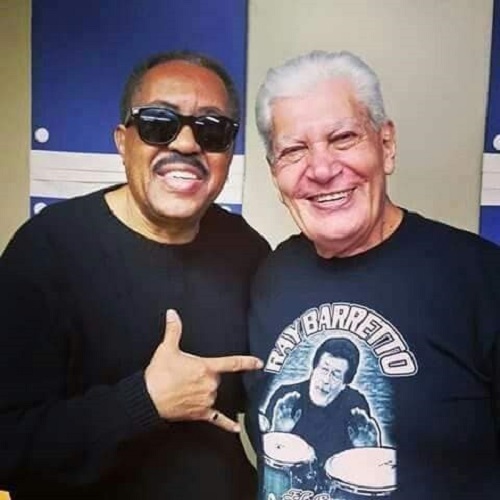
Tito Allen y Adalberto Santiago

The Origin of a Name with Tumbao

The stage name of this renowned sonero holds a curious history split into two parts. The first part, “Tito,” stems from a deeply rooted custom in Puerto Rican slang: the double diminutive. From Roberto, people began calling him “Robertito,” a nickname that over time affectionately evolved into “Tito.”

On the other hand, the surname “Allen” has a much more urban and accidental origin. The singer himself has confessed that during his youth, he saw the word painted as graffiti on a wall. The visual impact and the sound of the name pleased him so much that he decided to adopt it on the spot as his signature trademark for the entertainment world.

The Beginnings of a Multifaceted Star

Tito Allen’s musical journey formally began in 1962, when he was just a 16-year-old teenager. In his early days, the young Roberto showed a strong inclination toward rock and roll, a genre that was causing a frenzy among the youth of the 1960s.

During this formative period, Allen stood out as a bassist and guitarist, forming part of various musical trios that emulated the great bands of the era. These groups even enjoyed successful appearances on Puerto Rico’s Channel 4 television.

Fortunately for lovers of Caribbean rhythms, destiny guided him toward tropical music. His powerful voice, characterized by impeccable tuning and elegant phrasing, quickly made him a highly sought-after singer.

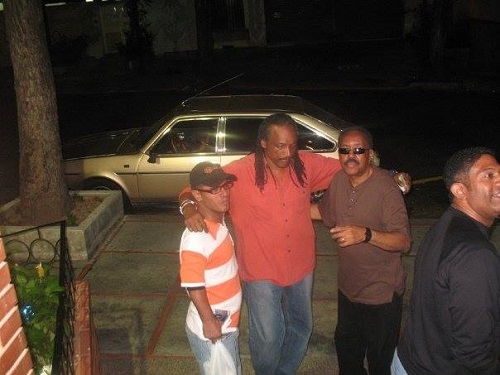
Dj. Augusto Felibertt, Orlando Watussi, Tito Allen y Jesus Torres

Among his major aesthetic influences, Allen has always expressed a deep admiration for Cheo Feliciano, whom he listened to with devotion during Feliciano’s era with the Joe Cuba Sextet. Likewise, he has repeatedly pointed to the Bobby Valentín Orchestra as one of his favorite bands of all time.

Conquering New York and the Big Leagues of Salsa

Determined to take his career international, Tito Allen traveled to New York in 1972. Although he initially tried to join the orchestra of the “King of the Timbal,” Tito Puente, Puente had no vacancies at the time. Far from discouraged, Allen joined forces with the prominent Colombian pianist Eddie Martínez to form a quintet that performed successfully in Big Apple nightclubs.

The true turning point came in May 1973. After a brief return to his native Puerto Rico, Allen went back to New York and, thanks to a recommendation from Eddie Martínez, scored an audition at the famous club El Corso. There, maestro Ray Barretto was looking for a vocalist to replace none other than Adalberto Santiago.

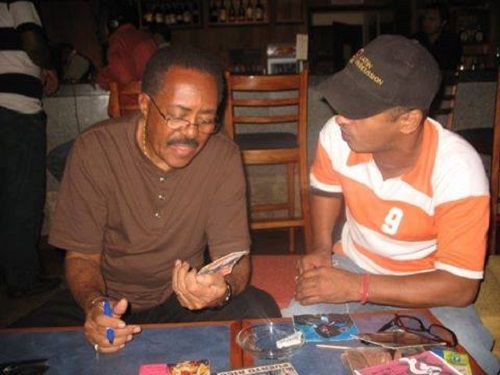
Tito Allen y Billy Crespo

Allen rose to the challenge masterfully, recording the acclaimed album Indestructible (1973), a work that instantly enshrined him in the pantheon of salsa royalty.

A Legendary Journey: Following his successful run with the Ray Barretto Orchestra, Tito Allen fulfilled his dream of working alongside Tito Puente. Later, he joined the ranks of the legendary Típica 73 before launching a solid solo career.

His impeccable reputation also led him to become a fundamental part of the Puerto Rico All Stars, participating in two of their most iconic album productions. Additionally, he collaborated closely with the virtuoso Louie Ramírez, leaving an indelible mark thanks to his versatility.

The Golden Backup Singer of the Latino Neighborhood

Beyond his brilliance as a soloist and bandleader, Tito Allen’s career stands out for his generosity and professionalism in the recording studio.

His trained, melodious voice graced countless productions for artists of the stature of Pupi Legarreta, Ralphy Santi, and Conjunto Clásico, among many other representatives of “the ultimate expression of the Latino neighborhood.” His work as a backup vocalist was essential in defining the sound of New York and Caribbean salsa during the ’70s and ’80s, solidifying his status as a complete artist and a gentleman of music who today, more than ever, deserves the applause of his audience.

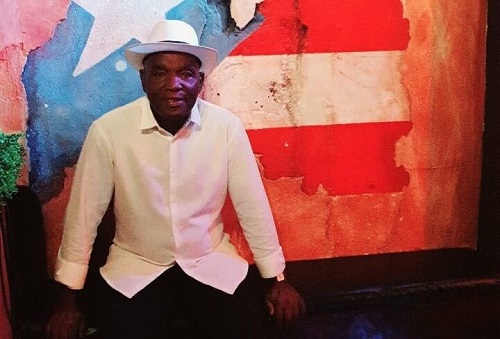
Tito Allen y Dj. Augusto Felibert

Also Read: Our friend Tito Allen supports the Salsa Museum

Héctor “Tempo” Alomar: The Scorching Voice and the Rhythm Blessed by “El Cantante de los Cantantes”

The Invaluable Legacy of an Afro-Antillean Percussion and Vocal Giant

Héctor “Tempo” Alomar was born on December 28, 1950, in Parada 19 of Santurce, Puerto Rico. A singer, percussionist, and true pedigree sonero, he became an essential figure in salsa music thanks to his outstanding contributions to world-class bands.

His resume included Orquesta La Conspiración, La Diferente, Conjunto Libre, La Charanga Afrocubana, La Charanga América, Orquesta Broadway, Charanga la Tapa, Casanova y su Montuno, Batacumbele, El Combo de Siempre, Zaperoco, Nacho Sanabria’s Orchestra, Grupo ABC, and, in a career-defining run, Roberto Roena’s Apollo Sound. He also led his own musical ensemble under the name Sexteto La 51, his last recording with the legendary and living legend of Fania All Stars Eddie Montalvo.

Héctor Tempo Alomar la Voz Candente y el Ritmo

The remembered former member of Apollo Sound passed away at the age of 70 in his native Puerto Rico on May 9, 2021, leaving a profound void in the world of music collecting and salsa culture.

A Rhythm That Ran Through His Veins

The son of Doña Isabel Román and Don Luis Alomar, young Héctor showed an innate connection with the clave from a very early age. His mother used to recall that the boy would strike the rhythm with any kitchen utensil he could get his hands on, even breaking several glass cups while trying to draw sound from them with silverware.

He made his first professional recording as a minor, at just 15 years old. It happened when producer Joe Blanco invited him to record percussion with Chacón y sus Batirrítmicos, capturing his talent on tracks like “Ahorita va a llover” and “Mi guajira.”

In 1968, he moved to New York City, and by 1970, he reunited with his great childhood friend, maestro Ángel “Cachete” Maldonado. Maldonado introduced him to the city’s music circles, providing the decisive push for him to develop as a lead singer.

Héctor Tempo Alomar nació el 28 de

Blessed by “El Cantante de los Cantantes”

“Tempo” Alomar joined Orquesta La Conspiración as a timbalero, staying with the band for about three years. Later, thanks to a recommendation from trumpeter and arranger José Febres, bandleader Rafy Val recruited him for La Diferente. This gave him his first opportunity to formally record salsa on the album Fuerza Bruta, produced by Larry Harlow.

During his time with La Conspiración, a legendary anecdote took place at New York’s El Hipocampo club, right after a Fania All-Stars concert. Héctor Lavoe, who was scheduled to sing at the club that night, was running late, and the band couldn’t start. “Cachete” Maldonado assured José Mangual Jr. that “Tempo” knew the repertoire and recommended him to step up to the stage.

Out of deep respect for Lavoe, Alomar hesitated but ultimately took the stage to perform “Juana Peña,” winning the applause of the demanding crowd. Halfway through the second song, “No me llores más,” he spotted Héctor Lavoe walking into the venue, and out of sheer awe, he stopped singing. It was Lavoe himself who, from the audience, gestured for him to keep going.

When the performance ended, “El Cantante de los Cantantes” went up to the stage, congratulated him warmly, and encouraged him to keep pursuing his singing career.

Setting the Big Apple Ablaze

Around 1973, once again recommended by “Cachete” Maldonado, he auditioned for maestro Manny Oquendo, who was looking for a lead vocalist for Conjunto Libre. He was accepted immediately. After six months of intense daily rehearsals, the group chained together memorable hits driven by “Tempo’s” voice, such as “No critiques,” “Tú no me quieres,” “Bamboleate,” and “El Changó de María.”

Tempo Alomar El legado incalculable de un gigante de la percusión y el canto afroantillano

These were five golden years with El Libre, a period during which he also recorded an album with Néstor Torres’ La Charanga Afrocubana.

As the 1980s arrived, he joined Charanga América. His versatility and high demand in the New York scene led him to collaborate and record with stellar figures, including Alfredo de la Fe, Johnny Rodríguez, Víctor Paz, Jorge Dalto, and the Latin Percussion label. He also worked with Orquesta Broadway and Casanova y su Montuno, played congas for Pete “Conde” Rodríguez, and played timbales for maestro Eddie Palmieri.

In 1985, he decided to return to Puerto Rico. On the Isla del Encanto, he contributed his talent to flagship ensembles like Batacumbele, Zaperoco, and Héctor Santos’ El Combo de Siempre, sharing the stage in the latter with Ismael Rivera Jr. (Maelito). Additionally, alongside Felo Barrios, he completed a prestigious one-month US tour with the legendary double bassist Israel López “Cachao.”

The Golden Era with Roberto Roena and Apollo Sound

In 1993, while rehearsing with Grupo ABC (where he worked alongside Nacho Sanabria and Roberto Angleró), the legendary Aníbal Vázquez Roberto Roena’s uncle invited him to participate as a vocalist in a special local television recording with Apollo Sound.

Roberto Roena y Tempo Alomar

Roena was captivated by “Tempo’s” style and cadence, even though the vocalist hadn’t fully memorized the lyrics to some of the songs for that TV show. With his characteristic wit, Roena himself wrote the lyrics on large cue cards beneath the TV cameras and instructed the cameraman to avoid close-ups of Alomar, preventing the audience from noticing he was reading.

That chemistry sparked 16 uninterrupted years of back-to-back hits with Apollo Sound and a close, lifelong friendship between Roena and Alomar.

Together, they immortalized musical gems such as “Dale como es,” “El pueblo pide que toque,” “Atrévete conmigo,” “Sr. Bongó,” “Baila y goza,” “Mi mambo pide campana,” and the international smash hit “Cómo te hago entender”—a track that became a salsa anthem and took them to massive venues across Colombia, Panama, Peru, Venezuela, and all of Europe.

During his fruitful tenure with Apollo Sound, “Tempo” also took an active role in selecting session musicians and backing various artists. One of his most remembered cross-genre collaborations was with urban music icon Tego Calderón on his landmark album El Abayarde, where Alomar joined his voice to sing the classic “Planté bandera.”

Héctor “Tempo” Alomar lives on in the memory of music lovers worldwide as a bastion of syncopation, a street-corner sonero, and a true gentleman of rhythm.

Collaboration:

Historia Salsera

Augusto Felibertt

Also Read: It is indisputable that the most popular orchestra in Puerto Rico and South America during the 1970s was Roberto Roena’s Apollo Sound

  • « Go to Previous Page
  • Page 1
  • Interim pages omitted …
  • Page 10
  • Page 11
  • Page 12
  • Page 13
  • Page 14
  • Interim pages omitted …
  • Page 119
  • Go to Next Page »

International Salsa Magazine (ISM) is a monthly publication about Salsa activities around the world, that has been publishing since 2007. It is a world network of volunteers coordinated by ISM Magazine. We are working to strengthen all the events by working together.