
Directory of North American nightclubs |
||
|
|
||
|
|
|
|
|
|
||

CALIFORNIA |
|

ILLINOIS |

MICHIGAN |

NEW JERSEY |

NEW YORK |
|
|
|
|
|
|
|
|


Directory of North American nightclubs |
||
|
|
||
|
|
|
|
|
|
||
|
CALIFORNIA |
|
ILLINOIS |
|
MICHIGAN |
NEW JERSEY |
NEW YORK |
|
|
|
|
|
|
|
|
In this space, we have interviewed artists and groups from different countries of Latin America, but there have been a few times we had the opportunity to connect with talent from Brazil and not only that. They also sing and play typical music of their country, which makes them even more interesting, so we could not fail to speak with Diogo Brown and Isabelle Duarte.
Both have been very kind and shared with us some of their most significant experiences as Brazilian musicians in the United States and how that has shaped their way of making music.

The first to take the floor was Isabelle, who informed us that she started singing at a church in her home country, Brazil, when she was just six years old. Over time, she also got to sing at weddings, quinceañeras, local festivals, and events of all kinds.
About 10 years ago, she fell in love and married an American man, with whom she moved to the United States, where she met Diogo, a compatriot of hers who was born and raised in a city far from her own. However, their “Brazilianness” and love for music brought them together in the project they now share with other musicians, Gafieira Rio Miami.
In Diogo’s case, his passion for music awoke at 15, the age at which he knew he wanted to be a professional musician. His mother convinced him to enroll in a music school and an English academy, as she suspected that English would be extremely useful for his future career and this was indeed the case. His arrival to the United States was very similar to Isabelle’s, as he also met an American woman online; they eventually fell in love and moved there together. He attended a screening of a Brazilian film in which he had appeared, where he met her and finally live their relationship in person. That was over 20 years ago.
Since then, Diogo has worked with countless artists and companies such as Sony Music, Univision, and Warner. Among the stars he has collaborated with are Gloria Estefan, Ricky Martin, Lara Pausini, and many others.

Something interesting that Diogo tells us is that, in his early years as a musician in Brazil, he spent listening to Latin music, and some of his favorite artists were Buena Vista Social Club, Cachao, Jimmy Bosch, and many others of this kind. By his own admission, this is uncommon for a Brazilian resident in Brazil, who usually only listens to music of their own country. Both he and Isabelle agree that, in Brazil, very little music in Spanish is consumed, among other factors, due to the language barrier.
Isa tells us that her connection to Hispanic music began to form in the United States, and her husband contributed a lot to that, since he is of Hispanic origen. In addition, they settled in Miami, where there is a mix of cultures of each country, so she started to be exposed to genres like salsa, cumbia, merengue, and other rhythms that are not usually heard in Brazil. For her, Gafieira Rio Miami is a golden opportunity to demonstrate that Brazil is not separate from the rest of the Americas.
In addition, he noted that globalization and major musical phenomena in Portuguese and Spanish have managed to break that language barrier over the years.
Gafieira Rio Miami was born from a much smaller idea that began with just seven musicians. As the project grew, the group managed to have a total of 11 members, including five brass players, the rhythmic part, and a singer. There are 10 musicians and one vocalist, Isabelle. The members include Brazilians, Venezuelans, and Americans, but they are all united by the passion for Brazilian music.

In a music scene that pushes bands and orchestras to make themselves smaller, Gafieira Rio Miami has always chosen to remain intact despite the circumstances. Diogo has been perfectly clear that if he’s offered a gig with fewer musicians, he prefers to say no. He says there are 11 members and all are needed for every performance, since otherwise, the impact of the live music would not be the same.
Read also: Rafaelito and his career between Munich and New York
Luis Manuel Rondón is a bandleader and composer with whom we have been able to talk about the most important details of his career in a conversation of a little more than half an hour. Rondón currently leads the group The Latin Ensemble, of which he spoke along with other important issues.

Luis Manuel began in music as young as 12 years old, which means that he has more than 50 years of artistic career. His first job in the arts was as a percussionist for a Venezuelan gaita group known as Los Monumentales, when he served as a bongo player and bucket drummer. His role as a singer came about by accident, as it was not something he was looking for.
It turns out that the group had a singer nicknamed “El Cabeza” who had an amazing voice, but he had a big and unforgivable flaw. He was a drunk with misconduct who used to disappear and skip rehearsals and the most important performances. Luis Manuel recalls that they had a very important rehearsal in the days prior to a major event that weekend, so the band members tried to contact “El Cabeza” by all possible means, but they could not talk to him.
After several days of no news from him, they decided to test the vocal skills of the members to see who could “save the day” and fill the place of singer. That was when Luis Manuel started singing the famous song “La Grey Zuliana” and convinced his bandmates to make him the replacement. From there, he sang for various groups until, upon coming of age, he managed to join a fully professional group and began to be contacted to perform at dances.
He also played with Expresión Gaitera and Grupo Sancoson, from which Grupo Jarana originated. Many of the members of the latter ended being part of Guaco. The members of Sancoson attended the Liceo Aplicación, where Luis Manuel went to high school alongside the famous bassist Carlos Puche.
Some time later, he joined Grupo Cóctel Y Canela and became the owner of Grupo Cactus, which was very famous at the time. He was also a member of Dalila Show La Orquesta, La Orquesta Sibari, and La Billo Caracas Boys.
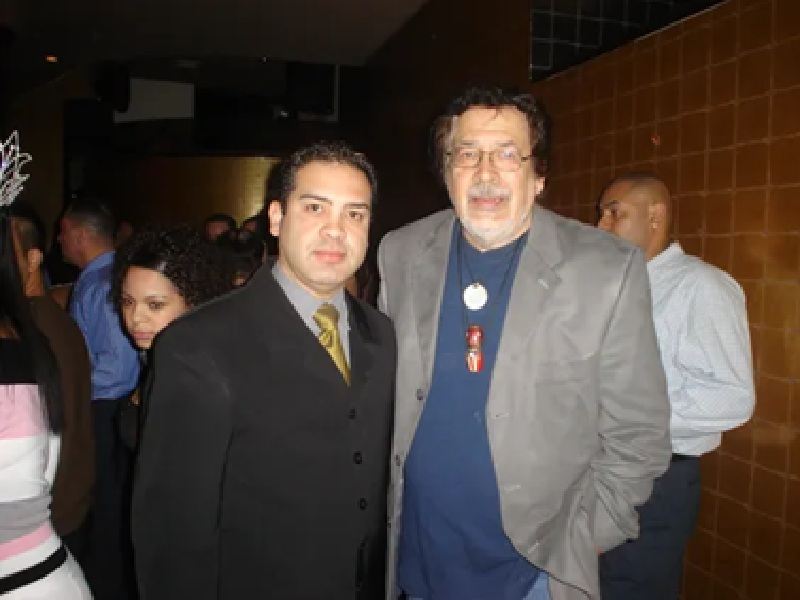
In 1999, Luis Manuel moved to the United States and settled in New Jersey, where he recorded an album which had some success in the New York music scene and won the Association of Latin Entertainment Critics in 2007, also known as the ACE Award. After that, many important things happened in his career, such as signing with Sony Music, which released and distributed his work.
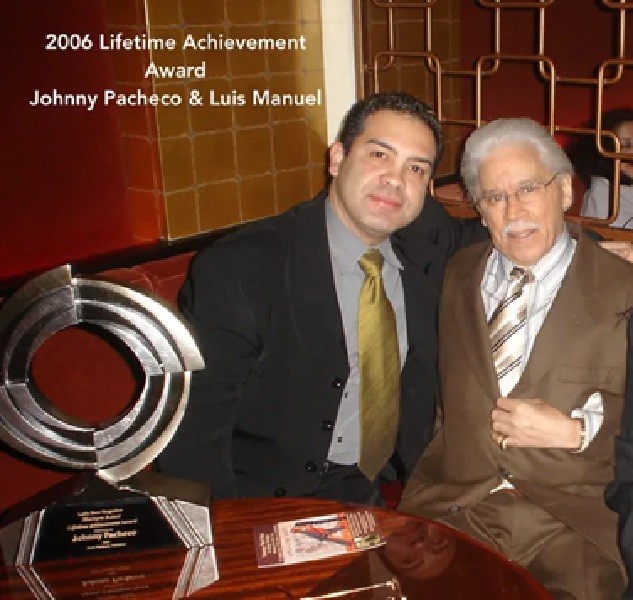
He lived a very good time until the famous economic crisis of 2008, which led many orchestras to lay off some of their staff and hurt him to some extent. However, that did not stop him from continuing to open up new paths to the music, and his persistence led him to collaborate with Oscar D’León, Gilberto Santa Rosa, Tito Nieves, José Alberto “El Canario,” Johnny Pacheco, Ray Barretto, and many others.
Listening to those artists as a child made him feel completely out of their league, so having collaborated with them was a dream come true for him.
Until that point in his career, Luis Manuel got great professional and personal satisfaction, but there was something very important missing in his list of successes: having his own project. He gave shape to this idea when he began his relationship with the woman who is his wife today, Gabriela Caraballo, an economist by profession with an entrepreneurial mindset. Some day talking about it, she proposed him to create an organization, which they later named The Latin Ensemble.
From that moment on, they began to be hired for private parties and corporate events of all kinds, to the point that they even performed at a Dolce & Gabbana event for the grand opening of one of their stores. They also performed for Donald Trump at Mar-a-Lago and put on big shows at important people and places.
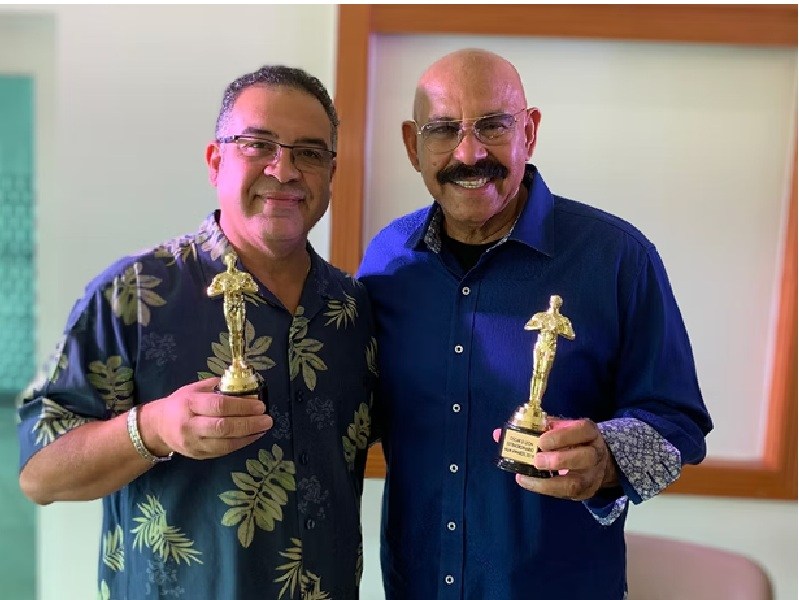
He has also received important awards, such as the Estrella Music Award at the James L. Knight Center in Miami, alongside the likes of José José and Grupo Niche. He also received the Ángeles de Amor Award, which honors individuals who contribute to supporting Latinos in the United States.
We must also mention the Latino Magazine Award, which he won in 2019 and 2022.
For about six years now, Luis Manuel and the group have also been based in Spain. It all began when they were hired to perform at the Carnival of Tenerife in October 2019, so he, his wife, and their young daughter traveled first and rented an Airbnb. They had a contract to perform at the party of the Candlemas’s Virgin, but the point is that the event was scheduled for March 2020, when the COVID-19 pandemic had already started.
Because they could not leave, Luis Manuel and his family rented an apartment where they had to stay until early 2021, which is when restrictive sanitary measures were finally relaxed and they could leave Tenerife. Fortunately, this was not a waste of time for them, as they saw the potential of what they could accomplish in Spain, so they moved to Madrid and tried their luck there.
Throughout this time in Europe, Luis Manuel and his group have performed throughout Spain, Portugal, France, and most recently in Belgium. In Belgium, The Latin Ensemble was hired to perform at a royalty party, and the group has done such a fantastic job that they will perform at another event for the same family, making it clear how talented the members are and how hard they have worked to make a name for themselves in the industry.
Unfortunately, because it is a royal family, they were not allowed to take pictures or record videos, but it is still a great event in the career of Luis Manuel and his bandmates.
Read also: John and Liz reveal details of the 16th annual SF Salsa Festival
We have received a very warm greeting from our great friend, Puerto Rican singer-songwriter Héctor Luis Pagán, who has thanked us for our continued support for his prolific musical career and gave us a biography in which we can read some of the most important facts of his time in the music industry. Below are some of the most significant highlights of his career.
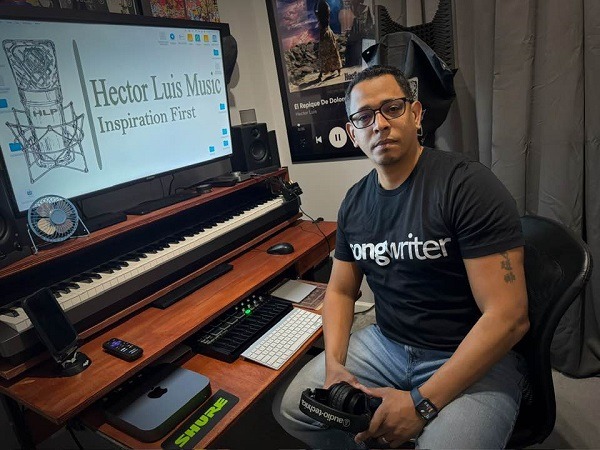
Héctor’s first contact with music was when he was just a seven-year-old boy who, before he could even read or write effectively, had already composed his first song, which is strong evidence the gifts that would later define his adulthood. A few years later, that same song would be recorded by its creator, being part of Héctor’s first experience as a singer in New York City.
From that very day, the artist has composed approximately 500 songs, and many of them have been recorded by other renowned prestigious artists, which led Héctor to be considered as a prolific and talented composer whom the biggest names turned to for guaranteed future hits.
As for his career as a vocalist, Héctor has also made great achievements worthy of mention. Thanks to his vocal skills, he performed on large international stages, which is how he caught the attention of none other than Ray Castro, owner and musical director of Conjunto Clásico.

Seeing what he was made of, Castro invited him to join the legendary group as lead vocalist, a position he retained for over 17 years. During those years, he toured extensively across many countries where he shared the stage with some of salsa glories, such as Victor Manuelle, Willie Colón, El Gran Combo de Puerto Rico, and many more.
At that stage, the artist also recorded the lead vocals for the album ”Si Ella Estuviera”, which included one of his most important compositions, “Esa Tarde.” The inclusion of one of his own songs on the album was an important thing for his career, as the group typically performed only songs by its founder, Ramón Rodríguez. This recognition of his talent was extremely important for his career and prepared him for what would come next.

Today, Héctor’s evolution as an independent artist has not stopped, which has allowed him to explore his creativity in a way that he never could before. Just by the year 2025, he released his first solo album, titled “A Mi Estilo,” showing how delighted he was with his independence. This new project is composed entirely of original material written by him.
At this time, he is developing a major project he called “12 Capítulos,” which is designed to last all year around with a new track released each month. In addition to fully exploring his role as a composer, the project features a series of guest artists and musicians who embellish the work done.
After an impressive decades-long career and an extremely extensive catalog of songs he wrote, Héctor Luis Pagán continues to contribute to the evolution of salsa and to honor his Latin roots.

Read also: ‘‘El Griego Rumbero’’ visited the Salsa Museum and donated some objects
After coupling on our schedules, we were able to speak with bandleader and pianist David Frankel, whose story of how he became interested in music and eventually dedicated himself to it is truly fascinating. It also shows that not only Latinos and their descendants can fall in love with these rhythms, but also people outside our culture. This is because David has Russian and Polish heritage, which did not prevent him from falling in love with Latin music so intensely.

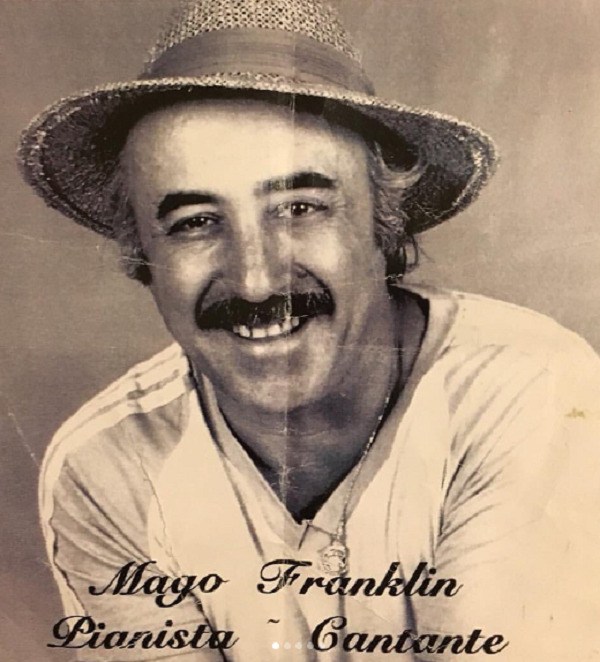
David was born in Lower Manhattan, New York, where there were many Latin families at the time. The neighborhood housed many Puerto Ricans and Dominicans. To this we must add that his father, Daniel “El Mago del Órgano” Franklin, was a musician and moved to that very place where Papote Jiménez, Ismael Miranda, Markolino, Freddy Lugo, Henry Fiol, Luis Ayala, and many others lived. Besides being a neighborhood full of artists, it was much cheaper living there, so he thought it was the ideal place for him.
It is worth noting that Daniel knew how to write music and read scores, but he had never played Latin music before in his life. He began to know it when several musicians he worked with asked for his help to read their scores, which led him to fall in love with Afro-Cuban music and develop an interest in salsa and merengue.
When David was born in 1979, Daniel had already been making music for about 15 years and had earned the nickname “The Organ Wizard” thanks to some band competitions held at a club in the Bronx. From a very young age, the boy watched bands rehearsing on the first floor of his house, so this salsa scene was natural for him. However, David had nothing to do with music until the death of his father in 2003.
David never had any interest in entering the art world, but the void left by Daniel’s death in his life drove him to study music, looking to connect with his father in some way. From there, he began taking piano and percussion classes, but he did not stop there. He also started to go out social dancing in the New York nightclubs and to know a bit more the nightlife of the city. On one occasion, a woman left him alone on the dance floor, and he was so ashamed in that moment that he decided to take classes and learn to dance.

That was when he realized that all the local bands played almost the same genres and songs, but there was no need for that because there was a world of possibilities in the Latin music he had discovered during his classes. There is a world beyond La Fania, and he learned that thanks to dance schools. All this thinking led him to create his own band with different music, to the old-school style he had always loved.
His father had always told him salsa is for dancing, and if you are not playing dance music, you are doing it wrong.
After thanking us for the question, David then proceeded to explain that there was a school in New York called the Harbor Conservatory for the Performing Arts, located at 104th Street and Fifth Avenue in Manhattan. The heads of the education programmes there were Ramón Rodríguez and Louis Bauzó, who were excellent musicians and great people whom he met thanks to his father, who was a piano teacher at that institution. David used to accompany Daniel to the school and met both teachers through him.
Following his father’s death, David returned to that same conservatory to study singing with Ramón, while also studying percussion with Georgie Delgado and piano with Louis. In short, this institution was of vital importance for his career, and the many things he learned there were momentous both personally and professionally.
As for the dance, he enrolled at the Baila Society school in New York through some friends, but later studied at others such as Santo Rico Dance and Dance On 2.
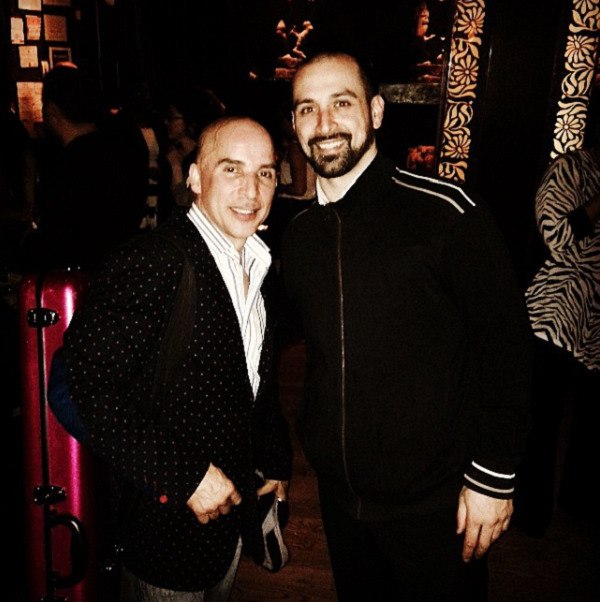
David began his career as a musician by playing boogaloo with a group called Spanglish Fly and a few other small bands. After everything he had studied and learned, already for the year 2011, the idea of creating his own group started percolating in his mind, so he posted an ad online looking for musicians and called some former classmates who might be interested in the proposal. That was how he managed to gather a decent number of people with whom he could finally put the Avenida B project together.
He chose salsa dura as his main genre because it is the kind of music that makes him want to dance, and given his background, this was very important to him.
He is also about to release an album in tribute to his father, which he has named “El Mago,” and it will feature some of his own songs; it is scheduled to be released in July 2026.