• Skip to primary navigation
  • Skip to main content

International Salsa Magazine

  • HOME
  • Previous editions
    • 2026
      • ISM / June 2026
      • ISM / May 2026
      • ISM / April 2026
      • ISM / March 2026
      • ISM / February 2026
      • ISM / January 2026
    • 2025
      • ISM / December 2025
      • ISM / November 2025
      • ISM / October 2025
      • ISM / September 2025
      • ISM / August 2025
      • ISM / July 2025
      • ISM / June 2025
      • ISM / May2025
      • ISM / April 2025
      • ISM / March 2025
      • ISM / February 2025
      • ISM / January 2025
    • 2024
      • ISM / December 2024
      • ISM / November 2024
      • ISM / October 2024
      • ISM / September 2024
      • ISM / August 2024
      • ISM / July 2024
      • ISM / June 2024
      • ISM / May 2024
      • ISM / April 2024
      • ISM / March 2024
      • ISM / February 2024
      • ISM / January 2024
    • 2023
      • ISM / December 2023
      • ISM / November 2023
      • ISM / October 2023
      • ISM – September 2023
      • ISM – August 2023
      • ISM July 2023
      • ISM Edition June 2023
      • ISM – May 2023
      • ISM April 2023
      • ISM March 2023
      • ISM February 2023
      • ISM January 2023
    • 2022
      • ISM December 2022
      • ISM November 2022
      • ISM October 2022
      • ISM September 2022
      • ISM August 2022
      • ISM July 2022
      • ISM June 2022
      • ISM May 2022
      • ISM February 2022
      • ISM January 2022
    • 2021
      • ISM December 2021
      • ISM November 2021
      • ISM October – 2021
      • ISM September 2021
      • ISM August 2021
      • ISM July 2021
      • ISM May 2021
      • ISM April 2021
      • ISM June 2021
      • ISM March 2021
      • ISM February 2021
      • ISM January 2021
    • 2020
      • ISM December 2020
      • ISM November 2020
      • ISM October 2020
      • ISM September 2020
      • ISM August 2020
      • ISM July 2020
      • ISM June 2020
      • ISM May 2020
      • ISM April 2020
      • ISM March 2020
      • ISM February 2020
      • ISM January 2020
    • 2019
      • ISM December 2019
      • ISM November 2019
      • ISM October 2019
      • ISM Septembre 2019
      • ISM August 2019
      • ISM July 2019
      • ISM June 2019
    • 2016
      • ISM December 2016
      • ISM November 2016
      • ISM October 2016
  • Spanish
  • Download Salsa App
    • Android
    • Apple

Search Results for: Orchestra

First Huelva Salsa Festival

Europe / Spain /

First Huelva Salsa Festival. Afro-Cuban rhythms make their debut in Huelva’s nightlife

First Huelva Salsa Festival - Photo 1
First Huelva Salsa Festival – Photo 1

By Javier Corrales García: Salsa is synonymous with joy and delight; it is a collection of sensations evoked by the drum. Salsa is beauty; it is youth within experience—like the wood of an old tree with buds constantly sprouting. Salsa is a world unto itself; Salsa is a syncopated beat in the heart.

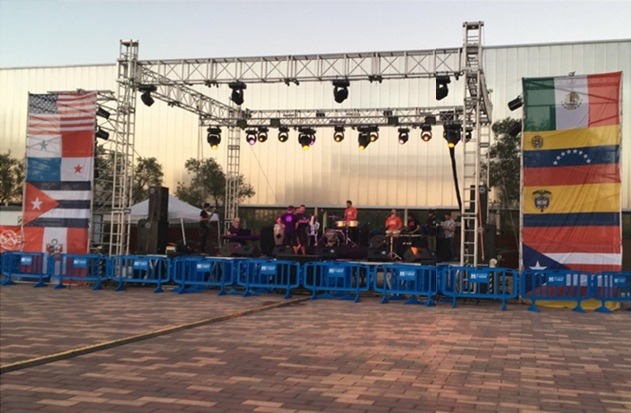
Last August, in a corner of southern Spain, a stage was set up facing a monument sculpted by Miss Whitney—a monument representing the spirit of discovery, specifically the European discovery of the wondrous lands of the Americas. This location in southern Spain is none other than the very spot from which Christopher Columbus and his crew set sail 525 years ago in search of new routes, only to stumble upon unknown lands—the port of Palos de la Frontera.


In the wake of that “accident” came a series of events, tragedies, and invasions, but also *transculturation*—a term coined by Fernando Ortiz to define the complex process of reciprocal communication between cultures. These mutual influences blended various cultures into one—rich like few others, and musically unparalleled.

August was the month when those three ships set sail, and August was also the month chosen to celebrate a magnificent festival featuring the music born of that transculturation: the First Huelva Salsa Festival. Seven orchestras showcased diverse styles—ranging from traditional *son*, *nengón*, and *changüí* to repertoires featuring sophisticated jazz arrangements that were both elegant and powerful, as well as the sounds of the genre known as salsa that dominated the Latin music scene in New York City during the 1960s and 70s.

concert - collash 1
concert – collash 1

Sessions by DJ Corr and Wally DJ before and after each concert.

pre - concert
pre – concert

Salsa Festival

A look at the festival’s orchestras:


SON DE CUBA

A group of Cuban musicians led by *tres* player Leo Cabezas, featuring traditional *son* music as the main attraction. They opened the concert lineup on the first day in a stunning setting—the only concert held in Punta Umbría right on the beach sand—amidst the fabulous atmosphere typical of “El Mosquito” (a bohemian beach bar that champions live music and boasts what are likely the best sunsets in the province of Huelva).

In addition to the opening performance, they played the closing concert on the final day, inviting musicians from Troveros de Asieta to join them on stage.

Troveros de Asieta invitando a Proyecto Mambo

LA CANDELA

Gilberto Miguel Calderón Cardona—known first as Sonny and later as Joe Cuba—would be proud of the legacy evident in the excellent work of La Candela. This young group has achieved a sound that stays true to the cadence and flavor of the famous “Big Apple” sextet—a feat that is notoriously difficult to pull off.

Rafa Richie Rodriguez, sonero de la Candela

Dancers worldwide were fans of Joe Cuba, and La Candela—his worthy successors—are now gathering their own following within the dance community. They perform fantastic covers of Joe Cuba songs alongside original tracks packed with danceable flavor. This magnificent group from the Canary Islands comes highly recommended for music lovers, dancers, radio broadcasters, and—above all—organizers of dance congresses around the globe.


SEPTETO NABORI

After listening to their album *20 Años*, one could easily predict that their live show would be powerful; indeed, after the concert ended, they were the talk of the audience. It was a marvel to see these Cubans—long based in Italy—delivering the true flavor of *son* and giving it their all on stage.

Septeto Nabori with their audience

Tracks from their album, such as “Ni pa ti ni pa mi” and “Santiago si la lleva,” lifted spirits during a magical night of salsa, *son*, *guaracha*, and mambo.

Cinta Lopa at the percussion workshop, with Santiago Reyther behind her.

Their two *soneros*—Iván Antonio Rodríguez and Yoelis—were fascinating, possessing the distinctive voices of seasoned, old-school *son* singers. Luis Alberto Danger was sublime throughout the entire show.

Bandleader Alejandro Morcate kept the musical machinery running on guitar; bassist Raúl Cardoso added flavor with his syncopated swing; Monchi laid down the grooves on the *tres*; and Yoandy Armenteros and Jose Alberto Ávila handled the percussion, providing the rhythm and spice. A marvelous septet that captivated everyone present.

Ivan Antonio Rodriguez and Yoelis soneros from Septeto Nabori

SONORA LIBRE

Mauricio Ochoa was missing—not because the replacement conga player lacked quality, but because Ochoa is the mastermind behind this superb work and deserved to witness the audience’s appreciation firsthand.

Sonora Libre ensured everyone had a fantastic time, serving as the perfect finale for the festival’s Friday night. Sebastián Cabra handled musical direction, showcasing magnificent arrangements—track after track—that infused the horn section with a strong jazz essence without losing an ounce of swing or flavor.

Salsa Ecstasy with Sonora Libre

With lyrics ranging from upbeat *guarachas* to thought-provoking verses, and salsa played at full intensity, kudos to this stylish group based in Barcelona.

They wrapped up the night by mingling with the guys from Septeto Nabori—a *sonero* face-off filled with great vibes.


JÓVENES CLÁSICOS DEL SON

Led by bassist Ernesto Reyes Proenza, this Cuban group—with over 20 years of history—won awards right from the start. With “El Nene” on vocals, they achieved success that established them as a benchmark in reviving the importance of *son*—the quintessential Cuban popular genre.

Jóvenes Clásicos having a great time on stage

During the concert, *sonero* José Antonio Rodríguez (“Pepitin”) kept the audience constantly engaged, making them dance non-stop to one song after another. They played with *son*, *changüí*, and even *nengón*—traditional tracks from their new album, *El Bar de Paco*, which is highly recommended for lovers of majestic *son*.
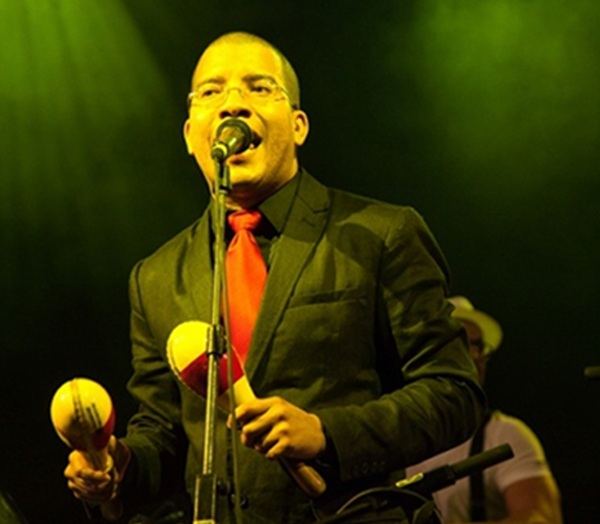
Pepitin on the maracas

César Hechavarría delighted the crowd time and again with his mastery of the *tres* guitar, delivering rich improvisational solos that we wished would never end. José Manuel Rodríguez Arias radiated joy, dancing while playing the cowbell with great flair and rhythm.

ORQUESTA DEL SOLAR

The guys from Orquesta del Solar threw a fantastic *rumba* party—pure, authentic salsa. They mixed original songs with tasty classics like “Fulanito Malanga,” “Conciencia y Guaguancó,” and “Abran Paso,” as well as a crowd favorite among the night’s dancers: “Ahora Sí.”

Jaime Vazquez, conguero del Solar

Our sincerest congratulations go to Julio Mena for leading this superb orchestra for so many years as a national and international salsa reference point. They hold the prestige of having accompanied legends like Meñique, Jimmy Bosch, Cheo Feliciano, and Adalberto Santiago—a sheer delight for dancers!

The orchestra is highly appreciated by dancers and is a regular fixture at congresses and events catering to the dance community.

Naty Georgiades Guaguancó workshop

TROVEROS DE ASIETA

We wrap up our musical review of this fantastic event with the *son*-loving Canary Islanders. Returning to Huelva for the second consecutive year, they showcased their tight, cohesive quality—delivering an elegant, powerful *son* sound. Their exciting repertoire featured the *conjunto* style, including tracks like Arsenio Rodríguez’s “Mulence”—a song with quintessential *rumba* lyrics. A treat for both the ears and the feet—and on a personal level, they are humble, down-to-earth, friendly, and charming. The perfect finale to this magnificent festival!
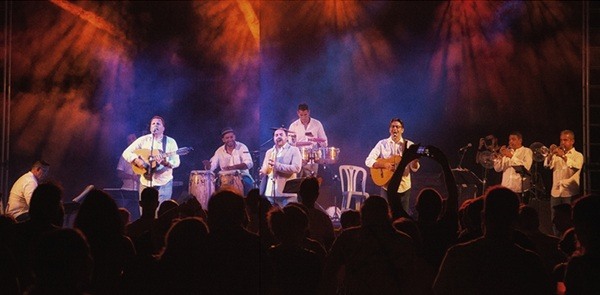
Troveros revolucionando al publico

ADDITIONAL ACTIVITIES – FIRST HUELVA SALSA FESTIVAL

The concert series was complemented by dance, percussion, and history workshops, offering a wide range of activities designed to bring the worlds of music and dance closer to the audience.

Percussion workshop offered by Santiago Reyther and Lázaro Chino Acebal.

In short, a delightful festival offered free of charge thanks to the Huelva Provincial Council and organized by Música Fundamental, under the leadership of Carlos Ferrer. We are eagerly looking forward to the second HSF!


Audience attending the Sonora Libre concert
After the "Proyecto Mambo: From Changüí to Mambo" workshop in New York.
After the “Proyecto Mambo: From Changüí to Mambo” workshop in New York.

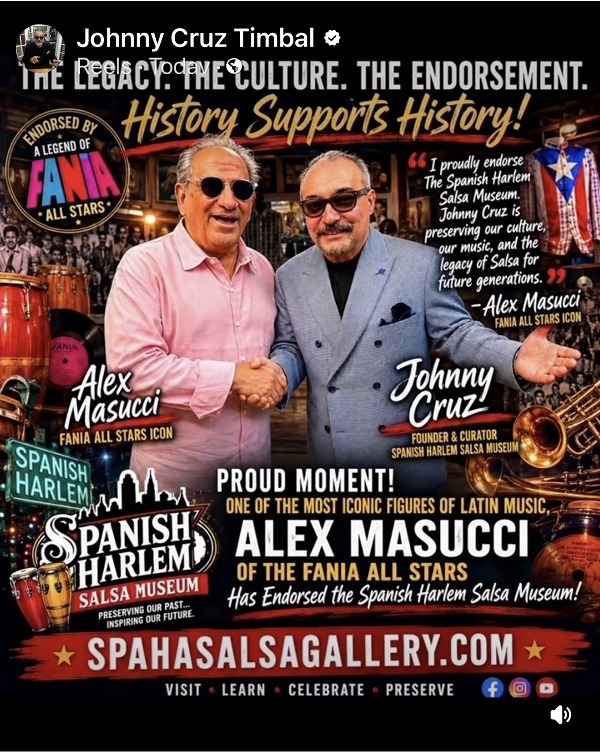
Alexander Masucci endorses The Salsa Museum and our work

We have been blessed to be supported by great artists over recent years, but on this very special occasion, we have won the support of music executive, producer, composer, and promoter Alex Masucci, the brother of legendary lawyer, businessman, and co-founder of the Fania All-Stars, Jerry Masucci. 

Now, we will talk a little about the story of this great Latin music figure for everyone to know him beyond his family ties.

Producer Alexander Masucci
Music executive and producer Alexander Masucci

Who is Alex Masucci, and how were his beginnings?

Alex Masucci was born on November 11, 1949, and grew up in Brooklyn, New York, along with his parents, Urbano and Elvira Masucci, and his brother, the renowned music executive Gerald Masucci, better known to all as Jerry Masucci. He worked part-time for Fania Records still in his teens, attended the University of the Americas in Mexico City and graduated in business administration. Years later, along with Ray Aviles, he founded A&R Film Distributors in the early 1970s, the same year they distributed of “Our Latin Thing.”

Participation in Fania Concerts

Continuing with his activities with the Fania All-Stars, he also supported the production of several of their most important live concerts, among which we can mention the one at Yankee Stadium on August 24, 1973, which received more than 45,000 people. Another of the great events in which Masucci participated was a Celia Cruz concert together with the Fania All Stars at the Stade du Hain in Kinshasa, Zaire, which received about 80,000 people who were able to enjoy “La Guarachera de Cuba” and her companions of that night.

Subsequently, he produced a few performances on big stages such as Madison Square Garden and throughout the United States.

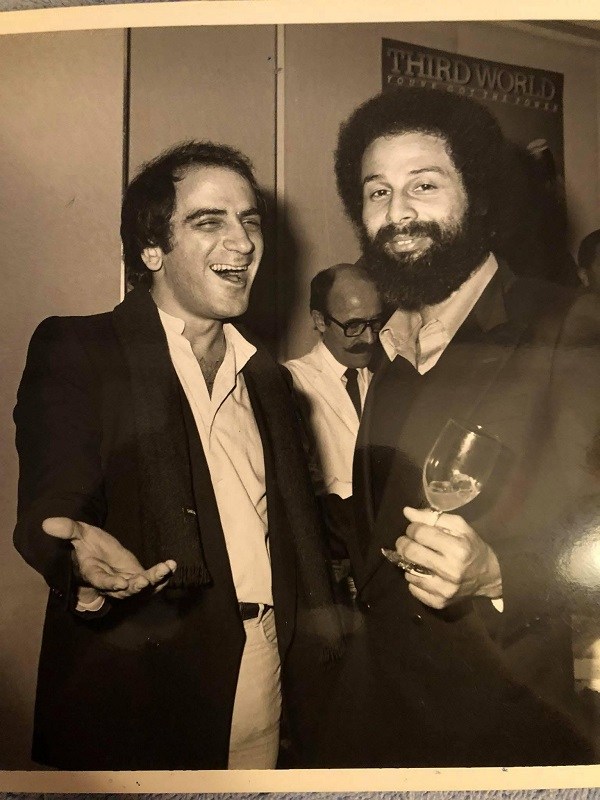
Alex Masucci and William Stewart
Alex Masucci and former drummer of the internationally renowned Third World band William Stewart

Island Records and Boardwalk

Alex also had a very fruitful journey at Island Records, where he was called upon by its founder Chris Blackwell to be part of the special projects division, a time during which he managed to sign and produce successful albums by Invisible Man’s Band, Third World Band, and Bob Marley himself. In fact, the Jamaican artist managed to get his music heard on American urban radio.

As for Boardwalk Records, he was also able to work with the aforementioned record label thanks to music entrepreneur and filmmaker Neil Bogart, who urged Alex to join the company and deal with great artists of the stature of Ringo Starr and Joan Jett.

Masucci and Cruz
Alex Masucci next to Johnny Cruz

Return to Latin Music and Newer Projects

After the very pleasant experience of having worked together in previous years, Blackwell contacted Alex again and proposed once more that they join in a new project that he would name Island Miami, to which Alex gladly said yes. Sometime later, Blackwell left Island, which led him and Alex to partner their recently created company Palm Pictures with Masucci Entertainment. Thanks to this alliance, they managed to sign the Cuban orchestra Carlos Manuel Y Su Clan.

Currently, the executive founded his own company Haz-Mat Entertainment, with which he created music and film projects, among which we can include the documentary on the history of Fania Records.

Read also: Puerto Rican singer Héctor Luis Pagán greets us and supports us

Fernando Lavoy The Montunero of Salsa and Son

The Indelible Footprint of a Masterful Voice in the Golden Era of SAR Productions.

Introduction and Musical Legacy, Fernando Lavoy was one of the best-kept and most dazzling secrets of 20th-century Afro-Cuban music.

Born on May 6, 1950, in Havana, Cuba, he possessed an exceptional mastery and vocal quality that quickly caught the attention of the era’s biggest icons.

It was the legendary trumpeter Alfredo “Chocolate” Armenteros who, blown away by Lavoy’s innate gift for traditional phrasing and improvisation, affectionately dubbed him “El Montunero” (The Montuno Master).

Fernando Lavoy El Montunero de la Salsa y el Son

Throughout his career, Lavoy showcased his talent as both a singer and songwriter in heavyweight ensembles, including:

  • The celebrated Sonora Matancera
  • Chocolate Armenteros’ orchestra
  • Conjunto Dinastía Diez
  • Roberto Torres’ mythical SAR All Stars

He also led his own group, “Los Soneros.” His tragic murder in 1992 in Miami, United States, cut short the life of a brilliant artist, but left an indelible mark on the heritage of tropical music.

The Rise in New York and the Alliance with SAR Productions

After emigrating to the United States in 1980 in search of new artistic horizons, Lavoy immediately immersed himself in New York’s effervescent Salsa and Son scene.

His first big break came courtesy of Chocolate Armenteros, contributing masterfully to the album “Y sigo con mi...” under the SAR Productions record label.

Sar All Stars La India de Oriente,Jorge Maldonado Y Fernando Lavoy y en el tres Charlie Rodriguez

Founded by Roberto Torres, this record label was characterized by a unique musical aesthetic: it championed the classic texture of Cuban son, extending song lengths to allow generous space for instrumental solos and pure improvisation.

In 1981, Lavoy solidified his place as a member of the SAR All Stars, catapulting his voice into the spotlight of the most demanding music lovers.

Unlike other commercial acts of the era (such as Fania Records) that leaned heavily into crossovers with the English-speaking market, SAR Productions stood firm in direct Cuban roots. While they injected subtle nuances of jazz, they preserved that traditional, deep, and organic cadence that captivated Hispanic audiences.

Fernando Lavoy y Los Soneros: A Distinct Identity

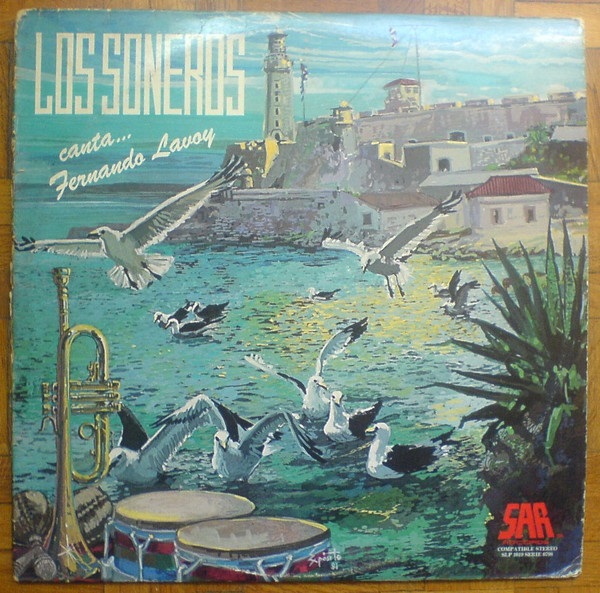
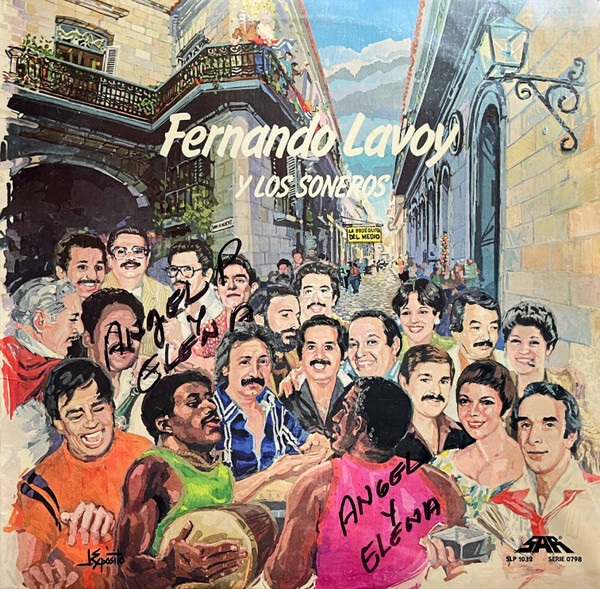
Between 1981 and 1982, Fernando Lavoy recorded two foundational albums under his own name: “Los Soneros” (1981) and “Fernando Lavoy y Los Soneros” (1982).

Los Soneros Canta Fernando Lavoy 1981.

Although the norm at SAR was to use the talented house band to back soloists, Los Soneros presented themselves as an autonomous group with their own identity, produced by the infallible Roberto Torres.

The ensemble stood out for its solid instrumentation led by trumpeter Juan González, who served as director and arranger, accompanied by his son Juan González Jr. on piano and the virtuoso Juan Méndez on bongo.

The band was formally structured as a classic, old-school conjunto: four powerful trumpets, bass, conga, bongo, and three backing vocalists stylishly led by Norman Rodríguez.

Analysis of a Masterpiece: The 1982 Album

The 1982 record is absolute proof of Lavoy’s musical maturity; he composed 50% of the repertoire.

  • “No voy a dormir”: The album opens electrifyingly, where a powerful trumpet introduction gives way to Fernando’s entrance, followed by a masterful trumpet solo by Juan González and an explosive bongo breakdown by Juan Méndez that builds into a montuno climax.
  • “Cóquela suave”: A son montuno penned by Lavoy that, true to its name, begins with a smooth, gentle cadence before transforming into a hard-hitting, danceable son, enriched by a sublime piano solo from Juan González Jr.
  • “Pegaditos”: A famous composition by Miguel Matamoros who, along with Arsenio Rodríguez, stands as one of the pillars of son is reinterpreted while respecting the purity of its traditional structure. The track shines with a high, piercing trumpet that floats above the Cuban singer’s vocals, experimenting with tempo variations that gradually increase the rhythmic intensity alongside flawless backing vocals.
  • “Juana la sin goma” & “No vuelo contigo”: The album closes with the former, a track packed with playfulness, dance energy, and high-octane lyrics, and the latter, a more laid-back son that, without quite becoming a bolero, maintains the majestic structure of Cuban son with a vibrant closing montuno.
Fernando Lavoy Y Los Soneros 1982

Ultimately, Fernando Lavoy’s work remains a foundational pillar that vindicates the sabor, rhythm, and eternal essence of son montuno.

Text courtesy of Maida Lorena Lavoy.

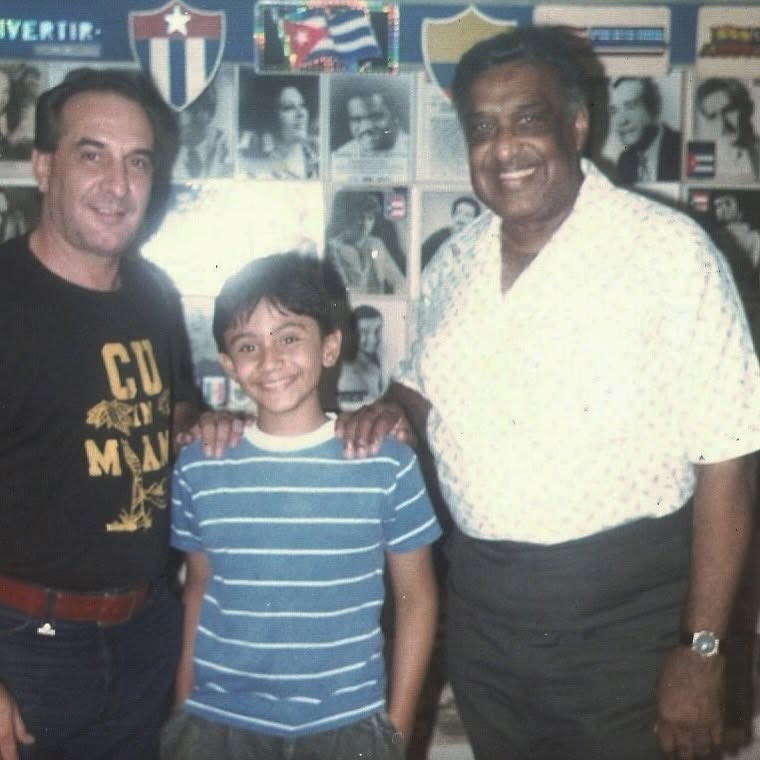
Foto Museo De La Salsa, en Barrio Obrero, en su visita en 1991 junto al gran cantante puertorriqueño Yayo El Indio y Carlos Molina Castellanos, actual director del Museo De La Salsa

Also Read: Alfredo “Chocolate” Armenteros: The Golden Legacy of the Cuban Trumpet

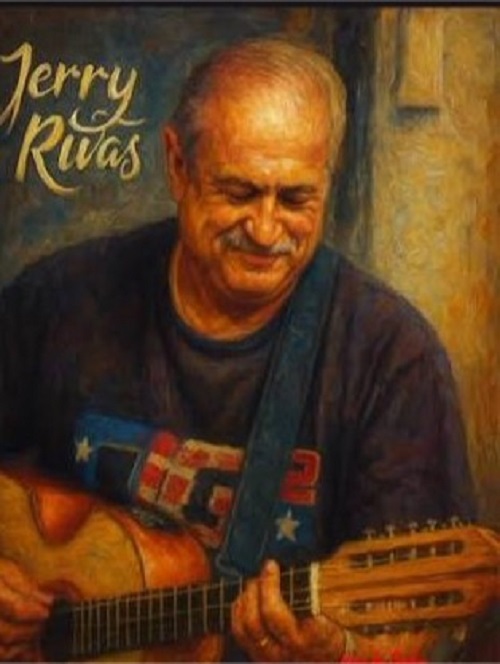
The Senior Mulato Jerry Rivas and His Half-Century Legend with El Gran Combo de Puerto Rico

From the chords of the Puerto Rican cuatro to the eternal voice of “Los Mulatos del Sabor”

Few names resonate with as much power, respect, and relevance in the salsa firmament as that of Jerry Rivas.

Born in Tampa, Florida, but with his soul deeply rooted in the heart of Orocovis through his parents’ heritage, Jerry Louis Rivas Díaz has carved his name in letters of gold into the history of Caribbean music.

El Mulato Mayor Jerry Rivas y su Leyenda de Medio Siglo con El Gran Combo de Puerto Rico

Nearing 50 years as the lead vocalist for El Gran Combo de Puerto Rico, Rivas is more than just a singer; he is a living institution of salsa, a definitive sonero of his era, and the guardian of a legacy that continues to keep the entire world dancing.

Roots, Strings, and the Making of a Self-Taught Musician

Jerry’s history with Puerto Rico formally began in 1960, when his family moved back to the “Isla del Encanto” to settle in Bayamón.

There, the young Jerry began to breathe in the folklore and rhythms that defined the Boricua identity. What many do not know is that long before commanding microphones and international stages, Jerry was deeply passionate about string instruments.

As a fundamentally self-taught musician and singer, his first great love was the guitar. Over time, his musical curiosity led him to master the Puerto Rican cuatro, the island’s national instrument par excellence.

De los acordes del cuatro puertorriqueño a la voz eterna de Los Mulatos del Sabor

Not content with just that, he decided to delve deeper into the roots of Afro-Caribbean music, learning the secrets of the Cuban tres under the tutelage of the renowned professor Carlos Seguí.

This solid foundation as an instrumentalist not only shaped his ear but also gave him an impeccable sense of rhythm and timing that would later define his unique style for soneo (improvisational singing).

The Path to the Top: From Local Bands to a Historic Recruitment

Before the spotlight of El Gran Combo fell upon him, Jerry Rivas honed his craft throughout the island’s musical circuit, leaving his mark on every project:

  • Grupo Complicación: His teenage musical battleground, where he served as a guitarist for three years.
  • Conjunto Cojoba: A group he joined in 1972, sharpening his stage presence.
  • Conjunto Chaney (1974): Jerry was part of the select group of founding musicians of this project, which years later would become a powerhouse of romantic salsa.
  • Latin Brass (1976): The definitive showcase where his voice truly began to shine on its own.

It was precisely in 1976 when destiny knocked on his door. Following the shocking departure of the iconic “Niño de Trastalleres,” Andy Montañez who left the orchestra after 14 golden years to join Venezuela’s Dimensión Latina El Gran Combo found itself facing one of the most difficult transitions in its history. Replacing a legend seemed like an impossible task.

However, the keen eye of Don Quique Lucca (founder of La Sonora Ponceña) did not fail. Don Quique recommended the young Jerry to Don Rafael Ithier. After hearing him perform, Ithier didn’t hesitate: in 1977, Jerry Rivas officially joined the “University of Salsa.”

Nacido en Tampa, Florida, pero con el alma arraigada en las entrañas de Orocovis por la herencia de sus padres, Jerry Louis Rivas Díaz

Nearly 50 Years of History at “The University of Salsa”

Joining such a demanding institution in the midst of an era-defining shift was a monumental challenge. Audiences initially viewed the new member with skepticism, but Jerry, armed with unwavering humility and immense talent, never tried to imitate his predecessor; instead, he forged his own legend.

Across nearly five decades, his voice has immortalized anthems of the global salsa songbook. Essentials on any dance floor like “Azuquita pa’ el café,” “Ojos chinos,” “Y no hago más na’,” “El menú,” “Cupido,” and “La clave” carry his unmistakable stamp.

His elegant performance style, combined with his sharp wit and deep respect for the dancer, solidified the orchestra’s golden age and ensured the transition was a resounding success.

“Joining El Gran Combo was a tremendous school and responsibility. Replacing Andy was no easy feat, but Don Rafael Ithier gave me the confidence to just be myself on stage.” Jerry Rivas, looking back on his beginnings.

Pocos nombres resuenan con tanta fuerza, respeto y vigencia en el firmamento de la salsa como el de Jerry Rivas.

The Present and Vibrant Legacy of an Eternal Sonero

Now in 2026, the tropical music landscape has changed drastically, but El Gran Combo de Puerto Rico remains unshakeable at the top.

Jerry Rivas stays incredibly active, leading the vocal front of “Los Mulatos del Sabor” alongside the orchestra’s newer generations, Anthony García and Joselito Hernández. This blend of Jerry’s veteran wisdom and the energy of the new vocalists has injected a refreshing vitality into the group.

Jerry Rivas is not just a survivor of salsa’s golden age; he is the living bridge connecting the rich traditions of the 20th century with contemporary audiences.

From his days tuning strings in Bayamón to packed stadiums across Europe, Latin America, and the United States, his journey stands as a testament to discipline, passion, and love for his culture.

We wish lifelong health, inspiration, and continued success to this eternal maestro who, besides being one of salsa’s most beloved voices, has never ceased to be, in every sense of the word, a complete musician. Long live the music of Jerry Rivas, and let the drums keep rolling!


Jerry Rivas y Papo Rosario

Also Read: The Gran Combo of Puerto Rico “Los Mulatos del Sabor”

Puerto Rican Trombonist and percussionist Arturo Vazquez Jr. from Projecto 7 Salsa & Latin Jazz Band

Trombonist and percussionist Arturo Vazquez Jr. is joining us today to talk about his career and his current band, Projecto 7. This salsa and jazz band features an interesting mix of Latin genres and is often invited to popular local venues in Illinois, where Arturo and his bandmates live, including Two Brothers Roundhouse, Joe’s on Weed, and MCM Pub.

Here is a summary of how much we talk about his early years, the foundation of the band, and his current professional activities.

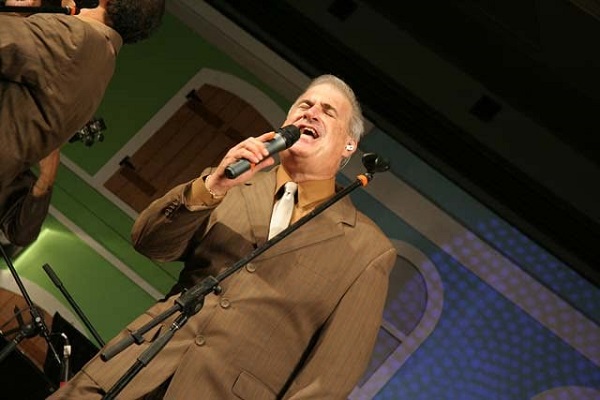
Arturo Vazquez singing
Percussionist and trombonist Arturo Vazquez Jr singing live

Arturo’s beginnings in music while he was still a child 

As usual, before delving into other issues, we wanted to know a little about Arturo’s beginnings in music to establish a chronology, and he told us that he expressed interest in this world when he was just a 10-year-old boy. His grandfather was a musician, and he and his colleagues often organized parties in the municipality of Patillas, Puerto Rico, where the family lived, and jíbara music was always present in everyday life.

The first instruments he learned to play were the timbales and the bongo, but after his grandfather passed away, he was given the accordion his grandfather had played, although unfortunately it did not really catch his attention. That was why he remained focused on percussion. Furthermore, knowing how important it is to get a proper academic education, he studied at the Free School of Music in Puerto Rico for a time, but due to the financial difficulties that his parents were experiencing at the time, they decided to move with their son to New York.

In the mentioned city, he continued his percussion studies at the School of Liberal Arts, being Willie Colón and Tito Puente his greatest inspirations to become a professional musician.

Years later, specifically in the 1970s, his parents found work in Chicago and moved there. That was where Arturo studied high school and met many aspiring percussionists, so the competition was brutal. Therefore, the orchestra’s conductor offered him the trombone spot and gave him a large bass trombone. 

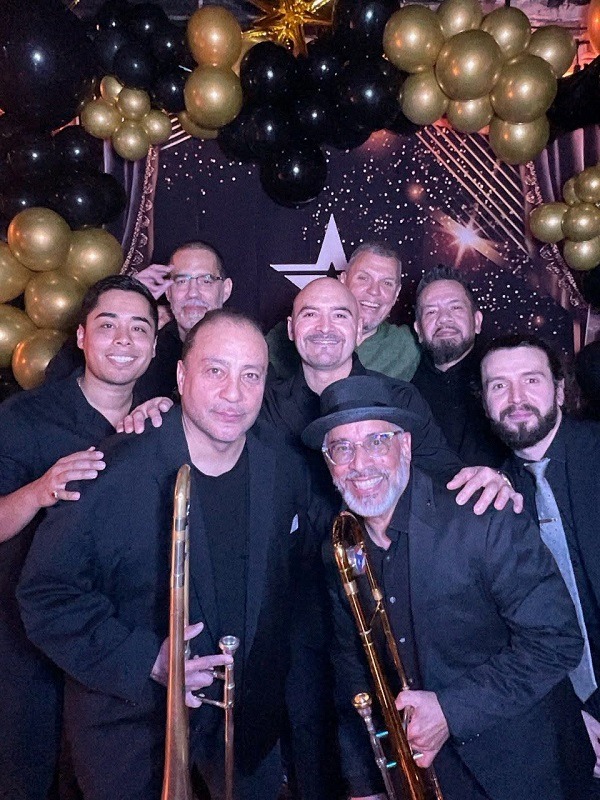
projecto 7 led by Arturo
This is Projecto 7 Salsa & Jazz Band led by Arturo Vazquez

After he graduated, he began studying at the University of Illinois in Chicago, where he learned to read music and improvise with Professor J.J. Johnson during symphony orchestra concerts. Once he had gained a more or less acceptable experience in trombone practice, he remembered why or who inspired him to play in the first place, so he began playing in way Willie Colón would. That was not very common in his time, since most trombonists were classical musicians, but he did not care at all, so he started to entirely focus on salsa.

At the same time, he also specialized as a bomba and plena percussionist, so he trained at the Segundo Ruíz Belvis Cultural Center with maestro Rafael Cepeda, better known as “The Patriarch of Bomba and Plena” in Puerto Rico, who traveled to Chicago to teach percussion alongside AfriCaribe, a nonprofit cultural organization led by bandleader and singer Evaristo “Tito” Rodriguez. That was how Arturo also learned to play the pandereta and the barril, but with a focus on bomba and plena.

Professional opportunities before Projecto 7

Before creating his own group, Arturo gained considerable musical proficiency. In the area where he lived in Chicago, there were many gangs recruiting young people to sell drugs, resulting in the emergence of numerous initiatives that sought to keep kids off the streets such as El Congreso Puertorriqueño, whose main goal was to introduce them to Latin music. It was then that the artist met a record label called Caribe, thanks to which he made his first recording as a trombonist with the Orquesta La Unión. This was essentially one of several orchestras that served as a warm up for major groups and artists such as Hector Lavoe, Willie Colón, Ismael Miranda, Ray Barretto, and many others.

Projecto 7 playing at the Cubby Bear
Projecto 7 Salsa & Jazz Band playing at the Cubby Bear in Chicago

Before becoming a soloist, he put aside his career as a musician for more than 10 years because it was not enough to support his family, which already included two daughters. During those years, he studied psychology at the University of Chicago, studied therapy and rehabilitation at the University of Puerto Rico, and taught psychology and therapy at the Elgin Community College.

He worked in Puerto Rico from 1981 to 1988, when he moved to Miami to test the atmosphere in the city, but competition among Latino, especially Cubans, made it impossible for him to make a name for himself there, so he went to try his luck in Elgin, located about 31 miles from Chicago, where he eventually worked as a professional therapist and psychology professor. 

Projecto 7 Salsa & Latin Jazz Band

His group, Projecto 7, started at a parranda in which Arturo and Los Hnos Rodriguez in Elgin. The artists invited him to join them and propose new things for the project. When the brothers’ orchestra disbanded, Arturo received a call from a former member of Orquesta La Selecta, Joe González, who moved to Elgin to care for his sick father. González proposed Arturo and other musicians to form a new group called Projecto 7, since there would be seven artists in the group.

Since then, they have made efforts to keep the same lineup of musicians, including musical director, pianist, and bassist Juan Rivera; trombonist Tony Morales; singer Ricky Rodríguez; and bongo player Luis Angel Palermo.

Read also: Steel pan percussionist Brad Shores shows us the best of Caribbean music in Florida

  • « Go to Previous Page
  • Page 1
  • Interim pages omitted …
  • Page 12
  • Page 13
  • Page 14
  • Page 15
  • Page 16
  • Interim pages omitted …
  • Page 160
  • Go to Next Page »

International Salsa Magazine (ISM) is a monthly publication covering salsa activities around the world and has been publishing since 2007. It is a worldwide network of volunteers coordinated by ISM Magazine. Together, we work to strengthen salsa events around the world.