

UNITED STATESDIRECTORY OF NIGHTCLUBS |
||
| CALIFORNIA | FLORIDA | ILLINOIS |
| MICHIGAN | NEW JERSEY | NEW YORK |
| OHIO | PENNSYLVANIA | TEXAS |
| VIRGINIA | WASHINGTON | |
UNITED STATESDIRECTORY OF NIGHTCLUBS |
||
| CALIFORNIA | FLORIDA | ILLINOIS |
| MICHIGAN | NEW JERSEY | NEW YORK |
| OHIO | PENNSYLVANIA | TEXAS |
| VIRGINIA | WASHINGTON | |
Cuba is and will continue to be one of the main cradles of the best artists in Latin America and San Miguel Perez is one of those cases. The producer, composer and singer gave us an exclusive interview to talk about his musical beginnings, his history and what he is currently working on. Don’t miss it!

San Miguel is known in his country as ”El Tresero Moderno” (the modern tres player in English) due to the styles he uses when playing. He chose the Cuban tres as his main instrument because it is a very important icon in the music of his country and the one that most represents Cuba internationally,
His first contact with music occurred at the age of 10, when he began studying classical music, but adding the Cuban tres. He followed this same path throughout high school and university until he became part of some Cuban popular music groups such as Los Jóvenes Clásicos del Son and Adalberto Álvarez y Su Son.
Together with the latter group, he released the album ”Respeto Para Los Mayores”, which was very popular at the time. This success led them to collaborate with great orchestras such as Los Van Van, with whom they shared the stage sometimes.
On one occasion, one of the members of Los Van Van took the stage to jam with the guys of Adalberto Alvarez y Su Son, including San Miguel. Seeing the Cuban’s talent and style with the tres, he baptized him with the nickname ”El Tresero Moderno”. This nickname had to do with his playing and the influences that the artist brings to the instrument when making a solo.

San Miguel was twice awarded with the Cubadisco Award, one in 2011 in the category of Best Tresero and the other in 2013 in the category of Best Traditional Cuban Music. These recognitions were very important for the musician, as the award was the result of a previous contest, which was focused on the work of treseros, singers and pianists from all over Cuba.
The primary objective of this contest was to rescue Cuban music and give new talents a chance to make their art known. Adalberto Álvarez, Frank Fernández, and Mayito de Rivera were part of the contest’s presidency.
Given that San Miguel was one of the winning treseros, the Bis Music label released an album called ”Treseros de Cuba”, material in which the young man was included. This was the album which won the Cubadisco award in 2014.
After receiving both awards, Adalberto Álvarez met up with San Miguel to invite the Cubadisco winner to join his group. He took advantage of the departure of the former tresero in the group to invite him.
San Miguel’s move to Los Angeles was due to a purely professional issue at first. He went to play with Adalberto Alvarez, Peruvian-American singer Cecilia Noël, her husband Colin Hay from Men At Work and other artists living in the United States. Due to this and other work proposals, he decided to stay in Tampa and, time later, to move to the city of Los Angeles and make it his permanent residence.
It should also be mentioned that many other artists have had to work other jobs outside of music in order to make ends meet, but fortunately this was not the case of San Miguel, who had the opportunity to work only in music and did not need to resort to other activities out of his passion. He has dedicated himself fully to playing, recording and producing music for the past 10 years.

Regarding the areas of music in which he has specialized, San Miguel began by explaining that he made a good improvement in composition during the time he played with Los Jóvenes Clásicos del Son. He also learned to make arrangements based on traditional music, something in which the director of the group, Ernesto Reyes Palma, played a very important role.
Regarding production, the artist did not participate much in that area, but he eventually did in the United States. It is in this country that he officially started his career as a soloist, tresero and artist. Three years after arriving in Los Angeles, he produced a first album called ”Un Poquito de Amor” in collaboration with Cecilia Noël and Colin Hay in 2017, which was a great learning experience for him, as he was able to experiment and mix many seemingly disparate rhythms.
Other areas in which San Miguel would like to specialize are sound engineering and remastering, but he is working hard to do so.
As for the current projects, he is currently promoting his single ”Besito Bon Bon”, which is the main song of his new album. In fact, San Miguel and his team are planning to give this same name to the whole album. On this occasion, he mixed electronic sounds with traditional Cuban music to give a much more modern rhythm to the traditional genres coming from the island. The album has nine songs, is produced by Jay Carona and contains some collaborations with Cecilia Noël.
Read also: Musical history of Roosevelt Cordova ”El Presidente de La Salsa”
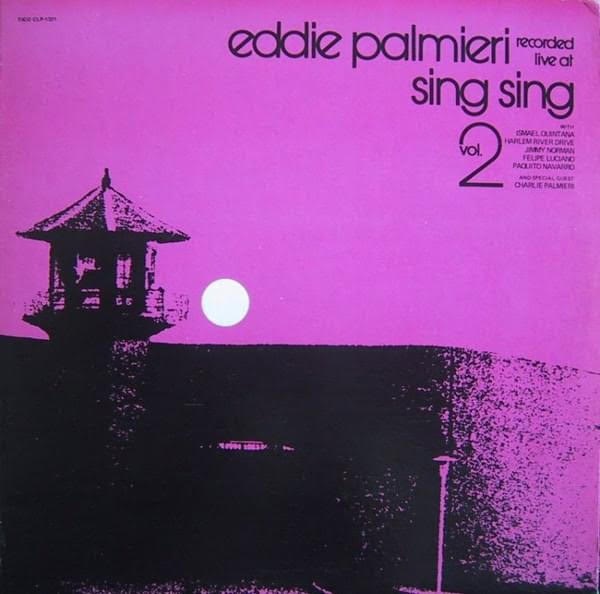
In the early 1970s, the American social landscape was dominated by the Vietnam War and the birth of several protest movements advocating for equality, justice and the defense of human and civil rights, and from sing sing a historic concert.
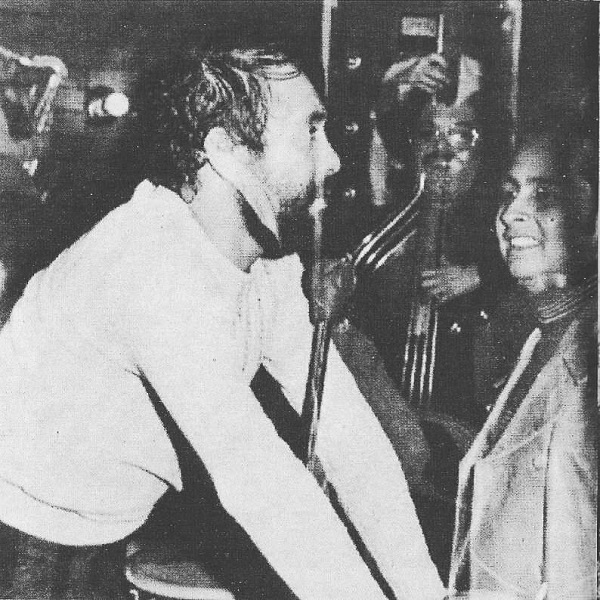
In the midst of all that collective turbulence, Eddie Palmieri and his orchestra were giving free rein to their social rebellion with a sweeping musical proposal.
But Palmieri’s rebelliousness was not only reflected in his music, but also in his decision to take his group’s sound to atypical and controversial scenarios that would attract the attention of the authorities.

In those days, a good friend of Eddie Palmieri was incarcerated in the sinister and historic Sing Sing Correctional Facility, also known as Sing Sing Prison, infamous for the reputation of its inmates and for its executions with electric chairs.
It was at that moment that the idea of an unprecedented performance at the facility was born.
Palmieri’s group was not only the orchestra of choice for Hispanics, it was also favored by the majority of African-Americans in the Latin dance world, and at that time the prison population at Sing Sing was composed mostly of Hispanics and African-Americans, so the stage was perfect.
However, it was not easy to perform a concert in a maximum security prison like the dreaded Sing Sing Prison.
However, at the request of Eddie Palmieri himself and with the coordination of Roulette Records and the prison administration, the performance took place on Wednesday, April 12, 1972.

It was the third prison in New York State, built in 1825. The state legislature allocated $20,100 to purchase the Silver Mine farm. The prison was to be self-supporting and not require a state budget.
Elan Lynds, a jailer at Auburn Prison (New York’s second prison), brought 100 convicts from Auburn to the new prison and employed them for its construction.
Harris A. Smiler was the first person executed by electrocution at Sing Sing on July 7, 1891. From 1914 until 1971, only the electric chair at Sing Sing was used for executions.
On January 8, 1983, more than 600 inmates in B Block started a riot, taking 17 officers hostage; it ended 53 hours later.
Sing Sing in popular culture
Near the end of Herman Melville’s short story Bartleby, the Scribe, it is mentioned that Monroe Edwards died of tuberculosis in Sing Sing Prison.

In addition, it was performed live by the band Corizonas (union of Arizona Baby and Los Coronas) in their live album “Dos bandas y un destino”.
There is a song by the salsa group Conjunto Clásico on the album El panadero released in 1986, called A los muchachos de Sing Sing, which has a message of encouragement to convicts.
There is a song by the French-Tunisian singer-songwriter (Michel) Laurent entitled Sing Sing Barbara, from 1971, which tells the story of an inmate who sends desperate messages of love to his wife from this prison.
There is a song by the Madrid group Los Nikis entitled Diez años en Sing Sing, which also gives title to the tribute album to that group.
There is a song by the Basque group Sorotan Bele titled Sing Singatiko Folk & Rolla.
In 1932 the film Twenty Thousand Years in Sing Sing was shot, directed by Michael Curtiz and starring Spencer Tracy and Bette Davis. The film is based on the book of the same name by Lewis E. Lawes.
In the film Constantine, and in the official Constantine comic book, John Constantine is seen to use the Sing Sing prison chair to connect to hell.
In the film Citizen Kane, protagonist Charles Kane threatens his political rival, Jim Gettys, to send him to Sing Sing, when Gettys informs Kane that he will publish his affair with Susan Alexander in the newspapers if he does not withdraw from the election.
In the film The Pilgrim, Charles Chaplin plays the role of a convict recently escaped from prison, who, when he is at the train station, moves his finger without looking over the board of destinations to choose one at random and falls on Sing Sing, so he repeats the process again when he realizes his unfortunate choice.
In the movie Breakfast at Tiffany’s, Holly Golightly periodically visits inmate Sally Tomato at this prison.
In the movie and musical The Producers, the main characters stop at the same prison and create a musical called Prisoners of Love.
In the video game Driver Parallel Lines, the protagonist spends 28 years in Sing Sing.
In the ABC television series Castle, Sing Sing is cited during an episode of the fourth, fifth and eighth seasons.
In the film noir movie Odds Against Tomorrow, Johnny, the character played by Harry Blafonte, says, “I know they changed his color when they rehabilitated him in Sing Sing.”
In the AMC television series Mad Men, Sing Sing is quoted during an episode of the third season.
In the series Breakout Kings, prisoners are transferred to Sing Sing for their help.
In the song Báilalo como tú quieras, by artist Tego Calderón, the phrase “If rapping was a crime, I’d be in Sing Sing!” appears.
In the horror movie saga Maniac Cop, cop Max Cortell is killed in Sing Sing prison by inmates and is resurrected in the form of a “maniac cop”.
In the Netflix series The Punisher, Arthur mentions to Billy Russo having been imprisoned 10 years in Sing Sing, in episode 4 of the second season.
In the novel “The Ppsychoanalyst” by John Katzenback published in 2002, the Sing Sing prison where a man served six months is named.
In Georges Simenon’s novel The Hound Dog starring Commissar Maigret, one of the characters spends several years in Sing Sing prison.
In the comics “Mortadelo y Filemón”, by cartoonist Francisco Ibáñez, when a character has done something barbaric, he is sentenced to Sing Sing prison and appears with the typical black and white striped prisoner’s suit, chopping stone with an iron ball chained to his leg.
In the series Law and Order the Sing Sing prison is constantly mentioned.
Also Read: Carlos “Nene” Quintero comes from a family of musical prodigies
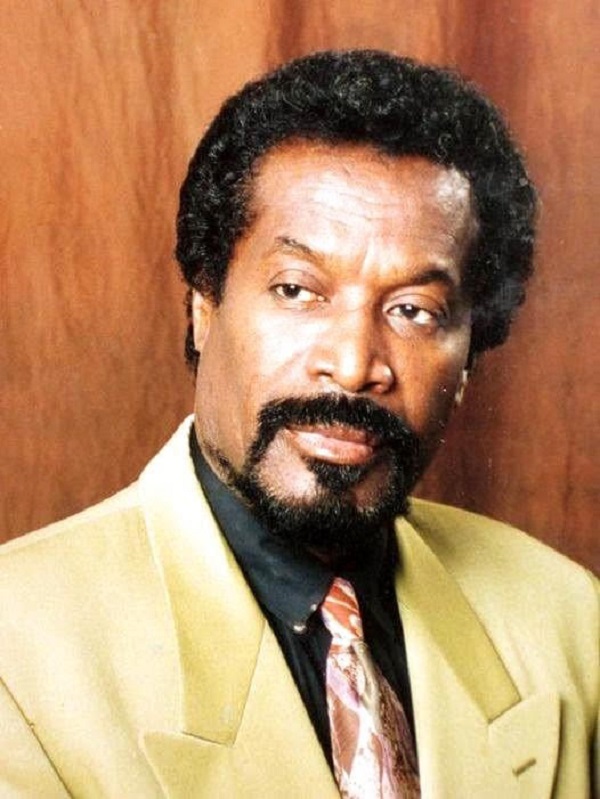
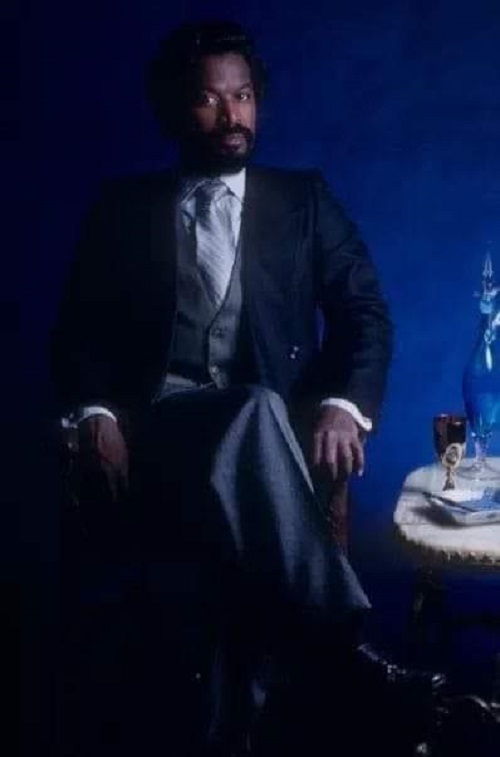
Pedro Juan Rodríguez, Pete “El Conde” Rodríguez “La Realeza de la Salsa” (Born in Ponce, Puerto Rico on January 31, 1933).

His father, who made his living as a musician playing in a string quartet that entertained parties and social gatherings, guided him during his first steps as a musician.
By the age of 6, little Pedro was very skilled with the bongo and singing popular Puerto Rican songs of the time.
Things became difficult after the death of his father and as a teenager Pete had to emigrate to the United States (1946) to live with his aunt in New York.
Once in New York, Pete managed to establish himself as a percussionist in the Orquesta Oriental Cubana. Before, long before joining the great Pacheco, Pete had to go through several orchestras among which stand out: Las Jóvenes Estrellas de Cuba (57), the Típica Novel and the Broadway from which he left for personal reasons.
In May 1962 Pete Rodriguez (he was not yet called El Conde), joined Pacheco in a Charanguero orchestra (flute, violin, rhythm and chorus). The first album with Pacheco was Suavito in 1963.
By 64 Jhonny Pacheco and Jerry Massucci founded Fania Records and created the internationally recognized Fania All Stars.

Rodriguez’s first appearance with Fania was at the Greenwich Village Red Garter Club in 1968.
For reasons of life Pete had to leave Jhonny Pacheco’s group; the concrete reasons for this separation will remain a mystery, but it seems that his departure was due to personal disagreements with other members of the group.
After Pacheco, Pete packed up his motets and moved with Rey Roig and the Sensación group (1964-1968). From his time with this group w For the years 66-67, Pete returned to the ranks with Pacheco. This was a more mature stage where the marvelous duo achieved their greatest hits: Azuquita Mami, Convergencia, La Esencia del Guaguanco, Sonero, Viralo al Reves and others.
The turmoil of the time, the world events, the new way of dressing and people’s way of thinking made Pete change his appearance; he let his beard grow and changed his hairstyle a little. This change gave him a new image and a new name “EL CONDE”.
The Pacheco-Rodriguez duo lasted approximately 8 years, since in 74 El Conde decided to go solo.
That same year El Conde released his best selling and Grammy award winning album El Conde (1974). Two years later (1976) El Conde became part of the Salsa Hall of Fame immortalizing himself with Catalina la O.
In 1993 El Conde made way for his son Pete Emilio and his daughter Cita Rodriguez who joined the group as second voice and backing vocalist.
The family was already complete because Francis Rodriguez, his wife, was in charge of the administrative and financial part of the group.ere the following songs Salsa, Bailando Conmigo and his hit El Rincón.
El Conde made his last recording on the Masterpiece Album (1999) with Tito Puente (1923-2000) and Eddie Palmieri. This album is considered posthumous because in that same year (2000) Tito and El Conde passed away.

His remains were taken to his native Puerto Rico. He is survived by his wife Francis, his two sons Cita and Pedro Emilio, and his grandchildren.

Source: El Pozo de la Salsa
Also Read: Héctor Martignon has been one of the most sought-after pianists on the Latin jazz scene in New York