• Skip to primary navigation
  • Skip to main content

International Salsa Magazine

  • HOME
  • Previous editions
    • 2026
      • ISM / May 2026
      • ISM / April 2026
      • ISM / March 2026
      • ISM / February 2026
      • ISM / January 2026
    • 2025
      • ISM / December 2025
      • ISM / November 2025
      • ISM / October 2025
      • ISM / September 2025
      • ISM / August 2025
      • ISM / July 2025
      • ISM / June 2025
      • ISM / May2025
      • ISM / April 2025
      • ISM / March 2025
      • ISM / February 2025
      • ISM / January 2025
    • 2024
      • ISM / December 2024
      • ISM / November 2024
      • ISM / October 2024
      • ISM / September 2024
      • ISM / August 2024
      • ISM / July 2024
      • ISM / June 2024
      • ISM / May 2024
      • ISM / April 2024
      • ISM / March 2024
      • ISM / February 2024
      • ISM / January 2024
    • 2023
      • ISM / December 2023
      • ISM / November 2023
      • ISM / October 2023
      • ISM – September 2023
      • ISM – August 2023
      • ISM July 2023
      • ISM Edition June 2023
      • ISM – May 2023
      • ISM April 2023
      • ISM March 2023
      • ISM February 2023
      • ISM January 2023
    • 2022
      • ISM December 2022
      • ISM November 2022
      • ISM October 2022
      • ISM September 2022
      • ISM August 2022
      • ISM July 2022
      • ISM June 2022
      • ISM May 2022
      • ISM February 2022
      • ISM January 2022
    • 2021
      • ISM December 2021
      • ISM November 2021
      • ISM October – 2021
      • ISM September 2021
      • ISM August 2021
      • ISM July 2021
      • ISM May 2021
      • ISM April 2021
      • ISM June 2021
      • ISM March 2021
      • ISM February 2021
      • ISM January 2021
    • 2020
      • ISM December 2020
      • ISM November 2020
      • ISM October 2020
      • ISM September 2020
      • ISM August 2020
      • ISM July 2020
      • ISM June 2020
      • ISM May 2020
      • ISM April 2020
      • ISM March 2020
      • ISM February 2020
      • ISM January 2020
    • 2019
      • ISM December 2019
      • ISM November 2019
      • ISM October 2019
      • ISM Septembre 2019
      • ISM August 2019
      • ISM July 2019
      • ISM June 2019
    • 2016
      • ISM December 2016
  • Spanish
  • Download Salsa App
    • Android
    • Apple

Search Results for: Pianist

Nicky Marrero is an innovator, timbalero and bongo player, living legend of our Afro-Latin and Caribbean music.

Nicolás Marrero Jr. “Nicky Marrero” was born in the Bronx, New York, on June 17, 1950, to a Puerto Rican father and mother (born in San Germán and Corozal, respectively).

He had formal studies in drums during his adolescence, but more could the sounds of Tito Puente and Willie Bobo, his major influences.
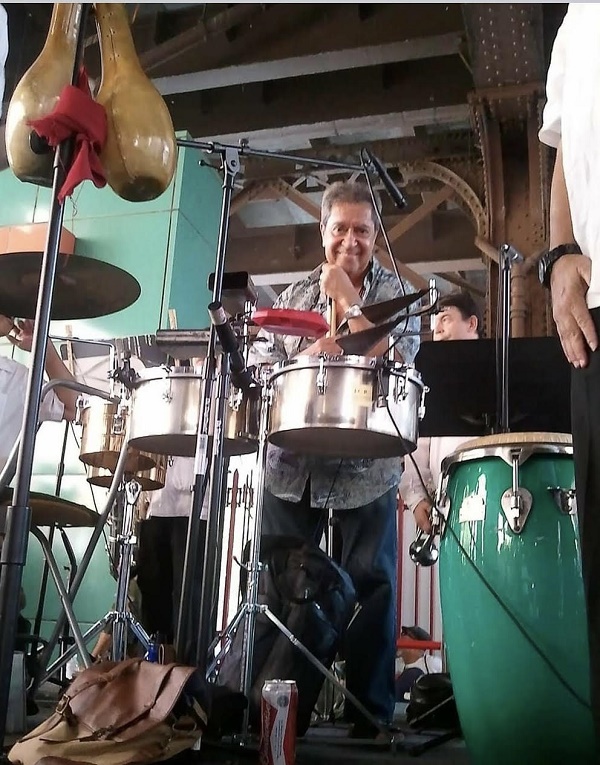
Nicky Marrero is an innovator, timbalero and bongo player, living legend of our Afro-Latin and Caribbean music.

He debuted in music with a high school ensemble called Orquesta Caribe.

However, his first recording session was at the age of 15 with the original band of another teenager born in 1950: Willie Colón.

Curiously, at the time of these sessions, three pillars of the Alegre All-Stars, Charlie Palmieri, Louie Ramirez and Kako, were present in the studio, and young Nicky was invited to participate as a timbalero.

In 1968 he was recruited by Eddie Palmieri, who by then, as a consequence of internal problems, gradually disbanded his original orchestra: La Perfecta.

Nicky Marrero joins the orchestra shortly after recording the album “Champagne,” the album “Justicia” (1969), where, still under the powerful voice of Ismael Quintana, Nicky begins to explore his own sound (listen to his solo in the song “My Spiritual Indian”),

The decade of the 70’s opens for him with three important events: the classic album “Vámonos Pa’l Monte”, his participation with Patato in the album “Portrait Of Jennie” by Dizzy Gillespie and the beginning of his career as a percussion teacher, as a member of the faculty of the East Harlem Music School, the school of Johnny Colón, legendary pianist and one-time pioneer of boogaloo.
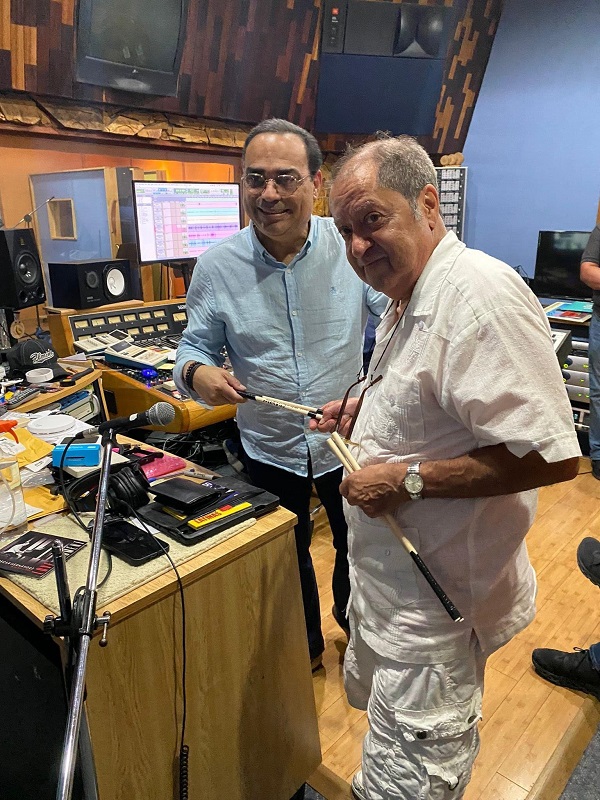
Ggilberto Santa Rosa y Nicky Marrero

At this institution Nicky gives his first lessons to a 13 year old boy named Jimmy Delgado.

In 1972 Nicky is invited to participate in the Afro-American Music Festival. 1975 he joins the troupe of the Wonderful Jew, Larry Harlow, then he is part of the Revelation Orchestra, two years with the Novel Orchestra.

In fact, thanks to his internship with Harlow’s band, Nicky was already part of Fania Records’ staff of musicians, recording as timbalero, bongos player and even drummer (and one of his first assignments for that label as a studio musician was the album “Pa’ Bravo Yo” by Justo Betancourt, produced by Harlow himself in 1972).

In 1973 he was included in the Fania All-Stars, replacing Orestes Vilató.

Marrero received an invitation from Pacheco to make his debut with them at Yankee Stadium in August of that year. Ironically, despite the events that separated Vilató from the stellar orchestra, he remained part of Fania’s studio staff. In fact, Vilató and Marrero crossed paths on countless sessions for various artists on the label between 1973 and 1980, in most cases with Marrero on timbales and Vilató serving as bongos player.

His multiple sessions for Fania (Ismael Miranda, Ismael Quintana, Héctor Lavoe’s first solo album (“La Voz”), Justo Betancourt and others), he also participates in “Sun Of Latin Music,” Eddie Palmieri’s classic par excellence and the first album to win a Grammy in the then debut category of “Best Latin Album.”
Roberto Roena y Nicky Marrero

He is also invited to participate in the first of several rock sessions, this one specifically as an all-around percussionist for the group Electric Flag: “The Band Kept Playing”.

He travels with Fania to the African continent, later Jerry Masucci gets a potentially lucrative contract for the Fania All-Stars with Columbia Records, for recording purposes the orchestra is reduced to a sextet: Pacheco, Barretto, Nicky, Roberto Roena, Bobby Valentin and debuting with the orchestra, Papo Lucca.

This is how Nicky, without being a band leader, not only became a star member of the Fania All-Stars, but also an “exclusive artist” of the Fania label. And as such, he appears on several albums that are not necessarily Latin and travels with Fania to Europe (the first of several subsequent visits) and Japan. Together with Harlow, Vilató on bongo, Eddie “Guagua” Rivera on bass, Frankie Rodríguez on congas, Harry Viggiano on guitar and Pablito Rosario on percussion, he recorded an album of downloads for the Japanese market under the curious group name of Belmonte (“Olé”). [This album is very difficult to obtain.

1977 he joins Tipica’73, an orchestra which he joins shortly after the release of the previous album: “Rumba Caliente,” ironically replacing Vilató once again. The album in question, for which Nicky alternated between his timbales set and the drums proper, is “The Two Sides Of Tipica’73,” the band’s most progressive album.

Nicky introduces drum toms to his rhythm kit (the only drum component Nicky overlooks in his regular timpani set is the hi-hats).

Nicky even recorded his first drum solo on the song “Yo Bailo De Todo” on that album. By this time, production at the Fania label and its subsidiaries was exhausting and the salsa boom in New York was in full swing.

Exhausting tours with the Fania All-Stars, he travels with Tipica’73 to Havana, Cuba, the first time in 20 years of economic blockade and open political friction that a New York Latin orchestra performs in the home of son, Nicky’s visit with La Tipica and Orestes Vilató’s own visit the following year, replacing him with the Fania All-Stars, helped to restore the timbal and bongo to the importance they should never have lost in Cuba.

Nicky Marrero Leyenda Fania

To this day, Nicky remains healthy and active in music.

Also Read: The legendary singer Guadalupe Victoria Yolí Raymond “La Lupe”
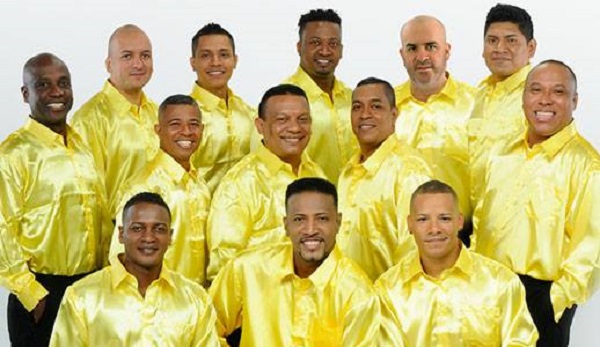
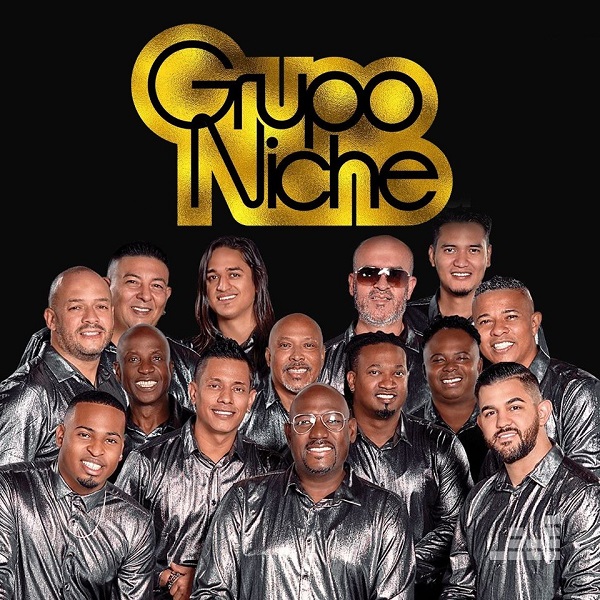
Colombia’s legendary Grupo Niche and its founder Jairo Varela

Grupo Niche was founded in 1979 in Bogotá, Colombia, by Jairo Varela, born on December 9, 1949 in Quibdó, Chocó, and Alexis Lozano, who played trombone and was an arranger, later leaving Grupo Niche to form Orquesta Guayacán de Colombia.

That same year, the group released its first album under the Daro label, entitled Al Pasito, with Jairo Varela and Alexis Lozano as directors, Nicolás Cristancho “Macabí” on piano, Francisco García on bass, Luis Pacheco on congas and singers Jorge Bazán, Saulo Sánchez and Héctor Viveros.

Two years later, Niche’s second production, Querer es poder, was released. The song “Buenaventura y Caney”, included in the album, became the first composition of the group to become a hit in Colombia, said Jairo Varela.

The legendary Grupo Niche of Colombia 2023

In 1983 After a tour of the United States in which they performed before several colonies of Colombians and a short stay in Buenaventura, the group decided to settle in Cali in 1983.

In 1984 and after releasing the albums Prepárate (1982) and ¡Directo desde Nueva York! (1983), Jairo Varela composed and produced the song “Cali Pachanguero”, which brought the group to national and international stardom.

The song, included in the 1984 album No hay quinto malo, was chosen as the official song of the Cali Fair.

After the success of No hay quinto malo, the group began to tour constantly throughout Colombia and other Latin American countries, becoming the most important orchestra in Colombia.

The album Triunfo, Niche’s sixth discographic production, was released in

1985 The song “Ana Milé”, sung by Jairo Varela, became a radio hit. A year later the group incorporated the renowned Puerto Rican singer Tito Gómez, who had previously worked with La Sonora Ponceña and Ray Barretto, the godfather of Latin jazz.

The inclusion of Gómez further boosted the group’s career throughout Latin America. That same year the album Me huele a matrimonio was released, with Gómez and Varela sharing the lead vocal duties.

Colombia's legendary Grupo Niche 2020
Colombia’s legendary Grupo Niche 2020

Later, another Puerto Rican joined the group, pianist Israel Tanenbaum, who would eventually leave the group to join a parallel group to Niche, Orquesta Guayacán.

Taking advantage of the group’s growing popularity, in 1987 an album of new versions of songs previously released by the group entitled Historia Musical was released.

That year, the director Jairo Varela fired a group of musicians due to their claims for high fees.

Varela hired some new musicians and recorded the album Tapando el hueco, a production that became an instant hit especially for the songs “Nuestro sueño” and “Cómo podré Disimular”.

After the release of the album, Grupo Niche became a sensation in Latin America, especially in countries such as Venezuela and Peru.

In 1989, the group gave a concert at the Campo de Marte in Lima, where it attracted more than one million people, a record number in that country.

To thank the Peruvian people for their incredible welcome, the band released the album Me sabe a Perú that same year.  1989 also saw the release of the album Sutil y contundente, a production that revalidated the group’s good form, especially with songs such as “Mi hijo y yo” and “Miserable”.

In 1990, after the departure of singer Tito Gómez, the group released the album Cielo de tambores, Grupo Niche’s most successful production to date. The same year of its release, Cielo de tambores ranked third on Billboard magazine’s tropical music chart in the United States.

The album’s success was based on the quality of compositions such as “Busca por dentro”, “Sin sentimiento”, “Debiera olvidarla” and “Cali ají” and the massive popularity of the song “Una aventura”. Charlie Cardona and Javier Vásquez provided the vocals for the album.

From that moment on, the group enjoyed international popularity, touring constantly in countries such as the United States, Peru, Mexico and Colombia, as well as making some presentations in Europe.

In 1992 the group released another successful album entitled Llegando al 100% with Charlie Cardona as lead vocalist. The songs “Hagamos lo que diga el corazón” and “No tuve a quién decirle amor” stand out from this production.

After the release of two compilation albums, the group released Etnia, an album recognized especially for the compositions “La Canoa ranchá” and “La magia de tus besos”. The vocalists on this production were Willy García, Álvaro Granobles and Javier Vásquez.

Jairo Varela was captured and imprisoned in 1995 after returning from a tour of the United States.

The musician was accused of front man and illicit enrichment for allegedly receiving payments from the account of a sister of drug trafficker Miguel Rodríguez Orejuela, corresponding to the presentations of Grupo Niche at the Caseta Carnaval del Norte, an event where artists such as Sergio Vargas and Oscar D’León el sonero del mundo also performed.

His experience in jail was reflected in the lyrics of several songs on the next Niche album. 1997’s A prueba de fuego became another commercially successful production for the group.

Colombia's legendary Grupo Niche 2015
Colombia’s legendary Grupo Niche 2015

The song “Eres”, sung by Willy García, achieved strong radio airplay and its video clip was equally popular.

A year later the album Señales de humo was released, which could not match the success of the previous production.

The group closed the 1990s with the release of the album A golpe de folklore, an album in which the group returned to its musical roots, exploring the folklore of the Pacific coast and emphasizing the “salsa brava dura”.

In 2001, Jairo Varela decided to move Grupo Niche’s headquarters to Miami in order to better focus on the group’s international touring demands.

That year the group published Propuesta, an album that was nominated for a Latin Grammy in the “Best Salsa Album” category, along with productions by prominent artists such as Isaac Delgado, Oscar D’León, Tito Puente, Gilberto Santa Rosa and Tito Rojas, great salsa artists.

In 2005 the group performs for the first time in Japan. That same year the album Alive was released.

In 2007 Varela suffers a heart attack that forces him to quit smoking. Two years later he released a new album entitled Robando sueños, promoted by the single “Un día después” with Elvis Magno on lead vocals. Jairo Varela stated that it was the best song he had ever written in his life.

The death of Jairo Varela.

On August 8, 2012 Jairo Varela suffered another heart attack in his apartment in southern Cali, dying at the age of 62, while he was writing a novel titled “Luces negras”, a story based on the Colombian Pacific that he was unable to finish.

Jairo Varela Founder of Grupo Niche in Colombia

After his death, a large number of songs were recorded on demos and written down on sheets of paper.

Some of these compositions were recorded and included in the posthumous 2013 album Tocando el cielo con las manos.

Yanila Varela, Jairo’s daughter, succeeded him as the group’s director.

At the end of 2014, the group shared the stage with the Gran Combo de Puerto Rico at Madison Square Garden in New York City.

In August 2015 José Aguirre took over the musical direction of Grupo Niche replacing Richie Valdés. That same year the idea of releasing an album with songs composed by Varela that failed to become hits arose.

The idea was finally embodied in a new record production released on October 2, 2015 titled 35 Aniversario, promoted with the single “Niche como yo”, a song composed by Jairo Varela in 1978.

The album received a Grammy nomination for Best Traditional Tropical Latin Album, a Latin Grammy nomination for Best Salsa Album and a Lo Nuestro Award nomination for Album of the Year in the Tropical category.

New stage 2020

Grupo Niche is currently formed by singers Alex Torres, Luis Araque and Alejandro Iñigo, percussionists Juanito Murillo, Fabio Celorio and Diego Camacho, pianist Víctor González, bassist Sergio Munera and musicians Edgardo Manuel, Edward Montoya, Carlos Zapata, Oswaldo Salazar and Paul Gordillo on wind instruments, under the direction of José Aguirre. At the end of the year, Grupo Niche won a Latin Grammy award for the best salsa album of 2020 with “40” and in March 2021 they will win the Anglo Grammy.

Also Read: Leo Pacheco Sonero del barrio and beloved example of father and friend was lead vocalist of the Orquesta Renovación under the direction of the tumbador Nico Monterola.

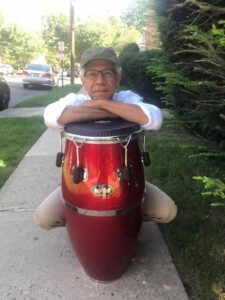
Carlos “Nene” Quintero comes from a family of musical prodigies

Carlos Vicente Quintero De Jesús, better known as Nene Quintero, was born on October 21, 1946 in the Caracas neighborhood of Marín (a neighborhood of percussionists par excellence), in San Agustín del Sur.

In a family that has produced several musicians, among them his brothers the former “Madera”, Ricardo and Jesús “Chu” Quintero, who died in the Orinoco tragedy; Rafael who lives in Marseille or his nephews Luisito (the “chamo Candela” of Daiquirí), Robert and Chuíto, who live in New York.

During his adolescence he was in several groups and then he played with Los Dementes, the Venezuelan group Pan suerte de Santana with César Monge (Dimensión Latina) and Alfredo Padilla (La Salsa Mayor), Porfi Jiménez, Frank Quintero and Los Balzehaguaos, Yordano and many others.

Carlos "Nene" Quintero comes from a family of musical prodigies
Carlos “Nene” Quintero comes from a family of musical prodigies

-What would be the five main moments of his career?

Nené lists them:

1- Having worked with people I went to see at a radio station and then I got to play with them. That was in the 70’s, in a place called Playboy in Altamira, with their bunnies and everything.

I worked with Lewis Vargas and Rafael “Gallo” Velásquez on trumpets; Moscatt was the saxophonist; Willy Pérez, pianist; Jorge Romero, bassist of Aldemaro Romero’s Onda Nueva; and Marcelo Planchart on drums.

2- When I heard on the radio a song I recorded with Los Dementes: “Rómpelo”, which was very popular. I saw myself as a very famous person, I was heard on the radio for the first time.

3- When Eumir Deodato came and proposed me to go with him to the United States.

I was not in conditions to go because I was working very well, I was doing a lot of jingles, I had two children who were starting to study.

I was sacrificing something that was taking shape: my family. I told him I could go, work and come back. The surprise was when a letter arrived for a tour of Mexico and the United States.

Deodato is a very kind person, he gives you freedom to work, we communicated in “Spanglish” and “portuñol” and he loved beer.

Carlos Nene Quintero

4- Seeing Celia Cruz when I was a kid in Marin, going to visit friends like Johnny Perez, from Sonora Caracas, and some time later working with her, even in her last shows, in Montreal.

Celia’s birthday was the same day as mine, and she looked older, but as soon as she started the music and said “sugar!” she was different, she was transformed.

5- Working lately with my nephews Robert and Luisito gave me a lot of emotion: The three of us on the same stage in New York with Celia Cruz.

But there are more experiences. Eros Ramazzotti, for example. “I chose to go to New York and Miami when things got tough here. I worked with Gato Barbieri and with salsa people.

I would go back and forth, two months out and back. I was recording with a saxophonist who worked with Eros and, the following year while I was in Miami he called me for a six-month tour.

I said yes, they called me the following year again and I spent three years with Ramazzotti touring all over Europe, Brazil, Puerto Rico, Central America, Mexico and Miami.

-Any anecdotes with Ramazzotti? –

Once on his birthday he rented a track where they raced cars. We were drinking, driving, talking, talking, listening to music and they brought a cream cake for Eros.

At one point when he was very close to me with the cake in his hand, I put it in his face. It was a mess with everyone throwing things and pieces of cake at each other.

But I got the impression that he was upset and I went over to apologize and explain to him that it was something that could happen on any South American birthday, especially with a cream cake. He told me not to worry, that it was fine.

Other jobs came through Ramazzotti, such as with Jovanotti and Lucio Dalla.

-And how was it with Little Louie Vega, one of the producers and DJs of the moment?

-I met him through Luisito. We have been touring Europe, the United States and Japan for the last three years, and we recorded with Pushim, a Japanese woman, a song that was in the Japanese top ten.

Meanwhile, “Nené’s” routine continues to be more international than ever between the United States, Europe and especially France, where he has been working with a group that bears his name: Nequin Group, with whom he recorded an upcoming album.

“Working abroad is like working here, but in another language”, he reflects on the matter and says that he is preparing a method for percussionists to work with their feet as well as with their hands.

Carlos Nené Quintero con mi Signature congas (Roberto Quintero)

-What has seemed new to you lately in Europe or in these parts?

-Those jazz works in which there is no conventional group with drums or bass, like what I did with Gerry Weil and Pablo Gil at the Corp Group Cultural Center.

THE BATICONGA AND THE “MCGIVER SET”.

The baticonga is a hybrid: drums with conga. I use bass drum, hi-hat, cimbals, toms, snare and cymbals of various thicknesses.

It has a special redoblante with a rim that does not protrude from the leather so that it does not bother when hitting it like a tumbadora.

It is an idea that I have been maturing. It was born because of Yordano’s album that made him famous, Manantial de corazón, there I recorded all the percussion and when it was time to play it live we needed a drummer and two percussionists. We got the drummer, but things were missing and I started to add electronic pedals, electronic drums, octapads and to use feet and hands.

Then we did an unplugged set and it had to be acoustic with congas, bass drum, snare drum, hi-hat, cymbals.

The McGiver set is a djembe with brushes, cymbals with rivets, a conga that is just like a lid, like a tambourine, and I mount it on top of a snare drum stand and a cowbell. A set that does it all.

SIX INFLUENTIAL PERCUSSIONISTS

Alejandro Blanco Uribe and Airto Moreira: “I saw a lot of Gerry Weil with La Banda Municipal in the 70s and Alejandro as a multi-percussionist with effects and accessories.

That led me to look at Airto’s proposal and to fall in love with percussion at a time when I was playing guitar”.

Trilok Gurtu: “For his fusion of oriental music with rock and jazz. I’ve been hearing him since Oregon, and when I heard him with John McLaughlin on the live album in London my jaw dropped.”

Jack DeJohnette: “As a drummer he has a very floaty groove, he can do with the beats what he wants and the rhythm is always there.”

Tony Williams: “Another drummer. I saw a video that aroused my interest because his technique is like the one I use with the baticonga”.

Carlos Nené Quintero con mi Signature congas (Roberto Quintero).

Giovanni “Mañenguito” Hidalgo: “Since he came out the thing changed, he gave another level to the congas or tumbadoras, with him there has been a ‘before and after'”. – with Roberto Quintero and Luisito Quintero.

Also read: Argenis Carruyo is known in the music scene as “El Volcán de América” (The Volcano of America) due to the power of his voice

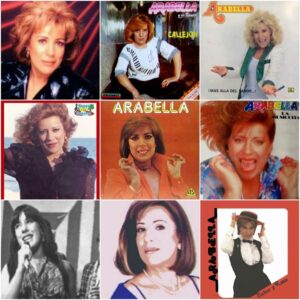
Arabella la Sonera Mayor de Colombia in her Callejón on a Sunday in Barrio with Chico Matanza

Born on June 5th, Arabella, “La Sonera Mayor”, is from Bogota, Colombia.

Arabella With her first name “María Margarita Pinillos”, she is an excellent Salsa singer and composer who shined in the 70’s and 80’s with her record productions, whose consecration and fame, however, was not in her native country but in Venezuela.

His Caribbean music song that made him famous was “Callejón” and he stayed in Venezuela for a while.

In 1972 he settled in Venezuela, it was in this country where he managed to strengthen his career and achieve the great success he had, he recorded several albums in the company of great artists of the time. In 78 and 79 he formed a group called “Los Maraqueros”, with which he could freely make the music he really wanted to make, Cuban music of Trio Matamoros and Puerto Rico.

She felt great interest in music from a very early age, however she did not contemplate from that time to make professional music, it was until she was 13 years old that a friend enrolled her without prior consultation in a radio contest of the time called “Orquídea de Plata Phillips”.

But because she was not prepared she was disqualified, however as a result she was recommended to participate in the television contest “Michel Talento” the first contest for amateurs of Colombian television. From that contest she went on to be hired at the Tequendama Hotel, the most important hotel of the time, as the first woman to sing vallenatos at the Salón Monserrate with the company of accordionist Ángel Martínez.

Arabella la Sonera Mayor de Colombia in her Callejón on a Sunday in Barrio with Chico Matanza

Arabella’s name was born from the fact that they used to tell her that she resembled a model that visited Colombia who unfortunately committed suicide, her pianist suggested her to adopt that name as her artistic name and she accepted.

Considered for many years as the natural successor of Celia Cruz, and Celia said that Arabella was her successor due to her extraordinary vocal quality.

She settled in Caracas-Venezuela since 1982, obtaining success in Salsa thanks to the advice of the great announcer Phidias Danilo Escalona.

In her beginnings she formed her own group called “Los Maraqueros”, she also recorded with Pacho Galán and with “Los Hijos del Rey” of the Dominican Wilfrido Vargas in which she recorded 4 merengues in a trip she made to the Dominican Republic, Wilfrido himself located her to record with him and they were hits the theme Corazón, Corazón de Julio Iglesia.

Los Armónicos de Manolo Monterrey, Chucho Sanoja y su orquesta, Willy Pérez and with the Megatones de Lucho.

With the groups that accompanied him as a salsa soloist.

It is worth mentioning that the song “Mi Vida es Cantar” immortalized by Ursula Hilaria de la Caridad Cruz, “La Guarachera del Mundo”, the queen of salsa, was composed by Arabella, who gave it to the eternal Cuban and salsa luminary.

For a while she lived in Puerto Rico where she decided to become a musical show businesswoman, with this company she traveled to several Latin American countries with first class singers: Marvin Santiago, Oscar de Leon, Ismael Miranda, among others.

Arabella Maria Margarita Pinillos

She finally announced her retirement from music after recording “La Musiquita” and “Yo te Vi”. After her retirement she moved to Miami, United States with her daughter, Margarita decided to dedicate herself to take care of her beloved daughter, her home and two cats and two dogs that are her favorites.


DISCOGRAPHY

– Más Allá Del Sabor (1990)

– Mi Son Es Un Misterio (1987)

– Puro Trópico (1987)

– La Musiquita (1987)

– Arabella (1985)

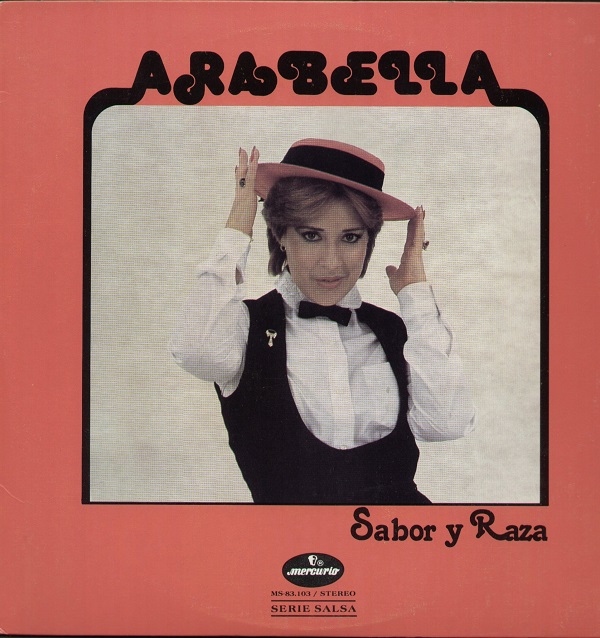
– Sabor Y Raza (1982)

– La Simpatiquisima (1980)

– Encontré Mi Amor (1979)

– Arabella (1978)

– Nelson Martinez y Arabella (1976)

– Nelson Martinez / Arabella Y Su Combo Tropical (1974)

Arabella la Sonera Sabor y Raza

SINGLES & EPs

– I Was Your Hunt (1990)

– Amiga La Vida / Sin Dejarte De Amar (1987)

– Mi Son Es Un Misterio / Mentiras (1986)

– Zape Pa’ Lla / Mentira (1986)

– Mentiras / Panamá (1985)

– Chico Matanza / Nu Sueño Mas (1982)

– Pal Campo/Mucho, Poquito, Nada (1978)

– Hija De Nadie (Flor Del Mal) / Arepas

– Domingo En El Barrio / Chico Matanza

– Mentiras / Espejismo

– Tómame Que Tómame / Con La Vara Que Midas (Take Me That Take Me / With The Rod That Midas)

Source:

William Aramburen Salsa Ephemeris

@arabellalasoneramayor 

Also Read: Betsy Colombian Salsa, Bolero and Son Cubano Singer

Orchestra “Real Expression”

Latin America / Venezuela / Caracas

Orchestra “Real Expression”. Relay youth in Afro-Caribbean music

The “Real Expression” Orchestra was born under the initiative of a group of friends who converged during the 90’s as part of their free time and to liven up their family parties.

Empirical musicians moved by the passion for the salsa genre and their musical preferences chose a series of songs to inspire their repertoire of “hard sauce” paying homage to orchestras such as: Los Satélites, Fruko y sus Tesos, Dimensión Latina, Roberto Blades, among others.

Real Expression" Orchestra
Real Expression” Orchestra

Relaunching

The “Real Expression” Orchestra in 2016 had an unexpected loss. Its founder Oswaldo García and pianist of the group, exercising his role as a GNB official, lost his life in a confrontation.

This moment marked a silence in the Royal Expression Orchestra, which after the physical disappearance of Oswaldo, could not find a path to musical growth and there was no longer reason to celebrate.

After a year, his son Wladimir A. García, who learned the magic of the piano from his father, decides again to summon these friends of his father to continue the legacy that was Oswaldo’s passion in life.

During the year 2018, the “homemade” rehearsals and the desire to consolidate the group continued and in December of that year Wladimir Alexander formally decided to start piano lessons with the teacher Alberto Crespo, a Venezuelan pianist recognized in the salsa scene for his participation. in Bands such as Bailatino, and professionalize their innate skills in order to take on the challenge of Musical Direction of the Orchestra, under a concept of varied salsa repertoire and coupling talents of different ages in order to capture audiences of all ages.

With this impetus and desire, “Orquesta Real Expression” was born with a group of musicians of all ages and periods, a fresh and original repertoire with a “street tumbao”, extolling what is born at night in the Caracas parish “23 de January” cradle of salsa par excellence and in homage to all “street and guataca” dancers.

Real Expression" Orchestra
Real Expression” Orchestra

Musicians

After the call, many musicians were encouraged to participate, including Gilberto Gil (tumbadoras) who has been supporting Wladimir Alexander since he took over the orchestra, we consider him “the brother of the house”.

There is also Gonzalo Ribas (singer) of the old school with an original soneo and a musician by vocation formally dedicated to the business of selling spare parts. In the voice is also part of this project Jeanmicet Canónico, singer with a career in traditional Venezuelan music.

Jeanmicet is currently part of the “Francisco Pacheco y su Pueblo” Project and his son, also renowned percussionist Roland Orozco, decided to join the percussion base for “Real Expression” with Luis Urbina.

On bass we are accompanied by “Yimmito León” from the family of the great Oscar D’ León, son of Yimmy Leon. The sax is represented by Javier José Torres Perez (saxophonist and flutist).

Following the line of brass Meyderson Rada (trumpet) who also belongs to the project of Francisco Pacheco y su Pueblo, and as arranger and bass Premmlim Villamizar of the new generation of, under the direction of Wladimir Alexander singer and piano.

Repertoire

The repertoire includes songs covered by orchestras such as Los Satélites, Grupo Canela de Colombia, Spanish Harlem, Hildemaro, Eddy Santiago, Eddie Palmieri, Oscar D’ León, among others.

Real Expression Orchestra. Musical Direction: Wladimir Alexander Garcia. Phone (0414)3175583. email: [email protected] Instagram: orchestrarealexpression / twitter: @ExpressionReal / Facebook: Real Expression Orchestra.

Under the production of: La Negrix Salsera

Email: [email protected]. Instagram: Yohelia Acosta / Facebook: Yohelia Acosta.

  • « Go to Previous Page
  • Page 1
  • Interim pages omitted …
  • Page 26
  • Page 27
  • Page 28
  • Page 29
  • Page 30
  • Interim pages omitted …
  • Page 55
  • Go to Next Page »

International Salsa Magazine (ISM) is a monthly publication about Salsa activities around the world, that has been publishing since 2007. It is a world network of volunteers coordinated by ISM Magazine. We are working to strengthen all the events by working together.