• Skip to primary navigation
  • Skip to main content

International Salsa Magazine

  • HOME
  • Previous editions
    • 2026
      • ISM / May 2026
      • ISM / April 2026
      • ISM / March 2026
      • ISM / February 2026
      • ISM / January 2026
    • 2025
      • ISM / December 2025
      • ISM / November 2025
      • ISM / October 2025
      • ISM / September 2025
      • ISM / August 2025
      • ISM / July 2025
      • ISM / June 2025
      • ISM / May2025
      • ISM / April 2025
      • ISM / March 2025
      • ISM / February 2025
      • ISM / January 2025
    • 2024
      • ISM / December 2024
      • ISM / November 2024
      • ISM / October 2024
      • ISM / September 2024
      • ISM / August 2024
      • ISM / July 2024
      • ISM / June 2024
      • ISM / May 2024
      • ISM / April 2024
      • ISM / March 2024
      • ISM / February 2024
      • ISM / January 2024
    • 2023
      • ISM / December 2023
      • ISM / November 2023
      • ISM / October 2023
      • ISM – September 2023
      • ISM – August 2023
      • ISM July 2023
      • ISM Edition June 2023
      • ISM – May 2023
      • ISM April 2023
      • ISM March 2023
      • ISM February 2023
      • ISM January 2023
    • 2022
      • ISM December 2022
      • ISM November 2022
      • ISM October 2022
      • ISM September 2022
      • ISM August 2022
      • ISM July 2022
      • ISM June 2022
      • ISM May 2022
      • ISM February 2022
      • ISM January 2022
    • 2021
      • ISM December 2021
      • ISM November 2021
      • ISM October – 2021
      • ISM September 2021
      • ISM August 2021
      • ISM July 2021
      • ISM May 2021
      • ISM April 2021
      • ISM June 2021
      • ISM March 2021
      • ISM February 2021
      • ISM January 2021
    • 2020
      • ISM December 2020
      • ISM November 2020
      • ISM October 2020
      • ISM September 2020
      • ISM August 2020
      • ISM July 2020
      • ISM June 2020
      • ISM May 2020
      • ISM April 2020
      • ISM March 2020
      • ISM February 2020
      • ISM January 2020
    • 2019
      • ISM December 2019
      • ISM November 2019
      • ISM October 2019
      • ISM Septembre 2019
      • ISM August 2019
      • ISM July 2019
      • ISM June 2019
    • 2016
      • ISM December 2016
  • Spanish
  • Download Salsa App
    • Android
    • Apple

Search Results for: Pianist

Luis Perdomo one of the most avid pianists of the Jazz in New York

Luis is one of the most active jazz pianists in New York.

Originally from Venezuela, he began playing piano at the age of 10, and by the age of 12 was playing professionally on radio and television, as well as in concerts and clubs. Luis later moved to the United States.

To attend the Manhattan School of Music on scholarship, he graduated in 1997 and went on to earn a master’s degree at Queens College, where he was a student of the great pianist Sir Roland Hanna.

Shortly after moving to New York, he quickly established himself as an in-demand pianist amassing an impressive resume.

Some of the artists Luis has recorded and/or performed include Ravi Coltrane, David Sanchez, Tom Harrell, John Patitucci, Ray Barretto, Brian Lynch, Miguel Zenon, Dave Douglas, David Weiss and The Cookers, David Gilmore, Ralph Irizarry and Timbalaye, Henry Threadgill and Steve Turre, among others; a list that is as remarkable for its high level as it is for its diversity.

To attend the Manhattan School of Music on scholarship, he graduated in 1997 and went on to earn a master's degree at Queens College.
Luis Perdomo One of the most avid pianists of the Jazz in New York

Luis is also recognized as a member of several bands, especially the groups led by Ravi Coltrane, with whom he spent 10 years and Miguel Zenon, with whom he has had a collaboration that is currently in its 18th year.

Luis has also made a mark as a performer. Composer and arranger on recordings by Ray Barretto, Ignacio Berroa, John Benitez and Ralph Irizarry. He has also been commissioned as a composer by the Jazz Gallery, The Afro Bop Alliance and Arturo O’Farrill’s Afro Latin Jazz Orchestra.

He can be heard most recently on Ravi Coltrane’s Grammy nominated “Spirit Fiction” and Miguel Zenón’s “Típico”. In 2002 he won the 2nd Grand Prize at the “3rd Martial Solal Jazz Piano Competition” in Paris, among a group of 66 international pianists.

He can be heard more recently in Ravi Coltrane’s Grammy nominated “Spirit Fiction” and Miguel Zenón’s “Tipico”. In 2002 he won the 2nd Grand Prize at the “3rd Martial Solal Jazz Piano Competition” in Paris, among a group of 66 international pianists.

As a sideman, Luis has performed at most of the major music festivals and venues in over 50 countries, and as a leader, he has toured Europe, Japan, South America and the United States.

Luis has also been very active around the world in recent years as a teacher, soloist and as leader of his own trio: The Controlling Ear Unit and various other projects, and has released nine highly praised recordings as a leader: “…Focus Point “.

Luis has performed at most major music festivals and venues in more than 50 countries.
Luis Perdomo has also participated in more than 200 recordings as a sideman.

Focus Point “. (2005),” Awareness ” (2006), and the highly acclaimed ” Universal Mind ” with Drew Gress and Jack Dejohnette (2012) for Ravi Coltrane’s RKM Music label. ” Pathways ” in 2008, the ” Childhood ” project in 2012 and ” Links ” in 2013 were recorded for Criss Cross Jazz.

His ” Twenty – Two ” project, with ” Controlling Ear Unit “, was released in 2015 on the Hot Tone Music label.

This high octane CD unites Luis with bassist / vocalist Mimi Jones and drummer Rudy Royston. The two most recent CD’s:” Montage “; Luis’ first piano outing and” Spirits and Warriors “; a quintet release for the Criss Cross Jazz label featuring drumming legend Billy Hart, was released in May 2016.

Luis Perdomo has also participated in over 200 recordings as a sideman.

As an educator, Luis has taught master classes at conservatories in Amsterdam and Paris, Princeton University, Hochschule Fur Musik und Theatre (Munich, Germany), Berklee (Valencia, Spain), IUDEM (Caracas, Venezuela), Esmuva (Madrid, Spain) ; and the School of Jazz in Berkeley, California, among others.

He has taught summer jazz camps, including “Jazz in July” at the University of Massachusetts, Langnau Jazz Nights in Switzerland; The Banff International Workshop and the University of Manitoba in Canada, Badajoz Jazz Worshop in Spain; Universidad EAFIT in Medellin; Tonica Jazz Festival in Guadalajara, Mexico and Guimaraes Jazz Workshops in Portugal, among others.

In 2016, Mr. Perdomo served as artistic director of the Langnau Jazz Workshops in Switzerland. Luis has also taught at the New School for Social Research, and currently serves as an adjunct professor of piano at Queens College in New York City.

In 2016, Mr. Perdomo served as artistic director of the Langnau Jazz Workshops in Switzerland.
Luis is one of the most active jazz pianists in New York.

For more information, visit www.luisperdomojazz.com

Home

Renowned pianist and producer Sony Ovalles died

The news was released on Sunday 13

On Sunday, December 13, Latin music mourned the death of the great pianist and music producer Sony Ovalles, who was a key piece of the merengue and music in his native Dominican Republic. It was known that the cause of death was a heart attack, many industry figures spoke about it:

“Dominican Music is still mourning, the teacher, producer, arranger, pianist Sony Ovalles has just died of a heart attack! Responsible for many hits of Wilfrido Vargas, Jhonny Ventura, Sergio Vargas, Monchy Capricho, Rubby Perez among other great orchestras and Dominican artists! My condolences to his family and friends! Another great musician who becomes part of the Celestial Orchestra! Rest in peace Sony Ovalles’ soul!”, expressed Alejandro Henríquez through his Instagram account.

Ovalles has left a very huge position to fill, since his contribution to Latin music is very great. There are many outstanding artists who owe many of their successes to this genius, whose favorite instrument was the piano. But his talent went beyond the black and white keys, his gift for producing, composing, and arranging the songs with which so many artists and groups became known, could be considered magic. Heaven is now celebrating to the rhythm of the Dominican Sony Ovalles!

Sony Ovalles falleció
Sony Ovalles left a great legacy,

Learn more about the great musician Sony Ovalles

His real name was Rafael Ovalles Amaro, but it was through Sony Ovalles that the industry knew him. He was born in Salcedo, part of the Hermanas Mirabal province, in the always beautiful Dominican Republic, back in the 40s, being the proud son of Carlos Ovalles and Nidia Amaro. His initiation in music did not occur until he was 14, under the tutelage of the great musician Cuto Estévez, who managed to see a future with music for Sony.

He was the pianist of choice of Wlfrido Vargas, Félix del Rosario, Runny Pérez, and many more artists, despite not being in front of the stage, his presence was very powerful alongside the other musicians in the orchestra. Apart from collaborating with solo artists, Sony also lent its talents to great groups such as Joseíto Mateo’s, Los Hermanos Rosario, Las Chicas del Can, along with many more.

In addition to collaborating with great artists, he formed different groups, such as the salsa group El Complot that had Mike Peguero as its interpreter, as well as an orchestra with Vicente Pacheco as singer. Despite standing out in the merengue, he put his touch to several salsa compositions, recorded a complete album with the salsero Michel, highlighting the song Esa mujer.

Sony Ovalles álbum
One of his albums.

There were many hits where he collaborated but the following are some of the most important: Wilfrido Vargas’ Atrevida, 13 años and Bachata merengue; Sergio Vargas’ Noche, La tierra tembló and Por ella; Vicente Pacheco’s El atracador, The New York Band y Tus 20 años. But his repertoire was infinite, demonstrating once again the great talent that exists in the Dominican Republic, one of the Caribbean jewels.


Home

The Elegant One of Salsa Life and Legacy of Tito Allen, one of the most refined voices in our Latin Music

The world of Afro-Antillean music celebrates the birth of one of the genre’s most distinguished and sophisticated voices Roberto Romero Caballero, universally known in the music scene as Tito Allen.

Born on May 1, 1946, in the iconic neighborhood of Santurce, Puerto Rico, this pillar of salsa has left an indelible mark on the history of Latin music throughout a career spanning over four decades of artistic excellence.

Tito Allen y Adalberto Santiago

The Origin of a Name with Tumbao

The stage name of this renowned sonero holds a curious history split into two parts. The first part, “Tito,” stems from a deeply rooted custom in Puerto Rican slang: the double diminutive. From Roberto, people began calling him “Robertito,” a nickname that over time affectionately evolved into “Tito.”

On the other hand, the surname “Allen” has a much more urban and accidental origin. The singer himself has confessed that during his youth, he saw the word painted as graffiti on a wall. The visual impact and the sound of the name pleased him so much that he decided to adopt it on the spot as his signature trademark for the entertainment world.

The Beginnings of a Multifaceted Star

Tito Allen’s musical journey formally began in 1962, when he was just a 16-year-old teenager. In his early days, the young Roberto showed a strong inclination toward rock and roll, a genre that was causing a frenzy among the youth of the 1960s.

During this formative period, Allen stood out as a bassist and guitarist, forming part of various musical trios that emulated the great bands of the era. These groups even enjoyed successful appearances on Puerto Rico’s Channel 4 television.

Fortunately for lovers of Caribbean rhythms, destiny guided him toward tropical music. His powerful voice, characterized by impeccable tuning and elegant phrasing, quickly made him a highly sought-after singer.

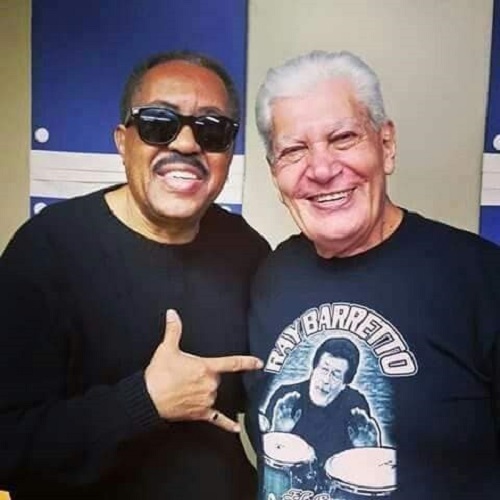
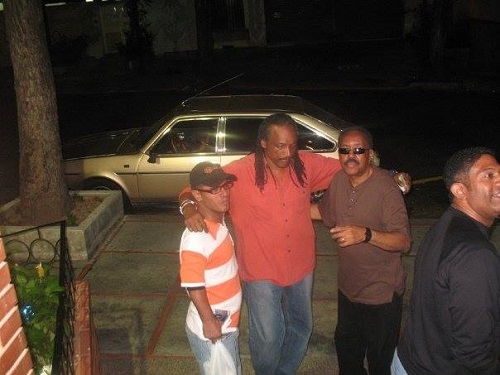
Dj. Augusto Felibertt, Orlando Watussi, Tito Allen y Jesus Torres

Among his major aesthetic influences, Allen has always expressed a deep admiration for Cheo Feliciano, whom he listened to with devotion during Feliciano’s era with the Joe Cuba Sextet. Likewise, he has repeatedly pointed to the Bobby Valentín Orchestra as one of his favorite bands of all time.

Conquering New York and the Big Leagues of Salsa

Determined to take his career international, Tito Allen traveled to New York in 1972. Although he initially tried to join the orchestra of the “King of the Timbal,” Tito Puente, Puente had no vacancies at the time. Far from discouraged, Allen joined forces with the prominent Colombian pianist Eddie Martínez to form a quintet that performed successfully in Big Apple nightclubs.

The true turning point came in May 1973. After a brief return to his native Puerto Rico, Allen went back to New York and, thanks to a recommendation from Eddie Martínez, scored an audition at the famous club El Corso. There, maestro Ray Barretto was looking for a vocalist to replace none other than Adalberto Santiago.

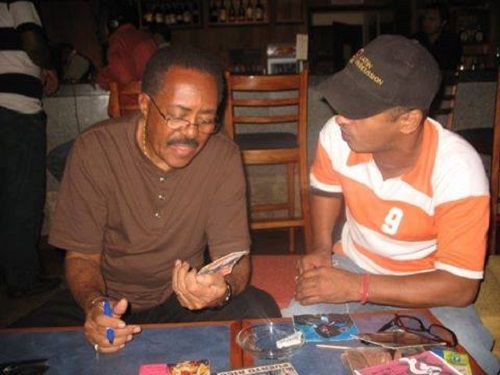
Tito Allen y Billy Crespo

Allen rose to the challenge masterfully, recording the acclaimed album Indestructible (1973), a work that instantly enshrined him in the pantheon of salsa royalty.

A Legendary Journey: Following his successful run with the Ray Barretto Orchestra, Tito Allen fulfilled his dream of working alongside Tito Puente. Later, he joined the ranks of the legendary Típica 73 before launching a solid solo career.

His impeccable reputation also led him to become a fundamental part of the Puerto Rico All Stars, participating in two of their most iconic album productions. Additionally, he collaborated closely with the virtuoso Louie Ramírez, leaving an indelible mark thanks to his versatility.

The Golden Backup Singer of the Latino Neighborhood

Beyond his brilliance as a soloist and bandleader, Tito Allen’s career stands out for his generosity and professionalism in the recording studio.

His trained, melodious voice graced countless productions for artists of the stature of Pupi Legarreta, Ralphy Santi, and Conjunto Clásico, among many other representatives of “the ultimate expression of the Latino neighborhood.” His work as a backup vocalist was essential in defining the sound of New York and Caribbean salsa during the ’70s and ’80s, solidifying his status as a complete artist and a gentleman of music who today, more than ever, deserves the applause of his audience.

Tito Allen y Dj. Augusto Felibert

Also Read: Our friend Tito Allen supports the Salsa Museum

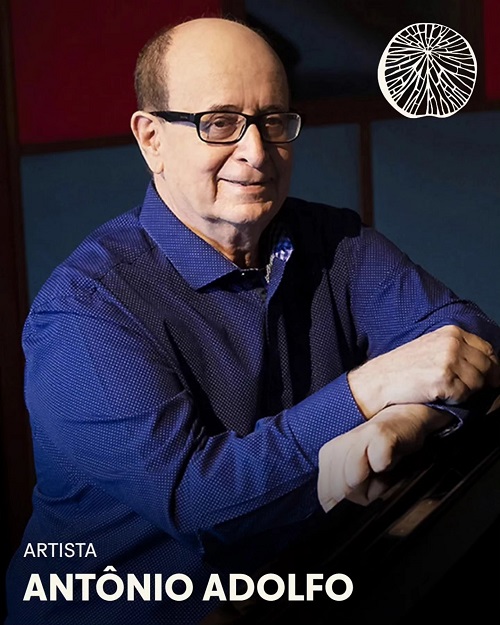
Antonio Adolfo: The Indelible Master of Brazilian Music

From Classical Cradle to the Jazz and Bossa Nova Revolution

That musical heritage is essential to understanding the greatness of Antonio Adolfo.

Being born into a home where the violin from the Rio de Janeiro Municipal Theater orchestra was part of the daily landscape shaped his sensibility from the cradle.

Although he grew up surrounded by the classical discipline of his father, his destiny lay within the keys, jazz, and the revolution of Brazilian popular music (MPB).

De la Cuna Clásica a la Revolución del Jazz y la Bossa Nova

The son of a classical violinist, Antonio Adolfo was born in the bohemian neighborhood of Santa Teresa, Rio de Janeiro, under the sign of Aquarius in 1947. At the young age of 16, the young pianist was already part of the exclusive bossa nova club brewing in the famous Beco das Garrafas alley, leading ensembles that stood at the forefront of the scene, such as Conjunto Cinco and the Samba Trio 3-D.

Shortly after, he participated in the iconic musical Pobre menina rica by Carlos Lyra and Vinicius de Moraes, beginning to make a name for himself in the industry.

Starting in 1967, by forming a creative partnership with lyricist Tibério Gaspar, Adolfo became one of the great catalysts of modern melody in Brazil, composing massive hits like “Sá Marina” and “Juliana.”

Antonio Adolfo El Maestro Imborrable de la Música Brasileña

At the same time, leading the group Brazuca, he established an electronic pop tone that was highly sophisticated for its time (with tracks like “Teletema” and “Ana Cristina”), culminating in the blistering musical highway of “BR-3″—a song that sparked great controversy and shook the core of the era’s music festivals.

A Pioneering Spirit and International Acclaim

After playing as a member of the backing band for the legendary Elis Regina on two European tours, and refining his technique in Paris with the renowned classical maestro Nadia Boulanger—in addition to studying in Brazil under masters Guerra-Peixe and Esther Scliar Antonio Adolfo was ready to take another giant leap.

In 1977, in an act of bravery and pioneering spirit, he released the album Feito em Casa (Homemade) under his own record label, Artezanal.

This was the opening kickoff for a liberating movement: the independent record industry in Brazil, triggering the rise of artistic dynamics that diverged from traditional market rules. Under this self-managed system, Adolfo recorded both original material (including children’s music that promoted free play) and foundational revisions of pianeiro classics, transforming the works of Ernesto Nazareth and Chiquinha Gonzaga for the contemporary piano.

This versatility proved that, as a performer and creator, Adolfo had achieved a rare distinction: mastering contemporary language from a place of timelessness.

Since 1985, the maestro has focused much of his energy on his music school, the Centro Musical Antonio Adolfo, while also participating in international events as an educator, without ever setting aside his stage career.

His profound work with the music of Chiquinha Gonzaga and jazz has earned him prestigious awards and nominations. Furthermore, he is the author of seven textbooks on Brazilian music published by Lumiar, a video lesson, and two books published abroad. For eight years, he proudly served as the Latin American representative for the IAJE (International Association for Jazz Education).

In recent years, Antonio Adolfo has returned to the stage more frequently, performing either in a solo piano format or with a group. From one of his performances at a U.S. university alongside his daughter, singer Carol Saboya, came an acclaimed live album released both in Brazil and abroad: Antonio Adolfo & Carol Saboya Ao Vivo / Live. This success has been followed by recording productions highly praised by international critics, such as Here and There / Aquí y Allá.

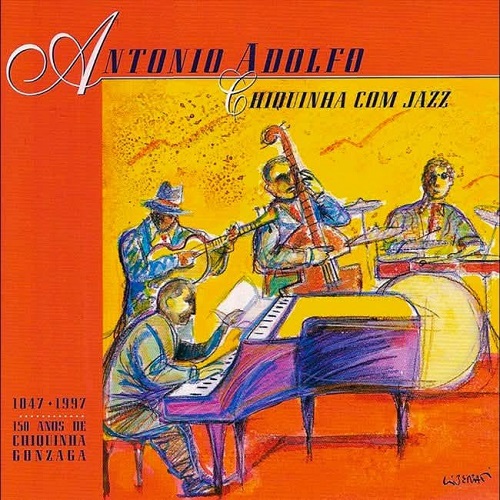
Chiquinha Com Jazz (1997)

Discographic Gem: “Chiquinha Com Jazz” (1997)

A perfect example of his genius for fusing Brazilian roots with the freedom of jazz is his 1997 album dedicated to the pioneer Chiquinha Gonzaga.

Tracklist:

Atraente

Cordão Carnavalesco

Lua Branca

Angu

Gaúcho (Corta-Jaca)

O Forrobodó

Corte Na Roça

Satan

Ismênia

Faceiro

O Abre Alas

          Personnel:

Antonio Adolfo: Piano and musical arrangements

Gabriel Vivas: Double bass

Ivan Conti: Drums

Claudio Spiewak: Acoustic guitar

Contributor:

L’Òstia Latin Jazz

Dj. Augusto Felibertt

Also Read: Carlos “Nene” Quintero comes from a family of musical prodigies

Luis Enrique’s “Hoy y Siempre” Tour Lands at the Choliseo

On Saturday, May 2, 2026, Luis Enrique brought his “Hoy y Siempre” concert to the Coliseo de Puerto Rico. Produced by TM Entertainment in a promotional partnership with radio station Z-93, the salsa vocalist returned to Puerto Rico to revisit his rise to stardom in the very place his musical journey began.

During the celebration, Luis Enrique had the brilliant musical direction of maestro Ceferino Cabán

Throughout the celebration, Luis Enrique was backed by the brilliant musical direction of Maestro Ceferino Cabán, whom he introduced as his “comrade of many battles.”

The “Prince of Salsa” spent the night acknowledging that, while Nicaraguan by birth, he came into his own musically on the Isla del Encanto. From the moment he took the stage, Luis Enrique basked in the crowd’s affection as they sang along at the top of their lungs to the hits he has cultivated since the start of his career.

A Journey Through the Hits

The opening set featured an energetic, beaming artist performing tracks like “Lo que fui, soy y seré,” “Mi mundo,” and “Dando y dando.” Shortly after, he moved into “Tú no le amas, le temes,” “Lo que pasó entre tú y yo,” and “Amiga.”

Luis Enrique
On Saturday, May 2, 2026, Luis Enrique presented his concert “Hoy y siempre” at the Coliseo de Puerto Rico.

Later, the atmosphere shifted to a patriotic tribute honoring both his Nicaraguan roots and his deep “Boricua” sentiment for the land that embraced him at the start of his career. This segment included:

  • “Autobiografía”
  • “Añoranza”
  • “Borikén” (a duet with Hermes Croatto)
  • “Amanecer borincano” — a moment where Luis Enrique once again adopted Puerto Rico as his second homeland.
  • “El amor es algo más”

The traditional instruments of Puerto Rican folk music—which continue to evolve across the island’s interior—took center stage during what will be remembered as a historic night for salsa. The cuatro was masterfully played by Christian Nieves, while the güiro de marimbo was handled by Jorge Yadiel Santos, who also provided backing vocals.

New Beginnings and Grand Finales

The soloist then transitioned into his more romantic repertoire with timeless favorites like “¿Quién eres tú?” (a duet with Norberto Vélez), “¿Cómo volver a ser feliz?” and “La mañana.” He also treated the audience to a premiere of an upcoming track titled “Nombre y apellido.” Luis Enrique noted that this new song was arranged and produced by the Puerto Rican producer, composer, and pianist Marcos Sánchez.

The prince of salsa celebrated the night by acknowledging that, although Nicaraguan by birth

The show reached its peak with “Así es la vida” and a medley featuring “Desesperado,” “Solo,” and “Compréndelo.” These were followed by “Sonríe” (a duet with David Rivera) and “Date un chance,” tracks that paved the way for a high-energy finale.

The performance proved that Luis Enrique remains in peak vocal and physical form. The multi-instrumentalist bid farewell to the island that saw him “born” as a salsa star with “San Juan sin ti” and his global smash “Yo no sé mañana.”

Bella Martinez Puerto Rico

 Read Also: Tony Vega Celebrates Half a Century of Romantic Salsa in Puerto Rico

  • « Go to Previous Page
  • Page 1
  • Page 2
  • Page 3
  • Page 4
  • Page 5
  • Page 6
  • Interim pages omitted …
  • Page 55
  • Go to Next Page »

International Salsa Magazine (ISM) is a monthly publication about Salsa activities around the world, that has been publishing since 2007. It is a world network of volunteers coordinated by ISM Magazine. We are working to strengthen all the events by working together.