• Skip to primary navigation
  • Skip to main content

International Salsa Magazine

  • HOME
  • Previous editions
    • 2026
      • ISM / May 2026
      • ISM / April 2026
      • ISM / March 2026
      • ISM / February 2026
      • ISM / January 2026
    • 2025
      • ISM / December 2025
      • ISM / November 2025
      • ISM / October 2025
      • ISM / September 2025
      • ISM / August 2025
      • ISM / July 2025
      • ISM / June 2025
      • ISM / May2025
      • ISM / April 2025
      • ISM / March 2025
      • ISM / February 2025
      • ISM / January 2025
    • 2024
      • ISM / December 2024
      • ISM / November 2024
      • ISM / October 2024
      • ISM / September 2024
      • ISM / August 2024
      • ISM / July 2024
      • ISM / June 2024
      • ISM / May 2024
      • ISM / April 2024
      • ISM / March 2024
      • ISM / February 2024
      • ISM / January 2024
    • 2023
      • ISM / December 2023
      • ISM / November 2023
      • ISM / October 2023
      • ISM – September 2023
      • ISM – August 2023
      • ISM July 2023
      • ISM Edition June 2023
      • ISM – May 2023
      • ISM April 2023
      • ISM March 2023
      • ISM February 2023
      • ISM January 2023
    • 2022
      • ISM December 2022
      • ISM November 2022
      • ISM October 2022
      • ISM September 2022
      • ISM August 2022
      • ISM July 2022
      • ISM June 2022
      • ISM May 2022
      • ISM February 2022
      • ISM January 2022
    • 2021
      • ISM December 2021
      • ISM November 2021
      • ISM October – 2021
      • ISM September 2021
      • ISM August 2021
      • ISM July 2021
      • ISM May 2021
      • ISM April 2021
      • ISM June 2021
      • ISM March 2021
      • ISM February 2021
      • ISM January 2021
    • 2020
      • ISM December 2020
      • ISM November 2020
      • ISM October 2020
      • ISM September 2020
      • ISM August 2020
      • ISM July 2020
      • ISM June 2020
      • ISM May 2020
      • ISM April 2020
      • ISM March 2020
      • ISM February 2020
      • ISM January 2020
    • 2019
      • ISM December 2019
      • ISM November 2019
      • ISM October 2019
      • ISM Septembre 2019
      • ISM August 2019
      • ISM July 2019
      • ISM June 2019
    • 2016
      • ISM December 2016
  • Spanish
  • Download Salsa App
    • Android
    • Apple

Search Results for: Pianist

“Choco Orta” Celebrates with New Single ‘Ahí na má’

The Puerto Rican sonera, percussionist, and producer “Choco Orta” is riding high with the release of her latest single.
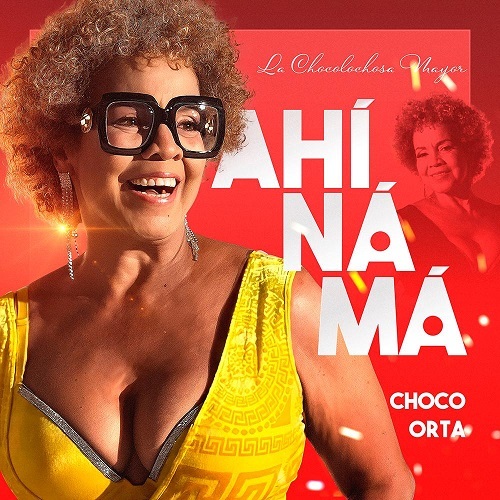
“Choco Orta” de celebración con su nuevo sencillo ‘Ahí na má’

With this rendition of ‘Ahí na má’ penned by Cuban composer Zenón Abdón Suárez and arranged by Venezuelan pianist David Silva—“Choco” reaffirms her artistic identity, her interpretive power, and her enduring place in contemporary salsa.

In Puerto Rico, fans still fondly remember the triumphant concert celebrating the multi-talented artist’s three decades in salsa, held on April 6, 2019, at the Santurce Fine Arts Center (Centro de Bellas Artes). Throughout her impeccable career, the dancer and theater professor has earned numerous prestigious accolades.

In this latest recording, “Choco Orta” delivers a performance deeply rooted in the essence of salsa. The track has a storied history, previously recorded by legends such as Ismael Rivera with Cortijo y Su Combo, Frankie Vázquez with Los Soneros del Barrio, and Rico Walker with La Puertorriqueña, among others. According to the press release accompanying the release: “’Ahí na má’ captures the authentic language of the barrio, where the soneo becomes a narrative and a genuine connection with the audience.”
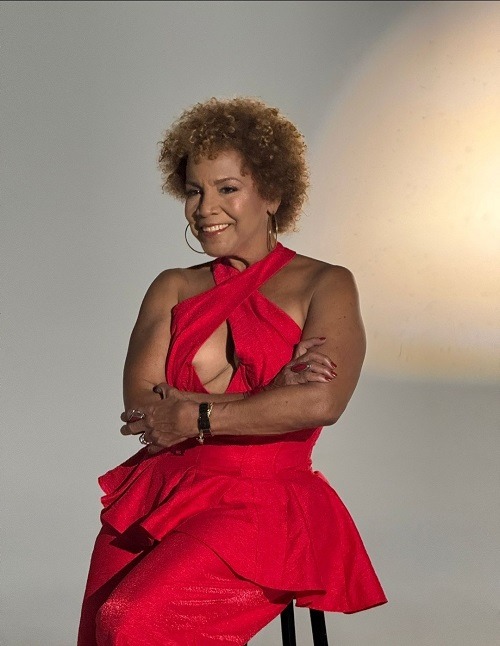
La sonera, percusionista y productora puertorriqueña, “Choco Orta”

This release was crafted specifically with the dancer in mind. The vocal tracking for the single took place at Willie González’s studio, under the expert engineering of Ceferino Cabán, while mixing and mastering were handled by José Guerrero at JosMastering in Venezuela. The cover art is the work of International Disseny.

Since her early days in Santurce, the seasoned soloist has carved out her own space in a historically male-dominated industry by focusing on her craft and growth. In an interview with Tele Once, “Choco” highlighted how her environment—steeped in a powerful salsa tradition—was instrumental in shaping her musical identity.

“Choco” dice reafirmar su identidad artística

“Choco Orta” stands as an exceptional example of the importance of soneo and improvisation as vital tools for communication and maintaining high-octane energy on stage.

Bella Martinez Puerto Rico

Read Also: Choco Orta, The Queen of Flavor
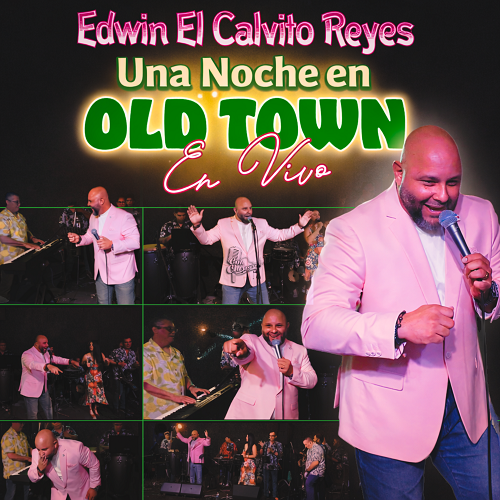
Let’s talk about Una noche en Old Town “en vivo,” while staying true to the musical journey of “El Calvito” Reyes

“Yes, Una noche en Old Town was an event held for about 100 people at a restaurant in the area known as Old Town in Kissimmee, Florida. Old Town is a park that feels like a year-round festival, 365 days a year,” the artist explains. This marks the third musical production from the Puerto Rican singer-songwriter known in the salsa world as “El Calvito,” one of the most fervent champions of the Salsa Nueva movement.

With this release, Edwin puts his salsa and his talent at the service of his followers. His repertoire spans classic salsa, romantic salsa, and what he calls “conscious salsa.”

Edwin “El Calvito” Reyes acknowledges that while everything has already been invented, the key is to stay focused and execute the ideas swirling in his mind. The press release for the new live album, titled Una noche en Old Town, notes: “Remember in the ’90s when many artists (…) recorded live productions? That was a trend that (…) went down in salsa history.”

The Production

The final product is a “live” recording of his orchestra. The production turned what was originally planned as a birthday party at Old Town Park in Kissimmee into a full album. Sound engineer Joseph Díaz captured the session, which was later mixed and mastered by pianist and engineer Víctor Romero. The content was further polished at Harmony Recording Studios in Orlando, Florida.

The album features the collective performance of the musicians who have accompanied the singer for years, including their appearance at the 2025 Día Nacional de la Zalsa in Orlando. The lineup includes:

  • John López: Congas
  • Daniel Ortiz: Timbales
  • Manny Urbina: Bongo
  • Víctor Romero: Piano and Musical Direction
  • Yasmani Roque & Marcos Rivera: Trumpets
  • Bert Laboy: Trombone
  • José Castro Marchán: Baritone Sax
  • Una Noche en Old Town Edwin El Calvito Reyes
    Una Noche en Old Town Edwin El Calvito Reyes
  • The night at Old Town also featured guest appearances by heavyweights such as Kriptony Texeira, Harold Montañez, and José Novoa. Additionally, Richie Nieves, the well-known voice of KQ FM Radio in Orlando, handled the album’s intro.

The Origin

The stage was set specifically at El Cilantrillo restaurant within Old Town. The event celebrated the birthday of Javier Colón, owner of La Feria Salsera and Edwin’s partner for the veteran-focused dance events that Edwin has successfully led in recent years. Javier hired “El Calvito’s” orchestra, the performance was recorded, and from that session, this authentic album was born.

By chance, the date of the party coincided with one of the most important days on the Puerto Rican salsa calendar: the traditional Holy Saturday Dance (Sábado de Gloria). “Many Latinos don’t understand and ask, ‘Are you guys seriously holding a dance on Holy Saturday?’ So, unintentionally, we tapped into that tradition—and it is a tradition in every sense of the word. By trying to keep it alive, we (Puerto Ricans) have shared it with the rest of the Hispanic public.”

According to Edwin, the performance was originally recorded for promotional purposes. However, the artist felt it was such a great capture of the evening’s energy that he consulted his musical director, Víctor Romero, to see what he thought of the idea.

The Release

Coincidence dictated that the album be published and available on digital platforms exactly one year after the recording. The producer admits it was a high-risk project because it was recorded live during an organic event outside of a controlled studio environment. The classic covers Edwin included as tributes to “those who have passed” (arranged as medleys) were his biggest concern, yet they ultimately earned widespread approval.

“El Calvito” Reyes says he doesn’t fear the critics. Driven by passion, he decided to release this 10-track production—eight of which he wrote himself, plus two salsa hit medleys—aiming to win over dancers, listeners, and collectors alike.

Tracklist:

  1. ‘Medley salsa nueva’
  2. ‘Así llamaban al Conde’
  3. ‘Homenaje a los que se nos fueron I y II’
  4. ‘Dime mi Buen Señor’
  5. ‘Tú del sur, yo del norte’
  6. ‘El karma’
  7. ‘Tócame la moña’
  8. ‘Baila cha cha chá’
  9. ‘Solo tiempo pa’ rumba’
  10. ‘Orgulloso de ser latino’

Stream & Connect: The album is available digitally on YouTube Music, Spotify, and Apple Music. Each track has a corresponding video at: https://www.youtube.com/@ElCalvitoReyesOficial/. The orchestra is available for bookings. You can reach the office via phone or WhatsApp at +1-912-980-8476 or by email at [email protected].

For more on the music of Edwin “El Calvito” Reyes, visit: https://solo.to/elcalvitoreyes

Bella Martinez Puerto Rico

Read Also: Edwin “El Calvito” Reyes el Sonero de la Sangre Nueva “Amor de Actualidad”

David Frankel pursued music and created Avenida B Band to reconnect with the memory of his father

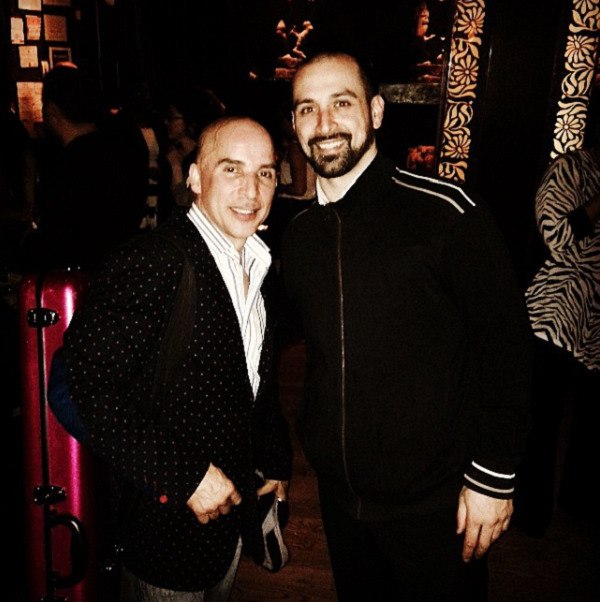
After coupling on our schedules, we were able to speak with bandleader and pianist David Frankel, whose story of how he became interested in music and eventually dedicated himself to it is truly fascinating. It also shows that not only Latinos and their descendants can fall in love with these rhythms, but also people outside our culture. This is because David has Russian and Polish heritage, which did not prevent him from falling in love with Latin music so intensely.

David and Ricky playing
David Frankel and Ricky Rosa playing live some years ago

What inspired David to pursue music

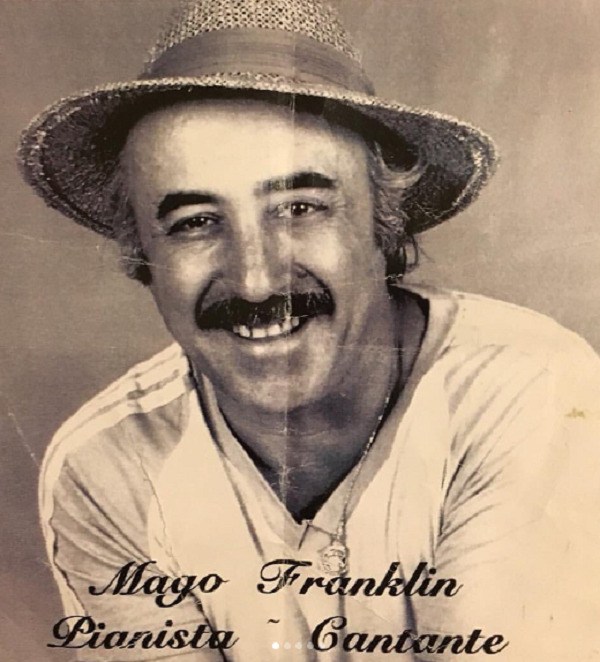
David was born in Lower Manhattan, New York, where there were many Latin families at the time. The neighborhood housed many Puerto Ricans and Dominicans. To this we must add that his father, Daniel “El Mago del Órgano” Franklin, was a musician and moved to that very place where Papote Jiménez, Ismael Miranda, Markolino, Freddy Lugo, Henry Fiol, Luis Ayala, and many others lived. Besides being a neighborhood full of artists, it was much cheaper living there, so he thought it was the ideal place for him.

It is worth noting that Daniel knew how to write music and read scores, but he had never played Latin music before in his life. He began to know it when several musicians he worked with asked for his help to read their scores, which led him to fall in love with Afro-Cuban music and develop an interest in salsa and merengue.

When David was born in 1979, Daniel had already been making music for about 15 years and had earned the nickname “The Organ Wizard” thanks to some band competitions held at a club in the Bronx. From a very young age, the boy watched bands rehearsing on the first floor of his house, so this salsa scene was natural for him. However, David had nothing to do with music until the death of his father in 2003.

David never had any interest in entering the art world, but the void left by Daniel’s death in his life drove him to study music, looking to connect with his father in some way. From there, he began taking piano and percussion classes, but he did not stop there. He also started to go out social dancing in the New York nightclubs and to know a bit more the nightlife of the city. On one occasion, a woman left him alone on the dance floor, and he was so ashamed in that moment that he decided to take classes and learn to dance.

David and the rest of Avenida B
The Avenida B Crew:
Juan Bowers – piano
Alvin Céspedes – bass
Ricky Rosa – congas/coro
Brian Pozo – bongos/coro/stage direction
Jhohan Hernandez – timbales
Demetrios Kehagias – trombone
Dan Lehner – trombone
David Frankel – lead vocals

That was when he realized that all the local bands played almost the same genres and songs, but there was no need for that because there was a world of possibilities in the Latin music he had discovered during his classes. There is a world beyond La Fania, and he learned that thanks to dance schools. All this thinking led him to create his own band with different music, to the old-school style he had always loved. 

His father had always told him salsa is for dancing, and if you are not playing dance music, you are doing it wrong.

Which teachers taught David?

After thanking us for the question, David then proceeded to explain that there was a school in New York called the Harbor Conservatory for the Performing Arts, located at 104th Street and Fifth Avenue in Manhattan. The heads of the education programmes there were Ramón Rodríguez and Louis Bauzó, who were excellent musicians and great people whom he met thanks to his father, who was a piano teacher at that institution. David used to accompany Daniel to the school and met both teachers through him.

Following his father’s death, David returned to that same conservatory to study singing with Ramón, while also studying percussion with Georgie Delgado and piano with Louis. In short, this institution was of vital importance for his career, and the many things he learned there were momentous both personally and professionally. 

As for the dance, he enrolled at the Baila Society school in New York through some friends, but later studied at others such as Santo Rico Dance and Dance On 2.

Jimmy and David
Jimmy Bosch and David Frankel

Avenida B Band

David began his career as a musician by playing boogaloo with a group called Spanglish Fly and a few other small bands. After everything he had studied and learned, already for the year 2011, the idea of creating his own group started percolating in his mind, so he posted an ad online looking for musicians and called some former classmates who might be interested in the proposal. That was how he managed to gather a decent number of people with whom he could finally put the Avenida B project together.

He chose salsa dura as his main genre because it is the kind of music that makes him want to dance, and given his background, this was very important to him.

He is also about to release an album in tribute to his father, which he has named “El Mago,” and it will feature some of his own songs; it is scheduled to be released in July 2026. 

David's father
Daniel ”El Mago del Órgano” Franklin, David’s father

Read also: Puerto Rican bandleader and musician Diana Sosa talks about her many projects in Nashville, Tennessee

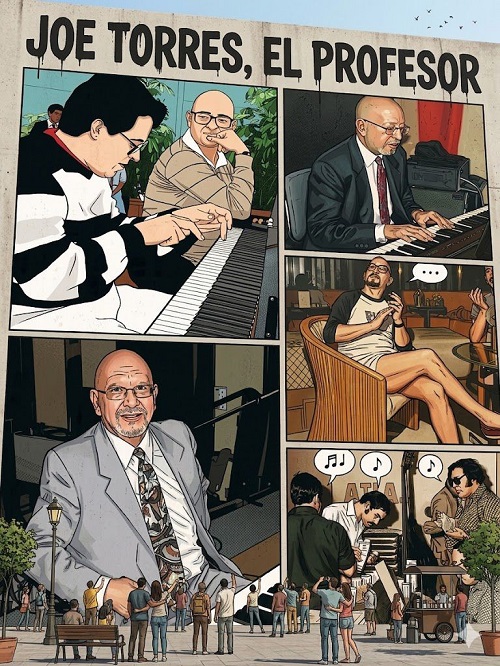
The Piano That Schooled the World the Eternal Legacy of “Professor” Joe Torres

The history of salsa is not only written by the voices of its idols or the thunder of its brass; it is written, fundamentally, on the black and white keys of those who knew how to sustain the pulse of an era.

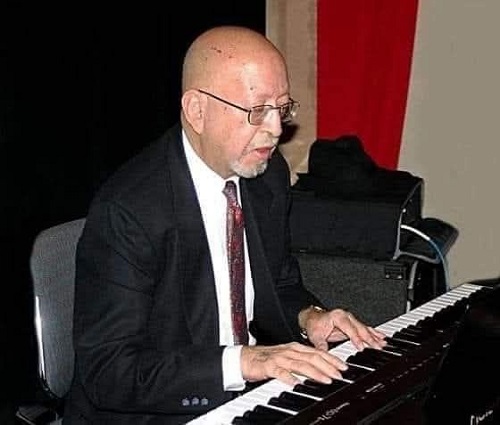
On April 13, 2020, in the quiet of a Bronx hospital, the “backbone” of Salsa Dura passed away at the age of 76: José Manuel Torres, known universally as “Professor Joe.”

Jose Manuel Torres Professor Joe Torres passed away on this day, April 13, 2020, in the Bronx, New York City, at the age of 76

Born in Manhattan on November 29, 1943, a son of the Puerto Rican diaspora from Guayama and Ponce, Torres embodied the pure essence of the Nuyorican.

Raised on Fox Street, his destiny was sealed in the hallways of P.S. 52 an elementary school that would eventually become the academic sanctuary of Latin music in the South Bronx.

Excellence as the Standard: From Neighborhood Sound to Musical Glory

His nickname, “The Professor,” was no mere poetic license. In a musical ecosystem where many relied on intuition, Joe possessed an almost mathematical skill: sight-reading.

Un pianista maravilloso, que no se parece a nadie

His technical precision allowed him to navigate elegantly between formal discipline and “street” flavor (sabor).

After debuting in the 1960s with the “King of the Bass,” Bobby Valentín, on seminal albums like Bad Breath, his career took a definitive turn when he joined the orchestra of a young, rebellious Willie Colón.

Replacing the virtuoso Mark Dimond, Torres didn’t just fill a void; he defined an aesthetic. For a quarter-century, he was the harmonic architect behind the two greatest giants of the genre: Willie Colón and Héctor Lavoe.

“As the pianist for the band, Professor Joe Torres was excellent,” Colón would recall years later.

It is his piano that resonates in the urban chronicles of Cosa Nuestra; the piano that provides the festive nostalgia in both volumes of Asalto Navideño a cornerstone of Puerto Rican identity and the piano that sustains the rhythmic tension in classics like The Big Break (La Gran Fuga) and Lo Mato.

There was no Fania milestone where Joe did not leave his mark, from the social lyricism of Siembra and Maestra Vida with Rubén Blades, to the raw power of Lavoe’s solo career.

Joe acompañó a Willie Colón y Héctor Lavoe en gran parte de sus grabaciones

Humility in the Shadows: The Man and the Legend

Despite participating in more than thirty productions that are now considered world cultural heritage, Joe Torres never felt the urge to claim the spotlight of a frontman.

As his colleague José Mangual Jr. noted, his humility was as vast as his talent. He preferred the rigor of the studio and the camaraderie of the stage, balancing his musical genius with his work as a computer technician a duality that spoke to his sharp intelligence and adaptability.

El Piano que Dictó Cátedra el Legado Eterno del “Profesor Joe” Torres

His legacy was celebrated in the year 2000 during the historic reunion concert of the “P.S. 52 Alums,” immortalized in the documentary From Mambo to Hip Hop. There, surrounded by titans like Ray Barretto and Manny Oquendo, Joe remained the same: a man with a kind smile and a sharp mind who, according to Blades, represented the true “gentlemanliness” of salsa.

Today, years after his passing, the void at the piano bench remains felt. The “Professor” didn’t just teach people how to read music; he taught that true greatness does not require noise.

His music lives on in every descarga, reminding us that as long as there is a piano playing in the Bronx, the echo of José Manuel Torres will never stop schooling the world.

Also Read: International Salsa Magazine presents essential trivia and facts about Héctor Lavoe.


Ray Pérez The Genius and Vanguard of Venezuelan Salsa

The Journey of a Pioneer Between Piano, Vinyl, and Musical “Madness”

Ray Pérez is, indisputably, one of the primary architects of Salsa in Venezuela. Born in Barcelona, Anzoátegui, on April 7, 1937, Ray stands as one of the most disruptive and essential figures in the genre’s history.

Ray Pérez: The Genius and the Vanguard of Venezuelan Salsa

His nickname, “El Genio” (The Genius), isn’t just hyperbole; he earned it through his multifaceted mastery as a pianist, arranger, and composer. Above all, he was a visionary who possessed the rare ability to capture the raw “sound of the streets.”

Historical Note: While his official records cite 1937, a fire that destroyed original birth registries has led to speculation that his true birth date may be December 25, 1938.

Music was in his DNA. Ray inherited a deep artistic vein from his father a singer, trumpeter, pianist, and musical director. Ray’s journey began at age twelve playing the tuba in the San Juan Bosco youth band under his father’s tutelage.

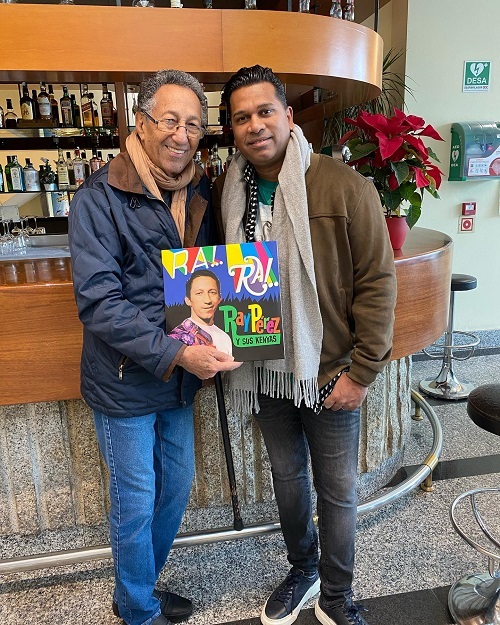
Ray Perez y Dustin Hogg

By seventeen, he had mastered the guitar, the cuatro, and the piano. Following his father’s passing, he balanced work and academics before ultimately deciding to commit his life entirely to his musical passion.

Formative Years and First Steps

Between 1962 and 1965, Ray studied at the Maracaibo Conservatory. His recording debut came via RCA Víctor under the artistic direction of Aldemaro Romero, recording the track “Marcianita” with the Trío Cristal.

After stints with the Trio Hambay and the group Los Bobos del Twist, he officially dove into Caribbean rhythms in 1965 with the creation of Ray Pérez y Su Charanga in the Zulian capital.

The Golden Era: Los Dementes, Los Kenya, and Los Calvos

Throughout his vast career, Ray launched three pivotal projects that secured his place in the Hall of Fame:

  1. Los Dementes (1965): Their debut, Alerta Mundo, Llegaron Los Locos / The Crazy Men (1966), signaled the start of a new era. Under this moniker, he recorded nearly 25 albums for labels like Velvet, Fania, and his own imprint, Pyraphon Records, founded in 1967.
  2. Los Kenya: Alongside the legendary voices of Carlos Yanes “Calavén” and Carlín Rodríguez, Ray innovated the sound by replacing traditional timbales with a full drum set. This project produced iconic albums like Ronda del Guaguancó, Rai Rai, and Nuevo Día.
  3. Los Calvos: A bold experiment, again featuring “Calavén,” which resulted in two essential productions for RCA Víctor: Estos son los Calvos and Los Calvos… y qué Calvos.
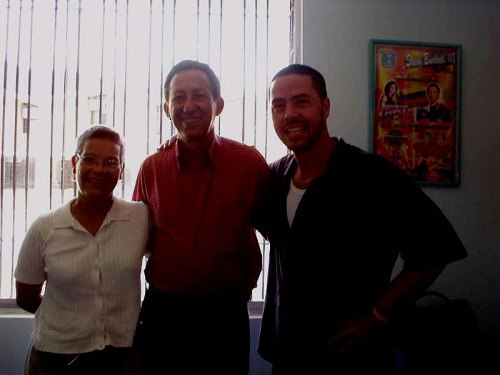
  4. La periodista y crítica musical venezolana Lili Rodríguez, el músico Ray Pérez y Roberto Ernesto Gyemant
    La periodista y crítica musical venezolana Lili Rodríguez, el músico Ray Pérez y Roberto Ernesto Gyemant

The New York Chapters and The Return

In 1969, Ray moved to New York City. There, he played piano for Francisco Ángel Bastar “Kako,” collaborated with Rafael Cortijo and Pedro “Rudy” Calzado’s Charanga, and arranged for the “King of Boogaloo,” Pete Rodríguez, composing hits like “Bossa Triste” and “Dame Felicidad.”

Upon returning to Venezuela in 1971, he founded Ray Pérez y su Orquesta, releasing a string of hits such as Aquí estoy de nuevo, Perucho y el loco Ray, and Yo soy el Rey de la Salsa. In 1974, he struck gold again with Grupo Casabe, recording three albums under the CBS label.

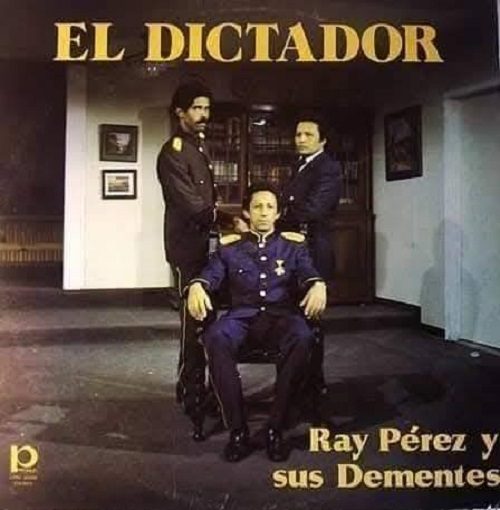
Ray Pérez Y Sus Dementes El Dictador 1981

An Everlasting Legacy

Ray’s prolific career includes collaborations with immortal voices like Perucho Torcat, Nano Grant, Teo Hernández, and Nelson Navas. He has shared the stage with titans such as “El Pavo” Frank Hernández, Alfredo Padilla, Alberto Naranjo, and César Monge.

From his massive repertoire, we remember the anthems of the barrios:

  • “No salgas de tu barrio”
  • “Emae Mae”
  • “Pa’ l 23”
  • “Así mueren los valientes”
  • “Guaguancó en New York”
  • “La montaña”


Colaboración: Fotografías de ©Roberto Ernesto Gyemant

 Read Also: The Conjunto Bailatino “La Resistencia Salsera” again “Antes los ojos del Mundo” and here, “No hay quinto malo”

  • « Go to Previous Page
  • Page 1
  • Interim pages omitted …
  • Page 3
  • Page 4
  • Page 5
  • Page 6
  • Page 7
  • Interim pages omitted …
  • Page 55
  • Go to Next Page »

International Salsa Magazine (ISM) is a monthly publication about Salsa activities around the world, that has been publishing since 2007. It is a world network of volunteers coordinated by ISM Magazine. We are working to strengthen all the events by working together.