• Skip to primary navigation
  • Skip to main content

International Salsa Magazine

  • HOME
  • Previous editions
    • 2026
      • ISM / August 2026
      • ISM / July 2026
      • ISM / June 2026
      • ISM / May 2026
      • ISM / April 2026
      • ISM / March 2026
      • ISM / February 2026
      • ISM / January 2026
    • 2025
      • ISM / December 2025
      • ISM / November 2025
      • ISM / October 2025
      • ISM / September 2025
      • ISM / August 2025
      • ISM / July 2025
      • ISM / June 2025
      • ISM / May2025
      • ISM / April 2025
      • ISM / March 2025
      • ISM / February 2025
      • ISM / January 2025
    • 2024
      • ISM / December 2024
      • ISM / November 2024
      • ISM / October 2024
      • ISM / September 2024
      • ISM / August 2024
      • ISM / July 2024
      • ISM / June 2024
      • ISM / May 2024
      • ISM / April 2024
      • ISM / March 2024
      • ISM / February 2024
      • ISM / January 2024
    • 2023
      • ISM / December 2023
      • ISM / November 2023
      • ISM / October 2023
      • ISM – September 2023
      • ISM – August 2023
      • ISM July 2023
      • ISM Edition June 2023
      • ISM – May 2023
      • ISM April 2023
      • ISM March 2023
      • ISM February 2023
      • ISM January 2023
    • 2022
      • ISM December 2022
      • ISM November 2022
      • ISM October 2022
      • ISM September 2022
      • ISM August 2022
      • ISM July 2022
      • ISM June 2022
      • ISM May 2022
      • ISM February 2022
      • ISM January 2022
    • 2021
      • ISM December 2021
      • ISM November 2021
      • ISM October – 2021
      • ISM September 2021
      • ISM August 2021
      • ISM July 2021
      • ISM May 2021
      • ISM April 2021
      • ISM June 2021
      • ISM March 2021
      • ISM February 2021
      • ISM January 2021
    • 2020
      • ISM December 2020
      • ISM November 2020
      • ISM October 2020
      • ISM September 2020
      • ISM August 2020
      • ISM July 2020
      • ISM June 2020
      • ISM May 2020
      • ISM April 2020
      • ISM March 2020
      • ISM February 2020
      • ISM January 2020
    • 2019
      • ISM December 2019
      • ISM November 2019
      • ISM October 2019
      • ISM Septembre 2019
      • ISM August 2019
      • ISM July 2019
      • ISM June 2019
      • ISM May 2019
      • ISM April 2019
      • ISM March 2019
      • ISM February 2019
      • ISM January 2019
    • 2018
      • ISM December 2018
      • ISM November 2018
      • ISM October 2018
      • ISM September 2018
      • ISM August 2018
      • ISM July 2018
      • ISM June 2018
      • ISM May 2018
      • ISM April 2018
      • ISM March 2018
      • ISM February 2018
      • ISM January 2018
    • 2017
      • ISM December 2017
      • ISM November 2017
      • ISM October 2017
      • ISM September 2017
      • ISM August 2017
      • ISM July 2017
      • ISM June 2017
      • ISM May 2017
      • ISM April 2017
      • ISM March 2017
      • ISM February 2017
      • ISM January 2017
    • 2016
      • ISM December 2016
      • ISM November 2016
      • ISM October 2016
      • ISM September 2016
  • Spanish
  • Download Salsa App
    • Android
    • Apple

Search Results for: Puerto+Rico

De Tierra Caliente founder Bronson Tennis talks about his career and band

There have been many American musicians who have fallen to the charms of Latin music, which is a practically inexhaustible source of genres allowing them to experiment with in many ways. One of them is Bronson Tennis, with whom we have been fortunate to talk about his interesting career and current musical group, De Tierra Caliente.

Bronson playing
De Tierra Caliente founder Bronson Tennis playing the guitar

Bronson’s beginnings in music

Bronson Tennis began to put his eyes on music when he was just a child, when he was very attracted to the 1990s alternative rock movement in the United States. When he was only 11 years old, his parents bought him his first bass guitar and later he also wanted to learn to play the guitar and sing.

In family matters, Bronson and his three brothers are musicians and several of his cousins and uncles have also been musicians. In addition, his mother was a fine artist and his grandmother was an art teacher.

Both in school and church, the boy always chased opportunities to sing and show his vocal skills to anyone who wanted to hear. He also took advantage of all these spaces to learn as much as he could about music until he was old enough to exercise it professionally. 

Today, his main instrument is the guitar, although he also plays the cavaquinho (an instrument of Portuguese origin which is widely used in samba) and the roncoco, which is an adaptation of the Andean charango that he uses to play salsa and Cuban son.

Bronson posing for the camera
Bronson Tennis playing the guitar while posing for the camera

Professional debut in music

Bronson also told us that he began his career path as a bassist and chorister in several musical groups in the city of San Diego between 2006 and 2009. He then spent some time in Philadelphia, where he also played with other bands from a variety of genres.

It is interesting that he lived in Buenos Aires, Argentina, where he also worked as a bassist and singer in some bands. In fact, in that same country, he helped form a Caribbean funk band in which he learned a lot about these genres so foreign to what he played in his childhood and youth. He stayed about four years in Argentina, specifically between 2009 and 2012, until he moved to Brazil for about six months to continue learning more and more about Latin music, but it was not his last stop in South America, as he was also in Colombia for a while more.

Following this, he returned to Philadelphia and decided to form his own orchestra which he named De Tierra Caliente.

Prior to De Tierra Caliente

When Bronson returned to Philadelphia, he had the chance to meet some musicians from the Puerto Rican music scene in that city and saw that they had similar outlooks on music, so they got back in the saddle to prepare a formal project amongst themselves.

The artist assures that it was in Argentina where he learned what it takes to move forward with his band. ”Argentines are people who do everything with strength and confidence, whether in music or in soccer. No matter who or what they have to face, as they take on all the challenges with confidence and that is something we could all learn from Argentina.” Bronson said of his stay in that country.

Bronson and his band
(L to R) Papo Buda, Bronson Tennis, Eubie Nieves, Andy Meyer and Steve Cochran

In Brazil, he studied percussion and learned Portuguese, while Colombia taught him to play salsa, champeta, vallenato and many other genres. In short, each country he has visited gave him tools to facilitate his learning in everything about Latin music in various areas.

Precisely thanks to all this acquired knowledge is that Bronson finally felt able to form his own band in 2014 in union with fellow musicians who understood what he wanted to carry out.

How De Tierra Caliente started

Upon his return to the United States, Bronson was very clear that he wanted to incorporate all those elements learned in South America and the Caribbean, but giving them his own touch. It was then that he met conguero Papo Buda, with whom he agreed on much and began the recruiting process for the rest of the musicians.

After that, Bronson and Papo could add more artists to the group, resulting in a fairly consistent group over time. Since its founding, very few musicians have left the band and Bronson and those who remain have an excellent relationship with all of them despite no longer being band mates.

Among his greatest inspirations, Bronson mentioned many artists and groups of various nationalities and genres such as El Gran Combo de Puerto Rico, the Brazilian composer and singer Paulinho da Viola, the group Caribe Funk and many others.
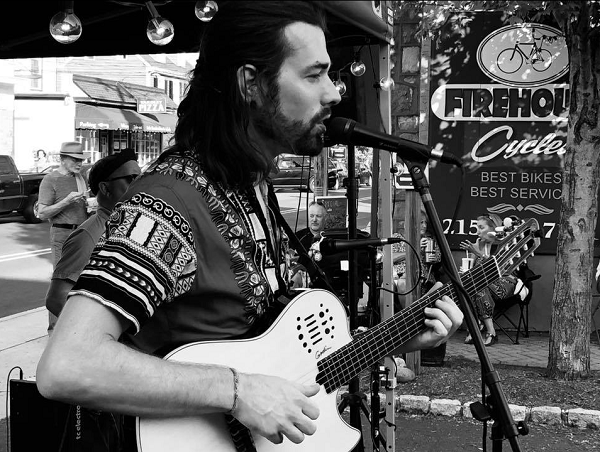
De Tierra Caliente playing
De Tierra Caliente playing live in Yardley

Read also: Latin jazz and mambo trumpeter Jonathan Powell and his great collaborations

Eduardo Herrera

Latin America / Puerto Rico / Puerto Rico

Puerto Rican singer Eduardo Herrera presents us with his new album “Libre” which will have 10 songs, one of them has the same title as the album, which aroused our curiosity. He mentions that his song “Libre” deals with a false love that destroys and manipulates at his convenience, his process of liberation from all that is bad or toxic in that love and, above all, the search for a force to have the courage to face everything and so on. being able to value yourself as a person and being able to look at yourself in the mirror.

Eduardo Herrera tells us that “it is not just a song, it is a way to get out of a prison, of the emotional and physical abuse that you can receive from a person who supposedly loves you… for me it has a lot of meaning, I sing it with great emotion because I lived it I got over it and now I’m free.”

The origin of the album was thanks not only to the singer but also to the good musicians who accompanied him, designed and finished him, among them the arrangers Richard Marcell (piano and bass) and Adán Pérez (piano), Tito de Gracia on percussion, Juan Carlos Cardona (Juako) with Trombones, Jesús Alonzo with Trumpet, Ángel Torres with Baritone.

Eduardo Herrera
Eduardo Herrera

Eduardo Herrera says that since he was a child he has sung in different choirs as he mentioned in the previous report, but from the age of 11 he fell in love with tropical music thanks to Jerry Rivera with the song “Casi un Hechizo” becoming addicted or passionate about the sound of the trumpets the congas and the romantic songs. After the separation of his partner, he began to write his own songs, and later he met a first-class musician named Adán Pérez, a great pianist and arranger; together they met to write and create the current themes of the discography.

He (Eduardo Herrera) also told us that he was in a choir called the Housing Authority Youth Choir, where he had many pleasant experiences and the opportunity to sing at Radio City Music Hall with the British Rock Symphony. In 2016 he produced an album of sacred music and had the honor of meeting Richard Marcell, winner of several Grammys as an arranger and musician, in that production he made 5 excellent songs.

The discography “Libre” has themes that speak of pain, love and the hope of a new beginning for the artist, that is, it is a production with a great variety of lyrics, he confesses that each song is its own story, it has its own identity and hopes that the salsa audience enjoys his work to the fullest since he left his whole being in that production.

In order for the professional life of an artist to be recognized, the greatest obstacle must be avoided, which is oneself, limiting oneself, being afraid; always says: to all my brothers or sisters who are starting something or have a goal in life, don’t give up, fight for your dreams

For more information:

  • Phone: +1 787 399 5064
  • Email: [email protected] / [email protected]
  • Facebook: https://www.facebook.com/eduardoherrerasalsa/
  • Instagram: https://www.instagram.com/eduardoherrerasalsa/
  • YouTube: https://www.youtube.com/user/eduardoherreramusic

Star of the Month: Orlando Watussi. The Latin king in Italy!

Europe / Italy / Milan

In International Salsa Magazine, we want to create a network of people who want to inspire and share music around the world. This month we have the pleasure to present you the Venezuelan musician: Orlando Watussi!

He is a composer, musician, sonero and salsero currently living at Milan, Italy. His career started in 1969 in a band called “Los Exitantes” with Alexis Monterola. Then, in 1971, Watussi joined the group “Principe y su sexteto”. Years later he was the founder and director of the group, El Satelite, with Federico and su Combo Latino, until closed his career in Venezuela with a brief stay in the group “Salsa Mayor”.

Orlando Watussi
Orlando Watussi

The most important years in his music career were between Puerto Rico and New York where he got into Latin Jazz and Salsa. His first international music work was with Don Rafael Cortijo in 1976, work that took him to Puerto Rico in order to join the Combo de Cortijo.

In 1986 had the opportunity to start his solo career, creating a big name in the salsa movement with the hit “Las Calaveras Blancas”, with the production of Jose Mangual Jr. Through all his music career, Watussi has collaborates with artists like Johnny Sedes, Alfredo Naranjo, Cheo Navarro and many others. His is currently living and working in Milan, Italy, but also giving concerts in Germany, Spain, France and in his natal country: Venezuela.

Discography: Echando Pa ‘Lante Orlando Watussi

  • Cuidala Bien
  • Son Caleño (Aldemar Barona / Orlando Watussi)
  • La Verdad
  • Si Te Tuviera
  • Barrios
  • Malunga
Orlando Watussi - Como Nunca
Orlando Watussi – Como Nunca

Latin America / January 2025

Fundación Cultural Madera 15 donde la Hermandad, el Deporte, la Danza y la Salsa van de la manoEnrique “Culebra” Iriarte, master of the piano and musical compositionLarry Harlow and Ismael Miranda: beginning of the so-called “Salsa Arseniana” in honor of the music of Arsenio Rodriguez, the creator of Son Montuno and “King of Guaguanco”.Calibrated maracas

DIRECTORY OF NIGHTCLUBS

Argentina flag
ARGENTINA

Aruba circular flag
ARUBA

Belize circular flag
BELIZE

Bolivia circular flag
BOLIVIA

Brazil flag
BRAZIL

Chile circular flag
CHILE

Colombia
COLOMBIA

Costa Rica circular flag
COSTA RICA

Cuba circular flag
CUBA

Dominican Republic
DOMINICAN REPUBLIC

Ecuador circular flag
ECUADOR

Guatenala circular flag
GUATEMALA

Mexico Circular flag
MEXICO

Panama circular flag
PANAMA

Peru circular flag
PERU

Puerto Rico circular flag
PUERTO RICO

Venezuela circular flag
VENEZUELA

Larry Harlow and Ismael Miranda: beginning of the so-called “Salsa Arseniana” in honor of the music of Arsenio Rodriguez, the creator of Son Montuno and “King of Guaguanco”

Extracted from the book called: “El origen y la creación de la Salsa”; creator: Mon Rivera, promoter: Al Santiago.

For sale on Amazon kdp, by clicking on the following link:

With which is attached a complete summary of the musical work of Larry Harlow with Ismael Miranda from its creation in 1966 to 71.

At the end is the original song of Arsenio: “Oiga mi Guaguanco”, with the fabulous musical arrangement of Harlow himself in “Salsa Clasica”, with the exquisite singing of the “Niño Bonito de Puerto Rico” Ismael Miranda.

Larry Harlow and Ismael Miranda: 1966 – 1971 with trombones.

Julio Cesar Galindo Alarcón Diplomático de Peru Ministro (R), Historiador Musical. Autor de Libro sobre Creacion de la Salsa

Lawrence Ira Khan, better known in the music scene as Larry Harlow, affectionately known as “The Wonderful Jew”, was born in Brooklyn, New York, on March 20, 1939 and died in New York on August 20, 2021, American musician, orchestra conductor, pianist, composer, musical arranger, producer, creator of the so-called “Latin Opera”, in 73 he was one of the most important disseminators of Afro-Cuban Jazz, “Arseniana” Salsa and Classical Salsa, confirming at the highest level the use of the trombone and the USA instrumental technique, corroborated as the two most important characteristics that identify the new American Musical Movement.

The beginning of Larry’s musical work must be analyzed from his return from Cuba in 1959, after having traveled to the island in the mid 50’s, to know and study Cuban music in its different rhythms, but because of the Revolution he had to return to New York; finding the boom and enthusiasm produced by the Pachanga spread by Charlie Palmieri, Pacheco, Quijano, Orlando Marin, Mon, Eddie Palmieri, Ray Barretto, Richie, among others.

At the end of 65 he forms his orchestra with trombones and application of the instrumental technique of Jazz; he signs a contract with the “Fania” label and plans to record his first album.

In 1966 he recorded his first album called “Heavy Smokin” with Felo Brito’s vocals; L.P. little known, in which stand out: “Tu Tu Ratan”, “Maria la O”, “Rica Combinación”, “Mi Guaguancó”, “Orchestra Harlow” and “Adios Mamá”.

In the same year he recorded his second album called “Gettin’ Off” or “Bajándote”, sung by Ramón Quian: “Monguito” el Unico, an excellent full-length album that was a great success.

Some of the highlights are “Bajandote”, “Guarachita”, sung by Vickie; “Tu no lo creas”, “Meta y Guaguancó”, “Coco May May” and “Cienfuegos”.

In ’66, a young teenager appears singing in Andy Harlow y su Sexteto’s group.

Andy gave him to his friend Joey Pastrana at the beginning of 67 to record the album “Let’s Ball”, in which the young singer Ismael Miranda had his first hit with the song “Rumbón Melón”.

Larry Harlow who lacked a good singer, offered the job to Ismael, who without hesitation accepted it immediately; and debuted with Larry on his third album in 67 called “El Exigente” and thus began the WONDERFUL DUPLE OF LARRY HARLOW AND ISMAEL MIRANDA, who together formed a sensational duet, amazing and impressive, in the History of Classical Salsa.

In “El Exigente” with the debut of the “Niño Bonito de Puerto Rico”, the songs “El Exigente”, “Las luces”, “Rumba me llaman” and “El Mejor” stand out.  The following year, in 1968, he recorded the album, “Orchestra Harlow presenta a Ismael Miranda”.  With this unsurpassable combination, the Classic, Brava and Hard Niuyorquina Salsa begins in the unique style of the “Judío Maravilloso” with the singing of the fabulous Ismael Miranda, one of the most attractive, fine and sharp voices in the history of Salsa, in which stand out the songs: “La Contra- ria”, “Jaguey”, “Yo me voy”, “Lamento Cubano”, “Bobby’s Boo-galoo, ‘Rumba a la vida’ and ‘Mi Guajira si’.

In 1969 he recorded his fifth album and third with Ismael Miranda, called “Mi Mono y Yo”, in which he continues the teaching of Classical Salsa with Afro-Cuban Jazz fusion, in which almost all the songs stand out: “El Malecón”, “Voy para la luna”, “Amorcito Ven”, “Jovenes del Muelle”, “Ven Rumbero Ven”, “Para donde tu vas”, “Mi Madre” and “Traigo Guajira”.  With these last two albums, Larry with Ismael had achieved the expected success; and they had become the favorite orchestra in all the Salsa Concerts that had already become customary in the weekends of the Big Apple.   In ’69, the author witnessed for a month these Salsa Dance Concerts that were usually given in the halls of the Hotels of the New York districts.

DIPLOMATICO DE PERU, MINISTRO (R); HISTORIADOR MUSICAL; AUTOR DE LIBRO SOBRE CREACION DE LA SALSA.

In 1970, Larry introduces the electric piano in his orchestral format; this motivates him to title his album of the same year: “Electric Harlow”.  With the recording of this album really begins the so-called “Salsa Arseniana” of Larry, coinciding with the last year of life of the great Cuban musician Arsenio Rodriguez, the father of Son Montuno and “King of Guaguancó”, Legend and undisputed genius of the development of Cuban music; but, however, having been the most important Cuban musician of the twentieth century, for his contribution of having created the Son Montuno and the modernization of Guaguancó, has NOTHING TO DO WITH THE CREATION OF SALSA:  BUT YES; FOR HIS VALUABLE CONTRIBUTION, WITH THE DEVELOPMENT OF THE MOVEMENT CREATED BY MON.

In “Electric Harlow” stand out: “La Revolution”, the wonderful Salsa arrangement of “Oiga mi Guaguancó”, by Arsenio Rodríguez, “Guasasa”, “Con Dulzura”, “Donde va Chichi” and “Tu Cosita Mami”. In 71 he recorded his album “Abran Paso”, and here we have to refer to Ismael Miranda as a singer-songwriter; because if from his first album recorded with Larry: “El Exigente”; he had already shown his composer’s fiber, having composed some songs together with Harlow; in this 71 album:  “Abran Paso”, he confirms and ratifies his conditions as a singer-songwriter, composing five themes of his authorship, successfully distinguishing the theme of the same name of the album: ‘Abran Paso’, ‘Donde lle- vas el Son’, ‘Abandonada fue’, ‘Oigan bien mi Guaguancó’ and ‘Dolor y Amor’.  Other highlights include: “Se casa la Rumba” and ‘Vengo Virao’, by Tite Curet Alonso.

Orchestra Harlow Vocal Ismael Miranda – Electric Harlow

Having died the penultimate day of 70 Arsenio Rodriguez, Larry Harlow, a few months later had the idea of offering him a posthumous tribute, which materialized with the recording in 71 of an album “Homenaje Póstumo”, which was called “Tribute to Arsenio Rodriguez”, including four hit songs by Arsenio:  “Tumba y Bongo”, ‘No me llores’, ‘Sueltala’ and ‘El Terror’; ‘Arsenio’, Harlow’s theme with Ismael Miranda and ‘Saludos a todos los Barrios’, by Lázaro Prieto.  The Harlow Orchestra in the last two albums was integrated with:  Conductor and piano: Larry Harlow; Singer: Ismael Miranda; Trumpets: Larry Spencer and Ralph Castrello; Trombones:  Lewis Khan, Leopoldo Pineda and Sam Burtis; Bass: Lydio Fuentes; Congas: Frankie Rodríguez; Bongó: Manny Oquendo; Timbal: Phil Newsum; and Tres y Cuatro: Yomo Toro, in “Abran Paso”.

Finally, Larry Harlow participated as pianist in “Red Garter”; and also as pianist and producer in “Chee-tah”.  Ismael Miranda did it as a singer in the two concerts of the “Fania All Stars” in ’68 and ’71.

Julio Cesar Galindo Alarcón

Diplomat of Peru Minister (R), Musical Historian. Author of a book on the Creation of Salsa.

Also Read: Larry Harlow ”El Judío de la Salsa”: innovative and irreverent

  • « Go to Previous Page
  • Page 1
  • Interim pages omitted …
  • Page 34
  • Page 35
  • Page 36
  • Page 37
  • Page 38
  • Interim pages omitted …
  • Page 105
  • Go to Next Page »

International Salsa Magazine (ISM) is a monthly publication covering salsa activities around the world and has been publishing since 2007. It is a worldwide network of volunteers coordinated by ISM Magazine. Together, we work to strengthen salsa events around the world.