• Skip to primary navigation
  • Skip to main content

International Salsa Magazine

  • HOME
  • Previous editions
    • 2026
      • ISM / May 2026
      • ISM / April 2026
      • ISM / March 2026
      • ISM / February 2026
      • ISM / January 2026
    • 2025
      • ISM / December 2025
      • ISM / November 2025
      • ISM / October 2025
      • ISM / September 2025
      • ISM / August 2025
      • ISM / July 2025
      • ISM / June 2025
      • ISM / May2025
      • ISM / April 2025
      • ISM / March 2025
      • ISM / February 2025
      • ISM / January 2025
    • 2024
      • ISM / December 2024
      • ISM / November 2024
      • ISM / October 2024
      • ISM / September 2024
      • ISM / August 2024
      • ISM / July 2024
      • ISM / June 2024
      • ISM / May 2024
      • ISM / April 2024
      • ISM / March 2024
      • ISM / February 2024
      • ISM / January 2024
    • 2023
      • ISM / December 2023
      • ISM / November 2023
      • ISM / October 2023
      • ISM – September 2023
      • ISM – August 2023
      • ISM July 2023
      • ISM Edition June 2023
      • ISM – May 2023
      • ISM April 2023
      • ISM March 2023
      • ISM February 2023
      • ISM January 2023
    • 2022
      • ISM December 2022
      • ISM November 2022
      • ISM October 2022
      • ISM September 2022
      • ISM August 2022
      • ISM July 2022
      • ISM June 2022
      • ISM May 2022
      • ISM February 2022
      • ISM January 2022
    • 2021
      • ISM December 2021
      • ISM November 2021
      • ISM October – 2021
      • ISM September 2021
      • ISM August 2021
      • ISM July 2021
      • ISM May 2021
      • ISM April 2021
      • ISM June 2021
      • ISM March 2021
      • ISM February 2021
      • ISM January 2021
    • 2020
      • ISM December 2020
      • ISM November 2020
      • ISM October 2020
      • ISM September 2020
      • ISM August 2020
      • ISM July 2020
      • ISM June 2020
      • ISM May 2020
      • ISM April 2020
      • ISM March 2020
      • ISM February 2020
      • ISM January 2020
    • 2019
      • ISM December 2019
      • ISM November 2019
      • ISM October 2019
      • ISM Septembre 2019
      • ISM August 2019
      • ISM July 2019
      • ISM June 2019
    • 2016
      • ISM December 2016
  • Spanish
  • Download Salsa App
    • Android
    • Apple

Search Results for: Salsa Music

The Flavor of Barrio La-33 and the Urban Salsa Revolution

The Birth of Swing in Chilly Bogotá

Bogotá, a city nestled more than 8,600 feet above sea level, cold and prone to drizzle, did not seem in the early 2000s like the most obvious birthplace for one of the 21st century’s most influential salsa orchestras.

El Sabor del Barrio La-33 y la Revolución de la Salsa Urbana

However, in 2001, in the heart of the Teusaquillo neighborhood, La-33 was born. Breaking the stereotype that salsa only flourishes on warm coasts, this band proved that Caribbean flavor (sabor) also runs through the veins of the Colombian capital.

Founded by brothers Sergio and Santiago Mejía (musical director/bassist and keyboardist, respectively), the orchestra took its name from the street where they held their first rehearsals: 33rd Street (Calle 33).

From its inception, the project had a clear identity: to rescue the raw, urban, and gritty sound of 1970s salsa brava, evoking legends like Héctor Lavoe, Willie Colón, and the Fania All-Stars, while injecting it with the attitude, energy of rock, and Bogotá’s gritty street vibe. To finance their first album, the band members saved money earned from their gigs in local bars and nightclubs.

The “La Pantera Mambo” Phenomenon

La-33’s rise to international stardom was no accident, but rather the result of a brilliant recording masterstroke. In 2004, they released their self-titled debut album, La-33. The record included a track that would become their ticket to the world: “La Pantera Mambo.”

This piece a spectacular mambo-rhythm version of Henry Mancini’s cinematic classic, “The Pink Panther Theme” fused jazz, suspense, and a powerhouse horn section.

The song instantly became a radio hit and an essential anthem on dance floors from Cali to Berlin, proving that salsa was not a genre of the past, but a living language capable of reinventing Western pop culture.
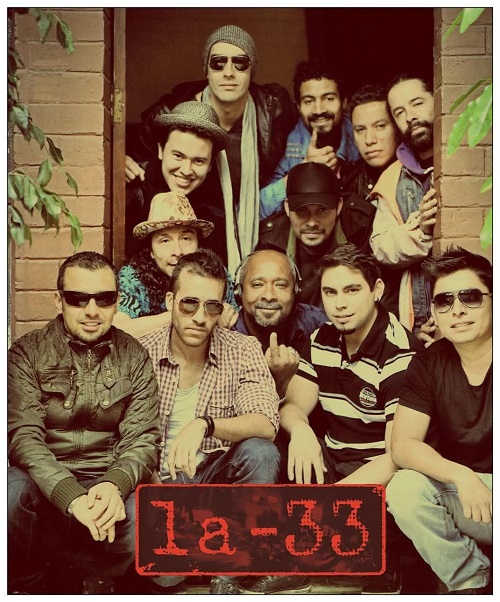
El año 2001, en el corazón del barrio Teusaquillo, nació La-33

Dynamic Evolution and Discography

Unlike the salsa romántica orchestras that dominated the commercial hit charts in the ’90s and 2000s, La-33 bet on an organic sound heavily influenced by mambo, jazz, pasodoble, and ska.Their music dispenses with excessive synthesizers, prioritizing instead the raw power of percussion, the brilliance of the horns, and lyrics that narrate daily life, urban chaos, and bohemian nightlife.

Throughout their career, they have built an impeccable musical catalog across several studio albums:

  • La-33 (2004): The debut album featuring “La Pantera Mambo” and “Qué Rico Boogaloo.”
  • Gózalo (2007): Nominated for a Latin Grammy, it solidified their success with tracks like “Bye-Bye” and “Soledad.”
  • Ten Cuidado (2009): A more mature record exploring fusions with ska and jazz.
  • Tumbando por ahí (2013): A tribute to the band’s street-smart, party-loving spirit.
  • Caliente (2016): Their fifth studio production, released to celebrate fifteen years on the scene.
  • Si tú quieres salsa (2019): A return to their roots with a powerful, mature, and refreshed sound.

Global Ambassadors of Colombian Salsa

What began as a group of friends rehearsing in a Bogotá house transformed into a global phenomenon. La-33 has toured all five continents, performing at prestigious international events such as the Sziget Festival in Budapest, the Cali Fair (Feria de Cali), and various jazz and world music festivals across Europe, Asia, Africa, and the Americas.

Their ability to get audiences who don’t even speak Spanish dancing is a testament to the universal power of their horn section and rhythmic core.
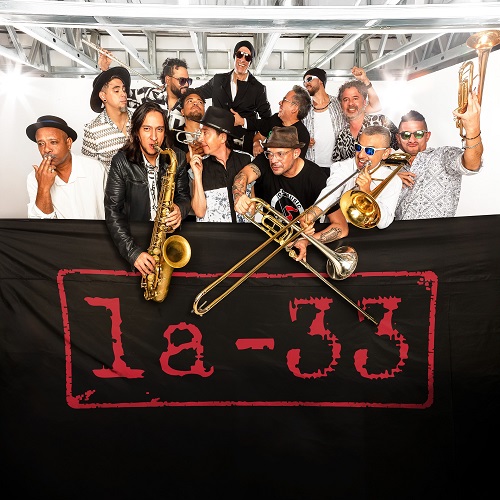
La 33 El nacimiento del swing en la fría Bogotá

Today, La-33 is not just an orchestra; it is an institution of Colombian alternative music. They proved that salsa can be played wearing leather jackets and a punk attitude while maintaining absolute respect for Afro-Latin roots making it clear that to have swing, all you really need is passion.

Band Members

  • Sergio Mejía (Bandleader and electric bass)
  • Santiago Mejía (Keyboards)
  • Guillermo Celis (Vocals)
  • David Cantillo “Malpelo” (Vocals)
  • Edison Velásquez (Vocals and flute)
  • Alejandro Pérez (Congas)
  • Juan David Fernández “Palo” (Timbales)
  • Diego Sánchez (Bongos)
  • Vladimir Romero (Trombone)
  • José Miguel Vega (Trombone)
  • Adalber Gaviria (Saxophone)
  • Roland Nieto (Trumpet)
  • Javier Galavis (Sound engineer)
  • Ray Fuquén (Field producer)

 Also Read: Colombia’s legendary Grupo Niche and its founder Jairo Varela
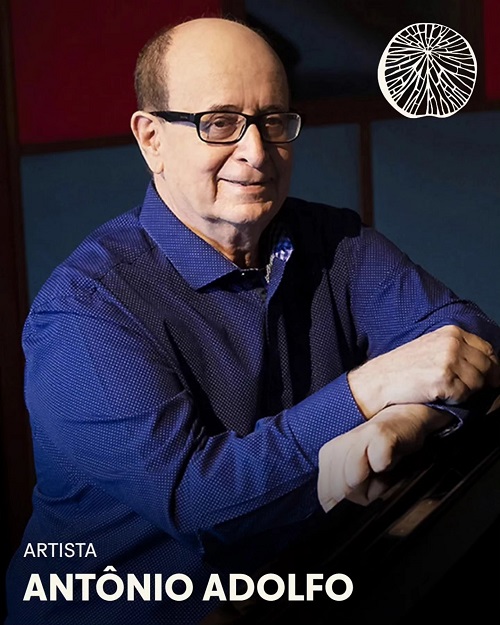
Antonio Adolfo: The Indelible Master of Brazilian Music

From Classical Cradle to the Jazz and Bossa Nova Revolution

That musical heritage is essential to understanding the greatness of Antonio Adolfo.

Being born into a home where the violin from the Rio de Janeiro Municipal Theater orchestra was part of the daily landscape shaped his sensibility from the cradle.

Although he grew up surrounded by the classical discipline of his father, his destiny lay within the keys, jazz, and the revolution of Brazilian popular music (MPB).

De la Cuna Clásica a la Revolución del Jazz y la Bossa Nova

The son of a classical violinist, Antonio Adolfo was born in the bohemian neighborhood of Santa Teresa, Rio de Janeiro, under the sign of Aquarius in 1947. At the young age of 16, the young pianist was already part of the exclusive bossa nova club brewing in the famous Beco das Garrafas alley, leading ensembles that stood at the forefront of the scene, such as Conjunto Cinco and the Samba Trio 3-D.

Shortly after, he participated in the iconic musical Pobre menina rica by Carlos Lyra and Vinicius de Moraes, beginning to make a name for himself in the industry.

Starting in 1967, by forming a creative partnership with lyricist Tibério Gaspar, Adolfo became one of the great catalysts of modern melody in Brazil, composing massive hits like “Sá Marina” and “Juliana.”

Antonio Adolfo El Maestro Imborrable de la Música Brasileña

At the same time, leading the group Brazuca, he established an electronic pop tone that was highly sophisticated for its time (with tracks like “Teletema” and “Ana Cristina”), culminating in the blistering musical highway of “BR-3″—a song that sparked great controversy and shook the core of the era’s music festivals.

A Pioneering Spirit and International Acclaim

After playing as a member of the backing band for the legendary Elis Regina on two European tours, and refining his technique in Paris with the renowned classical maestro Nadia Boulanger—in addition to studying in Brazil under masters Guerra-Peixe and Esther Scliar Antonio Adolfo was ready to take another giant leap.

In 1977, in an act of bravery and pioneering spirit, he released the album Feito em Casa (Homemade) under his own record label, Artezanal.

This was the opening kickoff for a liberating movement: the independent record industry in Brazil, triggering the rise of artistic dynamics that diverged from traditional market rules. Under this self-managed system, Adolfo recorded both original material (including children’s music that promoted free play) and foundational revisions of pianeiro classics, transforming the works of Ernesto Nazareth and Chiquinha Gonzaga for the contemporary piano.

This versatility proved that, as a performer and creator, Adolfo had achieved a rare distinction: mastering contemporary language from a place of timelessness.

Since 1985, the maestro has focused much of his energy on his music school, the Centro Musical Antonio Adolfo, while also participating in international events as an educator, without ever setting aside his stage career.

His profound work with the music of Chiquinha Gonzaga and jazz has earned him prestigious awards and nominations. Furthermore, he is the author of seven textbooks on Brazilian music published by Lumiar, a video lesson, and two books published abroad. For eight years, he proudly served as the Latin American representative for the IAJE (International Association for Jazz Education).

In recent years, Antonio Adolfo has returned to the stage more frequently, performing either in a solo piano format or with a group. From one of his performances at a U.S. university alongside his daughter, singer Carol Saboya, came an acclaimed live album released both in Brazil and abroad: Antonio Adolfo & Carol Saboya Ao Vivo / Live. This success has been followed by recording productions highly praised by international critics, such as Here and There / Aquí y Allá.

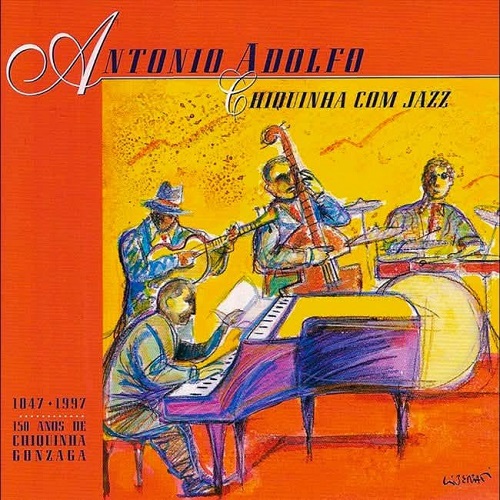
Chiquinha Com Jazz (1997)

Discographic Gem: “Chiquinha Com Jazz” (1997)

A perfect example of his genius for fusing Brazilian roots with the freedom of jazz is his 1997 album dedicated to the pioneer Chiquinha Gonzaga.

Tracklist:

Atraente

Cordão Carnavalesco

Lua Branca

Angu

Gaúcho (Corta-Jaca)

O Forrobodó

Corte Na Roça

Satan

Ismênia

Faceiro

O Abre Alas

          Personnel:

Antonio Adolfo: Piano and musical arrangements

Gabriel Vivas: Double bass

Ivan Conti: Drums

Claudio Spiewak: Acoustic guitar

Contributor:

L’Òstia Latin Jazz

Dj. Augusto Felibertt

Also Read: Carlos “Nene” Quintero comes from a family of musical prodigies

Steel pan percussionist Brad Shores shows us the best of Caribbean music in Florida

Brad Shores is an American musician whose love for tropical music has led him to undertake some truly interesting and successful projects, so we know this article will be of our readers’ liking, so they cannot miss it. 

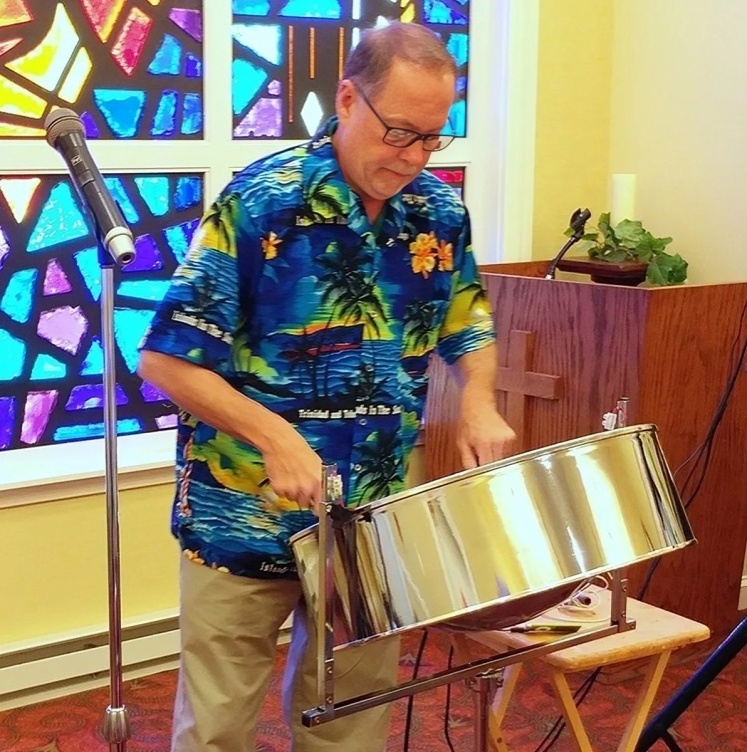
Brad at a church
Percussionist Brad Shores at a church in Newton, KS

How Brad got his start in music

Brad began his story by explaining that his parents were musicians. His mother taught music, while his father loved playing the drums and had been in various bands throughout his life, which caused the boy to be exposed to that world from the earliest age and end up falling in love with it just as his parents did. 

He tells that one day his mother used to lend him the sticks she used to play the drums and teach him to read and understand music when he was just in third grade, so from an early age, it was made easier for him to learn everything regarding music. Around the same time, he understood that music would quite possibly have a very special place in his life, since he had always enjoyed playing and loved it so much.

He was studying music theory in high school, and in college, he earned his degree in music education at Fort Hays State University in Kansas. He focused primarily on drums and percussion, but thanks to all the professional experience he has gained over the years, he plays almost all instruments competently. He also had the opportunity to teach others to play from very early in his own bands and now in a little more formal way, so he had to learn to play everything up to a certain level.

Previous experience to his current group Tropical Shores Steel Drum Band

Before starting his own project, Brad had the opportunity to play with groups in all genres and sizes, so he has a not inconsiderable background.

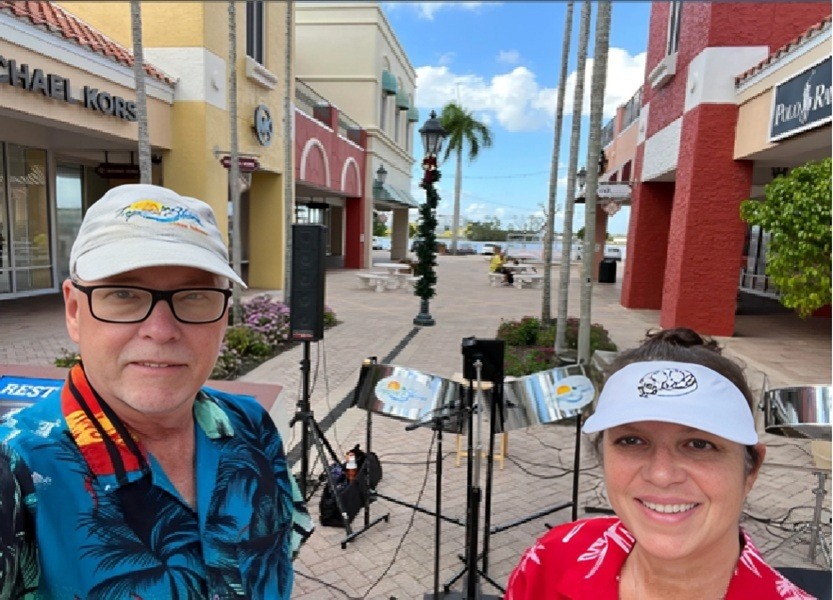
Brad and Erica
Brad and Erica at Moxi Junction

He remembers a jazz trio he was able to be part of in high school, which could be considered one of his first significant professional experiences, but that was just the beginning. He also remembers being part of many projects in college, such as an opportunity in which he played for some Germans and another in which he was in a rock band, showing that the artist was not limited to anything and was perfectly capable of crossing into all genres and adapting to them as it suited him.

Once he moved to Phoenix, he also played with many other bands and continued to experiment until he finally tried steel drums, which is primary instrument to this day and for which he is best known.

Contact with tropical and Latin music 

Being already in Phoenix, Brad told us that he was in a band where there was a steel pan percussionist who played a kind of music Brad had never heard before in his life. It was Caribbean music that had really caught Brad’s attention, and he definitely wanted to learn to play it as skillfully as that guy, so he listened carefully to every note that came from his instrument. With his lack of training in those genres, it was a bit difficult for him, but he finally succeeded and got very good.

In the case of Erica, his current wife, her mother played the organ at a church in Chicago, where she grew up. Before he met Brad, she was a salsa, merengue, and cha-cha-cha dancer, so she had a very different background from her husband’s with regard to rhythms. She also had a master’s degree in music, so her education in this discipline was wide, even if she had not had plenty of practice yet. It is worth mentioning that she is his second wife, since Linda, his first wife and mother of his three children, died from lung cancer in 2014.

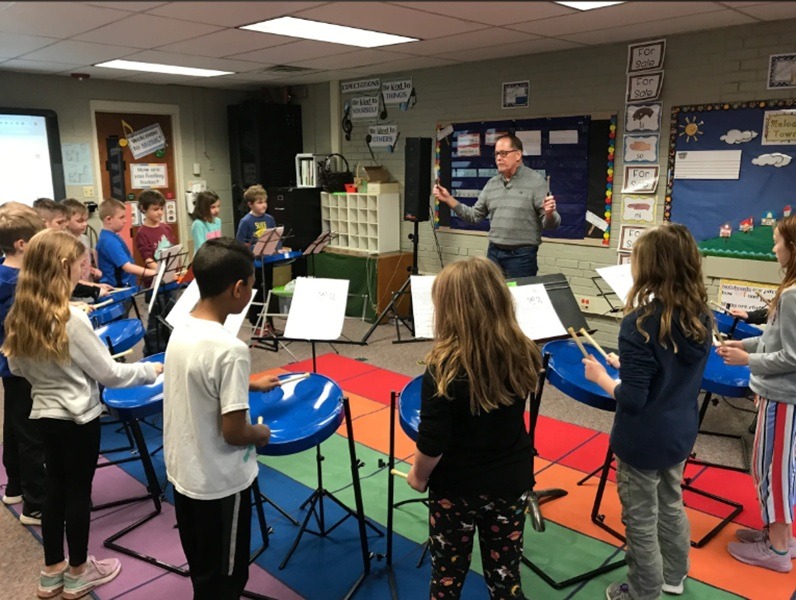
Brad teaching
Brad teaching mini pans to grade school students

Tropical Shores Steel Drum Band 

A handicap Brad and all the musicians of the day had to face was the impossibility of finding and repeating a lot of music, since there was still no internet. Therefore, he could only pay attention to what their peers and colleagues were doing at the time to be able to imitate them and learn how to play the steel drums.

When Brad and Linda moved from Phoenix to Kansas, they had to start looking for local musicians who could suit the project they were making and finding places to play, since many people in Kansas were not used to hearing the type of music they played. For this reason, they would start their sets by playing other genres to which the audience was accustomed to, so that they would be more open to their tropical songs.

Tropical Shores Steel Drums and Teaching

In addition to playing, the Tropical Shores Steel Drums Band has a very important component: teaching. Brad decided it was not enough just to learn to play steel drums and many other instruments, but rather had to share his knowledge with others, especially children. They love music and enjoy the challenge of learning to play an instrument they may never have heard before.

He has also taught at the university level. After having taught for a time at Collier County Schools in Naples, he accepted the assistant band director position at Ave Maria University in Florida, where he currently resides with his family. 

Read also: Ray Rodríguez and The Colao Band promote Latin music in San Antonio, Texas

Gafieira Rio Miami brings the best of Brazilian music to Miami

In this space, we have interviewed artists and groups from different countries of Latin America, but there have been a few times we had the opportunity to connect with talent from Brazil and not only that. They also sing and play typical music of their country, which makes them even more interesting, so we could not fail to speak with Diogo Brown and Isabelle Duarte.

Both have been very kind and shared with us some of their most significant experiences as Brazilian musicians in the United States and how that has shaped their way of making music.

Diogo playing live
Diogo Brown from Gafieira Rio Miami playing live

How Diogo and Isabelle got into music

The first to take the floor was Isabelle, who informed us that she started singing at a church in her home country, Brazil, when she was just six years old. Over time, she also got to sing at weddings, quinceañeras, local festivals, and events of all kinds. 

About 10 years ago, she fell in love and married an American man, with whom she moved to the United States, where she met Diogo, a compatriot of hers who was born and raised in a city far from her own. However, their “Brazilianness” and love for music brought them together in the project they now share with other musicians, Gafieira Rio Miami.

In Diogo’s case, his passion for music awoke at 15, the age at which he knew he wanted to be a professional musician. His mother convinced him to enroll in a music school and an English academy, as she suspected that English would be extremely useful for his future career and this was indeed the case. His arrival to the United States was very similar to Isabelle’s, as he also met an American woman online; they eventually fell in love and moved there together. He attended a screening of a Brazilian film in which he had appeared, where he met her and finally live their relationship in person. That was over 20 years ago.

Since then, Diogo has worked with countless artists and companies such as Sony Music, Univision, and Warner. Among the stars he has collaborated with are Gloria Estefan, Ricky Martin, Lara Pausini, and many others.

Isabelle singing live
Isabelle Duarte singing at the Lincoln Cemter

How was the connection with Spanish and Latin Music

Something interesting that Diogo tells us is that, in his early years as a musician in Brazil, he spent listening to Latin music, and some of his favorite artists were Buena Vista Social Club, Cachao, Jimmy Bosch, and many others of this kind. By his own admission, this is uncommon for a Brazilian resident in Brazil, who usually only listens to music of their own country. Both he and Isabelle agree that, in Brazil, very little music in Spanish is consumed, among other factors, due to the language barrier. 

Isa tells us that her connection to Hispanic music began to form in the United States, and her husband contributed a lot to that, since he is of Hispanic origen. In addition, they settled in Miami, where there is a mix of cultures of each country, so she started to be exposed to genres like salsa, cumbia, merengue, and other rhythms that are not usually heard in Brazil. For her, Gafieira Rio Miami is a golden opportunity to demonstrate that Brazil is not separate from the rest of the Americas.

In addition, he noted that globalization and major musical phenomena in Portuguese and Spanish have managed to break that language barrier over the years.

Gafieira Rio Miami

Gafieira Rio Miami was born from a much smaller idea that began with just seven musicians. As the project grew, the group managed to have a total of 11 members, including five brass players, the rhythmic part, and a singer. There are 10 musicians and one vocalist, Isabelle. The members include Brazilians, Venezuelans, and Americans, but they are all united by the passion for Brazilian music.

Diogo and Laura
Diogo Brown and Laura Pausini

In a music scene that pushes bands and orchestras to make themselves smaller, Gafieira Rio Miami has always chosen to remain intact despite the circumstances. Diogo has been perfectly clear that if he’s offered a gig with fewer musicians, he prefers to say no. He says there are 11 members and all are needed for every performance, since otherwise, the impact of the live music would not be the same. 

Read also: Rafaelito and his career between Munich and New York

Tony Vega Celebrates Half a Century of Romantic Salsa in Puerto Rico

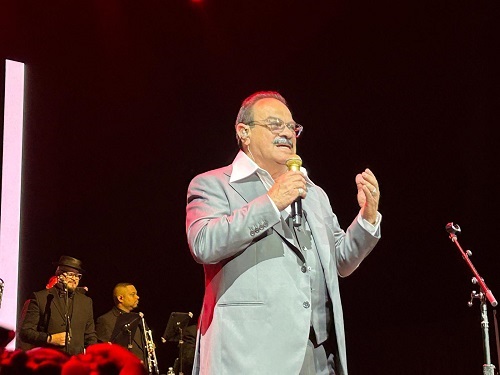
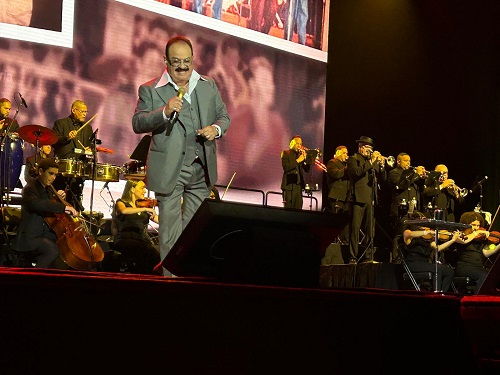
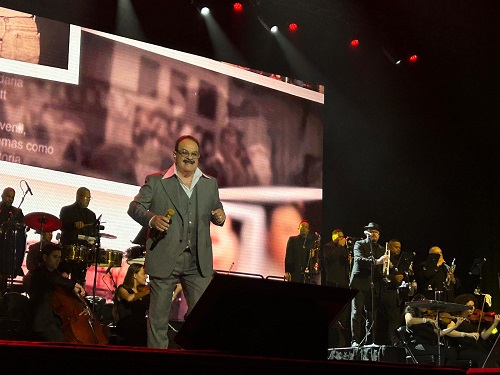
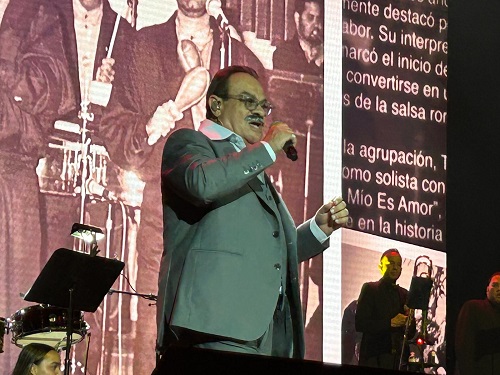
On Saturday, April 25, 2026, the Coca-Cola Music Hall was swept up in the sounds of salsa as Tony Vega took the stage for his concert “49+1: Half a Century of Romantic Salsa.” Thanks to the production of Alexandra Fuentes and a promotional partnership with the radio station Salsoul, the legendary vocalist returned to Puerto Rico for a night filled with music, nostalgia, and profound emotion.

Tony Vega con su director musical, Jota Ruiz Imagenes Jorge Mas

Throughout the celebration, Vega was backed by the musical direction of the virtuous instrumentalist, composer, singer, and independent producer known in the salsa world as Jota Ruiz, of the prestigious Ruiz de Ponce musical dynasty. Jota led an elite ensemble featuring:

  • Savier Díaz (congas), Edwin Clemente (timbales), Jorge Mercado (bongo), Juan Rivera (piano), and Alexis Pérez (bass).
  • José “Pucho” Ruiz (the Ruiz family patriarch) and Víctor Ambert on trumpets.
  • César Ayala and Julio Hernández on trombones.
  • Fernando Muscolo on keyboards.
  • Hugo Maysonet and Alejandro Villegas on backing vocals.
  • A string section composed of Jonelys Ruiz, Sairilis Meléndez, Sinaí González, Sofía Acosta, Orlando Rivera, and César Jacomino, with Luis Rodríguez providing general assistance.
  • Tony Vega recordando su etapa con Eddie Palmieri Tony Vega con su director musical, Jota Ruiz Imagenes Jorge Mas
    Tony Vega recordando su etapa con Eddie Palmieri Tony Vega con su director musical, Jota Ruiz Imagenes Jorge Mas

Tony Vega’s performance made it clear that his storied career has been a cornerstone of salsa history, particularly within the salsa romántica movement. The audience made the Coca-Cola Music Hall in San Juan vibrate, singing at the top of their lungs to the many hits Vega has placed at the top of the charts over the decades.

Tony Vega y la orquesta acompañante Tony Vega con su director musical, Jota Ruiz Imagenes Jorge Mas

The artist of Puerto Rican descent structured his set to detail the various stages of his brilliant career. He opened the night with “Cosquillita,” representing his professional debut alongside Raphy Leavitt. He then playfully performed “Feo pero sabroso,” a nod to his time in the recording studio with Louie Ramírez, followed by “El cuarto” and “Vámonos pa’l monte” as a tribute to his artistic growth under the mentorship of Eddie Palmieri.

Tony Vega y su sección de percusión Tony Vega con su director musical, Jota Ruiz Imagenes Jorge Mas

A deeply significant and nostalgic moment arrived with a medley chronicling his years with Willie Rosario, prompting the crowd to sing even louder to “Busca el ritmo” and “Mi amigo el payaso.”

From there, the vocalist reminisced about the transition to his ongoing solo career. He shared the story of his historic contract with Ralphie Mercado of RMM, which, as Tony recalls, was famously signed on a napkin “without any formalities.” From this era, he highlighted staples such as “Yo me quedo,” “Tu prenda tendida,” “Lo mío es amor,” “Dile,” “Tengo curiosidad,” “Uno mismo,” and “Mi iglesia,” which he performed as a duet with the stellar guest Alex D’ Castro. He continued the marathon of hits with “¿Dónde estás?,” “Deja,” “Esposa,” “Si me miras a los ojos,” “Si yo vuelvo a encontrarla,” “Fui la carnada,” “Ella es,” “Olvídalo ya,” “Carita de sol,” “Haremos el amor,” “Esa mujer,” and “Aparentemente.”

Tony Vega, concierto CCMH Tony Vega con su director musical, Jota Ruiz Imagenes Jorge Mas

The closing theme, “Déjame soñar,” stirred the singer’s patriotic pride and featured a powerful timbal solo by Edwin Clemente, followed by guest appearances from Gerardo Rivas and his son, Gerardo Gabriel Rivas.

Tony Vega, Trombonista César Ayala al fondo Tony Vega con su director musical, Jota Ruiz Imagenes Jorge Mas

Throughout the evening, Tony Vega expressed his gratitude to those instrumental in his success. He showed profound respect for Humberto Ramírez, who is widely credited with laying the foundation for Tony Vega’s signature sound and establishing the musical concept for his orchestra at its inception. Another noteworthy moment occurred during an improvisation in “Déjame soñar,” where he affectionately declared José Alberto “El Canario” an honorary “Boricua.”

As he had anticipated, Tony Vega experienced the concert as a true celebration of all he has achieved in his 50-year career. He emphasized how much it meant to be surrounded by his people, “sharing music with those who have been with me from the start, right where it all began.”

Bella Martinez Puerto Rico

Photography: Jorge Más

Read Also: Bella Martinez, the irreverent Salsa writer

  • « Go to Previous Page
  • Page 1
  • Interim pages omitted …
  • Page 3
  • Page 4
  • Page 5
  • Page 6
  • Page 7
  • Interim pages omitted …
  • Page 300
  • Go to Next Page »

International Salsa Magazine (ISM) is a monthly publication about Salsa activities around the world, that has been publishing since 2007. It is a world network of volunteers coordinated by ISM Magazine. We are working to strengthen all the events by working together.