• Skip to primary navigation
  • Skip to main content

International Salsa Magazine

  • HOME
  • Previous editions
    • 2026
      • ISM / March 2026
      • ISM / February 2026
      • ISM / January 2026
    • 2025
      • ISM / December 2025
      • ISM / November 2025
      • ISM / October 2025
      • ISM / September 2025
      • ISM / August 2025
      • ISM / July 2025
      • ISM / June 2025
      • ISM / May2025
      • ISM / April 2025
      • ISM / March 2025
      • ISM / February 2025
      • ISM / January 2025
    • 2024
      • ISM / December 2024
      • ISM / November 2024
      • ISM / October 2024
      • ISM / September 2024
      • ISM / August 2024
      • ISM / July 2024
      • ISM / June 2024
      • ISM / May 2024
      • ISM / April 2024
      • ISM / March 2024
      • ISM / February 2024
      • ISM / January 2024
    • 2023
      • ISM / December 2023
      • ISM / November 2023
      • ISM / October 2023
      • ISM – September 2023
      • ISM – August 2023
      • ISM July 2023
      • ISM Edition June 2023
      • ISM – May 2023
      • ISM April 2023
      • ISM March 2023
      • ISM February 2023
      • ISM January 2023
    • 2022
      • ISM December 2022
      • ISM November 2022
      • ISM October 2022
      • ISM September 2022
      • ISM August 2022
      • ISM July 2022
      • ISM June 2022
      • ISM May 2022
      • ISM February 2022
      • ISM January 2022
    • 2021
      • ISM December 2021
      • ISM November 2021
      • ISM October – 2021
      • ISM September 2021
      • ISM August 2021
      • ISM July 2021
      • ISM May 2021
      • ISM April 2021
      • ISM June 2021
      • ISM March 2021
      • ISM February 2021
      • ISM January 2021
    • 2020
      • ISM December 2020
      • ISM November 2020
      • ISM October 2020
      • ISM September 2020
      • ISM August 2020
      • ISM July 2020
      • ISM June 2020
      • ISM May 2020
      • ISM April 2020
      • ISM March 2020
      • ISM February 2020
      • ISM January 2020
    • 2019
      • ISM December 2019
      • ISM November 2019
      • ISM October 2019
      • ISM Septembre 2019
      • ISM August 2019
      • ISM July 2019
      • ISM June 2019
  • Spanish
  • Download Salsa App
    • Android
    • Apple

Search Results for: Salsa orchestra

Cubanoson

Northeast – Middle Atlantic- New Jersey 

Cubanoson is a traditional Cuban dance orchestra as created by pianist and composer, Leonel “Papo” Ortega. This Orchestra unites the “Punto Cubano” and the “Son Montuno” bringing danceable Cuban music to any public or private event.

In 2006, Cubanoson released their debut album “Recordando a Cuba” which contain 10 tracks. Four years after, this NY’s Cuban orchestra presented their second album “Rumba Nueva” with 13 singles including 7 originals in Spanish, English and French. Likewise, Cubanoson has the purpose to unite the talent and dedication of excellent contemporary musicians, (true exponents of Latin roots), to offer and express the traditional Cuban music to all cultural venues! Please, visit them in https://www.facebook.com/cubanoson

Cubanoson
Cubanoson

Next Event: Tuesday, August 7th

Time: 7:00 PM

Venue: National Night Out Festival. Bergenline Ave and 43rd St, Union City, 07087.

Come and dance with Cubanoson for the 13th straight year LIVE!

This is a great festival free to all over a span of 3blocks.

Support of the Police.

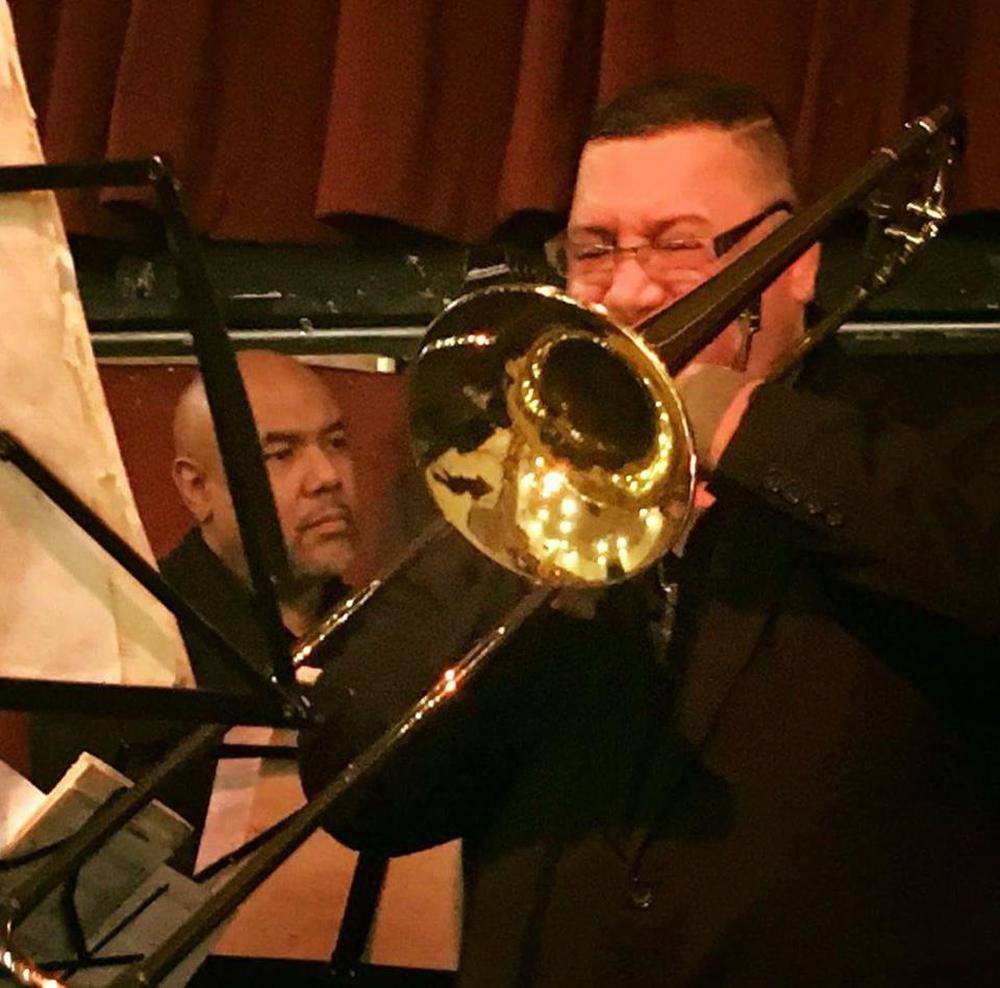
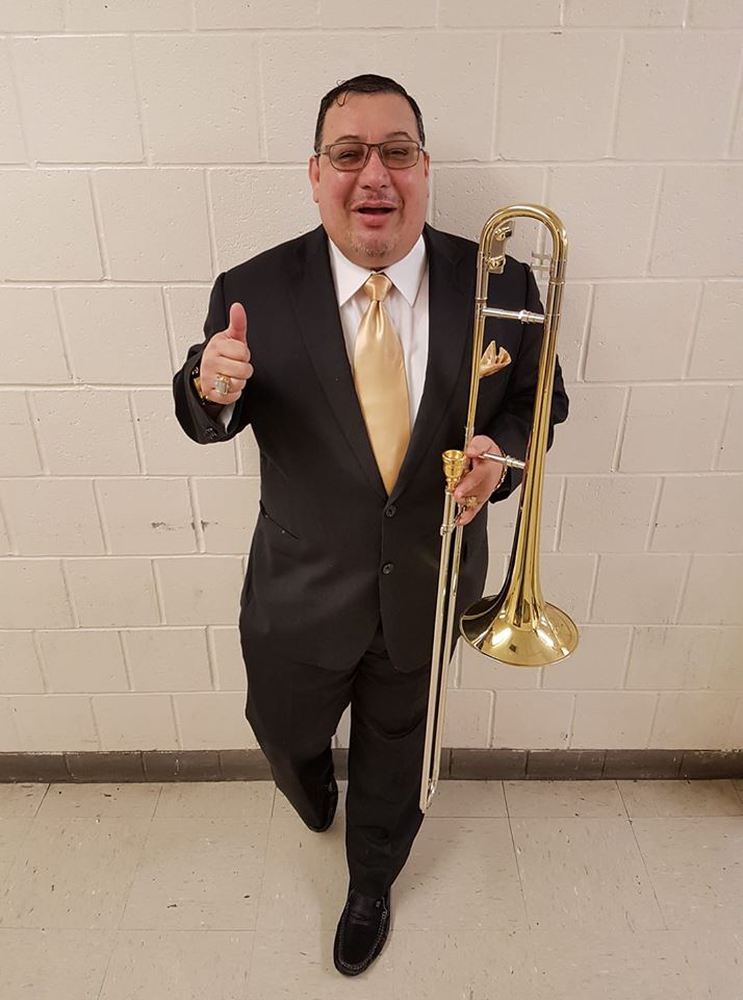
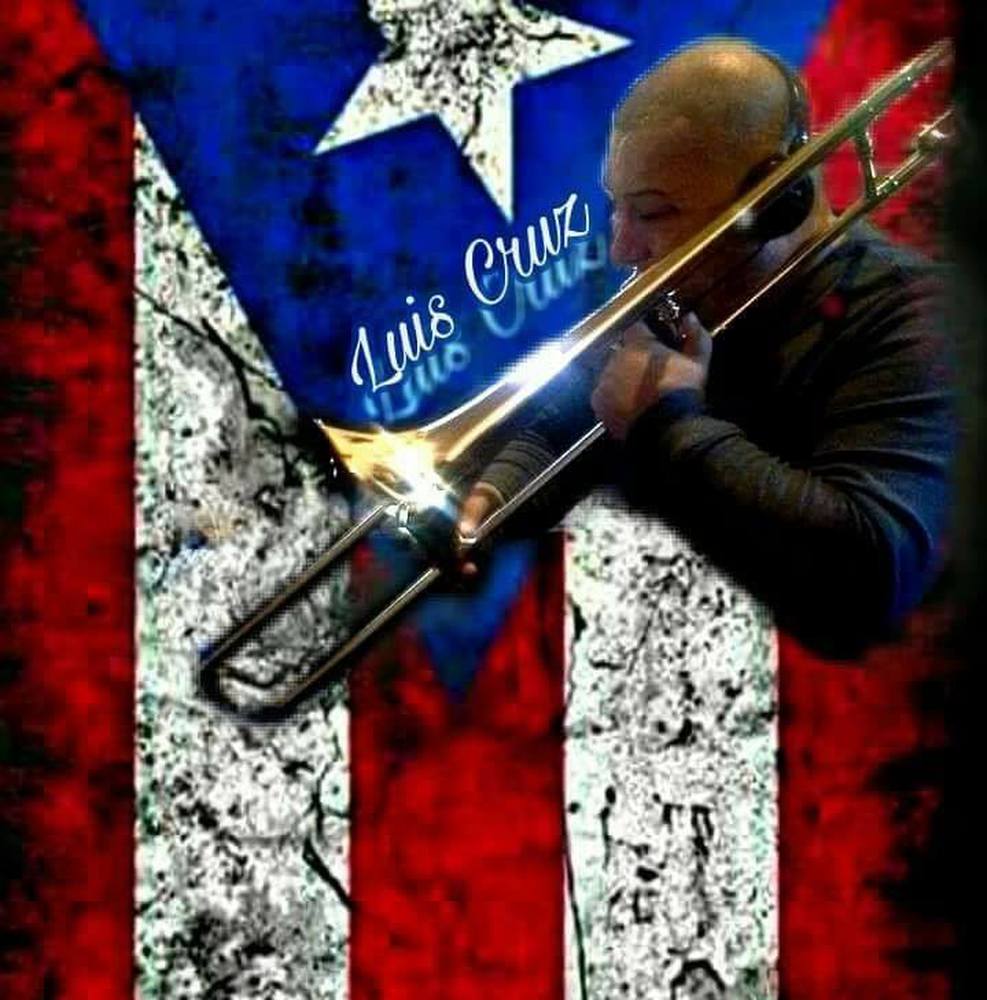
Luis J. Cruz H. – Puerto Rican Trombonist

North America / USA / New York

Luis J. Cruz H. They recognize the Puerto Rican Trombonist

The Puerto Rican Trombonist Luis J. Cruz H.

The sound of the trombone sings a seductive melody that fuses the Antillean archipelago into a single town united by strong historical-cultural ties.

The sons and daughters of the Caribbean have left their mark on universal culture, but the libertarian struggles established an umbilical cord that established the dream of an Antillean confederation that has resisted the divisionism that conquering partisans have sown for more than a century.

Luis J. Cruz H playing the trumpet

Luis J. Cruz H, an academic musician from Catañes based in New York with more than thirty-seven years of artistic life, recognized as the Steel Lips Trombone by legendary musicians such as Ángel ¨Papo¨Vazquez (Founder of the Manny Oquendo Free Group of New York, the Baracumbele Experimental Group of Puerto Rico).

Cruz got her start in music at the age of fourteen, when she took an optional music course in middle school. He discovered that he had talent, loved music and wanted to be a musician. The teachers advised him to enroll in the Escuela Libre de Música de Hato Rey in Puerto Rico.

Photo of Luis J. Cruz H.

¨I was privileged. I had excellent teachers at the Ramón B. López, Rafael Cordero and Onofre Carballeira schools. They encouraged me to study and listen to the call of my heart. My parents, Luis A. Cruz Vega and Carmen M. Huertas Santiago, were fundamental. My mother has been my greatest source of support and two educators, teacher Edgardo Correa and teacher Antonio Salcedo, are the people who have most influenced my professional development¨ recalls Cruz Huertas.

The love between the trombone and Cruz was one at first sight. ¨I heard the trombone and I fell in love with its sound. Then I petted him. I reach my soul. It’s been more than thirty seven years since I married my trombone and we became one.

Puerto Rico -  Luis J. Cruz H.
Puerto Rico – Luis J. Cruz H.

He has participated in several orchestras such as José Alberto el Canario, Celia Cruz, Frankie Ruiz, Willie González, Eddie Santiago and is currently the first trombone of the legendary group Boricua Legends of Pedro Pocholo Segundo in New York.

In the coming days of the month of August, he will visit us in Caracas-Venezuela, to participate in a master class on techniques, use and execution of the slide trombone at the facilities of the National Center for Social Action for Music.

Luis J. Cruz H.
Luis J. Cruz H.

Rubén Blades: What a magnificent way to celebrate 70 years of life and 50 of career!

North America / USA / Miami

Rubén Blades

The author of many of the most popular hits in the history of salsa, reached the seventh decade and music has not stopped playing for him.

The indisputable social sense of his songs made the difference in times when the themes of every other song were about love and unloved.

Rubén Blades
Rubén Blades

“The poet of salsa” was born on July 16, 1948 in a humble family, in Panama City, leaded by musicians, because his father was a percussionist and his mother was a pianist.


With an amazing multifaceted nature, Blades was the first in his family to go to college; so music was a hobby, like any other. Shortly after graduating as a lawyer, he arrived to Miami running away from Omar Torrijo’s dictatorship.


Since the time of Fania, he has walked through different currents of the same genre and composed the song Patria, which is still the second national anthem of his native Panama. In his last awarded albums, he returns to the company of great orchestras and to an intentional change in his voice to give nostalgia airs to the songs he sings. He has won 17 Grammy Awards and has been nominated 3 times for the Emmy Awards.


He has ventured into film, television and politics. His deeply critical nature does not allow him to ignore injustice and the abuse of power, and does not skimp on making his point of view known. Recently, he hinted his presidential aspirations in Panama for the 2019 elections, and this would not be his first time at the presidency’s run. In addition, he was Minister of Tourism between 2004 and 2009.

Photo of Rubén Blades

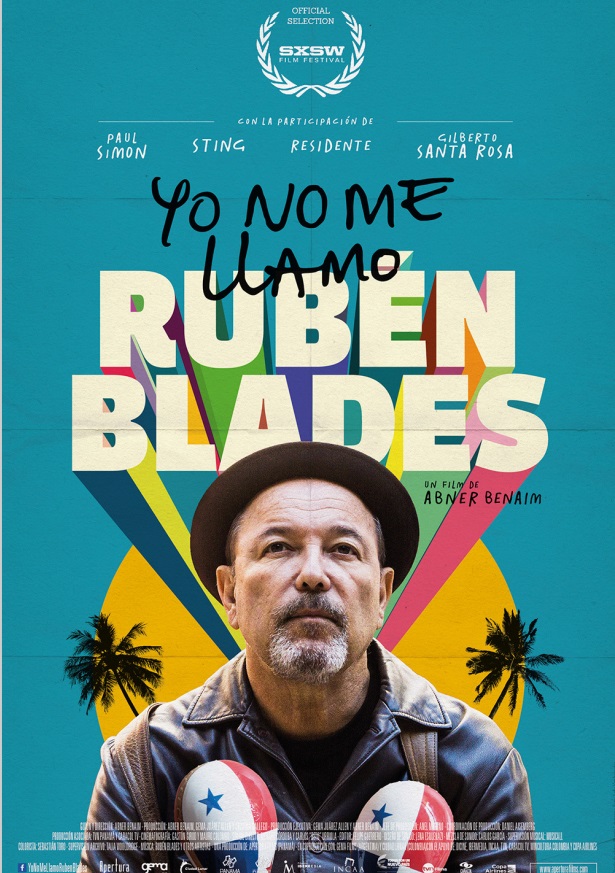
Blades has acted in 35 films and three series, and we must add the recently released documentary, “Yo no me llamo Rubén Blades” directed by Abner Benaim. Apart from his apparition in the popular TV series “Fear The Walking Dead”, he recently participated in the film “Hands of Stone” about the mythical Panamanian boxer Roberto “Manos de Piedra” Durán. There is no artistic space which Blades has not dabbled in.


How does he celebrate 70 years of life and 50 of career?

Singing! Although he has stated on several occasions that he wants to devote himself to other artistic facets and perhaps on purpose, he has allowed himself to think retired and then reappear with excellent albums like “Cantares del subdesarrollo” or, “Medoro Madera” the truth is that everybody is wondering, what will Rubén Blades do now, will he retire?

Rubén Blades
Rubén Blades

Currently, Blades writes opinion articles and publishes them on his website www.rubenblades.com, while on tour with the Panamanian group Roberto Delgado & Orquesta, until September. As if that was not enough, he prepares a book of poems, two scripts for cinema, is considering a couple of offers for the big screen, and will continue promoting the documentary “Yo no me llamo Rubén Blades” that although HBO has not revealed when it will be released on TV, will continues its journey in film festivals, and on cinema until August 30th in Panama, and 31th in Mexico to start the next premieres.


As a cherry pie will keep us in suspense about his possible presidential candidacy, because ” “antes necesito saber lo que el país quiere y si está dispuesto a abandonar el clientelismo a cambio de un plan nacional a largo plazo” Likewise, Blades clarified that ” no es algo que esté ya decidido “, it is a possibility, which requires society’s “apoyo masivo”.


This year near his 70th birthday, he affirmed without doubts:  ” No me despido de los escenarios, sino de las giras de salsa. En este momento tengo muchos otros planes y proyectos y, a mi edad, tengo que priorizarlos”.

Yo no me llamo Rubén Blades

Anyway, Rubén Blades is that salsero that integrated action and politics into his social struggle. What else can we ask of him?

The son montuno was born in the area of Santiago de Cuba

It was constituted by a mixture, in perfect harmony, of the African sonorous roots with the metric and the style of versification of Spanish origin. Although it presents a rhythmic base similar to the son, they do not have a common origin.

This rhythm is a product of the same phenomenon of transculturation that other genres of the Cuban traditional music have undergone by the hybridization of cultures.

Uncertainties about the origin of son montuno

According to Fuentes Matons himself, he is only a compiler of the verses and the authors were the sisters Micaela and Teodora Ginés, who wrote the lyrics in Santiago de Cuba around 1560.

The son montuno was born in the area of Santiago de Cuba

But this story does not have sufficient evidence, and may be the result of the author’s modesty, the oldest son montuno that is collected is that of Ma’Teodora, from 1893.

Many authors assure that the real author is Fuentes Matons, in an attempt to validate the musical roots of the Island. What is certain is that the expansion of this rhythm from the 18th century in Cuba was very fast.

In addition, due to the migration of Caribbean people to Cuba, the mixture with sonorities coming from Haiti, Santo Domingo and Puerto Rico became more and more frequent Haiti, Santo Domingo and Puerto Rico.

Evolution and popularity of son montuno in the 20th century.

From the 19th century onwards, migration from East to West was significant.

This was due to the wars of independence that had taken place in the eastern part of the island.

This migration brought as a consequence that the rhythm also expanded and mixed with the rhythms that already existed in the West.

In the western provinces, mainly in Havana and Matanzas, there was the concept of a band composed of six or seven members, which favored the new genre.

Arsenio Rodríguez (1911-1970), known as “el ciego maravilloso” (the wonderful blind man), was one of the great musicians who brought this sonority to the forefront.

Among his most popular works are “Papa upa”, “Mami, me gustó”, “La vida es sueño”, “La yuca de Catalina”, among many others.

The lyrics are characterized by the picaresque jocularity, the simplicity of the message, the easy to memorize refrains and the exchange with the public in occasional interpretations.

The orchestra, on the other hand, does perform complex improvisations and virtuoso musical combinations. Arsenio Rodríguez popularized the rhythm worldwide, opening a space for traditional Cuban music in the 1950s.

Arsenio Rodríguez (1911-1970), known as “el ciego maravilloso”, was one of the great musicians who brought this sonority to the forefront.

Legacy of Son montuno

The legacy of this Cuban rhythm is present in genres such as Latin salsa, mambo, Latin jazz, timba and chachachá. Some outstanding musicians kept its rhythmic base and incorporated their own melodic creations.

Among these are: Benny Moré, Pío Leyva, Roberto Faz, among many others.

The primitive instruments of the Cuban son are the Cuban tres, the bongo, the maracas, the claves and the marimbula.

The Cuban tres is a kind of guitar with three pairs of strings. The bongo constantly improvises. The maracas and claves accompany the guitar and the bongo.

The marimbula was used as a bass in the traditional Cuban son.

Later, other instruments such as the guitar, double bass, trumpet and timbales were added.

What kind of instruments did the African slaves bring to Cuba?

Among the typical instruments we find the chekeré, the güiro and the batá drums. The chekeré in Cuba is also known as ágbe.

The basic instrumental ensemble is made up of a series of string instruments (jarana, requinto or son guitar, leona) and percussion instruments (pandero, quijada de burro, marimbol, tarima for zapateado), to which other instruments have been added in recent experiments (violin, double bass, cajón, etc.).

What is the national instrument of Cuba?

The Cuban BongóThis small double drum is considered by many to be the most characteristic instrument of Cuba
The Cuban Bongó
This small double drum is considered by many to be the most characteristic instrument of Cuba

The Cuban bongo

This small double drum is by many considered the most characteristic instrument of Cuba.

It is easy to identify the bongo at first glance as it has been used and popularized in countless celebrations until it has become an indispensable instrument.

Also Read: Israel “Cachao” López Sobrado en fama y respeto en los años setenta se dedicó a mantener la tradición a nivel supremo

North America / August 2024

Kemi and LucumiGabriel NaviaYari More Latin BandNanette hernándezWillie GonzálezPBS

Thumbnail about the salsa museum

Las Maracas promo

Martinez attorney

Canada flag

CANADA

DIRECTORY OF NIGHTCLUBS

Dirty Martini
Dirty Martini Oakville
2075 Winston Park Dr
Oakville, OntarioN, Canada L6H 6P5
+1 905 829-8400

El Rancho
El Rancho
430 College St
Toronto, Ontario, Canada M5T 1T3
+1 416 921-2752

LULA LOUNGE
Lula
1585 Dundas West
Toronto, Ontario, Canada M6K1T9
+1 416 588-0307

Marlowe Restaurant & Bar
55 York Blvd
Richmond Hill, Ontario, Canada L4B 3B4
+1 905-771-8645

Sahara
Sahara
1855 Dundas St E
Mississauga Ontario L4X 1M1
+1 905 282-0316

Smokeshow BBQ & Brew
744 Mt Pleasant Rd
Toronto, Ontario, Canada M4S 2N6
+1 416 901-7469

Mangos Kitchen Bar
Mangos Kitchen Bar
1180 Howe Street
Vancouver, BC, Canada V6Z 1R2
+1 604 559-5533

Baza
Baza Dance Studios
1304 Seymour Street
Vancouver, BC, Canada V6Z 1R2
+1 778-379-2292

Studio Nightclub
Studio Nightclub
919 Granville street
Vancouver, BC, Canada V6Z 1L3
+1 604 620-6604


United States flag

UNITED STATES

DIRECTORY OF NIGHTCLUBS

CALIFORNIA FLORIDA  ILLINOIS
MICHIGAN NEW JERSEY NEW YORK
OHIO PENNSYLVANIA TEXAS
VIRGINIA WASHINGTON
  • « Go to Previous Page
  • Page 1
  • Interim pages omitted …
  • Page 74
  • Page 75
  • Page 76
  • Page 77
  • Page 78
  • Interim pages omitted …
  • Page 155
  • Go to Next Page »

International Salsa Magazine (ISM) is a monthly publication about Salsa activities around the world, that has been publishing since 2007. It is a world network of volunteers coordinated by ISM Magazine. We are working to strengthen all the events by working together.