• Skip to primary navigation
  • Skip to main content

International Salsa Magazine

  • HOME
  • Previous editions
    • 2026
      • ISM / May 2026
      • ISM / April 2026
      • ISM / March 2026
      • ISM / February 2026
      • ISM / January 2026
    • 2025
      • ISM / December 2025
      • ISM / November 2025
      • ISM / October 2025
      • ISM / September 2025
      • ISM / August 2025
      • ISM / July 2025
      • ISM / June 2025
      • ISM / May2025
      • ISM / April 2025
      • ISM / March 2025
      • ISM / February 2025
      • ISM / January 2025
    • 2024
      • ISM / December 2024
      • ISM / November 2024
      • ISM / October 2024
      • ISM / September 2024
      • ISM / August 2024
      • ISM / July 2024
      • ISM / June 2024
      • ISM / May 2024
      • ISM / April 2024
      • ISM / March 2024
      • ISM / February 2024
      • ISM / January 2024
    • 2023
      • ISM / December 2023
      • ISM / November 2023
      • ISM / October 2023
      • ISM – September 2023
      • ISM – August 2023
      • ISM July 2023
      • ISM Edition June 2023
      • ISM – May 2023
      • ISM April 2023
      • ISM March 2023
      • ISM February 2023
      • ISM January 2023
    • 2022
      • ISM December 2022
      • ISM November 2022
      • ISM October 2022
      • ISM September 2022
      • ISM August 2022
      • ISM July 2022
      • ISM June 2022
      • ISM May 2022
      • ISM February 2022
      • ISM January 2022
    • 2021
      • ISM December 2021
      • ISM November 2021
      • ISM October – 2021
      • ISM September 2021
      • ISM August 2021
      • ISM July 2021
      • ISM May 2021
      • ISM April 2021
      • ISM June 2021
      • ISM March 2021
      • ISM February 2021
      • ISM January 2021
    • 2020
      • ISM December 2020
      • ISM November 2020
      • ISM October 2020
      • ISM September 2020
      • ISM August 2020
      • ISM July 2020
      • ISM June 2020
      • ISM May 2020
      • ISM April 2020
      • ISM March 2020
      • ISM February 2020
      • ISM January 2020
    • 2019
      • ISM December 2019
      • ISM November 2019
      • ISM October 2019
      • ISM Septembre 2019
      • ISM August 2019
      • ISM July 2019
      • ISM June 2019
    • 2016
      • ISM December 2016
      • ISM November 2016
  • Spanish
  • Download Salsa App
    • Android
    • Apple

Search Results for: Son

Luis J. Cruz H. – Puerto Rican Trombonist

North America / USA / New York

Luis J. Cruz H. They recognize the Puerto Rican Trombonist

The Puerto Rican Trombonist Luis J. Cruz H.

The sound of the trombone sings a seductive melody that fuses the Antillean archipelago into a single town united by strong historical-cultural ties.

The sons and daughters of the Caribbean have left their mark on universal culture, but the libertarian struggles established an umbilical cord that established the dream of an Antillean confederation that has resisted the divisionism that conquering partisans have sown for more than a century.

Luis J. Cruz H playing the trumpet

Luis J. Cruz H, an academic musician from Catañes based in New York with more than thirty-seven years of artistic life, recognized as the Steel Lips Trombone by legendary musicians such as Ángel ¨Papo¨Vazquez (Founder of the Manny Oquendo Free Group of New York, the Baracumbele Experimental Group of Puerto Rico).

Cruz got her start in music at the age of fourteen, when she took an optional music course in middle school. He discovered that he had talent, loved music and wanted to be a musician. The teachers advised him to enroll in the Escuela Libre de Música de Hato Rey in Puerto Rico.

Photo of Luis J. Cruz H.

¨I was privileged. I had excellent teachers at the Ramón B. López, Rafael Cordero and Onofre Carballeira schools. They encouraged me to study and listen to the call of my heart. My parents, Luis A. Cruz Vega and Carmen M. Huertas Santiago, were fundamental. My mother has been my greatest source of support and two educators, teacher Edgardo Correa and teacher Antonio Salcedo, are the people who have most influenced my professional development¨ recalls Cruz Huertas.

The love between the trombone and Cruz was one at first sight. ¨I heard the trombone and I fell in love with its sound. Then I petted him. I reach my soul. It’s been more than thirty seven years since I married my trombone and we became one.

Puerto Rico -  Luis J. Cruz H.
Puerto Rico – Luis J. Cruz H.

He has participated in several orchestras such as José Alberto el Canario, Celia Cruz, Frankie Ruiz, Willie González, Eddie Santiago and is currently the first trombone of the legendary group Boricua Legends of Pedro Pocholo Segundo in New York.

In the coming days of the month of August, he will visit us in Caracas-Venezuela, to participate in a master class on techniques, use and execution of the slide trombone at the facilities of the National Center for Social Action for Music.


Luis J. Cruz H.
Luis J. Cruz H.

Rubén Blades: What a magnificent way to celebrate 70 years of life and 50 of career!

North America / USA / Miami

Rubén Blades

The author of many of the most popular hits in the history of salsa, reached the seventh decade and music has not stopped playing for him.

The indisputable social sense of his songs made the difference in times when the themes of every other song were about love and unloved.

Rubén Blades
Rubén Blades

“The poet of salsa” was born on July 16, 1948 in a humble family, in Panama City, leaded by musicians, because his father was a percussionist and his mother was a pianist.


With an amazing multifaceted nature, Blades was the first in his family to go to college; so music was a hobby, like any other. Shortly after graduating as a lawyer, he arrived to Miami running away from Omar Torrijo’s dictatorship.


Since the time of Fania, he has walked through different currents of the same genre and composed the song Patria, which is still the second national anthem of his native Panama. In his last awarded albums, he returns to the company of great orchestras and to an intentional change in his voice to give nostalgia airs to the songs he sings. He has won 17 Grammy Awards and has been nominated 3 times for the Emmy Awards.


He has ventured into film, television and politics. His deeply critical nature does not allow him to ignore injustice and the abuse of power, and does not skimp on making his point of view known. Recently, he hinted his presidential aspirations in Panama for the 2019 elections, and this would not be his first time at the presidency’s run. In addition, he was Minister of Tourism between 2004 and 2009.

Photo of Rubén Blades

Blades has acted in 35 films and three series, and we must add the recently released documentary, “Yo no me llamo Rubén Blades” directed by Abner Benaim. Apart from his apparition in the popular TV series “Fear The Walking Dead”, he recently participated in the film “Hands of Stone” about the mythical Panamanian boxer Roberto “Manos de Piedra” Durán. There is no artistic space which Blades has not dabbled in.


How does he celebrate 70 years of life and 50 of career?

Singing! Although he has stated on several occasions that he wants to devote himself to other artistic facets and perhaps on purpose, he has allowed himself to think retired and then reappear with excellent albums like “Cantares del subdesarrollo” or, “Medoro Madera” the truth is that everybody is wondering, what will Rubén Blades do now, will he retire?

Rubén Blades
Rubén Blades

Currently, Blades writes opinion articles and publishes them on his website www.rubenblades.com, while on tour with the Panamanian group Roberto Delgado & Orquesta, until September. As if that was not enough, he prepares a book of poems, two scripts for cinema, is considering a couple of offers for the big screen, and will continue promoting the documentary “Yo no me llamo Rubén Blades” that although HBO has not revealed when it will be released on TV, will continues its journey in film festivals, and on cinema until August 30th in Panama, and 31th in Mexico to start the next premieres.


As a cherry pie will keep us in suspense about his possible presidential candidacy, because ” “antes necesito saber lo que el país quiere y si está dispuesto a abandonar el clientelismo a cambio de un plan nacional a largo plazo” Likewise, Blades clarified that ” no es algo que esté ya decidido “, it is a possibility, which requires society’s “apoyo masivo”.


This year near his 70th birthday, he affirmed without doubts:  ” No me despido de los escenarios, sino de las giras de salsa. En este momento tengo muchos otros planes y proyectos y, a mi edad, tengo que priorizarlos”.

Yo no me llamo Rubén Blades

Anyway, Rubén Blades is that salsero that integrated action and politics into his social struggle. What else can we ask of him?

The Djembe is a percussion instrument belonging to the family of membranophone instruments

It originated in the ancient Mandinga Empire, approximately between the towns of Bamako (Mali) and Kankan (Guinea), from where it later migrated to Senegal, Ivory Coast and Burkina Faso, forming an integral part of the music and traditions of the area.

Africans playing Djembe

It is believed that this migration was due to the Numu, who were (and still are) blacksmiths [[professionals considered guardians of certain powers.

They were in charge of making the Komo masks, performing circumcision and ablation of adolescents to mark their passage to adulthood, as well as sculpting and playing the yembes.

As a result of differences in shape, wood density, internal engravings and skin, there is a wide range of tones that can be emitted by the yembe.

Striking the skin near the center produces lower notes, striking it near the edge.

It is struck with the fingers together and stretched, but without leaving them glued to the drumhead, so that the sound comes out.

On the other hand, to produce the highest pitched sound, the slap is used.

The palm of the hand is slightly curved and the membrane is hit with the fingertips.

It is estimated that the djembe was invented approximately 3000 years ago by the African Maninka tribe, who used it as a ceremonial instrument.

The Djembe originated in the former Mandinga Empire, approximately between the towns of Bamako (Mali) and Kankan (Guinea).

The word yembé comes from the Bambara language and means together in peace.

Membranophones are musical instruments that produce sound through the vibration of a taut membrane or drumhead.

The membranes can be made of animal skin or synthetic material and the instruments can be mounted on wooden cylinders, ceramic vessels or gourds.

Membranophones can be played by percussion or rubbing and can have one or two membranes, closed or open bottoms.

Some examples of membranophones are:

– Bombo: A direct hit membranophone whose sound is extracted by striking it with a wooden striker.

– Snare: A membranophone instrument

– Drum: A percussion instrument with a resonance box, which is usually cylindrical, and a membrane called a drumhead that covers the opening of the box.

– Zambomba: A friction drum.

– Cuica: A friction drum

– Juque: A Costa Rican instrument that is a friction drum

– Mirlitón: A blown membranophone instrument.

Membranophone Africa This percussion instrument is of African origin, but its antecedents are Asian (Japan and China) places where it is widely spread and is known with the names “Kelontonga” and also known as “Den-Den Daiko”.

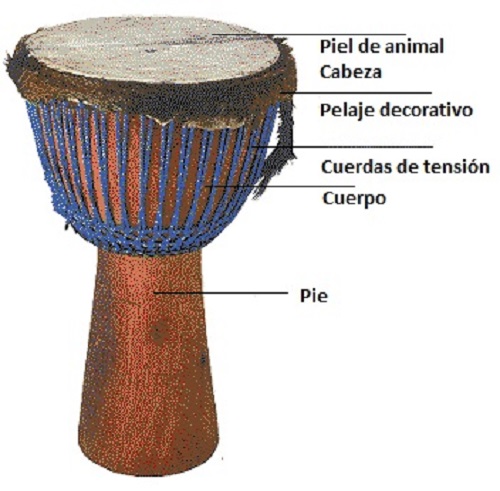
Djembe parts
Djembe parts

Membranophones. The membranophones produce the sound by means of the vibration of a tensed membrane. The vibration of this membrane can be provoked by hitting it, rubbing it or by voice (humming).

The castanets or “palillos” are a percussion instrument created by the Phoenicians three thousand years ago.

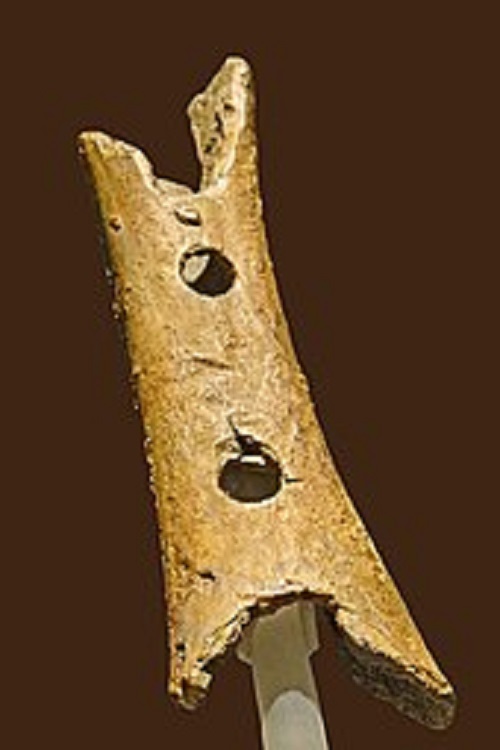
The oldest instrument is the flute, invented by Homo habilis in the Paleolithic and made of bird bone and mammoth ivory, this instrument is about 42 000 years old.

The oldest instrument is the flute, invented by Homo habilis in the Paleolithic period and made of bird bone and mammoth ivory, this instrument is about 42 000 years old.dor de 42 000 años
The oldest instrument is the flute, invented by Homo habilis in the Paleolithic period and made of bird bone and mammoth ivory, this instrument is about 42 000 years old.

The Divje Babe flute is the oldest instrument in the world and is currently in the National Museum of Slovenia.

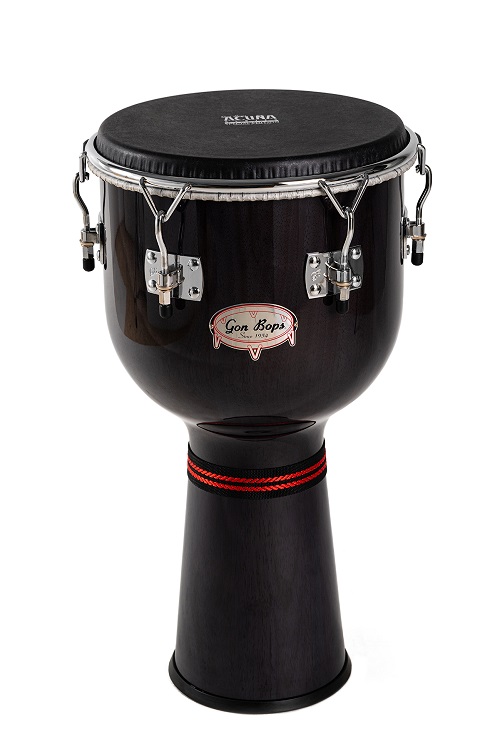
Alex Acuna Special Edition Djembe.

The combination of Asian Oak shell, Remo Skyndeep Natural head and premium Gon Bops hardware produces massive bass and impressive volume on Alex Acuna’s Signature 14″ Djembe.

Alex Acuna Special Edition Djembe

Source: Gon Bops

Also Read: Orestes Vilató es una de las figuras más influyentes en el mundo de la percusión Latina

Thank you Rafael for all you have done for Salsa. Without you many of us would not be salseros

On August 29, 1926, Rafael Ithier was born in Rio Piedras, Puerto Rico. Brilliant and talented pianist, composer, arranger, producer and founding director of the University of Salsa “El Gran Combo de Puerto Rico”.

Thank you Rafael for all you have done for Salsa.

Former member of Cortijo y su Combo. Don Rafael Ithier is by his own merit an authentic living legend of salsa worldwide.

The Korean War was imminent. The young Puerto Rican soldier Rafael Ithier, in the service of the U.S. Army, feared being sent to the battlefield. Music was his thing.

He had been a pianist in several ensembles in his native San Juan before his military service.

His mission at that time (1950) was to organize an orchestra to liven up the parties at the military base.

But the group did not progress because the soldier with the soul of a musician did not hurry the coupling of the incipient band.

He wanted to buy time. “Sorry, sergeant, the band is not ready to perform,” Ithier would say every time he was called upon. In the end, his cunning saved him from war. Several of those musicians would later form the Borinqueña Mambo Boys band. From then on, Ithier would earn his living at the piano.

With that same astuteness, and after six glorious years and a painful separation from Combo de Cortijo, one of the most successful groups in West Indian music, this self-taught musician founded El Gran Combo de Puerto Rico.

He called several of the best musicians of the defunct Combo and two very young singers: Andy Montañez and Pellín Rodríguez.

May 26, 1962 marks the birth date of the orchestra, which today has become a living legend of the genre, with 48 years in the salsa music scene and 57 recordings.

Since its first presentation at the Rock and Roll saloon in Bayamón (Puerto Rico), the Gran Combo revolutionized West Indian music with an innovative clave rhythm for that time, which was aimed at the dancer’s ear.

The jocular lyrics of their songs with Andy Montañez’s and Pellín Rodríguez’s strong voices made an immediate impact.

In addition, the band’s fresh image and colorful choreography soon gave the band its own identity, at a time when orchestras were proliferating.

For its founder, “fidelity to an original style, but at the same time adaptation to musical evolution and group discipline have allowed us to get to where we are today,” says the 84-year-old bandleader. With this formula they survived the difficult times of the industry, the genre and the passing of the years and fashions.

Thank you Rafael for all you have done for Salsa. Without you many of us would not be salseros

One of the difficult moments that Ithier remembers was when the two flagship voices of the group left in the seventies. According to the musician, “many decreed the death of the Gran Combo”.But once again, the director’s wisdom came to the fore when he found two voices that matched the band’s style.

The arrival of the new singers (Jerry Rivas and Charlie Aponte) reflected Ithier’s knowledge and leadership in managing his orchestra. When Rivas, white and blond, was introduced to replace the stellar Andy Montañez, the other musicians, most of them dark-haired, looked at him with suspicion. Ithier, with his traditional good humor, responded: “You can rest assured, he’s a black man painted white”.

On the cusp of success today few remember the vicissitudes to consolidate, after the disintegration of Cortijo y su Combo (due to indiscipline of the musicians, among them Ismael Rivera), from where the base of musicians of the Gran Combo came from. Ithier recalls how they were branded as “traitors” by the public and the musical milieu.

“Several times we were hired in clubs and when we arrived to play and they saw us, they closed the doors. Those were difficult times, we didn’t even have a place to rehearse”. The orchestra was on the verge of disappearing, says its director, who, disillusioned, locked himself in his house, determined to give up music.

Rafael Ithier received Honorary Doctorate Degree

“The musicians came looking for me and after begging me to conduct for a while, I returned. The truth is that with so many problems I thought the group would last one or two years at most and look where we are now,” confesses Ithier.

But the constancy, the iron but friendly discipline and the virtuosity of the 14 members of the group paid off. In 2005 alone, they performed in 137 shows around the world.

Los Mulatos del Sabor, La Bandera Musical de Puerto Rico or La Universidad de la Salsa, nicknames by which the legendary group is known, are now in their 48th year.

The successful musical life of El Gran Combo de Puerto Rico is linked in every musical note to the style andpersonality of its director and founder Rafael Ithier. This pianist describes himself as a self-taught musician who never attended a conservatory.

His musical school was the street and his discipline to learn from the musicians of his time. Ithier, born in Rio Piedras, Puerto Rico, in 1926, has proven throughout his 63-year career to be a visionary of Latin music. In the 1960s, when he founded the group, he cemented his own style based on the rhythms that dominated the music scene of the time, such as bogaloo, jala-jala, bomba and plena. As for him, he was always a classical pianist.

In the seventies he understood the new direction that West Indian music was taking, already known as salsa, and he adapted to the changes.

He introduced the trombone to the brass section to give it a modern sound. Thirty years later, when the romantic salsa trend emerged, the Gran Combo knew how to stay current and worked in this line, without losing its style, but even so, the critics came.

“Music evolves like everything else and we adapt to the changes. Many orthodox of the genre do not accept it and criticized us, but for this reason many orchestras disappeared”. However, Ithier is one of the defenders of classic salsa and a critic of the so-called salsa monga (romantic), today in decline due to the resurgence of salsa dura.

“Those little guys missed the formula. They didn’t know what the clave was and they took away all the flavor of our music, they all did the same thing and that scared the dancer away. They even said that the clave was a delay in the music”.

In Latin music industry and genre circles, his influence is more than recognized.

It was Ithier who Gilberto Santa Rosa sought out for advice and support to become a soloist after having played with orchestras such as Willie Rosario’s. At present, Rafael Ithier continues in the direction of the Gran Combo and has no plans to retire, although he has not sat at the piano for three years due to hearing loss, according to himself, “due to an illness poorly cared for by not stopping traveling with the orchestra.”

Source: Alejandro-Gonzalez Teodoro (Dr Ted Alejandro Jr)

Also Read: The Royalty of our Latin Music Pete “El Conde” Rodríguez first singer signed by Fania Records label

ISM / August 2024

ISM August 2024-Left ISM Aufust-2024-Right
SalsaApp-L SalsaApp-R
NA August 2024
LA August 2024
Europe August 2024
Africa August 2024
Asia August 2024
Oceania August 2024
La Noche Cubana August 2024
Ivan Villasmil 8-2024

“We are the Latin music world network”

Do you enjoy Latin music? Would you like to get more involved in this genre and share your passion for Salsa, Bachata, Kizomba, Merengue and more. Why not joint our Global Team of volunteers as a correspondent?
You can ask for more details with no obligation and we’ll be happy to talk to you about the benefits that come with the role

  • « Go to Previous Page
  • Page 1
  • Interim pages omitted …
  • Page 101
  • Page 102
  • Page 103
  • Page 104
  • Page 105
  • Interim pages omitted …
  • Page 268
  • Go to Next Page »

International Salsa Magazine (ISM) is a monthly publication about Salsa activities around the world, that has been publishing since 2007. It is a world network of volunteers coordinated by ISM Magazine. We are working to strengthen all the events by working together.