• Skip to primary navigation
  • Skip to main content

International Salsa Magazine

  • HOME
  • Previous editions
    • 2026
      • ISM / June 2026
      • ISM / May 2026
      • ISM / April 2026
      • ISM / March 2026
      • ISM / February 2026
      • ISM / January 2026
    • 2025
      • ISM / December 2025
      • ISM / November 2025
      • ISM / October 2025
      • ISM / September 2025
      • ISM / August 2025
      • ISM / July 2025
      • ISM / June 2025
      • ISM / May2025
      • ISM / April 2025
      • ISM / March 2025
      • ISM / February 2025
      • ISM / January 2025
    • 2024
      • ISM / December 2024
      • ISM / November 2024
      • ISM / October 2024
      • ISM / September 2024
      • ISM / August 2024
      • ISM / July 2024
      • ISM / June 2024
      • ISM / May 2024
      • ISM / April 2024
      • ISM / March 2024
      • ISM / February 2024
      • ISM / January 2024
    • 2023
      • ISM / December 2023
      • ISM / November 2023
      • ISM / October 2023
      • ISM – September 2023
      • ISM – August 2023
      • ISM July 2023
      • ISM Edition June 2023
      • ISM – May 2023
      • ISM April 2023
      • ISM March 2023
      • ISM February 2023
      • ISM January 2023
    • 2022
      • ISM December 2022
      • ISM November 2022
      • ISM October 2022
      • ISM September 2022
      • ISM August 2022
      • ISM July 2022
      • ISM June 2022
      • ISM May 2022
      • ISM February 2022
      • ISM January 2022
    • 2021
      • ISM December 2021
      • ISM November 2021
      • ISM October – 2021
      • ISM September 2021
      • ISM August 2021
      • ISM July 2021
      • ISM May 2021
      • ISM April 2021
      • ISM June 2021
      • ISM March 2021
      • ISM February 2021
      • ISM January 2021
    • 2020
      • ISM December 2020
      • ISM November 2020
      • ISM October 2020
      • ISM September 2020
      • ISM August 2020
      • ISM July 2020
      • ISM June 2020
      • ISM May 2020
      • ISM April 2020
      • ISM March 2020
      • ISM February 2020
      • ISM January 2020
    • 2019
      • ISM December 2019
      • ISM November 2019
      • ISM October 2019
      • ISM Septembre 2019
      • ISM August 2019
      • ISM July 2019
      • ISM June 2019
    • 2016
      • ISM December 2016
      • ISM November 2016
      • ISM October 2016
  • Spanish
  • Download Salsa App
    • Android
    • Apple

Search Results for: Spanish in the United States

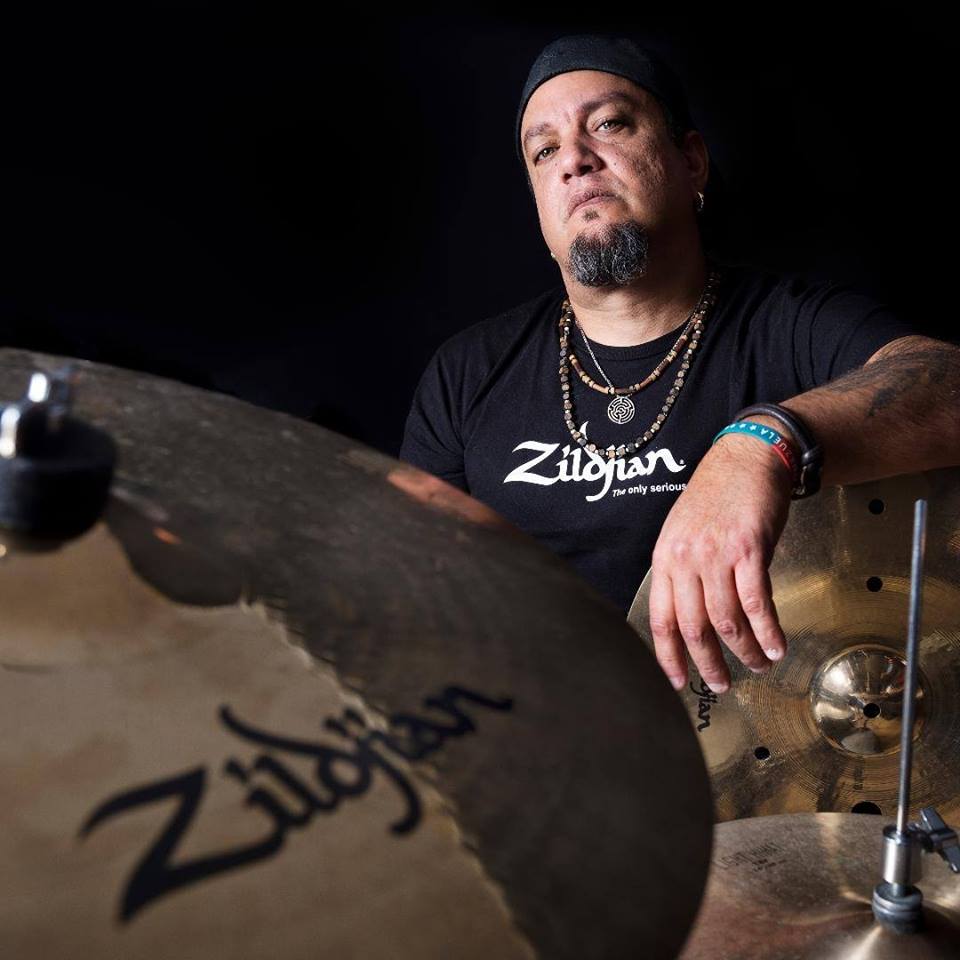
Marco Toro. The Versatile of Percussion

Europa/ Holanda

Marco Toro is a versatile drummer, percussionist and composer born in Caracas, whose roots are embedded in Venezuelan popular music and culture.
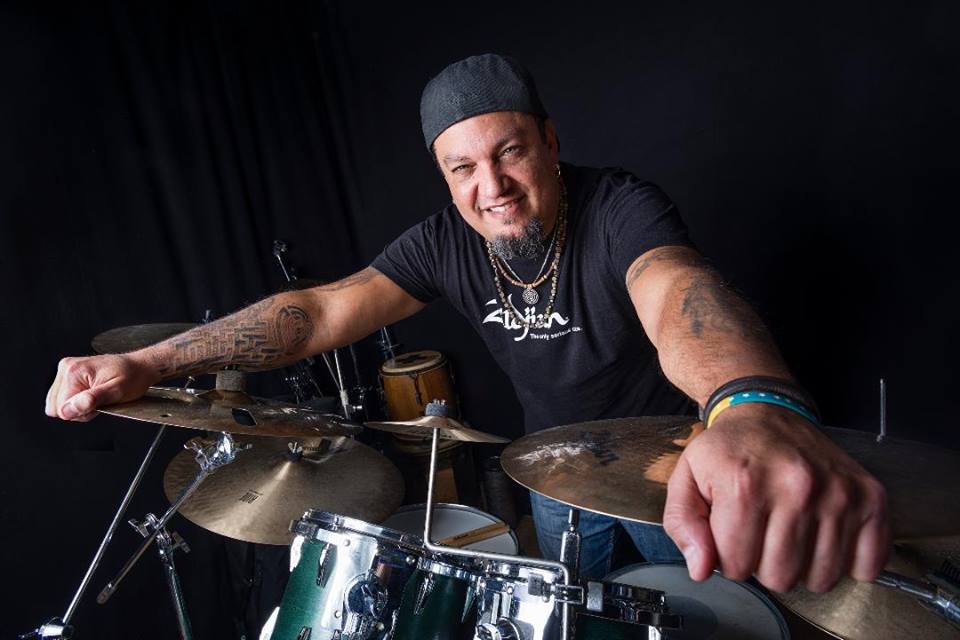
Marco Toro
Marco Toro

In October 2015 he released his latest work, this time it’s about Latin jazz: Marco Toro presents Zambo Jazz, a mix of rhythms and flavors that reminds the listener of places like Africa, South America and New Orleans.

Marco Toro once again shows his diversity on drums and percussion, playing as always with top-notch musicians who also share credits on this production.

Marc Bischoff, from Germany on piano, wrote two of the eight songs: Oh Lame Saint and Mojitos and Daikiries, trumpeter Oscar -Chucky- Cordero, from Venezuela, wrote The Tour. Michael Simon, also from Venezuela, arranged Marialí. James 2 AM It is a composition by Chilean Alekos Vuskovic and Let It Walk is by trumpeter and arranger Francisco Peña from Colombia. Matthias Konrad plays the trombone; He is also from Germany and the Venezuelan Samuel Ruiz plays the bass.
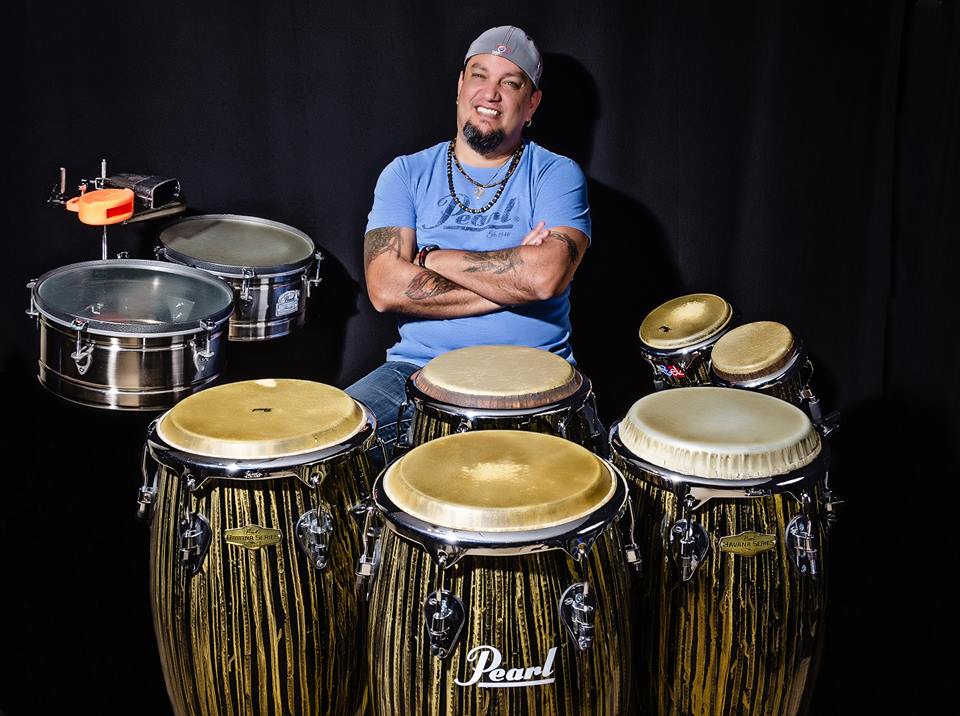
Marco Toro
Marco Toro

In addition to playing drums, timbales, congas, bongos and cowbells, he also plays typical Afro-Venezuelan instruments such as cumaco, culo e puya, bell drum, tamboras, maracas, etc.

He not only plays all kinds of percussion instruments, he also plays a wide variety of styles.

Already in 2004 he embarked on a solo project: Marco Toro y su Ensamble, exploring South American rhythms such as Son, Joropo and Salsa, among others. With this group he released eight albums; The last CD is from 2017: Marco Toro y su Ensamble 12+1 Anniversary more info (www.toro-ensamble.com).

Marco Toro is currently playing with Lucas van Merwijk’s Drums United and Cubop City Big Band since 2008, touring Europe, the United States, Canada, South America, China and Thailand.

In 1989 Marco Toro formed Laberinto, a rock band that became known for creating “Metalatino”, a unique blend of heavy metal and Latin percussion.

In 1992 Laberinto moved from Caracas to Amsterdam, where the band released eight albums between 1996 and 2010.

Dutch rap legend Osdorp Posse appears on The World Might Suck, since 2008.

A ninth album: The best of Labyrinth was released in Venezuela.

After years of successful and extensive touring in Europe, Colombia and Venezuela went their separate ways.
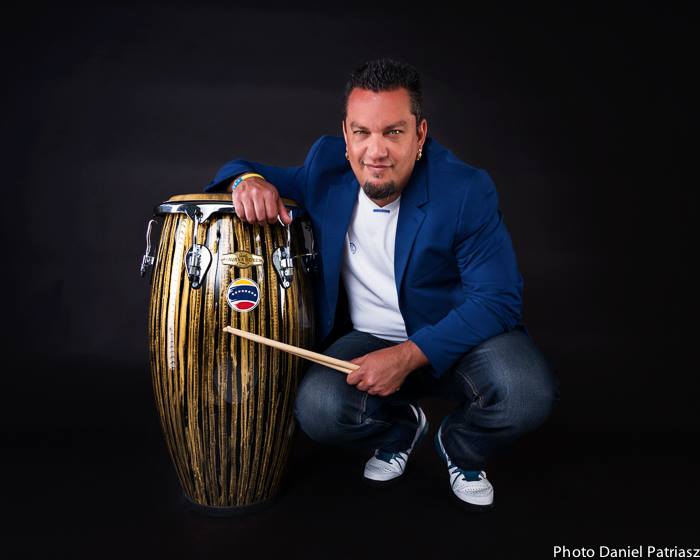
Marco Toro
Marco Toro

He has shared the stage and recorded with many renowned artists such as:

  • Andy González
  • La India, Jimmy Bosch
  • Pedro Arroyo
  • Metropole Orkest
  • Laberinto, Osdorp Posse
  • Def P
  • Beatbusters, Lucas van Merwijk’s Drums United
  • Cubop City Big Band
  • Ricky Luis N’Clave
  • Zambo Jazz
  • De Pana
  • Beatbusters and Def P
  • Santanico,
  • G. Clarinda y la Rítmica
  • Primera Plana Orchestra
  • Bembe Orchestra
  • El Trabucombo by Gerardo Rosales
  • Marejada, Tierra Caliente
  • Rudy Albano
  • Jacqueline Castro
  • Subject to change
  • Tumbao
  • Grupo Kilele
  • Javier Plaza and his Orquesta Sonrisa
  • FP La Banda
  • Chucky y su Trabuco Guarimba
  • Barrio Nuevo
  • La Misma Gente
  • Marike Jager Kuenta i Tambu
  • King of the bongo
  • Carmen Gabriela Lozada
  • Grupo Mate
  • Alejandro Carbajal
  • Flaco Carrillo
  • Silicon Head
  • Wereld Kinder Festival
  • The virtual school of Bart Noorman
  • Pistoleros de la Paz
  • Download Amsterdam
  • Ensemble Amsterdam
  • Cabo Cuba Jazz
  • The Soul of Spanish Harlem
  • Jean Paul Tamayo

among others.

Marco Toro
Marco Toro

Marco Toro is sponsored by Zildjian Cymbals, Pearl Percussion and Evans Drumheads.

North America / March 2024

Omar Ledezma Jr.Gabriel from Changüí MajaderoAlejandro MeolaThe Conga RoomJeremy Bosch

PBS

Thumbnail about the salsa museum

Las Maracas promo

Martinez attorney


Canada flag

CANADA

DIRECTORY OF NIGHTCLUBS

Dirty Martini
Dirty Martini Oakville
2075 Winston Park Dr
Oakville, OntarioN, Canada L6H 6P5
+1 905 829-8400

El Rancho
El Rancho
430 College St
Toronto, Ontario, Canada M5T 1T3
+1 416 921-2752

LULA LOUNGE
Lula
1585 Dundas West
Toronto, Ontario, Canada M6K1T9
+1 416 588-0307

Marlowe Restaurant & Bar
55 York Blvd
Richmond Hill, Ontario, Canada L4B 3B4
+1 905-771-8645

Sahara
Sahara
1855 Dundas St E
Mississauga Ontario L4X 1M1
+1 905 282-0316

Smokeshow BBQ & Brew
744 Mt Pleasant Rd
Toronto, Ontario, Canada M4S 2N6
+1 416 901-7469

Mangos Kitchen Bar
Mangos Kitchen Bar
1180 Howe Street
Vancouver, BC, Canada V6Z 1R2
+1 604 559-5533

Baza
Baza Dance Studios
1304 Seymour Street
Vancouver, BC, Canada V6Z 1R2
+1 778-379-2292

Studio Nightclub
Studio Nightclub
919 Granville street
Vancouver, BC, Canada V6Z 1L3
+1 604 620-6604


United States flag

UNITED STATES

DIRECTORY OF NIGHTCLUBS

CALIFORNIA FLORIDA  ILLINOIS
MICHIGAN NEW JERSEY NEW YORK
OHIO PENNSYLVANIA TEXAS
VIRGINIA WASHINGTON
MARCH 2024 FESTIVALS

Georgia US, circular flag
GEORGIA
Atlanta 2024 Festival

Atlanta Salsa Bachata Festival

Mar 07 / 11 2024

Sheraton Atlanta Hotel
165 Courtland St NE, Atlanta, GA 30303

California US circular flag
CALIFORNIA
SF SF 2024 festival

San Francisco Salsa Festival

Mar 21 / 23 2024

San Francisco Airport Marriott Waterfront
1800 Old Bayshore Hwy, Burlingame, CA 94010
+1 510-697-1892

Illinois circle flag
ILLINOIS
Chicago 2024 Festival

Chicago Salsa & Bachata Festival

Mar 28 / Apr 01 2024

Hyatt Regency O’Hare Chicago
9300 Bryn Mawr Avenue
Rosemont, Illinois 60018
+1 847 696 1234

Argentine-American composer and guitarrist Alejandro Meola kindly talked to us

There is a country we do not usually talk much about in this edition, but we have found the best moment to do so, and it is the land of tango and mate, Argentina. It turns out that, on this occasion, we talked with composer, singer and guitarist Alejandro Meola, who has honored us by accepting our invitation to this very special exclusive interview we had. 

Alejandro Meola is an artist who was born in the city of Miami, but his parents moved to Argentina when he was very young, so he spent his childhood and adolescence in the aforementioned country. In his accent, we can see how influential his upbringing in Buenos Aires was.   

Next, we will touch some of the most important issues related to his career and his life in general.  

This is Alejandro Meola
This is Alejandro Meola, a very talented Argentine-American guitarist

Alejandro’s beginnings in music 

As is typical, Alejandro began to feel a great attachment to music and it all started with the guitar that was in the house he grew up, with which he played at an amateur level and began practicing slowly and improving his skills over time. He says he always knew that his vocation was music, even without being old enough to decide on these issues. 

Given that the guitar was the instrument with which he started in music, this will always be the most important element in his artistic life above any other. However, he is also capable of playing other instruments such as piano, drums and bass, which can transport him to places within his mind where the guitar does not always take him.   

With regard to composition, Alejandro started to develop in this area through the need to express those emotions he had on the inside and communicate what his feelings in an original way with the help of music and the melodies that compose it. ‘‘I like to communicate things that resonate in other people’s minds and that’s where my taste for composition came from. Besides, I think that practice and time improve your ability to communicate emotions and transmit messages to anyone who listens to you. That evolves with oneself” said the artist.  

Alejandro’s musical education 

Alejandro told us that he studied at a music school in Argentina where he specialized more on guitar and composition, but what he calls ”street training” also helped him a lot to polish his act as an artist. The experience gained out the academies is so important to Alejandro that he even defines it as ”a parallel university”, which is as important as formal academic training, if not more. 

”It’s the street that gives you the tools, the experience and the journey to be a more complete artist. Practice on real stages is critical to specialize in music as it should be” Alejandro said on the subject.  

street training is important for Alejandro
According to Alejandro, ”street training” is very important for any artist

Argentine and American roots in Alejandro’s work 

Hearing Alejandro play evidences that he is heavily influenced by legendary and world-famous Argentine rock and the artist confirms this stating that he listened a lot to Fito Paez, Soda Stereo, Charlie Garcia, Gustavo Cerati, Luis Albert Spinetta, Andres Calamaro, among others. Undoubtedly, all of these music luminaries played a very important role on how this young man would perceive music, adding to all the American rock and blues he would listen to upon arrival in the United States. 

However, he noted that being in the United States also allowed him to listen to a number of Latin artists and rhythms which he never planned on experimenting with, but he did. His song ”La Inmigración” is a good example of this. In that regard, living in New York has expanded his horizons and led him to discover salsa, Cuban and Puerto Rican music. He also says that he took inspiration from Héctor Lavoe, Cheo Feliciano and La Fania when doing one or two songs. 

”At the end of the day, my music is a mixture of who I am and the places I’ve lived. A little from there, a little from here and a little from nowhere (laughs). A little from everywhere and a little from nowhere” he said.  

Alejandro also said that he is always on the lookout for other rhythms and ideas that come his way, but always using rock and guitar as a starting point.   

Alejandro at The Bowery Electric
Alejandro Meola playing live at The Bowery Electric

Why Alejandro chose New York as his permanent residence 

Since he was very young, Alejandro had always wanted to experience the dream of living and working in his art in New York. In addition to that, he wanted to know other cities in the country where he was born because while it is true that he spent most of his life in Argentina, he was also very clear that his country of birth was the United States, so he was curious to know it better. 

Once in New York, I met all kinds of people and artists with a very high musical level, so I was able to learn a lot from all of them. I feel like the bar is rising here and that led me to want to improve further every day. In that sense, I feel that New York gives you thick skin, since there are many obstacles to overcome to be truly recognized in music” said Alejandro about the city.   

The artist has been living in New York for 10 years now and is at ease in the place in which he currently is. In addition, he has managed to find a niche singing in Spanish, which has made him very happy and satisfied with his career.    

How Alejandro deals with languages in his music 

Something very common that many well-known artists do is to record songs in both English and Spanish so that the audience they reach is bigger, but Alejandro does not believe in it. He thinks that each song must have its own language and feeling, so he prefers to do one version of each song in one language. 

When he arrived in New York, he experimented a lot with English and has several albums in this language, but noting that he could work with Spanish without problems, he began to focus his music in that direction. In fact, today, almost all of his concerts are in Spanish.   

Each language has its advantages and disadvantages in terms of sound, so I must always pay attention to that,” said Alejandro on the subject. 

It has been a great pleasure for us to count on the talented Argentinean singer Alejandro Meola for this edition and we wish him the greatest success in his career from now on. 

Read also: El Tresero Moderno San Miguel Perez 

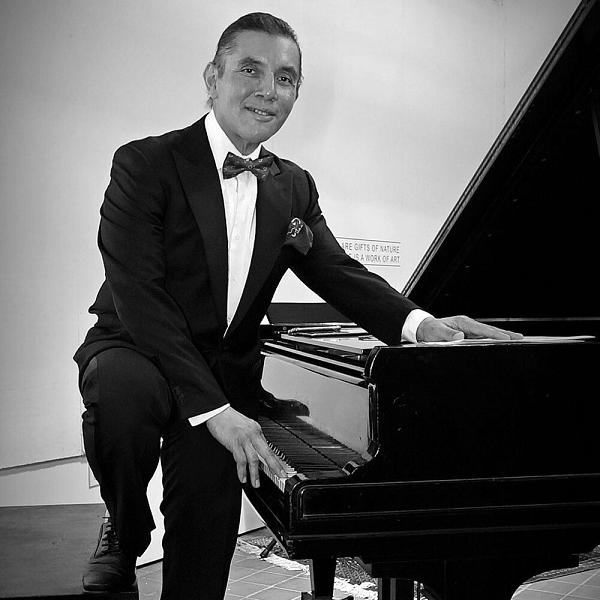
Large projects of Mexican pianist and composer Irving Flores

It is always a pleasure for us to talk with important figures from the Latin music industry in the United States and today it was the turn of the incredibly talented producer, arranger, composer and pianist Irving Flores, who has been kind enough to connect via Zoom and talk a little about his career and personal life. 

After the usual greetings and introductions, Irving started talking about what inspired him to get started in music which, in his case, was his father.   

Pianist Irving Flores
Mexican producer, arranger, composer and pianist Irving Flores

Irving’s father as a source of inspiration 

Irving’s first important contact with music was his father, who was a professional saxophonist in the 60’s and even worked for a big band in Tamaulipas, Mexico, the artist’s native country. 

He was his first musical maestro and the one who helped him take his first steps in this complicated world, to the extent that Irving also started playing the saxophone encouraged by his father. The young man always wanted to learn how to play piano, but the high level of salinity in the city of Tampico damaged this type of instruments. It is then that he chose the organ which, being electronic, withstood the weather conditions, but he never discarded the instrument he was most passionate about. 

Once he began his career as an orchestrator and arranger, he was exploring all wind instruments such as the saxophone, trumpet, and trombone and string instruments such as the guitar. He played the saxophone professionally for some years, studied at the National Conservatory of Music and received private music lessons to strengthen his knowledge.  

Roles as a producer, an arranger and a composer 

So, as was the case with many other Latin musicians, Irving perceived music as a job in which experience has been much more important than the academic part. In fact, he told us that, as a child, he saw his father sitting writing music and making arrangements, which led him to imitate him and do the same.  

When he has beraly 15, he was perfectly capable of arranging at a professional level, an experience that served him well in Mexico City when dealing with the best composers of his native country, such as Luis Demetrio, Vicente Garrido, Eugenia León and maestro Armando Manzanero. He was also Paulina Rubio’s musical director for many years. 

For years, Irving spent three or four days each week in a studio, which gave him the necessary experience to prepare for what was to come in his professional future.  

Irving worked with many figures
Irving has worked with many important figures in the music industry

San Diego 

Irving married a U.S. citizen and had a daughter with her, which made it much easier for him to get a visa to travel to the United States. After he split up with his wife, he specifically chose the city of San Diego because his daughter lives here and he wanted to see her grow up.  

Although that was the primary reason for his move there, he immediately noticed that there was much scope for him to work on his own stuff and make many contacts. One of them was Dave Scott, thanks to whom he was able to write music for the San Diego Symphony Orchestra. 

The artist assures that, regardless of the place he used to live, he never lost his way and never stopped learning everything he could about music. 

One of the greatest experiences he had in this city had to do with taking the place of Oscar Hernandez in the Spanish Harlem Orchestra. It turns out that Hernandez lost his luggage and passport on a flight, so someone had to take his place in the concert the band would have the next day in Mexico City. It was then that Gilbert Castellanos recommended Irving for this task.  

Hernandez and Irving met, each one put their terms and reached an agreement. The founder of the orchestra bought the artist a plane ticket and went to assume the role of pianist that Hernandez could not take that night and the result could not be better. Since then, Irving and the orchestra has been on excellent terms and both he and the world famous pianist became good friends.   

Irving and his piano
Irving next to his greatest passion, his piano

Working for great artists 

According to Irving, one advantage Latin musicians have is that they are able to play all styles of music, which gives them a greater range of action compared to other artists. We are also influenced by Latin music, Afro-Antillean music and Afro-Cuban music. These elements help us a lot to do our job. American musicians tupically specialize in a single context or genre, but Latinos don’t have those limitations,” Irving said on the subject.   

Although the pianist specializes in makings arrangements for jazz, the above mentioned shows that he is perfectly capable of entering any other genre, which has led him to work with great artists with many styles.   

One of the most interesting cases was Luis Miguel. One of his most important producers, Alejandro Carvallo, spent some time in Los Angeles, where he and Irving met and forged a friendship. That is how he started writing arrangements for ”El Sol de Mexico” and had a very good experience working for him and his team.  

In the case of the San Diego Chamber Orchestra, a composer working for the institution (and Irving’s friend) named Dave Scott needed an urgent arrangement at that time, but they did not have the budget for the relevant work. So, he asked Irving what they could do, to which he replied that he needed a few days to write a new arrangement. The following two weeks, the pianist had no time even to sleep, but he achieved the goal and wrote ”A Tribute to Frank Sinatra”. According to Irving himself, this has been one of the most important projects he has had in his entire career.  

Irving worked with Luis Miguel
Irving worked with many talented Mexican artists such as Luis Miguel and Paulina Rubio

American Citizen 

In the year 2021, Irving became an American citizen, which is certainly a great honor for anyone who lives in that country and also a great responsibility. The artist seems to know this very well.   

When we asked Irving about this topic, his answer was not so much based on the artistic aspect, but on everything that involves the acquisition of citizenship as a Latino. In this sense, the artist emphasized that the cultural and even judicial environment in which we grew up in most of our countries are completely different from those of the United States, so adapting to this country is a real challenge, but well worth it.   

In his case, the pianist also says that he was as disciplined as possible in each of his decisions to be able to get to the point where he is now. In that sense, he has always done his best to exercise his career as a musician with excellence, but always respecting U.S. laws at all times. He said this because he knows many talented people who were unfortunately imprisoned or deported for making mistakes in this regard.  

On the same subject, he also said that it is very important to follow the rules for American society to accept you as a member and give you all the opportunities you are given as a citizen with all the letters. 

Musically speaking, having a U.S. passport has provided him with the possibility to travel and tour anywhere in the world without any problem, which is extremely important for the growth of an artist’s career. 

Read also: The Rumba Madre and its roots in Basque culture 

The Rumba Madre and its roots in Basque culture

The Rumba Madre is a Nashville-based group whose characteristics are very interesting and make it different from many other artists and orchestras that have appeared in this section over the past few years.   

On this occasion, we had the pleasure of talking with Basque guitarist and tresero David Vila, who revealed the most important details about the creation of The Rumba Madre and his own musical career before and after the group, so just sit tight because there is a very interesting story coming on. 

guitarrist David Vila
Basque guitarist and tresero David Vila, who kindly talked to us

Music in David’s childhood 

When David was just a little boy, in his entire family, only his grandfather liked to sing. In contrary to the case of many other artists we have had the pleasure of interviewing here, David does not come from a family of musicians, but that did not keep him from developing a taste for this artistic side over time. 

Being very small, his parents moved from Galicia to the Basque Country to work and seek a new life. In this autonomous community, the cultural environment turned very lively and punk and other similar rhythms were at their peak of popularity, which got him interested in the tuna guitar and other instruments. He also started listening a lot to jazz and blues, which became fashionable in those years. 

Since David had no possibility to be formally educated in music, he just listened carefully and imitated the sounds the best he could until he decided that he needed to go one step further in his budding career as a musician. It was then when he moved to London, England, to study his degree in guitar. He had already worked as a musician in Spain, so this work experience was very useful to what he would do later on.   

Aside from having obtained his degree in music, David also toured around Europe with some local bands, which he continued to do in the United States when he moved to Nashville.  

Currently, he is a Hispanic popular music professor at the university level, so he teaches everything he has learned to young people who want to follow his same path.   

Rubén Darío, Benjamín Alexander, and David Vila
Nicaraguan guitarist Rubén Darío, Puerto Rican bassist Benjamín Alexander, and Basque guitar player David Vila

Nashville  

The first U.S. city David went to live in was Chicago because he was very interested in exploring the blues and other genres from that part of the country, but David did not have the visa required for entry into the U.S. at the time, so his plans to go there were inevitably postponed. When he was finally able to travel, he had no choice but to go to Nebraska and stay there for about two years for lack of a better option.   

Subsequently, he chose the city of Nashville as his final destination because of the large amount of musicians who live and work there. He even went so far as to call this place ”The Disneyland of musicians” because of all the opportunities it presents in this area.   

Another positive aspect for artists is that there are a lot of well-known record labels and studios to work with, making it an excellent choice for artists looking for a place to start or continue their careers. The locals themselves call it ”the music city” and have a saying that goes ”the worst waiter is a better musician than you,” making it clear how music is perceived in Nashville.   

David’s inclination for Latin music 

In England, David had already been studying some flamenco and, while it is true that he was not an expert yet, there were not many musicians in Nebraska who played that genre, so he caught the attention of many of his colleagues and groups that requested his services. The same thing happened in Nashville and the fact that he spoke Spanish reinforced the idea that he played Latin music.   

The above led many to believe that David was capable of playing both Flamenco and Cuban music without any problem, which was not entirely certain at the time. This is how he ended up playing guitar in a Cuban son band, thanks to which he had to learn to play the Cuban tres in order to be in the band.   

Although at first, it was too complicated for him, he focused on practicing a lot and listening to recordings of treseros to be able to imitate them as well as possible. Thanks to his effort and commitment, David learned how to play it and he spent five or six years doing it until he created his own group, The Rumba Madre.   

David laughingly recalls that his goal when moving to Nashville was to play country music as he did in England, but there were so many country musicians that he chose to explore another niche and ended up studying and playing Latin and Caribbean music.   

The Rumba Madre
The Rumba Madre playing live

The Rumba Madre  

After all the experience gained by David in those years, he thought it was time to create his own project and, for this, he chose two colleagues he met in that same musical context in Nashville, Nicaraguan guitarist Rubén Darío and Puerto Rican bassist Benjamín Alexander.   

The three artists coincided many times in different bands and concerts in which they played together, so they already knew each other’s styles very well. Since they were all Spanish-speaking, migrants and musicians, they saw that they had many things in common and established a friendship that led to a band.  

Both David and Ruben took advantage of the many compositions they had made in recent years and used them as repertoire for the project that was coming. Not much time would pass before music venues and festivals began to take them into account. 

On one such occasion, they met Cultura Profética keyboardist and composer Iván Gutiérrez Carrasquillo, who had lived in Miami his whole life, but decided to try his hand in Nashville, Gutiérrez was so impressed with the music made by The Rumba Madre that he proposed them to make an album. He also acted as a contact point for The Rumba Madre to be in touch with companies and labels that would be key to the success of the group later.   

They were going to release their first album in 2020, but could not present and promote it due to the pandemic, so they had no choice but to wait for things to die down.   

So far, The Rumba Madre has experimented with rumba, punk, Cuban son, salsa, flamenco, tango and many other genres. 

Read also: We welcome Patricio Angulo from Rumbaché to ISM 

  • « Go to Previous Page
  • Page 1
  • Interim pages omitted …
  • Page 9
  • Page 10
  • Page 11
  • Page 12
  • Page 13
  • Interim pages omitted …
  • Page 23
  • Go to Next Page »

International Salsa Magazine (ISM) is a monthly publication covering salsa activities around the world and has been publishing since 2007. It is a worldwide network of volunteers coordinated by ISM Magazine. Together, we work to strengthen salsa events around the world.