• Skip to primary navigation
  • Skip to main content

International Salsa Magazine

  • HOME
  • Previous editions
    • 2026
      • ISM / June 2026
      • ISM / May 2026
      • ISM / April 2026
      • ISM / March 2026
      • ISM / February 2026
      • ISM / January 2026
    • 2025
      • ISM / December 2025
      • ISM / November 2025
      • ISM / October 2025
      • ISM / September 2025
      • ISM / August 2025
      • ISM / July 2025
      • ISM / June 2025
      • ISM / May2025
      • ISM / April 2025
      • ISM / March 2025
      • ISM / February 2025
      • ISM / January 2025
    • 2024
      • ISM / December 2024
      • ISM / November 2024
      • ISM / October 2024
      • ISM / September 2024
      • ISM / August 2024
      • ISM / July 2024
      • ISM / June 2024
      • ISM / May 2024
      • ISM / April 2024
      • ISM / March 2024
      • ISM / February 2024
      • ISM / January 2024
    • 2023
      • ISM / December 2023
      • ISM / November 2023
      • ISM / October 2023
      • ISM – September 2023
      • ISM – August 2023
      • ISM July 2023
      • ISM Edition June 2023
      • ISM – May 2023
      • ISM April 2023
      • ISM March 2023
      • ISM February 2023
      • ISM January 2023
    • 2022
      • ISM December 2022
      • ISM November 2022
      • ISM October 2022
      • ISM September 2022
      • ISM August 2022
      • ISM July 2022
      • ISM June 2022
      • ISM May 2022
      • ISM February 2022
      • ISM January 2022
    • 2021
      • ISM December 2021
      • ISM November 2021
      • ISM October – 2021
      • ISM September 2021
      • ISM August 2021
      • ISM July 2021
      • ISM May 2021
      • ISM April 2021
      • ISM June 2021
      • ISM March 2021
      • ISM February 2021
      • ISM January 2021
    • 2020
      • ISM December 2020
      • ISM November 2020
      • ISM October 2020
      • ISM September 2020
      • ISM August 2020
      • ISM July 2020
      • ISM June 2020
      • ISM May 2020
      • ISM April 2020
      • ISM March 2020
      • ISM February 2020
      • ISM January 2020
    • 2019
      • ISM December 2019
      • ISM November 2019
      • ISM October 2019
      • ISM Septembre 2019
      • ISM August 2019
      • ISM July 2019
      • ISM June 2019
    • 2016
      • ISM December 2016
      • ISM November 2016
      • ISM October 2016
  • Spanish
  • Download Salsa App
    • Android
    • Apple

Search Results for: Spanish in the United States

Bandleader and bongosero Ray Degaldo is here to talk about his life and career

The talented percussionist Ray Delgado has made room in his schedule to share some time with us and talk about some of the most curious details of his artistic career, which fills us with pride and gratitude in equal measure. The founder of the Ray Delgado Project has many interesting things to say, and we are more than willing to listen.
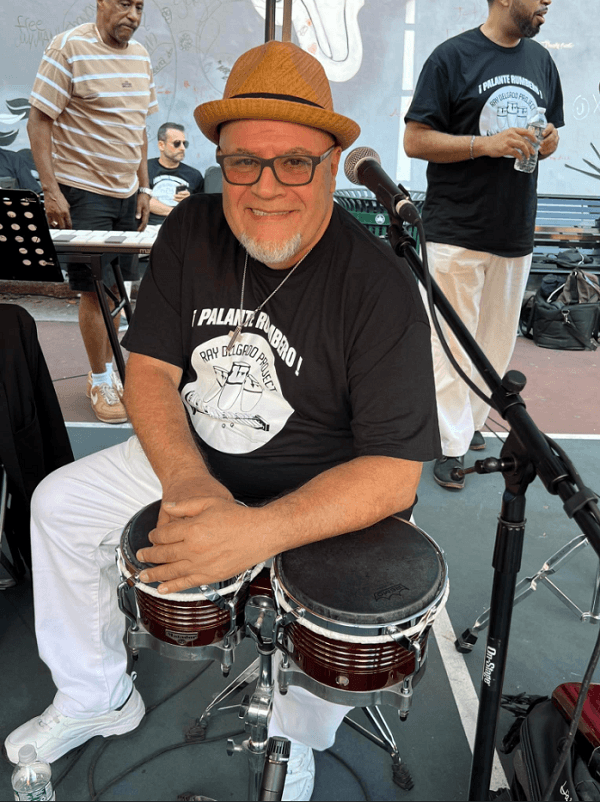
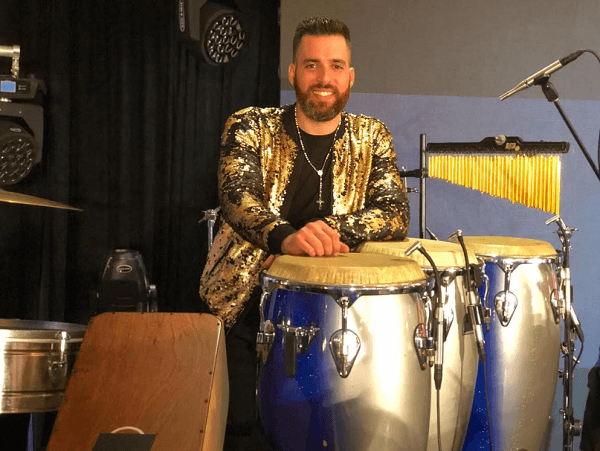
Ray playing the bongo
Ray Delgado playing the bongo live

Ray’s inspirations to become an artist

Ray grew up in a family with deep Puerto Rican roots and was raised between Puerto Rico and New York because his parents constantly moved from one place to another, which made him feel very fortunate because he was being formed between two cultures that allowed him to listen to all kinds of music. In his time, radio remained extremely popular, so this was his vehicle to travel just by listening to certain songs.

Music in English came from the United States and Europe, while music in Spanish came from Cuba, Venezuela, Puerto Rico, the Dominican Republic, Jamaica, and many other countries. Delgado was exposed to all genres, but as a New Yorker, the one that resonated the most with him was salsa and the atmosphere that it brings with it. In fact, he remembers having the joy of seeing the Machito Orchestra, Johnny Pacheco, Héctor Lavoe, Willie Colón, Pete Conde, and many others live.   

These great exponents were the ones who sparked off the young man’s desire to pursue music at some point, but his father did not like the idea at all, as he saw the men in this business as womanizers, drunks, and irresponsible. Obviously, no father wants his son to end up like that, so Ray had to wait to become a responsible adult with a steady job to finally realize his aspirations as a kid.
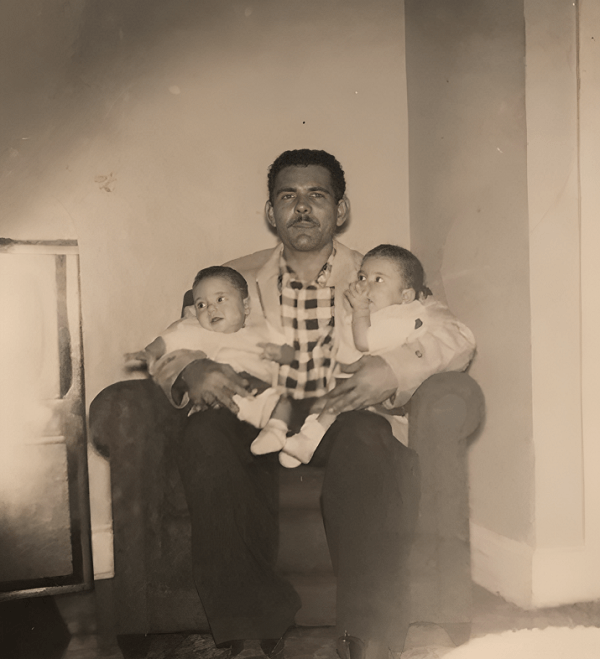
Ray and his father
Ramón Delgado Castro holding his son Ray Delgado and his brother when they were babies

It all started when some older men invited him to play with them, so he found an old bongo drum he kept in his closet and accepted the offer without a second thought.

That was the point of departure for him to play with many other bands in New York, and his consistent work led him to want to be better, to study hard and prepare himself much more.

Ray’s music education

Ray studied at the East Harlem Music School founded by legendary musician Johnny Colón in Manhattan, and focused on timbales with teacher Ray Cruz, but he left the instrument aside for a while when he moved back to Puerto Rico. When returning from the Island of Enchantment, he enrolled at the Harbor Conservatory for the Performing Arts. He also studied with Professor George Delgado, who is the current conguero for the Spanish Harlem Orchestra. He describes him as an excellent teacher and musician from whom he learned so much.

Additionally, he had the support of many musician friends who also helped him and taught him many things that are not learned in an educational institution, including Luis Rivera, Radamés Rojas, Eric Rivera, and many others. Close contact with other artists and groups made him see that many sounded exactly the same and there was little variety, so he decided to form his own orchestra.

In this way, he also learned percussion, which is the area by which he is best known today.
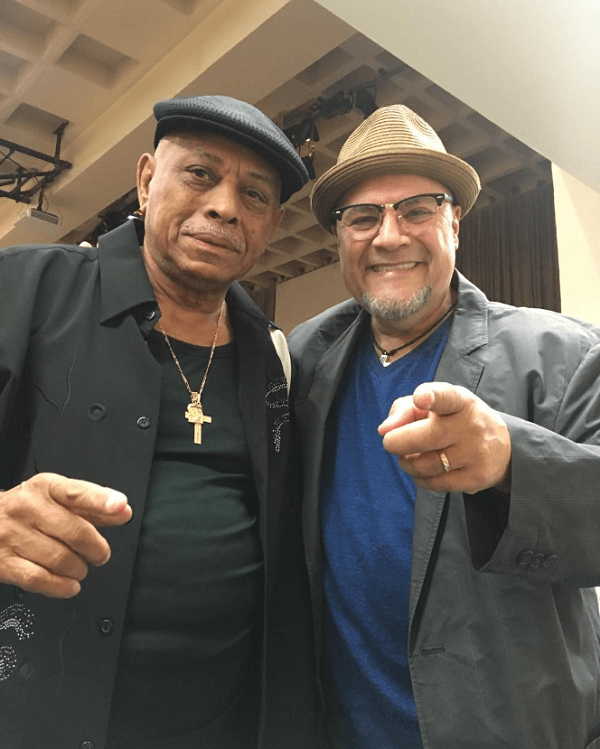
Joe and Ray
Joe Bataan and Ray Delgado

Ray Delgado Project’s birth

Driven by the lack of musical variety in his environment, he wanted to create his own musical project that included vibraphone, percussion, piano, bass, and vocalist. It all started with a workshop for musicians offered by Ray himself in a community room in the building where he lived and he was allowed to use it. After having played and experimented with different styles, the group was getting smaller until all the musicians who signed up ended up leaving.

From there, at every show and opportunity he had to meet new musicians, he would ask for their numbers to recruit them and achieve a chemistry and combination, resulting in the sound he wanted. Ray was in that process from 2009 until now. About three years ago, in 2023, he finally got what he was looking for. 

This group was called Ray Delgado Project, which takes up a huge amount of time and effort. However, the musician says that the New York where his youth was spent, which offered lots of places to go dancing, no longer exists, so there is not much work as back then.

Today, they play many covers of great hits from the 1970s, but they add their own touch to stand out with completely new arrangements. Not so long ago, they released their new version of “Lo Que Traigo es Sabroso,” a hit by Eddie Palmieri, and adapted it to their own style and arrangements. It can be found on Spotify and the main digital platforms. 
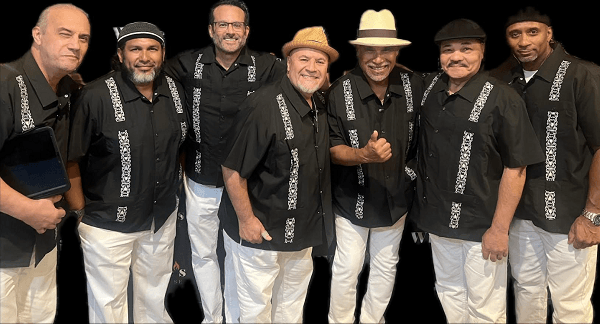
Ray and his orchestra
Ray Fuentes (piano), Abraham Saenz (bass), Danny Sieber (vibraphone), Ray Delgado (director and bongo), Rhadames ”Randy” Rojas (lead vocals) Izzy Diaz (congas), and José ”Cheo” Colón (timbales)

Ray is so happy with what he has achieved so far with their orchestra that ensures that when God calls him, he will be calm and happy to have been able to play and make audiences dance during his lifetime. God willing, we wish him many more years playing with the Ray Delgado Project, enjoying life and bringing joy to those who have the pleasure of listening to him. 

Read also: Leader of K’ndela Salsa Band Eric Cabanilla and all his entertainment company has to offer
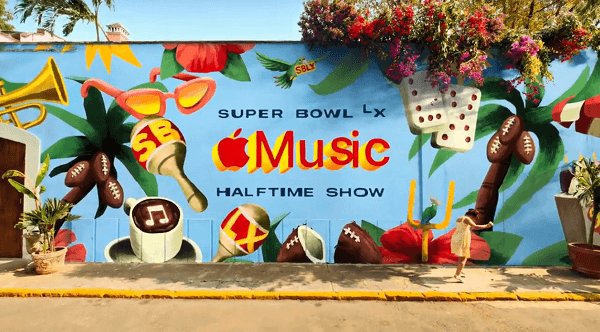
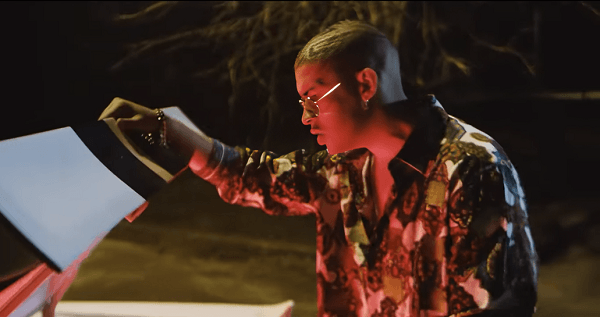
Background and reactions to Bad Bunny’s halftime show in The Super Bowl

The Super Bowl is the name given to the final match of the National Football League (or simply known as the NFL) championship, whose opponents are the winners of the National Football Conference and the American Football Conference. The match is due on the second Sunday of February every year and is one of the most watched broadcasts in the United States, but it is not the only thing that grabs viewers’ attention that day.

Over the years, the Super Bowl has become one of the most important social events in the country, to the point that it is one of the days of the year when more food and drink are consumed. One of its biggest attractions, and a matter of controversy from time to time, since its inception has been the Halftime Show. 

Absolutely every edition has featured a musical performance during halftime of the match. In the beginning, college marching bands were responsible for taking up the cudgel for the show, but its growing popularity got much more famous singers and bands be hired to take this prime spot.

There have been great and supremely talented artists, such as the exceptional case of Michael Jackson, who gave one of the most legendary and memorable performances to date. Likewise, artists such as U2, Justin Timberlake, Prince, Paul McCartney, The Rolling Stones, and Madonna, among others have also participated there. More recently, Shakira, Jennifer Lopez, Rihanna, and Usher have performed at the halftime show.

However, few musical performances have caused as much controversy as this year’s, which was performed by music producer, rapper, and reggaeton artist Benito Antonio Martínez Ocasio, known as Bad Bunny.

How Bad Bunny started his show
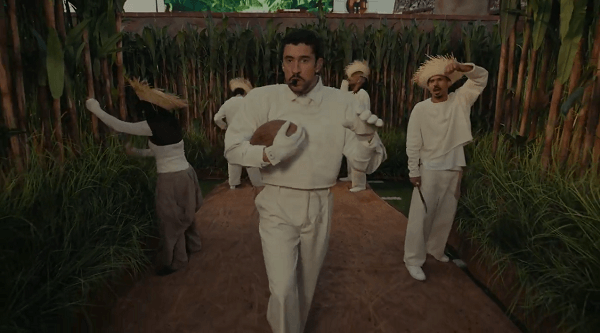
This is how the Bad Bunny’s halftime show started

Who is Bad Bunny?

Seeing everything he has achieved on a professional and artistic level, we could find it hard to believe the humble origins of the Puerto Rican artist, who grew up in a working-class household and was the son of a truck driver and a teacher who always instilled in their son the taste for music since childhood. By that time, many of his acquaintances started calling Benito “Bad Bunny” because of a sweet photo of him wearing bunny ears and having an annoying face.

What is known of his working life before becoming an artist is that for a time he worked as a bagger at Econo Supermarket while uploading the songs he composed to SoundCloud, material which reached the ears of producer DJ Luian. Through him, he managed to be signed to the label Hear This Music in 2016 and strengthened himself as an artist by collaborating with urban music greats such as J Balvin, Ozuna, and Cardi B. From there, his fame and popularity did nothing but grow and grow.

After that, what came next was a string of hits from his albums, which were “X 100PRE,” “YHLQMDLG,” “El Último Tour del Mundo,” “Un Verano Sin Ti,” “Nadie Sabe Lo Que Va A Pasar,” and “DeBÍ TiRAR MáS FOToS.” Following the release of “X 100PRE,” the Puerto Rican left Hear This Music and broke his professional relationships with DJ Luian and Mambo Kingz due to creative differences and the lack of support for their projects. 

Already in 2018, it was finally confirmed that “El Conejo Malo” left Hear The Music to join Rimas Entertainment led by his manager Noah Assad, who is the current CEO, public face, and majority owner of the company. However, the main investor since its founding in 2014 was former Venezuelan military officer and public official Rafael Jimenez Dan, whose links with the late President Hugo Chávez have made him a controversial figure and, to some extent, harmful to the company. For this reason, every effort has been made to disassociate Jiménez from the label until he finally sold his 60% stake in 2023, when Assad took full control of Rimas and Sony Music stepped in as a new investor.

Bad Bunny singing ''Soy Peor''
Bad bunny in his videoclip ”Soy Peor” during his time with Hear The Music

However, this situation inflicts no injury on the image and great success of Bad Bunny, who clearly has nothing to do with these businesses and operations between the owners of his current record label.

Social and political stances

In recent years, Bad Bunny has used his art to put a magnifying glass on important issues for Puerto Rican and Latino communities. Some of them are the exodus of many inhabitants of the island, gentrification, the energy crisis, and the territory’s status of associated state. In fact, he participated in the 2019 protests demanding the resignation of then Governor Ricardo Rosselló and released the song “El Apagón” and financed a documentary of the same name denouncing the constant blackouts, the terrible service provided by the private company Luma Energy, the privatization of beaches, and the government’s abandonment of Puerto Rico’s infrastructure. 

As for the Latino community in the United States, the artist has been very vocal about Immigration and Customs Enforcement (ICE) proceedings against illegal immigrants and recent altercations with some protesters who claim that the institution has criminalized Latinos, no matter if they are criminals or not. Moreover, in his acceptance speech for his Grammy in the category of Best Urban Music Album, he said, “ICE out! We are not savages, we are not animals… we are humans and we are Americans.”

With this prelude, it is clear how Bad Bunny would focus his show at the Super Bowl a week later on February 8 of this year.

Bad Bunny during his performance
Bad Bunny during his performance in the Super Bowl

Bad Bunny’s participation in the Super Bowl

The NFL and the production company Roc Nation, led by American rapper Jay-Z, chose Bad Bunny as the main artist for the halftime show in order to attract a global and Latino audience, a decision that obtained Commissioner Roger Goodell‘s support, which earned him a tsunami of criticism from much of the American public. What is known about this is that Jay-Z took into account his cultural impact and status as a Spanish-language musical leader, aiming to go for freshness and novelty on stage. 

So, that was how February 8 arrived with a very high expectation for what the artist and his team had prepared for that day. And boy, did they have a few surprises.

The performance, executed entirely in Spanish, was a tribute to Puerto Rico and Latin America in general. During the 15 minutes the Puerto Rican artist was on stage, scenography represented typical elements from the Island of Enchantment and much of Latin America, such as sugar cane fields, men playing dominoes, piragua stands, boxers, plastic chairs, barbershops, among others. 

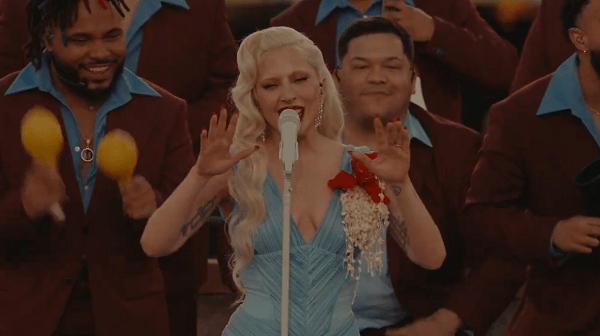
He kicked off the concert with one of his greatest hits, “Tití Me Preguntó,” followed by a remix of some of the most iconic songs by reggaeton artists such as Daddy Yankee, Don Omar, and Tego Calderón. One of the big surprises was the appearance of Lady Gaga performing “Die With A Smile” in salsa version and dancing with Bad Bunny to make way for Ricky Martin singing “Lo Que Pasó En Hawaii” in open protest against the parallels between the situation in Hawaii and that of Puerto Rico today. 

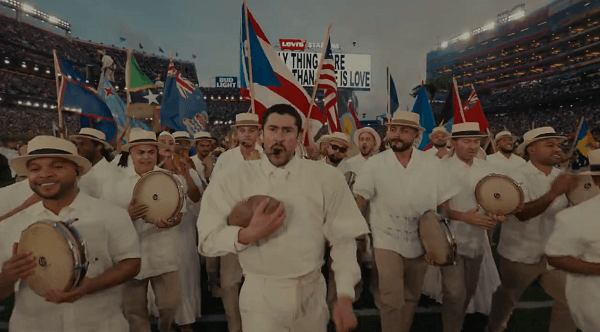
The show closed with the urban artist saying “God Bless America” and proceeding to list all the countries that comprise the American continent alongside people waving their flags. 

Lady Gaga singing
Lady Gaga singing ”Die With A Smile’’ in salsa version

Some reactions after the show

Reactions to the show were extremely divided. While much of the Latino audience welcomed the Benito’s message, many Americans found it boring and confusing because of unfamiliar references and language barrier. However, it is clear that it had a profound impact and will extend the conversation about Latinos for a long time. 

Even aside from art and the quality of the performance, many understand that the show goes much further than the artist and his actions, but rather the social and political message he wanted to bring to the United States and the world, to the point that President Donald Trump himself described it as “absolutely terrible, one of the worst, EVER!” He also added that the show “doesn’t represent our standards of Success, Creativity, and Excellence” of the United States and that it was “a slap in the face to our country.”

However, other personalities like Jimmy Fallon, who has had Bad Bunny on his show, have shown his support to the artist on numerous occasions both on his show and social media. He also received support and praise from singers such as Katy Perry, Kacey Musgraves, and Alicia Keys. 

Bad Bunny with the flags
Bad Bunny with the flags of Latino countries

A Puerto Rican artist’s perspective on Bad Bunny’s show

There have been many reactions from all over the world, but what do Puerto Ricans themselves think about it? To know what a Puerto Rican artist thinks about this great event, we spoke with singer, comedian, and actress Carmen Nydia Velázquez, who shared her thoughts about “el conejo malo” and all the debate his show generated in the media and social networks. The performer noted the following:

”In common with the vast majority of Puerto Ricans, I am deeply proud of our Bad Bunny’s performance in the Benito Bowl. He was spectacular! The fact that our beautiful island has given birth to a world-famous artist who has reached the most coveted stage for any artist fills your heart with joy. But the most important thing about Benito is his commitment to give us a relevant place in the world, with our Spanish language and our culture. The noise surrounding Benito’s participation, before, during, and after the Super Bowl seems to have no end. It’s now history!”

Read also: Musician and entrepreneur of Latin origin Jorge Torres talks about his band and his company

La Nota Band showcases the best of Venezuelan talent

We are proud to introduce the talented Venezuelans Rebeca Rodríguez and Armando Montiel, who are members of the group La Nota Band, which we will talk about in the following lines.

After thanking us and clarifying that they are both partners and share the direction of the band, they proceeded to tell us a bit about their origins, professions, band, and current careers.

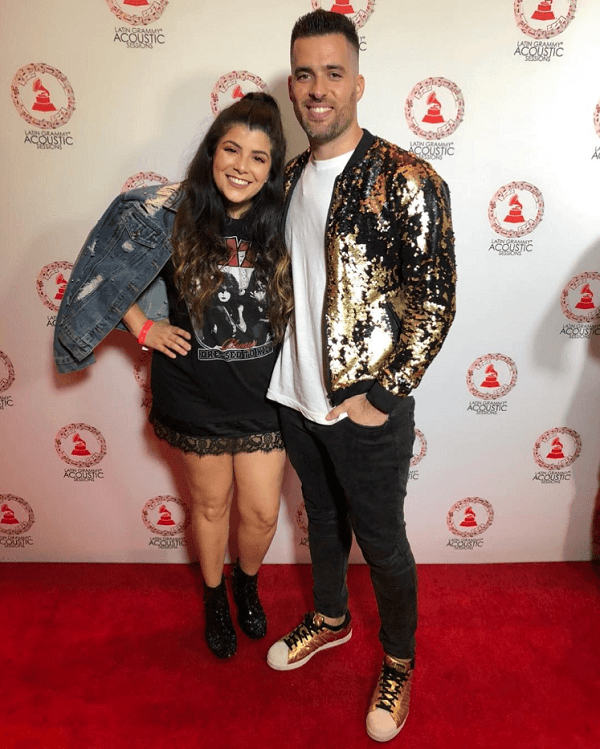
Rebeca and Armando in 2018
Rebeca Rodriguez and Armando Montiel at the Latin Grammys 2018

Rebeca and Armando’s beginnings in music

Armando began his story by telling us that, in his case, he has always loved music and enjoyed listening to it live. In his native city of Maracaibo, there were many street concerts featuring national and international artists, which sparked his interest in joining his school’s marching band between the third and fourth grade. This, in turn, led him to participate in some intercollegiate gaita festivals, which are very popular in many cities of the South American country. 

This love for music took shape when the young man moved to Caracas and began his percussion lessons to finally have more formal training in this art. However, his parents made him promise to study a “real” career and then do whatever he wished for. He did so and studied civil engineering at Nueva Esparta University, but he has never practiced it, as music has always been his profession.

Rebeca also loved music, and from an early age, was always reciting poems, learning songs, and singing them at full blast. Then, as she grew up, she slowly built her career and made decisions based on that goal. Just as Armando, she participated in her school’s gaita festivals and took singing and dancing lessons, which led her to join bands in Caracas and become a backup singer for great artists.

Like Armando, she also studied a university degree, but in her case it was social communication at Andrés Bello Catholic University. She does not practice it either, although she does use her knowledge in favor of her artistic career.

Armando playing live
Venezuelan percussionist Armando Montiel playing live

Groups prior to La Nota Band

Armando said with a laugh that he could not mention all the bands and artists he has worked with because there are too many, but the most important ones were Ricardo Montaner, Chino y Nacho, Víctor Muñoz, Elvis Crespo, Guaco, Treo, Mermelada Bunch, and a few others. 

Meanwhile, Rebeca pointed out that they met playing for Son Bubalú in Caracas and continued to share experiences in a certain way. While Armando was Chino y Nacho’s percussionist, Rebeca was hired as their backup singer, so they continued to live together and grow as artists in the same environments.

Their professional relationship developed at such a level that they ended up moving to the United States together in 2014 to take advantage of some work opportunities that arose. Among the artists they were able to play with in the United States are Gloria Estefan, Wisin y Yandel, Daddy Yankee, Luis Enrique, José Alberto “El Canario,” and many more. 

Already in the year 2016, both realized that they loved collaborating with music greats, but also wanted to start their own business so they would not have to rely on what others wanted for them. That is when La Nota Band was born, with support from family and friends who were willing to help them on this new path.

Rebeca and Yandel
Puerto Rican singer Yandel and Rebeca Rodriguez at the Premios Lo Nuestro gala

The beginning of La Nota Band

In addition to being on their own, another thing Rebeca and Armando wanted to do was to offer employment to other musicians who were in the same situation as them years ago. This was the case of Armando’s twin brother, who was about to go to the United States and also devoted himself to music on percussion. Then, he bought a drum set so he could become the band’s drummer and his brother could take his place as a percussionist.

From the beginning, they have always focused on pleasing both Anglo-Saxon and Latin audiences, so they have been working to fill their repertoire with songs in both English and Spanish in order to enliven events where the two cultures come together.

What they have learned from the artists they have worked with

Of all the great artists Rebeca and Armando have been fortunate enough to work with, there are a number of things they have learned and applied to their own careers. One of these was the use of playback, as it is an extremely common and necessary resource in modern music. There are also other elements used to increase the sound quality of their performances.

Similarly, the discipline, professionalism, and perseverance necessary to manage this business are things they have seen in other artists and that have helped them get the place they want in the industry, which they also expect to achieve. 

The Venezuelan musicians always keep their eyes and ears open to capture what can work for them and apply it to their own project.

La Nota Band and Chino y Nacho
Part of La Nota Band with Chino y Nacho at the Premios Lo Nuestro gala 2016

Dreams fulfilled

Among the many dreams come true thanks to music, Rebeca and Armando appreciate being able to travel regularly to many countries, even if their professional activities prevent them from sightseeing as they would like. This is something they would not have accomplished with other kinds of work, which they are enormously grateful for.

In addition to that, they are pleased to have been able to perform on big and famous stages such as Crypto.com Arena, formerly known as Staples Center, and Madison Square Garden in New York, something they never would have thought possible in their early years in Venezuela.

And last but not least, their talent and hard work have also led them to perform in important award ceremonies such as the Latin Grammys, Premios Juventud, and Premios Lo Nuestro.

Read also: Colombian dancer and instructor Camila Cepeda takes salsa caleña to Canada

Spain is reborn in new Cuban music by Yalil Guerra

The immense Hispanic legacy is usually relegated to the background, while being a key part of our sound identity.

Reference Image about Spain
Reference Image
Yalil talking about Spain
Composer, bandleader, and Latin GRAMMY winner Yalil Guerra.
Image courtesy of RYCY Productions

By YALIL GUERRA

The birth of the Cuban nation, after gaining its independence from its former colonizer, Spain, marked a break that transcended political concerns and entered strongly in the cultural aspect. Cubans were “denaturalized” after the Treaty of Paris in 1898, leading to a profound metamorphosis of identity that was inevitably reflected in our music. Out of that process a fresh and powerful sound expression emerged: a vibrant fusion between European, African, and North American influences, something that had already begun in the 19th century but was driven by a growth music industry and the cultural magnet of its northern neighbor, the United States.

For years I have listened to, studied, and enjoyed Cuban popular music — both the old and contemporary— and what I notice is that most productions tend to highlight the folklore—especially the Afro-descendant roots and the imprint of jazz — while the immense Hispanic legacy is usually relegated to the background, while being a key part of our musical identity.

In Cuban music today, both on and off the island, the record business is committed to a modern and bold sound. Compositions explore contemporary harmonies, bitonality, and extended chords — resources that come from both classical music and jazz — entwined with surprising and refreshing harmonic cycles. In wind instruments, melodic lines and musical motifs reveal the virtuosity and creativity of a new generation of musicians and arrangers, who are raised in solid academic traditions but open to global influences. The percussion stands out for its polyrhythm and the number of sophisticated tutti that require a unique expertise, but the Spanish influence is quite absent or just present in the language.

In contrast, What caught my attention was the newest music of singer, composer, and multi-instrumentalist Alain Pérez on his new album Bingo, where Spain resonates powerfully and recognizably. I find this gesture very special, as it vindicates a Spanish legacy in Cuban music that is often forgotten or minimized. I also highlight the case of pianist and composer José (Pepe) Rivero and his new album Estampas y Raíces where he pays tribute to classical Spanish composers, mixing their works with his unique interpretive style, bringing it closer to the language of Cuban jazz that is so familiar to him.

What about the large mass of Cuban artists and musicians who do not pay homage to the mother country? It is that we lost our historical memory or has it been erased? Is the omission of certain elements of our Spanish traditions a symptom of what some call the “Spanish Black Legend,” a myth that has seeped into our musical history and present?

I remember when Juan Perón said:

“And through the figure and work of Cervantes, Argentina pays tribute to the mother country, fruitful, civilizing, eternal, and to all peoples who have emerged from its maternal womb.” “And through the figure and work of Cervantes, Argentina pays tribute to the mother country, fruitful, civilizing, eternal, and to all peoples who have emerged from her maternal womb.”

Cuba is no exception.

Over the years, in response to the previously exposed, I have tried to make Spain present in my work: incorporating harmonious colors, Andalusian cadences, and the Phrygian mode—so tied to the Iberian sound—creating compositions devoted specifically to Spanish culture, especially my new string quartet entitled “Noches de España”, following the line of our great composer Ernesto Lecuona, who knew how to bring to life both African and Spanish things. As for me, I seek to keep alive that heritage and project it onto 21st-century Cuban music, without forgetting our important African legacy.

Today, rescuing the Spanish heritage in Cuban music is not just an act of memory: it is also an opportunity to rediscover the richness of crossbreeding that continues to define who we are and how our history sounds. Contemporary Cuban music not only looks to the future: it sings to its African roots, but it also needs to reconnect with that other essential part of our identity. After all, we think, love, and communicate in Spanish. Every note, every guitar or lute that sounds, will evoke that heritage and bring us near to the fullness of what we are.

It does not matter the color our skin is, or whether our grandfather was from Asturias or the Congo: cultural fusion is what forged our identity and will remain the essence of Hispanic America. Mexican writer, philosopher, and politician José Vasconcelos said: “I am Hispanic, and nothing about Hispanic is alien to me.”

At this crucial time, Cuban music has the challenge—and the opportunity—to sing its entirety. And in doing so, it shows us that, beyond styles or labels, what unites us is the sound of a common history.

DMA Yalil Guerra

Read also: Yalil Guerra and the musical roots of his talent

Ania Bartelmus from La Candela Flamenco talks about her performance at the Hispanic Heritage Celebration

For some time, Hispanic genres have attracted people from all over the world, who have been captivated by the rhythms and colors of our music and traditions. Such was the case of professional dancer and director of La Candela Flamenco Company, Ania Bartelmus, who despite her Polish roots, could not help but fall in love with these artistic expressions, prompting her to become one of the leading figures of flamenco in Atlanta, Georgia.

Ania was kind enough to take a few minutes out of her busy schedule to talk exclusively with International Salsa Magazine and treat some issues related to her beginnings and current career. 

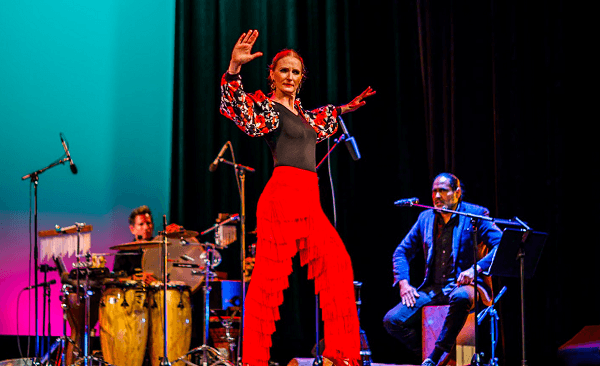
Dancer Ania Bartelmus performing live
Dancer Ania Bartelmus ”La Candela” performing live with Dave Holland and Juan Solas Machado in the background

How Ania’s interest in flamenco and Latin jazz was born

Although Ania was not born into a family of musicians or dancers, she has always been drawn to art and wanted to pursue one of its many branches as an adult. She started taking dance classes in different styles, including ballet, ballroom dancing, contemporary dance, and a little flamenco. 

At that time, at 18 years old, the young woman recalls attending a flamenco show by Spanish composer and guitarist Paco Peña in her hometown. She was so fascinated by the musician’s performance that she wanted to focus a little more on that genre and, if possible, manage to professionalize.

Then, her dance classes began to fully focus on flamenco and at much more advanced levels than before. This appeared insufficient to her, so she decided to live in Seville, Spain, for a few years to learn directly from the source.

La Rubia de La Candela

Ania was fortunate enough to have great teachers who turned her into the professional she is today and one of them was Curro Fernández, who affectionately nicknamed her “La Rubia de La Candela” when she was his student. During her first year in Seville, the dancer enrolled in the school of Esperanza Fernández and Miguel Vargas, the first being her singing teacher. 

Esperanza was originally Ania’s teacher, but she was constantly touring and could not always attend the scheduled classes. Therefore, it was her father, Curro Fernández, who took her place and taught the classes instead of her, which made him some kind of father and mentor for Ania and the rest of her classmates. His knowledge and good humor made him one of the best references for the girl on the way she had to go.

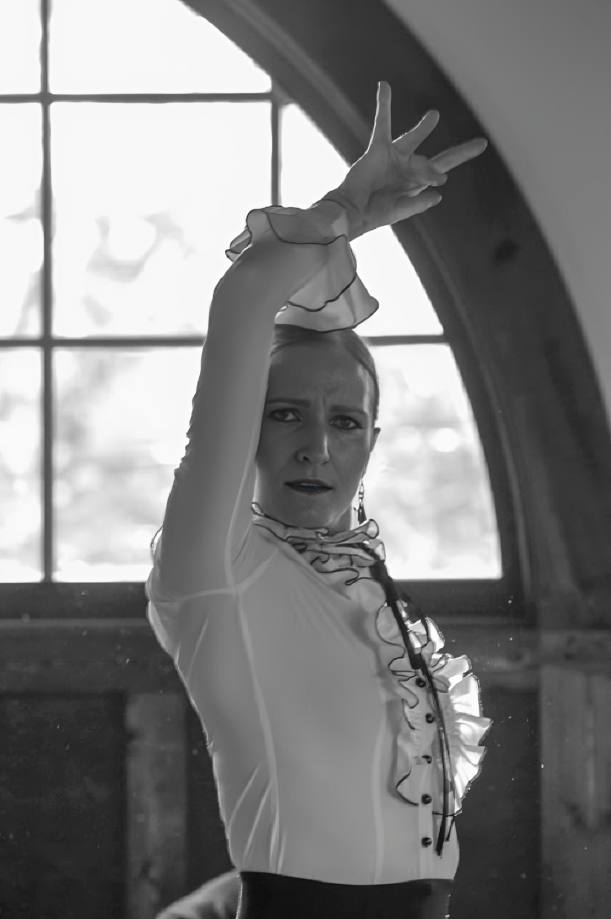
Ania posing
Dancer Ania Bartelmus posing for the camera

Creation of La Candela Flamenco

In 2014, Ania officially started her company, which initially received the name Ania Flamenco, but she later renamed it La Candela Flamenco in order to give more importance to Ania’s stage name. 

At the beginning, the company was seeking to present Spain’s traditional flamenco, but this became a tough task to pull off in the United States, as many of the best flamenco singers are not based there. So Ania decided to change her strategy and opted for a more Latinized flamenco, since most of her musicians come from Latin countries and a large part of the public feels a much stronger connection to Latin genres than to traditional flamenco.

On this subject, he also said: “We continue to respect the main rules of traditional flamenco, but we do not include flamenco singers because of the difficulty in finding them in the city. Our shows focus on other flamenco elements where we can best showcase the tradition’s richness.”

Current members of La Candela Flamenco Latin Band

La Candela Flamenco Latin Band is the company’s main group and is made up of a wide variety of famous musicians, one of them being Venezuelan guitarist José Chirinos, who joined the band in 2018 and contributed greatly to expanding the company’s horizons thanks to his background and the rhythms he brought from his homeland.

Thanks to Jose, Ania met Cuban percussionist Juan Pablo Solas Machado, who brought a lot of experience in flamenco, having been part of a company that toured the world with a Cuba’s flamencoised repertoire. The other percussionist who more recently joined is American Dave Holland, providing great knowledge about rhythms from around the world and serving as a connection between the Latin and the Anglo-Saxon souls for the rest of his bandmates.

We also cannot fail to mention Venezuelan pianist José Manuel García, one of last year’s great additions to the team along with fellow pianist Tony Castillo.

Finally, we also have Bulgarian flutist Teodora Stoyanova, whom Ania met through Jerry Fields, the percussionist with whom she started the company in 2014.

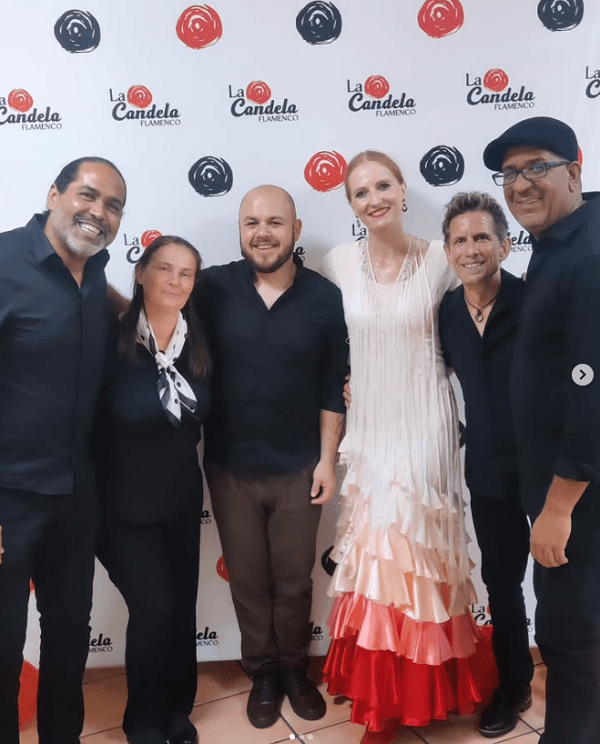
Ania and the rest of the musicians
From left to right: Cuban percussionist Juan Solas Machado, Bulgarian flutist Teodora Stoyanova, Mexican guitarist Ricardo Sánchez “Ricardito”, dancer Ania Bartelmus, American multi-percussionist Dave Holland, and pianist Tony Castillo

Hispanic Heritage Celebration

One of the major events in which La Candela Flamenco Latin Band usually participates annually is the Hispanic Heritage Celebration, to be held on October 25 at the Emory Performing Arts Studio in New York. This will be the third time they have presented this show in Atlanta, although in previous years, the concerts were held at the Roswell Cultural Arts Center.

Ania was first contacted to participate in the event in 2023, as its organizers wanted a show that reflected flamenco in the context of Hispanic heritage. On that occasion, Jose Chirinos played a leading role in the concert, while for the second edition, La Candela Flamenco Band featured the great talent of Mexican composer and guitarist Ricardito Sánchez and the aforementioned Tony Castillo. All of these musicians helped La Candela Flamenco to become more diverse and expand much more into Latin jazz and other rhythms of this type.

Thanks to the great job done by the team, for the second edition of the Hispanic Heritage Celebration, Ania noticed much more interest in the band’s performance than the previous year, and thanks to past experience, the next show worked best. 

For the third edition, in which the talented dancer and her group will perform once again, International Salsa Magazine wishes them all the best and we have no doubt that everything will turn out in the best possible way. 

Read also: Cuban singer-songwriter Osmay Calvo shows his versatility in the New Jersey music scene

  • « Go to Previous Page
  • Page 1
  • Page 2
  • Page 3
  • Page 4
  • Page 5
  • Page 6
  • Interim pages omitted …
  • Page 23
  • Go to Next Page »

International Salsa Magazine (ISM) is a monthly publication covering salsa activities around the world and has been publishing since 2007. It is a worldwide network of volunteers coordinated by ISM Magazine. Together, we work to strengthen salsa events around the world.