• Skip to primary navigation
  • Skip to main content

International Salsa Magazine

  • HOME
  • Previous editions
    • 2026
      • ISM / June 2026
      • ISM / May 2026
      • ISM / April 2026
      • ISM / March 2026
      • ISM / February 2026
      • ISM / January 2026
    • 2025
      • ISM / December 2025
      • ISM / November 2025
      • ISM / October 2025
      • ISM / September 2025
      • ISM / August 2025
      • ISM / July 2025
      • ISM / June 2025
      • ISM / May2025
      • ISM / April 2025
      • ISM / March 2025
      • ISM / February 2025
      • ISM / January 2025
    • 2024
      • ISM / December 2024
      • ISM / November 2024
      • ISM / October 2024
      • ISM / September 2024
      • ISM / August 2024
      • ISM / July 2024
      • ISM / June 2024
      • ISM / May 2024
      • ISM / April 2024
      • ISM / March 2024
      • ISM / February 2024
      • ISM / January 2024
    • 2023
      • ISM / December 2023
      • ISM / November 2023
      • ISM / October 2023
      • ISM – September 2023
      • ISM – August 2023
      • ISM July 2023
      • ISM Edition June 2023
      • ISM – May 2023
      • ISM April 2023
      • ISM March 2023
      • ISM February 2023
      • ISM January 2023
    • 2022
      • ISM December 2022
      • ISM November 2022
      • ISM October 2022
      • ISM September 2022
      • ISM August 2022
      • ISM July 2022
      • ISM June 2022
      • ISM May 2022
      • ISM February 2022
      • ISM January 2022
    • 2021
      • ISM December 2021
      • ISM November 2021
      • ISM October – 2021
      • ISM September 2021
      • ISM August 2021
      • ISM July 2021
      • ISM May 2021
      • ISM April 2021
      • ISM June 2021
      • ISM March 2021
      • ISM February 2021
      • ISM January 2021
    • 2020
      • ISM December 2020
      • ISM November 2020
      • ISM October 2020
      • ISM September 2020
      • ISM August 2020
      • ISM July 2020
      • ISM June 2020
      • ISM May 2020
      • ISM April 2020
      • ISM March 2020
      • ISM February 2020
      • ISM January 2020
    • 2019
      • ISM December 2019
      • ISM November 2019
      • ISM October 2019
      • ISM Septembre 2019
      • ISM August 2019
      • ISM July 2019
      • ISM June 2019
    • 2016
      • ISM December 2016
      • ISM November 2016
      • ISM October 2016
  • Spanish
  • Download Salsa App
    • Android
    • Apple

Search Results for: Spanish in the United States

The Albuquerque Latin Dance Festival

North America / USA /

The Albuquerque Latin Dance Festival, Aug 24-27, 2017
The Albuquerque Latin Dance Festival - 2017
The Albuquerque Latin Dance Festival – 2017

Performances films Lectures Dance Workshops

What better way to enjoy Albuquerque’s warm summer nights than with Latin dancing!

The Albuquerque Latin Dance Festival is three days of instruction, workshops lectures and dancing under the stars. Learn at multifaceted workshops the many Latin dance styles, or for beginners the Salsa Dance Bootcamp. Music’s and concerts make it an unforgettable event.

Know the directors!

John E. Mancini:

John E. Mancini
John E. Mancini

Music and Arts have been a part of Mr. Mancini’s life since a young age, Performing in Musicals such as The Sound of Music as Maximilian Detweiler, Bubble Trouble, and in Camelot with the Albuquerque Civic Light Opera now Musical Theater Southwest. Mr. Mancini has participated in choral singing again since his youth, from elementary school through high school and college and was a member of the New Mexi-cords, the Barbershop Chorus.

He also studied professional voice with David Majoros professional Baritone from New York City. Within the past 3 years Mr. Mancini began to study dance at the Arthur Murry Dance Studio in ABQ, including smooth and rhythm forms. Mr. Mancini was introduced to Latin Club dancing about 3 years and has become an avid enthusiast. As a result of this he became actively involved with the formation and operation of Guanabana Productions, Inc. DBA the Albuquerque Latin Dance Festival.

Julie Brovko (Treasurer and Volunteer Coordinator):

John E. Mancini
John E. Mancini

Julie began dancing as a child but did not discover Latin dance until her freshman year of college. After her first salsa class, she knew she was hooked. Julie moved to Albuquerque in 2009 to start a doctoral program in clinical psychology at the University of New Mexico and immediately sought out the dance community. Her work with the ABQ Latin Dance Festival started in 2010 when she volunteered to run he registration table and she has been increasingly involved ever since.

Wellington Guzman (Vice President):

Wellington Guzman
Wellington Guzman

Wellington hails from Santo Domingo, Dominican Republic. He loves music, dancing and people. He has been involved in multiple aspects of Latin music offering in Albuquerque and New Mexico. Since moving his family to New Mexico in 1995, he’s been promoting and producing salsa and merengue music events here for the love of the genre ever since. He is a well-known radio personality on KUNM and has been DJing for over 18 years. If you haven’t had the pleasure of meeting Wellington [yet], you will soon! He is just ½ a degree of separation from anyone and everyone here in New Mexico.

Kari Leiting (Secretary):

Kari Leiting
Kari Leiting

Kari began with vaious forms of dance at the age of four. This love of dance led to teaching in Chicago and Minnesota. While teaching dance, she discovered her interest in Latin dance. Kari moved to Albuquerque in 2009 to start the clinical psychology doctoral program at the University of New Mexico. She has enjoyed the fact that the Latin dance community is so much broader in Albuquerque than in the Midwest. Her work with the ABQ Latin Dance Festival started in 2010 when she volunteered to help monitor classes and her involvement has increased each year since.

Idalia Lechuga – Tena:

Idalia is in her second year volunteering with the ABQ Latin Dance Festival and focuses on the Marketing/PR and Government Affairs strategy. A few of Idalia’s passions are music, dance and art. She dances salsa, flamenco and Tango, which she believes are three of the most passionate dances.

She has degrees in Economics, Political Science and International Politics and is fluent in four languages: Spanish, French, Italian and English, and has traveled to fifty four countries around the world. She has studied in several countries such as Chihuahua-Mexico, Pamplona-Spain, Paris-France and at the University New Mexico, to name a few.

Idalia Lechuga - Tena
Idalia Lechuga – Tena

During her undergraduate career, she wrote an electronic academic research bool on “The Positive Effects of the Immigration Spectrumin the United States in the Economic and Political Sector, with a concentration in Latino immigration” which she has written in Spanish, French and English and has presented in coferences at Universities throughout the U.S.

Idalia loves classical music, opera, mariachi music and is an avid violinist. She has played with the Albuquerque Philharmonic when she is not too busy with the many organizations she is also a painter, mostly oil and she describes her art style as early DaVinci and late Picasso. She loves spending time with her family and her Chihuahua dog Kochinada.

Idalia is the owner of ILT International, LLC a consulting firm that offers services in Government and Political Affarirs and Marketing and PR in English, Spanish, French and Italian. She also started a winery in Chihuahua, Mexico in partnership with her father. Idalia currently serves as Communications Director with the State Programs. She has served in high level administrations and is heavily involved in local and statewide politics, international groups, and in her local community, she serves as president of her neighborhood association in the International District in Albuquerque.

Santiago Candelaria:

Santiago Candelaria sits on the board of directors of the Albuquerque Latin Dance Festival as a representative of the National Hispanic Cultural Center (NHCC).
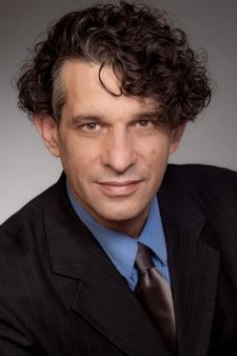
Santiago Candelaria
Santiago Candelaria

He has been a very proud staff member of the NHCC’s Performing Arts program for more than 11 years-an organization he’s proud to serve, humbled to represent, and grateful to be a part of.  It is part of the NHCC’s work ethic and organizational culture to encourange staff to work with the community and with presenting partners in this capacity.

Service on other organizational boards by NHCC staff members in an important part of the Center’s work culture because it strengthens community bonds, continues to raise the bar for programming quality, and allows the Center to be of service to the community, both locally and at-large.

Santiago has an extensive history with social styles of dance. Previously, he was ballroom dance instructor at Strictly Dancing in Santa Fe, now the Dance Station. He worked as an instructor with High Altitude Swimg, teaching swimg and Lindy Hop and was a founding member of The Santa Fe Social Club, teaching salsa and training instructors. In Albuquerque Santiago has worked with Salsa Baby and Salsasana. He has choreographed for Fright Night, 5$ a Day, and Disco Gravy on film as well as for numerous theatrical performances.

Jessica Montoya (Director of Programming for Dancers/Performers)

Jessica is a native New Mexican born and raised in Taos, NM. She began dancing at the age of 4 years old at the Betty Winslow Dance Studio. At the age of 16, Jessica studied abroad in Valencia, Spain, where she studied Flamenco.

Jessica Montoya
Jessica Montoya

Upon returning, she performed dinner shows at the Historical Taos Inn and festivals around New Mexico. She also continued studying Flamenco with Maria Benitez summer programs in Santa Fe, and later with Eva Enciña & Pablo Rodarte at the University of NM. Continuing her education at UNM, she also studied Jazz (Contemporary and lyrical) and Hip Hop with the renowned Loren Fletcher Nickerson.

After graduating from UNM with a BA in Psychology / Communications and an endorsement in Performing Arts, she decided to get back into her Latin Roots and put her energy into Salsa, Bachata, Cha Cha Cha and Reggaeton.

You can also find Jessica teaching Salsa skills and drills classes at Defined Fitness (Riverside) and Maple Street Dance Studio in Albuquerque, NM.


 

Puerto Rican American bandleader and singer Elle Jay is proud of her roots

After so many years of coexistence between Latinos and Americans on US soil, there are many citizens who, as a result of this mix, carry in their DNA both identities and that is how they live their lives. Such is the case of Elle Jay, the founder and lead singer of Spanglish Latin American Band, with whom we talked about her life, career, and current orchestra.

Elle Jay recording
Bandleader and singer Elle Jay recording in the studio

Elle’s beginnings in music

Elle has been singing since she was very young. In fact, her mother says that when she was just six months old, she flounced excitedly whenever she heard Latin music. In addition, she comes from a family of musicians, firstly with her father, who played drums in an orchestra, and her mother, who was a singer. For this reason, music was always very present in each and every stage of her life, but she would not become a professional until many years later.

Moreover, once she grew up and became an adult, she felt she did not yet have the skills required to be a good singer, so she had to roll up her sleeves and start to gain experience if she wanted to reach the level she sought. That is how she met the members of a salsa orchestra that played in her area and asked them if they could give her the opportunity to join the group and get better over time. They said yes, and that is when she began to learn everything she could under the wing of various veteran musicians, who taught her to understand the rhythms and clave in the various genres of Latin music. 

She also joined other bands like the Orquesta Curaré and Pa’ Gozar Latin Band led by vocalist Laura Sosa, whom Elle considers one of her greatest mentors and teachers in the competitive and complex world of music.

Elle Jay and Jorge Rosario
Guitarist and bassist Jorge Rosario and Elle Jay presenting an evening serenade

How Spanglish Latin American Band got started

Several years later, she finally felt ready to start her own project according to her professional aspirations and therefore stop relying on what others were looking for in a group. In that regard, she took advantage of her half-Puerto Rican and half-American identity and her fluency in Spanish and English to develop an idea that she would share with other musicians she met in her neighborhood. These artists liked it and decided to join her on this road and see what the future held for them.

That was about six years ago, and the project has not done more to grow over time thanks to the tenacity of both Elle and the rest of the team who have made it all possible.

Current and former members of Spanglish Latin American Band

As many other groups of its type, Spanglish Latin American Band has undergone many changes since its founding. One of the few who has stayed in the band from day one is guitarist and bassist Jorge Rosario, who has accompanied Elle at all times and is by her side to this day. He also supports her greatly in everything related to sound and recordings.

The rest of the musicians have come and gone since the beginning. Among the current members of the band are Elle, Jorge, Italian trombonist Mike Matarrazo, and pianist Walter Ávalos. They are currently the most visible and stable faces of the group, while the others only play along with them occasionally.

Elle Jay and the rest of the band
Conguero Mike McSweeney, trombonist Mike Matarrazo, bandleader and singer Elle Jay, drummer Hermidez, bassist and guitarist Jorge Rosario, pianist Walter Ávalos, and bongo player Jay Torres

Half Puerto Rican, half American

In other interviews, Elle has said that she identifies herself a lot with both the United States and Puerto Rico, which she has wanted to reflect in her music. That is why she has always felt a strong connection with artists like Selena, as “The Queen of Tex-Mex” was also very aware of her Latin culture despite being born in the United States. Quintanilla inspired her so much that she wanted to make a tribute to her by singing her famous song “Bidi Bidi Bom Bom” in reggae.

Another example of this is the group Sade with the song “The Sweetest Taboo,” which Elle translated into Spanish and covered in rumba and salsa to “latinize” it. She has done the same with many other well-known songs that have been covered in salsa and Spanish by her group. 

Although the majority of the public has shown great receptiveness to their work, Elle also points out that this has caused them some problems with producers and event promoters who think that the group is not American or Latin enough, which has negatively impacted them in some bookings. However, the artist assures that both she and her bandmates stand firm in their convictions and should not change the basis of their project just because a few people do not like it.

“This is who I am, and I can’t please everyone. There always will be people who say yes or no because that’s how this business works, so you have to be strong and move forward despite the obstacles you face,” Elle said on the subject.

Elle Jay and her students
Elle Jay with her students during a salsa class. She is also a dance teacher

To communicate with Spanglish Latin American Band, you can do so via social media or email:

Facebook: Spanglish Latin American Band

Instagram: @spanglishlatinamericanband

Email: [email protected]

Read also: Trombone player Lindsey McMurray from the women’s orchestra Las Chikas

Bachata Festival 2017 in San Francisco, California

North America / USA / California
Bachata Festival 2017 in San Francisco, California

The Ultimate Bachata, Salsa, Kizomba and Zouk Experience… A Dance Convention for Beginners, Intermediate & for all levels of dancing! The 9th Annual SF International  Bachata Festival

  • Date: JULY 21st – 24th, 2017
  • Bachata | Kizomba | Zouk | Salsa (4-Party Rooms)
  • 3 days and  3 nights of dancing
  • Friday, Saturday & Sunday from 10am until 6am!
Photos from the 2017 Bachata Festival in San Francisco

Transform your dance skills in one weekend with these world renowned dance instructors plus a dance experience of a lifetime!

  • Live Band
  • Dance Workshops from 10am to 5pm
  • Performances Every Night Ÿ Social Dancing until 6am
  • Jack and Jill Contest prize Giveaways

SFIBF, (San Francisco International Bachata Festival) is the largest and hottest Bachata festival in the world, located in one of the greatest city in the world – San Francisco. Created by Rodney Rodchata Aquino, along with its sister event Reno Bachata Festival, they are the first Bachata festivals in the USA. It celebrates the music and dance of Bachata, preserving its roots and accepting its evolution, as well as Salsa, Zouk and Kizomba.

Marriot Flyer
Marriot Flyer

Festival Line-Up

More than 20 instructors, DJs and Live Band for this year’s festival!

Adam Taub (Colorado)/ Bachata:

Adam Taub is one of the few ones who have seriously studied authentic bachata (the way Dominicans dance). SFIBF is extremely proud to present him with his special music, history and dance workshops at the San Francisco International Bachata Festival – July 21-23, 2017.

Adam Taub
Adam Taub

Adam Taub is a documentary film director from Colorado whose films include La Quinceañera, Don Angelo, and El Duque de la Bachata. His film La Quinceañera won the 2007 award for Best Documentary at the Angelus Student Film Festival in Hollywood, California and Best Documentary at the San Diego Latino Film Festival.

Alberto & Nola (Australia) / Bachata:

Nola Komis is the Founder, Director and Principal Instructor of A Touch of Salsa Latin Dance Studios in Sydney, Australia. A Touch of Salsa runs classes in Salsa, Bachata, Zouk and Kizomba. They also offer competition courses, workshops, performance courses and more and will this year will be celebrating 11 years.

Alberto and Nola
Alberto and Nola

Nola Komis and Alberto Torres-Perez have been teaching together for the past five years and they are both passionate and love sharing their passion for dance. Nola and Alberto have both travelled to Athens, Geneva, New Zealand, Hawaii and all over Australia where they have taught workshops at Festivals/Congresses to packed participants and have received many great reviews for their classes.

Nola and Alberto are looking forward to being part of the San Francisco Bachata Festival in July 2017.

Emelie Andagan (Sacramento) / Salsa:

The Yemaya Salsa Dance Company was founded by Emelie Andagan & Heather Wong-Xoquic in October, 2000. Emelie learned to dance salsa after only a few years due to her extensive dance background of over 20 years and many years of experience as a ballet and jazz student, and later a teacher at the Ballet Theatre of Dover Dance Conservatory.

Emelie Andagan
Emelie Andagan

The troupe started as a small group of only four couples that rehearsed twice a week in various garages and practically anywhere with a smooth surface. She owns and manages Yemaya Dance Studio in Sacramento, and is the main director of Yemaya dance Company.

Emelie Andagan
Emelie Andagan

Luis Aguilar (San Francisco) / Salsa:

Luis Aguilar debuted in 2000 with the Salsa Mania Dance Company in San Francisco. Since then, he performed with such giants in the Latin music industry as El Gran Combo de Puerto Rico, the Tito Puente Orquestra, Celia Cruz, Ray Barretto, Jose “El Canario” Alberto, Oscar de Leon, Eddie Palmieri, the Spanish Harlem Orquestra and Sonora Carruseles. In addition to his impressive performance credits, Luis has taken 1st place in many Latin dance competitions and Congresses such as The San Francisco International Salsa Congress and the Bay Area Salsa Dance Competition.

Luis Aguilar
Luis Aguilar

Since joining forces in 2007, Luis and Anya have become the ON 2 WORLD SALSA CHAMPIONS for the second year in a row, along with having become two time undefeated San Francisco Congress Salsa champions in ’09 and ’10, undefeated two time New York Congress champions in ’09, ’10, Puerto Rico Hustle and Salsa champions ’09, and are currently the North American Salsa Champions and two time winners of the NY/NJ salsa open. With their combined backgrounds, Luis and Anya make a dynamic duo that brings a fresh new element to the salsa dance floor.

Benga Da Beatz (Ohio) / Kizomba:

Benga is a Nigeria born international dancing sensation, with backgrounds in several African dances, ballroom dances, American dances, and latin dances. From Waltz to Tango, Makoussa to Kizomba, hip hop to west coast swing, and Irish dance to Bollywood. Benga has intensive dancing experiences all across the globe.

Benga Da Beatz
Benga Da Beatz

An Afro Beats and Afro-cuban solo performer, and a latin dance instructor well known to many now as the Da Beatz. With 26 years of African Dancing and 6 years of professional latin dancing, Benga is teaching and promoting at every Latin events possible with his own vibrant style of Fun Swagness.

Cymeone Mopao (France) / Kizomba:

Cymeone Mopao
Cymeone Mopao

Cymeone Mopao is a well-known kizomba instructor based in Paris. He is one of the first instructors to have taught kizomba in France beginning in 2009. Born into a family of musicians, he was accustomed to lots of music and quickly adapted to the dance lifestyle. As he immersed himself into dance, he became proficient in African style dances such as ndombolo and coupé décalé.

Cymeone Mopao
Cymeone Mopao

When he was 18, he joined a group of dancers called “les coeurs brisés “. From there he became interested in other Afro style dances like Zouk, Kompa and Kizomba. He gave his first Kizomba class in 2009 and became one of the most wanted instructors in international festivals. In 2010, he was the first French instructor to teach Kizomba in the United States (New York).

Bruno & Olga (Los Angeles) / Zouk:

Bruno and Olga started dancing together in November 2015 and have since taught and performed at numerous events around the country from local workshops to large international congresses.}

Bruno & Olga
Bruno & Olga

In 2016 they took second place in the semi-pro division of the Zouk US Open with their now well-known choreography piece “Worth It” and shortly after got featured in the “Fences” movie, that’s currently in production stage. Olga has a rich dance background in classical ballet, modern, contemporary and commercial jazz, as well as hip hop and heels choreographies. She is also an All-Star west coast swing dancer. Bruno is trained in hip hop, salsa, kizomba, tarraxinha, semba, and of course brazilian zouk.

He has been on the social dance scene of his hometown Braga, Portugal since he was 14 years old. Since his move to the US he’s been mainly focusing on zouk and kizomba, training and teaching around the country with his partner, performing in ISDC dance company for a while, and currently codirecting the Zouk team at Ivo Vieira’s Dance company and learning from the best dance professionals in the world.

Sandro (Brazil) / Zouk:

Sandro Soncini is a dancer, choreographer and dance instructor from Florianopolis, Brazil. He has studied and trained in dance for over 10 years. Sandro is experienced in many partner dance styles, and has intensively studied the concepts of body movement driven by his training in tango.

Sandro
Sandro

In 2010 Sandro moved to Argentina to continue to develop his dance skills and education at DNI tango school. Sandro has participated in various congresses and competitions, including BAILA FLORIPA DUO, where in 2012 together with his partner he placed 3rd.

Sandro has taught in zouk throughout Canada, United States and Brazil. Currently Sandro is living in Vancouver, Canada with a focus on promoting zouk in the Pacific North West.

Bachata Festival 2017, Tickets / Passes:

  • Tickets: Full Passes $200.00 Unlimited. (EXP July 15th)
  • Tickets at Doors: $250 Buy Your Passes in mybachatafestival.com

Location: The SF Marriott Hotel 1800 Old Bayshore Hwy, Burlingame, CA 94010 Discounted Nightly rate of $141 a night (you must use the site – www.sfibf.com) Free Shuttle 24 hours a day.

Bachata Festival 2017

Eduardo Tancredi is a renowned Uruguayan pianist and composer specializing in Latin Jazz

Eduardo was a distinguished student at Berklee College of Music in Boston.

Eduardo was an outstanding student at the Berklee College of Music in Boston.

Musical Style: His music fuses a wide variety of Afro-Latin rhythms (such as Uruguayan candombe, Brazilian samba, Cuban son, Peruvian landó, and Venezuelan joropo) with the harmonies and melodies of modern jazz.

Accolades: He has recorded several CDs with his own compositions and has received awards for his outstanding performance in the Latin jazz scene. His album “Ongoing Dreams” was chosen as the best album in its category in 2002 by “The Boston Globe.”

Teaching Experience: During his time in the United States, he was a piano and harmony professor at Berklee College of Music. Since 2003, he has resided in Barcelona and teaches at ESMUC (Escola Superior de Música de Catalunya).

Collaborations: He has collaborated with numerous musical groups as a pianist and is a significant figure in the jazz scene in Spain.

Eduardo Tancredi is a prominent figure in Latin Jazz, known for his ability to integrate diverse Latin American rhythmic influences with the harmonic sophistication of modern jazz.


Latin accents took some time to establish themselves in jazz music. Very few composers ventured into that genre in the early decades of the last century, to the point that their timid attempts were considered exotic and trivial.

Initially, one recalls passages from William C. Handy’s “St. Louis Blues,” some Scott Joplin ragtimes, Jelly Roll Morton’s references to the “Spanish tinge,” or, shortly after, the themes performed by Duke Ellington’s orchestra.

Eduardo Tancredi
Eduardo Tancredi

It was in the 1940s that the Latin touch gained relevance. Cuban Mario Bauzá, who had played trumpet in Chick Webb’s and Cab Calloway’s orchestras, propelled the success of Machito’s band and convinced Dizzy Gillespie to hire conga player Chano Pozo.

Afro-Cuban influence became powerful in the following decades through sones, charangas, rumba, mambo, and salsa. Names like Chico O’Farrill, Tito Puente, Mongo Santamaría, Ray Barretto, and Chucho Valdés became highly regarded, and their works inspired a legion of jazz musicians.

Eduardo Tancredi es un reconocido pianista y compositor uruguayo, especializado en Jazz Latino

Latin jazz today has a strong presence in popular music, and Uruguayan Eduardo “Edú” Tancredi is a brilliant exponent of that style. He was an outstanding student at Berklee College of Music in Boston, where he won awards such as the Quincy Jones Award and the Outstanding Latin Act Award.

After his acclaimed “Ongoing Dreams” from 2002, this CD, “Venimos Tumbando,” recorded in 2007, now arrives with ten formidable compositions and his own arrangements. His background in Latin American folklore plus his jazz studies have achieved a splendid confluence that is enjoyed from beginning to end on this album.

His versatility as a composer is evident in candombes (“La mama vieja” and “Montevideo”), a baião (“Baialona”), a chorinho (“El germen”), a zamba (“Zamba del aire”), and the obvious references to Afro-Caribbean rhythms that unite their exciting cadences with jazz elements. Edú’s works are incisive, stimulating, possess an overflowing swing, and it’s easy to imagine the musicians’ pleasure during their performance.

The arrangements contrast the different orchestral sections, highlighting their diverse sound textures, suggestive harmonizations, and enhancing the dynamics and fiery percussion instruments. Three saxophones, piano, guitar, bass, and drums alternate with ten other guest musicians (vocals, sax, harmonica, two basses, two drum sets, and three percussionists), generating a sonic turbine that captivates the listener from the first note.

This doesn’t mean that all tracks propose an overwhelming rhythm. There are passages of beautiful lyricism, as in the two versions sung by Ana Finger, or the pleasant harmonica of Antonio Serrano, or the director’s piano in “Como un blues.”

The soloists perform at a high level, with special mention of Miguel Zenón’s alto sax, an improviser of fresh ideas, clean musicality, and great inspiration and fervor. The interventions of guitarist Alejandro Luzardo, trumpeter Matthew Simon, tenor saxophonist Eladio Reinón, and baritone saxophonist Xavi Figuerola are also noteworthy.

“Venimos Tumbando” confirms Tancredi’s talent as a composer and pianist and his skill as an orchestra conductor. Abilities he generously demonstrated during his acclaimed performance at the Teatro Solís last December. Thomas Werner

Edu Tancredi & Bandon 33 – Venimos Tumbando (2007)

Tracks:

  1. El Subibaja
  2. Hocus Pocus
  3. Montevideo
  4. El Germen
  5. La Mama Vieja
  6. Baialona
  7. Mapa Del Mundo
  8. Venimos Tumbando
  9. Como Un Blues
  10. Zamba Del Aire

Musicians: Edu Tancredi (Piano) Ana Finger (Vocals) Antonio Serrano (Harmonica) Mathew Simón (Trumpet) Pere Grau (Soprano sax, alto sax) Miguel Zenón (Alto sax) Eladio Reinón (Tenor sax) Juajo Arrom (Trombone) Xavi Figuerola (Baritone sax) Alejandro Luzardo (Guitar) Matías Migues, Paco Weht, Javier Gómez (Double Bass) Santiago Blanco, Salvador Toscano (Drums) Carlos Reyes “Compota”, Alejandro Luzardo, Santiago Blanco, Alexis Liden, Sandro Lustosa, Salvador Toscano (Percussion)

Edu Tancredi & Bandon 33 - Venimos Tumbando (2007)
Edu Tancredi & Bandon 33 – Venimos Tumbando (2007)

Information By:

Ostia Latin Jazz

DJ, Augusto Felibertt

Also Read: Arturo “Chico” O’Farrill. “The Architect of Afro-Cuban Jazz”

French flamenco dancer Fanny Ara lets us know the most important details of her career

There are countless artists from all over the world who have fallen in love with Latin and Spanish-speaking rhythms due to their colors and richness, so we cannot fail to talk about cases like that of dancer, choreographer and dance teacher Fanny Ara, with whom we had the opportunity to talk for a few pleasant minutes about her beginnings in her native French Basque Country and her current career. 

This talented woman, who we met through her work with Javi Jiménez and his group Barrio Manouche, has a lot of interesting things to say, so we invite our readers to enjoy this story from start to finish.

Dancer Fanny Ara posing
The beautiful Fanny Ara posing for the camera. Photo taken by Tony Abello

Fanny Ara’s beginnings in dance

With respect to how Fanny first became interested in dancing, Fanny explained that her aunt was a Spanish classical dancer and convinced her parents to sign her up for dance classes when she was about six or seven years old, to which they agreed and so they did. The little girl was so pleased with this discipline that she knew at once that she wanted to be devoted to this for the rest of her life.

She studied piano, although nowadays he does not play it, and obtained a degree in music at the Bayonne School of Art and, once he had finished all her studies, she wanted to try his luck in Spain. Been there, she had the opportunity to work side by side with some of the best exponents of flamenco dancing such as Isabel Quintero and Antonio Najarro, sparking her curiosity for looking further into it and specializing in it. 

In the end, she stayed in Spain for a few more years and had no incentive to return to her country of origin. She had already started a new life in a completely different place and a profession that kept her there for the time being.

Moving to the United States

While still living in Spain, Fanny fell in love with an American and went to live with him in San Francisco, where her partner had always lived. She was fortunate enough to move to what was no other than the city with the largest flamenco music scene in the country, so it was not at all difficult for her to adapt to the new world that was opening up before her.

In fact, it did not take long for her to join dance companies, teach classes and perform just like she had been doing in Europe. The only difference is that San Francisco was a big city, while her hometown was very small and Seville, where she lived in Spain, was not a big village either, so this was a big change for her.

San Francisco opened her mind tremendously in many ways that she had not considered, so she decided that this would be her new home indefinitely.

Maria Elena and Fanny
Flamenco dancer Marina Elena Scannell and Fanny Ara. Photo taken by Timo Nuñez

Differences between the American and European market in terms of dance

Given that San Francisco had a much wider variety of cultures and music, Fanny was able to experiment with many other art forms like she had not done before, so she was able to dance different genres from flamenco such as jazz and even salsa, especially at social events.

The fact that her new home did not have the same traditional barriers the dancer encountered in Spain helped her to expand her horizons and try new genres and dances. In addition, being able to work in Canada and Latin America has also allowed her to expand her knowledge to unimaginable levels.

Awards and nominations 

This entire career has also led Fanny to be recognized for her talent. The artist received six Isadora Duncan Dance Award nominations for important categories such as Most Outstanding Individual Dancer and Most Outstanding Musical Performance. In addition, she earned a recognition from New York’s Vilcek Foundation as “Creative Promise in Dance.” 

She feels absolutely happy and lucky to be awarded and recognized for her achievements in several of her greatest works, including “Magia Flamenca,” “A Través de Tus Ojos,” “Tattooed,” “Lilith,” among others.

Biggest challenges of being a dancer and choreographer

According to Fanny, one of the biggest challenges facing an event producer and choreographer like her is the obtaining of economic resources needed to carry out her ideas, which makes it difficult to get financing for her projects, especially after the pandemic.

In addition, many venues and restaurants are not interested in paying what corresponds to a flamenco show, which greatly reduces the chances of making some labour agreements.

Another disadvantage encountered by the artist and her team is the refusal of some theaters to allow them to use their premises, as the flamenco tablao requires a certain footwear and tap, which can be a little damaging to the floor of these establishments. 

However, these problems have not been an impediment for her to continue her work, although she has had to adapt to certain conditions.

Fanny and Barrio Manouche
Fanny Ara dancing with the group Barrio Manouche

What motivates Fanny to create her choreographies

One of the things that move Fanny to create a choreography is to give a voice to those who cannot speak. In the last two productions the choreographer has made, she has sought to address the abuse suffered by human beings, especially women. The plot of the play is about three dancers who have suffered some form of abuse throughout their lives, showing how important it was for Fanny to show what many people suffer today with no one to listen.

What the artist wanted was to bring a message of hope to her audience and give a voice to those who have remained silent in the face of any form abuse to them. Best of all, words were not required to give the message, as the dancers expressed their emotions through their movements and gestures, which was more than enough.

In the case of “Lilith,” Fanny was the lead dancer together with two other musicians who accompanied her to offer a simple but powerful performance about the hard life’s way of a woman, something the artist wanted to illustrate through her work.

Ara sought to raise awareness among the audience during the hour or two her show lasted, so that attendees would go home with a different view of what they had believed until now. 

Read also: Javi Jiménez from Barrio Manouche talks about his career in Spain and then in San Francisco

  • « Go to Previous Page
  • Page 1
  • Interim pages omitted …
  • Page 3
  • Page 4
  • Page 5
  • Page 6
  • Page 7
  • Interim pages omitted …
  • Page 23
  • Go to Next Page »

International Salsa Magazine (ISM) is a monthly publication covering salsa activities around the world and has been publishing since 2007. It is a worldwide network of volunteers coordinated by ISM Magazine. Together, we work to strengthen salsa events around the world.