• Skip to primary navigation
  • Skip to main content

International Salsa Magazine

  • HOME
  • Previous editions
    • 2026
      • ISM / June 2026
      • ISM / May 2026
      • ISM / April 2026
      • ISM / March 2026
      • ISM / February 2026
      • ISM / January 2026
    • 2025
      • ISM / December 2025
      • ISM / November 2025
      • ISM / October 2025
      • ISM / September 2025
      • ISM / August 2025
      • ISM / July 2025
      • ISM / June 2025
      • ISM / May2025
      • ISM / April 2025
      • ISM / March 2025
      • ISM / February 2025
      • ISM / January 2025
    • 2024
      • ISM / December 2024
      • ISM / November 2024
      • ISM / October 2024
      • ISM / September 2024
      • ISM / August 2024
      • ISM / July 2024
      • ISM / June 2024
      • ISM / May 2024
      • ISM / April 2024
      • ISM / March 2024
      • ISM / February 2024
      • ISM / January 2024
    • 2023
      • ISM / December 2023
      • ISM / November 2023
      • ISM / October 2023
      • ISM – September 2023
      • ISM – August 2023
      • ISM July 2023
      • ISM Edition June 2023
      • ISM – May 2023
      • ISM April 2023
      • ISM March 2023
      • ISM February 2023
      • ISM January 2023
    • 2022
      • ISM December 2022
      • ISM November 2022
      • ISM October 2022
      • ISM September 2022
      • ISM August 2022
      • ISM July 2022
      • ISM June 2022
      • ISM May 2022
      • ISM February 2022
      • ISM January 2022
    • 2021
      • ISM December 2021
      • ISM November 2021
      • ISM October – 2021
      • ISM September 2021
      • ISM August 2021
      • ISM July 2021
      • ISM May 2021
      • ISM April 2021
      • ISM June 2021
      • ISM March 2021
      • ISM February 2021
      • ISM January 2021
    • 2020
      • ISM December 2020
      • ISM November 2020
      • ISM October 2020
      • ISM September 2020
      • ISM August 2020
      • ISM July 2020
      • ISM June 2020
      • ISM May 2020
      • ISM April 2020
      • ISM March 2020
      • ISM February 2020
      • ISM January 2020
    • 2019
      • ISM December 2019
      • ISM November 2019
      • ISM October 2019
      • ISM Septembre 2019
      • ISM August 2019
      • ISM July 2019
      • ISM June 2019
    • 2016
      • ISM December 2016
      • ISM November 2016
      • ISM October 2016
  • Spanish
  • Download Salsa App
    • Android
    • Apple

Search Results for: Spanish in the United States

Eduardo Ron and his Fondo Blanco Band liven up great events in Miami

Once again, the Venezuelan talent in the United States is a source of inspiration for the subject of these lines and it is the turn of Venezuelan musician, sound engineer and DJ Eduardo Ron. The artist has kindly taken a few minutes of his time to answer our questions about his career and group, so here are the most important topics of our conversation.

Eduardo playing the keyboard
Eduardo Ron playing the keyboard during an event

How Eduardo started in music in his native country

Since Eduardo was just a five-year-old boy, he proved to have a very capable hearing at home and already liked music very much, so his parents decided to enroll him in piano lessons, although he confessed that the instrument was not his thing. At school, he became part of bands with which he gradually found his preferred style and genres.

With these groups, he even competed in school band contests in Caracas, which are very common in the city. Over time, the only one of his close friends who ended up devoting himself to music was him, to the point that he became a ‘’one-man band’’ who took care of almost everything in his own musical project.

It was until 20 years ago where he began to include singers, percussionists and other musicians to be part of his group. That is when he changed the name to ‘’Fondo Blanco’‘, taking Eduardo’s last name, which is Ron (rum in Spanish), as inspiration.

What things Eduardo learned besides the piano

From a very young, Eduardo always liked to have contact with the part of the audio and equipment, which led him to study sound engineering at the Taller de Arte Sonoro. In addition to that, although he loves percussion and masters it to some extent, he was a keyboardist and singer for many years. He is no longer doing either at the moment, as he has decided to devote himself entirely to music production, mixing and mastering.
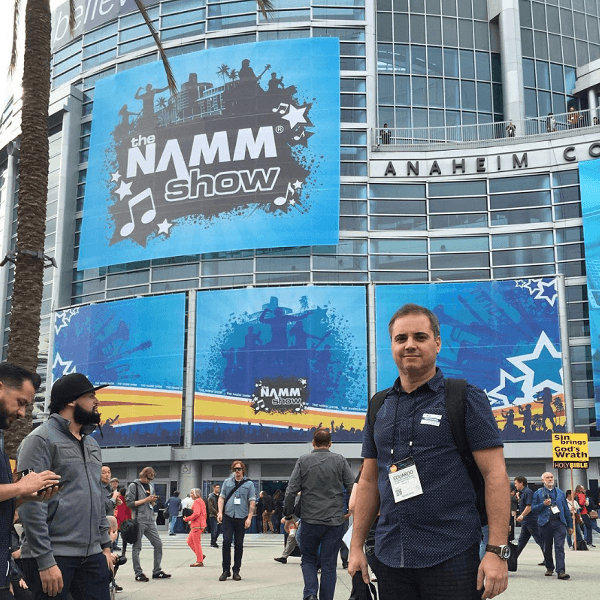
Eduardo at The NAMM Show
Eduardo Ron at The NAMM Show in 2016

When Eduardo decided to move to the United States

About 14 or 15 years ago, Eduardo decided to move to the city of Miami due to the political and economic situation in Venezuela at that time. For the same reason, he had no choice but to start from scratch with the project in these new lands and return to play, something he had not done for years, but the situation warranted.

The artist describes the Miami music market as complicated, since the competition is fierce. A huge advantage he had was that he studied English since he was very young, so the language issue was not a problem for him, but that did not make the other drawbacks easier to solve. 

One of the first surprises Eduardo got was that, in Miami, he has done no more than 50 events a year, while in Venezuela he had as many as 140 in a year. This is because the market is gigantic and it is difficult to make a big name in it, not to mention that live orchestras do not have as many bookings as before due to cost reductions.

Two years later, he had already got new artists working with him and his situation had stabilized successfully, although the process was not easy. Moreover, even today, he cannot demand exclusivity from those who work with him because he does not have the economic muscle for that, so he has a long list of musicians whom he calls for certain events. One of the first ones he always calls is Army Zerpa, whom he described as one of the best bassists and arrangers he knows, which is why he has become a key person for his project. 

Artists with whom Fondo Blanco has shared the stage 

Fondo Blanco has been fortunate to share the stage with great artists such as Oscar D’ León, Ricky Martin, Gilberto Santa Rosa, Marc Anthony, among others. Of course, the contact with these luminaries taught Eduardo many things and he assures that one of the best shows he offered was during a Santa Rosa concert, where there were more than 12,000 people. He assures that this is one of those days he will never forget.

Eduardo and Omar
Eduardo Ron next to Omar Ledezma Jr. at The NAMM Show in 2016

However, just as he has had very positive experiences as the previous one, obviously not everything is rosy. The Venezuelan told us that one of those not so good days was during a Ricky Martin concert, an event he had to open that day. It turns out that his equipment was damaged two hours before his turn and he had to try to fix it in front of the crowd of 30,000 people who came to see the Puerto Rican superstar, but nothing he did worked and the audience began to hiss.

That same day, Ricky Martin’s keyboardist asked him to borrow his keyboard because his was damaged and, when returning it, it was totally messed up and what Eduardo had there had been deleted.

Today, although he remembers this with humor, the experience was so unpleasant that it led him not to accept other proposals due to fear that the same thing could happen again. However, once these fears were overcome, he continued to play with his band and has managed to adapt to what the Miami market required both locally and internationally, which shows that the goals and targets should not be disregarded no matter however difficult the circumstances become and Eduardo Ron is a great example of that.
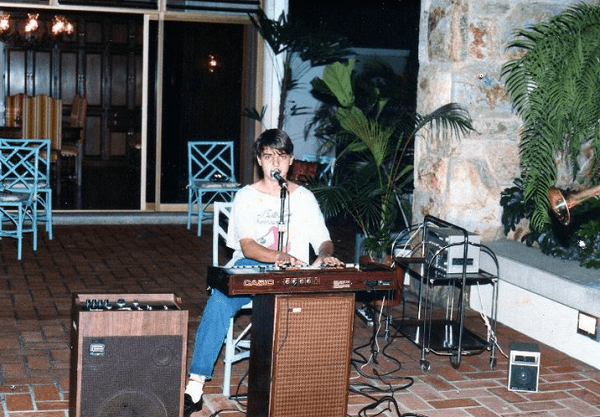
Eduardo rehearsing
Eduardo rehearsing for the gaitas contest at Claret School, Caracas

Read also: What a pleasure to talk to Pablo Pérez ‘‘El Alcalde de La Salsa’’

En el Nombre de Salomé. A Latin playwriting at Repertorio Español

North America / USA / New York

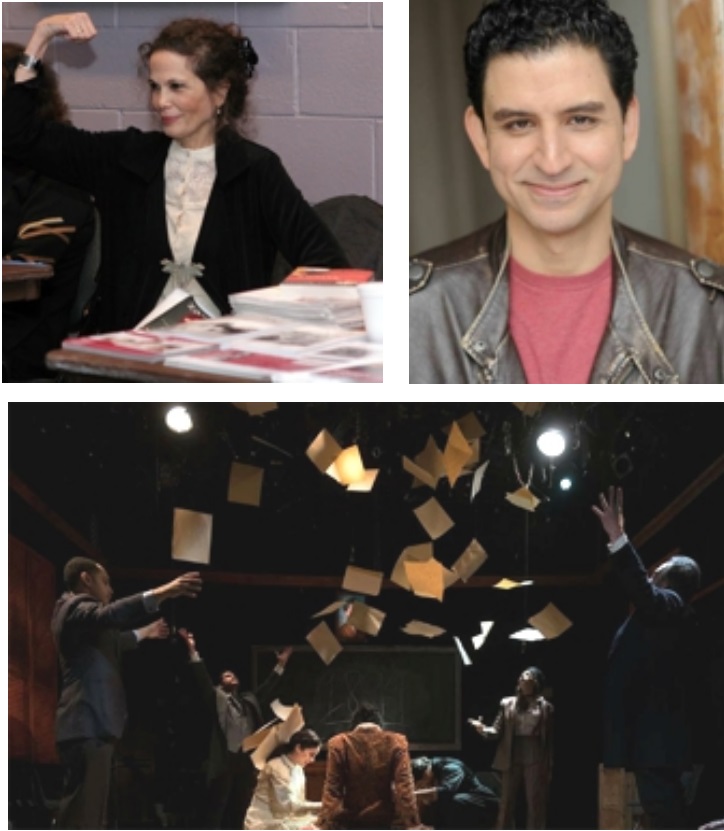
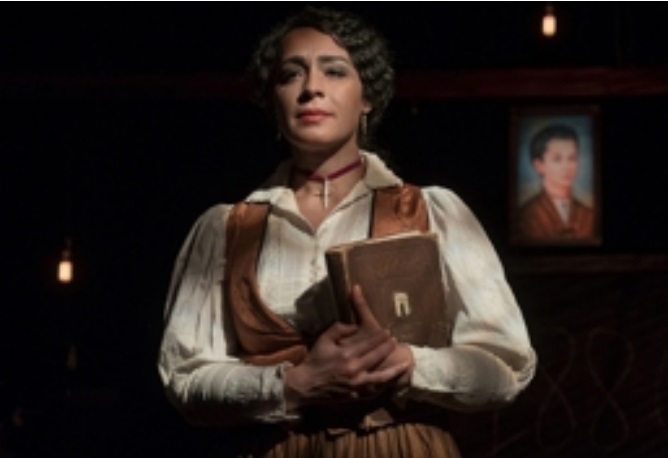
En el nombre de Salomé is a playwriting written by Marco Antonio Rodríguez and directed by José Zayas based on the fiction novel In the name of Salomé by Julia Álvarez, a history that presents the life of the patriotic poet and Dominican political activist, Salomé Ureña and her youngest daughter, Camila Salomé Henríquez Ureña. Two ladies that extolled the rights of women in XIX and XX centuries.

Salomé Ureña Díaz was a feminist poet during the most important years of Independence of the Dominican Republic, which became independent from Haiti and then returned to be the Colony of Spain for a time for their protection, hence the famous poem by Ureña “A la Patria” ” Salomé also founded the first university for women in the Caribbean country with the help of her husband, Francisco Henríquez y Carvajal, who years later was president of that nation.

Photo 2 - Salome - Repertorio Español
Photo 2 – Salome – Repertorio Español

By the other hand, Camila Henriquez Ureña was the youngest of her intellectual children, she was a respected educator of Spanish in the United States, lecturer in Latin America, co-founder of one of the main cultural feminist associations in Cuba, obtained a PhD in that Afro Caribbean country, participated in the restructuring of University of the Havana and ended up teaching in her homeland..

This fascinating novel published in 2000, captivated the attention of the director José Zayas, who decided together with the executive director of the Repertorio Español (Theater Company in Spanish famous in New York) to put it on stage.

Flyers - Salome - Repertorio Español
Flyers – Salome – Repertorio Español

Both decided that Marco Antonio Rodríguez, a New Yorker with Dominican roots, was the ideal playwright for this adaptation since all his masterpieces have been of total pleasure to the audience. “I was not familiar with Salome; she was a great poet. I knew about her poetry, but I was not very informed about her, and in reality that turned out to be something very positive. It allowed me to undertake the work not as if I were writing about an icon, but in order to find her humanity”, said Rodriguez for an American media.

This writer, producer, actor and director of Latin origin modernized the dramatic play venturing elements of humor as the creation of the character “Sylvestre”, who is a naive man, which is not accepted neither in Haiti nor in the Dominican Republic, so in the scenes of conversation with “Camila” speaks in a colloquial regionalist language, which produces in the audience, acceptance, identification and laughter. Rodriguez explains that his main objective in carrying out this work was to represent the Latino in other facets and not as usual (linked to drug trafficking or other problems), he wanted to change the stereotype of Latin in dramaturgies and films.

“I’m sure they are successful … but we have other stories to share, another psychology to explore, and other issues with which our communities identify.”

Photo - Salome - Repertorio Español
Photo – Salome – Repertorio Español

Zaya and Marcos made a perfect duet for the creative realization of En Nombre de Salomé. Together, they analyzed every detail of the scenes and characters, recreated a part of the Dominican culture and highlighted the Caribbean artistic talent that according to Zaya is still scarce in the theater.

Salome - Repertorio Español - Photo of the artists
Salome – Repertorio Español – Photo of the artists

For the author Julia Álvarez, poet, novelist, and American essayist of Dominican descent, it was a pleasant impression to see the dramaturgy in the Repertorio Español. “It is so rewarding when an artist sees that her play has inspired another artist and that through that artist the word spreads and we reach more and more people … It is a way to spread the stories that are important to our history and culture … Especially at times like this, when so many in the Latino community feel harassed, unwanted and undervalued”. This playwriting, the last October, was awarded with four HOLA (Hispanic Organization of Latino Actors) Awards, including: Outstanding Achievement in Dramaturgy and Outstanding Production of the Year.

En el Nombre de Salomé Next performances:

  • Friday, December 1st at 8pm Cost: $17 – $72
  • Tuesday, December 12th at 11am Cost: $30 Venue: Repertorio Español

Location: 138 East 27th Street, New York, NY 10016

To get more information about EN EL NOMBRE DE SALOMÉ, please visit their website http://www.marcoantoniorodriguez.com/


To the motherland


Tear, my homeland, the mantle that vilely, on your shoulders put the barbaric cruelty; already raises the bloody forehead from the dust, and sings the holy hymn of union and freedom.

Get up to gird yourself with the purple of glory, oh you, the world’s favorite of Columbus! Your sovereign rank dispute history, demand your laurel and your coat of arms from fame.

And ask your children, called to holy union, to carve you a grandiose pedestal of virtues, to affirm forever the powerful plant, showing the nations your immortal title.

And let, beloved country, let my hymns of pleasure mix with yours in the sonorous wind; Allow me to celebrate your joy and your contentment, as I regretted with you your bitter suffering.

I saw your own children yoking you to the iron yoke, making you an instrument of their cruel revenge; for a scepter they put the executioner’s ax for you, and funereal cypresses formed your canopy.

And then you looked at them outlaws, wandering, wandering tearful foreign beaches; and sad and downcast dying eyes I saw you return to heaven tired of crying.

You know how many times with your unfortunate pain I wept for your misfortune, I wept for your destruction, just as the daughters of Zion once wept for the ruin and havoc of its walls.

And you know that, like them, I hung from your palm groves the harp with which I wanted to sing your facts, because when I watched your blood flow relentlessly to the seas I couldn’t even prelude a chord sound.

But today that it seems you are reborn to another life, with holy rejoicing I take down my lute, to tell the world, if it judged you defeated, that, phoenix, you resurrect with new youth;

that you already hold the standard as the scepter of the free and your mother-of-pearl and sapphire sky as your canopy, and you go with progress, which flies to illuminate you, in pursuit of the bright future that flatters you;

that now your new children embrace each other like brothers, and swear to restore your dignity to your anguish, and among them there are neither serfs nor tyrants, and peace and good give us union and freedom.

O idolized country! Girded with high glory, prepare to be queen of the world of Columbus: your sovereign rank already guards history, fame presents you with your laurel and your coat of arms.

Salome Urena (1874)

Salome - Repertorio Español
Salome – Repertorio Español

15 Panama Jazz Festival

Latin America / Panama / Panama

Once again, Panama makes its appearance beginning the year at the City of Knowledge and Casco Antiguo – Panama Jazz Festival in its 15th edition, thanks to the “Danilo Pérez” Foundation, where it gives us the opportunity to enjoy music in a healthy way, once again becoming the The largest Jazz stage in the Region, where musicians and fans from different countries such as Costa Rica, Colombia, Chile, USA, Mexico, among others, will participate from January 15 to 20.

15 Panama Jazz Festival

Its director Danilo Pérez mentions “From the heart of America to the world” giving us a message, which is not just to make and carry out a festival but to show everyone his dedication worldwide by showing us his cultural project that consolidates creativity, exchange and talent. , with a strong commitment to Panamanian education and social welfare, returns with a strong artistic billboard.

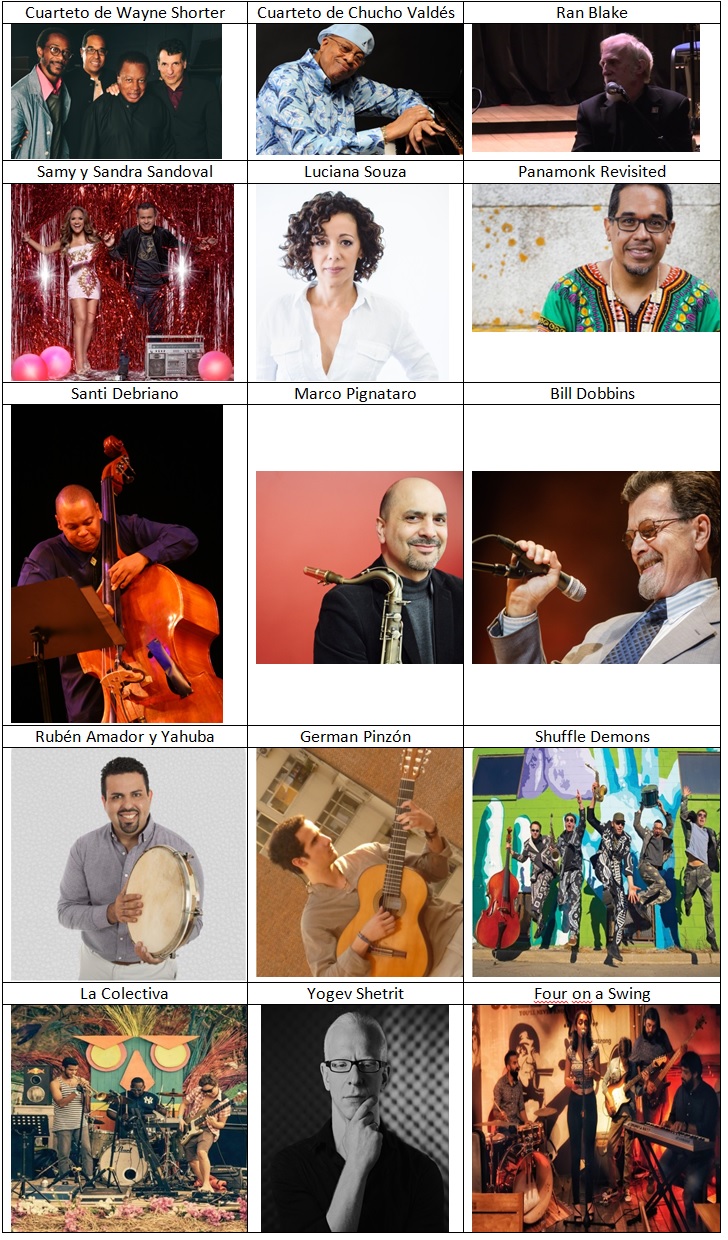
Performing artists include the Wayne Shorter Quartet; Latin jazz legend Chucho Valdés; the Brazilian singer, Luciana Souza; the legendary American pianist, Ran Blake, the master composer and pianist, Bill Dobbins accompanied on stage by the Global Jazz Big Band and the Panamanian cumbia patrons, Samy and Sandra Sandoval. Not to mention that the musical billboard is also strengthened with the participation of Panamanian bassist Santi Debriano along with saxophonist Craig Handy, pianist Bill O’Connell and drummer Will Calhoun, as core members of this musical banquet.

Others that will perform are the Panamonk Revisited trio, made up of maestro Pérez together with the Grammy-winning percussionist, Terri Lyne Carrington and bassist Ben Street, who will share this celebration with other renowned ones such as the Italian saxophonist Marco Pignataro and his Almas Antiguas quartet, with the Panamanian saxophonist Carlos Agrazal as a special guest; the Panamanian saxophonist Luis Carlos Pérez, and the famous Pan-African Jazz Project, made up of the Chilean saxophonist Patricia.

Collash of the 15th Panama Jazz Festival

Zárate Pérez, the Panamanian Luz Acosta (voice and bass) and Graciela Núñez (violin) and the Egyptian musicians Hesham Galal and Balquei.

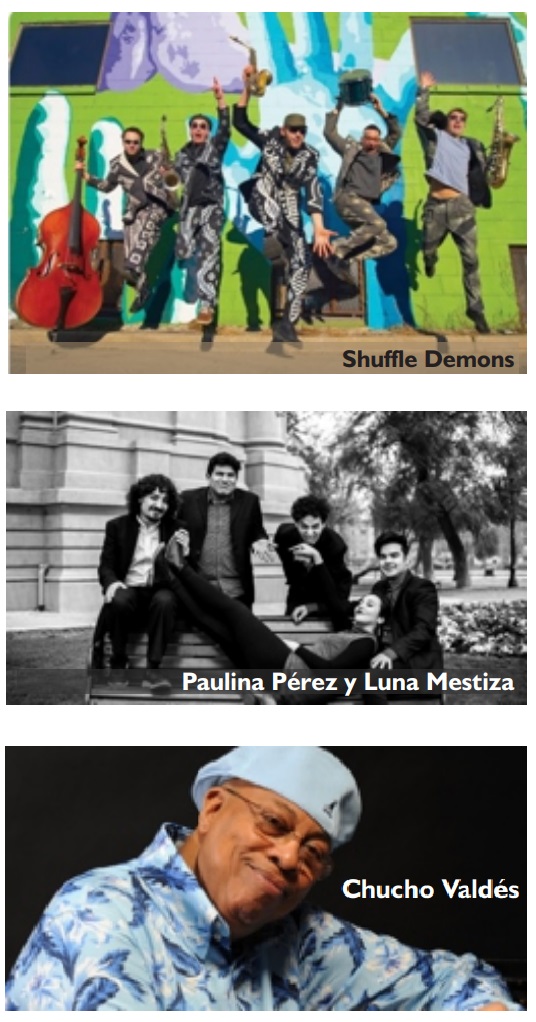
The Global Stage will be back this year, which will be a stage to enjoy in style with bands from different latitudes such as Rubén Amador and Yahuba (Puerto Rico), The Shuffle Demons (Canada), Paulina Pérez and Luna Mestiza (Chile), Josean Jacobo & Tumbao (Dominican Republic), Marco Pignataro (Italy), Yogev Shetrit Trio (Israel), Fundación Armonía Colectiva (Costa Rica), Four On a Swing (India) and Shea Welsh (United States); and Panamanian talents German Pinzón Jiménez, Tambo Jazz Collective, Digger Descendants Calypso Band, Proyecto Shuruca and Pureza Natural.

In addition, there will be highly prestigious educational institutions, Berklee College of Music, Berklee Global Jazz Institute, New England Conservatory, Thelonious Monk Institute of Jazz, New York Jazz Academy and Crossroads High School, which offer great support every year.

And of the institutes that will be: Berklee Global Jazz Institute, New England Conservatory, Thelonious Monk Institute Of Jazz and New Yorl Jazz Academy.

Artists of the 15th Panama Jazz Festival

And the schedule of activities to be carried out are:

Schedule of the 15th Panama Jazz Festival

One of the most important details of the festival is that auditions, countless educational clinics, as well as the VI Latin American Music Therapy Symposium, the I Classical Music Exchange Program and the II Symposium of Musical, Artistic and Cultural Expressions will be held. of Afro-descendants in Panama with the main theme El Calypso:

A unique Latin rhythm being known as an African and Afro-American music that began in Trinidad and Tobago, later being very popular in the highlands of Venezuela, San Andrés and Providencia in Colombia, Trinidad and Tobago, Puerto Rico and others from the Antilles, where they use instruments such as the stellpan (steel drums), trumpet, trombone, flute, Spanish guitar, electric bass, saxophone, congas, bongos, maracas. This rhythm varies depending on the country where it is performed, giving a unique touch to studying Calypso to all fans or interested in it.

For more information about the Festival, you can contact them through:

  • WebSite: http://panamajazzfestival.com/
  • Facebook: https://www.facebook.com/PanamaJazzFest/
  • Instagram: https://www.instagram.com/panamajazzfestival/
  • Twitter: https://twitter.com/PanamaJazzFesti
  • Email: [email protected]
  • Phone: +507 317-1466


Damian Ballester and the transformations of Cuban Folk Dance

Latin America / Cuba
Photo 3- Damian Ballester on stage

The relationship of Africa within the musical and dance culture in Latin America is notorious when we see the cultural expressions of the peoples of this continent, it is easy to see how similar they are, the use of percussion is one of the most relevant topics, in itself a mixture of cultural customs, religion, musicality, dance, in itself all the elements of the black race.

America, one of the main destinations of the ships with black slaves from many areas of Africa, caused our culture to be armed with a bit of each custom, therefore, we can say that in America there is a bit of each African people, this relationship of variety of slaves focused on dividing the forces of the race so as not to make it powerful, divided languages, customs, words and religions only left the marginalized population to communicate through percussion, an element that made the system improve at times of understanding within the fences where they lived.

Due to the above, African religions and customs are born in Cuba but, adopted by those already existing on the island, this combination gives us a rich variant of movements from three continents, Europe through Spain and Africa in all its splendor.

To clarify some topics of the folklore of the Caribbean island and its current dance transformations, we had to contact a great teacher, Damian Ballester, director of Iya Aye, one of the best folklore groups on the island of Cuba, to speak with this professional of the dance is necessary if we want to obtain real information about Cuban traditions, a great teacher who has left his teachings in many Spanish-speaking countries, among which Venezuela, Colombia, Ecuador, Mexico and now in the United States stand out…

we begin by greeting him and opening a pleasant conversation, to which we got an original response “Greetings acere, what was it”, calling him opens up a range of questions on the subject in question, here is an extract of the most common doubts generated around the relationship with salsa, its festivals and diffusion in the world.

Greetings Prof. Damian, grateful for your receptivity, we want to give information to our readers about the relationship of Cuban folklore within our world, Salsa, to begin with, what is defined as Cuban Folkloric dances?

Grateful for the opportunity and sure, that if we report on the case, folk dances are nothing more than the set of cultural goods or phenomena that constitute a cultural complex with manifestations of all aspects of popular life. It is the sum of the manifestations acquired by experience, by inheritance, by tradition, by the satisfaction of biological or sociological needs, among other things. This lasts through several generations and almost always undergoes transformations.

They will get compound terms in the word folklore, which speaks of people or people, popular knowledge, together with the popular knowledge of the people. It is a very long topic, because I should talk about so many things about my culture, better let’s leave the definition until here and thus add flavor to the interview.

Much better, we continue then, do African dances have any impact on Cuban folk dances?

Yes, of course, it is the root, the exercise of dance has always characterized my land and has suffered the same processes of contagion and transculturation between the ways of dancing of the colonizer and the styles introduced by African ethnic groups since the 16th century, in fact, the colonizers brought romance, active in the Cuban countryside for several centuries, with its couplets and their ways of singing and founding alegrías, while the black slaves included their ancestral rites, their drums, and their particular sense of rhythm and movement. bodily.

Given this brief explanation, we can say that not only dances of African origin contributed or influenced Cuban folklore, we can say that there is also an incidence from Spain, France and the Caribbean, but its main axis was born from the Spanish and the African.

We know the extent of Cuban folklore, for how long should a person prepare to be called a professor in this branch?

First of all, to carry the name, whether it is a teacher or instructor of Cuban folklore genres, there are two factors that are very important, the first is study, since Cuban folklore is made up of a very wide range of genres divided into different styles, I could mention some examples: Peasant, popular, Afro-Cuban and Franco-Haitian folklore.

Within the styles of peasant folklore, examples could be given of the Cuban zapateo, the ripiado parakeet, the chidonga, the hawk, the caringa, the son montuno, among others.

Within the styles of popular folklore, the Complex of the rumba, the mambo, the chachachá, the danzón, the dance, the pilón, the congas and the comparsas, the casino can be mentioned, within the Afro-Cuban folklore the Bantú cycle can be mentioned, the Yorubas, the Arara, the Abakua, within Franco-Haitian folklore we can mention the French tomb, the Haitian merengue, the gaga, the vodu among others, if I continue we will not finish today. (laughs to close)

Of the folkloric dances, which are the most outstanding or spread worldwide?

It could be said that there are several, examples are the popular folkloric ones, one could say the casino, the mambo, the chachachá, the son, the rumba complex, that the latter people tend to say are African or Afro-Cuban dances, that have African influence does not mean that they are classified within Afro-Cuban dances because this genre emerged in Cuba, was used as an object of protest against the government of that time and was eradicated in the essence of Cuban. In the same way, the one that has had the most impact and remained in the whole world are the Yoruba dances or dances of the orishas.

Should we open another interview to just talk about the many genres that the island embraces, what institutions correctly form the folkloric traditions in Cuba?

There are many institutions in Cuba, from the community point of view what is named in Cuba as amateur dancer are the community projects and actions that are nothing more than groups created in the communities, all of these supervised technically and methodologically by specialists from the houses of culture of each area by provincial and national methodologists governed by the Ministry of Culture.

From a professional point of view, there are art schools such as the ENA (NATIONAL SCHOOL OF ART) and the ISA (SUPERIOR INSTITUTE OF ART) all governed by a logical curriculum organized by specialists and connoisseurs of the genres.

Photo 2- Damian Ballester on stage

Other institutions that could be mentioned, is the little school of the national folkloric group of Cuba with 56 years of creation in charge of rescuing and safeguarding the traditional Cuban musical and dance traditions.

Wao, Enough, Do you know if there is any similar institution in the world?

In the world there are countless schools that are training dancers with the Cuban style and technique, whether they are Cuban or foreign teachers, but nothing like the preparation of art schools in Cuba that work with a logical and well-prepared program, in some schools around the world it could be said that they do not work under a logical methodological program for the teaching of these genres due to the commercial and monetary part, unfortunately there are many dedicated to commerce, to money and not to the necessary dedication.

This dissemination has been achieved while respecting the roots and traditions of the farmers? The root? The original essence?

Unfortunately, it could be said that a good diffusion of Cuban genres worldwide has not been respected or achieved, of 100% of the performers, it could be said that only 10% are protecting Cuban traditions, it is sad to say, but trade and populism it is destroying the folklore of an entire country.

Have these changes in traditions positively or negatively impacted Cuban culture?

First of all, traditions do not change if they are not passed down from generation to generation. In terms of their impact, I see it negatively because the dissemination that is taking place is incorrect and worst of all, there is no organization, which was of Cuba, can follow up on the program that is being given to Cuban genres, in itself, many see the commercial and hence they do not care about the poor distribution of what is taught.

What is the reason that so many dancers seek to perform Cuban dances? It is notorious to see it at festivals and congresses.

There are two very important factors: 1 Cuban music, which has been evolving in an incredible way, fusing Cuban rhythms within its repertoire, and the other factor is not because I am from Cuba, Cuban folklore could be said to be the most complete genre available. world level from the point of view of dance, is that it has a history, virtuosity is varied, it could be said that it is well complemented, due to its complexity and interpretive difficulty, it is what attracts attention, additionally, salsa comes from us, from these roots is born what now wants to be denied.

Teacher and the Cubans? Have Cubans spread their dance correctly?

It could be said that the vast majority of Cubans have disseminated the genres well, why do I say that the vast majority?

Because there is another small group that deforms it, money changes everything, foreigners think that all Cubans They dance, it has happened that they say Cuban and quickly you think he is a dancer, he knows everything, he is good, and no, that is not reality, one thing must be clear about being an opportunist, not a dancer, being a dancer by hobby and another is being one by profession or for being a teacher.

There are Cuban teachers who are hurt by the deformation that is happening with what has been studied so much, but there are others who only care about getting paid and do not care if their students do it well or badly.

How has the interpretation of Cuban roots impacted the so-called Salsa Casino in the world? Has the original and real spread of traditions been respected?

Look, since Cuban music began to evolve inside the casino, it began to undergo a series of transformations from movements to choreography due to the musical style that Cuban orchestras began to spread, known as TIMBA, which was well accepted by the public, If we talk about the impact from the traditional point of view, it could be said that there is no original interpretation of the Cuban roots because they are not executing a specific traditional genre, but rather what they are using different styles of the traditional folk dances that all this could be called Variety.

Have Cuban music and dance festivals or congresses devoted time and effort to improving these transformations? Have they worried about minimizing the damage?

In most cases, very few, first of all, if it is a competitive event, the organizers make the mistake of hiring unqualified personnel to evaluate genres of Cuban origin, and that is where the serious faults come from. There have been cases where there are groups , couples or soloists who perform a good technique within normal limits and the jury evaluates for a taste problem if they see it as beautiful and give it less points, or disqualify it, it is not about beauty, it is about correctness, the organizers should be more careful about these things.

What recommendations would you give to our dancer readers on this controversial topic?

The dancer must be clear about four aspects that are fundamental to his artistic life and entire career: dedication, love of dance and, most importantly, study.

Do only what you love and you will be happy, the one who does what he loves is blessedly condemned to success, which will come when it should come, because everything that should be, will be, and will come naturally.

Photo 1- Damian Ballester on stage

Let’s spend time respecting the roots and cultures of peoples, and above all, let’s take a good look at who we entrust our desire to learn, there are thousands of ways to learn correctly, everything is in the research, knowing who we contact and why There are hundreds of excellent instructors in the world, not to mention the many means of learning today.

I invite you to learn a little about this and other topics, I have a virtual classroom where I teach a lot of the theoretical and practical content online, I do it through the son rumbero academy and its virtual classroom format, follow the @sonrumbero accounts on Instagram and Facebook.

Mulatu Astatke, the first African to earn a PhD from Berklee College of Music

Mulatu Astatke (or Astatqé) (Jimma, Ethiopia, December 19, 1943) is an Ethiopian musician, composer and arranger. He is considered the father of Ethio-Jazz.

His musical training took place at the Trinity Laban Conservatoire of Music and Dance in London, where he studied clarinet, piano and harmony, New York and Boston, where he was the first African student and also the first African to earn a PhD from Berklee College of Music; there he was trained in vibraphone and percussion.

Mulatu Astatke, the first African to earn a PhD from Berklee College of Music

Later he combined the influence of jazz and Latin music with traditional Ethiopian music.

My desire to start making Ethio-jazz began in London while I was studying there in the 1950s; then I knew I wanted to be different with my music. I looked for musicians from different African backgrounds and saw that they were successful and promoted the culture of their country.

However, there was very little from East Africa and Ethiopia, so I decided at that point that I would create something unique based on the rich heritage of our music and show how much we have contributed to the world of music in general.

That journey began to take shape at Berklee College in Bastan. I was the first African musician to study there and that period was very important for me.

I learned the technical aspects of many different musical forms and my teachers gave me the confidence to move in my own direction, teaching me that it was okay to be different in my music and try something completely new.

Mulatu Astatke.
Mulatu Astatke.

Ethiopian cultural music is based on four modes  tezeta, bati, anchihoy and Ambassel  and within my music, I knew that those modes could not be played.

They had to remain at the center of my music or the whole character of the sound would change and become distorted. I began to add beautiful colors with chords, voicings, bass lines and rhythm sections, writing progressions that fit together well. It’s very difficult to write 12-note music around the Ethiopian modes without destroying them.

In the mid-’60s I returned to Addis, but I kept going back and forth to the United States.

At that time, no one was fusing Ethiopian music with jazz.

In my country there was the First National Theater Orchestra, and both the police and the army had their own orchestras.

There were also bands like the Echoes and the Ras Band.

Musicians at that time based their melodies strictly on the four Ethiopian modes, using techniques like the “canon,” with melodic lines echoing each other.

With Ethiopian jazz, I consciously wanted to expand and explore the modes in different ways.

Mulatu Astatke (or Astatqé) (Jimma, Ethiopia, December 19, 1943) is an Ethiopian musician, composer and arranger. He is considered the father of Ethio-Jazz.

I formed a group called The Ethiopian Quintet in New York, made up of a mix of Ethiopian, Latino, and African-American musicians (there weren’t many Ethiopian musicians in the United States at that time).

The band included trumpeter and pianist Rudy Houston, who later played with Yambu, and Felix Torres, who played with Sonora Ponceña.

I have always felt a deep connection between Latin and African music; I traveled to Cuba to find out where the first American landed, I heard their musicians play and dance and although they sang in Spanish, the tempo, rhythm and feeling were very similar to aspects of African music.

So, with the Ethiopian Quintet, I wanted to show the African contribution to Latin music and it was my first opportunity to experiment and start developing my vision of Ethio-Jazz with this band.

With the American and Puerto Rican musicians in the group we created a different atmosphere and arrangements.

It was a great opportunity for me and they loved what I was writing and the direction I was trying to take.

We did quite a few concerts, some Spanish weddings, events upstate New York and in Manhattan.

We played at the Village Gate with Dave Pike, a great friend of mine at the time, one of the world’s greatest vibraphone players. He played a lot with Herbie Mann and I remember sitting in to watch one of his recording sessions.

I saw a lot of other great musicians in concert, from Coltrane to Bud Powell and Bill Evans. On the New York live circuit I met a producer called Gil Snapper.

His musical training was at the Trinity Laban Conservatoire of Music and Dance in London,

Gil was a very nice and interesting guy and worked with musicians of many different styles.

He picked up on my music very quickly; we got on well and he invited me to record with The Ethiopian Quintet, so our first albums with him were ‘Afro Latin Soul’ Volumes 1 and 2, both recorded during 1966.

On the first volume, I performed an adaptation of an old Ethiopian warrior song, ‘I Faram Gami I Faram’.

I would have liked to have an Ethiopian singer for the song, but it was sung in Latin and the lyrics were translated to the singer so he could sing it in Spanish.

Nevertheless, it turned out to be a nice combination. The album included other compositions that were important steps for me: ‘Mascaram Setaba’ (Summer is Coming), ‘Shagu’ and ‘Almaz’. On the second volume, Rudy Houston suggested a piece of music that we called ‘The Panther’, in reference to the animal, but also in recognition of the Black Panthers, who were very active in the civil rights struggle in the United States at that time.

On this album, one of my favorites is my composition ‘Girl From Addis Ababa’, which worked very well as a fusion of Ethiopian modes and R&R rhythms, an indicator of the more refined Ethiopian jazz sound of my later album for Worthy, ‘Mulatu Of Ethiopia’ (1972). It also included my new arrangement of the 1950s tune ‘Lover’s Mambo’.

Both albums include nice arrangements also by Oscar Garcia, Rudy Houston and Gil Snapper as well.

I feel proud of the recording when I listen to it again. It was an important moment in my career and it was a very interesting and progressive time to be in New York in the mid-60s.

I was there at the same time as Hugh Masekela, Miriam Makeba and Fela Kuti and, each in their own way, we tried to do our part to put Africa on the map of contemporary jazz.

Mulatu Astatke & His Ethiopian Quintet - Afro-Latin Soul (1966, R-2018)
Mulatu Astatke & His Ethiopian Quintet – Afro-Latin Soul (1966, R-2018)

Mulatu Astatke, April 2018

Mulatu Astatke & His Ethiopian Quintet – Afro-Latin Soul (1966, R-2018)

Tracks: Afro Latin Soul: 01. I Faram Gami I Faram (Mulatu Astatke)

02. Mascaram Setaba (Mulatu Astatke)

03. Shagu (Mulatu Astatke)

04. One For Buzayhew (Mulatu Astatke) ke)

05. Alone In The Crowd (Gil Snapper)

06. Almaz (Mulatu Astatke)

07. Mulatu’s Hideaway (Mulatu Astatke)

08. Askum (Rudy Houston)

09. A Kiss Before Dawn (Gil Snapper & Weiss)

10. Playboy Cha Cha (Oscar Garcia) Afro Latin Soul Vol. 2:

11. The Panther (Boogaloo) (Rudy Houston)

Konjit (Pretty) (Oscar Garcia)

Soul Power (Rudy Houston)

Lover’s Mambo (Traditional, Arr. Mulatu Astatke)

Love Mood For Two (Rudy Houston)

Jijiger (Rudy Houston)

Girl From Addis Ababa (Mulatu Astatke)

Karayu (Oscar Garcia)

Raina (Rudy Houston)

Musicians:

Mulatu Astatke (Vibraphone, Piano, Drums)

Rudy Houston (Piano, Trumpet)

Robert Cuadrado (Bass)

Felix Torres / John Perez (Congas / Bongos on Vol. 1)

Pete Iglesias (Congas on Vol. 2)

Tony Pearson (Timbales)

Information provided (October 5, 2024)

Also Read: Flora Purim has earned her two Grammy nominations for Best Female Jazz Performance

  • « Go to Previous Page
  • Page 1
  • Interim pages omitted …
  • Page 5
  • Page 6
  • Page 7
  • Page 8
  • Page 9
  • Interim pages omitted …
  • Page 23
  • Go to Next Page »

International Salsa Magazine (ISM) is a monthly publication covering salsa activities around the world and has been publishing since 2007. It is a worldwide network of volunteers coordinated by ISM Magazine. Together, we work to strengthen salsa events around the world.