• Skip to primary navigation
  • Skip to main content

International Salsa Magazine

  • HOME
  • Previous editions
    • 2026
      • ISM / June 2026
      • ISM / May 2026
      • ISM / April 2026
      • ISM / March 2026
      • ISM / February 2026
      • ISM / January 2026
    • 2025
      • ISM / December 2025
      • ISM / November 2025
      • ISM / October 2025
      • ISM / September 2025
      • ISM / August 2025
      • ISM / July 2025
      • ISM / June 2025
      • ISM / May2025
      • ISM / April 2025
      • ISM / March 2025
      • ISM / February 2025
      • ISM / January 2025
    • 2024
      • ISM / December 2024
      • ISM / November 2024
      • ISM / October 2024
      • ISM / September 2024
      • ISM / August 2024
      • ISM / July 2024
      • ISM / June 2024
      • ISM / May 2024
      • ISM / April 2024
      • ISM / March 2024
      • ISM / February 2024
      • ISM / January 2024
    • 2023
      • ISM / December 2023
      • ISM / November 2023
      • ISM / October 2023
      • ISM – September 2023
      • ISM – August 2023
      • ISM July 2023
      • ISM Edition June 2023
      • ISM – May 2023
      • ISM April 2023
      • ISM March 2023
      • ISM February 2023
      • ISM January 2023
    • 2022
      • ISM December 2022
      • ISM November 2022
      • ISM October 2022
      • ISM September 2022
      • ISM August 2022
      • ISM July 2022
      • ISM June 2022
      • ISM May 2022
      • ISM February 2022
      • ISM January 2022
    • 2021
      • ISM December 2021
      • ISM November 2021
      • ISM October – 2021
      • ISM September 2021
      • ISM August 2021
      • ISM July 2021
      • ISM May 2021
      • ISM April 2021
      • ISM June 2021
      • ISM March 2021
      • ISM February 2021
      • ISM January 2021
    • 2020
      • ISM December 2020
      • ISM November 2020
      • ISM October 2020
      • ISM September 2020
      • ISM August 2020
      • ISM July 2020
      • ISM June 2020
      • ISM May 2020
      • ISM April 2020
      • ISM March 2020
      • ISM February 2020
      • ISM January 2020
    • 2019
      • ISM December 2019
      • ISM November 2019
      • ISM October 2019
      • ISM Septembre 2019
      • ISM August 2019
      • ISM July 2019
      • ISM June 2019
    • 2016
      • ISM December 2016
      • ISM November 2016
      • ISM October 2016
  • Spanish
  • Download Salsa App
    • Android
    • Apple

Search Results for: Spanish in the United States

Edgardo ‘‘El Bambino’’ and his extensive and interesting musical career

Edgardo ”El Bambino” Otero Lugo is the one to whom we want to dedicate some of the lines of this edition in International Salsa Magazine. The talented Puerto Rican vocalist has given us a few minutes of his time to talk exclusively about his beginnings, his career and other unpublished details that are not read in other media.   

dgardo ‘’El Bambino’’
This is Puerto Rican singer Edgardo ”El Bambino” Otero Lugo

Edgardo’s childhood and music   

As Edgardo’s childhood took place in his hometown of Vega Baja, Puerto Rico, the artist recalls that he would sit on the balcony of his house and play with buckets and sticks to pretend to play music. His mother, fed up with the noise he made, decided to enroll him in the school choir so that he could explore his curiosity about music in a more professional way. That was when he was in the fifth grade of the elementary school.   

As the years went by, the boy’s love for music just kept growing, until he got his first big opportunity thanks to singer-songwriter Edwin Crespo, who had already written for famous groups such as La Sonora Ponceña at the time. Back then, Edgardo was only 14 or 15 years old, so he still needed a lot of guidance on these issues, so maestro Crespo was the ideal person for that. 

It just so happenes that Pedro Crespo, Edwin’s father, was the founder of his own orchestra and grandfather of some of Edgardo’s cousins. Since they all lived nearby, Edwin heard him singing one day and liked his voice, so he offered to teach him how to sing professionally and invited him to join his Orquesta Ética, which is where it all began.   

By being part of the Orquesta Ética, Edwin decided to spend two or three days a week explaining to Edgardo what to do and how to do it so that everything would go wonderfully for the young vocalist, and that is exactly what happened. So much so that Edgardo spent about three years singing for the group, in which he claims to have learned much of what he knows today.   

Edgardo ‘’El Bambino’’ next to Frankie
Edgardo ”El Bambino” next to ”El Sonero del Barrio” Frankie Vazquez

The Rukanos   

After having left Orquesta La Ética, Edgardo was also part of Orquesta Los Rukanos, which was much bigger, had more instruments and more musicians. Therefore, it represented a bigger and more complex challenge. 

In 1981, he was invited to join the group by a Guyanese friend and colleague named Ferniand Pudia, who asked Edgardo to join him in a musical project he was working on, which he would name Los Rukanos, paying homage to the term used to refer to peasants and working class men in the South American country.    

Alongside with this orchestra, of which Edgardo was also one of the founders, he managed to perform in completely new stages and to follow his path in the learning of this complex and rich world that is music.   

Conjunto Quisqueya   

During a concert in his hometown, the members of Conjunto Quisqueya heard Edgardo singing and liked his voice so much that they invited him to play with them in a project for Nelson García, who at that time was the second trumpet of the orchestra.   

Having accepted the offer, the group recorded a whole LP called ”Nelson García y Merengue ’86”, which was a very nice experience for Edgardo since he had never had the opportunity to record in a studio before and finally he was able to do so. And it was not just any studio, but one of the most important in Puerto Rico, which was Tele-Sound Recording Studios.   

”Playing with the members of Conjunto Quisqueya was a spectacular experience. Their musicians are wonderful human beings with whom I still have very strong friendship bonds” said Edgardo about his experience in the ensemble.   

Edgardo ‘’El Bambino’’ in the army
Edgardo ”El Bambino” singing during his time in the army

Orquesta La Nueva Época de Ángel Rivera 

There were some years that merengue was gaining a lot of popularity in Puerto Rico, so the artists and groups of the moment had to adapt to fulfill the musical taste of the audience. Such was the case of saxophonist Angel Rivera, also originally from Vega Baja, who created an orchestra and invited several musicians to play with him, including Edgardo.    

The result was good acceptance from the public to the extent that the orchestra participated in competitions and won some awards thanks to the work done.    

This was very useful for Edgardo’s career, since he succeeded in diversifying his rhythms and learning to play new things and genres, which made him acquire a lot of knowledge. Until such time as he played with Conjunto Quisqueya, he had only done salsa, so trying merengue was really enriching for the musician.   

Service time in the army   

Edgardo was in the Puerto Rico National Guard for about 24 years in total and he remembers a time when he was mobilized to the Iraq War in 2006, the year in which he met Edwin ”El Calvito” Reyes, who was part of the 3rd Infantry. El Calvito” had a group whose lead singer could not speak Spanish, so he learned the lyrics phonetically in order to perform them.   

The chemistry between all the members was so great that they even played a few times at the U.S. base in Baghdad, where he stayed until 2008. It was then that he returned to Puerto Rico to adapt gradually to civilian life again, during which time he met Raphy Santana and joined his Tribute Orchestra, which made music to pay homage to maestro Héctor Lavoe.   

Permanent move to the United States   

In 2019, both Edgardo and his wife were retired from their jobs, so they thought it was a good time for a change of scenery, as they felt that nothing interesting was going on musically. This led them to move to the United States to settle permanently there, although he continued to travel to Puerto Rico to meet some commitments with La Corporación Latina, of which he was still part at that time. 

Read also: Momotombo SF with former members of Malo and Santana 
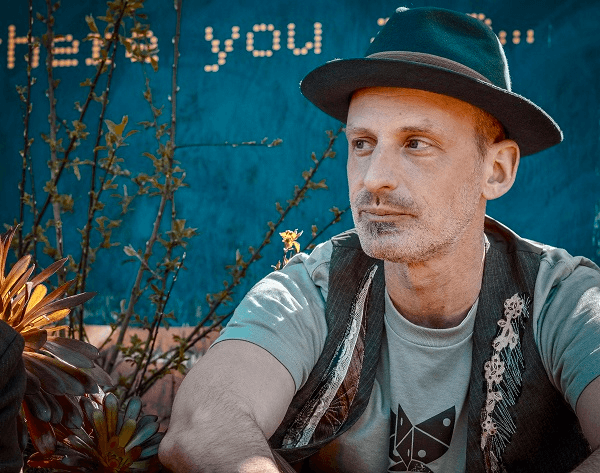
Raúl Vargas and his flamenco rumba duo Dos Bandoleros

One of the Latin genres that has been gaining more popularity in California, specifically in the Bay Area, is the Spanish flamenco rumba, so it is no coincidence that every day there are more and more exponents of this genre who have achieved a huge level of fame and respect among both their peers and the public.   

One of them is Raul Vargas, who has given us the honor of talking to us about his career and the projects he is currently working on, so we cordially invite you to read in order to learn more about this talented Spanish singer.   

singer Raúl Vargas
This is Spanish percussionist and singer Raúl Vargas

How Raúl got started in music   

Raul remembers being fascinated by music when he was still very young in his hometown, Madrid. At home, they he used to listen to what his parents played on the radio, but he does not remember anyone in his family being a musician or working it, so he was the first one to have a professional interest in this field.   

He also remembers listening to his mother’s cassettes with which he could enjoy all kinds of artists such as Julio Iglesias, Raphael, Camilo Sesto, Pimpinela and many others. However, as Raul grew older, he began to listen to what he liked just like his brother.   

When he was 16, he began to learn on his own to play the guitar using the songs he liked at the time. At age 17 he wrote his first song and, shortly after he went to live in Eklanda, Sweden, where he started writing many more songs and  take music more seriously, but he still did not see it as his profession.   

It is important to note that, while it is true that music was a very important part of Raul’s life, this was not what he did for a living, but cooking. Thanks to his career as a cook, there were many countries and cities that the young man managed to visit, although he was always accompanied by a guitar or drum he played during his free time.   

Raúl playing
Raúl Vargas playing the guitar

Arrival in the United States   

After having visited many places around the world, Raul met a group of Spaniards in Australia, who suggested him to go to a guesthouse for traveling musicians in the Latin Quarter in San Francisco to see what he felt about it. It turned out to be an excellent decision as he met many professional musicians who were able to make a living from their art, which prompted the young cook to do the same and follow the dreams he felt truly passionate about.   

This is how Raul decided that San Francisco should be his final destination, so he decided to remain in that city permanently. From then on, he continued to travel to other places for work and pleasure, but always returned to what he considered his new home.    

Once he settled in the United States, he started playing for several bands and focused all his time and effort on what really filled his soul and spirit: music.   

First groups and bands   

Despite being born in Spain, Raul had never played Spanish music before and preferred rock and pop, but contact with artists from so many countries in San Francisco made him rethink everything he had done so far. Many began asking him why he had never before sung or played flamenco rumba being Spanish, which led him to do more research on the genre from his country and start playing it. 

No much time would pass before the guitarist created his own flamenco rumba band, which he named ”Mala Maña” and was conceived as a circus theater and music group composed of eight people. It had a duration of three years and all these musicians, long time later, became part of the band Makrú. 

Additionally, he was also part of a duo alongside a guy from Guadalajara, Mexico called ”Fulanos”, which also contributed to the artist’s experience in terms of groups. 

Raúl and Muchacho
Raúl Vargas and guitarist Muchacho Mandanga

Dos Bandoleros 

The duo Dos Bandoleros started about six or seven years ago and its creation is described by Raul as a ”very lucky accident” thanks to which he met who today is his partner in this project. 

It turns out that Raúl and his Makrú bandmates were experimenting with playing in duos and trios to see how things went, which led him and his guitarist to play at a French wine bar on Monday nights. One of these days, they were approached by a young man named Alberto Gutierrez, known artistically as Muchacho Mandanga, who introduced himself and also started playing at the bar along with another Spanish percussionist.  

Weeks passed before both Raul and Muchacho could not take their partners to play due to personal problems, so the venue manager proposed the to join them that day. The chemistry between them was so great that they continued playing together and never apart again.   

At the beginning, they only played flamenco rumba, which was what got closer to each together in the first place. Later on, they started playing cumbia, Latin rock, salsa, Cuban son and many more. 

Read also: Guatemalan group Malacates Trébol Shop enchants with its Latin rock and ska 

Momotombo SF with former members of Malo and Santana

There is no doubt that The Bay Area has many talents, so there are always groups and people to talk about. Today it was the turn of the talented American percussionist of Nicaraguan origin Leo Rosales, with whom we had the pleasure of chatting about his life and projects with both the group Malo and his current band Momotombo SF.   

This Latin rock legend has so much to tell and we are happy to hear him and make known his success and great struggles in the world of music.   

Leo was born in San Francisco
Percussionist Leo Rosales was born in San Francisco, but his family is Nicaraguan

Leo’s beginnings in music 

Leo’s interest in music began at home with his parents, who, as we have already said, come from Central America, which greatly the young man and the steps he would take a few years later.   

It turns out that his father was a radio host at the station Radio Mundial and his uncle was a musician in the 1940s in Nicaragua, where both developed their careers linked to music for a long time. However, they decided that the Central American country did not offer them the opportunities they were seeking and decided to move to San Francisco and build their families there. 

It was in San Francisco where Leo was born, his father decided to return to his job as a radio host at the station Coffee and his uncle met important musicians who helped him adapt to the musical environment in that place. All this coupled with the numerous family parties held at Leo’s house with Latin music aroused an enormous interest in the child for this world. 

Tradictional music, salsa and Latin jazz inspired him to listen to all kinds of genres and bands, but not only in Spanish. He also became a big fan of The Beatles, The Rolling Stones, James Brown, among others. 

He loved what he heard so much he even decided to learn to play the drums on his own by ear. Then, he started using cooking pots and sticks to rehearse at home in an improvised way until he had the opportunity to use professional instruments.  

Leo playing
Leo Rosales playing the drums

Leo’s start in music professionally 

Leo was so hell-bent on making a name for himself in music that he got yogether with some friends and colleagues with the same interests to create an improvised group with which he gradually managed to play at parties and small street festivals. 

They also began to perform in larger events and to meet more and more important people in the industry. Also Leo and the other young people began to make friends with other groups, which led to new job opportunities for several of them.   

Around the same time they met the world famous businessman and concert promoter Bill Graham, who stated taking musicians to all over to San Francisco. This gave Leo the opportunity to play at the Fillmore West as well as other famous bands such as Chicago, Cold Blood, The Doors, The Gratful Dead, among others.   

There was a night when a friend invited him to see a band play that would completely change the vision Leo Rosales had of music because they did not just play rock, but also conga, timbales and other Latino-oriented instruments. That group turned out to be Carlos Santana’s band in 1968. 

Leo was so impressed with the group that the way he conceived music changed completely and he decided that this was the same direction he wanted to pursue. That is how he started playing Santana’s songs in various nightclubs, which led him to meet his brother Jorge Santana. 

Grupo Malo 

By the time Leo met Jorge, he was leading the group Malo. It all happened when the young man was about 17 or 18 years old and the same friend who took him to see Carlos invited him to see Jorge play with his band. At the request of the friend’s brother, Leo was given the opportunity to play the timbales, which he learned to play in the rock genre thanks to having listened to Santana for so long. 

After having played in several places with the group Malo and thanks to his high level as a musician, he was invited by one of the founders of the group, Arcelio García, to rehearse with the rest of the members. After rehearsing with them for a while, Leo became a permanent member of Malo and, shortly thereafter, he began touring the United States with them.  

All these performances helped the artist to become much more professional in his trade and to meet many other prestigious musicians.  

Gabriel Manzo
Co-founder of Malo and guitarist Gabriel Manzo

Momotombo SF  

After being in the group Malo for a long time, the priorities of some of its members changed. While Arcelio and Jorge continued with the Malo project, Leo and one of the ex-guitarists, Gabriel Manzo wanted to continue playing the same music, but did not want to continue using the group’s name out of respect for those who were still there and in order to avoid legal problems.  

That is when Leo talked to Arcelio and Jorge to ask for their opinion about it and they agreed that there was no problem with the birth of a new group, but it needed its nae changed. For this reason, the percussionist and his bandmates used one of Malo’s songs called Momotombo to refer to the new band they created. 

`‘Momotombo” is a song written by composer Pablo Tellez that pays homage to the Nicaraguan volcano near the town of the same name. Then, they began to refer to themselves as ”Momotombo with former members of Malo & Santana” to make it clear where its members come from. This was more than five years ago. 

”What we want is to keep alive the essence of Malo and Santana’s music with the same love with which we did it years ago, while respecting the original founders and those who were still there. On the contrary, we want to honor them and make it clear where we come from” said Leo, who evidently has full respect to Malo and its founders, who gave him the opportunity of his lifetime. 

Read also: The Bolivian charango with Spanish roots 

Tribute to Johnny “Dandy” Rodríguez Jr. His first recording was professionally with Tito Puente in 1964 and was titled “Exciting Rhythm of Tito Puente”

Johnny “Dandy” Rodriguez, (September 11, 1945, United States August 17, 2024) son of Johnny Rodriguez Sr. who was nicknamed “La Vaca”, remembered percussionist who was part of the orchestras of Tito Puente and Tito Rodriguez, among others; as we can deduce, music for Johnny Rodriguez is something clearly hereditary given that as a child he attended his father’s rehearsals and his mother was a dancer.

Johnny Dandy Rodriguez Foto By Miguel Martillo

To get an idea of ​​the musical family, let’s say that Johnny Rodriguez Sr. also took part in performances and recordings with musicians and singers of the stature of: Alfredito Levy, Joe Quijano, Jose Curbelo, Lou Perez Louie Ramirez, Machito, Miguelito Valdes, Noro Morales, Orlando Marin, Pete Terrace, Pupi Campo and Xavier Cugat.

The father’s enormous musical background was emulated in a great way with ample merits by the son.

Dandy Rodriguez grew up in Spanish Harlem in Manhattan, his home was very musical and when he was in high school he learned the details of percussion represented by the bongos, congas, timbales and drums. Influenced by his father he became interested in music and so in 1962 he joined the band of maestro Tito Puente.

His first professional recording was with Tito Puente and was titled Excitante Ritmo De Tito Puente; after this first album with Puente, “Dandy” Rodriguez began to deepen his musical studies listening and learning from leading musicians such as: José Mangual Senior bongosero from Machito, Rogelio “Yeyito” Iglesias bongosero from Cachao and Vitin Palacio bongosero from Johnny Segui.

He worked with the King of Timbales for more than three decades, initially in the sixties, more specifically from 1962 to 1972, then he rejoined Tito Puente’s band at the end of the seventies and was part of it practically until the death of the famous King of Timbales.

In the extensive career of our Johnny Rodriguez in music we must mention his internship with Joe Cuba’s orchestra, with whom “Dandy” Rodriguez himself says he participated in seven or eight albums since the mid-sixties; the first of them titled Joe Cuba Sextette – Comin’ At Yous; without forgetting to mention that in those albums the name of Johnny Rodriguez Jr. does not appear in the credits due to issues related to contracts with record companies.

His stay with Puente was not a limitation for him to be part of other musical groups, so he also worked for several years with another great of Latin music, the remembered Tito Rodríguez. He was also part of the band of the famous conguero Ray Barreto, replacing Tony Fuentes, and was one of the founders of the famous Típica 73 in 1972 and even took part in a couple of albums with Machito.

In the seventies, during the Salsa Boom, “Dandy” Rodriguez left his mark on recordings with: Jose “Cheo” Feliciano, Charlie Palmieri, Roberto Torres, Willie Rosario, Ismael Quintana, Celia Cruz & Johnny Pacheco, Louie Ramirez, Richie Ray & Bobby Cruz, Fania All Stars, Alfredo De La Fe, Conjunto Clásico, Henry Fiol and Tito Allen.

As we mentioned before, John Rodriguez returned to the band of maestro Tito Puente in 1978 and was part of the band until Ernesto Antonio Puente’s death in 2000 at the age of 77; he participated in this cycle in at least twenty musical works apart from a large number of concerts and performances on tours in different countries around the world.

During those two decades with Tito Puente he also worked with other musicians, singers and groups such as: Miguel Quintana, Roberto Torres, Charlie Rodriguez, Tito Allen, Alfredo De La Fe, Azuquita Y Su Melao, Charlie Palmieri, Celia Cruz & Johnny Pacheco, Paquito D’ Rivera, Raulin, The Bronx Horns and Angelo Vaillant.

Luisito Quintero, Johnny Rodriguez y George Delgado

During the first two decades of the new century, the musical work of maestro Johnny Rodriguez continued and his musical mark has remained in other publications with The Latin-Jazz Coalition, Frankie Morales, Eddie Palmieri, Gilberto Santa Rosa, George Delgado, Victor Manuelle, Rick Arroyo, Orestes Vilato, Mitch Frohman, Cita Rodriguez, Doug Beaver, Adalberto Santiago and Jeremy Bosch.

Also, special mention must be made of the participation of maestro Johnny Rodriguez with a group called The Latin Giants Of Jazz, in the best style of the classic Big Bands made up of great teachers, including some of the former members of maestro Tito Puente’s band; with this group they have published four albums; this project gave rise to another band called The Mambo Legends, who recorded the album entitled: Watch Out! Be careful!

John Rodriguez is without a doubt one of the most prolific percussionists in the world of Latin music called Salsa. The nickname “Dandy” dates back to his childhood when the car he was driven in was bought at a store or shop called “Dandy” and people said look how cute “Dandy” is and from there he stuck with that nickname. In music he is better known as Johnny instead of John.

In (the year 2022) the experienced Johnny Rodriguez had three or four groups with which he is playing, including Dandy Rodriguez and his Dream Team, while teaching percussion classes online.

He is one of the true legends of Latin music, not to mention that his talent has also been reflected in recordings for other musical genres such as: Electronic, Folk Rock, Folk, World & Country, Funk / Soul, Heavy Metal, Jazz, Stage & Screen, Jazz-Funk, Merengue and Pop.

Johnny Rodriguez y George Delgado

In his very extensive artistic career, maestro Johnny Rodríguez was part of historic and iconic recordings of our musical culture, some of these albums have been worthy of awards such as the Grammy Award, among which are:

Tribute to Beny Moré – Year 1978

On Broadway – Year 1983

El Rey: Tito Puente & His Latin Ensemble – Year 1984

Mambo Diablo – Year 1985

Goza Mi Timbal – Year 1990

Mambo Birdland – Year 1999

Masterpiece / Obra Maestra Tito Puente & Eddie Palmieri – Year 2000.

“In 2008, Johny entrusted LP’s Research and Development Department with the design of the John “Dandy” Rodriguez Jr. Legends Series bongos. John is proud that these drums, which bear his name, feature such outstanding sound and visual characteristics.”

Johnny Rodriguez’ “Dream Team”

Also Read: Jerry Ferrao says in salsa key: “My life is a drum”

Collaboration: Marino de Jesus (1588) from Salsa History from the Dominican Republic

North America / September 2024

Carlos alvarez

the charango

Omar Ledezma jr in Europemalacates trebol shopPBS

Thumbnail about the salsa museum

Las Maracas promo

Martinez attorney

Canada flag

CANADA

DIRECTORY OF NIGHTCLUBS

Dirty Martini
Dirty Martini Oakville
2075 Winston Park Dr
Oakville, OntarioN, Canada L6H 6P5
+1 905 829-8400

El Rancho
El Rancho
430 College St
Toronto, Ontario, Canada M5T 1T3
+1 416 921-2752

LULA LOUNGE
Lula
1585 Dundas West
Toronto, Ontario, Canada M6K1T9
+1 416 588-0307

Marlowe Restaurant & Bar
55 York Blvd
Richmond Hill, Ontario, Canada L4B 3B4
+1 905-771-8645

Sahara
Sahara
1855 Dundas St E
Mississauga Ontario L4X 1M1
+1 905 282-0316

Smokeshow BBQ & Brew
744 Mt Pleasant Rd
Toronto, Ontario, Canada M4S 2N6
+1 416 901-7469

Mangos Kitchen Bar
Mangos Kitchen Bar
1180 Howe Street
Vancouver, BC, Canada V6Z 1R2
+1 604 559-5533

Baza
Baza Dance Studios
1304 Seymour Street
Vancouver, BC, Canada V6Z 1R2
+1 778-379-2292

Studio Nightclub
Studio Nightclub
919 Granville street
Vancouver, BC, Canada V6Z 1L3
+1 604 620-6604


United States flag

UNITED STATES

DIRECTORY OF NIGHTCLUBS

CALIFORNIA FLORIDA  ILLINOIS
MICHIGAN NEW JERSEY NEW YORK
OHIO PENNSYLVANIA TEXAS
VIRGINIA WASHINGTON
  • « Go to Previous Page
  • Page 1
  • Interim pages omitted …
  • Page 6
  • Page 7
  • Page 8
  • Page 9
  • Page 10
  • Interim pages omitted …
  • Page 23
  • Go to Next Page »

International Salsa Magazine (ISM) is a monthly publication covering salsa activities around the world and has been publishing since 2007. It is a worldwide network of volunteers coordinated by ISM Magazine. Together, we work to strengthen salsa events around the world.