



| July 2026 FESTIVALS | ||
|
|
 |
ALOHANA Latin Dance FestivalJul 22 / 26, 2026 Sheraton Waikiki Beach Resort $ 363.16 |







Directory of North American nightclubs |
||
|
|
||
|
|
|
|
|
|
||

CALIFORNIA |
|

ILLINOIS |

MICHIGAN |

NEW JERSEY |

NEW YORK |
|
|
|
|
|
|
|
|


| July 2026 FESTIVALS | ||
|
|
|
ALOHANA Latin Dance FestivalJul 22 / 26, 2026 Sheraton Waikiki Beach Resort $ 363.16 |
Directory of North American nightclubs |
||
|
|
||
|
|
|
|
|
|
||
|
CALIFORNIA |
|
ILLINOIS |
|
MICHIGAN |
NEW JERSEY |
NEW YORK |
|
|
|
|
|
|
|
|




Directory of North American nightclubs |
||
|
|
||
|
|
|
|
|
|
||
|
CALIFORNIA |
|
ILLINOIS |
|
MICHIGAN |
NEW JERSEY |
NEW YORK |
|
|
|
|
|
|
|
|
In this space, we have interviewed artists and groups from different countries of Latin America, but there have been a few times we had the opportunity to connect with talent from Brazil and not only that. They also sing and play typical music of their country, which makes them even more interesting, so we could not fail to speak with Diogo Brown and Isabelle Duarte.
Both have been very kind and shared with us some of their most significant experiences as Brazilian musicians in the United States and how that has shaped their way of making music.

The first to take the floor was Isabelle, who informed us that she started singing at a church in her home country, Brazil, when she was just six years old. Over time, she also got to sing at weddings, quinceañeras, local festivals, and events of all kinds.
About 10 years ago, she fell in love and married an American man, with whom she moved to the United States, where she met Diogo, a compatriot of hers who was born and raised in a city far from her own. However, their “Brazilianness” and love for music brought them together in the project they now share with other musicians, Gafieira Rio Miami.
In Diogo’s case, his passion for music awoke at 15, the age at which he knew he wanted to be a professional musician. His mother convinced him to enroll in a music school and an English academy, as she suspected that English would be extremely useful for his future career and this was indeed the case. His arrival to the United States was very similar to Isabelle’s, as he also met an American woman online; they eventually fell in love and moved there together. He attended a screening of a Brazilian film in which he had appeared, where he met her and finally live their relationship in person. That was over 20 years ago.
Since then, Diogo has worked with countless artists and companies such as Sony Music, Univision, and Warner. Among the stars he has collaborated with are Gloria Estefan, Ricky Martin, Lara Pausini, and many others.

Something interesting that Diogo tells us is that, in his early years as a musician in Brazil, he spent listening to Latin music, and some of his favorite artists were Buena Vista Social Club, Cachao, Jimmy Bosch, and many others of this kind. By his own admission, this is uncommon for a Brazilian resident in Brazil, who usually only listens to music of their own country. Both he and Isabelle agree that, in Brazil, very little music in Spanish is consumed, among other factors, due to the language barrier.
Isa tells us that her connection to Hispanic music began to form in the United States, and her husband contributed a lot to that, since he is of Hispanic origen. In addition, they settled in Miami, where there is a mix of cultures of each country, so she started to be exposed to genres like salsa, cumbia, merengue, and other rhythms that are not usually heard in Brazil. For her, Gafieira Rio Miami is a golden opportunity to demonstrate that Brazil is not separate from the rest of the Americas.
In addition, he noted that globalization and major musical phenomena in Portuguese and Spanish have managed to break that language barrier over the years.
Gafieira Rio Miami was born from a much smaller idea that began with just seven musicians. As the project grew, the group managed to have a total of 11 members, including five brass players, the rhythmic part, and a singer. There are 10 musicians and one vocalist, Isabelle. The members include Brazilians, Venezuelans, and Americans, but they are all united by the passion for Brazilian music.

In a music scene that pushes bands and orchestras to make themselves smaller, Gafieira Rio Miami has always chosen to remain intact despite the circumstances. Diogo has been perfectly clear that if he’s offered a gig with fewer musicians, he prefers to say no. He says there are 11 members and all are needed for every performance, since otherwise, the impact of the live music would not be the same.
Read also: Rafaelito and his career between Munich and New York
Ray Rodríguez is a talented professional musician and ex-serviceman with whom we’ve had the great pleasure of talking to about his career and other interesting details of his life in general. This descendant of Puerto Ricans has shown us a little-known side of himself, and we’re more than happy to share it with our dear readers today, May 1, 2026.
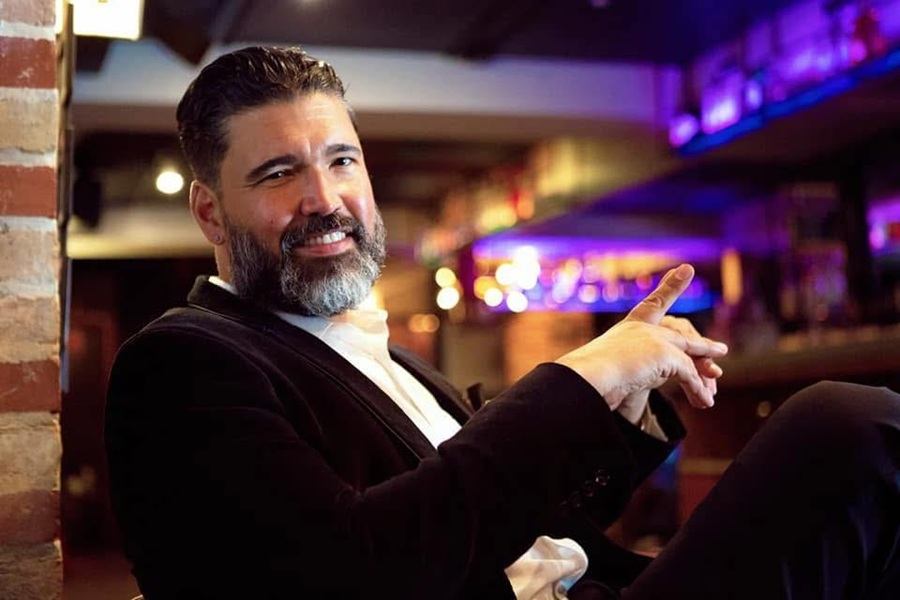
Ray came from a family full of musicians, but his father and grandfather dedicated themselves to the craft of building string instruments such as guitars, requintos, and cuatros. His grandfather, besides being a craftsman, was also a very talented musician, so he was in high demand in his town to liven up events of all kinds. Seeing so many musicians testing the quality of the instruments at home all the time, little Ray tried to be around to learn the tones he heard.
Over time, he had his own guitar and carried it with everywhere he went, something that his family always supported, and he is so grateful for that.
Music was always very present in Rey’s life, but he had not yet mastered it very well, and his interest in it had not developed much at all, so he joined the United States Army. However, once there, some of his fellow soldiers were also musicians, and taught him to play other instruments, but it did not end there. It was at this stage that his interest in singing was sparked and he dedicated to this profession after his retirement. That was 26 years ago.
He came to be there for a total of six years. In the beginning, he joined as an infantryman and later became an artilleryman. He also attended aviation school for about a year, but unfortunately had an accident that fractured his leg in six places, so he was given the option of staying or changing jobs again, and he chose the latter.
It should be noted that he spent much of his service in Germany, and being there, he devoted much of his free time to listening to music that reminded him of his roots and playing it as a hobby.
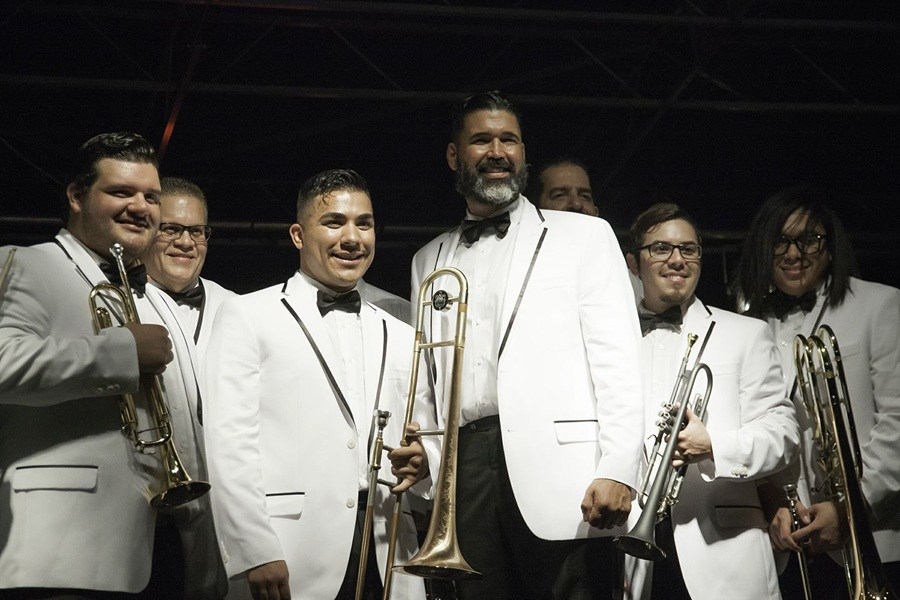
Having been born in Boston, Massachusetts, it struck us that he chose Texas as his new home. On this subject, he told us that his best friend was parked at Lackland Air Force Base in San Antonio and invited Ray to visit him. The artist enjoyed his walk around the city so much that he decided to stay there, so he applied to work at the City of San Antonio Aviation Department and got the position. After completing his retirement procedure, that was how he went directly to San Antonio, where he continues to live to this day.
As for the musical panorama he found there, what dominated the most at the time was regional Mexican music, so salsa, merengue, and other genres of that type were just beginning to take their place on the local music scene. Fortunately, things have changed since then. During those same years, Ray was invited to a rehearsal with the merengue band Grupo Chocolate to serve as a backup singer, and he spent about six years singing with them, but also became the band’s manager and owner.
Already in the year 2007, the band unfortunately broke up and all the members went their separate ways, which is when Ray finally decided to form his own band, The Ray Colao Band.
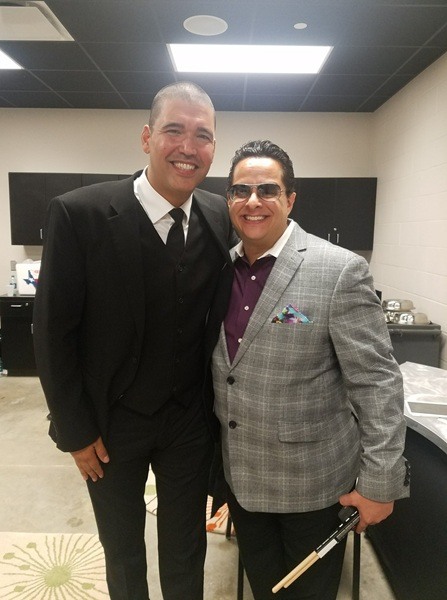
For a time, Ray was the singer of Tito Puente Jr.’s band, and both he and the timbalero were having lunch at a restaurant and talking about the band Ray wanted to start. Ray explained to him that his project was like a mix of everything and that it was all “colado” (in this context, it means everything is mixed together). In addition, he always snuck into someone else’s stage without being part of the group (”colado’’ in Spanish), so Puente gave him the idea to use that name for his band, and it was.
As for his accompanying musicians today, we can mention guitarist and singer Jessi García, guitarist, pianist, and bassist Rogelio Romer Hidalgo, singer Gilberto Álvarez, percussionist Georgie Padilla, and the late Jesús Navarrete. These were the members who formed the core of the band, and almost all have been working alongside Ray for about 18 years continuously, except for Gilberto, who spent some time in Puerto Rico but then rejoined them. After them, The Colao Band also welcomed Hainel García and Robert García.
In addition to the band, Ray has also been able to open his own restaurant, Cuba 1918, which he has been running for about four years. He says the project is going very well and that it has become a music and arts venue where he hires various bands to entertain customers during their meal.
Read also: Actress, comedian, and singer Carmen Nydia Velázquez tells us about the best of her career
The artist we will talk about today is a very particular case, since he comes from a country which is not usually related to salsa or Latin music in general. However, the passion for these rhythms has captivated people from all over the world, so it is not surprising that our guest has experienced the same thing.
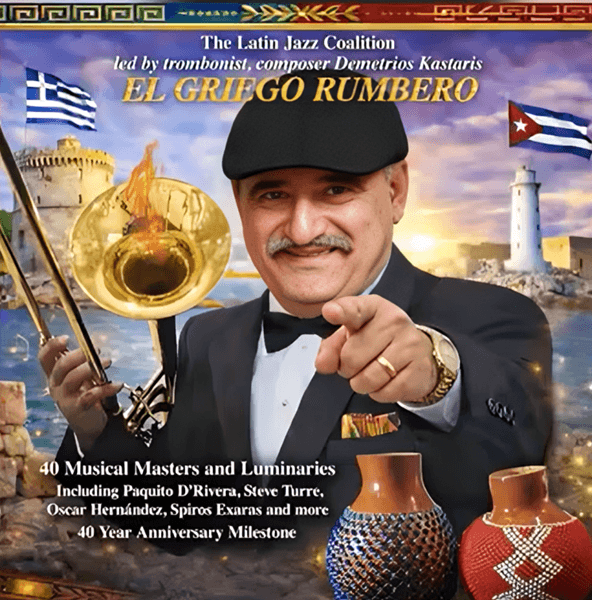
We’re talking about the Greek-born trombonist and composer Demetrios Kastaris, whom El Rubio Boris and I were fortunate to welcome at the Salsa Museum. Here’s a little of his fascinating story.
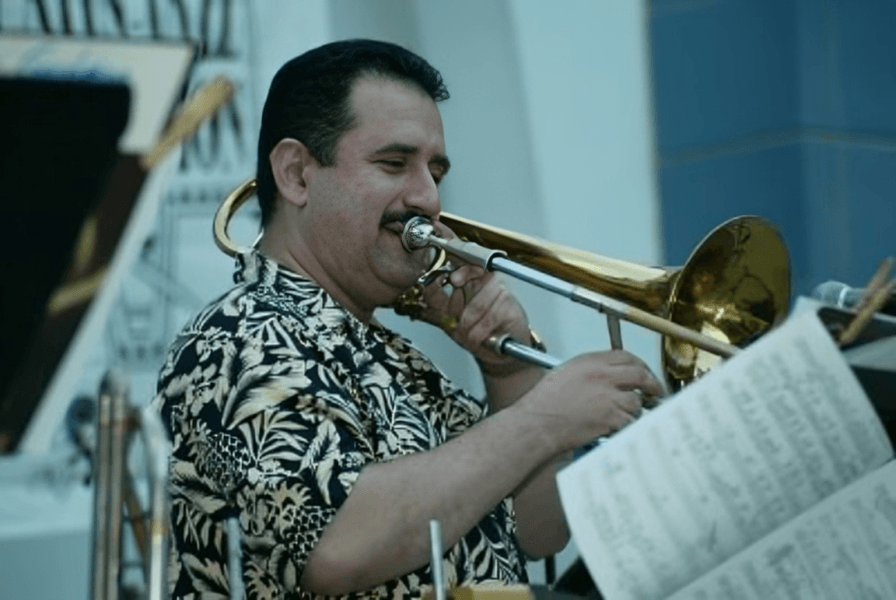
Demetrios was born in Thessaloniki, Greece, but moved with his family to the United States when he was just two years old. After living in Ohio for a few years, the family moved again, but this time to St. Louis, Missouri, a place that would be critical to the training of the Young man in the times to come.
The first contact of the boy with music was in elementary school during a live performance by a classical music quintet, but what really captivated him was a demonstration of a slide trombone by a member of the St. Louis Symphony Orchestra. It was at that instant the aforementioned instrument inspired Demetrios to take trombone lessons and join the school concert band.
More importantly, as Demetrios grew older, he spent countless hours practicing the trombone, especially in summer when he was free from school work. Finally, On reaching the age of 17, his perseverance began to bear fruit, and he got the opportunity to rehearse with the Stan Keaton Jazz Orchestra, which was the first great experience for the teenager. Just one year later, he sang as a soloist at the Classical Rimsky-Korsakov Concerto.
Other than that, Demetrios received the John Philip Sousa Band Award just before graduating from high school. He then studied music education at the University of Missouri-St. Louis, when he played in the jazz band and won several awards with the group.
Two years after having studied in Missouri, Demetrios moved to New York, where he received a scholarship that allowed him to attend New York University and take more steps in his musical career. While completing his studies, he met a bandleader on the subway and was invited to a rehearsal where he was given the opportunity to arrange Afro-Cuban jazz pieces for the first time in his life.
Latin music and its rhythmic features made such an impression on Demetrios that he began attending concerts by many of its great exponents, such as Willie Colón, Eddie Palmieri, Ray Barretto, Tito Puente, Mongo Santamaría, and many others. This led him to transcribe and conscientiously analyze these artists’ songs to satisfy his curiosity and learn more about these rhythms.
After graduating with honors, he earned a masters degree in jazz from the Manhattan School of Music. Soon after, he was already teaching in public schools while performing with one of the bands of the Concord Resort Hotel.
For over 50 years of artistic career, Demetrios has had the opportunity to perform with big Latin stars such as Tito Puente, Luisito Quintero, Alfredo De La Fé, Ray Barretto, Charlie Palmieri, Herencia Latina, Oscar Hernández from The Spanish Harlem Orchestra, and many others.
Already in the decade of 1980, the artist founded the Latin-Jazz Coalition and recorded several of his original compositions in genres such as Brazilian and Afro-Cuban jazz. In certain Circles, his work has earned him the nickname of “El Griego Rumbero”, a moniker by which he is still known today.
Much more recently, Demetrios was invited to play with Los Leales de Cuba at the Buena Vista Curry Club and also to rehearse with Los Muñequitos de Matanza, which was a very learning afternoon and a memorable experience for him. Thereafter, he traveled to Cuba on several occasions to learn much more about this music.
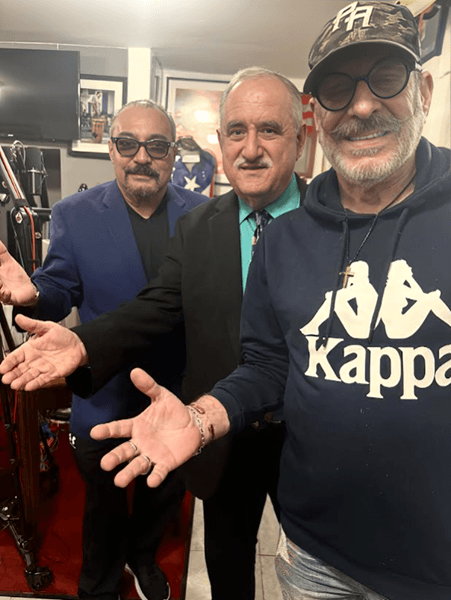
Just two years ago, Demetrios visited the Spanish Harlem Salsa Museum directed by yours truly and spent an enjoyable time with our entire team but he did not come alone. He brought us his photograph and a poster of the Latin Jazz Coalition, which were mounted on a wall alongside many other photographs of stars such as The Fania All Stars, Hector Lavoe, Tito Puente, Celia Cruz, El Gran Combo de Puerto Rico, Larry Harlow, and many others.
His childhood trombone was also added to our extensive display of objects donated by artists and their families. This took place on March 20, 2024, and the instrument remains at our institution to this day as a reminder of a Greek man’s love for our music and a thank you to his dedication over the years.

Read also: Rey Ruíz visits the Salsa Museum and talks about his prolific career