• Skip to primary navigation
  • Skip to main content

International Salsa Magazine

  • HOME
  • Previous editions
    • 2026
      • ISM / May 2026
      • ISM / April 2026
      • ISM / March 2026
      • ISM / February 2026
      • ISM / January 2026
    • 2025
      • ISM / December 2025
      • ISM / November 2025
      • ISM / October 2025
      • ISM / September 2025
      • ISM / August 2025
      • ISM / July 2025
      • ISM / June 2025
      • ISM / May2025
      • ISM / April 2025
      • ISM / March 2025
      • ISM / February 2025
      • ISM / January 2025
    • 2024
      • ISM / December 2024
      • ISM / November 2024
      • ISM / October 2024
      • ISM / September 2024
      • ISM / August 2024
      • ISM / July 2024
      • ISM / June 2024
      • ISM / May 2024
      • ISM / April 2024
      • ISM / March 2024
      • ISM / February 2024
      • ISM / January 2024
    • 2023
      • ISM / December 2023
      • ISM / November 2023
      • ISM / October 2023
      • ISM – September 2023
      • ISM – August 2023
      • ISM July 2023
      • ISM Edition June 2023
      • ISM – May 2023
      • ISM April 2023
      • ISM March 2023
      • ISM February 2023
      • ISM January 2023
    • 2022
      • ISM December 2022
      • ISM November 2022
      • ISM October 2022
      • ISM September 2022
      • ISM August 2022
      • ISM July 2022
      • ISM June 2022
      • ISM May 2022
      • ISM February 2022
      • ISM January 2022
    • 2021
      • ISM December 2021
      • ISM November 2021
      • ISM October – 2021
      • ISM September 2021
      • ISM August 2021
      • ISM July 2021
      • ISM May 2021
      • ISM April 2021
      • ISM June 2021
      • ISM March 2021
      • ISM February 2021
      • ISM January 2021
    • 2020
      • ISM December 2020
      • ISM November 2020
      • ISM October 2020
      • ISM September 2020
      • ISM August 2020
      • ISM July 2020
      • ISM June 2020
      • ISM May 2020
      • ISM April 2020
      • ISM March 2020
      • ISM February 2020
      • ISM January 2020
    • 2019
      • ISM December 2019
      • ISM November 2019
      • ISM October 2019
      • ISM Septembre 2019
      • ISM August 2019
      • ISM July 2019
      • ISM June 2019
    • 2016
      • ISM December 2016
      • ISM November 2016
  • Spanish
  • Download Salsa App
    • Android
    • Apple

Search Results for: Timba

Takashi Nakazato

Asia / Japan / Tokyo

Takashi Nakazato, Multi- percussionist specializing in various musical genres.
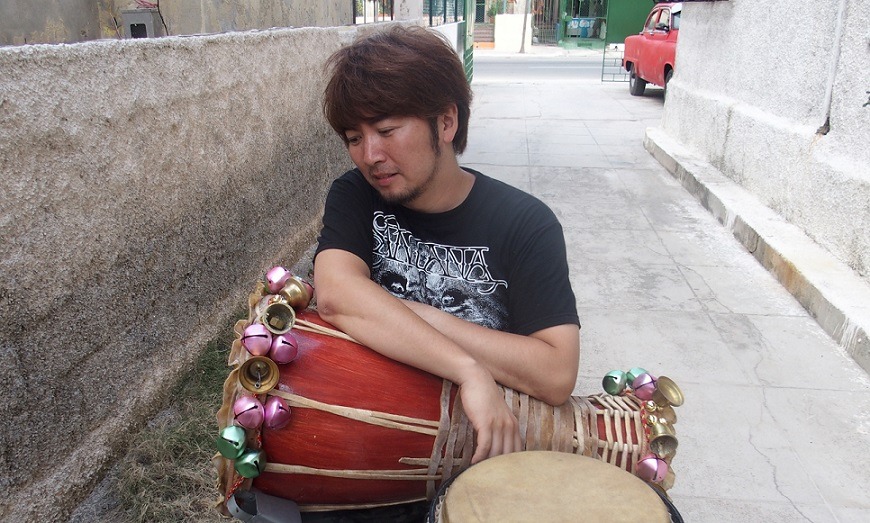
Takashi Nakazato Olympus Digital Camera

Takashi Nakazato born in Asakusa, Tokyo is a multi-percussionist specializing in various musical genres.

He has performed with numerous well-known artists throughout his career, as well as performing with “The Lion King, The Musical” for five years.

Nakazato has toured most of Europe and Asia with the Jaribu Afrobeat Orchestra, Jazztronik, Fried Pride (Tokyo Jazz Festival etc) Kyoto Jazz Massive (North Sea Jazz Festival, Tokyo Crossover Jazz Festival etc) and toured China with the Online Game Orchestra (Ro Legend 2016)

Takashi has also toured Japan with famed pianist, Yukie Nishimura and toured Mala in Cuba.

He was the only Japanese percussionist to be hired for the gig.  Takashi studied for a long while in Cuban, learning Cuban folklore and Bata under the wing of greats like Adonis Panter Calderon, Barbaro Yordany Crespo Richard (Osain Del Monte) and Angel Boraño.

He studied the Conga drum under Tomas “El Panga” Ramos, Edger Martinez and Joaquin Pozo.

His timbal mentor was Juan Carlos Rojas.  He made Santo, Obatala, while in Cuba.
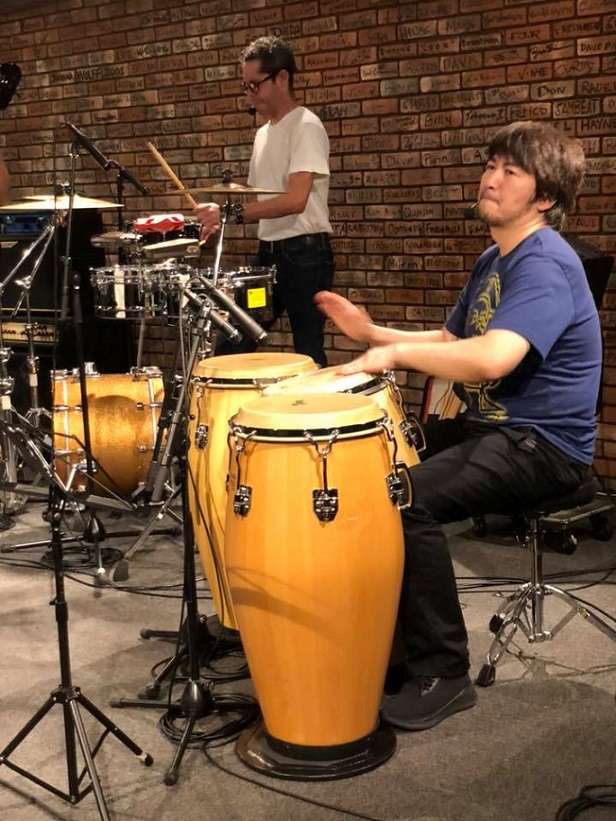
Takashi Nakazato
Takashi Nakazato

Nakazato has his own fusion band, Piecework, and is also a member of 10 piece percussion group, Orquesta Nadge! Nadge! And Ayumigos (Japanese and Cuban members of Latin Jazz).
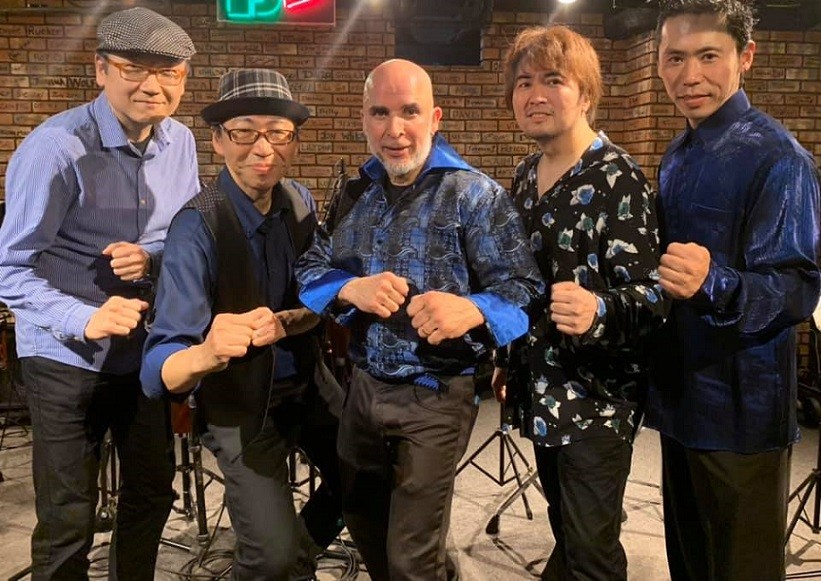
Takashi Nakazato with the orchestra

Nakazato released his first album “Clandestina,” which included guests Luisito Quintero, Robert Quintero, Calixto Oviedo, Karl Vanden Bossche and Olí Savill. His percussion instruction book & DVD was published in 2014.

He is currently a member of the orchestra of maestro Jimmy Bosch ¨The Trombon Criollo de La Salsa ¨ and at the same time is an exclusive artist of the percussion instrument brand Gon Bops in Los Angeles California.

https://www.facebook.com/takashi.nakazato.75

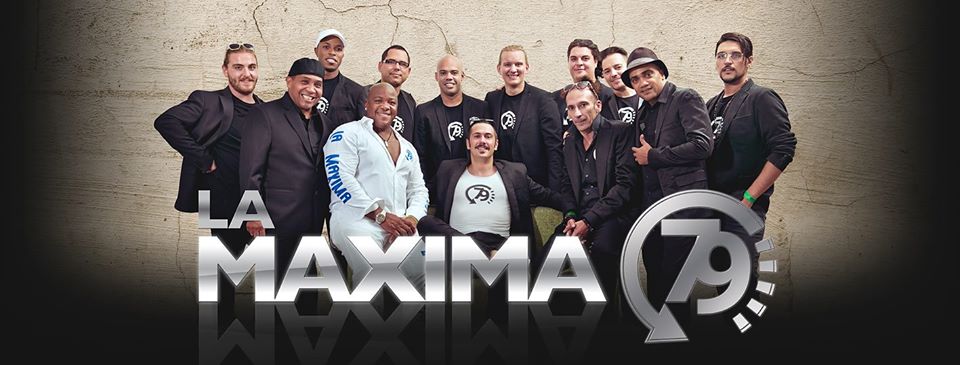
Maxima 79 Salsa Orchestra

Europe - Milano - Italy

Maxima 79 Salsa Orquestra was born in Milano – Italy in the year 2010 of the idea of the DJ and Musical Producer Fabrizio Zoro.

Maxima 79 Salsa Orchestra

Fabrizio Zoro had the magnificent idea of making music, returning to the sound of the 70’s for dancers with a modern sound and, at the same, time of the golden age of salsa in New York.

With two productions made with high quality and an original and rich sound in Afro-Caribbean rhythms.

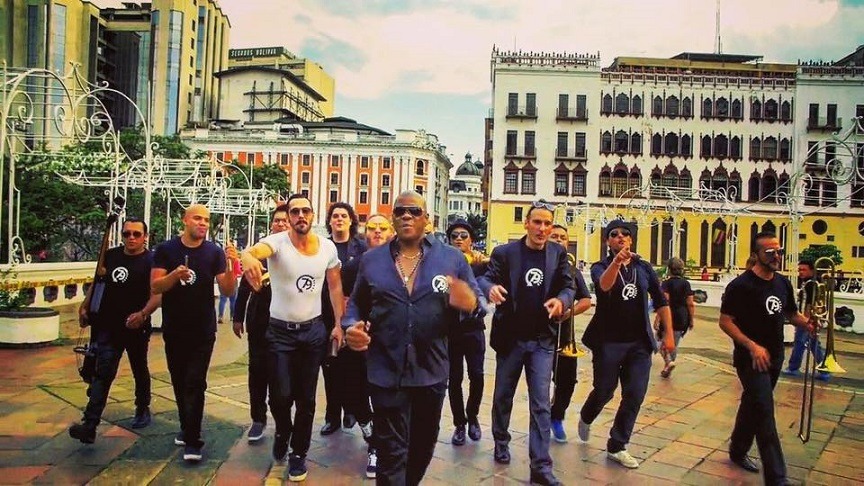
Maxima 79 Salsa Orchestra on stage

The two titled albums, Returning to Guaguanco in 2013 and Joseito in 2016, have given him a seat in the best dance halls across the European continent and thanks to all his successes, the orchestra is recognized worldwide as one of the best Salsa groupings for the dancer.

La Maxima 79
La Maxima 79 – Joseito

The original compositions by the hand of  Fabrizio  Zoro founder, director and performer of the bongo, bell and guiro, carrying Afro-Caribbean Rhythms in the soul, at the same time, Fabrizio tells us that Cuba is the most important musical novelty in the whole basin from the Caribbean and the world and for this reason they returned to the origins of the Traditional Salsa with a musical work entitled “Cuban Session” dedicated to typical rhythms of the Big Island such as Timba, the Cuban Son and the Traditional Changüí.

The musical arrangements of the productions were prepared by Fabrizio and Marco Puma, the official pianist of the orchestra and, also, known as the best-known Italian bachatero in the world, but with this album he has shown that his first passion stays within the key that beats in his immense salsa soul.

In their ten years of experience, they have been awarded the Honorable Mention USA and Songwriting Competition awards in 2014.

Musicians

Fabrizio Zoro: Director, founder, director and performer of bongo, campana and güiro

Marco Puma: Piano, Arrangements, Chorus

Jose Luis “Lalo” Brea: Mixing, Sound Engineer, Guitar on “Seventy-Nine Boogaloo”

Thorben Schütt: Trombone

Samuele Davìd: Trumpet

Efren Iriarte: Timbales and Drums

Umberto Nocita: Congas

Juan Carlos Avila: Bass

El Guille: Singer, Lead Voice, Chorus

Yoris El Trinitario: Singer, Lead Voice; Chorus

Dairo Todd Andino: General Chorus, Trombon

Ernesto “El Puro” Perez: Three

Mauro Brunini: Trumpet in “Rumbera Church”

Guest

Angel Luis Justiniano: Lead Voice on “Seventy Nine Boogaloo”

Isaia Leoni Dj The Prophet: Producer on “El Propeta Del Guaguanco”

Jeremy Suarez “J- Style”: Chorus on “One More Day”

Daniele Roveda: Vibes on “El Pasillito”

Inwoo Choi, Ilario Cali, ’Sara Spazzini, Francesca“ Alysea ”Carbone: Chorus on“ Seventy Nine Boogaloo ”

Samoel Scotton: Congas on “Rumbera Church”

Yannior Farre : Piano On“ El Bele Bele ”

They currently belong to the Record Label:

Smayra Publishing – www.smayrapublishing.com

RESILIENZA

Resilenza
Resilenza

Resilience is the ability of an individual to face a negative event by transforming and reorganizing their life in a positive way, including improving the previous situation.

The title is deliberately left in Italian to indicate the country of origin of La Maxima 79 and to indicate that Salsa today has become something Global with orchestras and dancers from all over the world under one family.

A special thanks goes to all the DJs and dancers of the World who help from the beginning La Maxima 79 to grow and spread their music and keep doing it.

Thanks to the entire iLatin Music Ilario Cali ‘Seal family, Sara Spazzini, Laura Fossati, Dj Alexio Grossi and Massimiliano Pioli for always supporting the production.

Thanks from my heart.

Milan, Italy

lamaxima79.com

+393398158230 (WhatsApp)

https://www.facebook.com/lamaxima79/

Salsa: From New York to the world!

North America – United States – New York

Last February we actively participated in different activities in New York, promoted by different instances and always supported from the Spanish Harlem Salsa Gallery Museum and The Johnny Cruz Show.

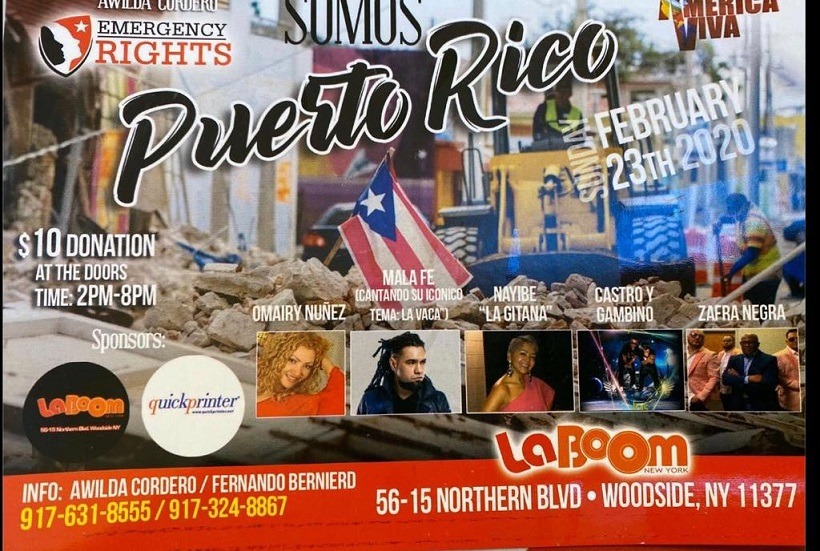
Johnny Cruz: We were part of the Somos Puerto Rico event, together with more than 25 artists and with the collaboration of La Boom, which allowed thousands of people to work for our island: Puerto Rico. There was a lot of music, and we were accompanied by artists such as Jova Rodríguez, Arlene, Roberto Vásquez, Anissa Gatners, Fernando Berniero, Alex Bautista, Jen Carrasco and Kevin Tapia, among others.

We also had typical food for sale and many initiatives aimed at saving so many lives in need. From this event we want to continue bringing families to the United States and they can be calm until they stop shaking in the south west of Puerto Rico. You are not alone!

In addition, we are working hard on a documentary about Frank Ferrer, always thinking of immortalizing figures that have consolidated Salsa in the world as a Latin genre of world projection.

Salsa, as you know, is a typically New York musical genre, the result of the influence of great Latin jazz musicians, and the existence of a youth of Latin origin born, or resident in New York, in slums where Salsa is the best expression, spiced up by the exile produced by the Cuban Revolution and the awareness of American racial minorities.

In 1964, Johnny Pacheco, a flutist of Dominican origin, and Jerry Masucci, a young businessman, founded the Fania label, which gave the old Latin labels, a more modern sense of Caribbean music. Musicians and singers of the previous generation were reinvented, but others were incorporated as a young Willie Colon, the Palmieri brothers, Eddy and Charlie; Papo Luca, Ray Barreto, Larry Harlow. And, there were also singers who put their voice to Salsa to tell stories of the street, daily or reflexive, that were the mirror of the life of the neighborhoods: Cheo Feliciano, Adalberto de Santiago, Andy Montáñez, the Ismaeles -Miranda and Ribera-, Justo Betancourt, Héctor Lavoe or Rubén Blades.

Johnny Cruz Salsa: From New York to the world!

The influence of the Cuban revolution had led composers and salsa musicians to become aware that it was necessary to compose songs that talked about what was happening in the streets from a critical perspective, giving way to a new salsa and foot reality for characters as Frank Ferrer started from folklore and protest to arrive at salsa mixing both concepts in an exemplary album: Yerbabuena. All this and much more can be enjoyed very soon.

For this month of March, Puerto Rico will organize the 1st World Salsa Collectors Meeting and of course we will be there representing New York with the Salsa Museum (SPAHA Salsa Gallery Museum). From March 7th, at least 15 organizations of this type of collector from seven countries will exhibit their collections of the Caribbean genre.

The collectors meeting will take place at the Sheraton Hotel, in Miramar, under the theme “La Salsa se baila así” and will be free admission. It will be attended by collectors from Puerto Rico, Colombia, Panama, Peru, Ecuador, Mexico and several cities in the United States.

That day will be the official release in LP format of the album “Mario Ortiz, 55 Aniversario”, nominated for the last edition of the Latin Grammys.

The event includes memorabilia exhibitors of legendary salsa artists such as Willie Rosario, Bobby Valentín, Roberto Roena o la Sonora Ponceña, as well as the Museo de la Salsa de Puerto Rico or the Fundación Nacional para la Cultura Popular.

Pieces from the Jairo Varela Museum, renowned deceased Colombian musician, whose orchestra Grupo Niche is still active and triumphing around the world will be presented. The writer Daniel Nina, will give a lecture about Salsa, and Puerto Rican dancer Tito Ortos will talk about the history of salsa dancing. We can enjoy live music with the group Cubaneo 54, and a great closing with the several times awarded Big Band of the Free School of Music of San Juan, directed by Professor Manuel García. See you there!

As always, remember that Spanish Harlem Salsa Gallery is in 1708 Lexington ave New York N.Y. 10029. Open free to the public all Thursdays & Fridays from 4 to 7 pm and Saturdays from 1 to 8 pm. Check the updates in our website: spahasalsagallery.com.

Johnny Cruz - Spaha Salsa Gallery
Johnny Cruz – Spaha Salsa Gallery

Also, The Johnny Cruz Show, the #1 Salsa Show on television on all 5 Boroughs of New York on CH67.  Saturdays from 3:30 to 4:30 pm.

Contact: Johnny Cruz. 917-747-8505.  [email protected].


By Johnny Cruz Correspondent, New York City, New York

Joe Bataan’s music remains in force

Joe Bataan in the Spaha Salsa Gallery

There are many artists of international stature have been in the Salsa Museum and left some valuable object in our facilities, and this month, it was the turn of American singer and musician Joe Bataan, who was kind enough to share with producer Johnny Cruz and his show partner Boris Calderón. 

Joe Bataan and Johnny Cruz in the Spaha Salsa Gallery

In one of the videos taken during the visit, the artist mentioned that the place was awesome and had expanded so much that another building would have to be made soon for so many valuable acquisitions. Let’s remember that both the artists and their families have been donating all kinds of garments, instruments and things related to their careers to be exhibited in the museum with the purpose of showing the public this valuable part of our culture.

After such an extraordinary exchange, we believe it believe to talk a little about the story of this talented man and how he has reaped all the success obtained at the time.

Story of Joe Battan

Bataan Nitollano is a New York singer of African-American and Filipino origin from his parents, but he grew up in the neighborhood of Harlem, where he got in trouble with the law and was trained in music.

Joe Bataan signing a jacket in the Spaha Salsa Gallery

While he spent a short time in prison, he studied music, and trained in playing the piano, something that would be extremely important for his artistic career. Once he was released, he formally began his career as a singer and formed his first group, which he named ”Joe Bataan and the Latin Swingers”. At that time, the young man was heavily influenced by two genres that were very fashionable at the time, which are boogaloo and Afro-American Doo-wop.

Although Bataan was not the first to enter the aforementioned genres, his very particular talent made him worthy of the attention of the newly created record label Fania Records, which signed the artist in 1966 and released his first single ”Gypsy Woman” the following year. The song ended up being a huge hit in the Latin community in New York City and laid the foundation for what would end up becoming what we know today as Latin Soul.

During the time Joe worked with Fania, he recorded about eight albums, which became a true sensation due to their mix of Doo-wop in Latin rhythms with English soul, which was quite new at the time. Everything was going well until he had some frictions with the label manager Jerry Masucci concerning the economic issue, so the singer ended up leaving the company to launch his own label Ghetto Records.

The artist's signature
The artist’s signature

In the 1980s, he spent a long time away from music to devote himself to teaching at the same center where he was held and experienced some health declines that kept him silent for quite some time until he ws back in play in 2005, when he released his album ”Call My Name” whose rhythms were based on Latin soul and got many positive reviews. This album proved that Bataan was still a talented artist even though his genres are no longer the most popular.

Today, he is a person with extensive experience in the world of music who is always willing to give his everything to any fan who wants to listen to him. The Spaha Salsa Gallery team is pleased to have had his presence in recent days, so we hope that meetings like this one can be repeated.

Read also: Life and career of Ernie Acevedo

Contact: Johnny Cruz. 917-747-8505. [email protected].


By Johnny Cruz, ISM Correspondent, New York, New York City


Rolando Sanchez

USA / Hawaii / Honolulu

Rolando Sanchez: Percussionist, Singer, Composer, Producer and leader is the best selling Latin American artist in Hawaii

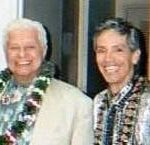
Rolando Sanchez
Rolando Sanchez

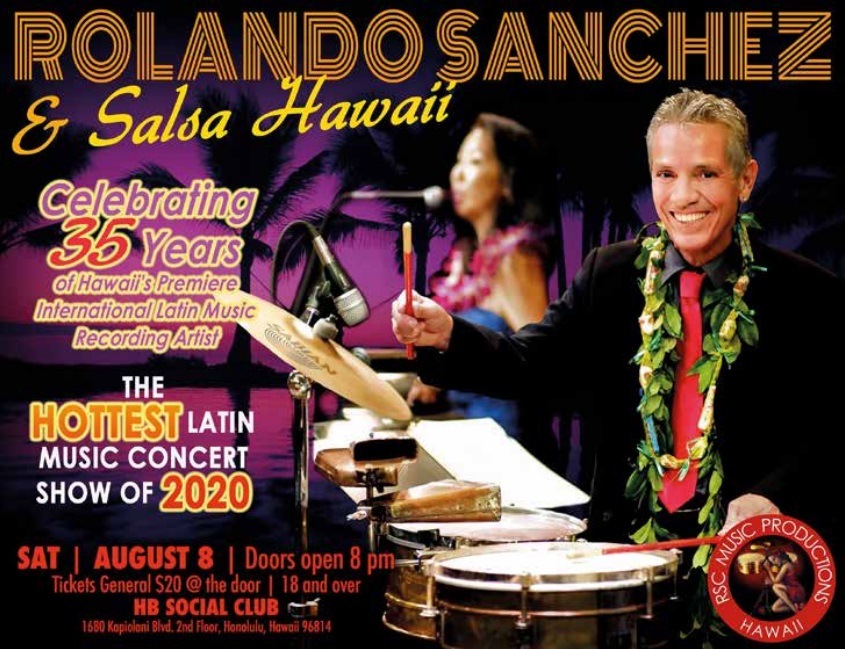
Rolando Sanchez Percussionist – Singer – Songwriter – Producer, leader of Hawaii’s Premiere, longest running, bestselling Latin recording artist from Hawaii.

In this Site you will experience the history and achievements of this musical Family called “SALSA HAWAII” for over 20-years, performing, recording, touring and just sharing the love and ALOHA of our Latin Music Wolrdwide.

With CDs sold Worldwide and the number of awards and accolades from press, government, musical organizations, community organizations, locally, nationally and Internationally.

HONOLULU TROPICAL

Celebrating 20 years of Latin Music in Hawaii Rolando Sanchez Salsa Hawaii Singer, Songwriter, Percussionist (timbales-congas-bongos-drums) Recording Artist, and Producer. Born in Masaya, Nicaragua, to a musical, artistic family; his father, an accomplished songwriter, pianist, and singer.

His mother also played piano and sang as with most of his immediate family. His musical influence began at a very young age playing drums with neighbourhood kids emanating the music of the time (i.e.: Beatles, Trini Lopez, Paul Anka, etc.).

In his early teens he began listening to  more Latin music styles, which formed the basis for his music today. The bands that influenced him at the time were Tito Puente, Celia Cruz, Billo’s Caracas Boys, Sonora Matanzera, Sonora Santanera, Daniel Santos, and a Nicaraguan band Los Satelites del Ritmo.

Rolando Sanchez playing drums in concert

In the late 60s, the family relocated to San Francisco, California where he grew up and truly realized that music was to be his life. The music scene in the Bay Area at this time was very diverse. He delved in all the different styles.

During that time, Latin music was beginning to blossom and all kinds of Latin-style bands such as The Aliens, Latin Bloods, Los Beamers, Bandido, Unidad 77, and Limbo began to play in and around the Bay Area.

Cesar’s Club was THE place to be to experience the best Latin musicians (Pete and Coke Escovedo, Roger Glenn, Luis Gazca, Pablo Telles, Victor Pantoja, performing live.

That’s when Rolando Sanchez realized his passion for Latin music and particularly Timbales. Then it happened! Santana Band came out and proved to be the biggest inspiration for all Latin musicians in the Bay Area (the world) including Rolando. It seemed that Latin bands were coming out of the woodwork: Azteca, Malo, Sapo, Dakila, and Salsa De Berkeley to name a few. He played with different bands in San Francisco’s Latin music scene and shortly thereafter, decided it was time to start his own band called SOLAR; they played a mixture of Latin rock and Latin jazz fusion

Rolando Sanchez and his brother Mario (still playing congas with Bay Area bands) were also some of the guys hanging out at Dolores Park in the Mission District playing congas and timbales along with such notables as Raul Rekow, Karl Perazzo, Chepito Areas, Carlos Badia, John Santos, and many other well-known Bay Area Latin percussion artists of today.

His band gained popularity and started playing the circuit where he met and befriended such artists as Pete and Sheila E. and Master Armando Peraza who helped develop his affinity for percussions.

While playing in the Bay Area, SOLAR was billed with bands like Azteca, Azuquita, Sapo, Cal Tjader, Cesar’s All-Star Band, Willie Bobo, and others.

After their break-up, he formed the band SUNSMOKE together with his uncle, Freddie Velasquez, who had just returned to the Bay Area from touring the country with the Phil Driscoll Band. SUNSMOKE quickly became well-known in the Bay Area and they toured the west coast and Canada where they opened for blues master B.B. King and performed at the Canadian Rock Festival with bands from all over the world.

After a couple of very busy years, including recording some demos for major record labels, they broke up and Rolando spent some time in Los Angeles checking out the music scene there. Upon returning to the Bay Area, he joined MESSIAH, one of the hottest Funk/Gospel/Rock/Disco bands. Their single, “Get up on Your Feet and Dance”, became a hit in the International disco scene. MESSIAH then went on to Japan where they enjoyed instant success and toured for 4 months. Shortly after their return, the band broke up and the Rolando Sanchez Band was born. Composing and writing his own material, Rolando released his ­first single cassette with two original songs, “She’s the Lady” and “Cold Hearted Woman”.

Rolando Sanchez
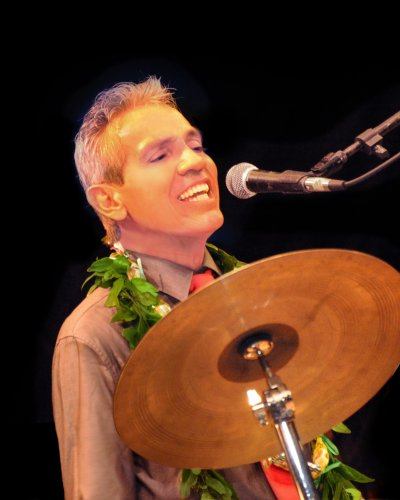
Rolando Sanchez singing

She’s the Lady” was made into a music video shown on local stations on both east and west coasts at  the very beginning of the MTV movement. It featured some of the Bay Area’s ­nest musicians including vocalist Jo Baker (Elvin Bishop Band). After being in the Bay Area for nearly 20 years, Rolando felt the need for a change of pace in his life. In 1984, he visited his sister in Hawaii and the rest, as they say, is history.

Not long after arriving in Honolulu, Rolando decided to make it his home and the place where he would throw his musical fate to the wind.

  1. His very ­first musical engagement in Honolulu was at the Waikiki

Shell with one of Hawaii’s hottest singer/songwriters of that year, Mr. Audy Kimura, in celebration of 25 Years of Statehood. This made it all the more clear to him that he was in the right place.


  • « Go to Previous Page
  • Page 1
  • Interim pages omitted …
  • Page 32
  • Page 33
  • Page 34
  • Page 35
  • Page 36
  • Interim pages omitted …
  • Page 69
  • Go to Next Page »

International Salsa Magazine (ISM) is a monthly publication about Salsa activities around the world, that has been publishing since 2007. It is a world network of volunteers coordinated by ISM Magazine. We are working to strengthen all the events by working together.