• Skip to primary navigation
  • Skip to main content

International Salsa Magazine

  • HOME
  • Previous editions
    • 2026
      • ISM / March 2026
      • ISM / February 2026
      • ISM / January 2026
    • 2025
      • ISM / December 2025
      • ISM / November 2025
      • ISM / October 2025
      • ISM / September 2025
      • ISM / August 2025
      • ISM / July 2025
      • ISM / June 2025
      • ISM / May2025
      • ISM / April 2025
      • ISM / March 2025
      • ISM / February 2025
      • ISM / January 2025
    • 2024
      • ISM / December 2024
      • ISM / November 2024
      • ISM / October 2024
      • ISM / September 2024
      • ISM / August 2024
      • ISM / July 2024
      • ISM / June 2024
      • ISM / May 2024
      • ISM / April 2024
      • ISM / March 2024
      • ISM / February 2024
      • ISM / January 2024
    • 2023
      • ISM / December 2023
      • ISM / November 2023
      • ISM / October 2023
      • ISM – September 2023
      • ISM – August 2023
      • ISM July 2023
      • ISM Edition June 2023
      • ISM – May 2023
      • ISM April 2023
      • ISM March 2023
      • ISM February 2023
      • ISM January 2023
    • 2022
      • ISM December 2022
      • ISM November 2022
      • ISM October 2022
      • ISM September 2022
      • ISM August 2022
      • ISM July 2022
      • ISM June 2022
      • ISM May 2022
      • ISM February 2022
      • ISM January 2022
    • 2021
      • ISM December 2021
      • ISM November 2021
      • ISM October – 2021
      • ISM September 2021
      • ISM August 2021
      • ISM July 2021
      • ISM May 2021
      • ISM April 2021
      • ISM June 2021
      • ISM March 2021
      • ISM February 2021
      • ISM January 2021
    • 2020
      • ISM December 2020
      • ISM November 2020
      • ISM October 2020
      • ISM September 2020
      • ISM August 2020
      • ISM July 2020
      • ISM June 2020
      • ISM May 2020
      • ISM April 2020
      • ISM March 2020
      • ISM February 2020
      • ISM January 2020
    • 2019
      • ISM December 2019
      • ISM November 2019
      • ISM October 2019
      • ISM Septembre 2019
      • ISM August 2019
      • ISM July 2019
      • ISM June 2019
  • Download Salsa App
    • Android
    • Apple
  • Spanish

Search Results for: Tito Puente

Orlando José Castillo: The Venezuelan sonero graduated in New York

Orlando José Castillo “Siempre Pa’lante”

He (Orlando José Castillo) is catalogued as one of the most important soneros that Venezuela has given to the world and considered a living legend of Afro-Caribbean music for his extensive, successful and extraordinary career during many years; for “International Salsa Magazine”, it is a great honor to have as a special guest on this occasion Orlando José Castillo “Watussi”, born in Marín, Yaracuy state, on March 23, 1949, who, since he was a child, moved with his parents to live in the parish of La Pastora in the city of Caracas.

Welcome Master Watussi and we hope that all salsa lovers through International Salsa Magazine, www.salsamundi.com, will know part of his life.

Thanks to all the staff for giving me the opportunity to read your magazine, which is already observed in Latin America, USA and Europe.

Orlando José Castillo "Watussi" The Venezuelan Sonero graduated in New York
Orlando José Castillo “Watussi”

And well, I am currently living in the city of Milan, Italy and let me tell you that I have beautiful and unforgettable memories of Barquisimeto, so for me it is a pleasure and an honor at the same time, to be sharing with all those people and my country.

To begin with, Maestro Watussi, which were the first groups and orchestras you were part of? Let me tell you that I started with Los Satélites, Federico y su Combo Latino, Porfi Jiménez, Príncipe y su Sexteto and that was super important, since they were the Venezuelan orchestras with which I began to form my career, especially with Los Satélites, Porfi, Federico; I sincerely owe the present of my life to all of them and that is why I do not want to leave them out of the picture.
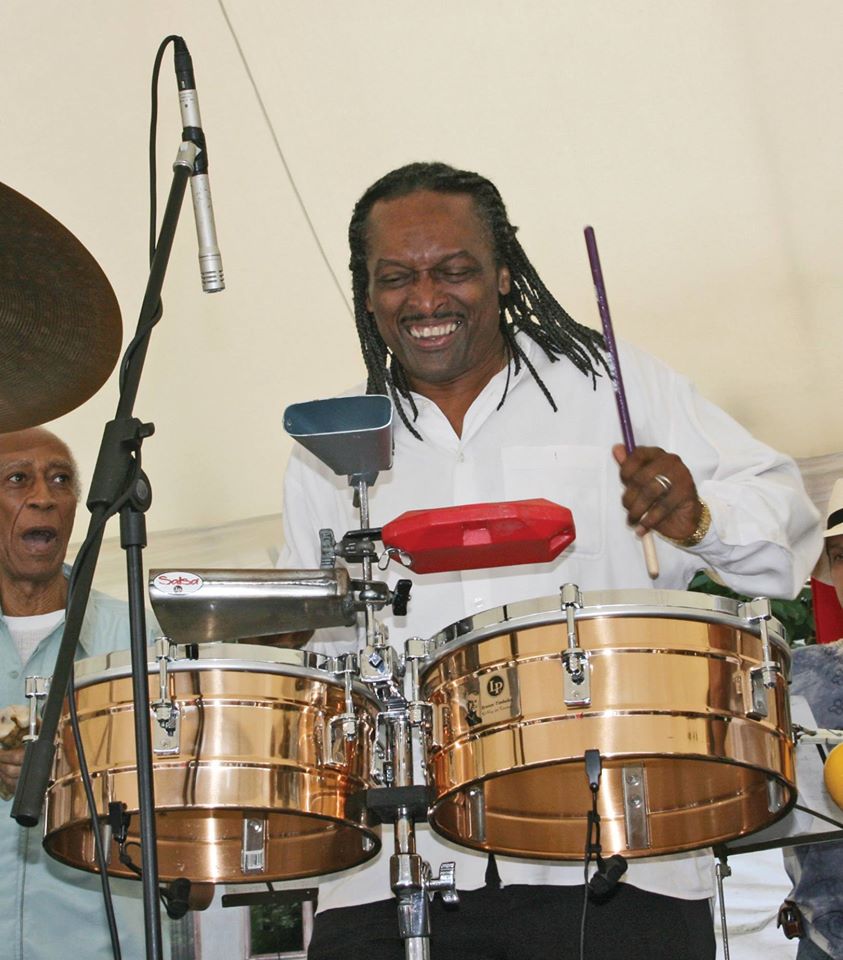
"Watussi" The Venezuelan Sonero graduated in New York
Orlando José Castillo “Watussi”

Very good teacher, we would like to talk about your career in Puerto Rico and in the United States, with the various groups with which you were part.

Well, I tell you that I left Venezuela in 1979 definitely because I traveled for the first time in 1971, musically speaking, and it was my first international tour to the island of Santo Domingo with Los Satélites and then we returned in 72 and in 1974 we were the first Venezuelan orchestra to set foot on American soil in New York City.

NY being on the most important stage in the world at that time as it was Madison Square Garden and the importance of imposing a hit of musical salsa in the Big Apple, with a song I recorded called “Traicionera”, by the master Carlos Guerra and recorded with “Los Satélites”, after that experience I was founder of the “Renovación”, from there I went to be part of “Federico y su Combo Latino”; Then I worked with Rafael Cortijo and his Combo in Puerto Rico in 1977.

Later, in 1979, I went to the island of Borinquén, Cortijo was already traveling to New York and because I could not accompany him, I was lucky enough to be asked by the maestro Bobby Valentín to be part of his band. I stayed with him for three months and at one point I went to New York, The strike of Puerto Rican musicians, as many Dominican musicians were entering the island, led to Bobby being criticized for having a Venezuelan singer instead of a Puerto Rican one.

Later, in New York, I joined Cortijo and Kako Bastar again, who was another teacher in my career and with him I learned to know that great city and at that time almost all the singers of the orquestas bravas, were beginning to do their own work as soloists and I began to work with Joe Cuba and his Sextet, Eddie Palmieri, Larry Harlow, La Típica 73, until I arrived at the “Conjunto Libre”, I was there for about a year and a half, I recorded with them “El changó de María”.

After I had signed with the Fania label, which was a mistake I made, because Cortijo and Kako were telling me not to do it, since I had Fania in my brain, I rushed and was with them for a year practically inactive in the discography and that cost me not to have recorded the last album with Rafael Cortijo and others.

I recorded with Fania “Mi rumba y yo” and told them to leave me alone, they let me go and I joined the orchestra of “Bobby Rodríguez y su Compañía” for three years, I recorded a very good album, including the songs “María Cristina”, “El Pintor”, “Homenaje a Cortijo”.

In fact Carlos, then I continued with Palmieri in 1987, when I had already recorded the album “Las Calaveras” with José Mangual Jr. and there I began my career as a soloist.

Later on I set up my orchestra in New York, but unfortunately work began to decline due to the closure of venues such as El Corso, Casablanca, Copacabana, El Palladium and that brought as a consequence much less work, but thank God, in 1988 I had the opportunity to go to Paris, invited by my compadre Alfredo Cutuflá, in the place of Cheo Feliciano, to do the dance of December 31st at the New Morning.

Excellent, master Watussi, and it must have been a great commitment to replace Cheo at that time, tell us about this experience. Yes, I was fortunate to take his place because he did not travel at that time without his orchestra and Alfredito Cutuflá told me to get Cheo, I had his telephone number, I gave it to him and he told me that if Cheo did not go, I would go, and well it was a tremendous success with Cutuflá and that opened the doors for me in Europe and specifically in Italy, where my friend Carlos Ugueto was based, who brought salsa to that country.

Orlando José Castillo "Watussi"
Orlando José Castillo “Watussi”

Ugueto played the first album of this genre on his radio program, in his club and after he found out that I was in France, he sent for me and facilitated a tour in Milan in 1990, since in 1989 I was in Panama, singing to my compadre’s daughter Roberto “Mano ‘e Piedra” Durán, his 15 year old party, together with Camilo Azuquita, exactly on December 16, 1989,

but on December 19 the invasion of Panama began and I had to stay there until January 5 and well Carlos, I go to Europe and start my tour in Holland, then London, where I did a show with the master Tito Puente, on December 30, 1990, there I was 2 months in the old continent; I returned to New York, where I was residing, and in 1991 I returned to Europe and that’s when I stayed here for good with my family in Milan.

Orlando José Castillo, when you come to Venezuela, we imagine you will feel very well because you are visiting your homeland?

Of course I do, professor, when I go to my country I recharge my batteries, because there is no place like Venezuela, no matter what happens and I tell you honestly, I hope one day to be able to be in Barquisimeto with you, especially to personally show my appreciation for this gesture of having given my name to that “Peña Salsera Orlando Watussi”, in the middle of 2019, being the first time in Venezuela, to give me an honor of that size; especially my thanks to Dany Castillo and my family there, precursors of that idea, and to all the musicians of the musical capital to whom I send a cordial greeting.

Master Watussi, I am remembering that you were integrating the “Clan of Salsa” here in our city, do you remember that too?

Obviously, my friend Carlos, I was there with one of the bravest singers that Venezuela has given, my little brother Willy Rodriguez, who unfortunately is no longer with us.

Willy “El Guaro”, took care of me in his house for a few days, until I got my house in Barquisimeto; I am going to take advantage of this interview professor, to thank the family of Aldemar Barrera, the family of Honorio, tremendous bass player, Coromoto, who was the engine of that movement; greetings equally to Egidio and to all those panas.

Carlos, I want to greet especially the people of the Orquesta Malecón, I hope that one day we can meet on a stage and make a little effort, or perhaps in the Peña itself.

Orlando José Castillo, what can you tell us about Maestro Baquedano? Santiago Baquedano is one of the best musicians Venezuela has ever given and with him I worked on Margarita Island for a few months and from there I went to “La Salsa Mayor” and then I went to Puerto Rico, but I feel proud to have shared with so many valuable people from my country in my 50 year artistic career.

And let me tell you Carlos, just to finish, I reiterate my congratulations and good wishes for you to continue always with the work you do with this salsa column and your radio program, which aims to support and encourage musical talent in salsa.

Thank you Carlos and God bless you, take care all of you in my country and don’t leave the house! Cool…!.

 

Home

ISM November 2020

Cover Magazine 11 ISM special edition Nov 2020
In this months issue read about the tribute to legend Frometas Billo’s Caracas Boys, also articles on Tito Puentes, the “gentleman of Salsa, Mr. Tito Nieves, Sheila King, , the transalvania Salsa Festival, and many others.

Johnny Cruz – Let’s support the artists who continue working

North America / United States

The latin music from the Johnny Cruz view

We are about to end this 2020 so atypical and challenging for everyone. Especially for artists who make a living from shows and entertainment. I want to congratulate all those who keep up working despite adversity. I also take advantage of the season to thank those who accompany us to make each and every one of our projects possible, and of course, to God, for the health and recovery of those who have had relapses throughout this year. Thank you all!

Johnny Cruz from New York
Johnny Cruz is the president of Spanish Harlem Salsa Gallery

My recognition goes to Ismael Miranda.

This Puerto Rican artist became famous during the salsa explosion of the 70s in New York, his fans called him “El niño bonito de la salsa”. Miranda was still a teenager when he recorded with the Larry Harlow Orchestra and joined the Fania All Stars.

Then came a solo career of extraordinary quality. Known for his professionalism and healthy habits, Miranda continues to record and perform concerts with his voice as vital as ever.

He recorded his first album at 16 with the Joey Pastrana orchestra. Then he went to Larry Harlow and began to seek his own identity and have more respect for music. He confesses that at first he did not take his music career so seriously, and although there were women and drugs, he never disrespected his directors or the public.

“When fame falls on you and you are not prepared, you become a person who is not very nice, who thinks that he is more than anyone else. I was an inexperienced baby, but I was catching up little by little.

Friends like Cheo Feliciano and Pete “El Conde” Rodríguez watched over me. Adalberto Santiago was always by my side. Santitos Colón — Tito Puente’s singer — became my compadre. With all those people that surrounded me, I had to start doing things as God intended so as not to lose their support,” he said in an interview. Given the good impression his performances with Andy Harlow made, his brother, Larry Harlow, called the Judío Maravilloso, decided to recruit him to his orchestra.

Ismael Miranda began his recording cycle with the album El exigente. Convinced of the potential of the young singer, in 1968, Larry launched a new production entitled Harlow Orchestra presents Ismael Miranda.

The successes were repeated with the recordings Electric Harlow, Tribute to Arsenio Rodríguez, Abran paso and Oportunidad. With Larry Harlow, Ismael also ventured into the field of composition, sharing credits with him on the songs “La revolucion”, “Guasasa”, “Arsenio”, “El malecón” and “Lamento de un guajiro”, among others.

He has also stated that the most unpleasant thing about his career is that being so young in the beginning, he has had to see iconic characters and great friends like Héctor Lavoe, Celia Cruz, La Lupe pass away.

Find it difficult to be alone after having so many friends. “Today the world is each one by his side. La Fania was not just a record company. We were a big family in which we all loved each other very much. Every time I hear another musician leave, my soul breaks. ”

In the 1980s he recorded several productions with his independent record label. He recorded in 1984 with the prestigious Cuban group Sonora Matancera for his old record company Fania.

In 1986 his album Versos de Nuestra Cultura, together with singer-songwriter José Nogueras, was one of the great successes of the Christmas season of that year. In 1988 he announced his intention to retire from the artistic media. But that idea never came to fruition. Ismael has recorded with his own record label, IM Records, and with the RMM company.

He has a very close family. He has been with his second marriage for 25 years and has also been with his first wife for another 25 years. All of his children are married and have their own businesses. He has 13 grandchildren and two great-grandchildren. Recently Ismael Miranda and José Alberto “El Canario” joined Daniel Peña in “Hijo Del Cañaveral” Daniel Peña, Dominican based in the city of Miami.

He is recognized for his percussion skills and for being a music producer. Peña has worked with music greats such as Tito Puente Jr., pianist Marlow Rosado, Ismael Miranda, pianists Richie Ray and Larry Harlow, Celia Cruz and Giovanni Hidalgo. In 2014, he made his debut with the album “Eleven”, dedicated to his children; and three years later I have released “Sancocho”, a project with eleven songs.

The Dominican presents his new single “Hijo del Cañaveral”, a production that he made together with two great masters of salsa, Ismael Miranda and José Alberto “El Canario”.

Gerardo Rivas releases his first solo single.

Gerardo Rivas first solo single
New song for this talented artist

Puerto Rican Gerardo Rivas delights his followers with the launch of his first solo song. “A derretir el hielo” is a salsa, composed by Juan José Hernández and Victor Sanabria López, with musical production by Marcos Sánchez.

A few weeks after its premiere, the video clip has almost thirty thousand views on YouTube. The work leads to mysticism and contains a refreshing proposal. The direction was the work of Giova González and was filmed in San Juan, Puerto Rico. “Vamos a juntar los cuerpos bella, vamos a subir al cielo, vamos a prender la vela bella, vamos a derretir el hielo” the chorus quotes.

After more than a decade belonging to the group NG2, Puerto Rican salsa duo Rivas decided to try it on their own. “With great humility I present my first solo work. All my life I have been involved in music and daring to do a solo project feels very good “, declared Rivas. The singer is the son of Jerry Rivas, who belongs to “El Gran Combo”. From a very young age he has been immersed in the musical world. He was the vocalist of the group “Gerardito y los rockolos”.

In addition, it has around twenty-five years of experience. Rivas has always been a believer in salsa, bets on it and defends it in each presentation. A faithful representative of the genre!

The new success of Papo Rosario with Luisito Carrion and Isidro Infante!

This is the land where I was born. Papo Rosario is a world-class artist who has put the name of Puerto Rico high. Rosario, who withdrew in 2019 from the group considered the “Universidad de la salsa”, El Gran combo de Puerto Rico, after having an accident and presenting health problems, affirms that he already feels ready to resume his musical career with the Launch of his first solo production by producer Isidro Infante.

From this new album, we have their second single that cannot be missed. Without jumping on stage as before, but maintaining the grace of his movements, the singer Papo Rosario continues to work on his return to salsa with maestro Isidro Infante, who was the musical director of Fania All Stars. Rosario retired from El Gran Combo de Puerto Rico in 2019, after 38 years, as a result of a tumor in the spine, with which he battled since 2000, when he was operated on for the first time. This was followed by a second surgery in 2005, a third in 2017, and a fourth and fifth in 2018.

“They took out the whole tumor, which shot up as it pleased. In 2017 they removed 70% of the tumor on my right side, equivalent to a football. In 2018 they rebuilt my spine because the tumor ate a lot. I have a titanium spine, a scaffold on my back with rods that keep me on my feet. They removed 30% of the tumor on my left side in 2018,”, explained the singer. The medical prognosis indicated that he would not walk again.

“After so much therapy, I feel super good. After the operation, he said: let it be the will of Father God, it was not known if he was walking or not. I am up in the fight and grateful to God and to all the people for their prayers, which have contributed greatly to my health ”, the now soloist has stated in recent interviews. Rosario’s relationship with Infante dates back to adolescence, when they studied at Central High School in Santurce.

“I have always been an admirer of Isidro. We met around the world, he with the Fania and I with the Combo. People told me: ‘You have to do something’, I made up my mind and wanted Isidro to make a couple of arrangements for me”, he revealed. He has also stated that: “We come with traditional sauce, eventually something will be done with more mischief. The topics are everyday, nothing hurtful, but motivational in the middle of the quarantine. We do not want to come with bochinches, but to bring joy and give thanks ”. I wish you success today and always!

Gran Combo in concert

The Gran Combo de Puerto Rico announce concert (more artists)
The concert will be this November 14th ith more artists

El Gran Combo de Puerto Rico announced its first virtual concert for this November 14th from the Centro de Bellas Artes in Santurce. After almost eight months of inactivity due to the paralysis of the entertainment and events industry caused by the COVID-19 pandemic.

The “Mulatos del Sabor” have remained “bien guardados” during this period, but they understand that it is now “time to remove the mold and offer the sauce that we are asking for,” according to Jerry Rivas, vocalist of the veteran group. The so-called “Universidad de la Salsa” will offer on Saturday, November 14 at 9:00 p.m. the virtual show from the stage of the Centro de Bellas Artes (CBA), Luis A Ferré in Santurce. The mulatos have named the concert “El Gran Combo para el mundo”, since from the Spyntyx.com platform it can be enjoyed from any corner of the planet.

“The pandemic arrived and the whole world was paralyzed. But in the face of people’s requests and the messages that reached us about when they are going to do a show, we ventured into this format, which is new to us, but it is still an opportunity to reach more people anywhere in the world. In addition, we are going to present some of the themes of what will be our new record production “, mentioned Willie Sotelo, musical director of the group.

Sotelo and Rivas indicated that the founder of El Gran Combo, Rafael Ithier welcomed the virtual format, since like the rest of the members he is eager to return to the stage. Ithier turned 94 years old in August this year and has been very careful and cautious in preventing the spread of the coronavirus. So much so that for the birthday celebration the mulattoes surprised him with a sound bus at his house.

The musicians arrived at the front of Ithier’s residence and greeted him from the outside, and according to Rivas, days later the older mulato was tested for COVID-19 to verify that he is in good health. The virtual show will be prerecorded in some parts to avoid any mistakes. Tickets can be pre-purchased through spyntyx.com at a cost of $ 8.00.

The presentation will be a musical journey through hits such as: “Arroz con habichuelas”, “Sin salsa no hay paraíso”, “El problema está en el coco”, “Es la mujer”, “Achilipú”, “Colombia tierra querida”, “A mí me gusta mi pueblo”, “La espuma y la ola”, “El comején”, “La receta de amor”, “Alguien que me quite tu amor”,”Si la ves por ahí”, “Te veo, nena” y “No hay manera”, among others.

The group will integrate to the repertoire about three new songs as part of the musical production that they have worked in the months of the pandemic and that they hope to release before the end of 2020. “We had started the album before the pandemic, but these months have been perfect because by not traveling we have been able to dedicate ourselves to finishing the nine songs on the album. We are already in negotiations with record companies and the launch should be in December”, said Sotelo.

The group is invited every year to participate in the Feria de Cali at the end of December. This year, the invitation came to make the presentations in a small format capacity and in various tents that can maintain social distancing. The salsa orchestra has not confirmed its participation, so they are still evaluating the possibility of traveling to Colombia. Even so, in Puerto Rico they have six dates of Drive-In events and closed circuits confirmed for the holiday season. This never stops!

Adaberto Santiago 65th Anniversary

And if we are talking about incredible careers in this edition, I can’t stop talking about Adalberto Santiago and the new projects of the 65th anniversary with great artists of the genre. This time I can tell you about Cuco Peña’s string arrangements, the participation of Nelson Jaimes and, of course, the help of my friend Freddy Miranda. At 83 years old, he is still in the rumba. There is less and less to show the world this historical piece for the world of salsa.

Some invitations

The invitation to tune in to the new Fm / Internet radio station on Live365.com continues: Salsagallery. Good music, interviews with the artists and much more.

As always, remember that Spanish Harlem Salsa Gallery is in 1708 Lexington ave New York N.Y. 10029. Open free to the public all Thursdays & Fridays from 4 to 7 pm and Saturdays from 1 to 8 pm. Check the updates in our website: spahasalsagallery.com.

Also, The Johnny Cruz Show, the # 1 Salsa Show on television on all 5 Boroughs of New York on CH67. Saturdays from 3:30 to 4:30 pm.

Contact: Johnny Cruz. 917-747-8505. [email protected].

Home

ISM / October 2025

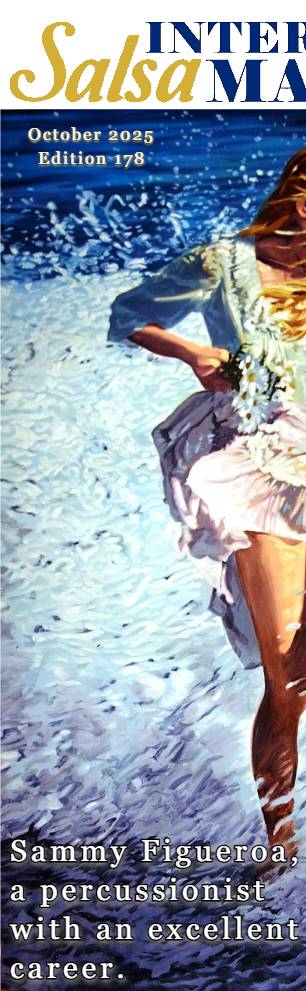
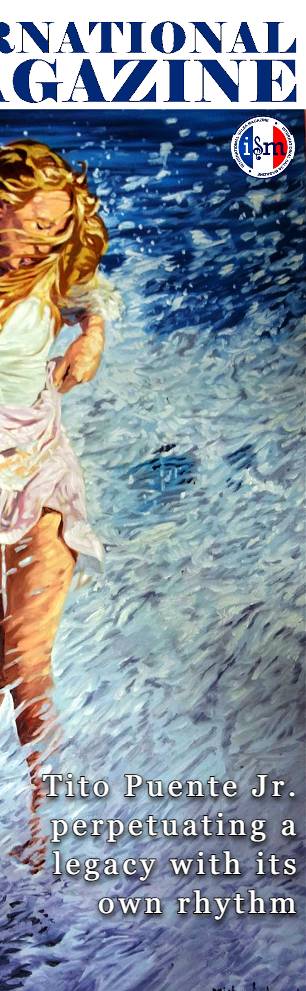
Left cover October 2025 Right cpver October 2025
SalsaApp Left SalsaApp Right
NA October 2025
LA October 2025
EU October 2025
AF October 2025
AS October 2025
OC October 2025
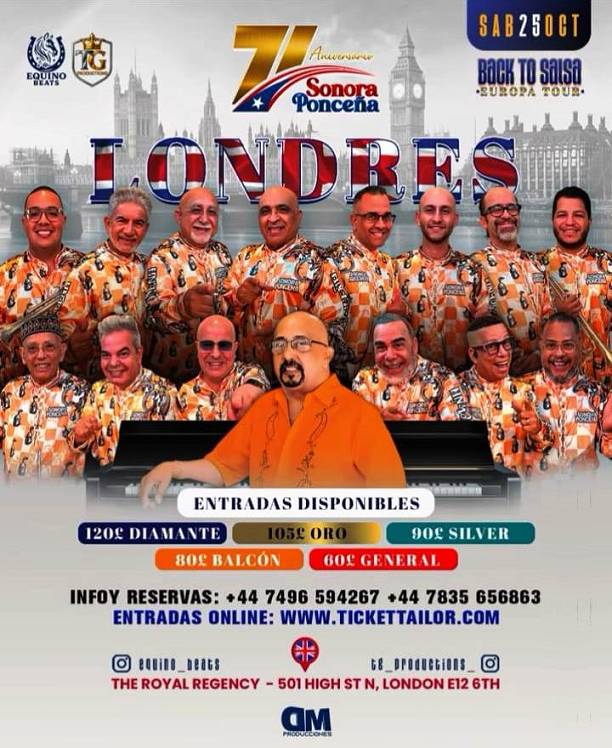
La Sonora Ponceña tour
Painter October 2025
“We are the Real Latin music world network”
Letter to the Editor Joint our team

[Read more…] about ISM / October 2025

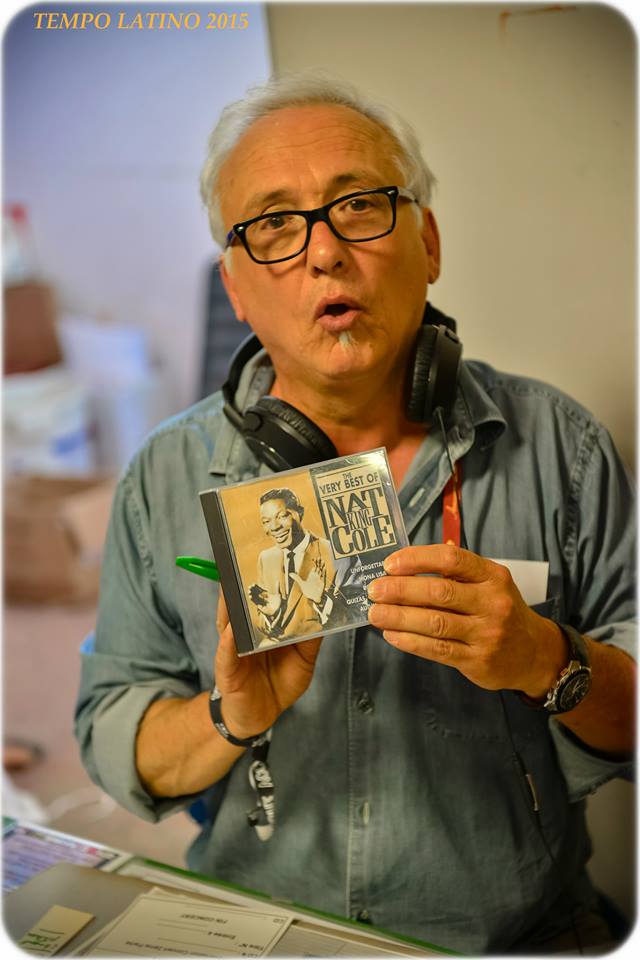
Eric Duffau and his 26-year Tempo Latino’s legacy

North America / USA / New York

The biggest festival in Europe reaches its twenty-sixth edition and its founder told us how this journey began. International Salsa Magazine met with Eric Duffau and was able to talk about the beginning of the festival and the history behind the event that houses more than 60,000 people each year.

Tempo Latino Festival

Tempo Latino Festival is “The only one”. For 25 years has kept its artistic approach in the heart and around Afro-Cuban and Latin Music. Its region, “Occitanie”, in the department of Gers, opens up internationally by supporting the cultural adventure. A beautiful project built south pride and prize of risks to produce all these artists.

Eric Duffau is a music lover in all its splendour. He arrived in Paris in 1982, from his small village Vic-Fezensac to devote himself to the formal study of music. He studied classical music, medieval music, jazz, and at the same time, he met Mambo, Cha-Cha-Cha, Salsa and Latin Jazz. With his formal apprenticeships, he met the Temp, and with his learning in the streets of Paris, he met a range of Latin rhythms that were combined divinely to form what we nowadays know as Tempo Latino.

Eric Duffau
Eric Duffau

With this idea, he put together a 6-page project and in 1993 he returned to his village to seek the support of all those who wanted to collaborate. This is how in 1994 the first edition of the festival was held with 100 volunteers, becoming known among journalists, the public in France, Europe and the world.

The first edition was attended by 3,500 people with paid entrance, over the years the capacity of this arena up to 7,000 people paying every day, plus those who attend the other locations throughout Vic-Fizensac. Today, more than 60,000 travel to this small village to dance for 4 days in every corner.

To Vic-Fezensac, that has 3,700 habitants, is preparing itself during the whole year to welcome to a mixed race public and traveler, essential artists or to discover, proposing a festival under the heat of the end of July where everyone will have the freedom to go to the meeting of rhythms, people, flavors and other shared pleasures.

The Tempo Latino’s team is a well-oiled team that leads several projects of front and in which everyone knows what to do. All members of this team are passionate and possess very strong skills and a spirit of solidarity mark.

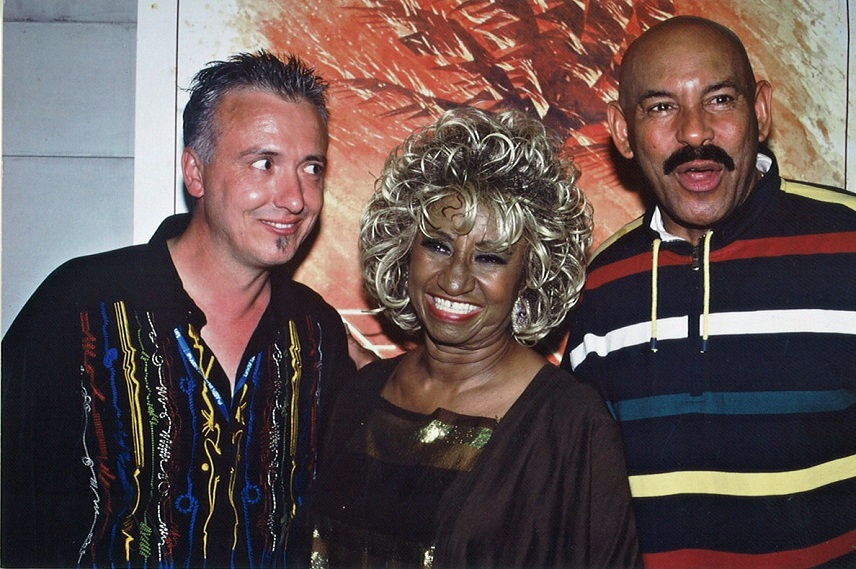
Eric Duffau, Celia Cruz y Oscar D Leon

To pay attention to every detail the festival count with:

7 members of the board | 2 employees

500 volunteers | 22 commissions

2 months of editing before festival

From this year, Mr. Jean-François Labit, will replace Mr. Eric Duffau as president of the Festival.

Some of the great figures in the world of Latin music who have passed through Arènes Joseph Fourniol in 15 avenue Edmond Berges, 32190 Vic-Fezensac are:

Israel López “Cachao”

Celia Cruz

Jimmy Bosch

Ósar D’Leon

Yuri Buenaventura

Willie Colon

Ernesto «Tito» Puente

Richie Ray & Bobby Cruz

And hundreds more in 26 years…

Eric Duffau, Wilile Colon, Eric Jimmy Bosch 1999

Where is Vic-Fezensac?

Vic in Fesensac in Occitan, is a town and commune in France, located in the Midi-Pyrénées region, department of Gers, in the district of Auch and canton of Vic-Fezensac. Is one of the last towns in France which still showcases bullfighting. The main feria takes place over the Pentecost weekend. On this occasion, tens of thousands of people gather all night long over the weekend in the tiny streets of the city. It is the first big “feria” of the year in Southwestern France. Small bodegas crowded with people are open until the morning comes, “bands” (bands of popular Basque or Gascon music) goes on the streets.

At the end of July, the Tempo Latino salsa festival takes place. Night markets (“Marchés de Nuit”) are also held in summer.

If you are in USA and want to go to the biggest Salsa Festival, you can fly with some cheap options that International Salsa Magazine finds for you:

Frenchbee:

San Francisco  – Paris

$500 round trip

www.frenchbee.com

La Compagnie:

New York – Nice

$1065 round trip in Business Class

www.lacompagnie.com

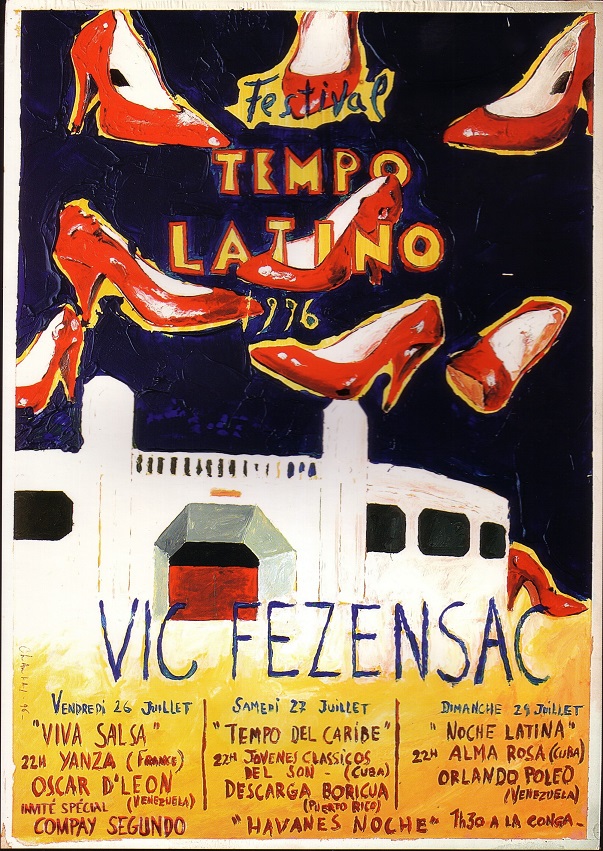
Tempo Latino Festival 1996 Jean-Paul Chambas flyer

Find them everywhere:

Web: http://tempo-latino.com

Facebook: https://www.facebook.com/tempolatino/

Twitter: https://twitter.com/tempo_latino?lang=fr

Instagram: https://www.instagram.com/tempolatino

Youtube: https://www.youtube.com/channel/UCRjFUG_yf9EgX-5FAPZwJGg

  • « Go to Previous Page
  • Page 1
  • Interim pages omitted …
  • Page 38
  • Page 39
  • Page 40
  • Page 41
  • Page 42
  • Go to Next Page »

International Salsa Magazine (ISM) is a monthly publication about Salsa activities around the world, that has been publishing since 2007. It is a world network of volunteers coordinated by ISM Magazine. We are working to strengthen all the events by working together.