• Skip to primary navigation
  • Skip to main content

International Salsa Magazine

  • HOME
  • Previous editions
    • 2026
      • ISM / May 2026
      • ISM / April 2026
      • ISM / March 2026
      • ISM / February 2026
      • ISM / January 2026
    • 2025
      • ISM / December 2025
      • ISM / November 2025
      • ISM / October 2025
      • ISM / September 2025
      • ISM / August 2025
      • ISM / July 2025
      • ISM / June 2025
      • ISM / May2025
      • ISM / April 2025
      • ISM / March 2025
      • ISM / February 2025
      • ISM / January 2025
    • 2024
      • ISM / December 2024
      • ISM / November 2024
      • ISM / October 2024
      • ISM / September 2024
      • ISM / August 2024
      • ISM / July 2024
      • ISM / June 2024
      • ISM / May 2024
      • ISM / April 2024
      • ISM / March 2024
      • ISM / February 2024
      • ISM / January 2024
    • 2023
      • ISM / December 2023
      • ISM / November 2023
      • ISM / October 2023
      • ISM – September 2023
      • ISM – August 2023
      • ISM July 2023
      • ISM Edition June 2023
      • ISM – May 2023
      • ISM April 2023
      • ISM March 2023
      • ISM February 2023
      • ISM January 2023
    • 2022
      • ISM December 2022
      • ISM November 2022
      • ISM October 2022
      • ISM September 2022
      • ISM August 2022
      • ISM July 2022
      • ISM June 2022
      • ISM May 2022
      • ISM February 2022
      • ISM January 2022
    • 2021
      • ISM December 2021
      • ISM November 2021
      • ISM October – 2021
      • ISM September 2021
      • ISM August 2021
      • ISM July 2021
      • ISM May 2021
      • ISM April 2021
      • ISM June 2021
      • ISM March 2021
      • ISM February 2021
      • ISM January 2021
    • 2020
      • ISM December 2020
      • ISM November 2020
      • ISM October 2020
      • ISM September 2020
      • ISM August 2020
      • ISM July 2020
      • ISM June 2020
      • ISM May 2020
      • ISM April 2020
      • ISM March 2020
      • ISM February 2020
      • ISM January 2020
    • 2019
      • ISM December 2019
      • ISM November 2019
      • ISM October 2019
      • ISM Septembre 2019
      • ISM August 2019
      • ISM July 2019
      • ISM June 2019
    • 2016
      • ISM December 2016
  • Spanish
  • Download Salsa App
    • Android
    • Apple

Search Results for: Van Van

Twenty-Seventh Edition Of Tempo Latino Will Be Unmissable

CANCELLED

The festival in its 27th edition will present international stars of great trajectory and emerging from July 29 to August 1

Tempo Latino, the leader Salsa Festival in France, resumes its activities after its forced pause due to the Pandemic. The whole family will be able to enjoy this summer in the open air, on its main stage “Les Arènes” of the presentations of established and emerging artists of Latin music in Vic-Fezensac (Gers, France) during the last weekend of July. Tickets for all performances are already available in advance since last January on their website.

At Les Arènes (main stage), Tempo Latino will present the concerts: Pacific Mambo Orchestra (Friday, July 30 – 9:00 P.M.), Los Van Van (Friday, July 30 – 11:00 P.M.), Interactivo (Saturday, July 31 – 9:00 P.M.), London Afrobeat Collective (Saturday, July 31 – 11:00 P.M.), Alain Pérez (Sunday, August 1 – 9:00 P.M.), and Issac Delgado (Sunday, August 1 – 11:00 P.M.), to close all their nights.

Every day of the festival, before the nightly live performances, in between each concert or before leaving Les Arènes, Tempo Latino offers a Caribbean atmosphere where you can taste exquisite dishes and enjoy a guest DJ each day in La Conga. Also, you can do the same at Bar Habana, in front of the bullring “El Pueblito”. Here, from 12:30 P.M. to 1:30 P.M., you can improve your Salsa steps with Atocha Showman with a free dance lesson.

To quench your thirst, you can head to La Placita, located at the back of Les Arènes. In this corner from 6:00 P.M., you will be able to savor varied and national wines, or if you prefer to continue discovering Latin specialties and crafts, you will find them in the dozens of stands in El Barrio. The El Barrio area is located in the center of the international market.

Post Tempo Latino
Tempo Latino will take place under favorable sanitary conditions for all attendees.

First Salsa Festival in Europe!

The Festival Tempo Latino maintains since 1994 its artistic focus on Latin and Afro-Cuban Music. The desire of this festival was and continues to be to make this live and popular music known. Its 500 volunteers invite event attendees each year to discover Latin rhythms for four consecutive days.

Since the beginning of Tempo Latino in the town of Vic-Fezensac, Les Arènes and its georithmic satellites of Conga and Cap Tempo have been the places designed to receive the maximum Salseros, who discover and enjoy the rhythms, artists, and Caribbean flavors of the moment.

Tempo Latino, being the Salsa ambassador in Europe, has presented for 27 years more than 200 renowned and emerging artists and orchestras, among which are: Papo Luca, Sonora Ponceña, Oscar D’Léon, Yuri Buenaventura, Los Van Van, Ernesto “Tito” Puentes, Afro Cuban All-Stars, Celia Cruz, Eddie Palmieri Orchestra & Alfredo De La Fé, Jimmy Bosch, Willie Colon, La Sonora Ponceña, Orishas, ​​El Gran Combo de Puerto Rico, Omar Sosa, Omara Portuondo, José Alberto “El Canario”, Spanish Harlem Orchestra, Johny Pacheco and his Tumbao Anejo, among many others.

Know the Ticket Reservation Methods

The three-day ticket for access to all Les Arènes concerts, which will take place from Friday to Sunday, is available for € 85 on its online platform.

This pass can be exchanged for a bracelet, valid for one person, and can be collected starting Friday at noon, at the counters dedicated to ticket controls located on both sides of the doors of the main stage.

You can also purchase your tickets at:

Pass 3 jours
Tempo Latino offers a special pass for the three-day festival of concerts

At the Tempo Latino Office: 3, rue du Général Delort, 32190 Vic-Fezensac

Authorized payments: Check (payable to Tempo Latino), Vacation Voucher, Cash, and Credit Card

During the Festival: The Tempo box office moves to Les Arènes. 18-20, Avenue Edmond Berges, 32190 Vic-Fezensac. Telephone: 05 62 06 40 40 / 05.62.06.66.56

Authorized Payments: Check (payable to Tempo Latino), Vacation Vouchers, Cash, and Credit Card

At the Artagnan Tourist Office in Vic-Fezensac: 18, rue des Cordeliers, 32190 Vic-Fezensac.

Authorized payments: Check and Cash

How do you Get to the Festival?

By car: Distance by car. Bordeaux – 170 km | Montauban – 115 km | Toulouse – 100 km | Tarbes – 80 km | Agen | 70 km | Auch | 25 km

By Train: Vic-Fezensac does not benefit from a station. Toulouse, Agen, and Auch are stations suggested for arrival. Tempo ferries will meet you there and escort you directly to the festival venue.

Unmissable Will Be Tempo Latino 2021!

Pacific Mambo Orchestra, Los Van Van, Interactivo, London Afrobeat Collective, Alain Pérez, and Issac Delgado will display their talent on stage

In this Twenty-Seventh Edition of Tempo Latino (a festival held outdoors), all the biosecurity measures implemented in the country will be respected.

First Salsa Festival in Europe!

Los Van Van will close on the first night of the festival. They will celebrate its 50 years of trajectory in Tempo Latino 2021.

Los Van Van was founded in 1969 by the bassist, composer, and legend of Cuban music, Juan Formell.

Juan, accompanied by José Luis Quintana, known as “Changuito” and César “Pupy” Pedroso, invented the “Songo”, a Cuban rhythm predecessor of the “Timba” or Cuban Salsa.

PIETRO MINGARELLI

To The Beat Of The Latin Rhythm

He made Latin music his lifestyle. He fused the art of contemporary dance with the Caribbean rhythm. He made the national and international stages his home and the Salsa artists his true friends. He is a professional dancer, composer, and director of online programs. In each dance, he reflects his style… He is elegant, passionate, classic, and unstoppable. This is how Pietro Mingarelli shows himself.

More than 40 years of experience summarize a series of national and international triumphs. At 5 years old Pietro was already seen as one of the best dancers in Italy. His beginnings were in ballet, Jazz, tap (Tip-Tap), and contemporary dance, achieving third place in his first competition with only 5 years old, among a group of 500 couples with competitors up to 12 years old, which allowed him to stand out from his first presentation.

For the next 10 years, he continued his dance studies and participation in couples’ championships with his sister, partner, and dance partner, Daria Mingarelli, with whom he won 10 national championships.

Pietro Mingarelli y Daria Mingarelli

In the mid-80s, without forgetting the rigor and discipline learned in his dance studies in Europe, he finds himself for the first time on a journey of no return to what would be his true passion, the Salsa. During a trip to Puerto Rico, he was able to establish the click with the Latin culture and one of the main and most representative rhythmic movements of it.
Gilberto Santa Rosa, Pietro Mingarelli, and Daria Mingarelli in the Video’s recording “No Digas Nada y Baila”

Between participation in a lot of festivals including the Bacardi International Dance Festival, which years later its format would become Congress, Pietro had the opportunity to establish professional alliances with the Arthur Murray Dance Center Academy (Puerto Rico) where he began to teach by Mambo. During that time, the Mingarelli brothers attended local patron saint festivals that would introduce them to the Caribbean idiosyncrasy, to the cadence of the salsa rhythm that is not found in the academies, that it is not possible to have it without feeling the music from the heart and connecting the feelings, which has no other name than what we know as the “El Sabor de la Calle”.

By the beginning of the ‘90s, Pietro had a consolidated career on the island of enchantment, dancing together with Daria for different local Salsa orchestras. From 1994 to 1998 the brothers were the official dancers of Gilberto Santa Rosa “El Caballero de la Salsa”, who see them dance and immediately add them to his work team. They were the protagonists of his Video “No digas Nada y Baila”, recorded in Old San Juan on the Calle del Cristo in 1997, and participated in the “Show de las 12” one of the most popular programs in the country in the presentations of the Salsa singer.


Instructor of Instructors

From the age of 15, Pietro born in Alessandria was emerging as the instructor of the instructors of Caribbean dance in Italy. As early as 1995 he was the co-founder of one of the most renowned schools in Turin, Salsa Manía, with franchises in Germany and other European countries.

Since 2000 he has been one of the annual organizers of world championships with live orchestras, such as the Italian Amateur Federcaribe Championship and the World Championship in San Marino.

Online Program “Dance Revolution”

As a visionary, he created the online program “Dance Revolution” that combines the training technique of a professional dancer with the “Son” (rhythm) of the street. Each class is live and personalized. This course of various levels teaches you the basic characteristics of Puerto Rican Salsa, teaching culture, and the differentiating way from other courses is the use of instruments played live to adapt the assistant’s ear for a safe and perfect entry into the dance.

The “Mingarelli Style” dance school with the slogan “From the Neighborhood to the Academy” took hold of Italy and the teaching system based on the combination of mastery of technique, a rhythmic execution of Puerto Rican Salsa, and an instructional mechanism that isn’t only based on the counter but the rhythmic sound of Salsa, it’s the current teaching method chosen by most of the best teachers from different salsa academies in the country.

For years, Pietro has been doing altruistic work with his sister, collaborating with associations of children with Down syndrome, deaf, dumb, and blind children to give free lessons, achieving an excellent level of performance among children with these special conditions.


Latin Beat

The Salsa dance professional, Pietro, masters several musical instruments: the Piano, the Conga, and the Percussion, the latter two he learned and mastered during his trips to Puerto Rico.

Pietro Mingarelli and his wife Yusely

This knowledge laid the basis for the creation of his orchestra Pietro Mingarelli and his Generation 73 at the end of 2015. The name of the orchestra was given by the year of birth of each member of the orchestra, coinciding in the year 1973. This orchestra varies from 9 to 11 musicians on stage depending on the space. They have performed to 3000 people in discos and dance halls in the cradle of Italy, Turin.

At the same time, Pietro Mingarelli has composed more than 20 songs, including 9 of them in his digital record production ” Hecho en Cuba”, where the Romantic Salsa single “Volveré otra vez” stands out, “Caldero” (more danceable) dedicated to the renowned Cuban Timbalero Juan Carlos Calderin, and “Mi cubana salsera” lyrics inspired by his wife Yusely from Guantánamo – Cuba, among many others.

Currently, “Alma en Pena” is his most recent single released in 2019 that you can enjoy on digital platforms and will be part of the new CD that Pietro will bring us with famous international Salsa artists … Maybe, Gilberto Santa Rosa could be one of his vocalists… We will wait to see what this excellent pioneer of Salsa in Italy brings us very soon.


A Ritmo de Salsa…

A Ritmo de Salsa is his most ambitious program created in 2020. Its original name was “Aventuras en Ritmo de Salsa” and it would be broadcast from a cruise ship for one of the main television stations in Italy. However, it cannot be carried out due to the arrival of the Covid 19 Pandemic.

Pietro has an invaluable historical-musical knowledge that makes him very popular in the Salsa world

However, this program did not remain in the drawer, it was launched online through its platform “Dance Revolution” and its first episode arrived in March 2020, surprising its audience with interviews with friends and great personalities from the Salsa world, among which stand out: Gilberto Santa Rosa, Charlie Aponte, Willie Rosario, and Bobby Valentin.

This successful program is 1 hour long; however, everything can change depending on the interviewee. One of the cases was the interview with César “Pupy” Pedroso (The Van Van´s Pianist, arranger, and composer) that lasted 3 hours, while 1 hour and 30 minutes was the duration of the program of the guest Alfredo de la Fe, Cuban violinist -American, who has shared the stage with Celia Cruz, Tito Puente and other great personalities of the Salsa´s first line.

Each interview is loaded with history, anecdotes, mini-concerts, and learning tips that have helped these famous artists to successfully manage their instruments and their careers.

You can see new episodes of A Ritmo de Salsa on Sundays in premiere at 8:30 PM… And for this month Pietro brings us to the “Sonera del Mundo”, Aymée Nuviola. You don´t miss out on all the fun!

Inicio

ISM December 2020

December Cover Edition 120

Banners Wishes you Merry Christmas

Thanks to the artist Fiorenza Gorini

Kizomba

Kizomba and the protagonism of the woman in dancing

Triangle Trade

Role of the Triangle Trade in the birth of Cuban rumba

Tips for dancing

Tips for dancing salsa with style and elegance

Albert Giorgio Giovanni DJ

From Italy Albert Giorgio Giovanni DJ. Lindo Salsa and Bachata

Los angeles salsa and its origins

Los Angeles salsa and its origins

Latin rymtms preferred by europeans

Latin rhytms preferred by Europeans to learn to dance

Everything you need to know about terraxa

Everything you need to know about tarraxa

What makes sesual bachata so popular

What makes sensual bachata so popular

Alfareros

“Alfareros” launches “Guerrera”

Jorge Celedon

ISM: Meet Jorge Celedón

Angel Bonne

Ángel Bonne He was part of Juan Formell’s Los Van Van Orchestra, and collaborated with the impressive Irakere band of maestro Chucho Valdés

Harry Fraticelli

Harry Fraticelli Virtuoso on guitar, requinto and bass Music for All Occasions

pirisila orchestra

ISM : Pirisalsa Orchestra

Hanny the voice if Cuba

Hanny the Voice of Cuba for the world

Domi Dance

You know “Domi Dance” Online

Villariny Salsa

Villariny Salsa Project from Puerto Rico

Jessi Uribe and Americo

Jessi Uribe and Americo

Jimmie Morales

Jimmie Morales a conguero for the history of Afro-Caribbean music

Ephemerides

ISM magazine back cover

How Artificial Intelligence changed the music biz forever

Since very recently, there has been a tool that gives machines and systems the ability to mimic many of the things humans do, such as writing texts, drawing, analyzing data, recognizing information, making decisions, among many others. Of course, we are talking about Artificial Intelligence. 

One of the areas in which artificial intelligence has definitely impacted is music, reaching the point where it may even compose entire songs, write lyrics, and generate voices so realistic that they could easily be confused with those of humans. Because of the impact this set of technologies has had on the art world, we cannot stop talking about such an important issue that, whether we like it or not, has significantly changed and will continue to change the music landscape significantly.

Imagen created by Artificial Intelligence
This is an image about AI in music created by AI

AI and Music

Even when this could cause discomfort, it is not a secret for anyone that every day there are more facilities for those who make music without having the necessary knowledge to produce something of high quality in many cases, so they ride on all possible resources to make their job easier and simpler. 

Artificial intelligence makes producing, composing, mixing, and mastering much less complex processes, and in many cases, human intervention is not necessary. Artists and all kinds of music professionals now have a much wider range of possibilities with which they can cross boundaries technology did not allow before. For this reason, it is imperative that they are trained as best as possible in these tools so they can get the most out of them, but trying to keep the human touch that every artistic product needs.

Benefits of using Artificial Intelligence in music

As we have made quite clear, artificial intelligence offers numerous advantages to all those who learn to use it, but what would be some of them?

  • Less chance of making mistakes: by limiting to the minimum human intervention, the chances of making a mistake that could harm the final result is very slim, delivering greater levels of confidence throughout any process.
  • Speed and efficiency in the processes: anyone who has had the opportunity to compose or knows someone who does understands that it can be a rather slow and arduous process, but artificial intelligence can make things easier beyond imagination. Something that usually lasts days or even weeks can suddenly happen in seconds, making this technology a huge draw for any music creator.
  • Greater creative possibilities: Because AI offers the ability to mix up styles and genres that an artist would not consider by himself, opening up a wide range of creative possibilities and helping to create unique and experimental songs.
  • Highest adaptability: another of the virtues of AI is the ability to create lyrics, adjust them, and adapt them to existing melodies. 
AI has some disadvantages
AI offers many advantages, but also some disadvantages artists take into account

Challenges facing artists with artificial intelligence

So as we mentioned some of the virtues of AI, it is needed to be honest and admit that it can bring some problems when not used correctly. For an artist, there are certain things that can be harmful if he does not have the right training and a clear idea of what he/she wants to achieve:

  • Little originality: this is one of the aspects that most concerns those who criticize excessive use of AI in music, since this technology is based on pre-existing data. While it is true that AI can generate new things, its production only comes from previously made content. 
  • Low emotional depth: one of the main criticisms against AI in the realm of artistic creation is the lack of emotional depth it sometimes offers. Music has been understood as one of the most emotional and human expressions an artist can convey, but unfortunately AI is occasionally unable to replicate it with the same intensity. These platforms cannot always grasp this emotional component, which is so necessary to create music with the level of authenticity and depth required to touch the hearts of audiences.
  • Concerns about job security of musicians: due the legal gray areas over which AI still navigates, there are many worries about job security of artists. Because this technology is capable of reproducing vocals and compositions that may well compete with those of humans, this could mean that the livelihoods of many workers of the music industry could be seriously affected. 

Copyright law in relation to Artificial Intelligence

One of the most common doubts regarding AI is how the matter of copyright is handled, especially in the music industry, where there have been more than one scandal involving this topic. According to Intellectual Property Law, any copyrightable work should be completely original and created by a natural person. Could we say that an AI-powered song is original? Well, let’s see.

Given that originality has no clear definition in the law, the courts and the legal literature have set up the term, which results in the objective approach and the subjective approach.

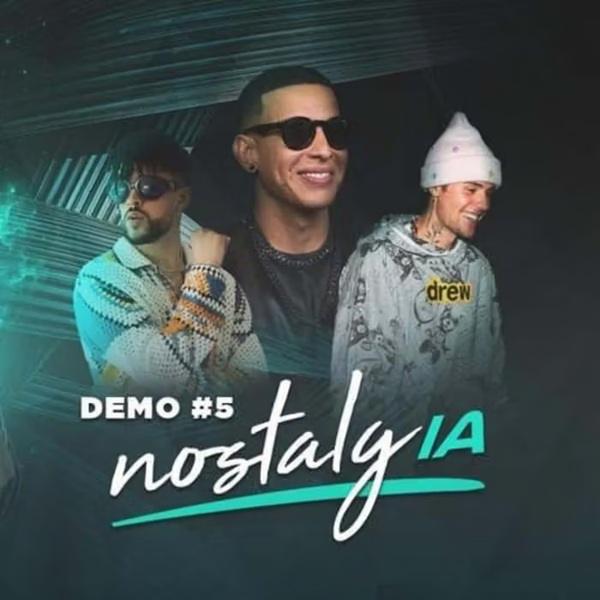
Cover created by AI
Cover of NostalgIA with the voices of Daddy Yankee, Bad Bunny, and Justin Bieber. The song was made by the artist prototype Flow GPT

The subjective approach holds that a work is original if it is a true reflection of its author’s personality, while the objective approach makes references to creating something that did not exist before. The predominant approach in most countries that have enacted appropriate legislation on this matter is the subjective one, making it difficult for works created using AI to be protected by law. However, companies that provide this technology generally point out that the rights to the material created by their AI belong to them.

In view of the above, the law is very clear that the author must be a natural person, making it impossible for a work created with AI to be legally protected. It is for the same reason that, even if the objective approach predominates at some point, it would still be very difficult to protect this material.

What can we conclude from all this?

It is clear that Artificial Intelligence is here to stay and change the music industry forever, so struggling against it and its use is absolutely useless. For this reason, it is important to see it as an ally in improving what was done and not as an enemy to fight. 

Although these platforms may have some disadvantages that have already been mentioned, proper training of artists can lower the chances of falling in the lack of human sensitivity and help integrate them into their work as effectively as possible, since AI is a reality with no turning back.

Read also: David Frankel pursued music and created Avenida B Band to reconnect with the memory of his father

Antonio Adolfo: The Indelible Master of Brazilian Music

From Classical Cradle to the Jazz and Bossa Nova Revolution

That musical heritage is essential to understanding the greatness of Antonio Adolfo.

Being born into a home where the violin from the Rio de Janeiro Municipal Theater orchestra was part of the daily landscape shaped his sensibility from the cradle.

Although he grew up surrounded by the classical discipline of his father, his destiny lay within the keys, jazz, and the revolution of Brazilian popular music (MPB).

De la Cuna Clásica a la Revolución del Jazz y la Bossa Nova

The son of a classical violinist, Antonio Adolfo was born in the bohemian neighborhood of Santa Teresa, Rio de Janeiro, under the sign of Aquarius in 1947. At the young age of 16, the young pianist was already part of the exclusive bossa nova club brewing in the famous Beco das Garrafas alley, leading ensembles that stood at the forefront of the scene, such as Conjunto Cinco and the Samba Trio 3-D.

Shortly after, he participated in the iconic musical Pobre menina rica by Carlos Lyra and Vinicius de Moraes, beginning to make a name for himself in the industry.

Starting in 1967, by forming a creative partnership with lyricist Tibério Gaspar, Adolfo became one of the great catalysts of modern melody in Brazil, composing massive hits like “Sá Marina” and “Juliana.”

Antonio Adolfo El Maestro Imborrable de la Música Brasileña

At the same time, leading the group Brazuca, he established an electronic pop tone that was highly sophisticated for its time (with tracks like “Teletema” and “Ana Cristina”), culminating in the blistering musical highway of “BR-3″—a song that sparked great controversy and shook the core of the era’s music festivals.

A Pioneering Spirit and International Acclaim

After playing as a member of the backing band for the legendary Elis Regina on two European tours, and refining his technique in Paris with the renowned classical maestro Nadia Boulanger—in addition to studying in Brazil under masters Guerra-Peixe and Esther Scliar Antonio Adolfo was ready to take another giant leap.

In 1977, in an act of bravery and pioneering spirit, he released the album Feito em Casa (Homemade) under his own record label, Artezanal.

This was the opening kickoff for a liberating movement: the independent record industry in Brazil, triggering the rise of artistic dynamics that diverged from traditional market rules. Under this self-managed system, Adolfo recorded both original material (including children’s music that promoted free play) and foundational revisions of pianeiro classics, transforming the works of Ernesto Nazareth and Chiquinha Gonzaga for the contemporary piano.

This versatility proved that, as a performer and creator, Adolfo had achieved a rare distinction: mastering contemporary language from a place of timelessness.

Since 1985, the maestro has focused much of his energy on his music school, the Centro Musical Antonio Adolfo, while also participating in international events as an educator, without ever setting aside his stage career.

His profound work with the music of Chiquinha Gonzaga and jazz has earned him prestigious awards and nominations. Furthermore, he is the author of seven textbooks on Brazilian music published by Lumiar, a video lesson, and two books published abroad. For eight years, he proudly served as the Latin American representative for the IAJE (International Association for Jazz Education).

In recent years, Antonio Adolfo has returned to the stage more frequently, performing either in a solo piano format or with a group. From one of his performances at a U.S. university alongside his daughter, singer Carol Saboya, came an acclaimed live album released both in Brazil and abroad: Antonio Adolfo & Carol Saboya Ao Vivo / Live. This success has been followed by recording productions highly praised by international critics, such as Here and There / Aquí y Allá.

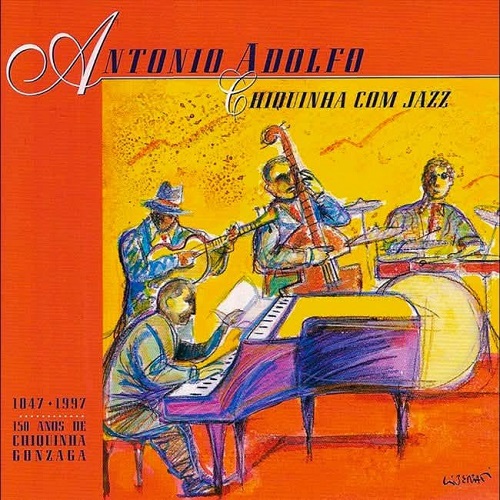
Chiquinha Com Jazz (1997)

Discographic Gem: “Chiquinha Com Jazz” (1997)

A perfect example of his genius for fusing Brazilian roots with the freedom of jazz is his 1997 album dedicated to the pioneer Chiquinha Gonzaga.

Tracklist:

Atraente

Cordão Carnavalesco

Lua Branca

Angu

Gaúcho (Corta-Jaca)

O Forrobodó

Corte Na Roça

Satan

Ismênia

Faceiro

O Abre Alas

          Personnel:

Antonio Adolfo: Piano and musical arrangements

Gabriel Vivas: Double bass

Ivan Conti: Drums

Claudio Spiewak: Acoustic guitar

Contributor:

L’Òstia Latin Jazz

Dj. Augusto Felibertt

Also Read: Carlos “Nene” Quintero comes from a family of musical prodigies

  • « Go to Previous Page
  • Page 1
  • Interim pages omitted …
  • Page 12
  • Page 13
  • Page 14
  • Page 15
  • Page 16
  • Interim pages omitted …
  • Page 137
  • Go to Next Page »

International Salsa Magazine (ISM) is a monthly publication about Salsa activities around the world, that has been publishing since 2007. It is a world network of volunteers coordinated by ISM Magazine. We are working to strengthen all the events by working together.