• Skip to primary navigation
  • Skip to main content

International Salsa Magazine

  • HOME
  • Previous editions
    • 2026
      • ISM / May 2026
      • ISM / April 2026
      • ISM / March 2026
      • ISM / February 2026
      • ISM / January 2026
    • 2025
      • ISM / December 2025
      • ISM / November 2025
      • ISM / October 2025
      • ISM / September 2025
      • ISM / August 2025
      • ISM / July 2025
      • ISM / June 2025
      • ISM / May2025
      • ISM / April 2025
      • ISM / March 2025
      • ISM / February 2025
      • ISM / January 2025
    • 2024
      • ISM / December 2024
      • ISM / November 2024
      • ISM / October 2024
      • ISM / September 2024
      • ISM / August 2024
      • ISM / July 2024
      • ISM / June 2024
      • ISM / May 2024
      • ISM / April 2024
      • ISM / March 2024
      • ISM / February 2024
      • ISM / January 2024
    • 2023
      • ISM / December 2023
      • ISM / November 2023
      • ISM / October 2023
      • ISM – September 2023
      • ISM – August 2023
      • ISM July 2023
      • ISM Edition June 2023
      • ISM – May 2023
      • ISM April 2023
      • ISM March 2023
      • ISM February 2023
      • ISM January 2023
    • 2022
      • ISM December 2022
      • ISM November 2022
      • ISM October 2022
      • ISM September 2022
      • ISM August 2022
      • ISM July 2022
      • ISM June 2022
      • ISM May 2022
      • ISM February 2022
      • ISM January 2022
    • 2021
      • ISM December 2021
      • ISM November 2021
      • ISM October – 2021
      • ISM September 2021
      • ISM August 2021
      • ISM July 2021
      • ISM May 2021
      • ISM April 2021
      • ISM June 2021
      • ISM March 2021
      • ISM February 2021
      • ISM January 2021
    • 2020
      • ISM December 2020
      • ISM November 2020
      • ISM October 2020
      • ISM September 2020
      • ISM August 2020
      • ISM July 2020
      • ISM June 2020
      • ISM May 2020
      • ISM April 2020
      • ISM March 2020
      • ISM February 2020
      • ISM January 2020
    • 2019
      • ISM December 2019
      • ISM November 2019
      • ISM October 2019
      • ISM Septembre 2019
      • ISM August 2019
      • ISM July 2019
      • ISM June 2019
    • 2016
      • ISM December 2016
      • ISM November 2016
  • Spanish
  • Download Salsa App
    • Android
    • Apple

Search Results for: charanga

The Bolivian charango with Spanish roots

There are many instruments that have greatly contributed to make Latin music and its great exponents known worldwide, but unfortunately they are not very popular and the general public is unable to identify them. Such is the case of the charango, which we will talk about in this opportunity.   

The charango can be defined as a stringed instrument that is part of the lute family and has its origin in the South American Andean region. It is believed that it began to gain popularity during the Viceroyalty of Peru. It has approximately five pairs of strings, but there are some models that have a greater or lesser number of strings.   

Here is more information and interesting facts about the charango and its history.   

Federico playing the charango
Peruvian charanguista Federico Tarazona playing the charango

How the charango is created in the first place    

Although it was not possible to determine exactly when the charango began to be played, it was found that it existed from the 17th century and was inspired by the Canarian timple (a stringed instrument from the Canary Islands that has five strings).   

The Canarian timple was always very present in the so-called ”Spanish charangas”, which were a type of parades or comparsas that took place in the street. This is the origin of the name ”charango” with which it would be called from now on.   

How the charango began to become popular   

Previously, it was an instrument used exclusively by the more rural classes of the time and was closely related to the indigenous population. However, since the 1950s, this situation began to change and the charango started to be heard in more urban areas, which led residents of such places to participate in concerts and folkloric activities for all audiences.   

the one responsible for this was Bolivian-born musician and luthier Mauro Núñez, who in 1944 began to use the charango to disseminate folk music and peduce new charango models in order to popularize it even more. This led many other musicians to find their own musical styles with the instrument, which brought the charango to concert halls and theaters all over Bolivia.   

A few years later, the charango arrived in Ecuador, but in the 1960s, it reached Argentina and some European countries. During those same years, several artists from Bolivia, Peru and Argentina began to tour the world and, as a result, ended up taking the charango to the rest of Europe, the United States and Japan.    

In 1973, Bolivian charanguista and composer William Ernesto Centellas took the initiative to create la Sociedad Boliviana de Charango with the support of charanguista Abdón Caméo and singer-songwriter Ernesto Cavour Aramayo. This society organizes the Congreso Nacional de Charango and the Encuentro Internacional de Charanguistas every two years.   

Nowadays, everyone accepts the idea that the home city of the charango is the city of Potosí and, due to the way its later diffusion went, the town of Aiquile was very important for the instrument to the point that today it is known as the ”Capital of the Charango”.  

A Youtuber playing the charango
A Youtuber teaching how to play a charango

How is the charango and how is it played? 

The charango is shaped like the guitar, although it tends to be slightly smaller. Likewise, its sound box has a smaller size and the neck is much shorter. Among the most common sizes, we can mention 50cm, 60cm and 75cm. Generally, it has five pairs of strings, but there are some Peruvian models that may have four strings, two at eaither end and a double string in the middle. 

The way in which the charango is tuned varies depending on the area and the musician’s preferences, but the most common tuning is natural temple. Just like the guitar, the charango also has the third-order strings octaved between them.   

As for the way the charango should be played, the techniques most used by the charanguistas are the rasgueos, the repiques and the tremolo. In talking about the most popular rhythms, we cannot fail to mention the Huayno, the Carnaval, the Cuenca, among others.    

Playing the charango can be quite a challenge for beginning musicians, but with enough effort and dedication, incredible results can be achieved even for the most inexperienced. 

Read also: Yes, I speak the ancient African Lucumi toungue: The second language of salsa 

The Dudamel | Father and son

Latin America / Venezuela / Caracas

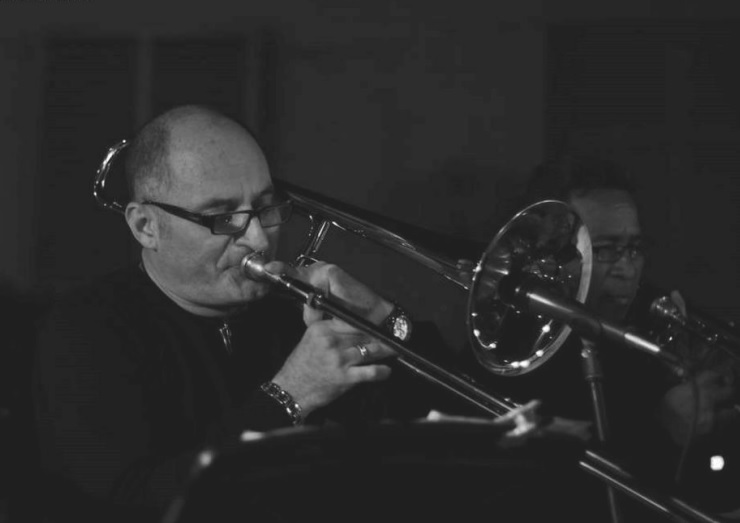
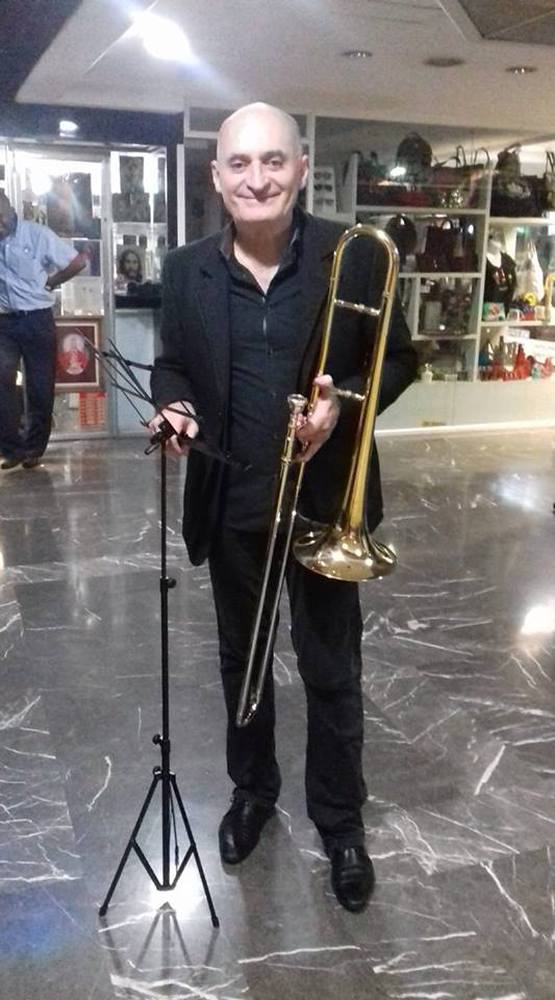
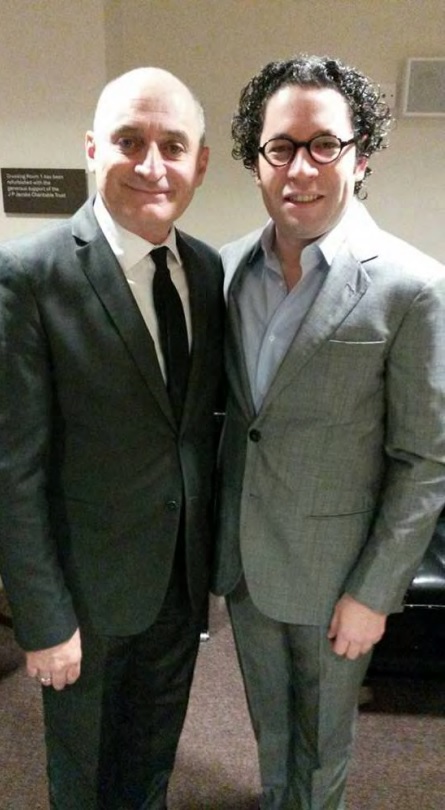
Oscar Dudamel, the father of Gustavo Dudamel, director of the Los Angeles Philharmonic Orchestra and the Simón Bolívar Orchestra of Venezuela, has been a musician for many years. Every Friday and Saturday, he receives applause from the public in the place where he plays the trombone since a small stage with “La Otra Banda de Dudamel” the Agraz ensemble, a salsa group whose main course is the songs of the duo made famous by Héctor Lavoe and Willie Colón.

Dudamel Padre e Hijo
Dudamel Father and Son

On Sundays, Oscar Dudamel has to be on the other shore and applaud standing up, as parents do, swollen with pride at the talent of their son who, with baton in hand, conducts a world-renowned Symphony Orchestra and if he think about it, his musical vein germinated from the brass bands of charanga, salsa and guaguancó.

After 10 at night it is difficult to find a place in “The Temple of Salsa”, the tickets are not sold out, but the tables and the best stalls of this place located on 7th Street that crosses Bolivar Avenue in Maracay, there fanatics and amateur dancers meet. of salsa and logically admirers of Héctor Lavoe and Willie Colón

Oscar Dudamel on the trombone is accompanied by Charly Guzmán, a talented young man who, at just 18 years old, shows the gifts of his voice; Oswaldo Agraz (musical director, piano and backing vocals), Gerardo Vargas (bass), Vicente Guzmán (timbale), Júnior Narváez (bongo), Diego Camus (conga and backing vocals), Ventura Prieto (trombone) and Johan Figueroa (alternate trombone). It is about the same format, instruments and identical distribution (the trombones next to the vocalist) of the orchestra that captivated him.

Dudamel father playing trumpet

And it is that music often also enters through the eyes, as Oscar Dudamel says, who knew he wanted to be a trombonist when he saw Willie Colón at La Feria de la Alegría holding his instrument while puffing out his cheeks, in that In this way, it is known that the first approach of the today brilliant, young and valued Orchestra Director Gustavo Dudamel to music, was not appreciating the Tchaikovsky that he likes to conduct so much, on the contrary, it was appreciating the music that came out of the trombone of his beloved dad.

The previous June, Oscar paid homage to Hector Lavoe as usual, for commemorating years of his death. “Héctor Lavoe died on Monday, June 29, 1993 at 11:45 in the morning”, an event that he remembers with the accuracy that sad events mark, but despite the pain, with satisfaction and pride, he mentions that his son Gustavo de Only 29 years old, before entering the stage he repeats a special ritual: “Before entering New York to direct, someone asked Gustavo: ‘“Master, what are you listening to? Tchaikovsky? and Gustavo replied: ‘No, Tito Rodríguez because he gives me swing'”.

If someone were to say that Gustavo Dudamel owes a debt to Willie Colón and Héctor Lavoe for his vocation as a musician, he would not be wrong, or acknowledge his father, who has often referred that his son’s versatility is due to the fact that he always listened to popular and classical music. . “I listened to more salsa than Beethoven, that’s why it has so much rhythm,” he says with a laugh.

Dudamel Padre
Dudamel Father

“I am his number one fan. He fulfilled the goals that I, due to various circumstances, could not fulfill, he made the dream that I wanted come true. He has reached where I would have liked”, reveals the father, who sees in his son an extension of his, “ .

In a life marked by music, a soundtrack for falling in love could not be missing. It was during the visit of El Gran Combo de Puerto Rico to Barquisimeto in the late 1970s that Oscar noticed Solange Ramírez, his wife and Gustavo’s mother; Today, 30 years later, when Falsaria sounds in Maracay, the song leads him to remember that indelible moment.

Gustavo Adolfo, as his mother calls him, began playing the güiro before he was four years old; later he would build his own battery out of biscuit tins and safety helmets.

Dudamel Padre e Hijo photo
Dudamel Father and Son photo

Gustavo received his first knowledge of music from his father, who was then a trombonist with the Lara Symphony, who had plenty of passion to play and lacked patience to teach. He wanted to be a trombonist, like his father, but his small arm could not reach the instrument.

“I imagined that Gustavo was going to be a musician,” he says. “I told him: ‘You have to be the best or among the best and never lose your principles or forget where we come from.'”

At the age of seven Gustavo played the timpani with La Banda Actual and at the age of nine he arranged for this salsa orchestra in which Oscar played for 16 years and with which he met again after many years.

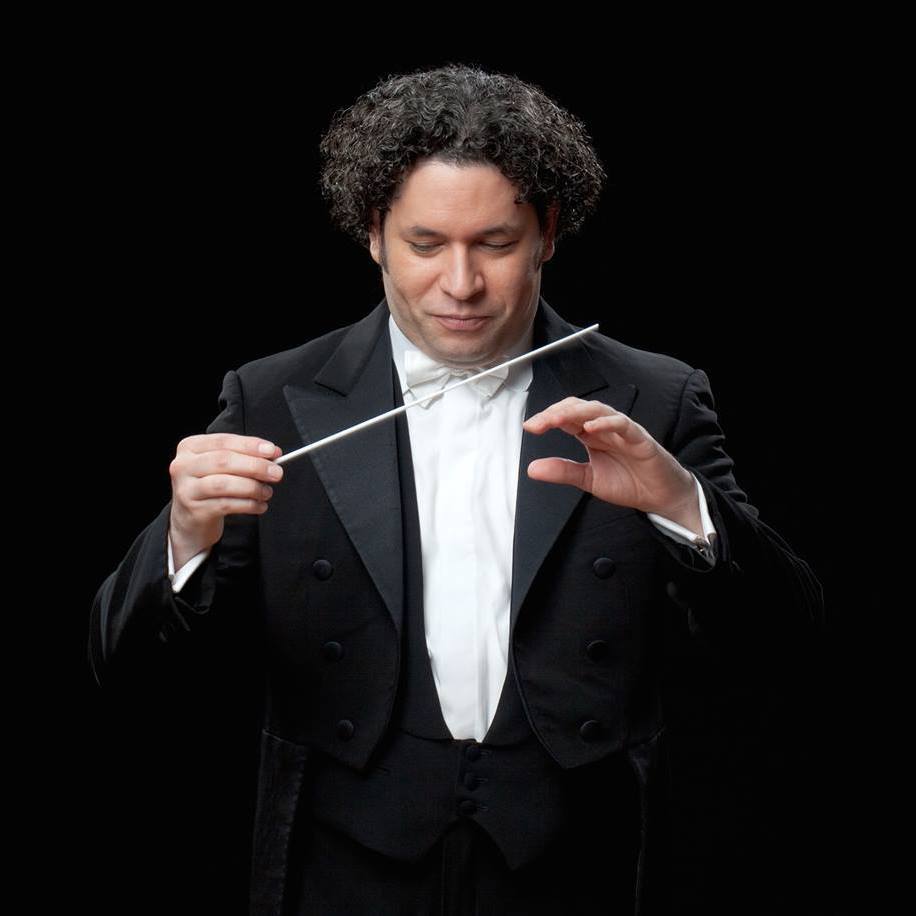
Gustavo Dudamel
Gustavo Dudamel

Gustavo decided on the violin, an instrument that adjusted to his size, and at home, father and son had the habit of studying while walking. There were times when one would bend down for the other to pass, so that the slide of the trombone and the bow of the violin would not trip over each other. However, popular music and academic music finally made their own meeting.

Oscar does not shake his hair, but he inflates his lungs with force and from that mouth-to-mouth breathing with his instrument, he manages to get the best out of it…. The father speaks of his salsa orchestra with the same pride that the son (Gustavo) does of his classical musicians.

Anacaona Orchestra

Latin America / Cuba / Havana

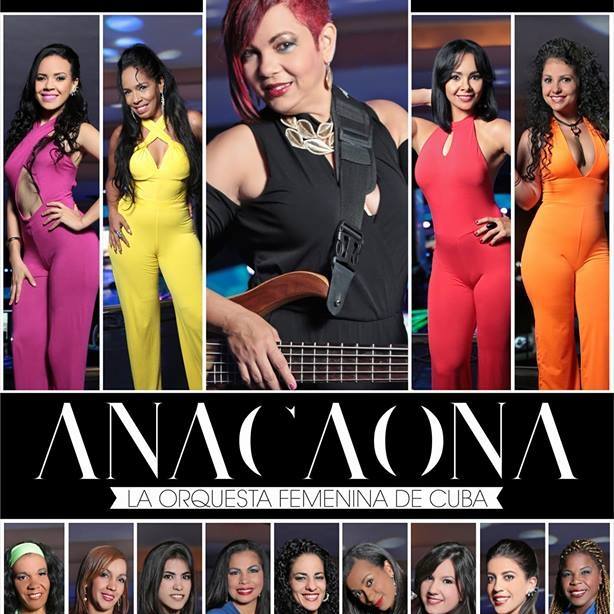
Anacaona Orchestra. Women of Cuba Since 1932

Genesis Founded in 1932

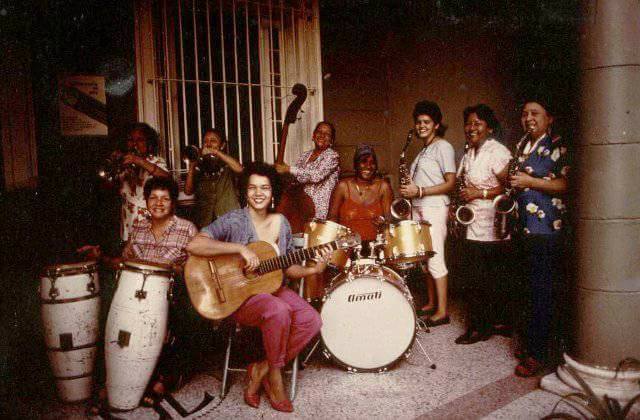
Anacaona Orchestra founded on February 19, 1932 by Concepción Castro Zaldarriaga and her sisters, being then the first female sextet of Son Cubano and in 1934 expanded to the Jazz Band and Charanga Típica format, projecting itself to the world from the famous ¨Aires Libres of the Saratoga Hotel. ¨ in the Havana Prado.

Anacaona Orchestra
Anacaona Orchestra

Between the 1940s and 1960s, these talented women toured throughout North to South America, the Caribbean and France.

In Mexico, one of the countries most visited by the orchestra at this stage, its images and sounds were recorded in some film of Mexican Cinema, such as: ¨the night is ours¨, ¨I do not deny my past¨ and ¨Women of theater¨ in which they alternated with film and music artists from that country. Also at that same time they recorded with the RCA Víctor label.

Anacaona Orchestra photo

The Aguirres

The sisters Giorgia and Dora Aguirre, with a solid musical background, specializing in Double Bass and Saxophone, recently graduated from the ¨Amadeo Roldan¨ Music Conservatory, joined the Anacaona Orchestra with its original founders in 1983, under the direction Alicia Castro, with whom they learned the most genuine genres of Cuban popular music, the rigor and discipline in this profession.

Anacaona Orchestra
Anacaona Orchestra

3rd Generation


After the retirement of the Castro sisters in December 1987, she assumed the direction of the Georgia Aguirre Orchestra, who, together with her sister and other young women who had also graduated from music schools, continued the work begun by the founders, consolidating a style that combines tradition with modernity, to preserve and enhance the history of Anacaona.

Anacaona Orchestra
Anacaona Orchestra

Tours

Internationally, they have traveled to more than 30 countries in Europe, Asia, Africa, America and the Caribbean, performing at important festivals and multiple stages, among which the most outstanding are:

Anacaona Orchestra
Anacaona Orchestra

The tour of 34 countries in the People’s Republic of China; his participation in the play ¨El Burgués Tropical¨ under the direction of Gerome Sabarì, inspired by Moliere’s classic, El Bourgeois Gentleman”; the tour made through some cities in the United States in which they also had a very emotional meeting with Graciela Pérez, singer and founder of Anacaona and the show “Sabor de la Habana” that opened the season of Cuban shows at the Cabaret Del Gran Casino Monte Carlo of the Principality of Monaco,

In addition to other important jazz and summer festivals in Spain, Germany, Belgium, Sweden, Holland, Canada, Jamaica, Aruba, Curacao, French Guiana, Guadeloupe, Martinique, Saint Lucia, Peru, Honduras, Venezuela and Mexico, among others.

Anacaona Orchestra flyer

Los Van Van in Europe

Europe

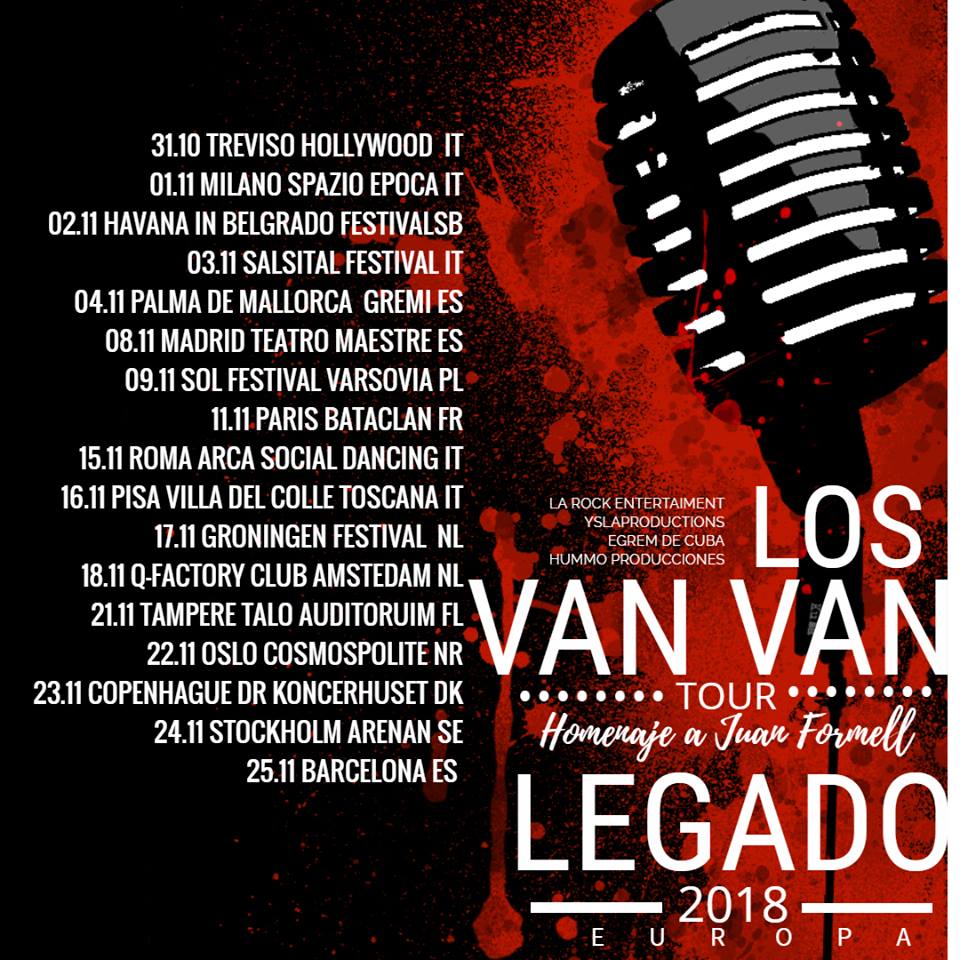
Los Van Van in Europe 2018

For decades, Los Van Van has been a world-class salsa orchestra that no one can keep silent about. The sixteen-strong formation continues to connect with this time through irresistible Cuban rhythms and Caribbean passion.

Los Van Van
Los Van Van

The band has been one of the first Cuban groups to use synthesizers and drum machines and has even created a completely new style: a superswing mix of a traditional charanga set-up (flute and violin combination), wind instruments and modern electronics, called ‘Songo’ by the Cubans.

In addition to Changui and Son Montuno, two traditional Cuban styles, Los Van uses different kinds of music such as rock, funk, disco and hip hop. Today Los Van Van consists of a selection of the best musicians of the first generation and new Cuban talents and vocalists. , led by Samuel Formell, son of the legendary founder of the band, Juan Formell.

In November you can enjoy to seventeen unmissable concerts for lovers of latin and salsa all around Europe!

Bamboleo de Lázaro Valdés is another of those exquisite Cuban products, as well as sweet rum and mild cigars

Like the sweet rum and mild cigars, bamboleo is another one of those exquisite Cuban products that, once tasted, can’t get enough.

The 14-member timba group is a fiery number, from its music and choreography to its well-dressed singers and musicians.

Lazaro Valdes leads the group, plays piano, arranges, composes and writes songs. Born in Havana, he studied at the Alejandro García Caturla Academy in the 1970s.

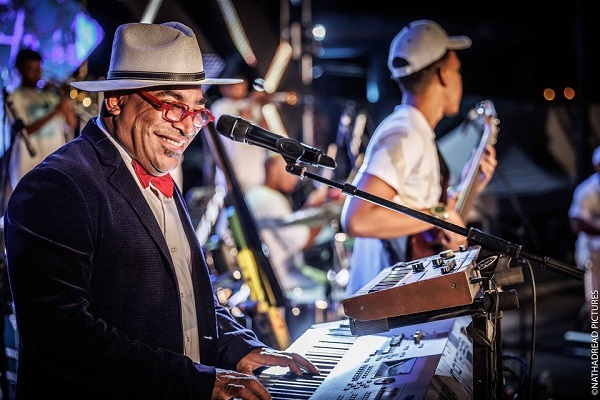
Lazarito Valdés & Bamboleo

He created Bamboleo after spending time performing with artists such as Pachito Alonso, Bobby Carcasses and Héctor Téllez.

He selected the best musicians and incorporated into his new company many who had been trained at the Escuela Nacional de Arte de La Habana.

He added sparkle with vocalist Haila Mompie, who in turn recruited vocalist Vannia Borges. Another Havana native, Borges began studying music at the age of five, and first sang professionally with an all-female group known as D’capo in the early 1990s. Four years later, she became part of the band D’capo.

Four years later, she moved on to Pachito Alonso y su Kini Kini, which she left in 1997 to add her talents to Bamboleo.

Lazarito Valdés.
Lazarito Valdés.

Guantanamera Yordamis Megret joined the group in 1998, a year after Mompie’s departure. She began her musical training at the age of 10 and took up the guitar.

Like Borges, she is also a student at the Escuela Nacional de Arte. After graduating, she began singing professionally with Ricacha. Before joining

Bamboleo, Megret sang in José Luis Cortés’ salsa group PG. Bamboleo began touring outside Cuba in 1996, the same year the group debuted with Te Gusto o Te Caigo Bien.

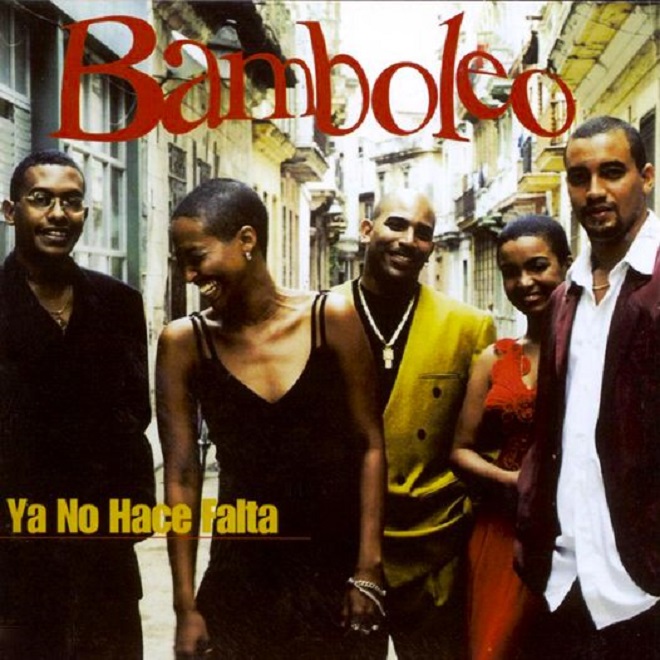
The group has performed in major U.S. cities from Chicago to Miami, and from New York to Los Angeles. Following the release of Yo No Me Parezco A Nadie and Ya No Hace Falta, the group toured the world, with stops in Europe, the United States and Japan, as well as the Heineken 2000 World Music Festival in China.

Bamboleo also collaborated on the Temptations’ Grammy-winning album Ear-Resistable.

Lazarito Valdés
Lazarito Valdés

In addition, the group has appeared on MTV’s Road Rules and has worked with artists such as James Brown, Femi Kuti and George Benson.

Bamboleo, one of the best-known groups on the crest of the timba wave, a new style that blends salsa with funk and jazz elements and emanates from the streets of Cuba, remains at the forefront with 1999’s Ya No Hace Falta.

After leaping to international notoriety with 1997’s Yo No Me Parezco a Nadie, the pressure was on to deliver for his newfound fan base.

With smooth arrangements and a band with a tight drum kit, Bamboleo had no trouble making good on their reputation and, if anything, raised the bar for the entire genre.

Both the horn section and the vocalists have a cool, smooth approach that contrasts with the energetic sound of similar groups like Charanga Habanera or NG la Banda.

This smoky, jazzy sensibility juxtaposed with the sharp corners of the superfunky rhythm section makes for easy and enjoyable listening.

The group doesn’t lack for warmth, with salty montunos from pianist/arranger Lazaro Valdes and plenty of time changes from a percussion section as good as any operating today.

Sonically, the ears rejoice in listening to a timba album that lacks neither fidelity nor modern production sensibilities.

With its balanced overall sound, unique approach and expert musicianship, Bamboleo will set trends and erase boundaries for decades to come.

Bamboleo - Ya No Hace Falta (1999)
Bamboleo – Ya No Hace Falta (1999)

Evan C. Gutierrez

Bamboleo – Ya No Hace Falta (1999).

Musicians:

Lázaro M. Valdés Rodríguez (Director, piano, composer).

Abel Fernández Arana (Alto Saxophone)

Carlos Valdés Machado (Tenor saxophone)

Anselmo “Carmelo” Torres (trumpet)

Dunesky Barreto Pozo (Congas)

Alberto Para (Maracas)

Herlon Sarior (Timbales)

Jorge David Rodríguez (Voice)

Yordamis M. Mergret Planes (Vocals)

  1. Frank Cintra Cruz (Trumpet)

Alejandro Borrero Ramírez (Vocals)

Vannia Borges Hernández (Vocals)

José Antonio Pérez Fuentes (Violin)

Maylin de la Caridad González Aldama (Cello)

Ludwig Nunez Pastoriza (Drums)

Rafael P. Pacerio Monzón (Banjo)

Ulises Texidor Pascual (Bongos)

Sources:

Información realizada ( 27 de enero de 2024)

L’Òstia Latin Jazz 

Also Read: Irakere was a Cuban group that developed an important work in Cuban popular music and Latin Jazz under the direction of Chucho Valdés

  • « Go to Previous Page
  • Page 1
  • Interim pages omitted …
  • Page 3
  • Page 4
  • Page 5
  • Page 6
  • Page 7
  • Interim pages omitted …
  • Page 15
  • Go to Next Page »

International Salsa Magazine (ISM) is a monthly publication about Salsa activities around the world, that has been publishing since 2007. It is a world network of volunteers coordinated by ISM Magazine. We are working to strengthen all the events by working together.