• Skip to primary navigation
  • Skip to main content

International Salsa Magazine

  • HOME
  • Previous editions
    • 2026
      • ISM / May 2026
      • ISM / April 2026
      • ISM / March 2026
      • ISM / February 2026
      • ISM / January 2026
    • 2025
      • ISM / December 2025
      • ISM / November 2025
      • ISM / October 2025
      • ISM / September 2025
      • ISM / August 2025
      • ISM / July 2025
      • ISM / June 2025
      • ISM / May2025
      • ISM / April 2025
      • ISM / March 2025
      • ISM / February 2025
      • ISM / January 2025
    • 2024
      • ISM / December 2024
      • ISM / November 2024
      • ISM / October 2024
      • ISM / September 2024
      • ISM / August 2024
      • ISM / July 2024
      • ISM / June 2024
      • ISM / May 2024
      • ISM / April 2024
      • ISM / March 2024
      • ISM / February 2024
      • ISM / January 2024
    • 2023
      • ISM / December 2023
      • ISM / November 2023
      • ISM / October 2023
      • ISM – September 2023
      • ISM – August 2023
      • ISM July 2023
      • ISM Edition June 2023
      • ISM – May 2023
      • ISM April 2023
      • ISM March 2023
      • ISM February 2023
      • ISM January 2023
    • 2022
      • ISM December 2022
      • ISM November 2022
      • ISM October 2022
      • ISM September 2022
      • ISM August 2022
      • ISM July 2022
      • ISM June 2022
      • ISM May 2022
      • ISM February 2022
      • ISM January 2022
    • 2021
      • ISM December 2021
      • ISM November 2021
      • ISM October – 2021
      • ISM September 2021
      • ISM August 2021
      • ISM July 2021
      • ISM May 2021
      • ISM April 2021
      • ISM June 2021
      • ISM March 2021
      • ISM February 2021
      • ISM January 2021
    • 2020
      • ISM December 2020
      • ISM November 2020
      • ISM October 2020
      • ISM September 2020
      • ISM August 2020
      • ISM July 2020
      • ISM June 2020
      • ISM May 2020
      • ISM April 2020
      • ISM March 2020
      • ISM February 2020
      • ISM January 2020
    • 2019
      • ISM December 2019
      • ISM November 2019
      • ISM October 2019
      • ISM Septembre 2019
      • ISM August 2019
      • ISM July 2019
      • ISM June 2019
    • 2016
      • ISM December 2016
  • Spanish
  • Download Salsa App
    • Android
    • Apple

Search Results for: eddie palmieri

The Jeque and his Band present: “Ultimatum”, a musical gem with Hermán Olivera

A masterful fusion that redefines Guaguancó and Cha-Cha, celebrating the group’s tenth anniversary.

El Jeque y su Banda is a salsa ensemble based in Venezuela.

Under the direction of its founder and general manager, Lic. Ángel Martínez “El Jeque,” and with the impeccable musical direction, arrangements, and piano work of the renowned William “Willie” Melo, the band has established itself as a benchmark in the genre.
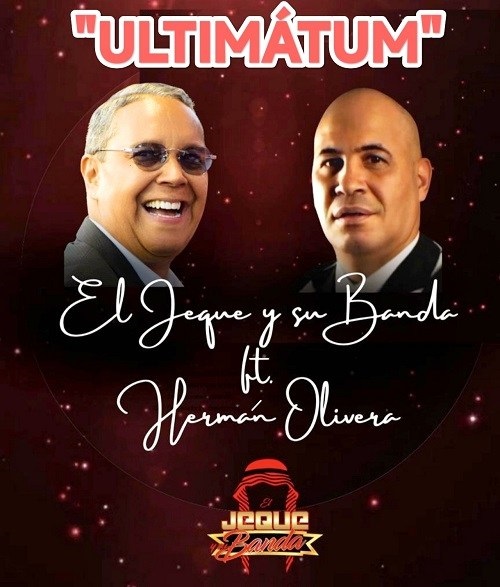
El Jeque y su Banda presenta “Ultimátum”, una joya musical junto a Hermán Olivera

Approaching ten years of professional trajectory, maintaining their momentum through persistence, passion, and dedication to their craft, the group celebrates this anniversary with the release of their fourth studio production: Evolución…El Jeque y sus Estrellas.

The Launch: “Ultimátum”

The purpose of this release is to announce the launch of their second promotional single, a piece crafted for the true music connoisseur: “Ultimátum.”

This musical gem features a collaboration with a legend of the genre, a world-renowned sonero and vocalist: Hermenegildo Olivera Suárez, globally known as “Hermán Olivera, El Sonero del Siglo XXI.”

Herman Olivera El Sonero del Siglo XII y Dj. Augusto Felibert

History and Evolution

This romantic-style track was originally recorded in 1981 by the great Puerto Rican interpreter Felipe “La Voz” Rodríguez.

The song was written by the legendary Puerto Rican composer Luz Celenia Tirado, who was the first woman recognized in the island’s challenging guild of troubadours and also performed on that original production.

On this occasion, El Jeque y su Banda takes the work in a new direction, transforming it into an aggressive Guaguancó fused with an elegant Cha-Cha.

The concept for this version was a creative endeavor led by Hermán Olivera, who defined the essence and intent of the track.

Ángel Martínez “El Jeque” y Dj. Augusto Felibertt

Subsequently, Luis Alberto and Willie Melo shaped the project, solidifying the final musical structure under the pen and direction of William “Willie” Melo, with the co-production of Luis Alberto “Redlouis” (Manager, Producer & Booking for Hermán Olivera).

Musical Virtuosity

It is remarkable how these music aficionados manage to mesh Guaguancó and Cha-Cha originally fused with a bolero with a versatility that preserves the essence, cadence, and appeal of the piece.

Herman Olivera Soneando Luis Rojas y Augusto Felibertt prueba de Sonido en el marco del evento Salsa Bajo la Cúpula Poliedro de Caracas.

Willie Melo masterfully integrates Hermán Olivera’s characteristic sound, marked by the influences of Manny Oquendo’s Conjunto Libre and the maestro Eddie Palmieri.

The arrangement, loaded with dissonant notes and power, softens its impact with the magic of the Cha-Cha, allowing Hermán to display his artistry in the soneo.

This interplay between the irreverent, the melodic, and the elegant makes “Ultimátum” a mandatory addition to any quality music lover’s playlist.

Production Credits

The excellence of this single is made possible by the participation of these great Venezuelan musicians:

  • Musicians: Yomar “Caballo” Méndez, Julito Antillano, Luis Ruíz, Joel “Pajarraco” Rivas, Frank Haslam, and Willie Melo.

  • Backing Vocals (Cha-Cha): Maestro Nino Segarra, accompanied by Rodrigo Mendoza and Wilmer Lozano.

  • Recording (Lead and Backing Vocals): Nino Segarra Studios (Puerto Rico).

  • Musical Recording, Mixing, and Mastering: Dale Cerebro Estudio, led by engineer Emmanuel “Cerebro” Romero.

Everything stated above summarizes a work with all the necessary elements to become a radio hit and, above all, an essential piece in your music library.

El Jeque y su Banda
El Jeque y su Banda

Sincerely,

Lic. Ángel Martínez “El Jeque”

Collaborations:

Luis Alberto “Redlouis” (Manager, Producer & Booking for Hermán Olivera)

Dj. Augusto Felibertt

Also Read: Hermán Olivera “El Sonero del Siglo XXI”

Rafaelito and his career between Munich and New York

We had a very personable and honest conversation with Rafael Pareja Ibañez, who via WhatsApp has given us a few minutes of his busy schedule to tell us a bit about his fascinating career to date and the group he currently leads, Rafaelito Y Su Tumbao. 

The artist, born in Lima, Peru, has a huge love for music and remains intact to date, so he says it is a pleasure to share the story of how he came to pursue it professionally, no matter how many times he tells it.

Rafaelito playing
Rafaelito playing the guitar live

Rafael’s beginnings in music

Rafael was first inspired by the artists his parents used to listen to at home, including La Sonora Matancera, Celia Cruz, Tito Puente, and many others. Family social gatherings always featured iconic songs by these stars, so he could not help but be interested in music at the early age of 10.

It all started when his father caught him beating some paint buckets to make it look like he was playing a drum set on the roof of their house, which led him to enroll his child in a music school to take guitar lessons. While it is true that this was the first instrument he learned to play, he also plays the baby bass in salsa and the piano together with all the percussion instruments.

At that time, what the young man played the most was rock and pop because the radio and other media left little room for Latin music. In fact, Rafael formed his first rock band at 16, as this was the genre with which young people identified the most in the 1980s.

Move to Germany

At 20 years of age, Rafael decided to move to Germany, specifically to Munich, where he lived for more than 27 years. It was there that he came into contact with people of other nationalities and had far more access to Latin music, especially Peruvian music, which surprised him greatly. He also got to listen to international stars such as Eddie Palmieri, Miguelito Cuní, and Arsenio Rodríguez.

Rafaelito and Nicky Marrero
American Latin jazz percussionist Nicky Marrero and Rafaelito at Mamajuana Cafe in the Bronx

It was also in Munich where he began to have his first professional experience together with major musical groups from there such as the Sexteto Melaza, where he played alongside musicians from different parts of the world. At a student barbecue, Rafael was hanging out with many Latinos, and they began to sing and play instruments together, leading them to form a group, which they named Melaza. During that time, he dedicated himself to play salsa, guaracha, son, bolero, and cha-cha-cha in a sextet format.

The group featured a guitarist, a bassist, a conga player, a timbalero, a bongo player, and a singer. This sums up his first musical experience in Germany, which lasted about a year and a half. It also helped him draw the attention of other musicians in the city’s music scene, who convinced him to join other projects that were being created.

Another of those projects included a trio of young musicians called Madera Limpia which was founded in 2005, when rap, reggaeton, reggae, and many other genres mixed with Latin rhythms such as changüí or kiribá were super trendy. It turns out that a Romanian couple traveled to Cuba, produced a film called “Paraíso,” and went on a concert tour through Europe and North Asia. Therefore, they needed to hire many musicians, including the members of Madera Limpia, who contacted Rafael through connections and asked him to be their bassist. The Peruvian accepted the offer and toured all those places with these musicians, an experience he talks about with great affection.

Back in Munich, he met Lou Bega, the creator of the hugely popular swing-pop cover of Pérez Prado’s “Mambo No. 5,” which stayed at number one for 36 consecutive weeks in the United States. When his producer wanted to find a band to accompany him, there were very few Latin musicians in the city and Rafael was one of them. Obviously, they called him and his colleagues to work on some demos featuring Bega’s vocals and trumpet samples. After being selected, he became the director of his live band and accompanied him on many concerts in Europe between 2007 and 2008.

El Canario and Rafaelito
José Alberto ”El Canario” and Rafaelito

Rafaelito Y Su Tumbao

Right there in Munich, Rafael finally made up his mind and formed his own musical group, Rafaelito Y Su Tumbao, which currently has branches in Munich, Lima, and New York, where the artist currently resides. Rafael arrived in this city as early as 2020, which is when he got to perform with stars such as Charlie Aponte, Andy Montañez, Jose Alberto “El Canario,” Hildemaro, and many others. When he saw how good the human material was in his new place of residence, he also founded Rafaelito Y Su Tumbao in New York with musicians from there. 

What is striking about his move to New York is that it was motivated by Rafael’s reunion with his childhood sweetheart in Peru, whom he reconnected with in 2019. It turns out that his partner was living in New York, so he jumped on this new opportunity that life offered him and made the romantic decision to cross the Atlantic again and marry her. This radically changed his life both personally and professionally, but he’s glad he did.

Members of Rafaelito Y Su Tumbao
Members of Rafaelito Y Su Tumbao in New York
Line Up :
Rafael Pareja – Baby Bass
Ray Cabrera – Piano
Andres Garces – Vocal
Karla Olivo Moreno – Vocal
Dennis Hernandez – Trumpet
Christian Gomez – Trumpet
Jimmy Bosch – Trombone
Andre Carpio – Timbal
Hector “ Jereto “ Ferreyra – Congas
Chuito Quintero – Bongo

Read also: Dominican bandleader and musical director Orlando Santana talks about La Makina and his career in general

‘‘El Griego Rumbero’’ visited the Salsa Museum and donated some objects

The artist we will talk about today is a very particular case, since he comes from a country which is not usually related to salsa or Latin music in general. However, the passion for these rhythms has captivated people from all over the world, so it is not surprising that our guest has experienced the same thing.

We’re talking about the Greek-born trombonist and composer Demetrios Kastaris, whom El Rubio Boris and I were fortunate to welcome at the Salsa Museum. Here’s a little of his fascinating story.

Demetrios Kastaris playing
Demetrios Kastaris playing the trombone

Demetrios’ early years

Demetrios was born in Thessaloniki, Greece, but moved with his family to the United States when he was just two years old. After living in Ohio for a few years, the family moved again, but this time to St. Louis, Missouri, a place that would be critical to the training of the Young man in the times to come.

The first contact of the boy with music was in elementary school during a live performance by a classical music quintet, but what really captivated him was a demonstration of a slide trombone by a member of the St. Louis Symphony Orchestra. It was at that instant the aforementioned instrument inspired Demetrios to take trombone lessons and join the school concert band.

More importantly, as Demetrios grew older, he spent countless hours practicing the trombone, especially in summer when he was free from school work. Finally, On reaching the age of 17, his perseverance began to bear fruit, and he got the opportunity to rehearse with the Stan Keaton Jazz Orchestra, which was the first great experience for the teenager. Just one year later, he sang as a soloist at the Classical Rimsky-Korsakov Concerto. 

Other than that, Demetrios received the John Philip Sousa Band Award just before graduating from high school. He then studied music education at the University of Missouri-St. Louis, when he played in the jazz band and won several awards with the group.

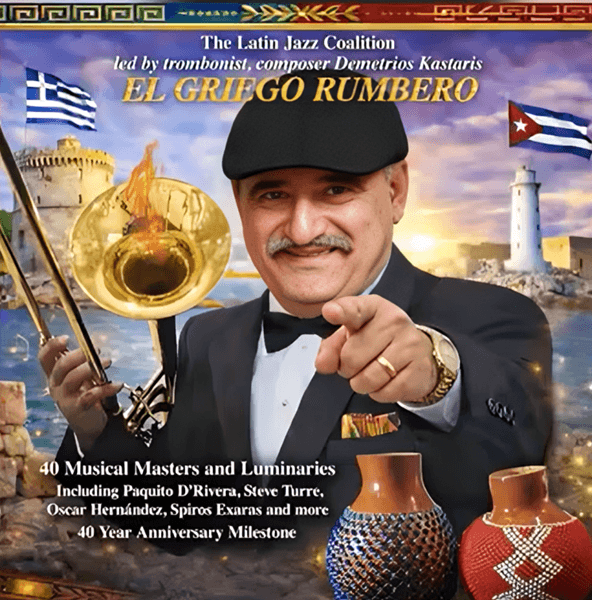
Cover of the album ''El Griego Rumbero''
Cover of the album ”El Griego Rumbero” by demetrios Kastaris

Moving to New York

Two years after having studied in Missouri, Demetrios moved to New York, where he received a scholarship that allowed him to attend New York University and take more steps in his musical career. While completing his studies, he met a bandleader on the subway and was invited to a rehearsal where he was given the opportunity to arrange Afro-Cuban jazz pieces for the first time in his life.

Latin music and its rhythmic features made such an impression on Demetrios that he began attending concerts by many of its great exponents, such as Willie Colón, Eddie Palmieri, Ray Barretto, Tito Puente, Mongo Santamaría, and many others. This led him to transcribe and conscientiously analyze these artists’ songs to satisfy his curiosity and learn more about these rhythms.

After graduating with honors, he earned a masters degree in jazz from the Manhattan School of Music. Soon after, he was already teaching in public schools while performing with one of the bands of the Concord Resort Hotel.

Other important details of his career

For over 50 years of artistic career, Demetrios has had the opportunity to perform with big Latin stars such as Tito Puente, Luisito Quintero, Alfredo De La Fé, Ray Barretto, Charlie Palmieri, Herencia Latina, Oscar Hernández from The Spanish Harlem Orchestra, and many others. 

Already in the decade of 1980, the artist founded the Latin-Jazz Coalition and recorded several of his original compositions in genres such as Brazilian and Afro-Cuban jazz. In certain Circles, his work has earned him the nickname of “El Griego Rumbero”, a moniker by which he is still known today.

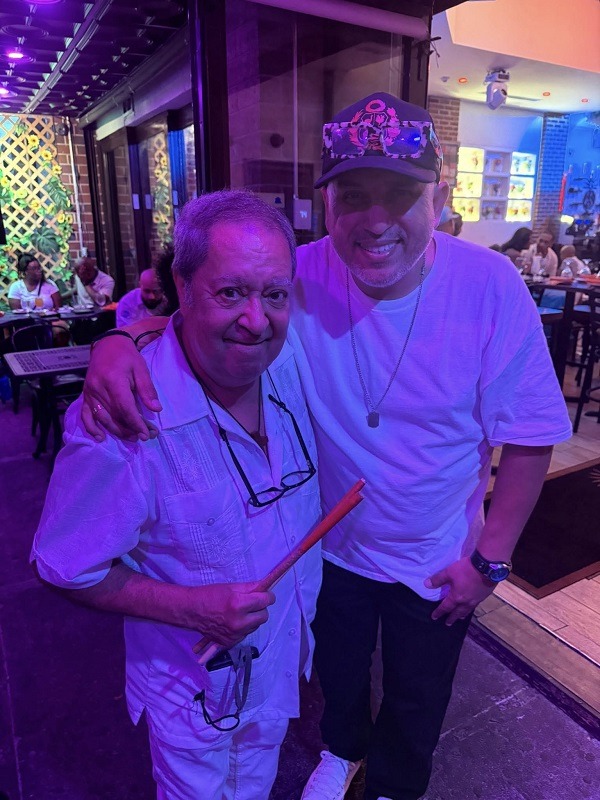
Johnny Cruz, Demetrios Kastaris and El Rubio Boris

Much more recently, Demetrios was invited to play with Los Leales de Cuba at the Buena Vista Curry Club and also to rehearse with Los Muñequitos de Matanza, which was a very learning afternoon and a memorable experience for him. Thereafter, he traveled to Cuba on several occasions to learn much more about this music.

Visit to the Salsa Museum

Just two years ago, Demetrios visited the Spanish Harlem Salsa Museum directed by yours truly and spent an enjoyable time with our entire team but he did not come alone. He brought us his photograph and a poster of the Latin Jazz Coalition, which were mounted on a wall alongside many other photographs of stars such as The Fania All Stars, Hector Lavoe, Tito Puente, Celia Cruz, El Gran Combo de Puerto Rico, Larry Harlow, and many others. 

His childhood trombone was also added to our extensive display of objects donated by artists and their families. This took place on March 20, 2024, and the instrument remains at our institution to this day as a reminder of a Greek man’s love for our music and a thank you to his dedication over the years.

Johnny Cruz ISM

Read also: Rey Ruíz visits the Salsa Museum and talks about his prolific career

Paoli Mejías A Talent Forged in the Streets and Discipline with a New Sound in Latin Jazz

From legendary sideman to the leader of a limitless musical vanguard.

Paoli Mejías is a pivotal figure in the evolution of contemporary percussion, renowned for his seamless fusion of Latin jazz with masterful conga technique.

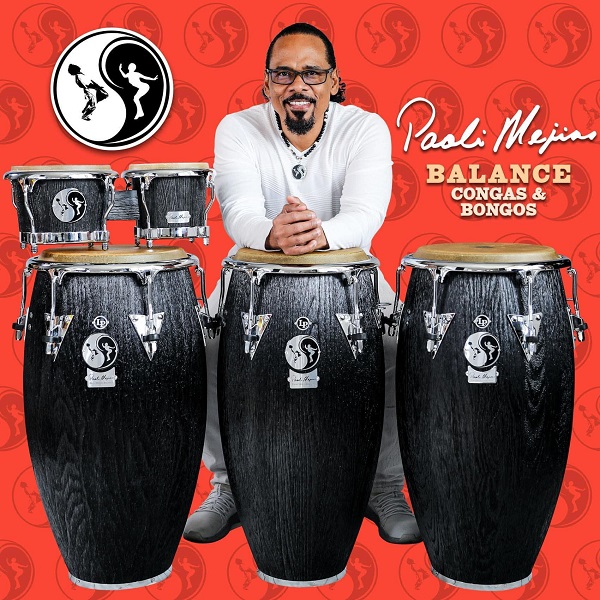
Paoli Mejias: From accompanying legends to leading a musical vanguard without borders

Paoli Mejias: From accompanying legends to leading a musical vanguard without borders

While he is an exceptional multi-percussionist, his command of the congas has established him as one of the most in-demand soloists in the world.

He is distinguished by a melodic style; he doesn’t just keep time he makes the drums “sing,” utilizing precise tuning and astonishing speed.

After touring the globe alongside icons such as Eddie Palmieri, Tito Puente, Seis del Solar, Chick Corea, and Marc Anthony, Mejías has solidified his status as an international benchmark. His vast musical, folkloric, and cultural knowledge positions him today not only as a percussion virtuoso but as a visionary leading his own quintet.

With a career marked by success, Mejías has produced three high-caliber independent albums: Mi Tambor (2004), which received a Latin Grammy nomination, Transcend (2006), and Jazzambia (2008).

Paoli Mejías, a talent forged in the streets and through discipline

Paoli Mejías, a talent forged in the streets and through discipline

These works have placed the Puerto Rican percussionist at the forefront of the genre, earning glowing reviews in the world’s most influential publications, including JazzTimes, DownBeat, Jazziz, and Modern Drummer.

A Talent Forged in the Streets and Discipline

Born in Río Piedras, Puerto Rico, on March 7, 1970, Paoli discovered his calling at the age of twelve. Inspired by the records of Carlos “Patato” Valdés and Ray Barretto, and the innovation of groups like Batacumbele and Irakere, he bought his first conga and began a self-taught journey.

Without formal teachers, he learned the language of percussion by mimicking the sounds emanating from his favorite vinyl records.

Paoli Mejía with Nuevo Sonido en el Jazz Latino

Paoli Mejía with Nuevo Sonido en el Jazz Latino

His true training took place in the effervescent musical atmosphere of San Juan, absorbing the styles of his mentors in street rumbas.

His professional debut came via Rafú Wagner (former vocalist for Bobby Valentín), and while still a teenager, he was already collaborating with renowned local artists such as José Nogueras, Glenn Monroig, and Charlie Sepúlveda.

The Leap to the Global Stage

His impeccable technique and melodic sensitivity quickly made him the preferred sideman for the greats. For over eight years, he was a key member of maestro Eddie Palmieri’s orchestra, recording on historic projects like Masterpiece/Obra Maestra (with Tito Puente), which won a Grammy Award.

Paoli Mejías is a fundamental figure when discussing the evolution of contemporary percussion

His discography now exceeds 20 commercial productions, including the nominated Acuarela de Tambores.

This exposure to world music enriched his creative fire. As Elmer González noted in Latin Beat: “Through Mi Tambor, Paoli achieves a watercolor of rhythms and textures that make this album one of the best Afro-Latin jazz productions released as a leader, and he aspires to continue a career forged on the stages of the world’s most important festivals.”

Beyond the Traditional Genre

Today, Paoli Mejías’ group offers a style that transcends labels. His proposal fuses the “Salsa Gorda” of the big orchestras with Puerto Rican bomba and plena, incorporating nuances of Greek, Flamenco, Indian, and African music. The result is a vibrant experience where the audience ceases to be spectators and becomes participants.

His versatility was cemented at the Heineken Jazz Festival, where critics highlighted his absolute mastery of minor percussion, timbales, bongos, and ethnic instruments like the Nigerian Udu, hailing him as one of the most complete percussionists of our time.

Paoli was there: Eddie Palmieri, Tito Puente, Seis del Solar, Chick Corea and Marc Anthony

Paoli was there: Eddie Palmieri, Tito Puente, Seis del Solar, Chick Corea and Marc Anthony

Beyond his role as a performer, the “Maestro” shares his knowledge by conducting clinics at prestigious institutions such as the University of Washington, the University of New Mexico, and the Puerto Rico Conservatory of Music.

Sponsored by leading brands like Latin Percussion and Sabian, Paoli Mejías continues to elevate the legacy of Latin jazz into exciting new dimensions.

Member of Santana

Paoli Mejías is a world-renowned percussionist who was a member of the band Santana, led by Carlos Santana.

Joining Santana: Paoli joined the group in 2013, taking over the conga chair. His arrival brought an impressive technical energy and rhythmic depth, establishing him as a fundamental piece of the band’s world tours for several years.

Source: Paoli Mejías

Photos: Paoli Mejías Archives / © Martin Cohen

Also Read: Carlos “Patato” Valdés: One of the Greatest Percussionists in Latin Jazz History

Ralph Mercado: The Visionary Who Turned the Rhythm of the Barrio into a Global Phenomenon

The Giant of New York Salsa

Ralph Mercado was a music promoter and an iconic figure of Salsa and Latin music in New York. More than just an entrepreneur, Mercado was the strategist who took Salsa out of local New York clubs and placed it on the world’s most prestigious stages.

Through his vision, the sound of Latin identity found a commercial language without losing its “street” essence, making him the most influential tropical music mogul of the 20th century.

Ralph Mercado, the visionary who transformed the rhythm of the neighborhood into a global phenomenon

Creator of “The Perfect Combination”; Early Days in the Bronx and Brooklyn

Of Puerto Rican and Dominican descent, Mercado was born on September 29, 1941, in Brooklyn. As a mere teenager, he was already organizing parties and dances as the president of a neighborhood social club.

He later founded the 3 & 1 Club on Atlantic Avenue, which hosted local bands and musicians such as Eddie Palmieri and Richie Ray & Bobby Cruz, among many others. Shortly thereafter, he created his first production and promotion company, Showstoppers, through which he promoted R&B acts of the caliber of James Brown, Aretha Franklin, Gladys Knight & the Pips, The Stylistics, and The Chi-Lites.

Expanding the Empire

He eventually ventured into Manhattan, where he helped expand the legendary Fania All-Stars, promoted dances at the Cheetah Nightclub, and presented Latin Jazz artists at venues like the Red Garter and the Village Gate. In 1972, Mercado established RMM Management, representing Palmieri and Ray Barretto.

Ralph Mercado was a music promoter and an emblematic figure of salsa and Latin music in New York

He managed the genre’s biggest stars, including Tito Puente and Celia Cruz, with whom he worked for 25 years. “I learned so much from her,” Mercado told the AP in July 2003, following the passing of the “Queen of Salsa.” “I witnessed the impact she had in every country we visited.”

Mercado credited Cruz and Puente with the internationalization of Salsa. “They were two artists with so much talent and such good hearts… something unrepeatable,” he expressed at the time.

The RMM Phenomenon

By 1987, his popular “Latin Tinge” nights at the Palladium attracted hundreds of salseros every Thursday. In 1992, he founded the independent label RMM, which branched into RMM Records, RMM Filmworks, and two publishing houses. With a catalog of over 140 artists, the label sold millions of albums annually.

Mercado brought Salsa to South America and to places as remote as Africa, Asia, and Israel. He personally discovered and launched the careers of talents like Marc Anthony, La India, Domingo Quiñones, Tony Vega, José Alberto “El Canario,” and Tito Nieves. For his work, he received numerous accolades, including the Billboard Lifetime Achievement Award in 1999.

Mercado creador de La Combinación Perfecta; RMM

The RMM Label: A Hit Factory

Mercado’s impact was solidified by his ability to adapt tradition to changing times. While others clung to the past, Ralph understood the potential of Salsa Romántica and the power of international collaborations. RMM didn’t just produce records; it produced culture, documenting the history of the rhythm through videos and massive concerts that redefined the concept of Latin entertainment.

His influence extended far beyond recording. As a promoter, he opened markets in Europe, Asia, and throughout Latin America, ensuring the tumbao was heard in every corner of the planet. He was a relentless negotiator and a protector of the legends’ legacies, ensuring that Latin Jazz and Salsa Dura maintained their academic prestige while dominating the pop charts.

An Indelible Legacy

“Without him, I don’t believe the Fania All-Stars would have achieved the success they did,” stated Eddie Palmieri. Meanwhile, promoter Leo Tizol remembered him as someone “accessible and noble” who never refused to share his knowledge with those starting out.

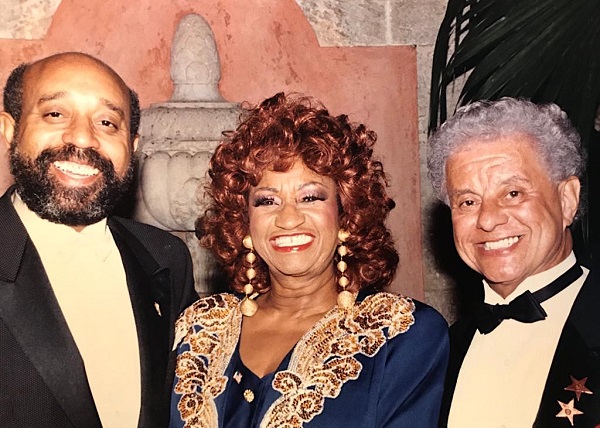
Mercado, Celia y Puene

Ralph Mercado passed away on March 10, 2009, surrounded by his wife Cynthia, his five children, his siblings, and his grandchildren. His departure left a void that as the greats of music often say can never be filled.

Source: RMM / Photo: Ralph Mercado Archives

Also Read: Hector Maisonave Manager of the Greatest Salseros in New York

  • « Go to Previous Page
  • Page 1
  • Page 2
  • Page 3
  • Page 4
  • Page 5
  • Interim pages omitted …
  • Page 31
  • Go to Next Page »

International Salsa Magazine (ISM) is a monthly publication about Salsa activities around the world, that has been publishing since 2007. It is a world network of volunteers coordinated by ISM Magazine. We are working to strengthen all the events by working together.