• Skip to primary navigation
  • Skip to main content

International Salsa Magazine

  • HOME
  • Previous editions
    • 2026
      • ISM / May 2026
      • ISM / April 2026
      • ISM / March 2026
      • ISM / February 2026
      • ISM / January 2026
    • 2025
      • ISM / December 2025
      • ISM / November 2025
      • ISM / October 2025
      • ISM / September 2025
      • ISM / August 2025
      • ISM / July 2025
      • ISM / June 2025
      • ISM / May2025
      • ISM / April 2025
      • ISM / March 2025
      • ISM / February 2025
      • ISM / January 2025
    • 2024
      • ISM / December 2024
      • ISM / November 2024
      • ISM / October 2024
      • ISM / September 2024
      • ISM / August 2024
      • ISM / July 2024
      • ISM / June 2024
      • ISM / May 2024
      • ISM / April 2024
      • ISM / March 2024
      • ISM / February 2024
      • ISM / January 2024
    • 2023
      • ISM / December 2023
      • ISM / November 2023
      • ISM / October 2023
      • ISM – September 2023
      • ISM – August 2023
      • ISM July 2023
      • ISM Edition June 2023
      • ISM – May 2023
      • ISM April 2023
      • ISM March 2023
      • ISM February 2023
      • ISM January 2023
    • 2022
      • ISM December 2022
      • ISM November 2022
      • ISM October 2022
      • ISM September 2022
      • ISM August 2022
      • ISM July 2022
      • ISM June 2022
      • ISM May 2022
      • ISM February 2022
      • ISM January 2022
    • 2021
      • ISM December 2021
      • ISM November 2021
      • ISM October – 2021
      • ISM September 2021
      • ISM August 2021
      • ISM July 2021
      • ISM May 2021
      • ISM April 2021
      • ISM June 2021
      • ISM March 2021
      • ISM February 2021
      • ISM January 2021
    • 2020
      • ISM December 2020
      • ISM November 2020
      • ISM October 2020
      • ISM September 2020
      • ISM August 2020
      • ISM July 2020
      • ISM June 2020
      • ISM May 2020
      • ISM April 2020
      • ISM March 2020
      • ISM February 2020
      • ISM January 2020
    • 2019
      • ISM December 2019
      • ISM November 2019
      • ISM October 2019
      • ISM Septembre 2019
      • ISM August 2019
      • ISM July 2019
      • ISM June 2019
    • 2016
      • ISM December 2016
  • Spanish
  • Download Salsa App
    • Android
    • Apple

Search Results for: eddie palmieri

Alberto Crespo and Carlos Santos Release Their Latest Single “Narci” with Grupo Bacheo to the Latin Market

On November 7, 2025, the vibrant Latin music scene celebrates a stellar collaboration that promises to ignite dance floors.

The acclaimed Venezuelan pianist, arranger, and music producer Alberto Crespo joins legendary Puerto Rican sonero Carlos Santos and the talented Grupo Bacheo to present their latest musical track titled “Narci.”
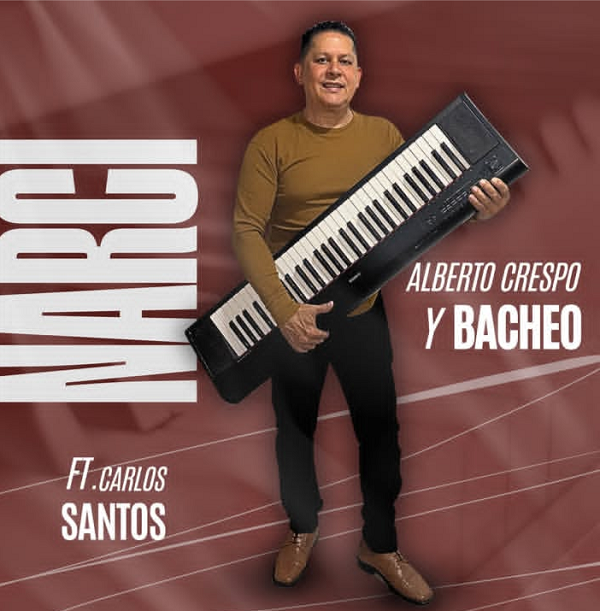
Alberto Crespo and Carlos Santos release their latest song, titled Narci, to the Latin market with Grupo Bacheo

This original composition by Ali Delgado and José Granados, featuring arrangements by Alberto Crespo himself, fuses a modern sound with the unmistakable rhythm of salsa, guaranteeing a musical experience that will delight dancers.

Alberto Crespo: A Piano Master with an International Career.

From his beginnings at the “José Ángel Lamas” Music Conservatory in Caracas, Alberto Crespo demonstrated exceptional passion and talent. His deep immersion in harmony, counterpoint, orchestration, and improvisation has established him as a versatile and well-rounded musician.

By age seventeen, he was already touring with renowned orchestras, sharing the stage with icons such as Naty y Su Orquesta, Celia Cruz, Bobby Capó, Carmen Delia Depini, Carlos Cano Estremera, Andy Montañés, Ismael Miranda, Pete Conde Rodríguez, and José Mangual Jr., among many others.
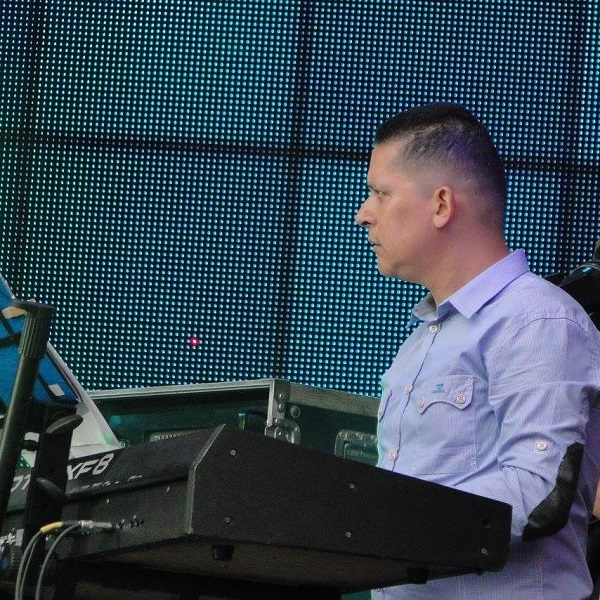
Alberto Crespo A Piano Master with an International Career

With over three decades of experience in salsa and Latin Jazz, Crespo has consolidated his reputation as a highly prestigious producer, arranger, and pianist. His impressive list of collaborations includes national and international artists such as Maikel Stuart, Frankie Morales (former singer for Tito Puente), Orquesta Bailatino, Grupo Mango, Herman Olivera, Rumberos de Callejón, Gilberto Santa Rosa, and Naty y Su Orquesta. His versatility has led him to be part of the most prominent musical groups in Venezuela.

Carlos Santos: A Classy Sonero with a Legendary Trajectory.

Born on March 13, 1946, in Cataño, Puerto Rico, Carlos Santos is a true sonero whose career took off with Joey Pastrana’s band. His powerful voice and unmistakable salsa flair led him to perform and record with emblematic salsa orchestras, including “Kako y su Trabuco,” “Los Kimbos,” “Conjunto Candela,” and Roberto Roena’s “El Apollo Sound,” in addition to special performances with Ray Barreto and El Conjunto Libre.

Santos has left classics for posterity such as “Chacaboom,” “Las cosas de la vida” and “Amor verdadero” with Joey Pastrana, as well as “Flores para tu altar” and “Me imagino” with Conjunto Candela. His voice also enriched productions by Eddie Palmieri and Los Kimbos with tracks like “Caridad” and “Todo el mundo.” During his time with El Apollo Sound, he garnered hits such as “El Progreso” and “Háblame ahora.”

Carlos Santos Un Sonero con Clase y una Trayectoria Legendaria

Carlos Santos currently resides in Florida, United States, and continues to delight audiences with his international and local performances.

The union of these two pillars of salsa, under the production of Chongo Producción (from New York) and Juancho Producción (in Cali), promises to be a memorable event for Latin music.

Ali Delgado (Caracas) y Juancho Producción (Cali)

Note: “45 RPM is for sale in Cali by Juancho Producción, and will be presented with great fanfare on December 30 at 10:00 a.m. at the Meeting of Music Lovers and Collectors (Encuentro de Melómanos y Coleccionistas) of the Cali Fair, Colombia. 2025.”

Production Credits

General Production

  • Production: Alberto Crespo & Chongo Productions LLC

Musical Team

  • Composer: Ali Delgado / José Granados
  • Vocalist: Carlos Santos
  • Arrangements: Alberto Crespo

Musicians

  • Timbal: Carlitos Padrón
  • Tumbadoras (Congas): Manuel “Manny” Márquez
  • Bongó / Bell: Carlitos Padrón
  • Trumpets: Jorge Maestre “Pitufo”
  • Baritone Saxophone: José Antonio Fariñas
  • Bass: José Soto “Mortadelo”
  • Percussion: Carlitos Padrón, Carlos Crespo
  • Chorus / Background Vocals: Heyzer Cabrera & José Soto “Mortadelo”

Recording and Post-Production

  • Recording Studios:
    • Chongo Estudios (New York)
    • A Tempo Estudios (Caracas)
    • París Recording Estudios (USA)
  • Mixing: Heyzer Cabrera / Alberto Crespo
  • Mastering: Heyzer Cabrera

Important Note by Alberto Crespo:

I was working on the arrangement for the song NARCI, and when I reached the chorus, I wanted to find a beautiful melody with a different harmony, like a chorus of angels singing from heaven. I was pacing around my workspace and the areas near my house, searching for ideas.

My wife, Adriangela, was listening to what I was developing to achieve a final connection, and all of a sudden, she sang that beautiful melody to me. I immediately copied it and added the chords, and honestly, it was something magical, very spiritual… “Ya no estás más a mi lado, cómo te extraño, mi amor, cómo te extraño…” (You are no longer by my side, how I miss you, my love, how I miss you…) That final unison of the chorus is very subtle and sentimental.

Video

Video: Chongo Productions LLC

Carlitos Padron Director de Chongo Producción (desde New York)

Listen to “Narci” on YouTube:

Alberto Crespo y Bacheo

[email protected]

+58 4142521642

Also Read: The Conjunto Bailatino “La Resistencia Salsera” again “Antes los ojos del Mundo” and here, “No hay quinto malo”

Brian Lynch is known for his versatility, excelling in Jazz (primarily post-bop and hard bop) and notably in Latin Jazz

Brian Lynch is a top-tier jazz trumpet, flugelhorn player, and arranger, highly respected for his work in both traditional jazz and his fusion with Afro-Cuban and Latin rhythms.

Lynch has been on the jazz scene for the better part of the last three decades. He is known primarily for his work as a sideman for many of the top musicians in jazz and as co-leader of a major Latin ensemble alongside Eddie Palmieri. For a long time, he has championed the music of the great trumpet players who preceded him.

Brian Lynch is a top-notch jazz trumpeter, flugelhorn player, and arranger

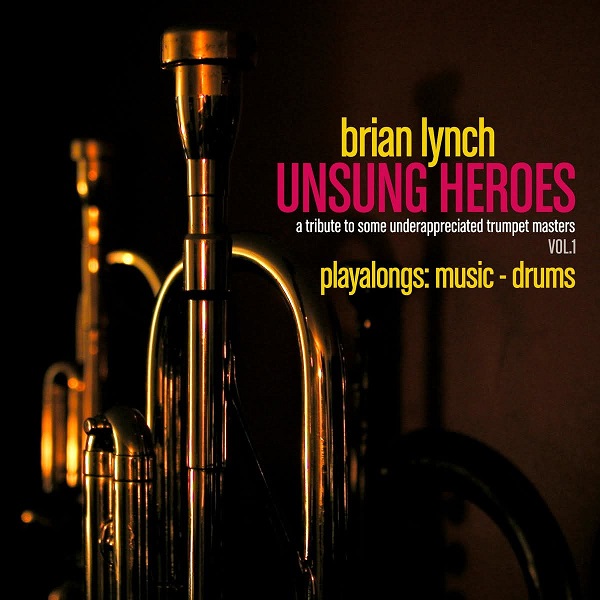
On this album, which is a natural follow-up to his 2000 album, Tribute to the Trumpet Masters, Lynch pays homage to the works of some of the most prominent, yet undeservedly unknown, jazz trumpeters, such as Joe Gordon, Claudio Roditi, Tommy Turrentine, Louis Smith, Idrees Sulieman, Charles Tolliver, and Kamal Adilifu (also known as Charles Sullivan).

Some of the tributes consist of performing compositions by these artists. In other cases, Lynch performs a tune he composed in the artist’s honor. In all cases, Lynch and his team, which includes Vincent Herring and Alex Hoffman on saxes and Rob Schneiderman on piano, are more than up to the task. They make each of the honorees proud.

Lynch ha estado en la escena del jazz durante la mayor parte de las últimas tres décadas

While there isn’t a single bad track on the album, standouts include Gordon’s “Terra Firma Irma,” which moves along to the potent beat of Pete Van Nostrand, along with excellent solos from all three horn players; Turrentine’s “Big Red” and Sulieman’s “Saturday Afternoon at Four,” both part of a treasure trove of unreleased compositions that were part of the Turrentine and Sulieman estates and that Lynch was able to tap into for these sessions; the hard bop of Tolliver’s “Household of Saud” (again, Van Nostrand’s drumming blew me away) and Lynch’s “RoditiSamba,” a tribute to the Brazilian master.

In short, Unsung Heroes is Brian Lynch’s best album as a leader in his long career. The musical mastery is top-notch, the compositions are always interesting, and the backstory of the whole project is a compelling history lesson for jazz trumpet fans who want to dig deeper than Miles, Diz, and Satchmo. The best news is that there’s more where that came from: this is only Volume 1 of the project; Volumes 2 and 3 are currently available online as downloads.

Paying tribute to the unsung masters of the jazz trumpet is a natural project for trumpeter and flugelhorn player Brian Lynch (the original text mentioned “Bryan Lynch” in this section, it is assumed to be a typo), who has been immersed in the hard-bop lineage since he was part of Horace Silver’s band in the 1980s.

He is accompanied by a mid-sized group that includes Vincent Herring on alto saxophone, Alex Hoffman on tenor saxophone, Rob Schneiderman on piano, David Wong on bass, Pete Van Nostrand on drums, and Vicente “Little Johnny” Rivero on congas.

Herman Olivera El Sonero del Siglo XXI voz líder de La Perfecta II de Eddie Palmieri, Dj. Augusto Felibertt y Brian Lynch un trompetista de jazz ganador de varios premios Grammy.

Moving through rhythms ranging from ballads to riffs and Latin jazz, the band masterfully navigates the material with solo and ensemble passages executed with great fluidity. The title suggests that there may be more installments in this series, and hard-bop fans will certainly hope so. Lynch has a wealth of material to draw inspiration from and a talented band with which to make an indelible mark.

Brian Lynch – Unsung Heroes Vol. 1 (2011)

Brian Lynch - Unsung Heroes Vol. 1 (2011)
Brian Lynch – Unsung Heroes Vol. 1 (2011)

Tracks:

  1. Terra Firma Irma
  2. I Could Never Forget You
  3. Further Arrivals
  4. Saturday Afternoon At Four
  5. Household Of Saud
  6. Roditisamba
  7. Big Red
  8. Unsung Blues
  9. Wetu

Musicians: Brian Lynch (Trumpet, Flugelhorn) Vincent Herring (Alto Sax) Alex Hoffman (Tenor Sax) Rob Schneiderman (Piano) David Wong (Bass) Pete Van Nostrand (Drums) Little Johnny Rivero (Congas 1-3, 1-6, 3-5)

Recorded October 12-13, 2008 and December 22, 2009 at Knoop.

Also Read: Oskar Cartaya “My Music, My Friends, My Time” Featured collaborations with illustrious friends such as Eddie Palmieri, Giovanni Hidalgo, Dave Valentin, and Justo Almario

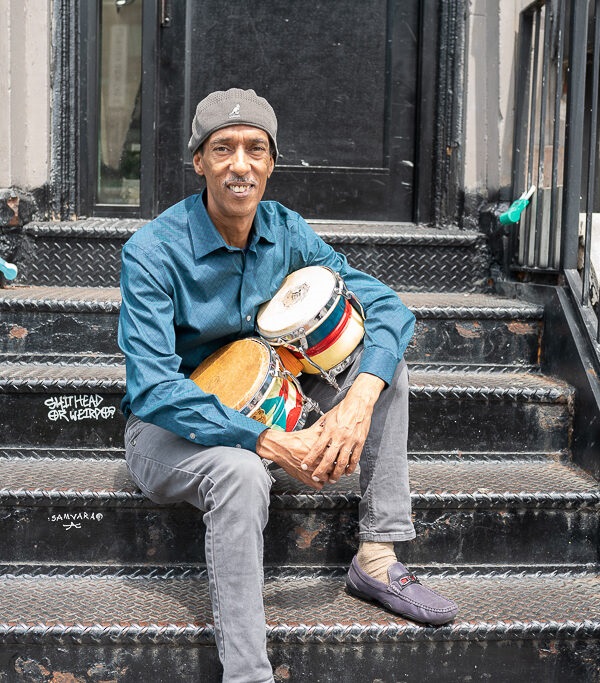
Anthony Carrillo The Legendary and Virtuoso Bongocero for Batacumbele and

Anthony Carrillo was born in New York City on 117th Street and Lexington Avenue, a neighborhood marked by significant complexities in terms of violence and drugs. This is why his father decided to move the family back to Puerto Rico in 1972.

Anthony Carrillo el Virtuoso del Bongo

“I remember that when I opened my eyes the second day, I heard the music of Willie Colón and Héctor Lavoe”.

Me opening my eyes, and the smell of the earth. It’s a scene I’ll never forget in my life.”

Once in Puerto Rico, his father continued to play music and was connected with musicians such as David “La Mole” Ortiz, who would later become a great mentor and collaborator for Anthony.

In the mid-1970s, Anthony and his brother began collaborating with the Areito Folkloric Ballet.

Anthony Carrillo: Master Percussionist

Master percussionist Anthony Carrillo comes from a proud Puerto Rican musical heritage. Although perhaps best known for his performances alongside his childhood friend and famous LP artist, Giovanni Hidalgo, Carrillo has performed with numerous renowned musicians throughout his career, including Eddie Palmieri, Gonzalo Rubalcaba, Paul Simon, and Harry Belafonte.

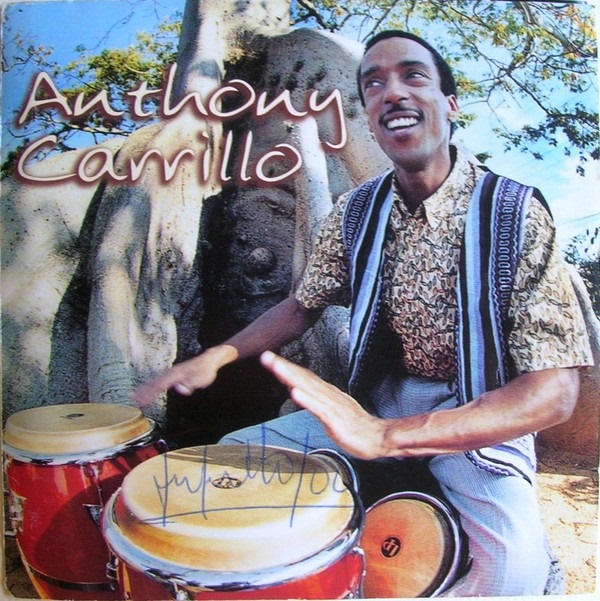
Anthony Carrillo Mis Raíces 1997

He was also an integral member of the outstanding percussion ensemble, Batacumbele, and, in contrast, the Puerto Rican metal band, PUYA. Piano legend Eddie Palmieri has referred to Carrillo as “the best bongocero in the universe.”

Under his own name, Anthony Carrillo has released three CDs, which include the historic first rumba recordings from Puerto Rico. His most recent performances include the off-Broadway musical “I Like it Like That” in 2017, and recording bongos with Puerto Rican artist Residente on his recent track “Hijos del Cañaveral.”

In April 2018, his Latin jazz group, AA team, released two original singles featuring Carrillo on bongos, drums, and vocals.

In August 2018, his dance orchestra, YÁMBAWA, released a four-track EP with originals and English-language pop standards infused with Spanish rap. He has stated that these two productions form his most prolific and inspired body of work in his career so far.

AA Team YÁMBAWA
AA Team YÁMBAWA

Musical Origins

Anthony Carrillo was born in New York City of Puerto Rican ancestry. From childhood, he expressed a special interest in music. His father, Mr. Roman “Don Nan” Carrillo, was his first teacher.

Through his father, Anthony Carrillo was exposed to the music of “Ramito” (one of the greatest exponents of folkloric music in Puerto Rico) and Rafael Cortijo.

Anthony’s earliest influences were “Papi Andino” (Ramito’s bongocero) and Roberto Roena (Cortijo’s bongocero).

When he was only nine years old, Anthony Carrillo’s family returned to Puerto Rico.

It was then that his father asked David Ortiz “La Mole” who was considered one of the best Rumberos in Puerto Rico to teach his son the techniques and patterns of Rumba. By age 13, Anthony was already part of the touring National folkloric group Areito, directed by Mrs. Irene Mcleane.

Anthony Carrillo Y Yova Rodriguez

In the early 1980s, Anthony Carrillo became a member of the famous folkloric group, La Familia Cepeda, the foremost exponents and keepers of the traditional “Bomba” and “Plena” styles.

Collaborators:

Yova Rodriguez

Planet Drum

Also Read:  Papo Vázquez the Pirate & Troubadour of Our Latin Music

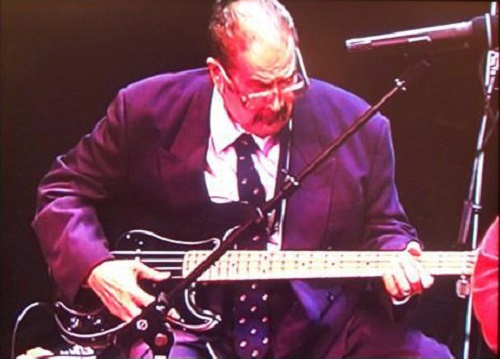
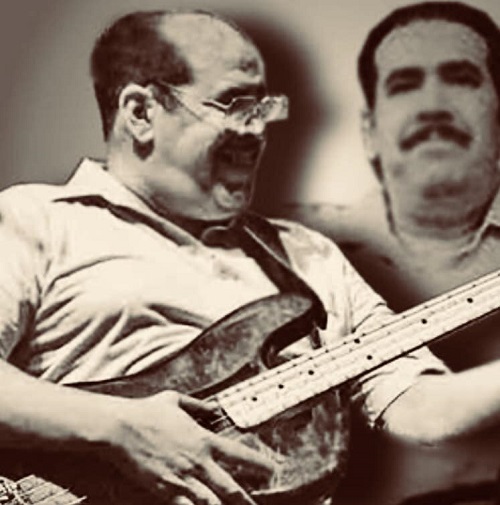
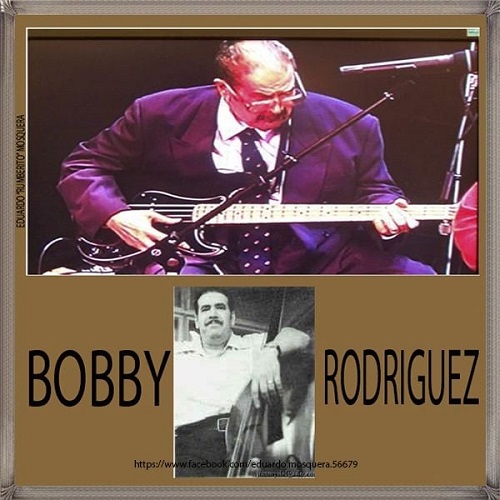
Roberto “Bobby” Rodríguez was a master of the Baby Bass and was instrumental in its popularization within Latin music

Roberto “Bobby” Rodríguez “Big Daddy” (1927-2002) was a renowned bassist and a key figure in Latin jazz and salsa. He was known for playing both the upright bass and electric bass.

Roberto Bobby Rodriguez was a master of Baby Bass and played a decisive role in its popularization within Latin music

He worked with legendary artists and bands such as Charlie Parker, Dizzy Gillespie, Machito, Tito Puente, and The Alegre All Stars. Born in Tampa, Florida, to Cuban parents, he is often associated with the Baby Bass, a type of electric upright bass.

The Baby Bass is a specific type of electric upright bass developed by the Ampeg company. It has a distinctive sound and is very popular in Latin music, especially salsa.

Many famous bassists in the genre, including Roberto “Bobby” Rodríguez “Big Daddy,” are known for playing this instrument. With its deep, percussive tone, the Baby Bass helped define the sound of salsa music.

In summary, the connection between Roberto “Bobby” Rodríguez and the Baby Bass is that the famous bassist, Roberto “Bobby” Rodríguez “Big Daddy,” was a master of the instrument and was instrumental in its popularization within Latin music.

“Big Daddy’s” Career and Legacy.

The son of Cuban and Puerto Rican parents, Roberto “Bobby” Rodríguez “Big Daddy” was born in Tampa, Florida, on May 2, 1927. His talent left a lasting mark on the performance of both the upright bass and the electric bass.

He began his career in New York at the age of 17 with Machito and His Afro-Cubans, where he replaced Julio Andino. He participated in recordings with Chico O’Farrill, Dizzy Gillespie, Cal Tjader, Eddie Palmieri, Willie Bobo, Mongo Santamaría, Joe Cuba, Eric Dolphy, the Alegre All Stars, and Tito Rodríguez. His most important and enduring collaboration, however, was with Tito Puente.

Rodríguez’s involvement with Puente’s band resulted in a catalog of countless tumbao basslines. He occasionally had the opportunity to lead the band with a solo, loaded with highly creative melodic improvisations.

On the 1990 album, Goza mi Timbal, the track “Ode to Cachao” features a large number of Bobby Rodríguez’s solos. In addition to being a tribute to Israel López, this track is a showcase of “Big Daddy’s” immense virtues and is considered one of the most unforgettable solos in Latin jazz. This partnership remained active from the 1950s to the 1990s.

Roberto Bobby Rodriguez Big Daddy was born in Tampa, Florida, on May 2, 1927

The nickname “Dedo Gordo” (Fat Finger) was given to him for his way of playing the electric bass, with a thick sound—something that in American musical circles is called a “groove.” According to experts, his technique was meant to emulate the sound of the Ampeg Baby Bass.

One characteristic he was always recognized for was his unique ability to play the clave rhythm with his foot while performing on the bass. His musical experience always made him seem like a contributor with a jazzy style.

On July 29, 2002, after a life full of resounding successes and an impressive legacy, Bobby Rodríguez passed away in New York.

Ambiguities with the Name Roberto “Bobby” Rodríguez.

The name “Bobby Rodríguez” has been used by several artists within the universe of Caribbean music.

One common source of confusion is the flutist, clarinetist, and saxophonist from Manhattan, Robert “Bobby” Rodríguez, who founded the group “La Compañía.” His date of birth has not been confirmed.

Another point of confusion is the common misconception that “Big Daddy” began his career with the Marcano Quartet. The truth is that the quartet featured Félix Manuel Rodríguez, who, in the early stages of his career at age 17, also went by the name “Bobby Rodríguez.” He would later adopt his famous stage name, Bobby Capó.

A third artistic namesake is Dr. Bobby Rodríguez, a trumpet player born in Los Angeles, California, who is also a teacher and author of the book, ABC’s of Brass Warm-Up. He has been nominated for a Grammy and has received awards as an educator.

Roberto Bobby Rodríguez Big Daddy (1927-2002)

The list of names similar to Roberto “Bobby” Rodríguez becomes much longer if you search for homonyms of his given name. For example, there is Roberto (Reimundo) Rodríguez, a trumpet player from Cienfuegos, Cuba. He co-founded the orchestra Los Jóvenes Estrellas de Cuba and became a member of the Fania All Stars. He also appears in the documentary Nuestra Cosa Latina. In 1982, he founded the group Los Rodríguez with his sons, Roberto Jr. and Willie.

His son, Roberto Rodríguez Jr., is another homonym we encounter in these musical paths.

Continuing with more homonyms, there’s the Cuban trumpet player Roberto Luis Rodríguez, who is the father of the currently famous trumpet player Roberto Juan Rodríguez, also Cuban, but who moved with his Jewish family to Miami at the age of nine. He has played with top artists such as Joe Jackson, Julio Iglesias, and Paul Simon.

 By: Diego Aranda (Audiokat)

Dj. Augusto Felibertt

Los Mejores Salseros del Mundo

Also Read: Bobby Valentín, the King of the Bass in the Fania All-Stars Machine – The Mind of a Master

Sammy Figueroa is an exceptional percussionist known for his versatility and for playing in a multitude of musical styles

Sammy Figueroa, a percussionist with an excellent career.

Sammy Figueroa was born in the Bronx, New York, in 1948. He is the son of bolero singer Charlie Figueroa, whom he never knew, as his father passed away at the age of 32.

Sammy moved to Puerto Rico as a child to live with his grandparents and escape the Bronx’s gang violence.

Sammy Figueroa is an excellent percussionist who has stood out for his versatility, playing in a multitude of musical styles

At 18, he started his professional career with bassist Bobby Valentín’s band. Throughout his career, he has stood out for his versatility, playing in a multitude of musical styles and contributing to nearly 400 albums, ten of which are platinum.

He has collaborated with major pop artists like David Bowie, Chaka Khan, and Mariah Carey, as well as with distinguished jazz musicians such as Miles Davis, Sonny Rollins, Quincy Jones, and George Benson. In 1977, he became a founding member of the Latin rock fusion group Raíces.

In 2001, Sammy Figueroa moved to South Florida and formed his own group, Sammy Figueroa and His Latin Jazz Explosion. His albums And Sammy Walked In and The Magician were nominated for a Grammy for Best Latin Jazz Album.

Sammy Figueroa, a percussionist with an excellent career

Sammy Figueroa, a percussionist with an excellent career

His 2023 album, Searching for a Memory / Busco Tu Recuerdo, is a tribute to his father. The project, produced by his wife, Rachel Faro, with whom he has also co-produced other albums, allowed Sammy to reconcile with his father’s legacy. On this album,

Sammy sings on a record for the first time and transforms his father’s classic boleros into modern Latin jazz arrangements. The album was nominated for a Latin Grammy in the “Best Jazz/Latin Jazz Album” category.

Sammy Figueroa has received numerous awards, including two Percussionist of the Year awards from the National Academy of Recording Arts and Sciences (NARAS), two Drummie Awards for Best Hand Percussion, and a Best Percussionist award from the Jazz Journalists Association.

Discovered by jazz flutist Herbie Mann, Figueroa became a well-known session and studio musician, touring and recording with The Brecker Brothers, Average White Band, Morrissey – Mullen, The Mahavishnu Orchestra John McLaughlin, and Miles Davis.

He has also appeared with Blondie, Sonny Rollins, David Sanborn, Quincy Jones, Dave Grusin, George Benson, Chet Baker, Stanley Clarke, Grover Washington Jr., Al Jarreau, Lena Horne, Joe Williams, Mark Murphy, Mike Mainieri, Néstor Torres, Chico O’Farrill, Mike Stern, Chuck Loeb, Bobby Watson, Dave Valentin, Arturo Sandoval, Paquito D’Rivera, Rubén Blades, Eddie Palmieri, Bobby Valentín, Tania Maria, Mariah Carey, James Taylor, Dr. John, Mick Jagger, David Bowie, Celine Dion, Blues Traveler, Natalie Merchant, David Lee Roth, Hall & Oates, Joe Cocker, Rickie Lee Jones, Annie Lennox, Whitney Houston, Anita Baker, Grace Jones, James Ingram, Diana Ross, Roberta Flack, Aretha Franklin, and many others.

Some of the R&B hits he is featured on include Sister Sledge’s “We Are Family,” Luther Vandross’s “The Night I Fell In Love,” and Ashford & Simpson’s “Solid (as a rock),” as well as most of Nile Rodgers and Bernard Edwards’ hits on the Chic and Sister Sledge record labels.

Michel Camilo wrote the song “And Sammy Walked In” in his honor, and it was also recorded by Giovanni Hidalgo. Two of his CDs, And Sammy Walked In and The Magician, have been nominated for Grammy Awards in the “Best Latin Jazz Album” category. Figueroa hosts a Latin jazz show on WDNA-FM in Miami, Florida.

Sammy Figueroa was born in the Bronx, New York, in 1948

If you’re not very familiar with Sammy Figueroa’s work, you can try an experiment with this album: listen closely to see if you can guess what his instrument is. In a medium-sized combo, what instrument seems to take center stage? The answer: it’s impossible to guess, which says something about Figueroa’s maturity as a leader.

It’s also surprising to see how pared down his forces really are this sextet sounds like a big band. (Spoiler alert: he’s a percussionist.) It also says something about him that the term “Explosion” is a misnomer for his band. There are no pyrotechnics, no crazy tempos, and no wildly layered rhythms here.

But there are some very impressive horn arrangements (check out “Cha Cha Pa’ Ti” and the lovely “Cuco y Olga”), along with some of the sweetest, most tender ballads to appear on a jazz album of any genre in recent years (“Queen from the South” and “Zuliana” are the best examples).

For a percussionist acting as a bandleader, giving this kind of sustained, loving attention to compositions that only make a tenuous use of his talent is further proof of Figueroa’s taste and maturity. Let’s hope Figueroa keeps going in this vein. Rick Anderson.

Sammy Figueroa & His Latin Jazz Explosion – Urban Nature (2011).

Sammy Figueroa & His Latin Jazz Explosion - Urban Nature (2011)
Sammy Figueroa & His Latin Jazz Explosion – Urban Nature (2011)

Tracks:

  1. Gufillo (Silvano Monasterios)
  2. Urban Nature (Gabriel Vivas)
  3. Latin What? (Michael Orta)
  4. Zuliana (Silvano Monasterios)
  5. 7th Door From The Left (Silvano Monasterios)
  6. Cuco y Olga (Nicholas Martines)
  7. Cha Cha Pa’ Ti (Gabriel Vivas)
  8. Queen From The South (Silvano Monasterios)
  9. Funny Talk (Gabriel Vivas)

Musicians:

  • Sammy Figueroa (Percussion)
  • Silvano Monasterios (Piano)
  • Gabriel Vivas (Acoustic bass)
  • John Michalak (Sax)
  • Alexander Pope Norris (Trumpet)
  • Nomar Negroni (Drums)

Guest Musicians:

  • Ed Calle (Sax)
  • Mike Orta (Piano)
  • José Gregorio Hernández (Percussion)

Website: Sammy Figueroa

By:

Dj. Augusto Felibertt

L’Òstia Latin Jazz

Also Read: Carlos “Nene” Quintero comes from a family of musical prodigie

  • « Go to Previous Page
  • Page 1
  • Interim pages omitted …
  • Page 3
  • Page 4
  • Page 5
  • Page 6
  • Page 7
  • Interim pages omitted …
  • Page 31
  • Go to Next Page »

International Salsa Magazine (ISM) is a monthly publication about Salsa activities around the world, that has been publishing since 2007. It is a world network of volunteers coordinated by ISM Magazine. We are working to strengthen all the events by working together.