• Skip to primary navigation
  • Skip to main content

International Salsa Magazine

  • HOME
  • Previous editions
    • 2026
      • ISM / May 2026
      • ISM / April 2026
      • ISM / March 2026
      • ISM / February 2026
      • ISM / January 2026
    • 2025
      • ISM / December 2025
      • ISM / November 2025
      • ISM / October 2025
      • ISM / September 2025
      • ISM / August 2025
      • ISM / July 2025
      • ISM / June 2025
      • ISM / May2025
      • ISM / April 2025
      • ISM / March 2025
      • ISM / February 2025
      • ISM / January 2025
    • 2024
      • ISM / December 2024
      • ISM / November 2024
      • ISM / October 2024
      • ISM / September 2024
      • ISM / August 2024
      • ISM / July 2024
      • ISM / June 2024
      • ISM / May 2024
      • ISM / April 2024
      • ISM / March 2024
      • ISM / February 2024
      • ISM / January 2024
    • 2023
      • ISM / December 2023
      • ISM / November 2023
      • ISM / October 2023
      • ISM – September 2023
      • ISM – August 2023
      • ISM July 2023
      • ISM Edition June 2023
      • ISM – May 2023
      • ISM April 2023
      • ISM March 2023
      • ISM February 2023
      • ISM January 2023
    • 2022
      • ISM December 2022
      • ISM November 2022
      • ISM October 2022
      • ISM September 2022
      • ISM August 2022
      • ISM July 2022
      • ISM June 2022
      • ISM May 2022
      • ISM February 2022
      • ISM January 2022
    • 2021
      • ISM December 2021
      • ISM November 2021
      • ISM October – 2021
      • ISM September 2021
      • ISM August 2021
      • ISM July 2021
      • ISM May 2021
      • ISM April 2021
      • ISM June 2021
      • ISM March 2021
      • ISM February 2021
      • ISM January 2021
    • 2020
      • ISM December 2020
      • ISM November 2020
      • ISM October 2020
      • ISM September 2020
      • ISM August 2020
      • ISM July 2020
      • ISM June 2020
      • ISM May 2020
      • ISM April 2020
      • ISM March 2020
      • ISM February 2020
      • ISM January 2020
    • 2019
      • ISM December 2019
      • ISM November 2019
      • ISM October 2019
      • ISM Septembre 2019
      • ISM August 2019
      • ISM July 2019
      • ISM June 2019
    • 2016
      • ISM December 2016
  • Spanish
  • Download Salsa App
    • Android
    • Apple

Search Results for: live music

Hernan Olivera the sonero of the 21st century

Latin America / Puerto Rico / Puerto Rico

Hernan Olivera, this excellent Salsa singer named Hermenegildo Olivera was born on January 30, 1959 in Newark, New Jersey.

Hernan Olivera is the son of Puerto Rican parents and from an early age he felt a great affinity for Latin music since his father listened to the groups of the moment such as Tito Puente, Celia Cruz, Machito, Ismael Rivera with Cortijo y su Combo, Alegre All Stars, Tito Rodríguez, Santitos Colon, etc.

Hernan Olivera
Hernan Olivera

Then, in the 70s, in the midst of the Salsa Boom, Herman began his love of singing listening to the performances of Chamaco Ramírez, Héctor Lavo’e, Cheo Feliciano and Marvin Santiago, among others. These vocalists were mainly his source of inspiration; That school of soneros served as an apprenticeship for him and that is when he made the decision to sing professionally.

Hernan Olivera - photo
Hernan Olivera – photo

When he was just 15 years old, Herman began his career as a Salsa performer with an orchestra called “La Justicia”, after this he was part of the band “La Sónica” where he met his friend and trombonist Jimmy Bosch, after this He spent time with the “Caramelo” orchestra and later made the most important leap in his career by joining the “Con Conjunto Libre” in 1978, where he left his voice for the first time on the LP “Increíble” from 1981 under the direction by percussionist Manolo Oquendo and Bassist Andy González where he stands out with the song “Decide”.

Then in 1983 he would record with the Conjunto Libre in the production “Rhythm, sound and style” the song “Que Humanity” that would become a success. In 1988 Herman left the group “Libre” and became part of a project by Mr. Fernando Pastrana and under the musical direction of trumpeter Miguel Santiago whose album was called “La Exclusiva” which shared the vocal part with Roberto Mier, in this album stands out interpreting the songs “Xiomara” and “Te vi pasa”.

Hernan Olivera with his piano

After this, in 1990 he was invited to record on the album “Salsa Sudada”, for the Valdesa Records label of Víctor Raúl Sánchez “Patillas” and with the musical direction of Isidro Infante, sharing vocals with Mario Muñoz “Papaíto”, Adalberto Santiago, Eladio Peguero “Yayo El Indio” and Pablo Villanueva Branda “Melcochita”; in this work he interprets the themes “La needle” and a tribute to the city of Cali called “Valle plata de salsa”.

He continued with his career as a performer and in 1993 he was once again invited to record the production “Now” with the Free Ensemble, where his great conditions and resources as a singer are undoubtedly reflected, there the song “You belong to me” became a hit in addition to other songs such as “Obsesión” and “El Son” stand out on this album.

Subsequently, he launched an independent project called Herman Olivera and La Exclusiva “Chequea La Mercancía” produced by Fernando Pestana, where the song “Me Extra Spider” is one of the most outstanding. In 1996 he reunited with the Conjunto Libre and made the live album entitled “On The Movie”.

Caratula Alta resolucin sin letras of Hernan Olivera

In 1997 he participated in the CD of the band Rikoson All Stars called “Evoluciones Del Son” where he stands out very well in the romantic theme “Aquella Noche”.

Photo - Hernan Olivera in concert
Photo – Hernan Olivera in concert

In 1998 he was requested by the piano teacher Eddie Palmieri and together with the vocalist Wichy Camacho they recorded the album “El Rumbero Del Piano” in which he stood out as a singer in the songs “Malagueña salerosa” and “Oiga mi guaguancó” that same year. he is invited to the recording studios by the trombonist Jimmy Bosch and they release the album titled “Soneando Trombón” which contains the hit “Otra opportunity” that he performs as a duet with Frankie Vázquez, on this CD the song “Descargarana” is also inserted. ”.

Photo 2- Hernan Olivera in concert

That same duo Olivera and Bosch meet the following year (1999) and make the production “Salsa Dura” where Herman shines interpreting the full “Impact we will have” this album also has the participation of the singers Frankie “Nene” Morales and Frankie Vázquez parallel to this album, the RMM label launches a live CD and DVD entitled “Eddie Palmieri & Friend’s” where Herman looks excellent in the number “Palo Pa’ Rumba”.

Hernan Olivera in concert

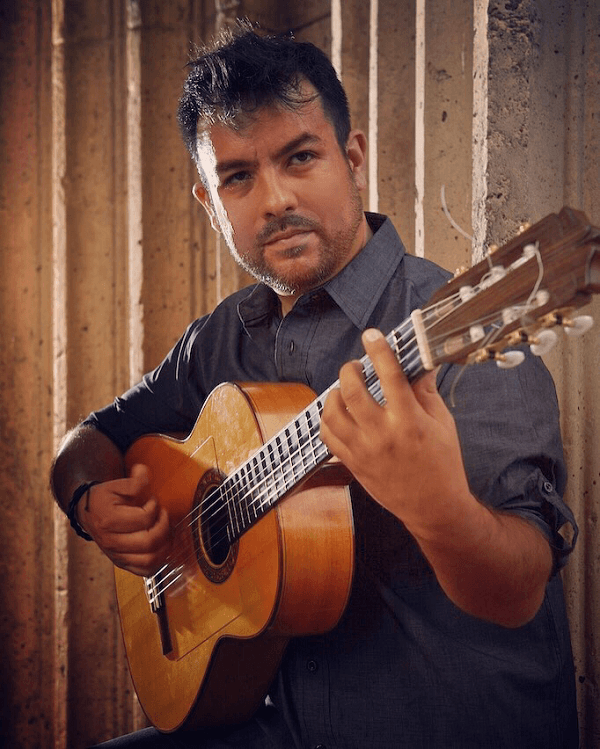
Bolivian guitarist Gabriel Navia and his love for music

We have had any number of Latin music artists of various nationalities in this section, but we are pleased to announce that, for the first time, we will tell the story of a Bolivian who brings pride to his flag with his great talent. 

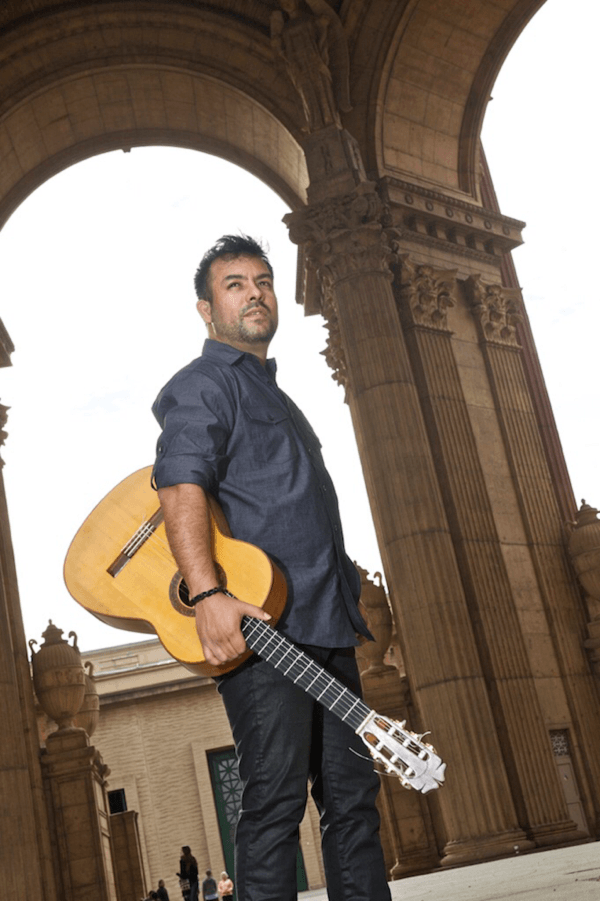
We are talking about Bolivian producer, composer and guitarist Gabriel Navia, with whom we were fortunate enough to talk by Zoom about the most important details of his fruitful career. In the following lines, some of the most important issues addressed in the conversation.  

Bolivian guitarist Gabriel
This is Bolivian producer, composer, and guitarist Gabriel Navia

How Gabriel’s love for music began 

Gabriel tells us that the love he has always felt for music was instilled in him by his parents, especially his father, who was professionally dedicated to it to the point of having his own band. In the 70’s, Eddy Navia, Gabriel’s father, was in an iconic Bolivian band called Sal Y Andina that played instrumental music, much of which was composed by him at the time.   

In his mother’s case, she had a great sense of rhythm and a beautiful voice, so she did her best to make her son learn as much as possible about the fundamentals of music and how to play various instruments. This shows that she was also a key piece in his training as an artist. 

Gabriel also points out that, at home, he and his family listened to music of all kinds, but New York salsa was very important in the path the young man would later take.   

Gabriel and the charango 

When reading a little of Gabriel’s history, we found that he played with his father in the group Sukay, with which he experimented a lot with the charango that, as he explains, is a five-stringed instrument very similar to the banjo. It was the first instrument he played in his life and the one that would inspire him to play the guitar later on.   

After his parents split, his father went to live in the United States and met his second wife, with whom he runs Sukay. That is when Gabriel began to visit the country and, soon after, he was playing in a theater for more than 2000 people. Then, he knew that this was what he wanted to devote the rest of his life to.    

Gabriel played the charango
Gabriel started his career by playing the charango with the group Sukay

Multi-instrumentalist   

While it is true that the instrument for which Gabriel is best known today is the guitar, it is not the only one he is dedicated to.    

The artist can be defined as a multi-instrumentalist, that is, someone who plays a considerable number of musical instruments with excellence such as piano, saxophone, quena and many others. ”I have always been curious to learn how to play new instruments and learn new things every day. That’s how I’ve managed to specialize in so many at the same time” Gabriel said about this.   

He has become more dedicated to playing the guitar since, during his time with the group Sukay, he had to replace the guitarist who was not available at the time, which makes him feel a special affection for the instrument as he used it. 

Not to mention that some of his instruments were robbed in his native Bolivia and one of the stolen objects was his charango. This event left him so depressed that he put the charango aside for years and devoted himself fully to the guitar, during which time he studied it in detail at a theoretical and practical level. He also began to listen to jazz and flamenco records in which the guitar is widely used, making him experiment with new styles. In this sense, an artist who inspired him a lot was Spanish guitarist Paco de Lucia.   

Gabriel playing live
Gabriel Navia playing his guitar live

Music education   

Gabriel has had the opportunity to study in several of the most important musical institutions in the world, which have been fundamental in the professional training of the artist.   

The first thought that came into his head was the Instituto Eduardo Laredo in Cochabamba. He described it as an arts school that has a very traditional style during the mornings, while the afternoons its teachers focus on the musical part. It is here where Gabriel learned all about theory, solfege, harmony, scores and many other important details.    

Some time later, in the United States, he entered the San Francisco Conservatory, where he studied with the famous classical guitarist Scott Tennant. In the same country, he won a scholarship to study some courses at Berklee College of Music.   

In Barcelona, he also received a scholarship to study a master’s degree in flamenco at the Conservatori del Liceu thanks to Fundación Carolina, whose main beneficiaries are Latin American applicants without the resources to study there.    

”I feel very fortunate to have been able to study in all these institutions which have been very important in my career, but I believe that a musician learns the most important things on stage. You can learn all the theory in the world, but if you haven’t had street experience and gone to practice, you will be an incomplete artist” Gabriel remarked on this subject.   

”In fact, I believe that many of the most prodigious musicians in the world have not been trained in academies, but in the streets, because they have had to make themselves from the beginning. Academic education is important, but the main place where music is born is in the heart” he continued.   

Navia Productions, LLC   

Gabriel had always worked as an independent artist, but there came a point in his career when he realized he needed something more to level up.   

Given that the best way to do business in the United States is through registered companies and brands, Gabriel created his own music company which he named NAVIA PRODUCTIONS, LLC, so that his project could be identified with a legally registered entity and avoid any legal problems.    

The company was basically created with the purpose of giving a legal basis to Gabriel’s work to stand on, but he still considers himself an artist as independent as the first day. 

Read also: Exclusive with tres player Iván Camblor from the group Pellejo Seco 

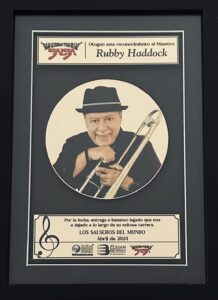
Rubby Haddock is one of the greatest exponents of our most danceable Latin Music in the Island of Enchantment

Our orchestra was born at the end of 1969, year in which we also began to record the 1st production “Presenting” which was released at the end of 1970.

Many talented musicians have passed through our orchestra such as Juancito Torres, Mario Ortiz, Rey Santos, Frank Morell, Hugo Dumont and many more that we will mention later.

Rubby Haddock is one of the greatest exponents of our most danceable Latin Music in the Island of Enchantment

Singers such as Sergio Cariño, Juan Acosta, Raul Carbonell Jr., Tony Rivas, Cucho Caro, Andres Reyes, Pedro Arroyo, Ricky Ramos, Tito Gomez, Yolanda Rivera, Eddie Rosario and Johnny Maldonado.

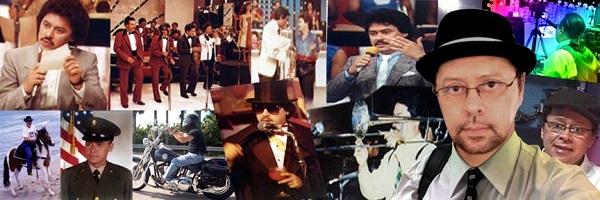
Rubby Haddock is one of the greatest exponents of good Latin music. His orchestra is known as one of the most danceable “Big Bands” on the Island.

He is called “El Maestro” by his followers and fellow artists. Because of his long artistic career, exposed to the world of show business, Rubby has become one of the best connoisseurs in the history of Latin music.

Born in Manhattan, New York on February 6th to Puerto Rican parents. His mother lived in Miami most of her life and in the late 60’s his father, Ruben Haddock who was a musician in New York, founded the most famous Dance Club in Puerto Rico, MIRAMAR CENTER when he owned El Club Coameño in Rio Piedras and El Club Caborrojeño in Bayamon.

A glorious time where his Producer Father brought to the Island of Puerto Rico the biggest stars of Latin music such as: TITO RODRIGUEZ, TITO PUENTE, LA LUPE, EDDIE PALMIERI, RICKY RAY, JOEY PASTRANA, JOE CUBA, WILLY COLON, HECTOR LAVOE, LARRY HARLOW, ISMAEL MIRANDA, CHIVIRICO DAVILA, TNT BAND among others, besides being manager and producer of ROBERTO Y SU NUEVO MONTUNO.

Rubby Haddock grew up with his father as a teenager in Puerto Rico within the entire business operation of Don Ruben, knowing these top stars of our music and hence the vein of musician and producer during his artistic career and experience in show business.

Celebrating the Rubi of Salsa Rubby Haddock. One of the greatest exponents of good Latin music

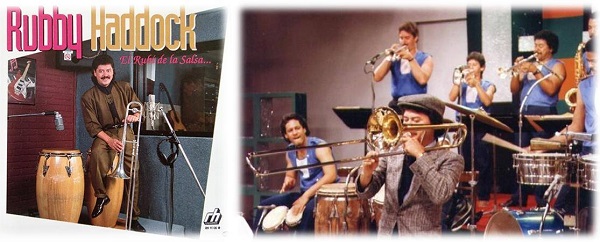
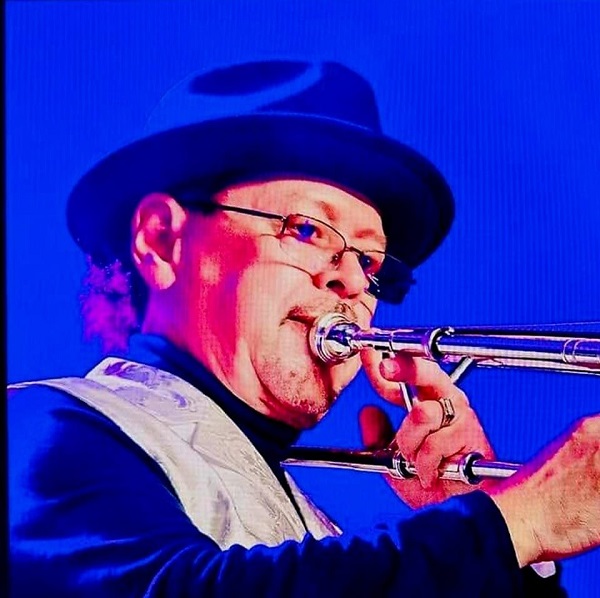
Rubby Haddock studied piano but showed that his passion was playing trombone.

For the years 1972 under the label UNIART, Rubby Haddock launches his first record production, “PRESENTING ORCH HADDOCK” becoming a powerful hit on the Island with the musical cut MONACILLO Y CORREA COTTO as some of the hits of this production.

In this first stage of Rubby’s musical career are among the different recordings: “PRESENTING”, “ASI ME LLAMAN”, “LA LEYENDA”, “DE REGRESO”, “UNLIMITED”, “2ND CONCIERTO FAMILIA TH”, “THE ENTERTAINER”, “THE ENTERTINER 2”, “OTRA VEZ”, “SALSA TROPICAL”, “EL RUBI DE LA SALSA”, “PASAPORTE MUSICAL”, “EL RUBI DE LA SALSA” and “PASAPORTE MUSICAL”.

In the second stage of his career, in 1978, when Rubby was the most popular in Puerto Rico with the song “Son Los Nervios”, one of the songs that propelled merengue on the island, Rubby surprised everyone by joining the U.S. Armed Forces in San Antonio Texas and Washington State, where in addition to completing medical courses, he also completed his Bachelor of Music Education at the Universities of Puget Sound and Pacific Lutheran.

In the 9th Infantry Div. Rubby became a member of the 9th Infantry Division Band where in addition to the Division Military Orchestra, Rubby most enjoyed the experience of being a member of the JAZZ ENSEMBLE BAND and the Big Band Jazz.

It didn’t take long for some of these great musicians to come and join Rubby’s Orchestra… At the request of a great Puerto Rican friend, and high ranking Army officer Eddie Velez, Rubby agreed to form his Orchestra back in Tacoma Washington State.

Remembering beautiful moments lived outside of his homeland until 1980, when he returned to Puerto Rico for a recording contract with the firm TH RECORDS, In this “come-back” in his return to Puerto Rico for the 80’s Rubby produces one of his most successful works: “De Regreso” with songs like: A Mi Jibarita, El Amor, Maria Teresa, Sra. Temptation with singers Raul Carbonell and Tony Rivas.

At the end of the 80’s Rubby Haddock ventured into Puerto Rican television, Wapa TV and Telemundo Channel 2, as producer of shows such as “Un puertorriqueño para la Historia (José Feliciano)”, New Year’s Eve Specials, etc.

Rubby Haddock y Sus Amigos, where the most prestigious artists such as: José José, José Feliciano, Mongo Santamaría, Barry Rogers, Eddie Palmieri, Julio Angel, and many more paraded in this section produced within the Midday Show. …. This show remained on the air for five and a half years.

Rubby Haddock
Rubby Haddock

By 1992 Rubby Haddock y su Orquesta represented Puerto Rico in the Puerto Rican Pavilion at Expo 1992 in Seville, Spain.

In the mid 90’s, although Rubby still continued as the Director of his Orchestra, he also ventured as an Entrepreneur with his own commercial Advertising Agency, where in addition to directing the entire operation of the agency Haddock & Haddock Adv, he was also the Creative, being in charge of all the production of Radio, Press and Television commercials for all the clients of the Agency.

By that time Rubby had already founded his own Recording Studio (Pentagrama Round), where he produced his three most recent productions of this decade in addition to sharing recordings for artist friends such as: Omar Alfano with Son By 4, it was from this studio that hits such as “A puro Dolor” were released.

His recording engineer was the outstanding engineer Sonny Hernandez. With him he shared works with artists such as: Danny Rivera, Andrés Jiménez, Ismael Miranda, Elvis Crespo, Melina León, Edwin Colon Sayas, Trió Borinquén, and others.

In 2000 Rubby moved to the United States where he currently lives. His fans constantly ask him to re-form his Orchestra because they miss his music and they also ask him for a compilation of his hits and a “Historia DVD” exposing the History of his Salsa, which seems to be Rubby Haddock’s next endeavor as an Artist.

Rubby has 3 sons, the first 2 Reuben Haddock and Rubby Haddock Jr, dedicated their careers to the business world and his youngest son Randy Haddock, who currently lives in New York, is a musician, singer and composer, already demonstrating great talent and the vein that comes from Don Ruben (grandfather) and Rubby (his father).

A very special thanks to Edgar Berrio and all the staff of Las Leyendas Vivas De La Salsa #8 for this great recognition, on behalf of Rubby Haddock and his family

Sources:

https://www.rubbyhaddock.com/news

pequi34 via Musica.com

Also Read: Jerry Ferrao says in salsa key: “My life is a drum”.

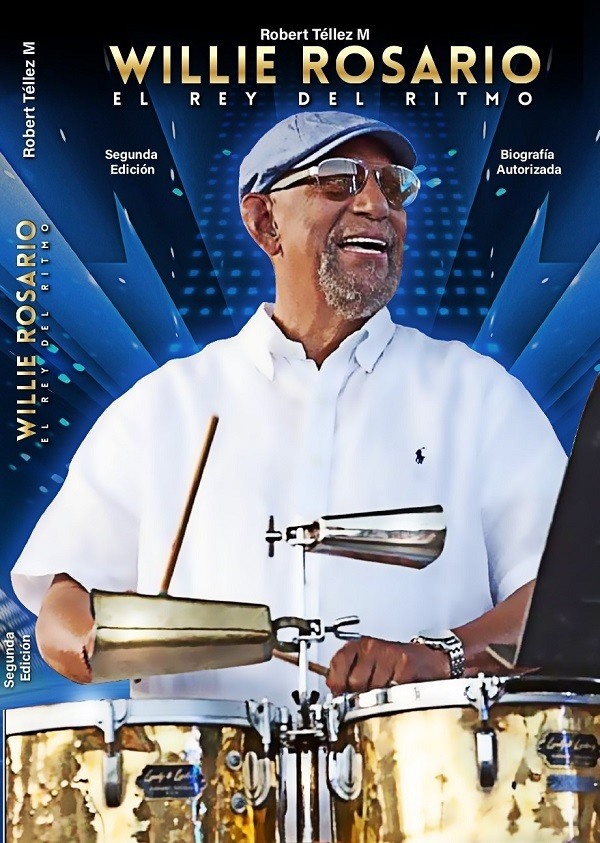
Willie Rosario, El Rey del ritmo by journalist and music researcher Robert Téllez M.

Puerto Rico Date Be more by Bella Martínez writes announces the release in Puerto Rico of the second edition of the authorized biography of Míster Afinque, Willie Rosario, El Rey del ritmo by music journalist and researcher Robert Téllez M.

Willie Rosario, El Rey del ritmo by journalist and music researcher Robert Téllez M

This second edition, which has been revised, expanded and updated, has 62 more pages, every time master Willie Rosario has remained active since the publication of the first edition in 2019 to date.  It also contains photographs that were not included in the first edition, images from Willie Rosario’s own archive and from the archive of the most important salsa collector, Robert Padilla.

The book, which has a preface signed by musician “Bobby” Valentín and a foreword by researcher José Arteaga, also compiles significant accounts from composers, musicians, instrumentalists, arrangers and vocalists who have been part of Rosario’s orchestra throughout different periods.

The new cover photo is by photojournalist Conrado Pastrano, the cover design is by graphic artist Felix Disla and the illustrations are by artist Frank Rosado.

The content of the back cover of the first edition, which includes the praises of Edwin Clemente, Edwin Morales, Elmer González, Hiram Guadalupe Pérez and Néstor Galán, was moved to the inside of the text, adding the recently captured praise in the voice of Ricardo Padilla, programming director of Salsoul radio station.

The back cover text is by the prodigious arranger, composer and music producer, who was exalted to the Hall of Fame of the U.S. East Coast and who, like Willie Rosario, is a timbalero and orchestra leader: Tito Rodríguez, Jr.  Tito tells us about “El Inolvidable’s” friendship with Willie Rosario, as well as the way in which Mister Afinque received from Tito Rodríguez the first songs that Rosario would record with his orchestra, including the classic ‘Changó ta vení’ (composition by “Justi” Barreto), arranged by René Hernández.  He also shares with us the closeness between Willie Rosario and Tito Rodríguez since they were neighbors in the Bronx, NY until they became colleagues and developed a friendship based on companionship and mutual admiration.  In a nostalgic way, he highlights the golden years of El Palladium. As if all this were not enough, Tito candidly offers his opinion on Willie’s contribution to the salsa sound, which he reinvented by adding the baritone saxophone to his orchestral format, which at the time was thought to be an experiment, and on the permanence of that contribution within Latin music.

The publication of this second edition of Willie Rosario, El Rey del Ritmo comes just in time to add to the centennial celebration of the musical leader, who has managed to keep his orchestra active and alive for more than six decades. The book is now available in physical format and can be purchased through Amazon.

Book cover Willie Rosario Second Edition

About the author:

The author, Robert Téllez M, is a music journalist, broadcaster and audiovisual media producer. He is a member of the Círculo de Periodistas de Bogotá (CPB) and since 1998 he has worked as a programmer for different music radio stations. For nine years he directed and hosted the program Conversando La Salsa on Radio Nacional de Colombia. He was also founder and general director of Revista Sonfonía. Robert Téllez M stands out as a researcher dedicated to Afro-Antillean music. His in-depth research has led him to serve as a consultant and lecturer, specializing in the appreciation of salsa music.

Published books:

* Ray Barretto, Fuerza Gigante (2016).

* Willie Rosario, el Rey del ritmo [Authorized Biography] (2019, 2024).

* Ray Barretto, Giant Force (2021), the translation by Ronald Vazquez of Ray Barretto, Fuerza Gigante, is the silver medal winning literary work for best Spanish to English translation at the International Latino Book Awards, 2021 edition.

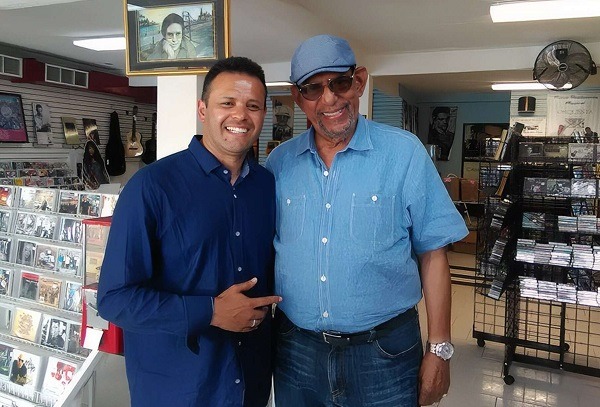
Robert Téllez y Willie Rosario.

Bella Martinez Puerto Rico

Also Read: Metamorphosis: from music to photojournalism, a reinvention without limits

Virginia Ramirez is the artist of the XXI century, the Princess of Piano and Voice, the hope that will save the new generations of anti-music

Virginia Ramirez, the talented concert pianist, pianist and singer-songwriter, has been making an impact for her contributions to the music of her country and the world. She was born in the city of San Cristobal, Venezuela and grew up in a family where art, poetry and music were the language of every day.

Virginia Ramírez es la artista del siglo XXI

His mother was a poet (Etha, the Lady of Love), Dr. Enriqueta Martinez, his father Asdrubal Ramirez, a self-taught harpist, guitarist and singer of Venezuelan popular music.

Since she was 7 years old she plays the piano and from a very young age she began to develop her musical skills, she started her training at the Miguel Angel Espinel School with the well-known teachers Edgar Vasquez (Piano) and Heliodoro Contreras (Theory and Solfeo).

She graduated as a pianist, concert pianist and piano teacher at the National School of Music in Havana (Cuba) where she graduated with the highest qualifications and studied at the José Lorenzo Llamozas School and the Simon Bolivar Conservatory of Music.

He has taken courses in harmony and improvisation with professors Gerry Weil, Andres Alen Rodriguez and Mike Orta at the “FIU of Miami” in the jazz department.

Ramirez studied classical piano with Professor Igor Lavrov, recorded her jazz projects with drummer Willy Díaz and bassist José Velázquez in the “Jazz” program of the Venezuelan TV channel “Venezolana de Televisión” in Venezuela on several occasions, and her first album “Espiral de Fuego”.

She participated as a special guest of other groups such as Alberto Borregales and Fredy Roldán and El grupo la Calle.

She participated with a new proposal as a composer and pianist in important Jazz festivals in Venezuela as the “Latin Festival” of the Teatro de la Opera de Maracay (June 2003) and the “Prehot” of the 5th.

Festival de Jazz del Hatillo (October 2003), where he alternated and shared the stage with the American bands of Aaron Thurston (drummer) and Jaime Baum (flutist), receiving excellent reviews from the radio and television press.

She alternates her activity as a jazz concert performer with teaching, as a piano and singing teacher.

In her music school Vicky’s harpsichord.

Her formidable work in music and composition is very beautiful and colorful, because in her proposal she has fused jazz and Afro-Venezuelan elements highlighting the values of Venezuelan and Latin American music and using a variety of drums such as the Culo’e Puya, Quitiplas, Clarines, Cumaco and Chimbangles combining them with the songs of the peoples of the coast of Venezuela making excellent personal harmonic contributions.

He has achieved a high musical concept that has been recognized in the continent and the world, for that incredible capacity to unite the idea of the concert with the characteristics of the Show and for that reason he contributes much more of the pure musical element in each one of his performances.

With a rich repertoire and an unparalleled originality in the world of Venezuelan Female Jazz, this excellent artist is a source of joy and an excellent contribution to the new generations of Jazz.

She has won countless national and international awards and recognitions, among which stand out: World Prize “César Vallejo” for Artistic Excellence, World Prize “El Águila de Oro” for Artistic Excellence 2022, 2023, almo Chispeante prize 2024, awarded by the UHE, world Hispanic writers union, thousand minds for Mexico, and world academy of literature, history, art and culture First Mention in the Juan Sebastián Bach Competition in Havana Cuba.

1993 as a teacher, pianist, concert pianist has participated in various festivals and concerts such as the Fitztrovia Festival in London, in Mexico, Madrid, the south of France, in Colombia with his salsa group tabaco latino, where he performed in different cities, Cali, Bogota and Medellin.

Within the salsa accompanied artists such as: Cheo Feliciano, Hernán Olivera, Meñique Lena Burke the singer Alfredy Bogado of the Venezuelan group “La Calle” and precisely with this group La Calle in the Juan Sebastian Bar when she worked there in 2000 was where they began their activities with salsa in several cycles of pianists, composers and arrangers.

In the Keyboard Museum of Caracas, in a jazz trio with Nene Quintero and William Velázquez on bass, in the Festival a toda Música Caracas, in the opera theater of Maracay and the Simón Bolívar University, among others.

Excellent comments in the national and international critics, have generated the presentation of his CD “Espiral de Fuego” presented by Otmaro Ruiz Jaquest Braunstein and Gerry Weil in his album “Manos y Alma” recorded, outstanding musicians such as: Nene Quintero, Aquiles Baez, Roberto Koch, Gonzalo Teppa.

Carlos Nene Quintero y Virginia Ramírez

Special guests: Vasallos del Sol, Aquiles Baez and C4 trio. This album “Manos y Alma” was presented by Aquiles Baez, Luis Perdomo and Pablo Aguirre from the BBC in London, received excellent reviews from the press in the south of France.

Her performance in the church La Canourgue in the south of France accompanied by the musicians Didier Hennot and Tonny Margalejo and her tour of successive concerts, carried out in France in different cities Mende, Saint Privat Des Vieux, Lozere, Ispagnac presenting her albums mentioned above.

She participated in the assembly and production of the play Cabaret with important theater artists such as Francis Rueda, Cayito Aponte, Natalia Martinez, Adrian Delgado, Karl Hoffman, Luis Fernandez performing in the Rios Reyna hall of the Teresa Carreño in different cities of Venezuela.

Virginia had the luxury of playing keyboards in the Kit Kat Club Band directed by Armando Lovera.

Great impact had her album “jazzguinaldos” produced as a trio with musicians Gonzalo Teppa and Nene Quintero, including as special guests Enio Escuariza, composer of all the lyrics of the album.

Her project “Acro Jazz” opens the horizon towards the world of circus arts, performing in different cultural centers of Venezuela musicalizing with the piano circus works and participating herself as a circus artist with the artist Jesús Piña in a pulsating work in the museum of the keyboard, Trujillo, Valencia among other cities with a new band integrated by Rubén Rebolledo Guitar, Willy Díaz Drums, David Rubio Bass and as special guests Jesús Piña and Kerlly Garcia.

He performed in the city of Morelia and Mexico, founded in 2015 a trio with musicians Fernando Mendoza Drums and Flavio Meneses bass, presenting the music of his albums in different nightclubs like Amati, Café de las Rosas, Casa de la cultura de Uruapan, and other cities of Morelia.

Virginia Ramírez, la talentosa concertista, pianista y cantautora

She accompanied drummer Antonio Sanchez in the house of music in Morelia.

Virginia Ramirez has collaborated with different artists of the Venezuelan music scene such as the group Facundo Project a Venezuelan Rock group, the singer Cheo Linares in his album “llegó la Navidad”, the singer Amarilis Bolaño in her album singing Henry Martinez, the singer Alejandra Gonzales in her album “Joyas de mi País” in the album “Tierra Liberada” and in the project “Venezuela demo”.

Ramirez has made music a matter of life and in her habitat of pianist and concert pianist, prepares for this year a vast plan to musicalize the poetry of the greatest poets of the world and a program entitled “La Totalidad de Virginia Ramirez”, by Cabina 11, Canal Global de Queretaro, Mexico, a country that has already known of her beauty and great talent.

I see in Virginia Ramirez, the complete artist with infinite talents as a pianist, singer, composer, songwriter and circus artist, who intentionally projects herself, illuminating the artistic firmament of the world with daring and magical projects that will always surprise the audience and make them feel the desire to ask for more.

Undoubtedly Virginia Ramirez is the artist of the XXI century, the princess of the piano and voice, the hope that will save the new generations of anti-music.

Dr. Carlos Hugo Garrido Chalem president of mil mentes por México and of the UHE Hispanic World Writers Union. President of the world academy of literature, history, art and culture.

Alterna su actividad de concertista de Jazz con la docencia, como profesora de piano y canto en su escuela de música la clave de Vicky.

Also Read: Wilmer Lozano from a very young age his mother saw in him the desire to be a musician

  • « Go to Previous Page
  • Page 1
  • Interim pages omitted …
  • Page 9
  • Page 10
  • Page 11
  • Page 12
  • Page 13
  • Interim pages omitted …
  • Page 149
  • Go to Next Page »

International Salsa Magazine (ISM) is a monthly publication about Salsa activities around the world, that has been publishing since 2007. It is a world network of volunteers coordinated by ISM Magazine. We are working to strengthen all the events by working together.