• Skip to primary navigation
  • Skip to main content

International Salsa Magazine

  • HOME
  • Previous editions
    • 2026
      • ISM / May 2026
      • ISM / April 2026
      • ISM / March 2026
      • ISM / February 2026
      • ISM / January 2026
    • 2025
      • ISM / December 2025
      • ISM / November 2025
      • ISM / October 2025
      • ISM / September 2025
      • ISM / August 2025
      • ISM / July 2025
      • ISM / June 2025
      • ISM / May2025
      • ISM / April 2025
      • ISM / March 2025
      • ISM / February 2025
      • ISM / January 2025
    • 2024
      • ISM / December 2024
      • ISM / November 2024
      • ISM / October 2024
      • ISM / September 2024
      • ISM / August 2024
      • ISM / July 2024
      • ISM / June 2024
      • ISM / May 2024
      • ISM / April 2024
      • ISM / March 2024
      • ISM / February 2024
      • ISM / January 2024
    • 2023
      • ISM / December 2023
      • ISM / November 2023
      • ISM / October 2023
      • ISM – September 2023
      • ISM – August 2023
      • ISM July 2023
      • ISM Edition June 2023
      • ISM – May 2023
      • ISM April 2023
      • ISM March 2023
      • ISM February 2023
      • ISM January 2023
    • 2022
      • ISM December 2022
      • ISM November 2022
      • ISM October 2022
      • ISM September 2022
      • ISM August 2022
      • ISM July 2022
      • ISM June 2022
      • ISM May 2022
      • ISM February 2022
      • ISM January 2022
    • 2021
      • ISM December 2021
      • ISM November 2021
      • ISM October – 2021
      • ISM September 2021
      • ISM August 2021
      • ISM July 2021
      • ISM May 2021
      • ISM April 2021
      • ISM June 2021
      • ISM March 2021
      • ISM February 2021
      • ISM January 2021
    • 2020
      • ISM December 2020
      • ISM November 2020
      • ISM October 2020
      • ISM September 2020
      • ISM August 2020
      • ISM July 2020
      • ISM June 2020
      • ISM May 2020
      • ISM April 2020
      • ISM March 2020
      • ISM February 2020
      • ISM January 2020
    • 2019
      • ISM December 2019
      • ISM November 2019
      • ISM October 2019
      • ISM Septembre 2019
      • ISM August 2019
      • ISM July 2019
      • ISM June 2019
    • 2016
      • ISM December 2016
  • Spanish
  • Download Salsa App
    • Android
    • Apple

Search Results for: live music

The man behind each song and his story Eduardo Herrera

There is a great variety of famous artists, singers, orchestras in different parts of the world but that does not mean that one cannot meet new artists, who have motivation and the desire to boost their musical talent; here we have as a guest Eduardo Herrera who is a salsa and ballad singer.

Eduardo is the son of Puerto Rican parents, raised in New York with a Puerto Rican flavor. From an early age he fell in love with music and with the passage of time he had many musical experiences in different genres with Latin nuances and foreign fusions, he mentions that when he was younger he participated in youth choirs on platforms and walked in the concerts of greats. artists learning the lyrics of urban music.

As time went by he obtained the perfect school that made a unique mold in his style; where it includes spiritual music, Latin rhythms and the influence of American styles without abandoning the Puerto Rican roots; He also mentions that he had the opportunity to share and collaborate with very famous artists who influenced him by their style and exceptional talent, until today.

Eduardo Herrera "El Amor"
Eduardo Herreray his “El Amor” Flyer

Eduardo Herrera tells us that his music is a set of experiences that identifies many people. It has no age or time, it has seasoning, a Caribbean rhythm and a feeling of the soul. When you listen to the melody you fall in love, when you listen to the lyrics it captivates you, when you listen to it again you turn it into what identifies you regardless of your age, race, condition, sex, it is that it simply identifies what nobody sees or knows in you or of you. In fact their songs carry stories; they tell your life, his and mine. Every story on a bus or train in New York, every event in the life of a family or an acquaintance, the stories of fans, among others.

In the course of his life he mentions that it was a transition since he went through many experiences both positive and negative, where he allowed him to obtain different meanings of the emotions he felt even if they were real or false, all these experiences served him to help others such as self-improvement.

In the “Salsa” and the “Balada” he has found his perfect space to express what he carries in his luggage. Hoping that there are many couples who to the rhythm of their music have a happy life.

Eduardo told us “To achieve that emotional catharsis that lifts you up from any tragedy you have to “LOVE YOURSELF BEFORE LOVING SOMEONE” so remember that when you listen to the music of Eduardo Herrera: “LOVE YOURSELF BEFORE LOVING SOMEONE”

Eduardo Herrera Photo
Group photo with Eduardo Herrera

Recognizing the value of an individual, and appreciating their abilities while learning from mistakes, that is what defines each song that you will hear from Eduardo. The message will arrive, the result of it depends on you so that you are happy. Because you learn from the difficult in the process, the end result depends on the way you handle the exams to rate yourself in feelings for the life you choose to live.

If you want to know more about him,

  • Facebook: https://www.facebook.com/eduardoherrerasalsa
  • Instagram: eduardoherrerasalsa
  • Correo: [email protected]
  • Teléfono: 787 399 5064


Home

Meet the director of the Academia Salsa Tepic – Mexico.

The history of Salsa Tepic :

Rafael Reyes is a Cuban who was dedicated to being a coach of Greco-Roman wrestling and Olympic Wrestling in Cuba and had the opportunity to work in Mexico in this profession during the time that his contract imposed, during this time he made the decision to live there , being his current stay in Nayarit, Mexico.

Thanks to personal motivation and the support of his students, he created and founded the Salsa Tepic Academy 6 years ago, he tells us that before founding his academy he gave dance classes at the Bar Juanes located at Rafael Buelna 86, Fray Junípero Serra, 63169 Tepic, Nayarit, Mexico; For him this was a hobby that he enjoyed very much and when he stopped working there, many of his students advised him to open a dance academy and that is how it came about.

Salsa Tepic Academy - Logo
Salsa Tepic Logo – Dance Academy


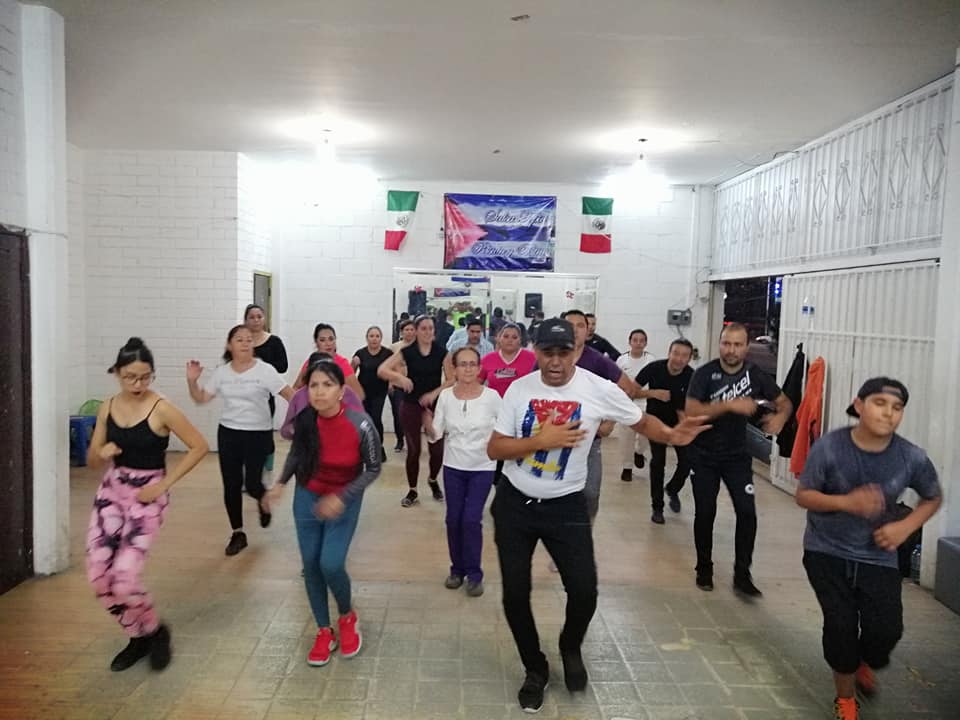
Practica de Salsa - Salsa Tepic
Estudiantes practicando pasos de baile en Salsa Tepic

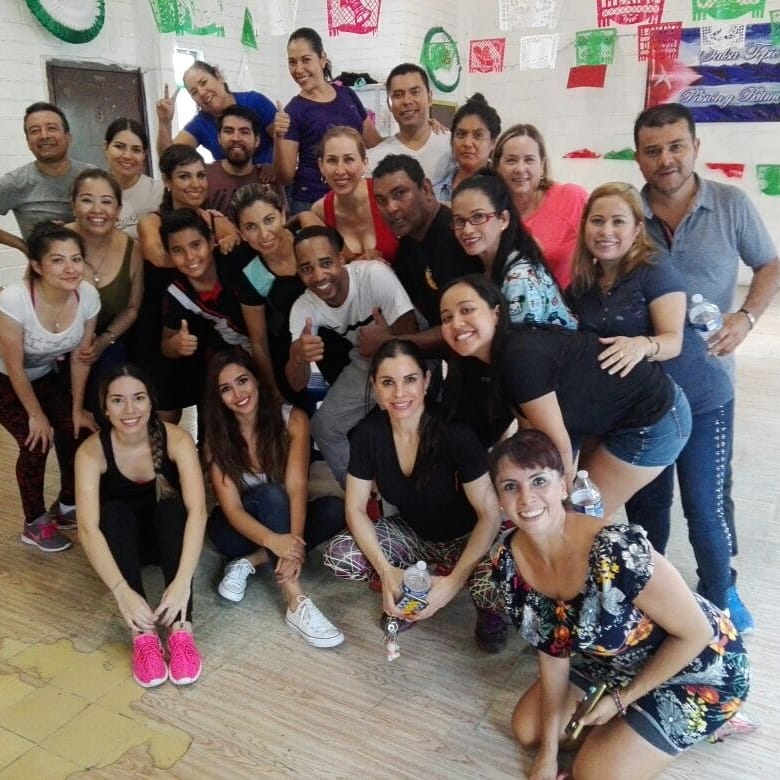
Estudiantes de la Academia Salsa Tepic
Photo of the Salsa Tepic Academy students

Son Cubano and Salsa Cubana are the genres that he likes the most, he mentions that each genre has an identification in each country and in Cuba he tells us that it is very lively and dynamic which can make different fusions such as Timba ( is the fusion of several Afro-Cuban rhythms)… giving this musical genre a lot of motivation, differentiating it from linear salsa, Salsa Neoyorquina and Salsa en Dos, but be careful, you have to know the differences between traditional Timba and Cuban Timba. and very broad cultural.Being Cuban, he tells us that music is in the blood of most Cubans, especially Afro-Caribbean music, and to top it off his parents enjoyed dancing so he spontaneously inherited this passion for dance from a very young age, and He perfected his native dance techniques in workshops with various teachers.

Rafael Reyes is also in charge of organizing the Salsa talent festivals in Nayarit, they have invited Guadalajara, Guaraguato, Puerto Bayarta, among others with new talents so that they have something more than just academic learning but a new experience through participation. and competition between the different students of each city, showing all their abilities on stage; In total, it has had 5 Salsa talent festivals, which one can find out when the next one will take place through the Salsa Tepic Facebook page.

Also the students of the Salsa Tepic academy have participated in other events such as the one that happened a few weeks ago at the Bar Tango Milonga, another event they participated was the Puerto Bayarta festival, and in other places.

The dance classes at the Salsa Tepic Academy are currently active, of course with the protection measures for the covid-19, they began to work from 7 – 10 am and from 5 to 10 pm Mexico time; There they teach Cuban Salsa, Bachata, Son Cubano, Rumba, Merengue, Cumbia, Cha Cha Cha, among other rhythms, so if you are interested in learning to dance from scratch or continue with the experience you have in order to be able to defend yourself during a social, competitions, parties and / or meetings, and at the same time that the students learn to identify the type of music that they dance respecting their respective times.

https://fb.watch/6q7Gdt89if/

And he leaves us the following message for all his readers, current and future students “Whatever happens, they dance, never stop, dance is very healthy, it takes away stress, it is motivational, it makes you more sociable and above all it is something that everyone likes when one learns … that they take off the taboo or the fear of saying I don’t like dancing because of any circumstance ”

For more information and the schedule of activities:

Fabián Rosales Araos Chilean singer-songwriter, native of the city of Valparaíso

With Santiago All Stars he recorded 2 albums leaving his voice captured in the songs Santiago de Fiesta, Forma la Rumba Sonero, Preparen Candela, Busca lo tuyo, Sabroso Guaguanco and more.

Chilean singer-songwriter, a native of the city of Valparaíso. He began his musical career at the age of 25, being part of salsa groups such as Latin Salsa, La Sandunguita, Trabuco Clásico and Santiago All-Stars.

With Santiago All Stars he recorded 2 albums leaving his voice in the songs Santiago de Fiesta, Forma la Rumba Sonero, Preparen Candela, Busca lo tuyo, Sabroso Guaguanco.
Fabián Rosales Araos Chilean singer-songwriter, native of the city of Valparaíso.

After achieving steady progress over the years, he decides in 2018 to jump into the limelight as a soloist recording solo his first production entitled “Ahora Si” leaving songs like Humo y Licor, Ahora Si, Tu Tiempo bailador, Buscando El Tumbao, Yo Vengo de aquí and more… All of them being original songs.

The production was made in Chile, Venezuela and Switzerland with great international collaborators. This album meant him to be nominated within the 5 best tropical productions of Chile for the Pulsar Awards of Chilean music.

In 2020 he released the single “A mí que me den la Salsa”, a composition of his own that has managed to position itself at No. 1 in the salsa ranking in the US, Puerto Rico and Europe.

In this year 2021, he surprises us with his most recent production titled “Como Suena mi Tambo”, a composition made by Fabian Rosales himself, with arrangements by Juan Rivadeneira, and where he has the collaboration of two great musicians from Puerto Rico such as Kachiro Thompson on Tumbadoras and Eliut Cintron on Trombone.

After achieving steady progress over the years, he decides in 2018 to jump into the limelight as a solo artist by recording his first solo production titled "Ahora Si
Fabián Rosales surprises us with his most recent production titled “Como suena mi Tambo” composition made by himself.

Fabian Rosales is currently nominated for the Awards to Excellence of the year 2021 in the category Salsero Singer of Excellence.

Follow on @FabianRosalesOficial #fabianrosales #comosuenamitambo #salsa

https://www.facebook.com/FabianRosalesOficial/

https://www.youtube.com/user/frosalestar/videos

Fabián Rosales Araos Cantautor chileno
Fabián Rosales is currently nominated for the 2021 Awards to Excellence in the Salsa Singer of Excellence category.

Valparaiso

Valparaíso is a city, commune and port of Chile, is the capital of the Province and Region of Valparaíso. Being also its historical, administrative, institutional and university center of the conurbation called Gran Valparaíso, which forms along with the communes of Viña del Mar, Quilpué, Villa Alemana and Concón.

According to the 2017 census, it has a population of close to 300,000 people, and if we include its conurbation, the Metropolitan Area of Valparaíso reaches 935,602 inhabitants, being the most populated in the region and the second city after Greater Santiago, together with Greater Concepción.

Valparaíso is the seat of the National Congress, the Command-in-Chief of the Chilean Navy and other national state institutions such as the Ministry of Culture, Arts and Heritage, the Undersecretary of Fisheries, Customs and Fisheries and Aquaculture. It is one of the busiest ports in Chile and one of the most important in the South Pacific.

According to the 2017 census, it has a population of close to 300,000 people, and if we include its conurbation, the Valparaíso Metropolitan Area reaches 935,602 inhabitants, being the most populated in the region and the second most populated city after Greater Santiago, together with Greater Concepción
Valparaíso is a city, commune and port of Chile, the capital of the Province and Region of Valparaíso.

The city is recognized for being a great center of higher education, since some of the most important universities in Chile are established, such as the Universidad de Valparaíso, Universidad Técnica Federico Santa María, Pontificia Universidad Católica de Valparaíso and Universidad de Playa Ancha.

Geographically, Valparaíso is presented in the form of a large natural amphitheater, located in the bay of the same name and surrounded by hills, where most of the population lives.

Between the foot of the hills and the sea is the Plan, the administrative, commercial and financial center of the city, while the port occupies the waterfront.

Due to its architectural wealth developed mainly in the late nineteenth century, in 2003 its historic center was declared a World Heritage Site by Unesco, becoming the third Chilean site protected by the international organization, after the Rapa Nui National Park and 16 churches in Chile.

Por: Erika Muñoz 

La Mulata RumberaErika Muñoz 

  “Se Armó la Rumba en México”

Correspondent de International Salsa Magazine

International Salsa Magazine

Home

The Spaha Salsa Gallery and The Johnny Cruz Show to the order of salsa

Spaha Salsa Gallery

Latino culture has found a large number of icons and places that have shown how wonderful it is and how proud we must be of being born in this land full of colors and talent for export. One of those incredible places is the Spanish Harlem Salsa Gallery, which is a cultural institution in which the inhabitants of East Harlem, New York, have the opportunity to learn all about salsa and its unusual roots. To that end, visitors can enjoy a great deal of material, information, resources, and many learning initiatives that will blow everyone’s mind.

The purpose of this wonderful space is to gather as much knowledge as possible about salsa and all the artists who have been responsible for bringing this musical genre to every corner of the planet. That is why its owners have been in charge of offering the most inclusive and diverse gallery to prove everything Hispanic talent has to offer. The institution provides a wide range of possibilities for those who want to learn more about the most well-known Latin music genre in history, and art is the tool used for this purpose.

Jonny Cruz and instruments
Johnny Cruz with some donated instruments at the Spaha Salsa Gallery

What the Spanish Harlem Salsa Gallery is looking for

One of the major aims of the Spanish Harlem Salsa Gallery is awakening the interest of the inhabitants of Harlem and the surrounding neighborhoods towards the musical styles that have inspired the five continents to dance. This is how this space became a valuable resource for many other public and private institutions, which have used the museum to foster greater interest in their own activities. This is because many of the tourists visiting New York know that it was in that city in which the biggest salsa movement in history took place, so they are particularly interested in going to places where they can learn about how salsa came about and what its roots are. That is when institutions such as the Spanish Harlem Salsa Gallery make an appearance and offer to answer any question on the matter.

Johnny Cruz next to Boris Calderón
Johnny Cruz Cruz next to musicologist and broadcaster Boris Calderón

Johnny Cruz, a noted musician and record producer, has made this place a true sanctuary for Latin music lovers and all that emerges from it. The museum, which was once a hardware store owned by his father, contains some of the most valuable objects in the history of salsa and that have a very special relationship with some of the greatest figures of the genre, such as Héctor Lavoe’s favorite guitar or José Mangual Jr’s bongos. This collection of objects has been made in order to preserve the legacy of the greatest exponents of the salsa genre in New York for people to remember who they were and what they contributed to Latino culture in spite of the years. Something very interesting to relate is that many of these instruments have been donated by artists, family members, or institutions that want the names of their owners to continue to sound as loud as possible.

Undoubtedly, Cruz and his greatest contributors in this noble work have ensured that locals and foreigners see the gallery as a space for recreation and learning in which they can learn about the origins of salsa and go back to the glory days with many of the greatest musicians in history.

The Johnny Cruz Show

In addition to the salsa museum, there is another space where Latin music artists will always feel at home. We are talking about the Johnny Cruz Show, which has a very interesting schedule and shows how wonderful our culture is.

The show is celebrating 25 years on the air and will be co-hosted by animator and show biz reporter Maribel Santos, who will definitely give a very special touch to this great celebration, which makes Johnny too happy. So many years on the air are the reward of the effort made to offer the best salsa content that the public deserves.

Johnny Cruz next to Maribel Santos
Poster announcing The Johnny Cruz Show with Maribel Santos

This show is one of the best options that salsa lovers have to know everything related to its best exponents and the latest news on these issues. The cool thing about this is there are many platforms through which those interested can enjoy the talent of Johnny Cruz as host and interviewer, so it will not be difficult to find each of the editions of this great program. In addition, all five counties in New York City can watch the show on cable television.

If case of not living in New York, you can tune into the show on its social media tools. For the time being, The Johnny Cruz Show is available on Facebook, Twitter, Instagram, and YouTube. It can also be watched on Salsa Gallery Radio live at the Live 365 station and the possibility of putting it onto podcast platforms in the future is under evaluation.

A poster with Johnny Cruz and David Marin
A poster announcing The Johnny Cruz Show with David Marin El Chapin y Felix Villalobos Music Man

Link to the Spaha Salsa Gallery’s official website: spahasalsagallery.com


By: Johnny Cruz correspondent of International Salsa magazine in New York city, New York


Home

7 Signs That You Should Attend A Festival

Are You Overwhelmed By Monotony?

Do you need to get out of the routine but without spending a lot? Do you want to expand your circle of friends? Do you want to have a new love? If the answer to most of the questions has been “Yes”, you most likely have a high need for social life that you can get at a Festival.

Half-length couple dancing
Adaptability, sociability, happy thinking, and remembrance are some of the skills you get at a festival

In a festival, you elude reality for a long time, and you will perceive unequaled sensations. One of the highest Latino events held in Europe is the Tempo Latino Festival in France, which hosts 7 000 people a day for a weekend.

Now that you already know the number of people with whom you can interact at a festival, I present you the seven signs to be conscious of how to recognize if you should attend one:

  1. You find it difficult to establish social relationships, or you don’t have time to share with your friends.
  2. You need to save as much as you can. It is due to the uncertainty that prevails in these times of the fluctuating economy. (Some scientific studies certify that it is better to invest money in experiences than in material objects).
  3. If your memories are about your family and student trips.
  4. You want to have a different weekend outside the daily routine or new love.
  5. You are interested in shows and attractions that make you live an experience to the fullest and have a feeling of exceptional freedom.
  6. You long to meet people with the same musical style.
  7. You want to show your best, most comfortable, or crazy outfits.

BRIEF HISTORY

The first festivals have provenance in Egypt (4500 B.C), followed by Greece and Rome. Subsequently, the first festival as we know them today took place in Dublin (Ireland) in 1897 after the middle ages. In the twentieth century began its greatest apogee with the most famous and long-lived events of this kind: Isle of Wight in England (1968), Woodstock in the United States (1969), and Viña del Mar in Chile since 1960.

Since then, the number of followers has increased in these festivities of several days that favor social life and that gives them skills such as adaptability, sociability, generous and joyful thinking, in addition to the remembrance that happens to occupy a fundamental place in this list.

If you are interested in experiencing this lifestyle and exercising a new way of empathizing with people with the same musical style and interests, here are two recommendations for upcoming Latin festivals to be held in Spain this fall 2021.

FESTIVALS IN SPAIN

Guaguancó Festival World-Madrid

Crowd of people with hands up
The festival will take place in the Sierra de Madrid, just 40 minutes from the city center

Ten years have marked the Guaguancó festival, which for the first time makes its stop in Madrid. This year it will have a lineup of high-level artists, workshops, events, Cuban music concerts, and activities.

The El Escorial resort campsite will be the place to celebrate this Afro-Caribbean weekend party.

El Escorial is a complex with large outdoor spaces for holding shows, concerts, and some workshops. Its covered spaces have more than 400 square meters, and all this under strict cleaning and disinfection protocols.

Date: Thursday, September 9th – Sunday, September 12th

Venue: Escorial Resort Natura. Carretera M-600, Km 3,5, 28280 El Escorial, Madrid, Spain

Barcelona Temptation Festival 2021

Woman dressed in red dancing with her partner
This festival has been successful with people from the USA, Canada, Russia, China, and Japan

This festival in the fourth edition will immerse you in the Latin rhythms of Bachata, Kizomba, and Urbankiz for a week. More than 11 artists on stage, workshops, social dances in the pool area and gardens with excellent DJs as well as grandiose masterclasses will be the programming of the Barcelona Temptation Festival 2021 from September 14th to Monday 20th at the Evenia Olympic Park hotel located in Gerona (Spain).

Venue: Evenia Olympic Park hotel. Building Park Carrer Sra. Del Rossell, S / N, 17310 Lloret de Mar, Gerona, Spain

SalsaGoogle.com is International Salsa Magazine


Home

  • « Go to Previous Page
  • Page 1
  • Interim pages omitted …
  • Page 132
  • Page 133
  • Page 134
  • Page 135
  • Page 136
  • Interim pages omitted …
  • Page 149
  • Go to Next Page »

International Salsa Magazine (ISM) is a monthly publication about Salsa activities around the world, that has been publishing since 2007. It is a world network of volunteers coordinated by ISM Magazine. We are working to strengthen all the events by working together.