• Skip to primary navigation
  • Skip to main content

International Salsa Magazine

  • HOME
  • Previous editions
    • 2026
      • ISM / May 2026
      • ISM / April 2026
      • ISM / March 2026
      • ISM / February 2026
      • ISM / January 2026
    • 2025
      • ISM / December 2025
      • ISM / November 2025
      • ISM / October 2025
      • ISM / September 2025
      • ISM / August 2025
      • ISM / July 2025
      • ISM / June 2025
      • ISM / May2025
      • ISM / April 2025
      • ISM / March 2025
      • ISM / February 2025
      • ISM / January 2025
    • 2024
      • ISM / December 2024
      • ISM / November 2024
      • ISM / October 2024
      • ISM / September 2024
      • ISM / August 2024
      • ISM / July 2024
      • ISM / June 2024
      • ISM / May 2024
      • ISM / April 2024
      • ISM / March 2024
      • ISM / February 2024
      • ISM / January 2024
    • 2023
      • ISM / December 2023
      • ISM / November 2023
      • ISM / October 2023
      • ISM – September 2023
      • ISM – August 2023
      • ISM July 2023
      • ISM Edition June 2023
      • ISM – May 2023
      • ISM April 2023
      • ISM March 2023
      • ISM February 2023
      • ISM January 2023
    • 2022
      • ISM December 2022
      • ISM November 2022
      • ISM October 2022
      • ISM September 2022
      • ISM August 2022
      • ISM July 2022
      • ISM June 2022
      • ISM May 2022
      • ISM February 2022
      • ISM January 2022
    • 2021
      • ISM December 2021
      • ISM November 2021
      • ISM October – 2021
      • ISM September 2021
      • ISM August 2021
      • ISM July 2021
      • ISM May 2021
      • ISM April 2021
      • ISM June 2021
      • ISM March 2021
      • ISM February 2021
      • ISM January 2021
    • 2020
      • ISM December 2020
      • ISM November 2020
      • ISM October 2020
      • ISM September 2020
      • ISM August 2020
      • ISM July 2020
      • ISM June 2020
      • ISM May 2020
      • ISM April 2020
      • ISM March 2020
      • ISM February 2020
      • ISM January 2020
    • 2019
      • ISM December 2019
      • ISM November 2019
      • ISM October 2019
      • ISM Septembre 2019
      • ISM August 2019
      • ISM July 2019
      • ISM June 2019
    • 2016
      • ISM December 2016
      • ISM November 2016
  • Spanish
  • Download Salsa App
    • Android
    • Apple

Search Results for: live music

Nolita Golding Soulful Latin

Europe / Reino Unido/ Londres

Nolita Golding has a new single & video with the amazing collaboration of Latin Grammy-nominated Tony Succar & LUKAS winner Alex Wilson

With her powerful, compelling voice, to kick off 2019 Nolita Golding launches her new single “There Must Be An Angel”  This single release is a step-change up in her career, cementing her reputation as a world class vocalist who can seamlessly weave between Soul and Latin in both English and Spanish.

The 80’s hit “There Must Be An Angel” (penned by Annie Lennox & David A. Stewart) has been deliciously arranged by Alex Wilson into a Soulful Latin version full of Caribbean flavour and laced with Gospel. Driven by Nolita’s power vocals and personality, she sets the scene for a definite hit in 2019! Soulful Latin… the new wave to hit the dance floors!

At present there is a musical trend focussed on the wonderful cultural revolution of the 60s in New York, when Latin America’s sounds were fused with jazz, soul and rock. This gave birth to fresh new styles such as boogaloo, spearheaded by luminaries such as Pete Rodriguez, Ricardo Ray, Joe Bataan and Joe Cuba.

Nolita Golding
Nolita Golding

Nolita Golding carries the soul of those pioneers and her unmistakable style proves it.  In her constant search for excellence, Nolita completed this new single at Wincraft Music Studios, owned by Steve Winwood. The production was masterminded by award-winning producer Alex Wilson and features special guest and Latin Grammy-nominated Tony Succar on timbales. In addition, Venezuelan percussion master Edwin Sanz and Cuban rock guitar powerhouse, Dany Labana, have added their magic … this band is simply smoking!

The creative process has been a unique and magical experience, resulting in a track fully loaded with rhythm, positive energy, Caribbean flavor and mucho sabor!

As ever, the impressive power of Nolita Golding’s voice combined with her bilingual skills has her in continuing high demand as the session vocalist who consistently delivers the goods!


We invite you to enjoy this new single, which comes out at the beginning of this month…
It was created just for you and we guaranteed you will fall in love with it!

Don’t miss the opportunity to experience Nolita Golding Soulful Latin live concerts during her Europe Tour 2019.



Nixmotion begins to mid- February 2019 in the Vermont State

North America / USA / Burlington

The major Salsa experience together to the pleasures of the winter in this creative Latin event similar to a Salsa Congress

Date: From Friday, February 22th to Sunday, February 24th

Nixpass (All -Access): $195 + $6.87 FEE (Sales end on February 22nd)

Venue: Hilton Burlington Lake Champlain. 60 Battery Street, Burlington, Vermont 05401

Nixmotion
Nixmotion

Nixmotion is something truly unconventional! This creative and unique Latin entertainment is designed for learning, so they have crafted workshops of one hour and 15 minute, with the last 15 minutes exclusively dedicated to practice and questions to the instructors. Also, 11 DJs will keep you dancing as early as 8PM, all the way until 5AM. As if this wasn’t enough, in addition to their Salsa room and Bachata room, they now will have a separate Kizomba chamber!

The refreshing experience NIXMOTION includes:

  • GRAMMY-NOMINATED NEW SWING SEXTET LIVE
  • 1HR SHOWCASE PER NIGHT
  • 3 NIGHTS OF PERFORMANCES
  • SALSA & BACHATA ROOM
  • NEW: KIZOMBA CHAMBER
  • ENHANCED WORKSHOPS
  • ICEBLOCK OUTDOOR SOCIAL
  • 23 HOURS OF SOCIAL DANCING
  • AFTER PARTY THEMATIC
  • AND MUCH MORE!

LIVE BAND

New Swing Sextet on February 23rd:

The band has been a popular and innovative exponent of Latin Jazz and Salsa with a long history of making music on the streets of Latin New York through harmonized vocals, piano, vibes, bass and Latin percussion for over five decades.


New Swing Sextet (NSS) had their professional debut performing in the Singer Bowl at the last New York World’s Fair in 1965 and recorded the last of 4 albums, all under the “Cotique” Label in 1970 and broke up in the late seventies.


The band offers the classic Latin New York sound of another era, perfectly preserved and bottled for today’s global Salsa enthusiasts. Their recent performances to large audiences all over the North America, South America, Europe, Russia, Asia and the Middle East have proven that NSS is better than ever.


Today, New Swing Sextet celebrates their 50th Anniversary preparing to release their new CD “50 Years of Swing” early next year, following up their “Back on the Streets…a taste of Spanish Harlem Vol 2” which was nominated for a Grammy Award in 2009 by the Recording Academy, and “Yesterday Today & Tomorrow,” released in January 2013. Please, visit: https://nixmotion.com/new-swing-sextet


The Unique Salsa Experience That You Don’t Miss Out!

Reserve your TICKETS Today:
https://www.nixmotion.com


Event Details:

FB Page: https://www.facebook.com/nixmotion

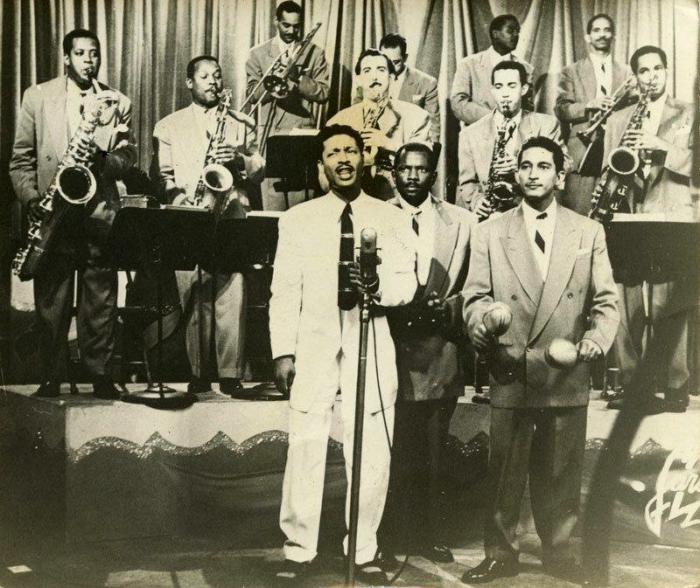
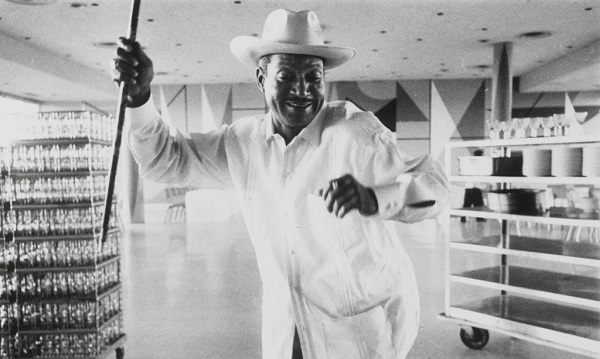
Benny Moré. The story of Cuba’s biggest crowd idol

Latin America / Cuba / La Habana

Who is Benny Moré? He is not just another musician, he is unanimously the most brilliant popular artist that has existed on the Afro-Cuban island. He is the symbol, the myth, the legend, it is undoubtedly the summary of the popular, rich and abundant music of Cuba.

Benny Moré symbolizes the peasant “Guateque”, the “Sarao”, the bohemian, the coffee, the bar, the theater, the party, carnivals, the show. “El Bárbaro del Ritmo” was the most popular in Afro-Cuban music.

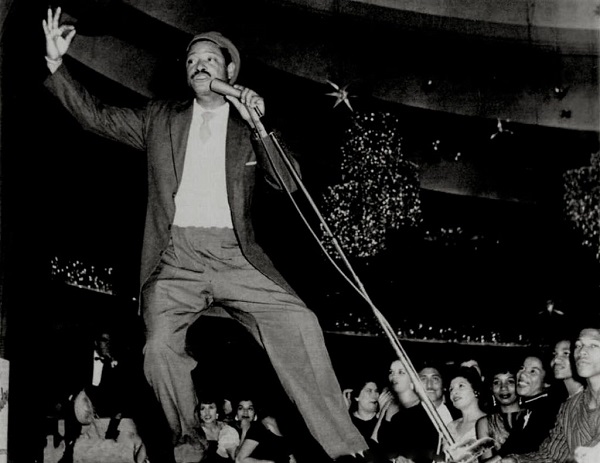
Benny Moré
Benny Moré

He was born on August 24, 1919 at seven in the morning in the Pueblo Nuevo neighborhood of the town of Santa Isabel de las Lajas, belonging to the Cienfuegos province. His parents were Virginia Moré and Silvestre Gutiérrez, and Benny was the oldest of 18 siblings. His last name Moré came from Ta Ramón Gundo Moré (slave of the Count Moré), who, according to the tradition of the Congos, was his first king in Santa Isabel de las Lajas.

Benny was gifted with a fluent tenor voice that gave life with great expressiveness and this context was definitive for his future career in music. He learned to play the insundi, the yuka drums, the Makuta and Bembé, invocators of deities, with whom he not only sang and danced to perfection, but also played the son, the guaracha and the rumba.

Since he was a child he expressed his great vocation for music, he would spend all day humming a song or improvising and directing ensembles composed of machetes, bongos made with milk cans, guitars made with a board and nails with strings of string sew, two sticks as keys, and so on.

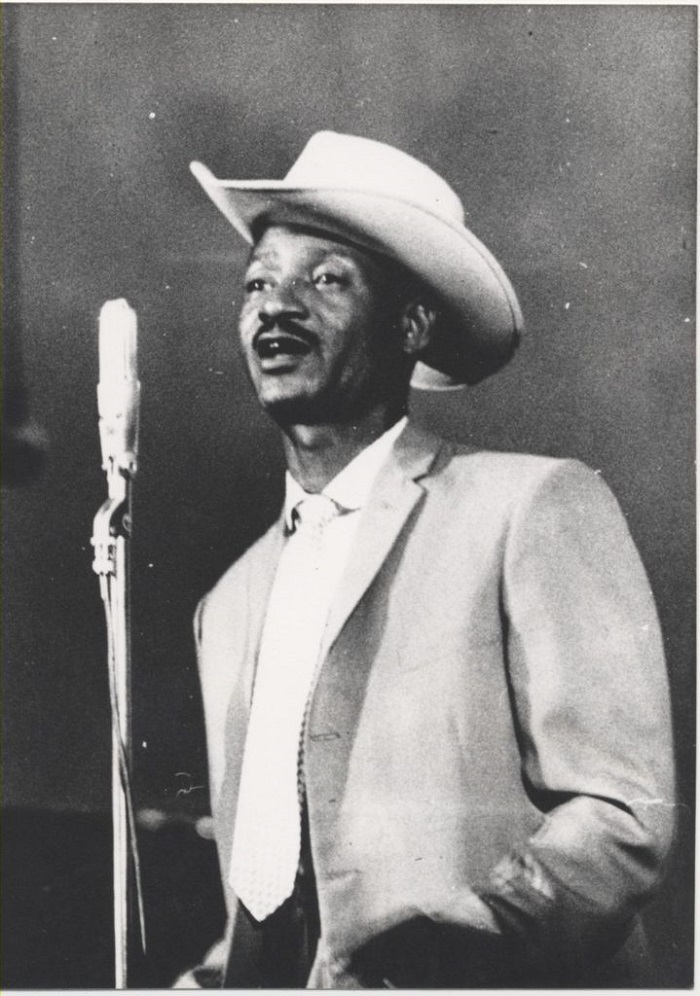
Benny Moré singing
Benny Moré singing

Moré was a teacher in all genres of Cuban music

The “Bárbaro del Ritmo” could always be found standing on a table singing and playing, surrounded by listeners. Bartolomé spent his childhood and adolescence, with no opportunity for study or permanent employment. Like his brother Teodoro, Bartolomé was enrolled in the School of Public Instruction “José de la Luz y Caballero”, where he always stood out for his conduct and application.

Why is the Bacardi symbol a bat?

Since he was a child, Moré had skills for singing and improvisation, which he demonstrated when he was barely seven years old, when he would run away for a few hours to entertain parties in the neighborhood and loved singing notes with his mother, to prevent her from sleeping while ironing late into the night.

His voice was particularly highlighted in the Son Montuno, the Mambo, and the Bolero

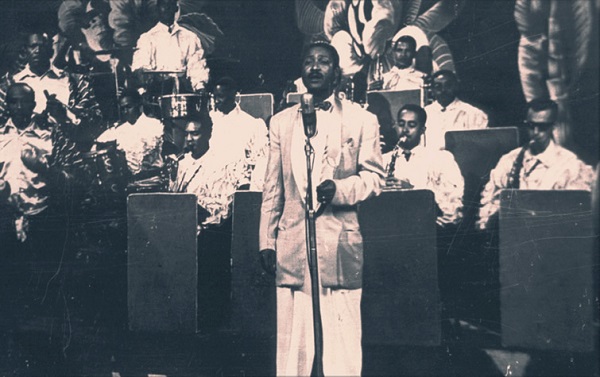
Benny Moré live
Benny Moré live

Benny went through a complicated life, but he was willing to do anything to achieve his dreams of triumph. With almost 20 years of age, in 1940 Bartolomé said goodbye to his mother at the Hotel Ritz in the Central Vertientes, where she worked, and traveled hidden, indistinctly, by train and truck to the City of Havana. He was definitely in the mission to try his luck in the bustling city!

Since then, he was seen by the famous neighborhood of Belen, with a guitar acquired in a pawnshop, wandering through cafes, bars, hotels, restaurants, and even brothels. That same year he told his cousin: “I stay in Havana, I rise up here or I sink”. From that moment began the saga of concerts at the bars of the port avenue … Once remembering those times, he confessed: “I threw myself into the street with a guitar on my shoulder to sing to tourists. I am not ashamed of it; Carlos Gardel also did it in Argentina and is the king of tango. ”

At that time, the CMQ station began broadcasting the Supreme Court of Art. Bartolomé Maximiliano Moré appeared in that program that Germán Pinelli and José Antonio Alonso encouraged. After presenting it and at the moment of beginning his presentation, they rang the bell.

Later Bartolomé returned to Monte and Prado to the Supreme Court and on this second occasion he won the first prize. Possessing a fresh voice, beautiful timbre, sensual and evocative. Bartolo sang with all the inner strength that claimed the Cuban rhythms.

In one of his raids, Siro Rodríguez, member of the famous Matamoros Trio, heard him sing in the bar of El Templete restaurant, on Avenida del Puerto, and was very impressed by the boy’s voice and tuning.

The entry of Bartolomé to the group of Miguel Matamoros was a fact and can be considered as his real debut as a professional singer, because with this group he had for the first time a steady job as a musician and made his first recordings on 78 revolutions per minute discs.

Benny knew he had a voice, the luck and a destiny. Perhaps he sensed it, intuited it, or simply trusted his triumph. When he started with Miguel Matamoros and his group, I already wanted to make changes in the picket line.

In Mexico, when Miguel became ill, he was able to direct the group, took control and enjoyed the “Cuates” in El Patio cabaret. When the contract ended, the Matamoros group returned to Havana, but without Bartolomé, who decided to try his luck by himself in Mexico.

When he communicated his decision to the famous author of El Son Siembra Su Maíz, Miguel Matamoros said: “It’s very good, but you have to change the name of Bartolo, which is very ugly. With that name you will not go anywhere”, You are right, Bartolo replied, from today I will call myself Benny, yes, Benny Moré. ”

The owner of the business was hypnotized by the very tasty atmosphere that Benny led as director. After singing with several push orchestras in Mexico, he planted himself beautifully with the most famous band of the 20th century: Pérez Prado and the Cuban mambo.

With this meeting two geniuses joined: Benny Moré had talent and natural intuition; in Pérez Prado, in addition to all that, the mastery of technique and an enormous facility to make music. With Perez Prado he conquered the noble Aztec people on tours of different states of that sister country.

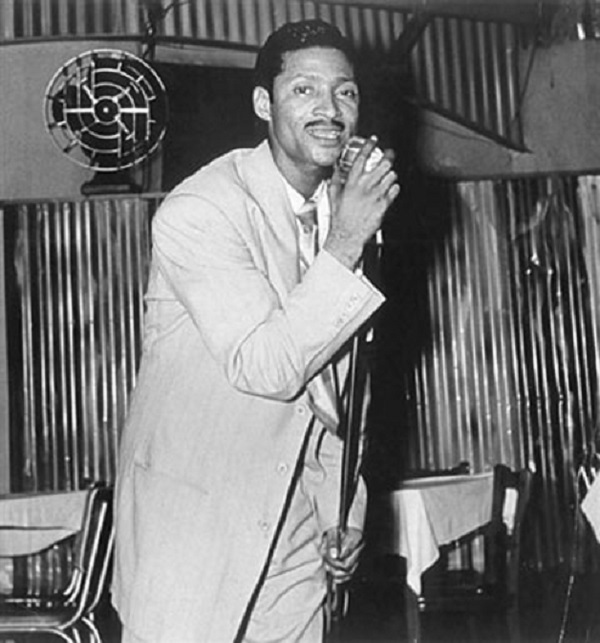
Benny Moré
Benny Moré

Due to the success achieved by Benny, the town gave him the title of “Prince of Mambo” and Pérez Prado, “King of Mambo“. He sang like nobody else in the world and began his international promotion.

By that time, Benny’s voice was known in Panama, Colombia, Brazil, Puerto Rico, Haiti, Venezuela, and of course, in his native Cuba.

In the joyful world of nightlife in Mexico City, the Cuban singer performed in many theaters, including Margo, Blanquita, Folliers and Cabaret Waikiki, alternating with renowned artists such as the legendary star Yolanda Montes (Tongolele), the Mexican Toña la Negra, and the outstanding cuban pianist and composer, Juan Bruno Tarraza, of whom Benny sang the bolero “It’s already twelve o’clock”.

Benny participates in many films and upon his return to Cuba, he was already certain that he had to be counted on.

The nostalgia for his family, friends, for the Homeland, and the desire to obtain laurels on his Island, where he considered that he was not known enough, made him return to his beloved Lajas at the end of the year 50. The ‘sonero mayor’ was definitely in Cuba, where he had left behind comforts, material and spiritual satisfactions, friends and even the loves that the successful do not usually lack.

During the following two years he acted by contract for a program called “De fiesta con Bacardí”, which was aired by the Eastern radio station with the orchestra of Mariano Mercerón, and the singers Fernando Álvarez Pacho Alonso.

Benny Moré
Benny Moré

As Benny Moré was an exclusive artist of RCA Víctor, this firm claimed his presence in Havana to make different recordings. In order to fulfill this commitment he gave alternative trips to Havana and thus maintained his responsibility with the eastern radio station.

After the commitment at Casa Bacardí and maestro Mercerón, in 1952 Benny Moré returned to Havana.

Certainly, Benny concluded an era, closed a chapter of Cuban musical life, that stage of nightlife that was already declining.

Benny’s life was related to a world that has already disappeared. Then everything became myths and legends … Benny kept on singing, but now it would be on scratch discs, which were digitized.

The “oidores” (listeners) will be transported in time, imagine the bars of the Havana port full of curious tourists. From Chinese restaurants selling “complete” to poor people who passed their hats, after singing through the streets of Havana – Cuba.

Benny Moré in concert

Young Puerto Rican singer Jeremy Bosch supports the Spanish Harlem Salsa Museum

There are many people who believe that salsa is a genre of past generations that does not have worthy youth representatives who stick up for this set of rhythms that has been keeping so many people dancing for so long, but fortunately they are wrong. Jeremy Bosch, whom we had the opportunity to interview at The Johnny Cruz Shw a few weeks ago is a god example of this.   

We are honored to know that one of the new sensations of Latin music, specifically salsa, supports one of the most important institutions dedicated to the genre such as the Spanish Harlem Salsa Museum, so we want to take advantage to talk a little about the career of this young singer and everything he has achieved so far.   

Jeremy playing the flute
Jeremy Bosch playing the flute live

Jeremy’s beginnings in this world 

Jeremy Bosch is a singer and flutist born in the city of Ponce, Puerto Rico, who began his journey in the world of music singing and playing percussion in the church on his block while growing up listening to a great variety of artists including Hector Lavoe to Chicago and Tonny Bennett, so he had influences of all kinds.   

Not much time would past before Jeremy took achevable steps towards the direction he was meant to take. At only 17 years old, he won a scholarship to study at Berklee College of Music in the city of Boston, United States, and graduated in 2023, specializing in jazz composition. From then on, what followed for the young artist have been successes and great proposals he could seize.   

One of thse things he is best known for is having been the vocalist and flutist of the acclaimed group Spanish Harlem Orchestra, but that has not stopped him from collaborating with great figures in the industry such as musical director and Grammy-winning percussionist Pete Perignon, with whom he recorded the social short called ”Sería Una Pena”.   

Johnny and Jeremy
Johnny Cruz and Jeremy Bosch posing for the camera

Jeremy’s professional career 

Sometime later, he would have the opportunity to realize one of the most important works of his career, which is the tribute to the late Cheo Feliciano, which was recorded live at the Dizzy Club in New York City and was titled ”The Music of Cheo Feliciano. In addition, the project included Nelson Gonzalez, Johnny ”Dandy” Rodriguez and Spanish Harlem Orchestra leader Oscar Hernandez.   

With regard to this great night for his career, Jeremy commented that since his debut both he and arranger and vibraphonist Felipe Fourniel had long time wanting to work on something about Cheo Feliciano and his legacy for a long time until they finally made it. This show was the sign that Jeremy has everything to become an icon of salsa and Afro-Caribbean music in general.   

As for his solo career, he has made a few remarkable recordings and one of them was ”Prologo Hoy”, which included the participation of Nicaraguan singer Luis Enrique and Cuban vocalist and guitarist Alain Perez. It is a five-song EP that focuses a lot on Afro-Colombian and tropical music, while including some covers in English such as ”Love Holiday”, which gives a distinct flavor to the material as a whole. 

Jeremy and Johnny on the set
Jeremy Bosch and Johnny Cruz on the set of The Johnny Cruz Show

Later on, Jeremy released ”Epilogo: la clave del tiempo”, which includes 11 tracks and is basically a mix of Afro-Cuban rhythms, soneo, urban genres, modern synthesizers, among other elements. The album starts with ”Locura” and continues with singles such as ”Try Again”, ”La Mala”, ”Autopsia” and a few more.   

Support for the Spanish Harlem Salsa Museum 

In the social networks of the director of the Spanish Harlem Salsa Museum, Johnny Cruz, there is a clip in which the The Johnny Cruz Show host introduces Jeremy as his special guest on that occasion, promotes the interview with him and describes him as the sensation of the moment. Then, the camera goes n Jeremy’s face, who thanks the invitation with a smile and assures that they both will have a good time talking about his life and career. 

We are honred to support young talents like Jeremy and, at the same time, to get the same support and love back because that is what salsa and the Latin music scene in general needs, that all those involved join together around it to keep it alive. 

Johnny Cru ISM corresponde in New York City


Read also: Paquito D’Rivera supports the salsa museum 

Jerry Ferrao says in salsa key: “My life is a drum”.

With a lifetime dedicated to folk music, singer-songwriter Jerry Ferrao has been bringing us some good salsa for some time now. With seven recordings to his credit; Restauración, Esto sí es Navidad, Paisajes de mi Negrura, Puertorican Folkloric Jazz, Tiempo al Tiempo, De Guerreros y Batallas and Desafío, it is clear that the salsa path he decided to take a couple of years ago brought a lot of musical experience, and a very tasty one at that.

Jerry Ferrao afirma en clave de salsa “Mi vida es un tambor”

I invite you to listen to his latest single ‘Mi vida es un tambor’, also available on YouTube:

The track -whose musical arrangement is by Jerry Ferrao and John Rivera Rosa- features the participation of great recording studio musicians, such as: Efraín Hernández on bass; Juan Gómez on piano; Angie Machado, Jaimar Vázquez and Javier Meléndez on trumpets; Benny Marín, Víctor Román and Noel Abel on saxophones; Pedro Dueño on bongo; plus a parade of top-notch guests: Endel Dueño on timbal, Kachiro Thompson on tumbadoras and Luis Aquino, in a masterful trumpet solo.  Backing up Jerry Ferrao’s lead vocals, we hear the voices of Flor Angel Guilbe, Wiki Gonzalez and Nandy “El Sinsonte” on backing vocals.

“I do it first out of a desire to explore new horizons. I’ve been in the bomba and plena for many years. I was with La Familia Cepeda for more than 20 years and with Los Hermanos Ayala from the town of Loíza for six to seven years. I was a disciple of the great masters: Don Rafael Cepeda Atiles, Marcial Reyes Arvelo and Tomás Flores, among others. The time has come for me, I am a composer! I have composed songs for several orchestras and folklore groups, it was time to write for myself! I said to myself, I am a composer and singer and I am going to design my own music,” he said.

He lived in Buenos Aires, Argentina while studying cinematography. There, Ferrao sang with the salsa orchestra La Clave Genética. It may have been there that the definitive leap to salsa was conceived.

Following the scourge of Hurricane Maria in Puerto Rico (2017), Jerry dedicated a salsa track titled ‘Retoñando’ (available on YouTube) to the memory of all his compueblanos who left in the aftermath of the hurricane.

Jerry Ferrao relates that he began receiving suggestions for him to record salsa because his voice excelled in that sound. “That must be because I have been listening to salsa, enjoying and appreciating it since I was a child. I have a family of well-known musicians, particularly because they are percussionists, timbaleros, congueros, bongoseros,” he said.

Con toda una vida dedicada a la música folclórica, el cantautor Jerry Ferrao ha estado trayéndonos salsa de la buena

In 2012 he published what could be considered the most important documentary on the history of the Puerto Rican bomba, Ayeres de la Bomba. This document has been praised by prestigious ethnomusicologists, anthropologists, sociologists and researchers specializing in Puerto Rico’s black history. I add with certainty, that our Jerry Ferrao must be considered as the authority on our folkloric rhythms.

Since he was a child, he was influenced by the art of Afro-Antillean roots music, especially salsa and guaguancó. With uncles like percussionists Pedro Dueño, Ángel Dueño and Endel Dueño, nicknamed “Los Hermanos Dueño” in the popular artistic scene, who have been recognized in different parts of the world, mainly by salsa and Latin jazz lovers, it should come as no surprise that Ferrao has grown up immersed in the rhythm and flavor that continues to dictate his creativity.

Determined to focus on salsa, he affirms that his contribution to Borikua folklore was also his musical foundation. “Yes, it is something that lives with me and I will continue to cultivate it in some way. Who knows if in the future I will do my own little things for the public, that I will sneak in some bomba or plena between salsa and salsa. I have been in folklore since I was about eight years old”, Ferrao said shortly before affirming that with the album Desafío (2022), which contains 12 songs of his inspiration, he made his formal entry into salsa. Jerry Ferrao bets on salsa, and salsa fans bet on Jerry. His efforts have not gone unnoticed and as a salsa artist, the excellence with which he has produced his musical deliveries is striking. “I swear it was a tremendous challenge to do all this. For different reasons, the production took about three or four years. All the songs and arrangements are my own, and I don’t even play guitar, although I would love to!” he shared.

The images are by Kali Torres

Bella Martinez Puerto Rico


Also Read: ¡Attack Sergio! Unbreakable: A fun read because of the contradictory content

  • « Go to Previous Page
  • Page 1
  • Interim pages omitted …
  • Page 78
  • Page 79
  • Page 80
  • Page 81
  • Page 82
  • Interim pages omitted …
  • Page 149
  • Go to Next Page »

International Salsa Magazine (ISM) is a monthly publication about Salsa activities around the world, that has been publishing since 2007. It is a world network of volunteers coordinated by ISM Magazine. We are working to strengthen all the events by working together.