

UNITED STATESDIRECTORY OF NIGHTCLUBS |
||
| CALIFORNIA | FLORIDA | ILLINOIS |
| MICHIGAN | NEW JERSEY | NEW YORK |
| OHIO | PENNSYLVANIA | TEXAS |
| VIRGINIA | WASHINGTON | |
UNITED STATESDIRECTORY OF NIGHTCLUBS |
||
| CALIFORNIA | FLORIDA | ILLINOIS |
| MICHIGAN | NEW JERSEY | NEW YORK |
| OHIO | PENNSYLVANIA | TEXAS |
| VIRGINIA | WASHINGTON | |
Latin America / Colombia / Medellin
Jimena Verano: He began his first artistic activities at a very early age, from the age of 7 he did his first school performance work called “El Sabio y el Boatman”, then at the age of 14 he leaned towards writing, writing poems, poems, among others. At the age of 16 he wrote his first song called “Desecho y Vacio”, which was part of the record production Cruzando Fronteras” by the Uruguayan singer Pablo Alejandro along with three other songs.
Noel entered the world of modeling and acting, in 2001 with the company “Cosmodiva Talents”, he participated in a number of television programs and commercials on different networks such as “Sabana Gigante”, “Dinamitados” (Americateve), among others. After 2 to 4 years, he is invited to join the group Climax from Mexico (table that applauds the most, ZaZaZa), a song that achieves the fame of that group, allowing it to tour various international stages and being winners and multiple nominees for more than 30 awards musicals.

In 2013, Noel published his first book of poetry and reflections “When the soul sings” which can be purchased on Amazon and other online stores. Also that same year he released his first musical single “Apariencias”, which is having a great success. good acceptance internationally.
He is currently working as a composer for different artists and groups inside and outside the USA. He is currently preparing for a media tour in Colombia with the help of Jimena Verano, his promoter VERANOPRODUCCIONES COLOMBIA, who tells us that “Noel Montano came to the artistic world to leave your own legacy
For more information contact them through email: [email protected]

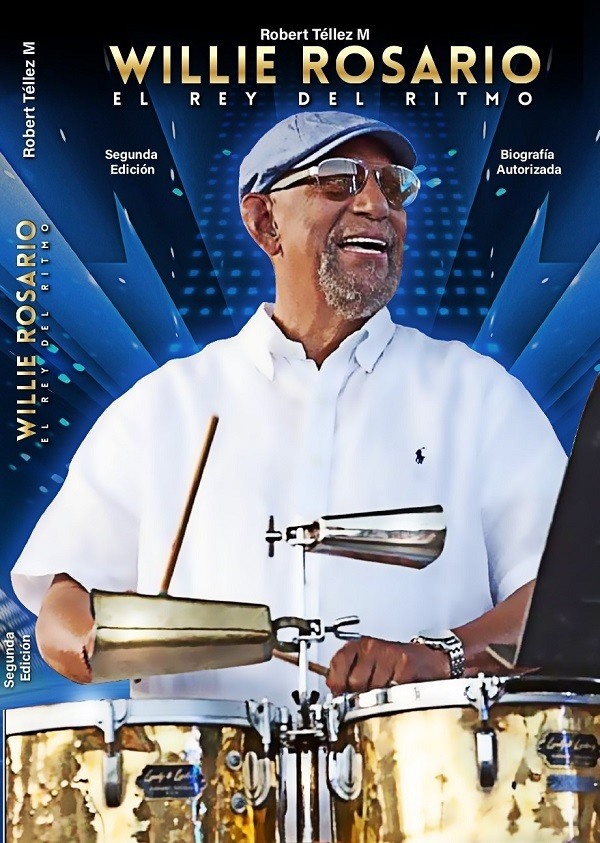
This second edition, which has been revised, expanded and updated, has 62 more pages, every time master Willie Rosario has remained active since the publication of the first edition in 2019 to date. It also contains photographs that were not included in the first edition, images from Willie Rosario’s own archive and from the archive of the most important salsa collector, Robert Padilla.
The book, which has a preface signed by musician “Bobby” Valentín and a foreword by researcher José Arteaga, also compiles significant accounts from composers, musicians, instrumentalists, arrangers and vocalists who have been part of Rosario’s orchestra throughout different periods.
The new cover photo is by photojournalist Conrado Pastrano, the cover design is by graphic artist Felix Disla and the illustrations are by artist Frank Rosado.
The content of the back cover of the first edition, which includes the praises of Edwin Clemente, Edwin Morales, Elmer González, Hiram Guadalupe Pérez and Néstor Galán, was moved to the inside of the text, adding the recently captured praise in the voice of Ricardo Padilla, programming director of Salsoul radio station.
The back cover text is by the prodigious arranger, composer and music producer, who was exalted to the Hall of Fame of the U.S. East Coast and who, like Willie Rosario, is a timbalero and orchestra leader: Tito Rodríguez, Jr. Tito tells us about “El Inolvidable’s” friendship with Willie Rosario, as well as the way in which Mister Afinque received from Tito Rodríguez the first songs that Rosario would record with his orchestra, including the classic ‘Changó ta vení’ (composition by “Justi” Barreto), arranged by René Hernández. He also shares with us the closeness between Willie Rosario and Tito Rodríguez since they were neighbors in the Bronx, NY until they became colleagues and developed a friendship based on companionship and mutual admiration. In a nostalgic way, he highlights the golden years of El Palladium. As if all this were not enough, Tito candidly offers his opinion on Willie’s contribution to the salsa sound, which he reinvented by adding the baritone saxophone to his orchestral format, which at the time was thought to be an experiment, and on the permanence of that contribution within Latin music.

About the author:
The author, Robert Téllez M, is a music journalist, broadcaster and audiovisual media producer. He is a member of the Círculo de Periodistas de Bogotá (CPB) and since 1998 he has worked as a programmer for different music radio stations. For nine years he directed and hosted the program Conversando La Salsa on Radio Nacional de Colombia. He was also founder and general director of Revista Sonfonía. Robert Téllez M stands out as a researcher dedicated to Afro-Antillean music. His in-depth research has led him to serve as a consultant and lecturer, specializing in the appreciation of salsa music.

Also Read: Metamorphosis: from music to photojournalism, a reinvention without limits

Vocalist “Chamaco” Rivera was in charge of the performance of Willie Rosario’s orchestra’s first hit. Chamaco”‘s announcements alluded to the parallel of the Barrio Obrero, between our “santurcino” neighborhood of Borinquen and its namesake, located in Cali, Colombia.
Then came the current front of “the band that delights” to perform a selection of the group’s countless hits. The first turn went to José Luis De Jesús “Papa Chú” with the impeccable interpretation of ‘Ojalá que te vaya bonito’. At one point, when the song called for a duet performance, José “Machete” Díaz was the accompanist.
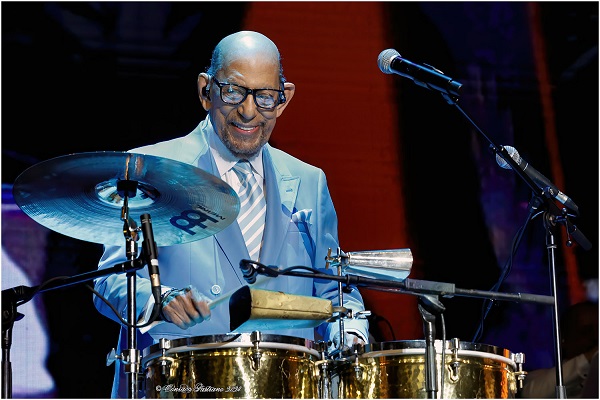
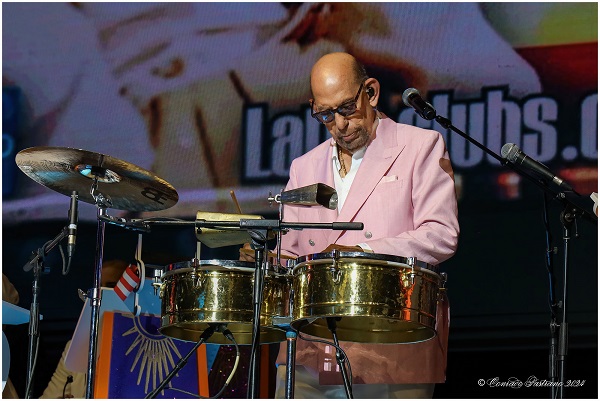
Smiling and with his voice cracking with emotion, Rosario greeted the audience, shortly before saying: “Thank you very much for coming this far” and giving entrance to “Manolito” Rodriguez, handing him the timbal. “Manolito” took the helm of Willie Rosario’s orchestra during several songs to which the young timbalero and musical director imparted his own tempo.
‘Anuncio Clasificado’ and ‘Cha-cha-ri-chá’ were heard in the voice of “Machete”, ‘Échame la culpa a mí’ and ‘El callejero’ in Erick Robles’ interpretation, and ‘Preparen candela’ with “Papa Chú” leading on vocals. Juventud del presente’ was heard in the voice of Rodriguez himself, who showed off his skills as a timbalero, director and singer, while dancing in choreography with the members of the vocal front.

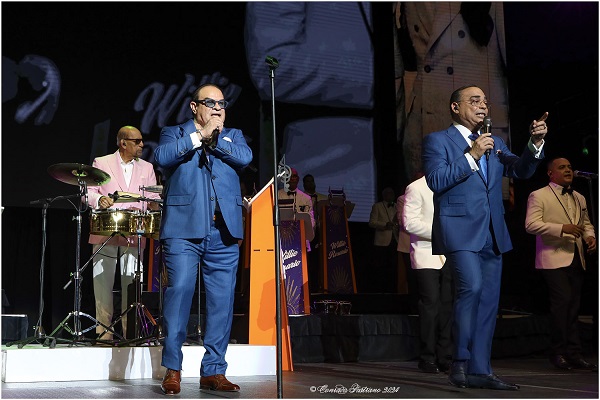
At about ten o’clock at night, the birthday boy took over the orchestra to “continue in afinque”. With the “afinque”, came the main course of the concert, for which “El Rey del ritmo” arrived on stage this time accompanied by the duo composed by Gilberto Santa Rosa and Tony Vega.
Gilberto looked impeccable both in his vocal role and in his staging as he performed ‘Babarabatiri’, ‘Obra sellada’, ‘La mitad’, ‘Me tendrán que aceptar’, ‘Botaron la pelota’ and ‘Changó ta’ bení’. During the delivery of this last song, Santa Rosa was accompanied by a corps of veteran dancers, among them the always remembered “Mike” Ramos, known within the Palladium Mambo Legends and within the Mambo Aces as “Mambo Mike”.

The detail that “El Caballero de la salsa” imparts to each of his concerts, highlighting each of the artists in the audience also took place in this event. The list of colleagues invited to the concert included Choco Orta, Luisito Carrión, Domingo Quiñones, Moncho Rivera, Ismael Miranda, Bobby Valentín, Jerry Rivas and Chucho Avellanet.
Although it is known that it is impossible to include all the hits of such a great career in three hours of concert, the selection of the repertoire was accurate and forceful. At almost 100 years old, bandleader Willie Rosario proved once again that, with his usual affinque, he continues to lead the salsa dancer’s favorite orchestra.
Also Read: Déjalo, the latest track by Pedro Conga y su Orquesta Internacional