


• Skip to primary navigation
  • Skip to main content

International Salsa Magazine

  • Home
  • Previous editions
    • 2026
      • ISM / January 2026
      • ISM / February 2026
    • 2025
      • ISM / December 2025
      • ISM / November 2025
      • ISM / October 2025
      • ISM / September 2025
      • ISM / August 2025
      • ISM / July 2025
      • ISM / June 2025
      • ISM / May2025
      • ISM / April 2025
      • ISM / March 2025
      • ISM / February 2025
      • ISM / January 2025
    • 2024
      • ISM / December 2024
      • ISM / November 2024
      • ISM / October 2024
      • ISM / September 2024
      • ISM / August 2024
      • ISM / July 2024
      • ISM / June 2024
      • ISM / May 2024
      • ISM / April 2024
      • ISM / March 2024
      • ISM / February 2024
      • ISM / January 2024
    • 2023
      • ISM / December 2023
      • ISM / November 2023
      • ISM / October 2023
      • ISM – September 2023
      • ISM – August 2023
      • ISM July 2023
      • ISM Edition June 2023
      • ISM – May 2023
      • ISM April 2023
      • ISM March 2023
      • ISM February 2023
      • ISM January 2023
    • 2022
      • ISM December 2022
      • ISM November 2022
      • ISM October 2022
      • ISM September 2022
      • ISM August 2022
      • ISM July 2022
      • ISM June 2022
      • ISM May 2022
      • ISM February 2022
      • ISM January 2022
    • 2021
      • ISM December 2021
      • ISM November 2021
      • ISM October – 2021
      • ISM September 2021
      • ISM August 2021
      • ISM July 2021
      • ISM May 2021
      • ISM April 2021
      • ISM June 2021
      • ISM March 2021
      • ISM February 2021
      • ISM January 2021
    • 2020
      • ISM December 2020
      • ISM November 2020
      • ISM October 2020
      • ISM September 2020
      • ISM August 2020
      • ISM July 2020
      • ISM June 2020
      • ISM May 2020
      • ISM April 2020
      • ISM March 2020
      • ISM February 2020
      • ISM January 2020
    • 2019
      • ISM December 2019
      • ISM November 2019
      • ISM October 2019
      • ISM Septembre 2019
      • ISM August 2019
      • ISM July 2019
      • ISM June 2019
      • ISM May 2019
      • ISM April 2019
      • ISM March 2019
      • ISM February 2019
      • ISM January 2019
    • 2018
      • ISM December 2018
      • ISM November 2018
      • ISM October 2018
      • ISM September 2018
      • ISM August 2018
      • ISM July 2018
      • ISM June 2018
      • ISM May 2018
      • ISM April 2018
      • ISM March 2018
      • ISM February 2018
      • ISM January 2018
    • 2017
      • ISM December 2017
      • ISM November 2017
      • ISM October 2017
      • ISM September 2017
      • ISM August 2017
      • ISM July 2017
      • ISM June 2017
      • ISM May 2017
      • ISM April 2017
      • ISM March 2017
      • ISM February 2017
  • Download Salsa App
    • Android
    • Apple
  • Spanish

Search Results for: salsa

ISM / March 2026

ISM 03 2026 L ISM 03 2026 R
SalsaApp Left SalsaApp Right
NA 03 2026
LA 03 2026
EU 03 2026
AF 03 2026
AS 03 2026
OC 03 2026

“We are the Real Latin music world network”

Letter to the Editor Joint our team

Latin America / March 2026

Adriana Mosquea 03 2026Andy Durán 03 2026Porfi Jiménez 03 2026Willie Colón 03 2023El Caballero de la SalsaSymphonic Bestial Sound 2026

March 2026 – Festivals

Puerto Rico circular flag
PUERTO RICO
42 Zalsa 03 2026

Día Nacional de La Zalsa

Mar 22, 2026

Plaza de la Independencia
Av. Franklin Delano Roosevelt
San Juan 00920, Puerto Rico

$ 30.00 + ivu & c.s

Bella MartinezCalibrated maracas

DIRECTORY OF NIGHTCLUBS

Argentina flag
ARGENTINA

Aruba circular flag
ARUBA

Belize circular flag
BELIZE

Bolivia circular flag
BOLIVIA

Brazil flag
BRAZIL

Chile circular flag
CHILE

Colombia
COLOMBIA

Costa Rica circular flag
COSTA RICA

Cuba circular flag
CUBA

Dominican Republic
DOMINICAN REPUBLIC

Ecuador circular flag
ECUADOR

Guatenala circular flag
GUATEMALA

Mexico Circular flag
MEXICO

Panama circular flag
PANAMA

Peru circular flag
PERU

Puerto Rico circular flag
PUERTO RICO

Venezuela circular flag
VENEZUELA


Porfi Jiménez The Master of Rhythm Who United Two Nations

The life, work, and legacy of tropical music’s most “Venezuelan” Dominican.

Porfirio Antonio Jiménez Núñez, known universally as Porfi Jiménez, was more than just a musician; he was a cultural bridge.

A Dominican virtuoso by birth and Venezuelan by choice, he became one of the most iconic figures of Caribbean dance music.

His legacy endures as an exceptional trumpeter, arranger, and bandleader who possessed a unique gift for reading the pulse of the streets and elevating it to the level of fine art.

Porfi Jiménez El Maestro del Ritmo que Unió a dos Naciones

The Prodigy of Hato Mayor: Academic Training

Born on February 16, 1928, in Hato Mayor del Rey, Dominican Republic, Porfi’s destiny was sealed by music from an early age. A recognized child prodigy, he began his formal studies at age seven.

Following the death of his father, his mother gifted him his first trumpet when he was eight a tool that would eventually become his eternal voice.

Unlike many bandleaders of his era, Porfi sought technical excellence at the prestigious Berklee College of Music in Boston. This education granted him a superior technical command of jazz orchestration and tropical rhythms, allowing him to inject a unique harmonic sophistication into popular music.

Vida, obra y legado del dominicano más venezolano de la música tropical.

Putting Down Roots in Venezuela: A 50-Year “Layover”

On February 6, 1954, Porfi landed in Caracas at the invitation of his compatriot Rafael “Tata” Minaya for a brief Carnival tour.

What was planned as a temporary trip turned into a stay that lasted over half a century. Before founding his own sonic empire, he honed his craft within the country’s most elite musical institutions:

  • The Pedro J. Belisario Orchestra.
  • Billo’s Caracas Boys, under the baton of Maestro Billo Frómeta.
  • Staff orchestras for Venevisión and RCTV, where he shone as the lead arranger during the golden age of Venezuelan television.

The Birth of a Signature Sound

On December 31, 1963, as the world celebrated New Year’s Eve, a legend was born: Porfi debuted his own orchestra at the Tamanaco Hotel’s Naiguatá Hall.

31 de diciembre de 1963, en el Salón Naiguatá del Hotel Tamanaco Foto By El Universal

His style broke the mold by fusing Dominican merengue with salsa and jazz, achieving a modern, high-energy orchestration.

That same year, he released his first LP, A bailar con Porfi (Velvet Records). Featuring the vocals of Kiko Mendive and Chico Salas, the orchestra produced hits that are now staples of the Latin party songbook:

  • “La Negra Celina”
  • “La Resbalosa”
  • “La Banda está Borracha”

The “King of Carnival” and the Golden Years

Throughout the 80s and 90s, his name was synonymous with sold-out venues. Dubbed the “King of Carnival,” no festival in Venezuela was complete without his music. His ability to create “people’s anthems” is undeniable, leaving behind timeless tracks such as:

Iconic Songs Cultural Impact
La hierba se movía A massive sales and dance phenomenon across the region.
Culucucú An undisputed hit during the December holiday season.
Se hunde el barco A quintessential classic in the repertoire of great orchestras.
Dolores / Chivo Florete A masterclass in high-energy, danceable merengue.


Culucucú Éxito indiscutible en las festividades decembrinas.

 An Immortal Legacy

Maestro Porfi Jiménez passed away in Caracas on June 8, 2010, at the age of 82.

Though Dominican by birth, he always declared himself “Venezuelan at heart,” leaving behind a devoted family and a generation of musicians trained under his disciplined leadership.

As we approach the centenary of his birth in 2028, his influence remains more vibrant than ever.

The tributes held between 2024 and 2026 in both the Dominican Republic and Venezuela only confirm that Porfi Jiménez was, is, and will always be the man who defined the rhythm of the Caribbean identity.

Also Read: Federico Betancourt “Pioneer of Salsa in Venezuela”

Andy Durán: The Architect of Mambo and Latin Jazz

If there is one name that embodies technical elegance and rhythmic passion in the contemporary Caribbean, it is Andy Durán.

A musician, arranger, composer, and conductor, Durán has spent over four decades serving as the guardian of the big band sound. He keeps the flame of legends like Tito Puente and Pérez Prado alive, but with a distinctive signature that fuses academic precision with popular soul.

Andy Durán El Arquitecto del Mambo y el Latín Jazz

Born in Caracas, Venezuela, on January 2, 1949, as Nelson Valor Ramos, this extraordinary artist is today an essential figure in music production and direction.

The Musician: Master of the Arrangement

Andy Durán is more than just a conductor; he is a scholar of musical structure. His academic background has allowed him to master the art of the arrangement the ability to transform a simple melody into a complex masterpiece where twenty musicians move as a single, unstoppable force.

  • The Big Band Sound: He is one of the few directors who has kept the large orchestra format relevant in Venezuela. His ensemble, Andy Durán’s Latin Jazz Big Band, is an institution renowned for its rhythmic precision and powerful brass section.
  • Stylistic Versatility: While Mambo is his backbone, his repertoire flows seamlessly through Jazz, Salsa, Mambo-Jazz, and traditional Venezuelan music.
  • Cult Discography: Albums such as Tropicalia, Mambo 2000, and his acclaimed tribute to Tito Puente, Fidelidad, are essential pieces for any collector of the genre.

The Person: The Educator and Music Lover

Behind the baton, Durán is known for his humility and profound work ethic; he is frequently described as a “gentleman of music.”

Nacido en Caracas, Venezuela, el 2 de enero de 1949, bajo el nombre de Nelson Valor Ramos
  1. Relentless Researcher: Beyond performance, he is a historian of rhythm. His concerts often turn into masterclasses where he explains the origins of the pieces, always honoring the original composers.
  2. Generational Bridge: He has served as a mentor for young Venezuelan musicians, integrating new talent into his ranks and proving that classic Caribbean genres have no expiration date.
  3. Cultural Resilience: In an era dominated by commercial trends, Durán remains faithful to acoustic quality and the complexity of Latin Jazz, earning the respect of international critics.
  4. Si existe un nombre que personifica la elegancia técnica y la pasión por el ritmo en el Caribe contemporáneo, ese es Andy Durán
    Si existe un nombre que personifica la elegancia técnica y la pasión por el ritmo en el Caribe contemporáneo, ese es Andy Durán

Career and Legacy

Andy Durán is one of the greatest exponents of Salsa and Latin Jazz in Venezuela. With 16 albums to his credit, he holds the most extensive discography of any Venezuelan jazz artist. Additionally, he is recognized as the country’s premier music copyist.

His beginnings date back to his youth with the group Nelson y su Sexteto. In 1978, he founded the Orquesta Palladium. Shortly after, he adopted the stage name “Andy Durán” to avoid confusion with other artists of the era and because it was easy to remember and write.

Since 1982, he has been fully dedicated to professional music, working alongside giants such as Aldemaro Romero, Eduardo Cabrera, the Billo’s Caracas Boys, Los Melódicos, and Soledad Bravo. In 1985, he released his first LP, Mambo Salsa. Among his most notable works are:

Nacido en Caracas, Venezuela, el 2 de enero de 1949, bajo el nombre de Nelson Valor Ramos
  • Tropicalia Caraqueña
  • Canelita y Andy Durán: Tribute to Celia Cruz
  • Tito & Tito (A tribute to Tito Puente and Tito Rodríguez)
  • Salsa Dura y Descarga: A Tribute to Fania
  • Fiesta con Billo

Reflections by Andy Durán: Is Singing Easy?

The Requirements: Flawless pitch, breath control, phrasing, and diction; in addition, a strong memory for melodies, lyrics, and orchestral arrangements.

It is highly recommended to know how to dance according to the genre being performed (e.g., Salsa). It is also beneficial to have basic acting skills to handle dramatic themes when necessary.

Andy Duran y Dj. Augusto Felibertt

Reading is mandatory to develop a rich vocabulary for improvisation or public speaking; it also prevents embarrassing spelling errors in written lyrics. Keeping the vocal cords healthy and trained is a vital matter. Music theory and sight-singing are the ideal, essential, and unavoidable tools.

Finally, a singer must define their style and repertoire with great care. One must invest in professional orchestral arrangements and have an arranger-director or advisor—this is an investment, just like stage attire.

Remember, my fellow singers: a director’s worst nightmare is a singer who is out of tune, off-beat, and forgetful.

Best regards to all vocalists and singers.

Maestro Andy Durán: Director, Arranger, and Composer

P.S. Vocalists must meet two more requirements: keep your nerves in check and sing from the heart.

Also Read: Víctor Cuica “The Eternal Breath of Latin Jazz and Venezuelan Identity“

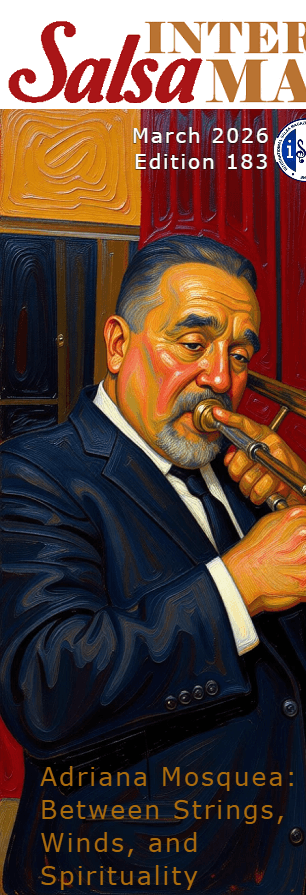
Adriana Mosquea: Between Strings, Winds, and Spirituality

Vocal Excellence, Instrumental Versatility, and Artistic Training

Adriana Carolina Mosquea Santana, born on August 25, 1993, in Santiago de los Caballeros, Dominican Republic, is a multi-faceted artist who has built a solid career as a solo singer, bassist, stage actress, and vocal coach.

Adriana Mosquea Between Strings, Winds and Spirituality

Early Training and First Steps

She began her musical journey at the age of five in school and church choirs. At nine, she entered the Centro de la Cultura de Santiago, where she studied singing, electric bass, and classical guitar. By age 17, she became the only female voice and bassist for the fusion group Oveja Negra.

After an accident that hindered the mobility of her hands for eight months, she defied medical diagnoses and achieved a full recovery through self-directed therapy, resuming her career with groups such as Sol Latino and La Piña Tá Dulce.

The Leap into Lyrical Music and Theater

In 2014, she received a scholarship from the La 37 por las Tablas school, joining the elite vocal group Les Cantatis. Under the tutelage of Roberto Guzmán and María Ligia Grullón, she performed pieces by Vivaldi, Pergolesi, and Tchaikovsky, and participated in the opera Carmen. In 2019, she was part of the choir for the opera La Traviata at the National Theater, conducted by José Antonio Molina.

Solo Career and National Projection

As a soloist, she has released tracks such as Humo y Humo and Zombie, performing at festivals like Arte Vivo and the Alliance Française. Her multidisciplinary project, Circo Imaginario, led her to open for the iconic Dominican rock band Toque Profundo.

Her appearance on Dominicana’s Got Talent in 2019 earned her massive recognition and excellent reviews from the judges. That same year, she joined Belkys Concepción y las Damas as a bassist and backing vocalist, sharing the stage with legendary figures like Johnny Ventura and Fefita la Grande.

Adriana Carolina Mosquea Santana, born on August 25, 1993 in Santiago de los Caballeros, Dominican Republic

Professional Background and Academic Formation

Adriana’s dedication goes beyond performance; she is an art scholar. She holds a degree in Art History and is currently pursuing a degree in Special Needs Education, focusing on music pedagogy.

Key milestones in her professional journey include:

  • Oveja Negra: Her first professional group at 17, where she served as the bassist.
  • Son Santiaguero & Sol Latino: Projects where she explored Cuban Son and alternative rock.
  • Belkys Concepción: She performed as the bassist for the band led by “The Mother of Merengue,” highlighting Belkys’ overwhelming energy on stage.

Innovation During the Pandemic and Recent Collaborations

Between 2020 and 2021, she produced her album Arte, Magia y Libertad (Art, Magic, and Freedom) in collaboration with Venezuelan producer Daniela Yánez. Her singles have received nominations at the Indie Dominican Awards and Expo Cibao.

Additionally, she participated in the In Memoriam segment of the 2020 Soberano Awards and composed part of the soundtrack for the film La Soga 3. In 2025, she stood out in a tribute to Maridalia Hernández, performing the duet Te Ofrezco.

Pedagogical Work and Vocal Coaching

Currently, Adriana is a prominent vocal coach. She has been a key figure in the technical evolution of the artist Tokischa, working on projects nominated for the 2025 Latin Grammys and 2026 Premios Lo Nuestro. She is a graduate in Art History and is currently completing a Degree in Pedagogy at CESUMA University in Spain.

Excelencia Vocal, Versatilidad Instrumental y Formación Artística

“Singing is a means of expression and healing. My focus is on a balanced life and technical discipline to set the voice free.”

The Multi-instrumentalist and the Winds of Communication

Although her primary instrument is the bass (and double bass in her early years), Adriana is proficient in guitar, piano, drums, and ukulele. her foray into woodwind instruments, such as the clarinet and saxophone, was born from a spiritual search:

“Wind instruments work with air, which is communication. As an artist, I needed to work on my ability to communicate what I was keeping silent.”

Identity, Flavor, and Spirituality

Proud of her roots, Adriana describes Santiago de los Caballeros as a peaceful “city-countryside.” Her palate travels between the Dominican Sancocho de siete carnes and the Venezuelan Mondongo, a dish she confesses has captivated her.

Adriana Mosquea
Adriana Mosquea

For her, music and spirituality are tools for self-knowledge. She defines spirituality as the acceptance of human duality—seeking balance between light and shadow, far from the pretensions of the ego.

Also Read: Dominican bandleader and singer Papo Ross is triumphing in Montreal

  • « Go to Previous Page
  • Page 1
  • Interim pages omitted …
  • Page 56
  • Page 57
  • Page 58
  • Page 59
  • Page 60
  • Interim pages omitted …
  • Page 393
  • Go to Next Page »

International Salsa Magazine (ISM) is a monthly publication about Salsa activities around the world, that has been publishing since 2007. It is a world network of volunteers coordinated by ISM Magazine. We are working to strengthen all the events by working together.