January 2026 / Festivals |
||
|
|
 |
BIG
|








Directory of North American nightclubs |
||
|
|
||
|
|
|
|
|
|
||

CALIFORNIA |
|

ILLINOIS |

MICHIGAN |

NEW JERSEY |

NEW YORK |
|
|
|
|
|
|
|
|


January 2026 / Festivals |
||
|
|
|
BIG
|
Directory of North American nightclubs |
||
|
|
||
|
|
|
|
|
|
||
|
CALIFORNIA |
|
ILLINOIS |
|
MICHIGAN |
NEW JERSEY |
NEW YORK |
|
|
|
|
|
|
|
|
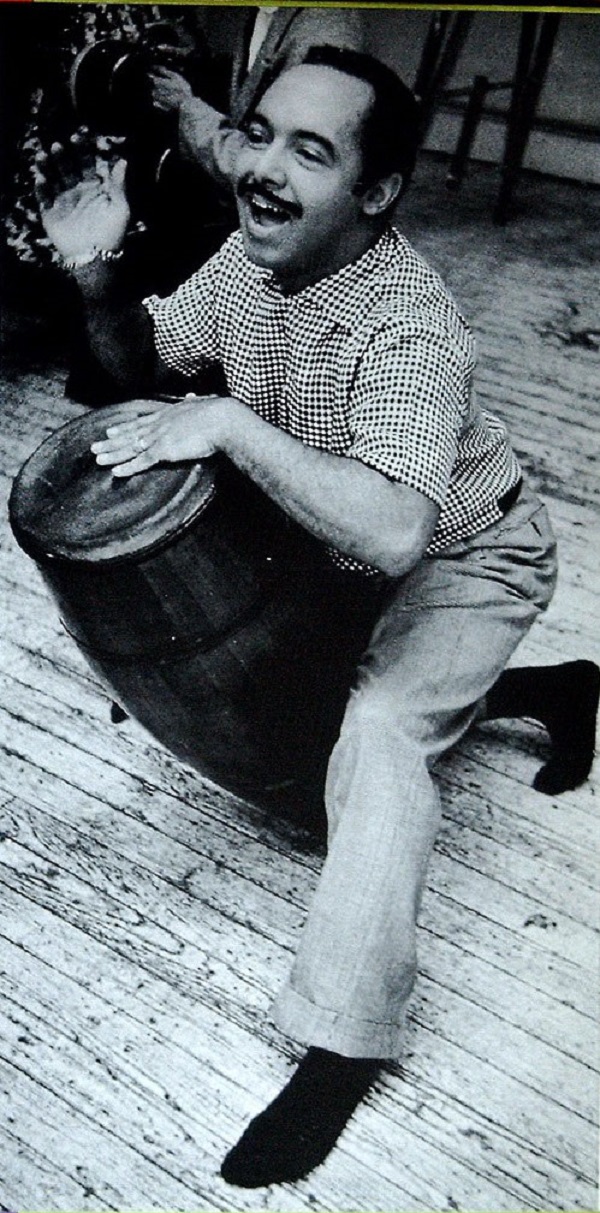
On December 3, 1983, Pantaleón Pérez Prado, an excellent bass player and composer, passed away in Milan, Italy. He was born on December 27, 1926, in Matanzas, Cuba.
Pantaleón’s Beginnings and Career
Pantaleón followed in the footsteps of his famous older brother, Dámaso Pérez Prado. At age 18, he formed his first orchestra, which he left in 1950 to join Dámaso’s group as a double bassist, accompanying him for several years.
The Legal Dispute
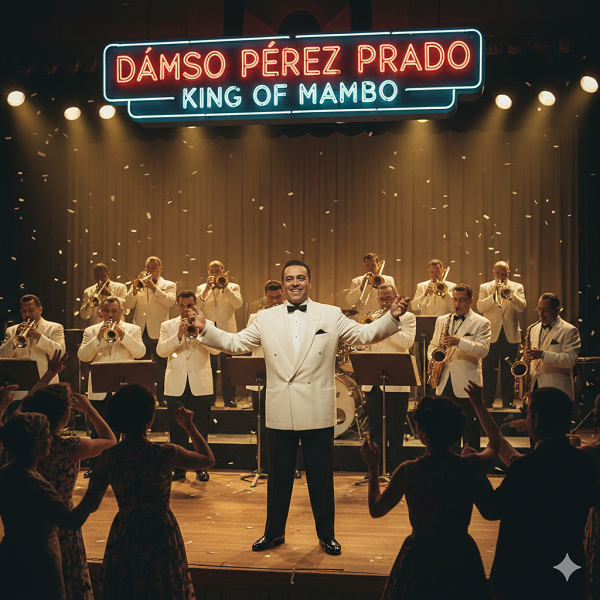
In 1956, a dispute between Dámaso Pérez Prado and his younger brother, Pantaleón (1926–1983), led to an unusual legal conflict. Dámaso sued his brother for $500,000, accusing him of impersonation.
In Hispanic culture, it is common for children to receive both parents’ surnames. In this case, the brothers’ birth names were Dámaso Pérez Prado and Pantaleón Pérez Prado, respectively, with Pérez being the father’s surname and Prado the mother’s.
Dámaso initiated legal action that concluded with Pantaleón being prohibited from using the title “Mambo King,” while also being required to use his full name. Some suggest that, beyond the lawsuit, there was a tacit agreement between the two brothers, based on the fact that Dámaso visited Europe infrequently, focusing his activities in the Americas, while Pantaleón permanently settled in Milan.
Name Confusion and The Conflict’s Revival
Originally, RCA credited the recordings to Dámaso Pérez Prado. However, when his records began appearing in the US, the record company shortened his name to the more alliterative Pérez Prado. In 1955, Dámaso dropped his full name and legally changed it to Pérez Prado.
Around that time, Pantaleón, who played bass with his own group, appeared at the Alhambra theater in Paris under the name “Pérez Prado, el Rey del Mambo.” Pantaleón was subsequently restricted by court order from passing himself off as Pérez.
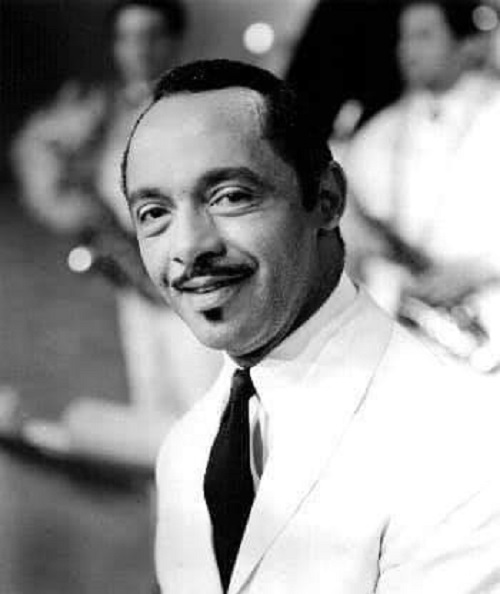
The ensuing lawsuit effectively put Pantaleón out of commission, but the younger brother had a form of posthumous revenge. When Pantaleón died in 1983, a widely circulated obituary was headlined “Mambo King Dies in Milan,” leading many people to (erroneously) believe it was Dámaso who had passed away.
Pantaleón’s Career and Legacy
Pantaleón Pérez Prado performed in Greece and traveled to Iran at the invitation of the Shah himself and his wife, Princess Soraya. He remained active until shortly before his death in 1983.
Dámaso Pérez Prado’s Notable Hits
Dámaso Pérez Prado’s best-known songs include:
Collaboration:
Los Mejores Salseros del Mundo
Also Read: Israel “Cachao” López, a Cuban musician and composer, has been hailed as “the Inventor of Mambo
In International Salsa Magazine, we have always tried to cover all types of Latin music artists, including producers, arrangers, composers, singers, musicians, dancers, and club owners. However, it is also important to talk to other platforms that promote Latin music as we do, so we contacted the creator of the website Salsa Vida, Takeshi Young, to learn a little more about this online media site and everything it has to offer the public.

In view of the trouble digital marketing specialist, dance teacher, and competitor Takeshi Young went to create a site like Salsa Vida, we obviously had to ask what relationship he had with Latin music. He replied that he loves to dance and has been doing so for about 19 years. His attendance at various salsa events led him to create a calendar for the San Francisco Bay Area, where he currently resides.
The acceptance he had led him to include much more content like articles, events, guides, and much more. The main goal was to show salsa lovers all the places they could go to enjoy this genre, but over time, Salsa Vida was turning into a sort of online newspaper that provided information on many other things related to the same topic, especially dance academies. For its operation, it uses tools like WordPress, iTools, and Chat GPT as an information bank to his writings, most of which are of his authorship.
He used the name “Salsa Vida” because of the lifestyle that he associated with salsa, which he considered to be unifying, nourishing, and joyful.
One of the most annoying parts about creating Salsa Vida was the calendar, as Takeshi always had to keep an eye on updates, date changes, and event cancellations. Fortunately, he always received information from many of the organizers, who told him when there were any changes in their schedules.

Takeshi pointed out that, at present, Salsa Vida’s most important goal is to teach and promote salsa around the world, which has led him to write all kinds of articles in which he seeks to educate his community on all kinds of topics related to Latin music, such as “what is pachanga” or “what is cha cha chá.” With this, he wants those interested in learning about dancing or knowing more about this rich world to have a starting point from the theoretical part.
In addition to that, the website still maintains the calendar to help salsa lovers find events related to their passion near their homes.
Takeshi claims to have so many contacts with a lot of bands, especially in the Bay Area, which has helped him keep on growing his website. However, the people he interacts with most in this environment are dancers and instructors who give him a lot of information about their work with their academies and students.
Moreover, his work has also helped him gain invites and press passes to all kinds of events and concerts in both San Francisco and the rest of California, allowing him to cover them and bring the latest updates to his loyal readers.
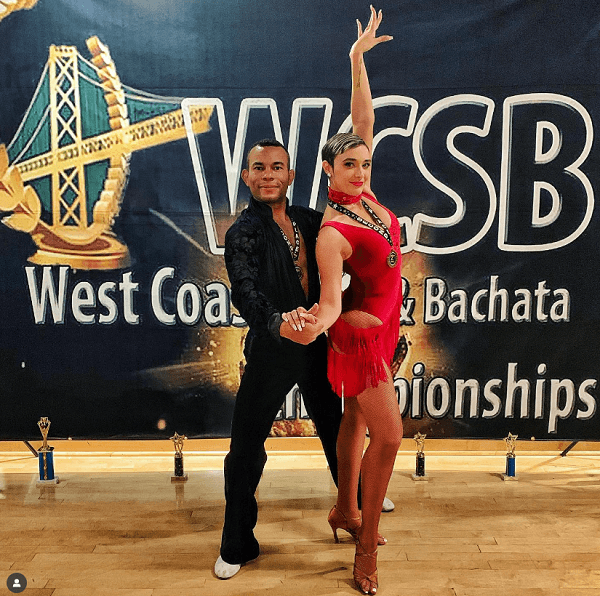
As for Takeshi and Salsa Vida’s goals for the coming months, the creative young man keeps searching for and publishing events from around the world for his readers to see, as well as highlighting the importance of expanding and publishing even more countries in his calendar so that many more salsa fans from other latitudes can use Salsa Vida to find what they want.
Today, the Salsa Vida calendar has events in about 80 countries, but Takeshi says it is not enough and wants to expand much more to other locations. He also wants to add more languages to make visitors to his page feel more comfortable, and new sections such as “Dancepedia” that would come to be a kind of Wikipedia, but focused on dance.
And if that were not enough, he wants to design an app through which those interested can use the same functions of the site in a much more comfortable and interactive way from any mobile device.
As well as handling Salsa Vida, Takeshi is also a digital marketing specialist and teaches salsa at San Jose State University twice a week.
Importantly, he has a BA in philosophy and a BS in software engineering, both from the aforementioned university. During those years, he was also a member of his class’s salsa and mambo clubs.
Read also: Haitian bandleader and musician Mac Gregore Brunis fulfills his dream in Montreal
Europe / France / Paris
Paris, the city of lights, is known for being a cosmopolitan city. Every month there is a special night where Latin music lovers and musicians have the chance to enjoy a new experience full of good music and dance lessons. LeSalsaClub’Party is the exclusive event where amazing DJ’s and artists of France offer an amazing show of Latin music.

The party is on September 18, and we promise you’ll have a great time because of the performance of the amazing DJ SER-J, the ambassador of salsa in Paris. His passion for music has always been a no-brainer, but it is with the salsa that she became ubiquitous. His collection grew quickly from CDs to vinyl. “A new way to listen to, greater harmonic richness, but especially the opportunity to get my hand on yet never digitized albums and therefore very little known.”
The party will be in 10-18 Rue Des Terres Au Curé 75013 Paris
For more information and prices, check the website: http://www.djser-j.com/ You can’t miss the night of your life! Soundcloud DJ Ser- J https://soundcloud.com/djser-j