• Skip to primary navigation
  • Skip to main content

International Salsa Magazine

  • HOME
  • Previous editions
    • 2026
      • ISM / June 2026
      • ISM / May 2026
      • ISM / April 2026
      • ISM / March 2026
      • ISM / February 2026
      • ISM / January 2026
    • 2025
      • ISM / December 2025
      • ISM / November 2025
      • ISM / October 2025
      • ISM / September 2025
      • ISM / August 2025
      • ISM / July 2025
      • ISM / June 2025
      • ISM / May2025
      • ISM / April 2025
      • ISM / March 2025
      • ISM / February 2025
      • ISM / January 2025
    • 2024
      • ISM / December 2024
      • ISM / November 2024
      • ISM / October 2024
      • ISM / September 2024
      • ISM / August 2024
      • ISM / July 2024
      • ISM / June 2024
      • ISM / May 2024
      • ISM / April 2024
      • ISM / March 2024
      • ISM / February 2024
      • ISM / January 2024
    • 2023
      • ISM / December 2023
      • ISM / November 2023
      • ISM / October 2023
      • ISM – September 2023
      • ISM – August 2023
      • ISM July 2023
      • ISM Edition June 2023
      • ISM – May 2023
      • ISM April 2023
      • ISM March 2023
      • ISM February 2023
      • ISM January 2023
    • 2022
      • ISM December 2022
      • ISM November 2022
      • ISM October 2022
      • ISM September 2022
      • ISM August 2022
      • ISM July 2022
      • ISM June 2022
      • ISM May 2022
      • ISM February 2022
      • ISM January 2022
    • 2021
      • ISM December 2021
      • ISM November 2021
      • ISM October – 2021
      • ISM September 2021
      • ISM August 2021
      • ISM July 2021
      • ISM May 2021
      • ISM April 2021
      • ISM June 2021
      • ISM March 2021
      • ISM February 2021
      • ISM January 2021
    • 2020
      • ISM December 2020
      • ISM November 2020
      • ISM October 2020
      • ISM September 2020
      • ISM August 2020
      • ISM July 2020
      • ISM June 2020
      • ISM May 2020
      • ISM April 2020
      • ISM March 2020
      • ISM February 2020
      • ISM January 2020
    • 2019
      • ISM December 2019
      • ISM November 2019
      • ISM October 2019
      • ISM Septembre 2019
      • ISM August 2019
      • ISM July 2019
      • ISM June 2019
    • 2016
      • ISM December 2016
      • ISM November 2016
      • ISM October 2016
  • Spanish
  • Download Salsa App
    • Android
    • Apple

Search Results for: Latin dance

We’ve talked with Elizabeth Meeker Howard, one of the members of Las Sabrosas Latin Orchestra

On other occasions, we talked to all-female musical groups to promote the tremendous female talent we have in Latin music. The amazing artist we talked to this time is no exception.

We are very happy to chat with trumpeter Elizabeth Meeker Howard, who told us about her fascinating project, Sabrosas Latin Orchestra, and some other aspects of her career worth mentioning. 
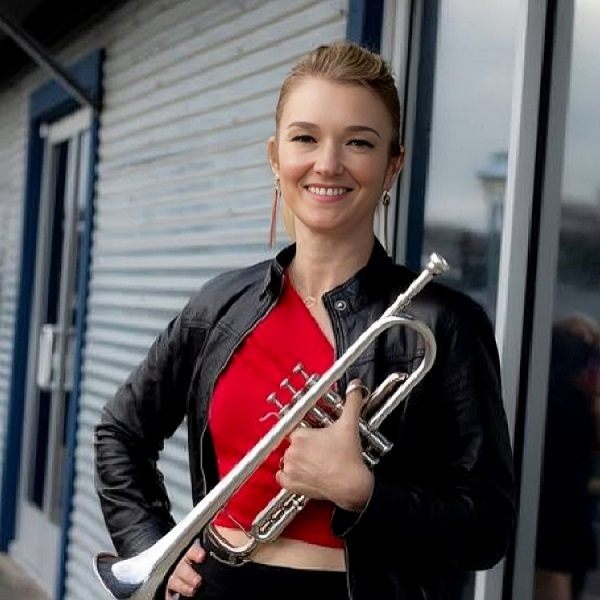
Elizabeth posing for the camera
Trumpeter and music teacher Elizabeth Meeker Howard posing for the picture

How Elizabeth started her career

The artist began her story telling us that some members of her family are involved into arts as is the case of her grandmother, who was a professional musician. Similarly, her parents instilled in her a love for music, so the young girl developed an appreciation about this world from an early age to the point that she joined the school band in fourth grade. She and her classmates were given the opportunity to choose their own instrument, so she chose the drums, but she soon discovered that it was not what she wanted to play.

When she was about nine years old, she began playing the trumpet and a little piano, but she would never use the latter professionally. 

In adulthood, she began studying classical music, specifically, classical trumpet, at Yale University, but she knew she wanted to do something that would appeal much more to the public and make people dance and have fun, which is when salsa came into play. During her academic training, she experimented with other genres such as pop and its derivatives, but that was not what she was looking for her professional future. Today, she plays salsa, funk, rock, and even mariachi quite skillfully.

She also earned her bachelor of music in the área of classical trumpet from Boston University, and later earned a master’s degree in the same subject from Yale.
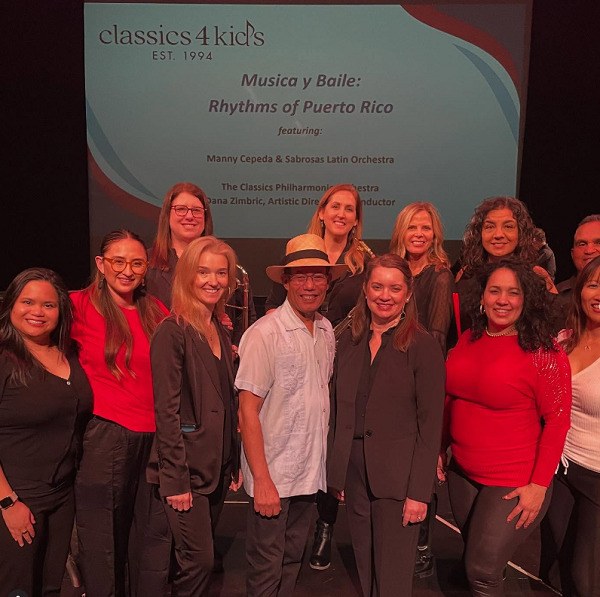
The members of Sabrosas Latin orchestra and Manny Cepeda
The members of Sabrosas Latin Orchestra with composer, percussionist, and singer Manny Cepeda

Beginning of her professional career

Elizabeth’s professional career as a musician began in high school, as she was hired for various small events. In college, she played with various bands and on projects of others, but she was not a regular member of any of them, and that situation continued even after she graduated from college. At that time, she was already working with salsa orchestras.

Once in San Diego, he learned everything he knows today about salsa, as this genre unfortunately is not taught in conservatories, as it happens with classical music and jazz. He added that “the only way to know salsa as a musician is to play in salsa bands. That’s how I learned: joining these groups.”

She does not deny that classical music offers a solid musical training to anyone who wants to study it, learn how to read music, transcribe it, and play the trumpet. If someone gives her a score, she is perfectly capable of playing that music, but it is also important for her to learn how to play that specific style. In the case of salsa, the artist says that it has some nuances that cannot be read in a score, so the attention should be paid to many details such as the joints between notes and the quality if the sound, which are only learned by listening to records and playing with musicians who are good at that style.

Elizabeth and the rest of the orchestra
From top to bottom: Elizabeth Meeker Howard, April Leslie, Shirley Coggon, Monica Saenz, Tomo Vida, Justine Dolorfino-Thieman, Mariela Contreras, Alyssa Keene, Monette Moreno, and Janet Thornton Realtor

Las Sabrosas Latin Orchestra

One of the things that spurred the creation of Las Sabrosas Latin Orchestra was the small number of women playing salsa, especially together, so she and other like-minded female artists began meeting up to rehearse and see how they sounded. At first, they were not sure enough how large or small the group would be, but eventually the girls who were already involved invited others to join, which resulted in a large salsa orchestra. Their official debut was scheduled for shortly before the pandemic, so it all got delayed a bit, but once the restrictions of that time fell, they were more than ready to start playing.

Something Elizabeth wanted to emphasize is that people have always been very supportive of them and showed much interest in the project due to the novelty of what they offered and the quality of their performance, which remains even today.

Music teaching

Besides being part of an orchestra, Elizabeth also teaches music at the university level and has led numerous student bands and ensembles, which has given her the experience needed to serve as musical director for various projects. Thanks to what she learned, she knows what can make a group succeed or fail.

Teaching and her work with Sabrosas complement each other perfectly, and one helps her be better every day at the other, which is why she speaks about both activities as a whole in her career.

Read also: Edgardo Cambon will celebrate his 40-year career at Yerba Buena Gardens

Get Away and Dance in Almería

Europe / Spain / Almería


Get Away and Dance in Almería

October 21, 22, and 23, 2016 – El Toyo Conference Center, Almería, Spain

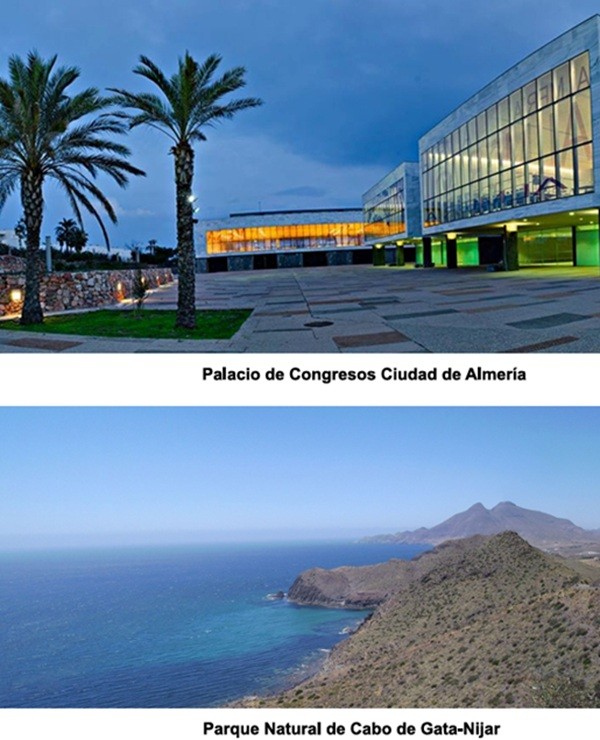
This is the ultimate event featuring music, Latin dance, sun, beach, pool time, tapas, and sightseeing tours through the Cabo de Gata Natural Park—all set against the best salsa, bachata, and kizomba atmosphere. Enjoy over 30 shows and more than 30 workshops with world-class artists like Adrián and Anita—six-time Salsa world champions—alongside an extraordinary lineup of instructors, teachers, entertainers, performers, and DJs. Among them is the formidable Afro-Antillean music specialist Pablo Bat, with talent arriving from cities across the country—including Granada, Málaga, Murcia, Albacete, Alicante, Valencia, the Canary Islands, and Almería—to ensure an unforgettable experience.

A fantastic atmosphere and great vibes guaranteed!

“Escápate y Baila Almería” (Getaway & Dance Almería)

The Ciudad de Almería Conference Centre and the Cabo Gata Garden Hotel—both located in El Toyo, Almería—offer an idyllic seaside setting, right next to the magnificent Cabo de Gata-Níjar Natural Park.

The event will feature a variety of activities centered around the *Palacio de Congresos Ciudad de Almería* and the Cabo Gata Garden Hotel. Both venues are located in El Toyo, Almería—an idyllic seaside setting right next to the magnificent Cabo de Gata-Níjar Natural Park.

For more information, visit:

  • salsatore.com
  • http://www.facebook.com/escapateybailaalmeria/

Enjoy the Tempo Latino 31st edition with the best of Latin music in Europe

That has been a very long year waiting a new edition of the biggest Latin music event in Europe! This July, fans of our music will finally be able to enjoy the 31st edition of Tempo Latino, which is one of the largest international festivals of Afro-Cuban, Afro-Caribbean, and Latin music. During the four days of the festival, the audience can enjoy the best of salsa, Latin jazz, mambo, timba, and fused rhythms every year.

This festival is usually held in the small village of Vic-Fezensac in southwestern France, since 1994, which is when its first edition took place. Nowadays, the event is typically held during the last days of July and the first days of August. 

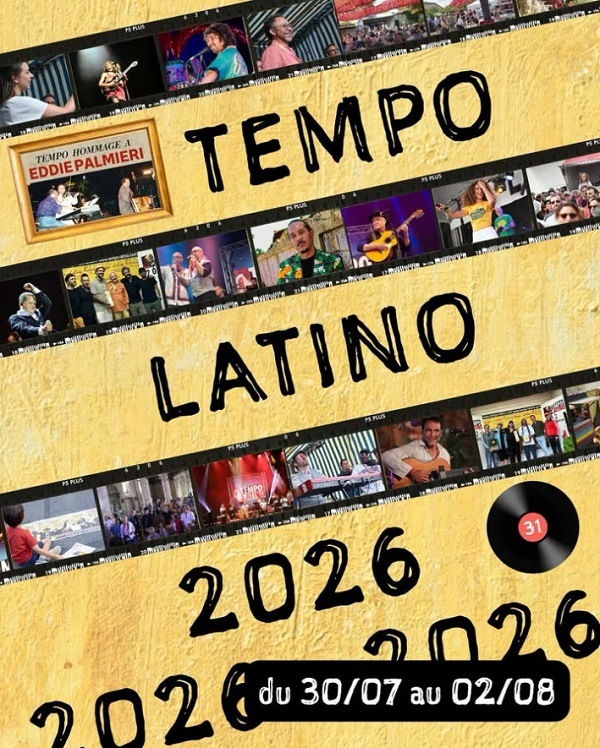
Tempo Latino 2026
One of the arts for Tempo Latino 2026

A little of the history of Tempo Latino

As mentioned previously, the festival began, and is still held, in Vic-Fezensac, a small village of around 3,700 inhabitants located in the Gers, which is well known for its bullfighting tradition. This association was founded in 1993 by music lover and Latin music DJ Eric Duffau, an artist who sought a different alternative to traditional commercial communities and aimed to bring traditional musical roots to the heart of Europe.

The first edition, which took place in the summer of 1994, aimed to transform the small French village into the mecca of salsa, Cuban son, and Afro-Latin jazz for four days a year.

An initiative that began as a small project has grown into one of the biggest salsa festivals of the world, which already enjoys the support of 500 local volunteers who organize into neighborhoods and homes. To this day, Tempo Latino has achieved a perfect balance between an ambitious production and a local and friendly atmosphere. It should also be stressed that it has been held on a regular basis since 1994, except for 2020 and 2021 due to the COVID-19 pandemic.

Evolution and golden age

The festival expanded so much thanks to its authenticity and freshness that it has come to be known as “The One” and has established itself as a mandatory stop for the greatest Latin music glories, including Celia Cruz, Eddie Palmieri, Rubén Blades, Willie Colón, Tito Puente, Los Van Van, El Gran Combo de Puerto Rico, La Sonora Ponceña, Oscar D’León, Cheo Feliciano, Ismael Miranda, Johnny Pacheco, and many others.

Maite Hontelé Y La Novia

Similarly, since its foundation, the festival has also served as a springboard for new musical talent, including solo artists and groups performing salsa brava, Latin hip-hop, Afro-Cuban funk, and other genres from places such as Cuba, Colombia, Venezuela, Puerto Rico, and New York. 

Activities beyond the concerts

Tempo Latino has come to a point where it is no limited only to stage performances, which are still the main attractions for attendees. They also offer dance workshops, which are designed for both amateurs and professional dancers interested in learning more about the roots and evolution of Latin rhythms.

Similarly, the festival also offers music and percussion workshops, introducing both amateur and professional musicians to important topics such as the clave, rhythm, and a bit of the history of Latin and Afro-Cuban music. In the case of percussion workshops, instructors teach students how to play the congas, timbales, bongos, and campana. As for wind instruments and musical combos, classes are given in trombone, trumpet, and saxophone.

We also cannot fail to mention the international market, where attendees can buy all sorts of things from our countries, such as instruments, clothing, traditional cuisine, handicrafts, souvenirs, and more.

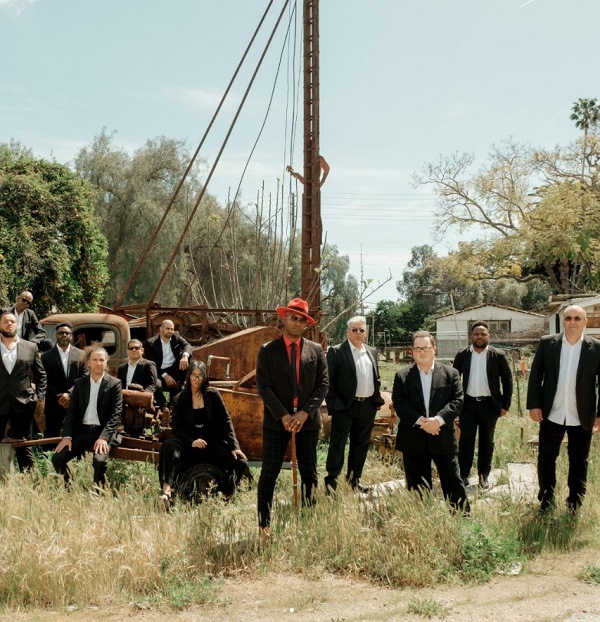
Orquesta Akokan, which is going to perform in this edition

Stages and structuring of the festival

Another of the great attractions of Tempo Latino is its “geo-rhythmic” network of locations, where you can find both concerts and peripheral activities that can be enjoyed simultaneously. Below are some of those that will be available for the 2026 edition:

  • Tempo Arena: This stage is located in the Vic-Fezensac bullring, known for its open acoustics and intense energy every night of the festival. Among the top artists that will perform there are Maïté Hontelé Y La Novia, Orquesta Akokán (Friday, July 31), Matt Bianco, Rogê (Saturday, August 1), Alfredo Rodríguez, and Tony Succar (Sunday, August 2).
  • La Conga (Tempo Social Club): This other stage is also very popular because it has a beachy vibe with real sand and operates from early morning until late into the night. As for the artists who will be performing, we can mention the queen of Argentine electronic cumbia, La Yegros, DJ Çarava, and DJ Lafuriosa.
  • Camp Tempo: This open-air format is packed every year with new musical proposals, alternative fusions, brass bands, and street groups that give life to the village during the day. In the 2026 edition, some of the alternative bands will include Chicos y Méndez, Chicharrón, Pixvae, and Aguanomas. 
  • Saint-Pierre Church: This venue is solely and exclusively reserved to small, intimate acoustic concerts where, as a general rule, only pianists and Latin jazz artists perform in the festival’s most solemn format.

Read also: How Artificial Intelligence changed the music biz forever

The Latin Ensemble enchants the United States and Spain with its talents

Luis Manuel Rondón is a bandleader and composer with whom we have been able to talk about the most important details of his career in a conversation of a little more than half an hour. Rondón currently leads the group The Latin Ensemble, of which he spoke along with other important issues.

Lead singer Luis Manuel
Director and lead singer of The Latin Ensemble Luis Manuel Rondón

How Luis Manuel got into Music

Luis Manuel began in music as young as 12 years old, which means that he has more than 50 years of artistic career. His first job in the arts was as a percussionist for a Venezuelan gaita group known as Los Monumentales, when he served as a bongo player and bucket drummer. His role as a singer came about by accident, as it was not something he was looking for.

It turns out that the group had a singer nicknamed “El Cabeza” who had an amazing voice, but he had a big and unforgivable flaw. He was a drunk with misconduct who used to disappear and skip rehearsals and the most important performances. Luis Manuel recalls that they had a very important rehearsal in the days prior to a major event that weekend, so the band members tried to contact “El Cabeza” by all possible means, but they could not talk to him.

After several days of no news from him, they decided to test the vocal skills of the members to see who could “save the day” and fill the place of singer. That was when Luis Manuel started singing the famous song “La Grey Zuliana” and convinced his bandmates to make him the replacement. From there, he sang for various groups until, upon coming of age, he managed to join a fully professional group and began to be contacted to perform at dances.

He also played with Expresión Gaitera and Grupo Sancoson, from which Grupo Jarana originated. Many of the members of the latter ended being part of Guaco. The members of Sancoson attended the Liceo Aplicación, where Luis Manuel went to high school alongside the famous bassist Carlos Puche.

Some time later, he joined Grupo Cóctel Y Canela and became the owner of Grupo Cactus, which was very famous at the time. He was also a member of Dalila Show La Orquesta, La Orquesta Sibari, and La Billo Caracas Boys. 

Luis Manuel and Ray
Luis Manuel Rondón and Ray Barretto

Move to the United States

In 1999, Luis Manuel moved to the United States and settled in New Jersey, where he recorded an album which had some success in the New York music scene and won the Association of Latin Entertainment Critics in 2007, also known as the ACE Award. After that, many important things happened in his career, such as signing with Sony Music, which released and distributed his work.

He lived a very good time until the famous economic crisis of 2008, which led many orchestras to lay off some of their staff and hurt him to some extent. However, that did not stop him from continuing to open up new paths to the music, and his persistence led him to collaborate with Oscar D’León, Gilberto Santa Rosa, Tito Nieves, José Alberto “El Canario,” Johnny Pacheco, Ray Barretto, and many others. 

Listening to those artists as a child made him feel completely out of their league, so having collaborated with them was a dream come true for him. 

How He came to start his own project

Until that point in his career, Luis Manuel got great professional and personal satisfaction, but there was something very important missing in his list of successes: having his own project. He gave shape to this idea when he began his relationship with the woman who is his wife today, Gabriela Caraballo, an economist by profession with an entrepreneurial mindset. Some day talking about it, she proposed him to create an organization, which they later named The Latin Ensemble.

Luis and Johnny
Luis Manuel Rondón and Johnny Pacheco

From that moment on, they began to be hired for private parties and corporate events of all kinds, to the point that they even performed at a Dolce & Gabbana event for the grand opening of one of their stores. They also performed for Donald Trump at Mar-a-Lago and put on big shows at important people and places.

He has also received important awards, such as the Estrella Music Award at the James L. Knight Center in Miami, alongside the likes of José José and Grupo Niche. He also received the Ángeles de Amor Award, which honors individuals who contribute to supporting Latinos in the United States.

We must also mention the Latino Magazine Award, which he won in 2019 and 2022.

Time in Spain

For about six years now, Luis Manuel and the group have also been based in Spain. It all began when they were hired to perform at the Carnival of Tenerife in October 2019, so he, his wife, and their young daughter traveled first and rented an Airbnb. They had a contract to perform at the party of the Candlemas’s Virgin, but the point is that the event was scheduled for March 2020, when the COVID-19 pandemic had already started.

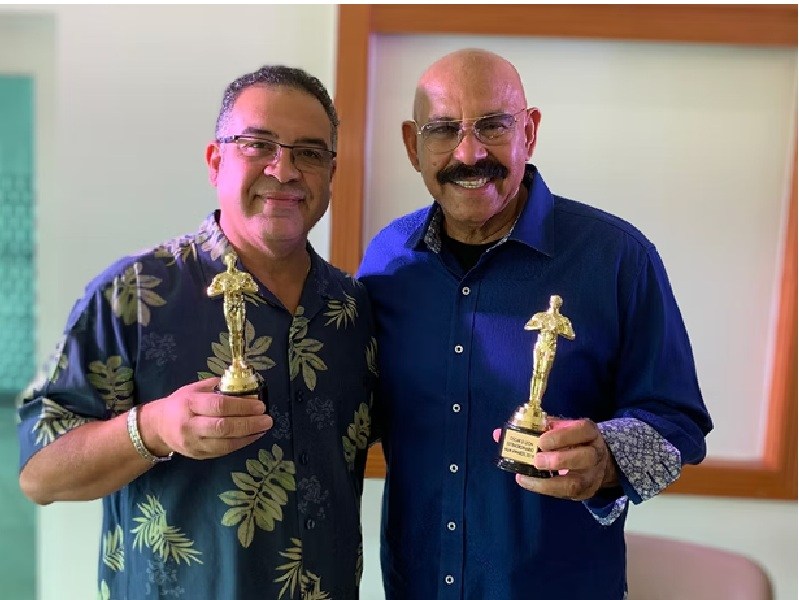
Luis and Oscar
Luis Manuel Rondón and Oscar D’ León

Because they could not leave, Luis Manuel and his family rented an apartment where they had to stay until early 2021, which is when restrictive sanitary measures were finally relaxed and they could leave Tenerife. Fortunately, this was not a waste of time for them, as they saw the potential of what they could accomplish in Spain, so they moved to Madrid and tried their luck there. 

Throughout this time in Europe, Luis Manuel and his group have performed throughout Spain, Portugal, France, and most recently in Belgium. In Belgium, The Latin Ensemble was hired to perform at a royalty party, and the group has done such a fantastic job that they will perform at another event for the same family, making it clear how talented the members are and how hard they have worked to make a name for themselves in the industry.

Unfortunately, because it is a royal family, they were not allowed to take pictures or record videos, but it is still a great event in the career of Luis Manuel and his bandmates.

Read also: John and Liz reveal details of the 16th annual SF Salsa Festival

Bailatino & Negramenta

Latin America / Venezuela / Caracas

Bailatino & Negramenta

Bailatino & Negramenta Flyers

This December, Hard Salsa Bar—the go-to spot for themed parties dedicated to spreading, promoting, and enjoying Latin music—invites you to experience an incredible atmosphere in their top-notch facilities.

They have just announced their year-end bash taking place on December 17th. The event features a New Year’s dance hosted by Hard Salsa Bar and Christian Paul Escobar (Splinter), starring two of the best Venezuelan orchestras today: Bailatino and Negramenta. It will be an authentic “mano a mano” (head-to-head) performance featuring their greatest hits.

The night will be soundtracked by DJs Augusto Rafael Felibert Palacios and Jesús Adrán, who will keep the energy high with stellar musical repertoires. It’s a night designed to satisfy true salsa aficionados and keep everyone dancing until dawn. Get ready for a world-class celebration as we gear up to say a grand goodbye to 2016 in the coming days.

This exciting event will take place on the second floor of Posada del Pollo on Panteón Avenue, Caracas. The party kicks off at 8:00 PM and will keep going until 6:00 AM the following morning. For all those attending this great event, guaranteed security will be provided, along with free on-site parking (limited to 50 vehicles).

Bailatino & Negramenta

Starting December 1st, tickets will be priced at 6,000 Bs. Please note that tickets will not be sold at the door, and availability is limited.

Affordable drink prices are guaranteed throughout the night; however, there are certain entry requirements and house rules to keep in mind:

  • Prohibited Items: No weapons, t-shirts, caps, backpacks, or luggage allowed.
  • Age Limit: Must be at least 21 years old with a valid ID (cédula).
  • Dress Code: Semi-formal attire.
  • Seating: Tables cannot be reserved (first-come, first-served).
  • Admission: We reserve the right of admission; disruptive or intoxicated individuals will not be permitted.

“By following these guidelines, we can all enjoy the long-awaited dance that Hard Salsa Bar has put together for the community.”

Hard Salsa Bard
Hard Salsa Bard

For more information or to purchase/reserve your tickets, contact:

  • Phone: (0414) 396-3465 / (0412) 589-5160
  • Email: [email protected]
  • Facebook: @hardsalsabarcaracas


  • « Go to Previous Page
  • Page 1
  • Page 2
  • Page 3
  • Page 4
  • Page 5
  • Interim pages omitted …
  • Page 143
  • Go to Next Page »

International Salsa Magazine (ISM) is a monthly publication covering salsa activities around the world and has been publishing since 2007. It is a worldwide network of volunteers coordinated by ISM Magazine. Together, we work to strengthen salsa events around the world.