










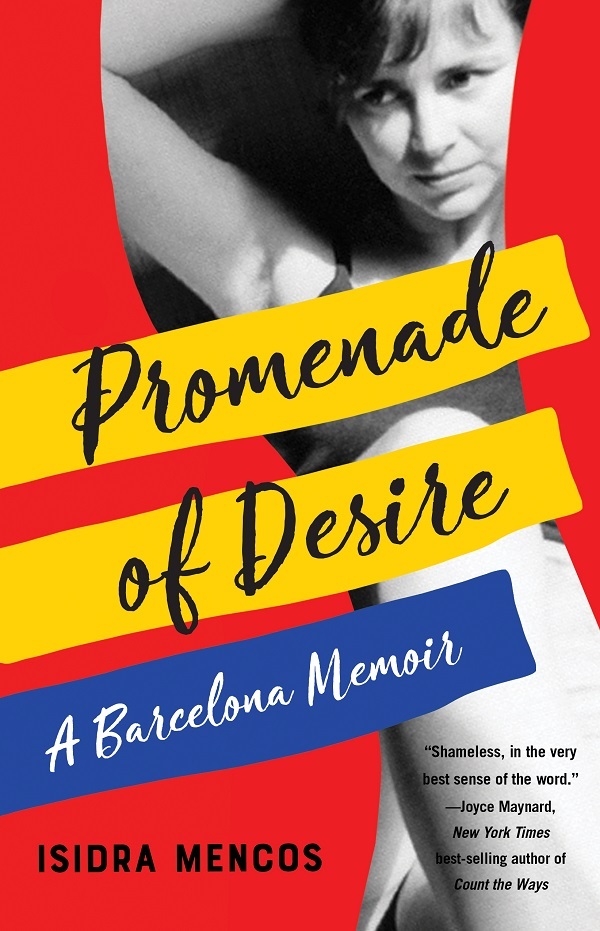
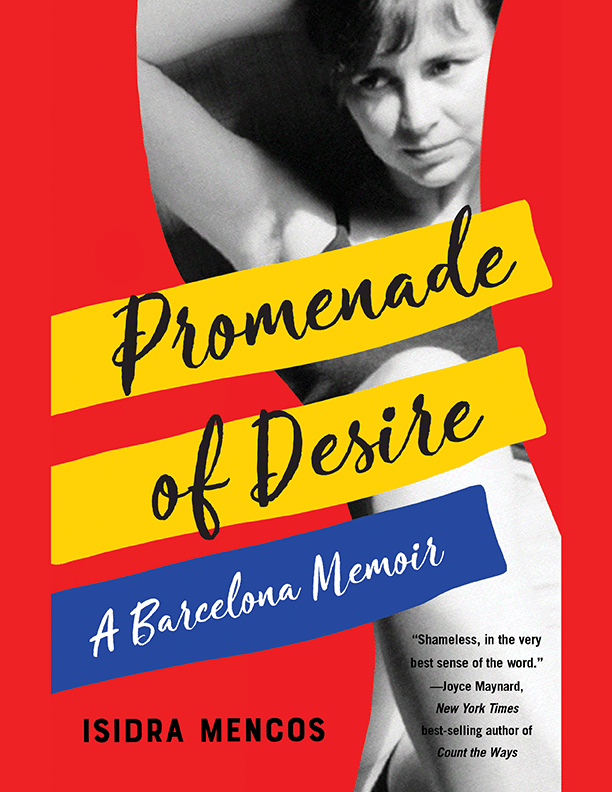
Isidra Mencos is the author of the engrossing, page-turning book, Promenade of Desire, A Barcelona Memoir. This book is a frank, honest and revealing coming of age story as a young woman in the transitional period marking the end of the Franco dictatorship to political freedom in Spain. It chronicles her formative experiences growing up with her family, embracing her sexuality, her relationships with men, discovering her liberation through Salsa music and finding herself.

LM: In your memoir Promenade of Desire, you describe your fascination with Salsa music as a liberating force during your coming of age as a young woman. Why Salsa music?
IM: I grew up in Spain under a dictatorship closely allied to the Catholic church. It was a very repressive atmosphere, not only politically but also culturally and sexually. From a very young age I learned to associate sensuality and pleasure with shame and guilt, so I felt disconnected with my body.
When the dictator died in 1975, I was 17 years old and in college. Spain transitioned to democracy and the culture went from repression to liberation and hedonism. That’s when I discovered Salsa music and dancing. From the moment I heard Salsa for the first time, I knew it was the music I had waited for my whole life. Although I didn’t know the steps, I was instinctively in sync with the beat.
Salsa allowed me to reconnect with my body and my sensuality in a guilt and shame-free way. It opened the door to a new me, a young woman aware and accepting of her body’s needs and desires. I fell in love with the great Salsa icons of the 70s, from the Fania All Stars to Rubén Blades, and Los Van Van. I went dancing three or four nights a week, until 5 a.m. I couldn’t get enough.
LM: What was the nascent Salsa scene like in Barcelona in the eighties?
IM: Salsa was not yet popular in Barcelona, where I grew up. Spain had been very isolated from other countries during the dictatorship and did not have significant immigration until the mid-70s so the exposure to this music had been limited. When I started dancing in 1977, there was only one dump of a club in the red light district, appropriately named Tabú, full of seedy characters. I was there all the time.
In the 80s Salsa started to gain traction and a few other places popped up. A very famous one at the time was Bikini, which was in a more bourgeois, safer area, and had two rooms, one for Salsa and one for Rock. Every single night the DJ would end the gig with “Todo tiene su final” with Hector Lavoe and Willie Colón. I loved it.
By the time I left Spain in 1992 there were four or five clubs dedicated to Salsa, and live concerts with iconic figures had started to come to the city. There were also Catalan bands that played salsa standards, like Orquesta Platería and others.
LM: What was the popular music in Spain at that time?
IM: Rock and punk were the most popular. Punk represented the rebellious spirit of the youth, who had grown oppressed and now had the freedom, in the new democracy, to be outrageous and excessive without consequences. A very famous punk group was Alaska y the Pegamoides.
LM: Your ex-boyfriend Abili was a prominent pioneer in promoting Salsa Music in Barcelona during that era. Can you describe the triumphs and challenges that he had promoting Salsa music?
IM: Abili had fallen in love with Salsa before me. He was a journalist by profession and had come into some money due to a labor dispute. He decided that he would invest that money into making Salsa as popular as any other type of music in Barcelona. He produced concerts with Salsa greats like Rubén Blades, Eddie Palmieri, Ray Barreto, Luis Perico Ortiz and others, who came to Spain for the first time. Unfortunately, he was a bit ahead of his times. There wasn’t still a big enough audience to fill in the venues, and he lost a lot of money. That said, he was a major contributor to popularizing Salsa in Barcelona. For example, he ran a weekly Thursday salsa night for a few years at a club, with a live band (Catalan players) and a DJ, and you could see the club filling up more and more every week.
He later got involved with one of the major Salsa spaces in Barcelona, El Antilla, programming the live bands and promoting the scene.

LM: You have visited Barcelona throughout the years since you immigrated to the United States. What are the differences that you have seen in the Barcelona salsa scene?
IM: Salsa is now very well established in the city, in part due to the increasing numbers of Latin American immigrants who started coming in the 80s and the 90s. There was a big wave of Cuban immigration starting in the 90s which changed the direction of Salsa in the city, making timba and rueda very popular, for example.
Salsa was also taken on by several bands which mixed Catalans with Latina American immigrants, and produced great music, such as Lucrecia or, nowadays, Tromboranga.
That said, when I go back now I notice that there are less venues that offer live bands on a regular basis. It’s more of a DJ scene with dance instructors.
LM: In the book, you described Salsa music as a passionate force in your life as you dealt with your family, relationships with different men, sexuality, and the transition in Spain from Franco’s era of dictatorship and repression to freedom and democracy. What do you want the reader to take from reading your book?
IM: I think we all have repressed one or more parts of ourselves from childhood on, in order to be accepted by our parents, our teachers, our friends, our bosses…. My memoir is an inspirational tale about finding a way to reclaim the parts of yourself that have been hidden and becoming a whole person again.
Read also: The multifaceted artist Yamila Guerra and all her projects





Welcome Harold to International Salsa Magazine “The Only Salsa Magazine in the World”. First of all, tell us: since what date does “La Crítica Orquesta” come out? Thank you Professor Carlos Colmenárez, for the wonderful invitation that you make us from your city Barquisimeto, in our sister Venezuela, with a fraternal greeting and thus let us know a little more through you and this prestigious media; because let me tell you friend, that the Orchestra begins to sound since 2012, with an enterprising, constructive, quality and very professional work, in search of an authentic sound that identifies it and allows it to take its rightful place in the salsa environment here in Colombia and internationally.
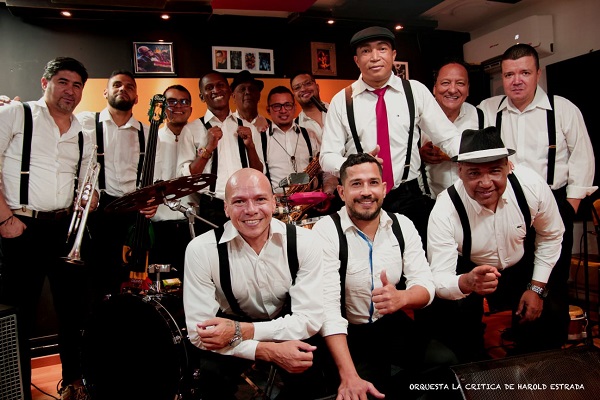
And in these 10 years of trajectory, have you had important participations in events and festivals? Indeed Professor Carlos, we had the honor of being present at the World Salsa Festival 2012 and also in the fairs of Cali, likewise several departments of the country have witnessed this magnificent evolution, seeking to remember the essence and expression of salsa Caleña with that characteristic sound and Orchestras that left their mark on the Afro-Caribbean and Colombian music.
Which international artists have been accompanied so far by “La Crítica Orquesta”. Carlos, we have had the privilege of accompanying here in Colombia salsa artists of the stature of: Rafu Warner, Luigi Texidor, Chamaco Rivera, Ruben Sierra, Julio Lopez, Manny Fuentes, and more, demonstrating the musical support of the group.
What is the mission of “La Crítica Orquesta”? We are convinced that our mission is to make quality music for the enjoyment of the people, for the delight of the dancer and the ear of the music lover, but especially, music to free the spirit and cheer the soul.
Who are the members of the Orchestra? “La Crítica Orquesta”, is conformed by: Harold Estrada (conductor and conguero), Oscar Eduardo González (Trumpeter), Cruz Ramón Mayora (Bongos player), Andrés Holguín (Trumpeter), Ramiro Lennis (Singer), Leo Bonilla (Trombonist), Andrés Felipe Silva (Bassist), Marco Felipe Ramírez (Timbalero), Carlos Alberto Cruz and Harrison Muñoz (Singers), Mauricio Bastidas (Saxophonist), Jerry Alejandro Figueroa (Pianist), Gregorio Gómez (Singer), by the way our bongos player, is Venezuelan, born in the city of Naiguatá, but since he was a child he lives in the city of Barquisimeto, to which soon will be back, the experienced and excellent musician Cruz Ramón Mayora Medina.
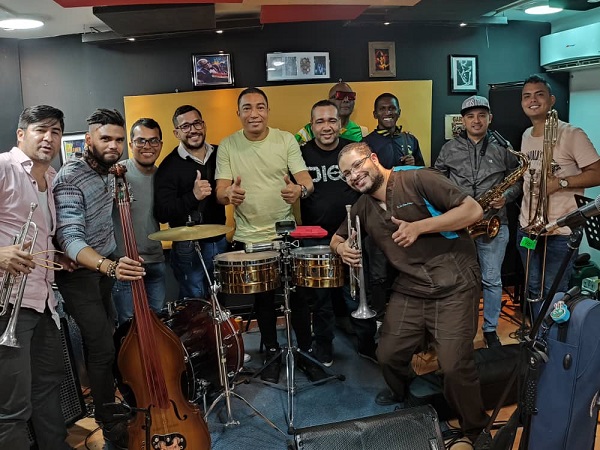
As for productions, have you already recorded some? Yes Professor Carlos, we already have several songs and even videos on Youtube for the knowledge of all. And these are the titles, composers, arrangers and performers: “Cannabis”, this is the most recent single recorded just a month ago, with lyrics by: Einar Flores and in the arrangements Andrés Silva, both Colombians. “Canallón”, lyrics by Einar Flores (Colombia) and arrangements by Pedro Cruz, (Dominican Republic). “Dale Duro”, composer and arranger Luis Cabezas (Venezuelan), the interpreters are: Carlos Cruz, Harold Aguirre and Adrián Barragán, respectively.
Upcoming concerts or events? We will be present God willing at the “Concierto Circulación”, on November 26 and also at the Cali Fair.
Thank you for accepting the invitation, brother and friend Harold Estrada and the whole Orchestra, for us it was an honor to have you in International Salsa Magazine salsagoogle.com, and from here we wish the greatest success to “La Crítica” of Colombia, a group that undoubtedly, is putting well in high the Salsa made in Cali.
The privilege is ours, Professor Carlos Colmenárez, and from Colombia, we will transmit you the best wishes of the Orchestra and the whole country, so that you continue to make known the salsa talent of your beloved Venezuela as well as of all the Salseros in the world. Thank you a thousand times for the support you give to “La Crítica Orquesta”, and on behalf of all its members, we send you blessings and wish you many successes and long life. You, the social communicators are a key factor to promote and publicize the musical work for Salsa made with quality and international flavor for the dancers and connoisseurs of the genre.
Until next time and we continue salseando…!
You can read: Henry Valladares, a brilliant, versatile, and disciplined percussionist