VANCOUVER
Directory of North American nightclubs |
||
|
|
||
|
|
|
|
|
|
||
|
|
|
|
|
|
|
|
|
|
|
|
|
|
|
|















VANCOUVER
Directory of North American nightclubs |
||
|
|
||
|
|
|
|
|
|
||
|
|
|
|
|
|
|
|
|
|
|
|
|
|
|
|




| Events – December 2025 | ||
|
|
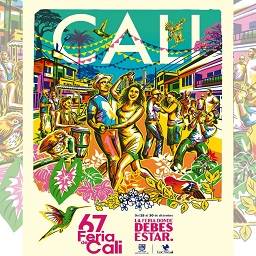 |
Feria de CaliDec 25 / 30, 2025 Santiago de Cali, Colombia |
|
|
 |
El Gaitazo del OsoDec 5, 2025 Poliedro de Caracas From $ 41 |


|
DIRECTORY OF NIGHTCLUBS |
||
|
|
|
|
|
|
|
|
|
|
|
|
|
|
|
|
|
|
|
|
|
|
|
|
Europe / England / London
All the sound and flavors (not only food) in one incredible place! Salsa is a South American bar/restaurant/nightclub. The food menu is a delicious selection of Latin infused dishes with something to suit everyone and our cocktail menu has a fantastic selection of classic and specialty cocktails. It is available for private hire everyday of the week and we can arrange food, drink and entertainment packages specific to your party needs including DJs, the best Salsa music, dancers and more!

Salsa!, 96 Charing Cross Road, London, London, WC2H 0JG.
Opening Hours Salsa Cafe Mon-Sat 10.00-17.00pm.
Restaurant, Bar and Club Mon-Thu 17.00pm-02.00am Fri-Sat 17.00pm-03.00am Sunday 17.00pm-02.00am

North America / USA / Portland
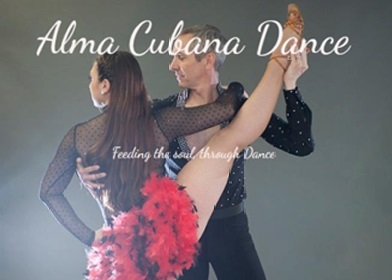
“They are a small dance group in Portland, ME. that offers Salsa and Bachata lessons and have student level teams for both those styles as well as ladies styling. Currently the lessons are on Sundays, you can find everything current on their website www.almacubanadance.com
Alma Cubana Dance was founded in the spring of 2015 by Vanessa Webber (Gutierrez). Alma Cubana means “Cuban Soul”, and being half Cuban, she wanted her group to reflect that heritage. It has been a long standing dream to offer classes, build a performance group and to help grow the Salsa and Latin dance community in Southern/Midcoast Maine. Their focus is to bring quality instruction while maintaining the social atmosphere of Salsa dance.
‘I danced Ballet and Modern growing up and helped develop a salsa company in Boston while in College which I believe is celebrating 10 years or more this year, although I am not with them anymore. I took 8 dancers to Miami last year and they competed in the first Miami Latin Dance Championships where all of them placed in at least one category.”
“They are a small dance group in Portland, ME. that offers Salsa and Bachata lessons and have student level teams for both those styles as well as ladies styling. Currently the My company is very young, only just 2 years, and it is mainly attended by those who love to dance but it is not a full time commitment. We perform locally a lot, and try to take the groups to 2-3 congresses or festivals, usually within driving distance. We have done Boston Salsa Festival twice, Connecticut Salsa Fest last year and Bachateando Miami last year, we plan to go to Connecticut and Boston again this year.” Vanessa Webber (Gutierrez), Alma Cubana Dance founder/director
They will be changing the schedule in April for Spring and Summer. Spring and Summer Schedule will have team practices on Sundays and Wednesday, classes for Salsa and Bachata before our regular latin night, which just celebrated 1 year.”
Sundays
Tuesdays
2017 Spring/Summer Schedule
Sundays: Classes held at Aquarius Ballroom
Wednesdays: Classes held at Pearl Nightclub
7:30–8:15 pm Salsa for Social Dance 8:15–9:00 pm Bachata for Social Dance 8:00–9:00 pm Drop-in Class Salsa/Bachata (Note: There is a potential overlap/error in the Wednesday schedule near the end, listing 8:15-9:00 pm and 8:00-9:00 pm for different classes).
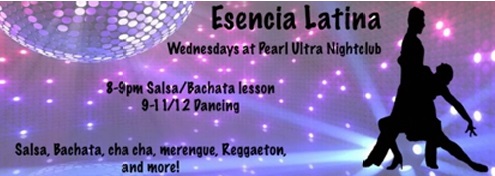
Esencia Latina Wednesdays at Pearl Nightclub
Esencia Latina means “Latin Essence” and that is what they want this night to embody. Start off the night with lessons to get your feet moving from 8-9pm. At 9, the lights go down and have a great mix of Salsa, Bachata, Merengue, Cha Cha and more to keep you on the dance floor. Latin dance is a social dance, its meant to be something you do with your friends and/or family. Loosen up, shake your hips and party like Latinas! Pearl Nightclub is located next to the Tap House 442 Fore St, Portland, ME
The Williamsburg Salsa Orchestra is an 11-member musical group that, as the name suggests, uses salsa as its foundation but also mixes it with other genres such as funk and indie rock to make its music distinct. This combination of beats has led the orchestra to be internationally recognized for its explosive arrangements, modern touches, and repertoire inspired by Anglo-Saxon artists.
Today we are here with arranger and percussionist Gianni Mano (founder) and Argentine singer Solange Prat (vocalist) to find out about their beginnings, the current situation of the orchestra, their roles in the project, and much more.

Gianni began his first address by sharing that his family had some musicians back several generations, but his own interest in music aroused in his childhood. It was then that his parents enrolled him in piano lessons, but his taste for Afro-Cuban and Afro-Caribbean music settled in when he was a teenager, recently moved to Miami to attend college.
In the late 1980s, he got a job at a nightclub, where he discovered hits from great artists who would inspire him in the future, such as Cuban musician and percussionist Carlos “Patato” Valdés. When he listened to the artist, Gianni could hardly credit how wonderful and different it was what captivated his ears.
By the time, the young man was studying percussion focused mainly on classical music, but the impact of those rhythms he had heard was such that he wanted to know much more about them. This led him to move to New York and hire private teachers to know more about salsa, Afro-Cuban, and Nuyorican music, because when heard them, he discovered that this was what he wanted to dedicate himself on an artistic level. He assured us that it is always best to learn music directly from those who play it, so it was the best decision he could take.
The musician assured us that, at that moment, he could not believe the world he was missing, but when he found it, he did not let it slide.
At this point, Solange joined us and said her interest in music began in her native Argentina, where her parents always listened to Gloria Estefan, Juan Luis Guerra, and other artists of this type. On her mother’s side of the family, some relatives played the guitar and a lot of Argentine folk music such as sambas and chacareras, so she had a lot of contact with that music and eventually started singing at a very young age.
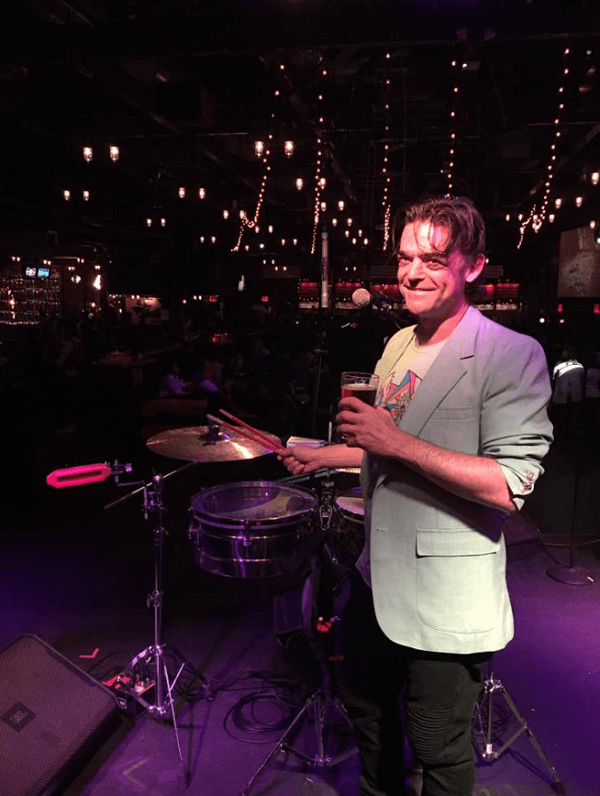
Since the girl used to sing all the time, her mother enrolled her in singing lessons until she got her first opportunity in a band at the age of 15. Added to that she spent about six months on a cruise in the Caribbean, and when she came back, she wanted to continue training on an artistic level, but with a focus on the music she had been listening to during her trip.
Sometime later, she went to visit a friend in New York, and it was there that she met Gianni, who asked her to join The Williamsburg Salsa Orchestra, which was already founded. It was something very new for her, as she had never sung salsa before, but she accepted the challenge anyway, and Gianni served as a mentor for her at all times.
As for his role as an arranger, Gianni told us that, when he left his previous job to devote himself entirely to music, he spent oceans of time transcribing arrangements of other artists’ songs to see how they worked. He remembers that the first song with which he tried this was one by Tito Puente, but then he did the same thing with hundreds more.
For a long time, he listened to all these pieces hundreds of times to understand the form of a salsa-based song and how it needs to be structured for the enjoyment of the dancer on the dance floor. That is how he began to write his own arrangements, although acknowledging that they were not all that good at first, so he had to practice a lot.
His coexistence with groups of different genres and practice with various types of instruments helped him greatly to master this area in all styles.

In 2009, Gianni was making some demos and garnered rave reviews, so he felt ready to start his own musical project, but obviously he could not do everything alone. He began to place ads in online newspapers to recruit artists to join his band, although there was a subject which worried him: language. He told us that he was looking for musicians who mastered both English and Spanish, and in that sense, Solange pleasantly surprised him with her singing ability in both languages.
The orchestra’s first show was in 2010, which let it to gaining some popularity in the public of the city.
From Solange’s point of view, she describes her arrival in the orchestra as an unexpected event for her career, since in Argentina she had experienced a lot with soul, R&B, and funk. However, this would change with her move to New York, which is when she met Gianni and discovered a whole new world for her until then, but she loved it a lot.
So, she did his best to learn everything she could about this new music and keep up with required level. Gianni played a big role in this, as he taught her how to play certain instruments and gave him CDs from some of the great salsa legends to take them as a guide.
She closed the subject by saying that moving to New York, meeting these musicians, and becoming part of this new music scene was great and inspiring.
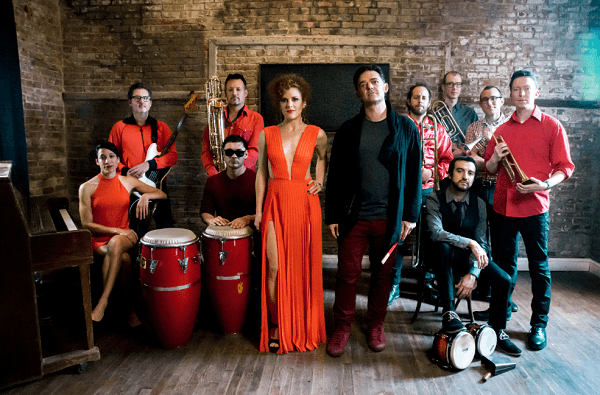
Currently, the Williamsburg Salsa Orchestra has 11 members in total. At a time when bands and musical groups are getting smaller and smaller, we wanted to know what Gianni and his artists do to stay together in an environment that pushes them in the opposite direction.
The percussionist says that one of his greatest dreams was to have a large salsa orchestra, and he has succeeded, but he admits that things were simpler before COVID-19. After that, far fewer people attended salsa dances or were willing to pay for such an event. Still, they have done everything humanly possible to keep the group together, since in the words of Gianni, an orchestra composed of six or seven people does not sound as good or as complete as one with nine or more musicians.
However, he does not deny that they have had some issues with certain venues due to the orchestra’s size, such as small stages or low ability to pay everyone, but in general, club owners and promoters just want a good show and for people to enjoy it. For this reason, they make an effort to hire bands like the Williamsburg Salsa Orchestra because they know what they have to offer.