• Skip to primary navigation
  • Skip to main content

International Salsa Magazine

  • HOME
  • Previous editions
    • 2026
      • ISM / May 2026
      • ISM / April 2026
      • ISM / March 2026
      • ISM / February 2026
      • ISM / January 2026
    • 2025
      • ISM / December 2025
      • ISM / November 2025
      • ISM / October 2025
      • ISM / September 2025
      • ISM / August 2025
      • ISM / July 2025
      • ISM / June 2025
      • ISM / May2025
      • ISM / April 2025
      • ISM / March 2025
      • ISM / February 2025
      • ISM / January 2025
    • 2024
      • ISM / December 2024
      • ISM / November 2024
      • ISM / October 2024
      • ISM / September 2024
      • ISM / August 2024
      • ISM / July 2024
      • ISM / June 2024
      • ISM / May 2024
      • ISM / April 2024
      • ISM / March 2024
      • ISM / February 2024
      • ISM / January 2024
    • 2023
      • ISM / December 2023
      • ISM / November 2023
      • ISM / October 2023
      • ISM – September 2023
      • ISM – August 2023
      • ISM July 2023
      • ISM Edition June 2023
      • ISM – May 2023
      • ISM April 2023
      • ISM March 2023
      • ISM February 2023
      • ISM January 2023
    • 2022
      • ISM December 2022
      • ISM November 2022
      • ISM October 2022
      • ISM September 2022
      • ISM August 2022
      • ISM July 2022
      • ISM June 2022
      • ISM May 2022
      • ISM February 2022
      • ISM January 2022
    • 2021
      • ISM December 2021
      • ISM November 2021
      • ISM October – 2021
      • ISM September 2021
      • ISM August 2021
      • ISM July 2021
      • ISM May 2021
      • ISM April 2021
      • ISM June 2021
      • ISM March 2021
      • ISM February 2021
      • ISM January 2021
    • 2020
      • ISM December 2020
      • ISM November 2020
      • ISM October 2020
      • ISM September 2020
      • ISM August 2020
      • ISM July 2020
      • ISM June 2020
      • ISM May 2020
      • ISM April 2020
      • ISM March 2020
      • ISM February 2020
      • ISM January 2020
    • 2019
      • ISM December 2019
      • ISM November 2019
      • ISM October 2019
      • ISM Septembre 2019
      • ISM August 2019
      • ISM July 2019
      • ISM June 2019
    • 2016
      • ISM December 2016
      • ISM November 2016
  • Spanish
  • Download Salsa App
    • Android
    • Apple

Search Results for: Timba

Alain Pérez Triumphs in Puerto Rico with a Confident Stride

The exclusive Tropicoro Club at the Fairmont El San Juan Hotel in Isla Verde was overflowing to welcome the multifaceted Cuban musician Alain Pérez, who performed in Puerto Rico for the first time as a solo artist. Before the dance concert, held on Puerto Rican soil, which closed Alain’s first solo tour of the United States, he had performed in New York, Los Angeles, Miami, and Tampa.

Alain Pérez
Alain Pérez

To open the concert, the Cubanísimo concept, led by Puerto Rican bassist and cuatrista Jesús Algarín, set the mood for the audience. The young musician made a confident entrance, accompanying himself with powerful interpretations on his instruments, skillfully directing his own orchestra. Prior to Alain Pérez’s show, the musicians of Cubanísimo—cuatrista, singer, and director Jesús Algarín, trumpeter Miguel Ortiz, vocalists Carmen Jiménez and Gilberto Félix, bassist Félix Juan Algarín, bongos player Freddy Camacho, conga player Jeren Guzmán, and flutist Juan Ortiz—brought to life songs like ‘El yerbero moderno,’ ‘Esa niña,’ ‘El bodeguero,’ ‘La rosa oriental,’ ‘El paralítico,’ ‘Así fue,’ ‘Parampampam,’ ‘Lo que fue no será,’ ‘Que te pedí,’ and ‘El cuarto de Tula.’ Once the musicians, directed by Algarín, finished their set, Alain Pérez made his triumphant entrance.

The singer, bassist, guitarist, percussionist, pianist, orchestra director, arranger, and music producer had been in Puerto Rico on a handful of occasions as a backing musician for artists of the stature of Issac Delgado and Chucho Valdés, to name a few. This time, of course, he arrived as a solo artist and with force, to the rhythm of ‘El cuento de la buena pipa.’ Once on stage, the “guajiro,” who confessed in an interview to having “converted to flamenco,” showed that he felt at home while singing, dancing, guaraching, playing the bass, soneando, and rumbando. Once Alain and his orchestra warmed up the luxurious venue, which was overflowing with people, the virtuous multi-instrumentalist performed songs such as ‘ADN,’ ‘El sabor de mi rumba,’ ‘Amor fugaz,’ ‘Son con moña,’ ‘Hablando con Juana,’ ‘Shorcito,’ ‘Modo avión,’ ‘Batilongo,’ ‘La lámpara,’ ‘Pa’ to’ la vida,’ ‘La moneda,’ the title track from his most recent production: ‘Bingo,’ ‘Andaba solo’—a duet with the “Caballero de la Salsa,” Gilberto Santa Rosa—and ‘Pistolero,’ the latter loudly requested by the elegant audience.

Alain Pérez acompañado de su bajista Mauro Cabrejas

Gilberto joined Alain to sing ‘Andaba solo’ as a duet, but not before giving a “welcome to this beast of music, with whom I had the opportunity to record and whom I had the opportunity to meet in person recently,” clarifying that he already knew him musically, adding that they would sing “without rehearsal, but with affection.”

During the show, the musician who defines himself as a guajiro, sonero, guarachero, and rumbero, delivered fusions characteristic of Alain’s great contribution to Latin music, within Afro-Cuban traditions influenced by his exposure to Hispanic folklore. Pérez built the show using a varied repertoire that included salsa, timba, son, and bolero in interesting fusions. Accompanied by his band—composed of Mauro Cabrejas, Josué Puig, Roberto Medina, Víctor Oliva, Alejandro Sosa, Robelis Arévalo, Julio Puig, Yunnier Stoker, Cristhian Díaz, Darío Andrés, Alejandro Fernández, and Isaac Cambar—Alain Pérez delivered on his promise: “a night full of Caribbean flavor, rhythm, and

Alain Pérez y su orquesta

energy.”

From the moment Alain started the dance, the energy did not wane. The audience connected with the artist and the person, who visibly emotional, repeatedly expressed gratitude “for the affection received and the nobility perceived,” adding that since setting foot on Puerto Rican soil he has “felt a lot of peace” and that he’s going to have to buy “a little ranch here.”

With the Puerto Rico performance, Alain successfully concluded his first solo tour of the United States with resounding success. That was the idea. Here in beautiful Borinquen, the audience while demanding makes sure the artist feels the love and respect with which they are received and celebrated. Congratulations!

Cubanísimo
Cubanísimo

Also Read: Bella Martinez, the irreverent Salsa writer

Bella Martinez Puerto Rico

Los Surik is a musical group formed in Victoria, Las Tunas, in eastern Cuba

Los Surik, a musical group from Las Tunas a province known for orchestras recognized both nationally and internationally has distinguished itself in the Cuban music scene for its excellence.

Los Surik is a group that was created in Victoria Las Tunas, in eastern Cuba.

This group of fifteen musicians (four of whom are vocalists) was established in Victoria, Las Tunas, in eastern Cuba.

They began their professional careers in 1982, focusing on harmonious arrangements through the use of complex structures, all in service of preserving the authenticity of the genres they perform, such as son, guaracha, merengue, song, and bolero, among others.

Los Surik used to rehearse at the home of José Luis Borrel, across from the old La Gran Señora store (at the intersection of Lucas Ortiz and Julián Santana streets). Later, they moved their instruments to Benny Revuelta’s house, on Gonzalo de Quesada street, at the corner of Lucas Ortiz.

This orchestra has stood out in the world of music in Cuba for its excellence.

Los Surik’s repertoire included, among other pieces, classic Spanish and American pop songs, and instrumentals that Benny would recreate with his saxophone. Pablín (now deceased) was an excellent singer, later a finalist on the TV show Todo el mundo canta. Paco Mesa also shone as a vocalist. Catalá was comfortable on the drums, as was Omarito on the bass. The speakers in the photo were designed by José Luis Borrell, who, in addition to being a musician, was a great electronics enthusiast.

In 1994, the group released an album titled Alma Musical (CD (Magic Music 0003-3)). Some of the songs from this album were number one in Cuba at that time.

Los Surik holds an interesting first in their career: its members ushered in the era of discography in Las Tunas, by recording the first long-play record in the territory in 1985. The album features 12 tracks, most of which were authored by group members, and it was recorded at Siboney studios in Santiago de Cuba. Due to its foundational nature, the album is an invaluable piece for the cultural heritage of Las Tunas.

Group Photo and Member

This photo was taken in the 1980s at the home of actress and promoter Blanquita Becerra (center), during the time when this once very popular and distinguished lady of Cuban lyrical theater resided in Las Tunas.

Among other members of the musical collective pictured are Arturo Gooden, Alberto Bada, Benny Revuelta, Gerardo Leyva, Raúl Cáceres, Héctor Aguilar, and Rafael Diez.

At that time, Los Surik was composed of the following musicians:

  • Julián Galbán Cruz – Bass
  • Fernando E. Quintana – Saxophone
  • Herminio García Rodríguez – Trombone
  • Gastón H. Allen Binhan – Trumpet
  • Rolando Portillo Cedeño – Trumpet
  • Arnaldo García Estrada – Keyboards
  • Eldo A. González Mantilla – Piano
  • Pablo S. Machado Palmero – Congas
  • Edilberto Machado Alba – Timbales
  • Luis Alfonso Guerra Ramírez – Bongos
  • José Eugenio Marín Tejeda – Vocals
  • Virginia Iznaga Cantero – Vocals
  • José Manuel Arnedo Rodríguez – Vocals
  • Francisco G. Mesa Marrero – Vocals

Lost Treasures and Alma Musical

Los Surik - Alma Musical (1994)
Los Surik – Alma Musical (1994)

Almost all the orchestra members were composers of the songs they performed. Sadly, many of these songs were never recorded on any album, so we cannot enjoy the high quality of the tracks they created. Only a lucky few had the chance to enjoy them live in concerts they gave outside of Cuba.

Los Surik – Alma Musical (1994)

Tracks:

  1. Dame Un Traguito (Son)
  2. Estoy Romántica (Ballad son)
  3. Amor De Película (Son montuno)
  4. El Cantante Enamorado (Son)
  5. Lo Que Cae Es Candela (Son)
  6. A Ese Le Llaman Parejero (Son montuno)
  7. La Fuerza Del Amor (Merengue)
  8. Juanita Morey (Merengue)
  9. La Luna Compartir (Ballad son)
  10. Voz Universal (Son)
  11. La Noche Junto A Ti (Bolero)

Musicians:

  • Julián Galbán Cruz (Bass)
  • Fernando E. Quintana (Saxophone)
  • Herminio García Rodríguez (Trombone)
  • Gastón H. Allen Binhan (Trumpet)
  • Rolando Portillo Cedeño (Trumpet)
  • Arnaldo García Estrada (Keyboards)
  • Eldo A. González Mantilla (Piano)
  • Pablo S. Machado Palmero (Congas)
  • Edilberto Machado Alba (Timbales)
  • Luis Alfonso Guerra Ramírez (Bongos)
  • José Eugenio Marín Tejeda (Vocals)
  • Virginia Iznaga Cantero (Vocals)
  • José Manuel Arnedo Rodríguez (Vocals)
  • Francisco G. Mesa Marrero (Vocals)

By:

L’Òstia Latin Jazz

Dj. Augusto Felibertt

EcuRed

Also Read: Septeto Nacional de Ignacio Piñero has played an important role in Cuban music for over seven decades.

Tribute to Alberto Naranjo and his musicians

Latin America / Venezuela / Caracas

40 years of El Trabuco Venezolano A Deserved Tribute to Alberto Naranjo and his musicians

Teresa Carreno Theater. Caracas, Venezuela August 21 to 25, 2017
Collaboration and Photographs by Lysbeth Weffe

From August 21 to 25, at the Teresa Carreño Theater (TTC), in Caracas, the Tribute to maestro Alberto Naranjo was held for his 57 years of artistic life, and to the group of his creation El Trabuco Venezolano for its 40 years of founding . With a long time of preparation and a lot of love involved, as it said in the hand program and was perceived in the environment, the event had the general production of Franklin Rojas, the Grupo Madera Foundation and the Teresa Carreño Theater Foundation.

Alberto Naranjo and Noel Mijares

More than an orchestra, El Trabuco Venezolano has been an authentic Venezuelan salsa movement born from the initiative of Alberto Naranjo, a veteran drummer and arranger who has walked the trade through the most diverse tendencies and schools of popular music in the Caribbean, always counting with the direct support of the musical producer, Orlando Montiel(I).

It was at a recital conference given by César Miguel Rondón and Domingo “El Flaco” Álvarez at the Museum of Contemporary Art in Caracas, in August 1977, that El TrabucoVenezolano(2) made its public debut.It immediately became the most finished and interesting musical project known to the city of Caracas up to that time. Alberto Naranjo organized it under the concept of a big band with the idea of ​​developing a particular proposal that would differ from its similar ones in the rest of the Caribbean, with a sound that bridges salsa, jazz, funk and Venezuelan.

With seven albums released, two of them live with the group Irakere from Cuba, and having passed more than a hundred performers through its ranks, El Trabuco, more than a group in conventional terms, has been a download and meeting space for local musicians, as well as the best of schools for many of them.

Alberto Naranjo
Alberto Naranjo

He also counts among his achievements, having motivated the Caracas salsa environment of the moment, imposing a high standard that influenced the formation of the best salsa orchestras, apart from creating, in short, his own Caracas sound brand(3).

The activities of this large tribute began on Monday 21 with the talks in the Protocol Plate of the TTC: “History in Venezuelan salsa” with Franklin Rojas and “Hera & Pablo, the Venezuelan salsa dance”; on Tuesday 22, Cheo Guevara’s discussion on “Alberto Naranjo, and his historical mark” and the forum “The production of salsa content in alternative radio” moderated by Zulay Millán. They continued like this throughout the week.

Several workshops were held, among them, “Percussion Tuning” dictated by Nicolás Monterola and “Latin Percussion” by Professor Frank Márquez. Also in the lobby on the ground floor of the TTC, the following concerts were presented: Caracas Legends Ensemble, with its tribute to Eddie Palmieri, the Salsarría Orchestra, Grupo Madera, Mundito and his Orchestra La Celestial, The Big Band of San Agustín and the Orquesta Carlin.

Grupo Madera
Grupo Madera

The highlight of this week of well-deserved recognition was the Trabuco Venezolano concerts at the Ríos Reyna venue on August 24 and 25, presented by Zulay Millán and José Gregorio Acero.

Although with a room not completely full and recalling other times of splendor of a TTC that received the stars of the show from all over the world, we enjoyed two nights of memorable, tasty, lively and educational concerts, with a stage full of great musicians. and a full Alberto Naranjo, going through it and playing around more than directing the members of the big band. With the best of the best-known musicians and singers of Venezuela in the genre, with some of the original members of this group and new talents, we were able to delight ourselves in an exquisite waste of salsa, jazz and funk, lasting three hours each day.

“The teacher was narrating the stories of the different themes that they interpreted…”

Alberto Naranjo at the Teresa Careño with his orchestra "Trabuco Venezolano"
Alberto Naranjo at the Teresa Careño with his orchestra “Trabuco Venezolano”

The member musicians of El Trabuco Venezolano 2017, present at the concerts on August 24 and 25, were: Alberto Lazo (piano), José “Mortadelo” Soto (bass), William Vásquez (three), William Mora (tumbadoras), Frank Márquez (timbale), Franklin Rojas (bongo), Hugo Olivero (sax), Eduardo “Mondy” Dávila (sax), Manuel Barrios (sax), Irvin Blanco (sax), Edwin Ruiz (sax), Adrián Suárez (trombone), Eliel Rivero (trombone), Pedro Carrero (trombone), Franklin Moreno (trombone), Oscar Mendoza (trombone), Vicente Freijeiro (trumpet), Rafael Rey (trumpet), Gustavo Aranguren (trumpet), José “Cheo” Rodríguez (trumpet) , Noel Mijares (trumpet), Edgar “Dolor” Quijada (voice), Troy Purroy (voice), José Luis Peña (voice), Yeci Ramos (voice), Arturo Guaramato (voice).

The teacher was narrating the stories of the different songs they performed, referring to the fact that his musicians were chosen by meritocracy, sharing with the audience and ordering someone to shut up on more than one occasion, in a humorous tone, yes. He reminded us that they are not only dedicated to salsa and in some pieces where they did not sing, he emphasized that they were instrumental and that they could help us soar our imagination and dream.

Yeci Ramos, Juan Jose Conde, Edgar "Dolor" Quijada, Jose Luis Peña, Troy Purroy
Yeci Ramos, Juan Jose Conde, Edgar “Dolor” Quijada, Jose Luis Peña, Troy Purroy

The great experience of this meeting of musicians that has been El Trabuco Venezolano was reflected in a repertoire of 13 songs, including originals, emblematic and premieres, which they gave us.

They began with the songs “Yo Soy La Rumba” (Marcelino Guerra) with the solo voice of Troy Purroy and a timpani solo by Frank Márquez, “Bravo Rumbero” (José “Cheo” Navarro) sung by Edgar “Dolor” Quijada, “ La Negra Tomasa” (Guillermo Rodríguez Fiffe) in the voice of Arturo Guaramato, “Tres Días”, an original theme by Chucho Valdés and ceded to El Trabuco, sung by José Luís Peña, with the participation of the dancers Hera and Pablo. At this point, the entire audience had warmed up, and there was even a couple from the public who danced in the hall from the beginning of the concert until the end, both days.

The night continued with the emblematic “Almendra” (Alberto Barroso). This theme arranged by Naranjo for Arturo Sandoval 46 years ago, featured the masterful participation of Noel Mijares -Venezuela Big Band Jazz, Desorden Público- on trumpet, interacting with great complicity with the maestro. It followed with a premiere, “Alna’s Mambo” an instrumental composition, subliminal as Naranjo described it.

Yeci Ramos, Juan Jose Conde, Edgar "Dolor" Quijada, Jose Luis Peña, Troy Purroy - Photo
Yeci Ramos, Juan Jose Conde, Edgar “Dolor” Quijada, Jose Luis Peña, Troy Purroy – Photo

The concert continued with “Gongo Blues” (Eduardo Cabrera), a theme in which the extraordinary solos of Eliel Rivero on the trombone, Gustavo Aranguren on the trumpet, Manuel Barrios on the saxophone and Alberto Naranjo pleased us playing the kettledrum. . He followed up with the instrumental “El Ojo del Huracán,” a Latin jazz combo, which was written in the early ’70s and still sounds weird, Maestro Naranjo said.

Then with the song “Oye como va” (Tito Puente) the rumba was lit up, the lights in the room were turned on and hardly anyone could keep up without stopping and dancing. In the song “El Hijo del Sonero” (Ricardo Quintero) Yeci Ramos sang, in “El Cumaco de San Juan” (Francisco Delfin Pacheco), Arturo Guaramato and in “Compañeros” (Ricardo Quintero), Juan José Conde, these three songs they were accompanied by the drums of Grupo Madera.

“Imágenes Latinas” (Bernardo Palombo – Andy González), was the theme chosen as the finale, a piece that has become a cult object among music lovers, the salsa audience and lovers of Latin jazz, according to the words of connoisseur José Orellán .

It featured the extraordinary participation of Adrián Suárez in the trombone and bodyguard solo, and the interpretation of the son player Edgar “Dolor” Quijada.

Alberto Naranjo in his tribute

At the concert on Friday 25, El Trabuco Venezolano and its creator were declared CULTURAL HERITAGE OF THE NATION by the Institute of Cultural Heritage (IPC) and the Ministry of People’s Power of Culture of Venezuela.

With the hope that this experience can be repeated in other theaters in the country and the world, we congratulate the organizers, Alberto Naranjo and the musicians of El Trabuco Venezolano for having received such well-deserved recognition as Cultural Heritage of the Nation.

Notes: (1) and (2) The salsa book. Chronicle of urban Caribbean music. Cesar Miguel Rondon. Ediciones B Venezuela SA., 2007. (3) Taken from the Caracas Exhibition. Ciudad del Son, montage and texts by Alejandro Calzadilla, at the La Estancia Cultural Center, belonging to the company Petróleos de Venezuela (PDVSA La Estancia), September 2017.

Tito Planas talked to us about his Orquesta Afinke and its members

If there is something that we have seen in recent times is that Los Angeles, New York and Miami are not the only places Latin music has had great boom due to the huge number of Latinos in those areas, as our culture has permeated many other places in the United States. A great example of that is the Orquesta Afinke, based in the state of Connecticut, and its director Herminio ‘‘Tito’’ Planas, with whom we were able to talk about his career and band.

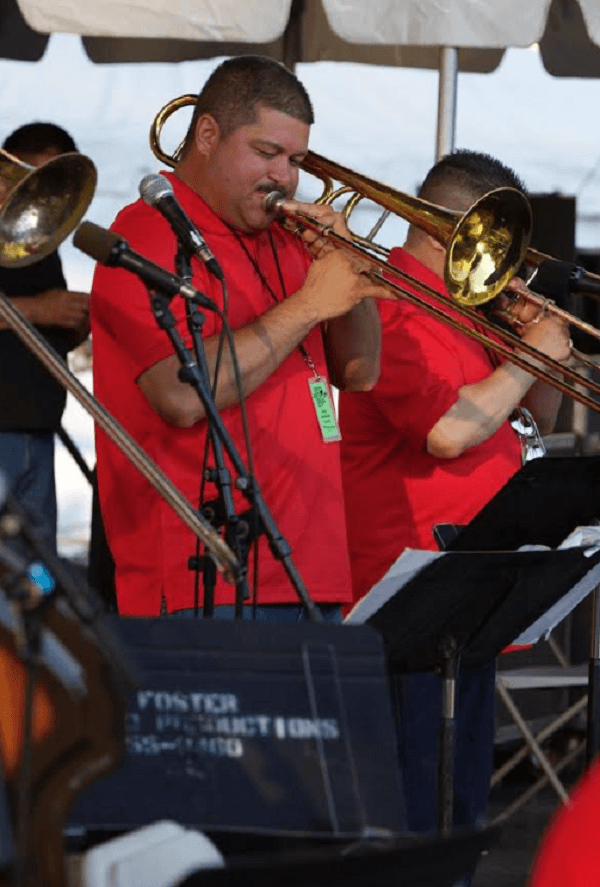
Tito playing the trombone
Orquesta Afinke director Tito Planas playing the trombone live

How Tito fell in love with music

Tito was born in Puerto Rico and raised in the town of Ponce, the home of great luminaries of salsa such as Hector Lavoe, Pete ‘’El Conde’’ Rodriguez, Papo Luca, Jose ‘‘Cheo’’ Feliciano, Ismael Quintana, Yolanda Rivera, among many others. He even attended school with Keila Lucca, the daughter of one of the Luccas of La Sonora Ponceña, and is still in contact with her through social networks.

He studied at the Free School of Music in Ponce where he sang in a children’s choir and they traveled around the town to delight a variety of audiences with his voice. Building on the success of this program run by the school, there were many children from third through eighth grades who began taking lessons of solfeggio or any instrument they wanted. 

In Tito’s case, he moved with his parents to the United States at age 13 in the eighth grade of the secondary education. His father had lost his job in Puerto Rico and the economic situation of the family was very precarious, so he made the decision to go first to find work and, in so doing, taking his children and his wife to live there.

In college, he started getting involved with salsa and had Jerry Perez as a trombone teacher, who taught him in this instrument for several years and offered him to form an orchestra together. They eventually did and toured with it in various parts of the United States.

Tito moved to the United States
Tito Planas moved to the United States at age 13, but never left his Latino heritage behind

Professional start

After being played the trombone for some time, many other musicians saw him and offered him to play with them in their orchestras. Many of these job opportunities came from New York, which was very close to him, which benefited him greatly because the clubs in that city closed much later, so they could play even till five in the morning. He combined all these activities with university and his private lessons in order to further improve his musical skills.

Orquesta Afinke

After the foundation of the orchestra, Tito and his musicians accompanied many great artists such as Hector Tricoche, El Grupo Guayacán, Viti Ruíz, Van Lester, Frankie Vázquez and many others.

Thanks to all these shows they were doing with other groups, Sammy Diaz, co-director of the orchestra, and Tito decided it was time to create a much more formal project that grouped together all the original members of the band. What brought them closer together was the fact that both Tito and Sammy had teenage children, whom they included in the group to keep them playing and in constant contact with music.

Tito and the rest of the group
From left to right: Junior Travieso, Victor Planas, Jerry Perez, Daniel Planas, Tito Planas, Samuel Diaz Jr., Samuel Diaz III, Louis Carrasquillo, and Rafael Rosado

Today, Tito’s youngest son is 18 years old and is about to enter the University of Connecticut to study music in order to follow the same path as his father, with whom he has been working in the orchestra since he was about 11 years old singing backup and playing the saxophone.

They started with about three scores with which they managed to put on a show for as long as half an hour. Today, 16 years later, they have more than 80 scores and about 12 original songs, of which one was recently released and another is being recorded at the time of writing this article. 

On the other hand, the core of the orchestra has been the same since its foundation and includes pianist Rafael Rosado, bassist Victor Planas, bongo player Sammy Diaz Jr. (co-director of the orchestra Sammy Diaz’s son), timbalero Sammy Tercero (another son of Sammy Diaz), conguero Luis Carrasquillo, singer Junior Travieso, singer Raquel Ramirez, Peruvian singer Jano Arroyo, trombonist Jerry Perez (the teacher who taught Tito to play the trombone) and Daniel Planas (Tito’s son).

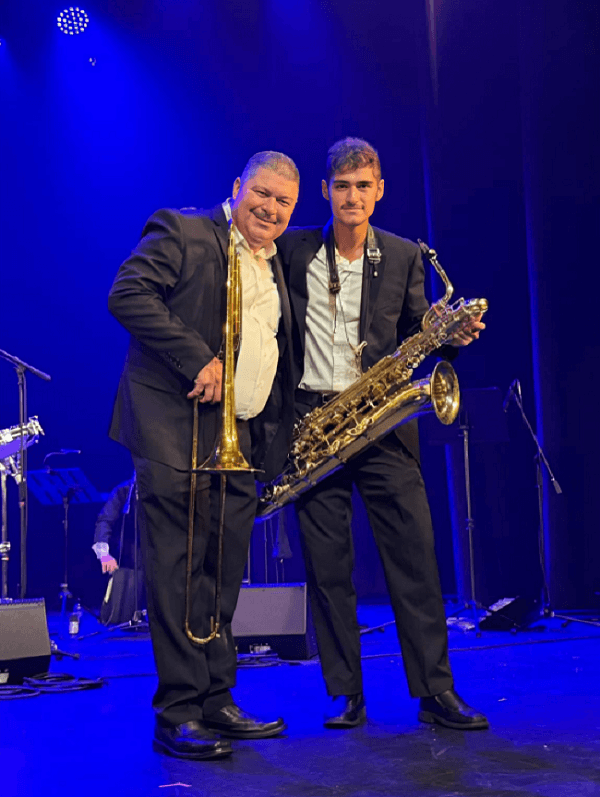
Tito and his son
Tito Planas with his younger son Daniel Planas

Read also: Eduardo Ron and his Fondo Blanco Band liven up great events in Miami

The multifaceted Aymée Nuviola delivers her ‘Corazón Sonero’ to Puerto Rico, at the historic Tapia Theater in Old San Juan

Pete Perignon’s orchestra kicked off Aymée Nuviola’s concert, entitled Corazón Sonero, with a powerful Latin jazz introduction. During the first minute, the instrumental melody settled into a salsa key, giving way to the voices of Lorna Marcano and Ricely Colón, who chanted: “Yo te invito a bailar y a gozar con Aymée, la sonera del mundo” (I invite you to dance and enjoy with Aymée, the sonera of the world). The chorus duo of Marcano and Colón prepared the theater for the triumphant entrance of the voice of La Sonera del Mundo.

La multifacética Aymée Nuviola Imágenes Conrado Pastrano

As the curtain rose at the historic Alejandro Tapia y Rivera Theater in Old San Juan, the stage design by José “Quenepo” Ramos Vega, which revealed two transparent fabric borders held in the middle by an imposing white star, caught the attention of the audience. The red of the triangle of the Cuban flag was represented by the pendant unfurled to the left of the star, while the cloth representing the Puerto Rican flag was held on the right hand side of the same star. The inspiration of the design demonstrates that the Cuban and Puerto Rican flags are fraternal twins.

The opening lyric that resounded in the theater, which was filled to capacity, with the vocal power of Aymée Nuviola read: “A little bit of good salsa, a little bit of pure salsa, so that new people, get to know our culture”. From then on, the music obeyed Nuviola’s command, singing: “Let the clave get into your body, let the conga and the bongo move the floor”. Sure enough, three hours later we were still letting the stage delivery of the musical team continue to move the floor. Pete masterfully directed: Jean Carlos Camuñas on tumbadoras, Carlos Pagán on bongó, campana, güiro and maracas, Miguel Camilo on piano, Jorge Rivera on bass, Pedro Marcano and Víctor Ambert on trumpets, César Ayala and Léster Pérez on trombones and Saviel Cartagena on tenor and soprano saxophones.

Ten minutes into the music under the direction of the leader of the generation of the present, as timbalero Pete Perignon is known on Puerto Rican soil, Aymée greeted the audience with a heartfelt, “¡Buenas noches, Puerto Rico!” She thanked the attendees in a candid manner for joining her, while making jokes about how heavy her dress was as she elegantly adjusted the flounce and wings of her sleeves. She also commented on the design of the theater, inaugurated in 1832.

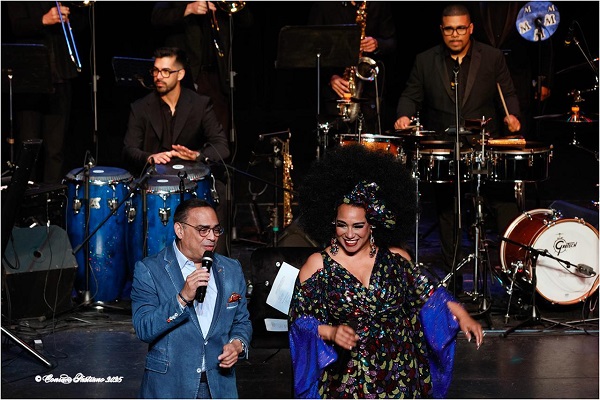
Gilberto SantaRosa y Aymée Nuviola Imágenes Conrado Pastrano

That first conversation with the audience served to connect with a: “we are survivors”, in clear reference to the COVID-19 pandemic, shortly before quoting Celia Cruz saying: “As Celia said so well: ‘Thank you Puerto Rico, for lending me your flag’. She also recognized actor Willy Denton, who played Pedro Knight when Aymée impersonated Celia Cruz in the soap opera Celia and who was among those present.

Nuviola boasted of having reached the fifth floor, as she recounted that she was going to record her version of ‘El ratón’ with Cheo Feliciano, whose unexpected death thwarted the long-awaited collaboration. However, Aymée decided to record it anyway, in order to pay tribute to Señor Sentimiento. The evening’s repertoire included: ‘Un poco de salsa’, ‘Salsa con timba’, ‘Yo sé que es mentira’, ‘El ratón’, ‘La tierra del olvido’ and ‘La gota fría’.

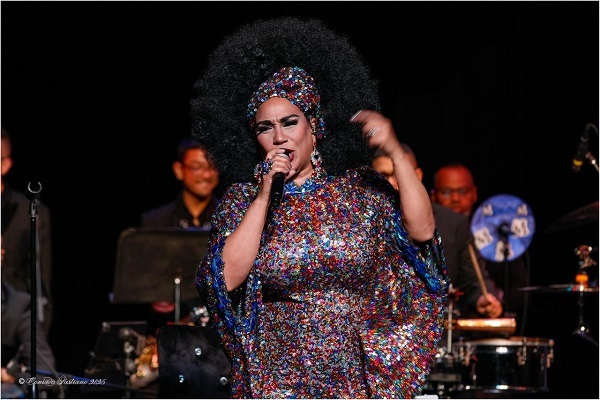
Many remember Aymée for her character of Celia Cruz in an acting performance that marked “a before and after” in the singer’s career. This was acknowledged by the actress, shortly before paying tribute to Celia, with her versions of ‘Cúcala’ and ‘Quimbara’, in addition to performing a medley of some of the songs with which Celia was crowned the Queen of Salsa. The medley included ‘Toro mata’ and ‘Bemba colorá’, among others.

The concert included a bohemian part during which Aymée accompanied herself on the classical piano to share with us her passion for the filin. The selected repertoire was: ‘Obsesión’, ‘Bésame mucho’, ‘Me faltabas tú’, ‘Perfidia’ and ‘Lágrimas negras’.

Before performing ‘El espacio’, of her own composition, and accompanied by Miguel Camilo on piano, Aymée said that the song was inspired by “someone else’s skeleton”, as the composer described it. Aymée emphasized that ‘El espacio’ is not dedicated to her husband. Between jokes and laughter, the sonera shared with those present her love story with Paulo Simeón, while acknowledging the presence of Fabio Díaz Vilela, who was the owner of the place where the couple met more than 14 years ago. Aymée expressed her gratitude to Fabio, for also having been a great support for the career of the producer, “from day one”.

Aymée Nuviola Imágenes Conrado Pastrano

The climax of the concert came as the sonera took off ‘El cuarto de Tula’, Gilberto Santa Rosa -who was among the attendees- went up on stage to duet with Aymée, between each soneo to describe the scope of the talent of the Cuban who gave her sonero heart to Puerto Rico. El Caballero de la Salsa was also able to tell La Sonera del Mundo the fascination that the Puerto Rican public has for her. For their part, Aymée’s soneos expressed to Gilberto the admiration she has for him for being “a great maestro”.

The repertoire of this last section included the songs ‘Fiesta’ and ‘El manisero’, which incorporated correspondences between the singer and the pianist. The coda of ‘El manisero’ coincided with the closing of the curtain, while the audience shouted “another, another, another”. The ñapa corresponded to ‘Chan chan’, a song included in the album that won Nuviola a Grammy for his production A Journey through Cuban Music. The interpretation was sprinkled with the strength brought by the trumpets of Pedro Marcano and Víctor Ambert, along with the trombones of César Javier Ayala and Léster Pérez. Chan Chan’ announced the farewell with which Aymée Nuviola’s energetic “God bless Puerto Rico” resounded as the curtain came down on her first solo concert on Puerto Rican soil. For my part, I reciprocate: “God bless Aymée Nuviola and her team (including Paulo Simeón and Luis Solís)”.

Here in the Island of Enchantment we are pleased to know that Corazón Sonero has consolidated this high-end artist, whom we already consider our own.

Bella Martinez Puerto Rico

Images: Conrado Pastrano

Also Read: Mel Martinez I come from Puerto Rico and Puerto Rico is Salsero

  • « Go to Previous Page
  • Page 1
  • Interim pages omitted …
  • Page 10
  • Page 11
  • Page 12
  • Page 13
  • Page 14
  • Interim pages omitted …
  • Page 69
  • Go to Next Page »

International Salsa Magazine (ISM) is a monthly publication about Salsa activities around the world, that has been publishing since 2007. It is a world network of volunteers coordinated by ISM Magazine. We are working to strengthen all the events by working together.