• Skip to primary navigation
  • Skip to main content

International Salsa Magazine

  • HOME
  • Previous editions
    • 2026
      • ISM / August 2026
      • ISM / July 2026
      • ISM / June 2026
      • ISM / May 2026
      • ISM / April 2026
      • ISM / March 2026
      • ISM / February 2026
      • ISM / January 2026
    • 2025
      • ISM / December 2025
      • ISM / November 2025
      • ISM / October 2025
      • ISM / September 2025
      • ISM / August 2025
      • ISM / July 2025
      • ISM / June 2025
      • ISM / May2025
      • ISM / April 2025
      • ISM / March 2025
      • ISM / February 2025
      • ISM / January 2025
    • 2024
      • ISM / December 2024
      • ISM / November 2024
      • ISM / October 2024
      • ISM / September 2024
      • ISM / August 2024
      • ISM / July 2024
      • ISM / June 2024
      • ISM / May 2024
      • ISM / April 2024
      • ISM / March 2024
      • ISM / February 2024
      • ISM / January 2024
    • 2023
      • ISM / December 2023
      • ISM / November 2023
      • ISM / October 2023
      • ISM – September 2023
      • ISM – August 2023
      • ISM July 2023
      • ISM Edition June 2023
      • ISM – May 2023
      • ISM April 2023
      • ISM March 2023
      • ISM February 2023
      • ISM January 2023
    • 2022
      • ISM December 2022
      • ISM November 2022
      • ISM October 2022
      • ISM September 2022
      • ISM August 2022
      • ISM July 2022
      • ISM June 2022
      • ISM May 2022
      • ISM February 2022
      • ISM January 2022
    • 2021
      • ISM December 2021
      • ISM November 2021
      • ISM October – 2021
      • ISM September 2021
      • ISM August 2021
      • ISM July 2021
      • ISM May 2021
      • ISM April 2021
      • ISM June 2021
      • ISM March 2021
      • ISM February 2021
      • ISM January 2021
    • 2020
      • ISM December 2020
      • ISM November 2020
      • ISM October 2020
      • ISM September 2020
      • ISM August 2020
      • ISM July 2020
      • ISM June 2020
      • ISM May 2020
      • ISM April 2020
      • ISM March 2020
      • ISM February 2020
      • ISM January 2020
    • 2019
      • ISM December 2019
      • ISM November 2019
      • ISM October 2019
      • ISM Septembre 2019
      • ISM August 2019
      • ISM July 2019
      • ISM June 2019
      • ISM May 2019
      • ISM April 2019
      • ISM March 2019
      • ISM February 2019
      • ISM January 2019
    • 2018
      • ISM December 2018
      • ISM November 2018
      • ISM October 2018
      • ISM September 2018
      • ISM August 2018
      • ISM July 2018
      • ISM June 2018
      • ISM May 2018
      • ISM April 2018
      • ISM March 2018
      • ISM February 2018
      • ISM January 2018
    • 2017
      • ISM December 2017
      • ISM November 2017
      • ISM October 2017
      • ISM September 2017
      • ISM August 2017
      • ISM July 2017
      • ISM June 2017
      • ISM May 2017
      • ISM April 2017
      • ISM March 2017
      • ISM February 2017
      • ISM January 2017
    • 2016
      • ISM December 2016
      • ISM November 2016
      • ISM October 2016
      • ISM September 2016
  • Spanish
  • Download Salsa App
    • Android
    • Apple

Search Results for: music

Edward Arcila The “Sonero” of Puerto Cabello Keeping the Essence of Contemporary Salsa Alive

When discussing the soneros who have kept the flame of traditional salsa burning in Venezuela, it is impossible to overlook Edward Arcila, proudly known in the Latin music scene as “El Sonero de Puerto Cabello.”

This moniker not only pays homage to his hometown, but also highlights a quality that is increasingly rare in today’s music industry: an innate gift for soneo real-time vocal improvisation and a deep respect for the most authentic roots of Afro-Latin music.

Edward Arcila El Sonero de Puerto Cabello

In an ever-evolving musical landscape dominated by commercial fusions, Arcila emerges as a guardian of the traditional sound, proving that salsa de golpe continues to beat strongly in the veins of the Venezuelan Caribbean.

Roots, Identity, and a Passion for Soneo:

Born in the historic coastal city of Puerto Cabello, Carabobo, Arcila has dedicated much of his life and artistic career to defending the sound of salsa brava, Cuban son, and mambo.

Self-taught and deeply connected to local popular culture, he developed a unique cadence from a young age alongside a sharp ear for the clave and tumbao.

Edward Arcila’s style stands out through a seamless combination of:

  • Interpretative Power: A strong, pitch-perfect voice full of maña (vocal flair and street smarts) that cuts through the orchestra without getting lost in the brass section.
  • Stage Presence: A charismatic charisma that instantly connects with both dancers and demanding music aficionados.
  • Improvisation Skills: The ability to ride the beat of the drum with fluid, coherent verses the true trademark of a real sonero

Homage to the Greats: The Art of Honoring a Legacy:

Throughout his solid musical career, Edward Arcila has not only built his own repertoire, but has also paid continuous tribute to the immortal figures who shaped the golden era of the genre.

Edward Arcila El Sonero de Puerto Cabello que Mantiene Viva la Esencia de la Salsa Contemporánea

His admiration for legends such as Tito Rojas (“El Gallo de la Salsa”) and master Justo Betancourt has allowed him to reinterpret classics of the Latin American musical heritage with his own unique signature.

Far from simple imitation, Arcila approaches these historical compositions with immense vocal maturity, stamping his own personality onto every track and thoughtful soneo. This quality has been widely acclaimed by critics and audiences who long for the wit, swagger, and emotion of the 1970s and ’80s urban Caribbean.

“Salsa brava isn’t sung with just the voice; it is sung through lived experience, respect for the drum, and a commitment to keeping alive the memory of those who paved the way.”

Reach, Collaborations, and the Venezuelan Salsa Scene:

Edward Arcila’s voice has resounded across multiple platforms, fronting major orchestras and bands throughout the country. His steady presence at international festivals, music collector gatherings, and packed concerts solidifies his relevance within the salsa circuits of Venezuela and the broader region.

Profesor Carlos Colmenarez y Edward Arcila

He has shared the stage with renowned instrumentalists and bandleaders, serving as a bridge between old-school masters and newer generations eager to learn the art of authentic soneo. His tireless work not only energizes the cultural scene in Carabobo, but also highlights Puerto Cabello as an endless reservoir of Afro-Latin talent.

A Contemporary Champion of Traditional Salsa

Within the Venezuelan musical landscape, Edward Arcila stands as one of the most respected contemporary figures. In an era where the genre faces the challenge of preserving its identity against short-lived trends, his music embodies perseverance, technical rigor, and a devotion to tradition.

More than just a performer, Edward Arcila is a cultural ambassador.

Arcila emerge como un guardián del sonido tradicional

His singing continues to remind audiences old and new that true salsa isn’t measured by fleeting fads, but by the power of emotion, the quickness of improvisation, and the untamed heartbeat of the sonero.

Also Read: Ronald Gómez One of the Most Respected Young Soneros of the New Generation

Andy Montañez “El Niño de Trastalleres” His Eternal Voice and Generational Legacy

From the Streets of Santurce to the Pinnacle of the Global Salsa Movement.

The history of Latin music cannot be written without dedicating a chapter of honor to Andrés Montañez Rodríguez, known universally as Andy Montañez.

Born on May 7, 1942, in the working-class neighborhood of Trastalleres in Santurce, Puerto Rico, Andy didn’t just become one of the most prodigious and charismatic voices in the genre he also became a fundamental pillar in bringing salsa to international acclaim and preserving its legacy.

Andy Montañez El Niño de Trastalleres

Growing up in a humble environment rich with musical nuance shaped his artistic sensitivity from a young age. Influenced by the boleros of the era, música jíbara (Puerto Rican folk music), and the Afro-Caribbean rhythms echoing from every corner of his neighborhood, young Andrés quickly proved to have a powerful, pitch-perfect baritone voice packed with an incomparable emotional quality. However, no one could have imagined that the boy from Trastalleres would ultimately become a living legend of Caribbean music.

The Golden Era with El Gran Combo de Puerto Rico (1962–1977)

His definitive leap into professional music came in 1962. Following the breakup of Cortijo y su Combo, Rafael Ithier founded El Gran Combo de Puerto Rico and recruited Andy Montañez as a lead vocalist alongside Pellín Rodríguez. This vocal duo became the driving engine that propelled the group toward resounding success for fifteen years.

Together with “La Universidad de la Salsa” (The University of Salsa), Andy immortalized tropical music classics that remain alive in the collective memory of dancers to this day. Tracks like “Las Hojas Secas,” “Julia,” “Un Verano en Nueva York,” “El Barbero Loco,” “Vagabundo,” and “Un Alma Buena” not only dominated radio charts across Latin America, but also defined the sound of salsa throughout the 1970s.

Su Voz Eterna y su legado transciende en generaciones.

Key Milestone in His Career:

Andy Montañez’s time with the Puerto Rico All Stars represents a brilliant chapter in the history of salsa boricua. Conceived in the mid-1970s under the leadership and vision of trombonist and producer Frankie Gregory, the supergroup was born as Puerto Rico’s answer to the New York Fania All-Stars phenomenon, bringing together the island’s elite instrumentalists, arrangers, and vocalists.

“His participation in the Puerto Rico All Stars not only reaffirmed the group’s musical patriotism, but also served as a bridge to sonic maturity just before he went on to establish his own orchestra in 1980.”

For true connoisseurs and collectors of salsa dura, the presence of “El Niño de Trastalleres” in the Puerto Rico All Stars left an indelible mark, proving that his voice fit just as seamlessly into a charanga or combo format as it did into the technical rigor of a big band or all-star super-orchestra.

Andy Nacido el 7 de mayo de 1942 en el populoso barrio de Trastalleres, en Santurce, Puerto Rico

His ability to transition from a rhythmic guaguancó to a romantic bolero with equal mastery solidified the foundation of his popularity.


La Dimensión Latina and International Consolidation:

In 1977, Andy Montañez made one of the riskiest and most talked-about decisions of his career: leaving El Gran Combo to move to Caracas and join La Dimensión Latina, filling the shoes left by Oscar D’León.

Although the challenge was daunting given the massive void left by the departure of the “Sonero del Mundo,” Montañez showcased his versatility and profound respect for the clave.

In Venezuela, he built a brilliant era, recording timeless hits such as “El Eco de un Tambor,” “Son de la Loma,” “Cantares,” and “Pan de Piquito.”

His tenure with La Dimensión Latina reaffirmed his status as a premier vocalist and further strengthened his emotional bond with the Venezuelan public, where he became a beloved cultural icon.

Solo Career and New Sound Fusions:

In the early 1980s, Andy returned to his homeland to launch his solo career, backed by his own orchestra and collaborating consistently with top-tier arrangers.

During this period, he managed to stay at the top of the romantic and sensual salsa scene without losing the gritty street groove and authentic Caribbean sabrosura.

Memorable anthems that defined generations emerged from this era, including:

  • “Casi Te Envidio”
  • “Payaso”
  • “Cobarde, Cobarde”
  • “Me Gusta”
  • “Milonga para una Mirada”

True to his restless creative spirit, Andy never hesitated to experiment. Throughout the 1990s and 2000s, he explored musical fusions by incorporating elements of traditional bolero alongside Trío Los Andinos, as well as venturing into reggaeton and urban rhythms with young Puerto Rican artists like Daddy Yankee and Julio Voltio. This open-minded approach allowed him to connect with new generations of listeners without ever betraying his salsa roots.

Legacy, Cultural Impact, and the Stamp of “El Niño de Trastalleres”:

Andy Montañez’s legacy extends far beyond his discography; he represents a symbol of Caribbean identity and pride.

Andy dice Gracias Puerto Rico

His talent has been recognized with numerous global awards, including the prestigious Latin Grammy Lifetime Achievement Award in 2006 (for his album AM/PM Línea Directa alongside Cuban singer-songwriter Pablo Milanés), underscoring his ability to build bridges between salsa, trova, and the singer-songwriter tradition.

Beyond his flawless vocal range and undeniable stage presence, what truly sets Andy Montañez apart is his human warmth, genuine charisma, and the grounded humility he has always maintained.

Despite performing on the world’s grandest stages, he has never forgotten where he came from he will always proudly be “El Niño de Trastalleres.”

Andy Montañez de las Calles de Santurce a la Cúspide del Movimiento Salsero Mundial

His voice remains a guiding light and an essential reference point for soneros everywhere who seek to master the art of singing with heart, rhythm, and authentic Caribbean soul.

Read Also: El Mulato Mayor Jerry Rivas and His Half-Century Legacy with El Gran Combo de Puerto Rico

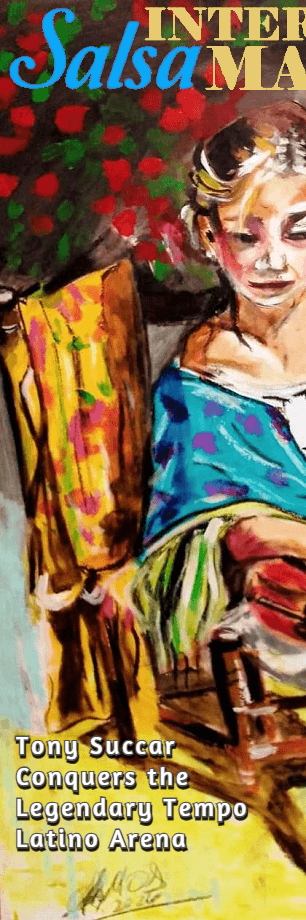
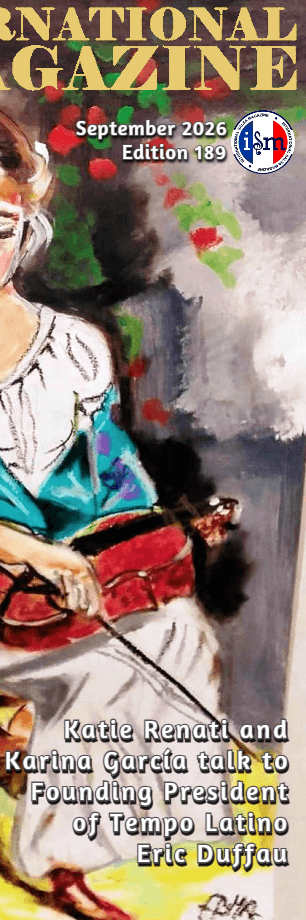
ISM / September 2026

​

ISM L 9 2026 ISM R 9 2026
SalsaApp Left SalsaApp Right
NA 9 2026
LA 9 02026
EU 9 2026
AF 9 2026
AS 9 2026
OC 9 2026
Backcover 9 2026
Acknowledgment 9 2026
“We are the Latin music world network”
Letter to the Editor Dual Split Left

[Read more…] about ISM / September 2026

Domingo Quiñones The Greatest Singer, Sonero, Poet, and Salsa Warrior

A Talent Born in the Diaspora and Forged in the Neighborhood

Domingo Quiñones was born on August 9, 1963, in Perth Amboy, New Jersey. Born to Puerto Rican parents, he returned to the island with his family at four years old to settle in the municipality of Ceiba.

In 1977, a young Domingo returned to New York, where six years later he formally launched his professional career by joining Conjunto Nativo.

Domingo Quiñones The Greatest Singer, Sonero, Poet, and Salsa Warrior

In that New York scene, the up-and-coming sonero began polishing his talent, collaborating with renowned bands and artists such as Rafael de Jesús, José Alberto “El Canario,” Johnny Rodríguez, and Conjunto Clásico.

By 1985, he joined maestro Luis “Perico” Ortiz’s orchestra, becoming its lead vocalist just eight months later. With the group, he recorded four iconic albums, most notably La vida en broma (1985), In Tradition (1986), and Perico (1987).

Domingo A Talent born in the Diaspora and forged in the Barrio

His performance quickly established him in the industry, leading him to become the first winner of the prestigious “Festival de Soneros: Duelo al Anochecer.”

Solo Breakthrough and Musical Maturity

In 1990, Quiñones signed with the influential label RMM Records and released his debut solo album, Domingo es mi nombre, produced by Charlie Donato. Following a standout feature on the legendary Tito Puente’s 100th album, he released his second project, Pintando lunas. Tracks like the duet “Enséñame” with Tony Vega and his salsa rendition of “Crazy for You” showcased the young performer’s impressive versatility.

Later, following significant personal experiences, he released Se necesita un milagro, one of the most pivotal albums of his career.

In this fifth project under RMM produced by Carlos “Cuto” Soto, with whom he had previously worked on the album Mi meta Domingo tackled spiritual, emotional, and social themes. Following its release in late 1997, the work was honored by the National Foundation for Popular Culture of Puerto Rico as one of the year’s most outstanding productions.

Domingo y Tito el Bambino

Continuing along that same reflective path, he released the album La verdadera Navidad in late 1998. The production highlighted his composition “Si mi papá se quitara,” a poignant song portraying a child’s pain over a father’s addiction, which became one of the season’s biggest hits.

Artistic Versatility: From the Music Stage to Theater and Film

Ever evolving, Domingo Quiñones’ passion for the arts led him to successfully venture into theater and film. In March 1998, he made his debut at Puerto Rico’s Festival Hall as part of the cast for the tropical adaptation of the rock opera Jesus Christ Superstar. Shortly after, he was cast to portray the legendary singer in the stage play Quién mató a Héctor Lavoe, presented by the Puerto Rico Traveling Theater in New York.

Domingo Quiñones y Dj. Augusto Felibertt

Amid talks to adapt the play for the big screen, Domingo earned standing ovations during the historic Fania All-Stars reunion at the Hiram Bithorn Municipal Stadium in Puerto Rico. Following this triumph came the successful release of his album Poeta y guerrero, where he reaffirmed his talent as both a singer and songwriter.

Beyond music and theater, the Puerto Rican salsero made his silver screen debut in the movie Héroes de otra patria. His performance earned him an honorable mention at the Viña del Mar International Film Festival, and the film was chosen as Puerto Rico’s official submission for Best Foreign Language Film at the 1999 Academy Awards.

Today, his legacy as a songwriter, producer, actor, and performer cements him as one of the most complete and respected singers in contemporary salsa.

Also Read: Ralph Mercado: The Visionary Who Turned the Neighborhood Rhythm into a Global Phenomenon The Salsa Giant in New York

Asia / September 2026

Apocalypse Now 2025Dubai Latin Crazy TribeGuia Fu 2025

Calibrated maracasBill Martinez

Karina Bernales presenta Septiembre 2026 FESTIVALES

Thailand circular flag
THAILAND
SBTA 9 2026

SALSA BACHATA TEMPTATION

Sep 11 / 13, 2026

Hotel Avani Sukhmvit
2089 Sukhumvit Rd
Prakanong Nua Watthana
Bangkok 10260, Thailand

€ 230

Malaysia ircle flag
MALAYSIA
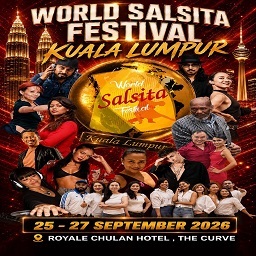
World Salsita Festival 9 2026

World Salsita Festival

Sep 25 / 27, 2026

Royale Chulan The Curve
No 6 Jalan Pju 7/3
Mutiara Damansara
Kuala Lumpur 47800, Malaysia

USD 160

Directory of Asian nightclubs

Hong Kong `circular flag

HONG KONG

Graffiti LKFGraffiti LKF
G/F, 17-18 Lan Kwai Fong, Central
Central, Hong Kong
Solar LKFSOLAR LKF
Central 2nd Floor, Ho Lee Commercial Building, 38-44 D’Aguilqr Street, Lang Kwai Fong Central
HKI Hong Kong
Sole Mio RestaurantSole Mio
Upper Ground Floor, 51 Elgin Street, Soho
Central Hong Kong, Hong Kong

ISRAEL

Havana Music Club
Havana Music Club
Yigal Alon St 126
Tel Aviv-Yafo, Israel
+972 3-562-3456

Japan circular flag
JAPAN

Egoland
Egoland Bar Akihabara
Chiyoda City, Kanda Sakumacho, 4 7-3 2F
Tokyo, Japan
Bar MirageBar Mirage
5F VORT Roppongi Briller, 3-14-14 Roppongi, Minato-ku
Tokyo 106-0032, Japan
+03-5860-6946
FiestaFiesta Latin Spot Bar
3F, 1 Chome-14-6 Kabukicho, Shinjuku City
Tokyo 160-0021, Japan
+81 90-1086-2878
El Cafe Latino TokyoEl Cafe Latino

3 Chome-15-24 Roppongi, Minato City
Tokyo 106-0032, Japan
+81 3-3402-8989

Latin Club Leon
Latin Club Leon
5-17-6 B1 Shinjuku, Shinjuku-ku
Tokyo 160-0022, Japan

La Tropi Azabu
La Tropi Azabu
3F Roppongi Azelea Bldf. 1-3-6 Nishi-Azabu, Minato-ku
Tokyo1060031, Japan

Thailand circular flag
THAILAND

bAFROS lOUNGE
Bafros
Sugar Club Complex Sukhumvit Soi 11
Bangkok 10110, Thailand
+66 63 039 8700

Havana Social Cocktail Bar
Havana Social
1/1 Sukhumvit Rd. Soi 11
Bangkok, Thailand
+66 2 821 6111

Vietnam circle flag
VIETNAM
Apocalypse Now Vietnam
Apocalypse Now Sai Gon
2F Thi Sach
Ho Chi Minh City, Vietnam 70000
+84 799 741 261


La Habanera Vietnam
La Habanera
Basement 81 xuân diệu Tay Ho
Hanoi 100000, Vietnam
+84 35 320 7220

La Pachanga Saigon
La Pachanga Club Saigon
3rd Floor, 39A Co Bac Street, Cau Ong Lanh Ward, District 1
Ho Chi Minh City 700000, Vietnam
+84 93 855 79 21
  • « Go to Previous Page
  • Page 1
  • Interim pages omitted …
  • Page 44
  • Page 45
  • Page 46
  • Page 47
  • Page 48
  • Interim pages omitted …
  • Page 316
  • Go to Next Page »

International Salsa Magazine (ISM) is a monthly publication covering salsa activities around the world and has been publishing since 2007. It is a worldwide network of volunteers coordinated by ISM Magazine. Together, we work to strengthen salsa events around the world.