• Skip to primary navigation
  • Skip to main content

International Salsa Magazine

  • HOME
  • Previous editions
    • 2026
      • ISM / March 2026
      • ISM / February 2026
      • ISM / January 2026
    • 2025
      • ISM / December 2025
      • ISM / November 2025
      • ISM / October 2025
      • ISM / September 2025
      • ISM / August 2025
      • ISM / July 2025
      • ISM / June 2025
      • ISM / May2025
      • ISM / April 2025
      • ISM / March 2025
      • ISM / February 2025
      • ISM / January 2025
    • 2024
      • ISM / December 2024
      • ISM / November 2024
      • ISM / October 2024
      • ISM / September 2024
      • ISM / August 2024
      • ISM / July 2024
      • ISM / June 2024
      • ISM / May 2024
      • ISM / April 2024
      • ISM / March 2024
      • ISM / February 2024
      • ISM / January 2024
    • 2023
      • ISM / December 2023
      • ISM / November 2023
      • ISM / October 2023
      • ISM – September 2023
      • ISM – August 2023
      • ISM July 2023
      • ISM Edition June 2023
      • ISM – May 2023
      • ISM April 2023
      • ISM March 2023
      • ISM February 2023
      • ISM January 2023
    • 2022
      • ISM December 2022
      • ISM November 2022
      • ISM October 2022
      • ISM September 2022
      • ISM August 2022
      • ISM July 2022
      • ISM June 2022
      • ISM May 2022
      • ISM February 2022
      • ISM January 2022
    • 2021
      • ISM December 2021
      • ISM November 2021
      • ISM October – 2021
      • ISM September 2021
      • ISM August 2021
      • ISM July 2021
      • ISM May 2021
      • ISM April 2021
      • ISM June 2021
      • ISM March 2021
      • ISM February 2021
      • ISM January 2021
    • 2020
      • ISM December 2020
      • ISM November 2020
      • ISM October 2020
      • ISM September 2020
      • ISM August 2020
      • ISM July 2020
      • ISM June 2020
      • ISM May 2020
      • ISM April 2020
      • ISM March 2020
      • ISM February 2020
      • ISM January 2020
    • 2019
      • ISM December 2019
      • ISM November 2019
      • ISM October 2019
      • ISM Septembre 2019
      • ISM August 2019
      • ISM July 2019
      • ISM June 2019
  • Spanish
  • Download Salsa App
    • Android
    • Apple

Search Results for: salsa in venezuela

Oscar D’ León. Confessions by Oswaldo Ponte by William Briceño Part II

Latin America / Venezuela / Caracas

“Continuing the musical biography of Oscar D’ León. He moved on to new horizons, new learnings, difficult experiences, and decisions, as life always holds a wide variety of surprises over time. One of those changes was his breakup with Dimensión Latina due to various internal group problems.
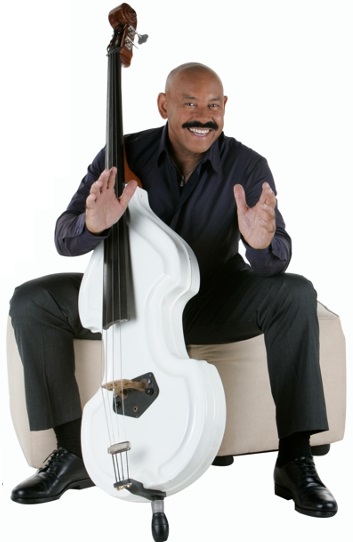
Photo 1: Oscar D' León
Photo 1: Oscar D’ León

Oscar’s departure caused issues for the group, as several of their scheduled performances in other countries were canceled, and over time, they lost audience, leading most of their members to split up and leave. Nevertheless, the group managed to carry on successfully but without the unique touch or ‘sazón’ that Oscar D’ León provided.

After leaving Dimensión Latina, Oscar ingeniously created La Salsa Mayor in 1976 and was able to release his first discography with his new group, thanks to the record label TH, which provided it because they were very interested in his new project, naming it ‘Con bajo y to’.’ From that moment, Oscar knew that he could consolidate himself with this group or any other, as his exceptional and unparalleled talents, so much originality, had never been witnessed”

“In any generation of Venezuelan artists. He also created another group called ‘La Crítica’ with the purpose that if any member of the Salsa Mayor Group was absent, one of them would substitute. However, the orchestra ‘La Salsa Mayor’ lasted only 4 years due to a strong disagreement Oscar had with his band on stage because the songs played during those two performances ‘were not accepted,’ leading to the closure of ‘Salsa Mayor.’ From that moment, he began to practice with his orchestra ‘La Crítica’ before his performances in Curaçao, where his songs, ‘Suavecito,’ ‘No ha pasado nada,’ served as a way to allude that everything had been overcome.”

“With this group, he achieved significant success. From that era, Oscar D’ León was known as the leading artistic figure in the country and on the American continent, with his music being heard in various homes in Venezuela and other Latin American countries. During that time, he traveled throughout the Latin American continent, the Caribbean islands, and the United States. From that moment, he leveraged his figure as he ventured into artistic promotion. He did so with Daniel Santos, Héctor Lavoe, El Gran Combo de Puerto Rico, and Celia Cruz.

If we have to mention which country Oscar liked or idolized the most, it was Cuba, because ever since he was very young, he loved the music played there, which over the years underwent various transformations in different stages, such as ‘La inmortal guaracha Celia Cruz’ which brought glory to the island; ‘la sonora Matancera’ carried the name of Martí’s land around the world; ‘Dámaso Pérez Prado,’ among other artists who contributed to the origin of Cuban music.”

“When Oscar D’ León first visited Cuba, it was an unforgettable experience and held extraordinary significance not only for the young artist but for the country itself. Its magnitude was such that, first and foremost, the ministers of culture and foreign affairs welcomed him, and every time he performed, large numbers of fans awaited to see and hear him. The respect and admiration for him were immense. In fact, this book mentions that ‘Cuban music,’ among other things, made Oscar D’ León’s existence as an artistic figure and as a person possible.”

Photo 2: Oscar D' León presenting his bibliography
cccc

“For Cubans, Oscar D’ León’s arrival had a profound effect; it was the rebirth of existing music. In short, he rescued it, causing Cuban music, ‘son,’ the central show, and entertainment venues to become their activities for relaxation and fun.

Oswaldo Ponte, in his research, mentions that when he looked for everything related to Oscar D’ León, there was immense admiration for him. Everyone he interviewed, even if they knew he was his manager and his biographer accompanied him, always said incredible things about Oscar. He not only rescued Cuban ‘son’ but also taught them to dance Cuban music, opening the minds and perspectives of Cubans, as Cuban ‘son’ continued to be known internationally. Everyone mentions what a good musician he is, that they can’t believe he isn’t Cuban and has that ‘sazón’ (flavor/charisma).

He was famous not only in Cuba but also in other countries. An example of this was Oscar’s participation in the Rome Festival when he sang a song by Adalberto. Mr. Adalberto Álvarez passed backstage and commented: ‘Cuba will never be able to repay Oscar for what he has done for Cuban music. He has kept it alive; if it hadn’t been for him, for Johnny Pacheco, for Celia Cruz, for La Sonora Ponceña and others who took it upon themselves to keep ‘son’ alive outside our country’… ‘and of all of them, the fundamental leader was Oscar D’ León because he is the most connected to authentic Cuban musical roots.'”

“In short, every time Oscar goes out to sing and dance, he is representing Cubans. For Cubans, dancing is almost a ritual. In 1950, they danced ‘son,’ ‘danzón,’ ‘mambo,’ ‘chachachá,’ ‘rumba,’ and other dances, some of which lasted a very short time, such as ‘dengue,’ ‘monzambique,’ ‘pilón,’ ‘carioca’; and others transcended time, like ‘conga’ and ‘rumba.’ Salsa is the continuation of, or the same as, ‘son,’ which can be danced with the same style or with different styles.
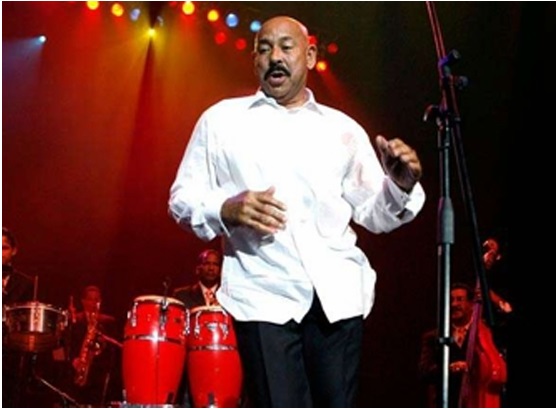
Photo 3: Oscar D' León in concert
Photo 3: Oscar D’ León in concert

Oswaldo Ponte began his promoter plan by hiring figures, among whom was Oscar D’ León. Becoming a serious entertainment promoter, he took the risk of doing it internationally (outside Venezuela) where he bought a contract from Guillermo Arena to present Celia Cruz with La Sonora Matancera. He also partnered with Juan Caravallo and managed to present the biggest show in Higuerote, Venezuela; with this great step, he was becoming a potential successful entrepreneur in international shows.”

“In 1983, he hired Oscar for 3 performances with ‘Roberto Blades,’ two at the Ávila Hotel and one at San Jacinto Park (both in Venezuela). At that time, Oscar was returning from Cuba, and with a new event, Oswaldo, upon seeing the show, pondered the difference between the two artists.

The Panamanian star was well-managed by his team. However, when it came to judging which was the better show, it was Oscar D’ León’s. When Ponte went to talk with him, he proposed becoming his manager on the condition that Oscar follow his instructions, as he always directed everything, which Oscar accepted. From that moment, many things changed not only artistically but also personally, offering the public not just Oscar D’ León and his orchestra, but Oscar D’ León himself, giving more charm and charisma to his audience.

One of the challenges he had to face was a stagnation in record sales. His new record productions weren’t taking off, so he decided to rely on television. Venezuela was both a recipient and a transmitter country, so his performances were broadcast on different television channels that gave great musical importance, such as ‘Siempre en Domingo,’ which covered the center and north of the American continent, and ‘Sábado Gigante,’ which covered South America, thus giving him international exposure.

One of his best and most unforgettable collaborations was with singer Celia Cruz, who was a great friend of Oscar’s. They participated in many events, one of which was in 1993, where Ralph Mercado did what he called ‘The Perfect Combination,’ which consisted of combining stars for public performances.

Participants included Oscar D’ León, Celia Cruz, Marc Anthony, La India from New York, Tito Nieves, Tony Vega, Cheo Feliciano, José Alberto El Canario, and Domingo Quiñones, of which the most recommended songs were ‘El Son de Celia y Oscar’ and ‘Vivir lo nuestro’ by Marc Anthony and La India. At that time, Oscar had left the TH label and was now with Ralph Mercado; his colleagues were Tito Puente, Celia Cruz, Sergio George, Cheo Feliciano, Tito Nieves, La India, José Alberto El Canario, and other significant stars.

There are many other details and more events up to the present day, but it would be too much to explain in one article. What is very clear is that Oscar D’ León has conquered countless goals in his life, and we can all do the same in the different areas in which we operate, if we set our minds to it with determination and an iron will.
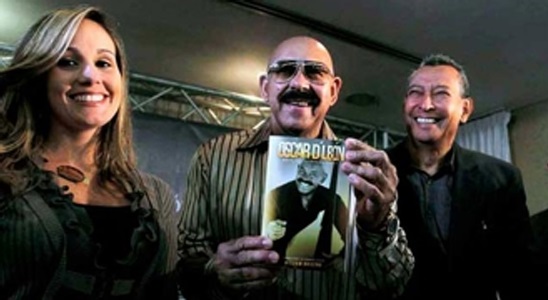
Photo 4: Oscar D' León and his bibliography
Photo 4: Oscar D’ León and his bibliography

To learn more about this, we recommend reading ‘Oscar D’ León, Confesiones De Oswaldo Ponte’ by William Briceño, published by Fundación Simón Bolívar.”
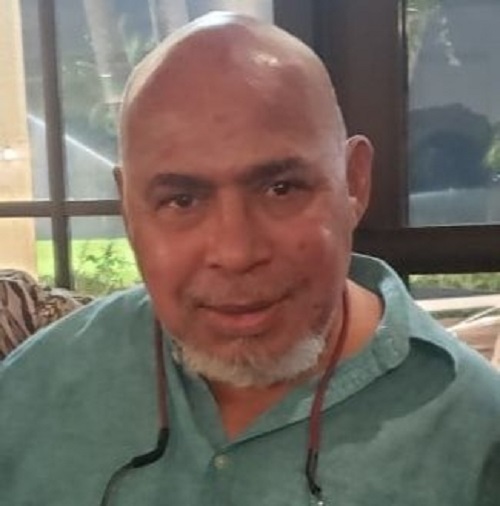

 

Ángel Luis Canales is a renowned Puerto Rican singer and composer known as “El Diferente” (The Different One) for his particular and irreverent style

Angel Canales was born on June 29, 1950, in Santurce, Puerto Rico.

During his childhood, around the age of 8 or 10, he moved with his family to New York City, where he lived in East Harlem (Upper Manhattan). Musical influences indicate that from a young age, he was strongly influenced by the music of Cortijo y su Combo and Ismael Rivera.

Before or concurrently with his musical career, he worked in the jewelry business; he was a messenger and later learned to cut and polish diamonds, a skill that allowed him to self-finance his musical career and pay high salaries to his musicians.

Ángel Luis Canales is a renowned Puerto Rican singer and songwriter known as El Diferente for his unique and irreverent style.

Musical Career

His Beginnings: He started as a timbalero in Ray Jay’s orchestra, where he debuted as a singer, replacing the lead vocalist.

His first album (1970), titled “Brujería,” was released in 1970 and recorded under the Alegre Records label, with musical direction by Mark Dimond. Hits from this production include “El Barrio,” “Yo No Tengo Pena,” and the title track.

Notable Hits: Among his most popular songs are: “Nostalgia,” “Sol de Mi Vida,” “Perico Macoña,” “Lejos de Ti,” “Hace Tiempo,” “El Cantante y la Orquesta,” “Sabor de los Rumberos Nuevos,” “Bomba Carambomba,” and his celebrated rendition of the bolero “Dos Gardenias.”
His Unique Style is recognized for its unorthodox approach and distinctive vocal timbre, which earned him the nickname “El Diferente” (The Different One).

He was a highly independent artist who self-financed his albums and founded his own record label, Celanac Records.

Tours and Retirement

International Tours: He toured internationally, visiting countries such as Panama (his first), Venezuela (where he performed at the Poliedro de Caracas in 1982), Colombia, and Peru. It is said that he never performed with his orchestra in his native Puerto Rico.

He retired in the late 1990s, deciding to leave the stage.

Currently, he is reportedly battling Parkinson’s disease, which has limited him and led him to choose silence and retirement, although he occasionally attends private events. He is currently 75 years old.

Àngel Luis Canales, y el pianista, compositor y arreglista Gilberto el pulpo Colòn

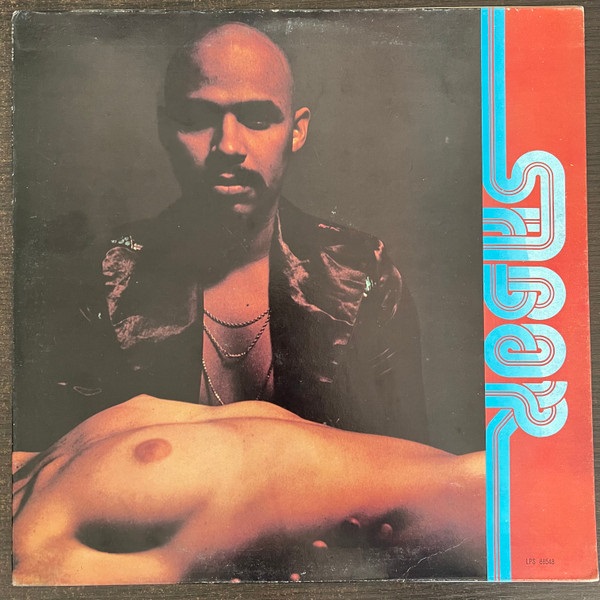
50 Years Since the Launch of “Sabor” (1975)

The Album: The album titled “Sabor” by Angel Canales was released under the Alegre Records label in 1975.

Only a boricua (Puerto Rican) who has been absent from their homeland knows what it’s like to be away from Puerto Rico when winter arrives in New York City. Or when you’re inside a taxi or walking the congested streets of the Bronx or the Latino barrio, and all you see around you are skyscrapers and more skyscrapers. The anxiety and sense of helplessness that overwhelm your spirit in the concrete jungle can only be calmed by memories.

50 years ago, on Monday, November 10, 1975, the unique voice of Puerto Rican singer Ángel Luis Canales consoled the thousands of boricuas oppressed by nostalgia with his composition “Lejos De Ti” (Far From You). It was a confession and affirmation of his Puerto Rican identity, in which he asserts that his love for his homeland will never die, even though he was raised in New York.

The song is a guaguancó with lyrics that evoke images of old San Juan, Villa Palmeras and its rich bomba heritage, Boca de Cangrejos, fried fritters on the grill, and the river that crosses through the old Ancón de Loíza Aldea, where his grandmother lived. “Lejos De Ti” remains the most remembered track from “Sabor,” an album produced by Joe Cain, recorded in late 1974, and released by Alegre Records on Monday, November 10, 1975.

Angle Canales Sabor 1975 Photography By Dominique

This album is considered one of the best salsa releases of the 1970s.

Canales’ Style: Canales favored a different style of interpreting Afro-Caribbean rhythms, combining elements from Héctor Lavoe, Ismael Rivera, Vicentico Valdés, and Paquito Pérez (the singer of the Orquesta Zodiac of Loíza). He extended the melodies with his nasal voice, challenging the poetry of the montunos, but going off-key and mispronouncing some words. His diction was far from perfect.

Production: The architect of Canales’ success was Colombian pianist Edy Martínez, who arranged seven of the eight tracks on this session, from cut #2 to #8. Due to a prior commitment with Mongo Santamaría’s band, he left his compatriot José Madrid in charge of the piano performance on this record.

Under Martínez’s direction, Canales embraced fame. “Sabor” was his second album between 1970 and 1971, he had recorded the “Brujería” session with pianist Mark Alexander “Markolino” Dimond, who founded Conjunto Sabor after spending several years with Willie Colón’s band.

Canales reappeared four years later with the Orquesta Sabor los Rumberos Nuevos with an arrangement by Louie Cruz. That same year, 1975, Larry Harlow produced Mark Dimond’s classic “Beethoven’s V” featuring vocalists Frankie Dante and Chivirico Dávila. “Sabor” was a huge hit.

Tours and Artistic Choices: The singer toured Europe, the United States, and South America, where Colombians, Panamanians, and Peruvians remember him fondly to this day, despite health issues forcing him to retire from the stage.

During the golden age of salsa, singers were expected to master all genres, and boleros were no exception. His vocalization on “La Hiedra” (a track written by Saverio Saratini and Vincenzo D’Acquisto) and “No Te Acostumbres” (a track belonging to Doris Aghian’s catalog) is notable for its theatricality, a trick Canales employed to mask the limitations of his voice.

Salsa dancers who thrive on piano, trombone, and percussion solos will be delighted with “Sabor Los Rumberos Nuevos,” “Sol De Mi Vida” (dedicated to his wife Brunilda), “El Cantante y La Orquesta,” and the hit “Hace Tiempo” (with its memorable chorus: ay, ay, ay, no me hagas padecer así – oh, oh, oh, don’t make me suffer like this).

Legacy: Before becoming a professional singer, Canales worked as a jeweler. A look at the covers of his first two albums is enough to conclude that he was a pioneer in the use of bling-bling in salsa. As a composer, Canales was a solid chronicler of barrio life. The story told in “Perico Macoña” is a good example: a man who smokes a joint and loses all self-control, insulting his own friends with his abrupt comments.

The re-issue of “Sabor” is a fitting tribute to the memory of the late Joe Cain.

Credits

  • Trombone: Juan Torres, Ricardo Montañez
  • Trumpet: Tom Malone
  • Baritone Saxophone, Flute: Emérito Benítez
  • Piano: José Madrid
  • Bass: Eddie Testo
  • Congas: Antonio Tapia
  • Timbales: Gadier Quiñones
  • Bongo: Aldemaro Luis Rivera
  • Producer: Joe Cain
  • Musical Director: Juan Torres
  • Recorded at: LE Studio NYC, December 1974
  • Engineer: Sandy Sina
  • Arrangements: Edy Martínez (except “Sabor Los Rumberos Nuevos” by Louie Cruz)

Torres, Montañez, Tapia, and Quiñones had previously collaborated with Canales on Markolino Dimond’s “Brujería” album.

Collaboration:

  • GonZalsa
  • L’Òstia Latin Jazz
  • Dj. Augusto Felibertt
  • Jaime Torres Torres
  • Fania Record
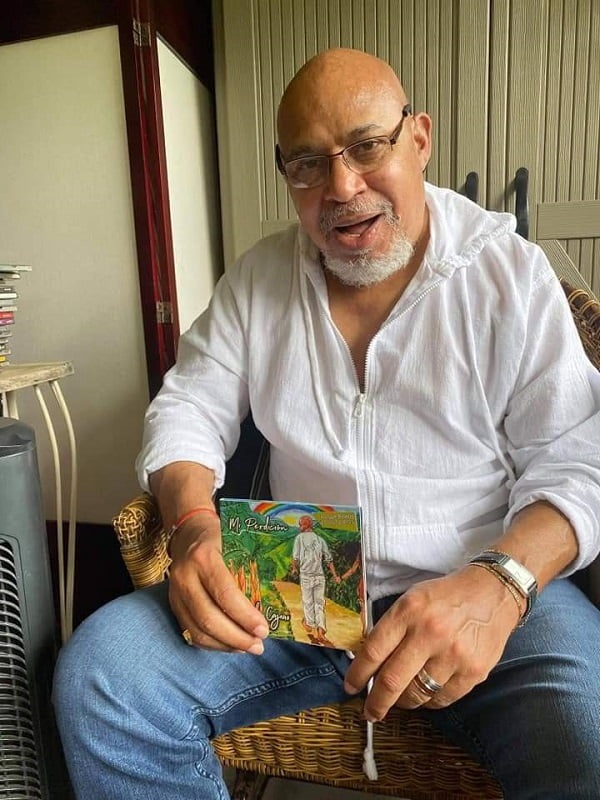
Angel Canales «El Diferente» recibiendo la produccion de Danilo Cajiao Titulada»Mi Perdicion» año 2020

Also Read: Angel Canales «El Diferente» receiving the production from Danilo Cajiao titled »Mi Perdicion» year 2020.

Latin America / December 2025

Brian Lynch 2025

Malia 2025Alberto Crespo 2025Ángel Luis Canales

Events – December 2025

Colombia December
COLOMBIA
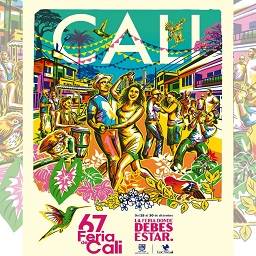
Feria de Cali 2025

Feria de Cali

Dec 25 / 30, 2025

Santiago de Cali, Colombia

Venezuela December
VENEZUELA
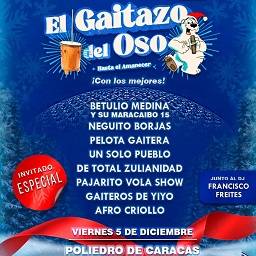
EL Gaitazo del Oso 2025

El Gaitazo del Oso

Dec 5, 2025

Poliedro de Caracas
1090 C. Principal Cacique Tiuna
Caracas 1090, Venezuela

From $ 41

Bella MartinezCalibrated maracas

DIRECTORY OF NIGHTCLUBS

Argentina December
ARGENTINA

Aruba December
ARUBA

Belize December
BELIZE

Bolivia December
BOLIVIA

Brazil December
BRAZIL

Chile December
CHILE 

Colombia December
COLOMBIA

Costa Rica December
COSTA RICA

Cuba December
CUBA

Dominican Republic December
DOMINICAN REPUBLIC

Ecuador December
ECUADOR

Guatemala December
GUATEMALA

Mexico December
MEXICO

Panama December
PANAMA

Peru December
PERU

Puerto Rico December
PUERTO RICO

Venezuela December
VENEZUELA

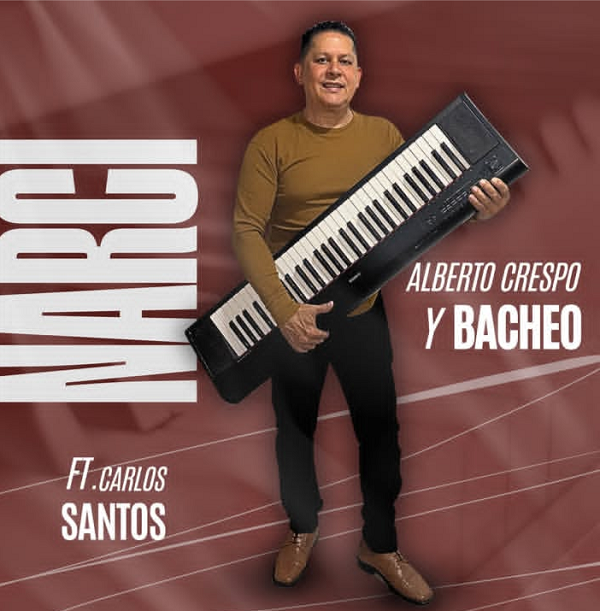
Alberto Crespo and Carlos Santos Release Their Latest Single “Narci” with Grupo Bacheo to the Latin Market

On November 7, 2025, the vibrant Latin music scene celebrates a stellar collaboration that promises to ignite dance floors.

The acclaimed Venezuelan pianist, arranger, and music producer Alberto Crespo joins legendary Puerto Rican sonero Carlos Santos and the talented Grupo Bacheo to present their latest musical track titled “Narci.”

Alberto Crespo and Carlos Santos release their latest song, titled Narci, to the Latin market with Grupo Bacheo

This original composition by Ali Delgado and José Granados, featuring arrangements by Alberto Crespo himself, fuses a modern sound with the unmistakable rhythm of salsa, guaranteeing a musical experience that will delight dancers.

Alberto Crespo: A Piano Master with an International Career.

From his beginnings at the “José Ángel Lamas” Music Conservatory in Caracas, Alberto Crespo demonstrated exceptional passion and talent. His deep immersion in harmony, counterpoint, orchestration, and improvisation has established him as a versatile and well-rounded musician.

By age seventeen, he was already touring with renowned orchestras, sharing the stage with icons such as Naty y Su Orquesta, Celia Cruz, Bobby Capó, Carmen Delia Depini, Carlos Cano Estremera, Andy Montañés, Ismael Miranda, Pete Conde Rodríguez, and José Mangual Jr., among many others.

Alberto Crespo A Piano Master with an International Career

With over three decades of experience in salsa and Latin Jazz, Crespo has consolidated his reputation as a highly prestigious producer, arranger, and pianist. His impressive list of collaborations includes national and international artists such as Maikel Stuart, Frankie Morales (former singer for Tito Puente), Orquesta Bailatino, Grupo Mango, Herman Olivera, Rumberos de Callejón, Gilberto Santa Rosa, and Naty y Su Orquesta. His versatility has led him to be part of the most prominent musical groups in Venezuela.

Carlos Santos: A Classy Sonero with a Legendary Trajectory.

Born on March 13, 1946, in Cataño, Puerto Rico, Carlos Santos is a true sonero whose career took off with Joey Pastrana’s band. His powerful voice and unmistakable salsa flair led him to perform and record with emblematic salsa orchestras, including “Kako y su Trabuco,” “Los Kimbos,” “Conjunto Candela,” and Roberto Roena’s “El Apollo Sound,” in addition to special performances with Ray Barreto and El Conjunto Libre.

Santos has left classics for posterity such as “Chacaboom,” “Las cosas de la vida” and “Amor verdadero” with Joey Pastrana, as well as “Flores para tu altar” and “Me imagino” with Conjunto Candela. His voice also enriched productions by Eddie Palmieri and Los Kimbos with tracks like “Caridad” and “Todo el mundo.” During his time with El Apollo Sound, he garnered hits such as “El Progreso” and “Háblame ahora.”

Carlos Santos Un Sonero con Clase y una Trayectoria Legendaria

Carlos Santos currently resides in Florida, United States, and continues to delight audiences with his international and local performances.

The union of these two pillars of salsa, under the production of Chongo Producción (from New York) and Juancho Producción (in Cali), promises to be a memorable event for Latin music.

Ali Delgado (Caracas) y Juancho Producción (Cali)

Note: “45 RPM is for sale in Cali by Juancho Producción, and will be presented with great fanfare on December 30 at 10:00 a.m. at the Meeting of Music Lovers and Collectors (Encuentro de Melómanos y Coleccionistas) of the Cali Fair, Colombia. 2025.”

Production Credits

General Production

  • Production: Alberto Crespo & Chongo Productions LLC

Musical Team

  • Composer: Ali Delgado / José Granados
  • Vocalist: Carlos Santos
  • Arrangements: Alberto Crespo

Musicians

  • Timbal: Carlitos Padrón
  • Tumbadoras (Congas): Manuel “Manny” Márquez
  • Bongó / Bell: Carlitos Padrón
  • Trumpets: Jorge Maestre “Pitufo”
  • Baritone Saxophone: José Antonio Fariñas
  • Bass: José Soto “Mortadelo”
  • Percussion: Carlitos Padrón, Carlos Crespo
  • Chorus / Background Vocals: Heyzer Cabrera & José Soto “Mortadelo”

Recording and Post-Production

  • Recording Studios:
    • Chongo Estudios (New York)
    • A Tempo Estudios (Caracas)
    • París Recording Estudios (USA)
  • Mixing: Heyzer Cabrera / Alberto Crespo
  • Mastering: Heyzer Cabrera

Important Note by Alberto Crespo:

I was working on the arrangement for the song NARCI, and when I reached the chorus, I wanted to find a beautiful melody with a different harmony, like a chorus of angels singing from heaven. I was pacing around my workspace and the areas near my house, searching for ideas.

My wife, Adriangela, was listening to what I was developing to achieve a final connection, and all of a sudden, she sang that beautiful melody to me. I immediately copied it and added the chords, and honestly, it was something magical, very spiritual… “Ya no estás más a mi lado, cómo te extraño, mi amor, cómo te extraño…” (You are no longer by my side, how I miss you, my love, how I miss you…) That final unison of the chorus is very subtle and sentimental.

Video

Video: Chongo Productions LLC

Carlitos Padron Director de Chongo Producción (desde New York)

Listen to “Narci” on YouTube:

Alberto Crespo y Bacheo

[email protected]

+58 4142521642

Also Read: The Conjunto Bailatino “La Resistencia Salsera” again “Antes los ojos del Mundo” and here, “No hay quinto malo”

Yerba Buena Gardens Festival 2017 in San Francisco

North America / USA / San Francisco

2017 Yerba Buena Gardens Festival (YBG Festival) proudly announces the lineup for its:

2017 Yerba Buena Gardens Festival - Free out doors fresh
2017 Yerba Buena Gardens Festival – Free out doors fresh

17th Season, which continues its tradition of bringing entertainment to downtown in San Francisco. May 7 – Oct 29, 2017, 760 Howard St. San Francisco, CA 94103

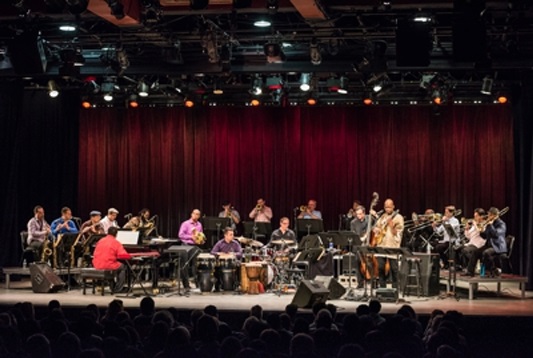
To kick off the new season, the Grammy-winning Arturo O’Farrill & the Afro Latin Jazz Orchestra + VNote Ensemble will open the Festival on Sunday, May 7, the first of this year’s 100 admission-free events. The very popular series Let’s Go Salsa@Jessie also will be present with the best artists. YGB Festival offers you free music, theater, circus, dance, poetry, and children’s programs with artists from the Bay Area and around the world.

Named one of the Best Urban Green Spaces in North America by USA Today, Yerba Buena Gardens is a world-renowned cultural destination for Bay Area residents, families, workers, and tourists alike. Yerba Buena Gardens is located between Mission Street and Howard Street and 3rd and 4th Streets in downtown San Francisco. Visit www.ybgfestival.org or call (415) 543-1718 for more information and complete 17th Season schedule.

Yerba Buena Festival’s exciting 17th Season promises an exceptional array of talent to please all audiences.

YBG Festival Executive/Artistic Director Linda Lucero says, “Everyone needs the spiritual sustenance, inspiration, and communal experience that only live performance offers. This summer, you’ll find your joy at Yerba Buena Gardens Festival!”

2017 Yerba Buena Gardens Festival

The Grammy-award winning Afro Latin Jazz Orchestra (ALJO), led by pianist, composer, and director Arturo O’Farrill, kicks off the Festival on Sunday, May 7 at 1:00pm. The ALJO brings together the drama of big band jazz, the culture of Latin music, and the virtuosity of eighteen of the world’s most accomplished solo musicians. Twelve years of critically acclaimed performances internationally have firmly established the ALJO as the standard-bearer for creative interpretation of Latin jazz greats such as Tito Puente, Frank “Machito” Grillo, and Chico O’Farrill, as well as the driving force behind new commissions from Latin music’s most talented composers and arrangers.

Arturo O’Farrill & the Afro Latin Jazz Orchestra + VNote Ensemble

Yerba Buena Gardens Festival includes the very popular Let’s Go Salsa@Jessie dance series, the family-friendly Children’s Series, Poetic Tuesdays with Litquake, and Thursday Lunchtime Concerts. Each and every week and weekend, the Festival has curated a lineup of musicians, dancers, poets, and actors from around the world including the Bay Area’s Kitka Women’s Vocal Ensemble on May 13, Brass Convergence II: Protest Brass on May 20, Richard Howell & Sudden Changes on May 27, NEA Heritage Fellows Michael Doucet and Tom Rigney with Flambeau on June 3, Festival-commissioned YBG ChoreoFest, a three-day site-

specific dance festival featuring 9 contemporary dance companies on June 9–11, NYC’s own M.A.K.U. Soundsystem on June 17, Circus Bella on June 23–24, AXIS Dance Company’s The Garden Project on July 1–2, Festival-commissioned Theatre Rhinoceros’ Lear! on July 7–9, Ensemble Mik Nawooj‘s premiere of Death Become Love on July 15, San Francisco Mime Troupe on July 23, SF Uke Jam Summer Uke-splosion! with Ukulenny and Cynthia Lin on July 29, Daymé Arocena + Latin Jazz Youth Ensemble on August 19, Paula West on August 26, Kugelplex with special guest Linda Tillery on September 2, Alsarah & the Nubatones on September 9, and Brooklyn Raga Massive with Classical Revolution performing Terry Riley’s In C on September 16.

Yerba Buena Gardens concert

The Festival closes with the 17th Annual Halloween Hoopla Sunday, October 29.

The popular series Let’s Go Salsa@Jessie, the open-air salsa dance party in Jessie Square (near the Contemporary Jewish Museum), takes place on the third Thursday of each month from May to September from 6:00 pm – 7:30 pm. Performers are Changuí Majadero on May 18, La Mixta Criolla on June 15, Somos el Son on July 20, Bobi Céspedes on August 17, and the Festival return of Ricardo Lemvo & Makina Loca on September 21.

The Festival offers the delightful Children’s Series, interactive performances specially designed for kids and families every Friday from June to August in Yerba Buena Gardens. The series presents performances by kid favorites: Caterpillar Puppets, Ka-Hon, Red Panda Acrobats, Pi Clowns, Venezuelan Music Project, Crosspulse, Unique Derique, and Non Stop Bhangra. The series ends with the wildly popular 17th Annual Halloween Hoopla on Sunday, October 29.

Yerba Buena Gardens Festival Commissions and Special Projects have commissioned the following projects to celebrate in June: Yerba Buena Gardens ChoreoFest, a brand new 3-day dance festival, June 9-11. Playwright/director/actor John Fisher writes and directs Lear!, a site-specific satirical musical based on Shakespeare’s King Lear for Theatre Rhinoceros, the nation’s, and likely the world’s, first queer theater on July 7-9 and Circus Bella on June 23 and 24. Conceived and directed by Abigail Munn and Joel Baker for Circus Bella, the show will feature high level, local and guest circus artists and includes static trapeze, rope walking, juggling, contortion, unicycle, original clowning, acrobatics, and more.

2017 Yerba Buena Gardens Festival - Photo
2017 Yerba Buena Gardens Festival – Photo

The Yerba Buena Gardens Festival also co-presents a series of admission-free outdoor programs with Union Square Live to be announced in April.

  • « Go to Previous Page
  • Page 1
  • Interim pages omitted …
  • Page 24
  • Page 25
  • Page 26
  • Page 27
  • Page 28
  • Interim pages omitted …
  • Page 94
  • Go to Next Page »

International Salsa Magazine (ISM) is a monthly publication about Salsa activities around the world, that has been publishing since 2007. It is a world network of volunteers coordinated by ISM Magazine. We are working to strengthen all the events by working together.