









| DIRECTORY OF NIGHTCLUBS | ||
|
|
|
|
|
|
|
|
|
|
|
|
|
|
|
|
|
|
|
|
|
|
|
|



| DIRECTORY OF NIGHTCLUBS | ||
|
|
|
|
|
|
|
|
|
|
|
|
|
|
|
|
|
|
|
|
|
|
|
|
El Jeque y su Banda is a salsa ensemble based in Venezuela.
Under the direction of its founder and general manager, Lic. Ángel Martínez “El Jeque,” and with the impeccable musical direction, arrangements, and piano work of the renowned William “Willie” Melo, the band has established itself as a benchmark in the genre.
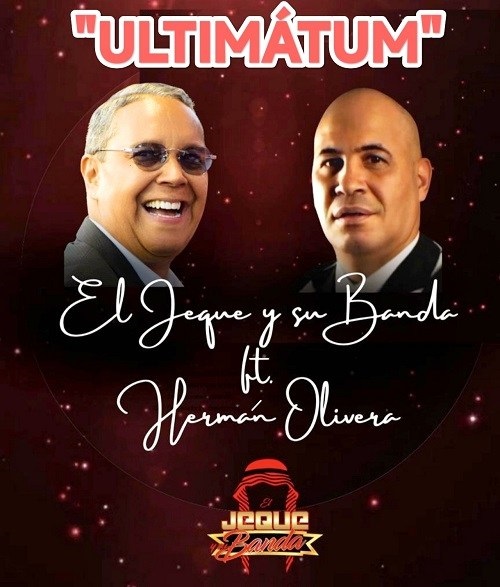
The Launch: “Ultimátum”
The purpose of this release is to announce the launch of their second promotional single, a piece crafted for the true music connoisseur: “Ultimátum.”

History and Evolution
This romantic-style track was originally recorded in 1981 by the great Puerto Rican interpreter Felipe “La Voz” Rodríguez.
The song was written by the legendary Puerto Rican composer Luz Celenia Tirado, who was the first woman recognized in the island’s challenging guild of troubadours and also performed on that original production.
The concept for this version was a creative endeavor led by Hermán Olivera, who defined the essence and intent of the track.
Musical Virtuosity
It is remarkable how these music aficionados manage to mesh Guaguancó and Cha-Cha originally fused with a bolero with a versatility that preserves the essence, cadence, and appeal of the piece.
The arrangement, loaded with dissonant notes and power, softens its impact with the magic of the Cha-Cha, allowing Hermán to display his artistry in the soneo.
This interplay between the irreverent, the melodic, and the elegant makes “Ultimátum” a mandatory addition to any quality music lover’s playlist.
Production Credits
The excellence of this single is made possible by the participation of these great Venezuelan musicians:
Everything stated above summarizes a work with all the necessary elements to become a radio hit and, above all, an essential piece in your music library.

Sincerely,
Lic. Ángel Martínez “El Jeque”
Collaborations:
Dj. Augusto Felibertt
Also Read: Hermán Olivera “El Sonero del Siglo XXI”
Latin America / Venezuela / Caracas

This December, Hard Salsa Bar—the go-to spot for themed parties dedicated to spreading, promoting, and enjoying Latin music—invites you to experience an incredible atmosphere in their top-notch facilities.
They have just announced their year-end bash taking place on December 17th. The event features a New Year’s dance hosted by Hard Salsa Bar and Christian Paul Escobar (Splinter), starring two of the best Venezuelan orchestras today: Bailatino and Negramenta. It will be an authentic “mano a mano” (head-to-head) performance featuring their greatest hits.
The night will be soundtracked by DJs Augusto Rafael Felibert Palacios and Jesús Adrán, who will keep the energy high with stellar musical repertoires. It’s a night designed to satisfy true salsa aficionados and keep everyone dancing until dawn. Get ready for a world-class celebration as we gear up to say a grand goodbye to 2016 in the coming days.
This exciting event will take place on the second floor of Posada del Pollo on Panteón Avenue, Caracas. The party kicks off at 8:00 PM and will keep going until 6:00 AM the following morning. For all those attending this great event, guaranteed security will be provided, along with free on-site parking (limited to 50 vehicles).

Starting December 1st, tickets will be priced at 6,000 Bs. Please note that tickets will not be sold at the door, and availability is limited.
Affordable drink prices are guaranteed throughout the night; however, there are certain entry requirements and house rules to keep in mind:
“By following these guidelines, we can all enjoy the long-awaited dance that Hard Salsa Bar has put together for the community.”

For more information or to purchase/reserve your tickets, contact:






| April 2026 – Festivals | ||
|
|
|
International
|
| DIRECTORY OF NIGHTCLUBS | ||
|
|
|
|
|
|
|
|
|
|
|
|
|
|
|
|
|
|
|
|
|
|
|
|
After having contact for days and overcoming some pitfalls, we could finally get to talking with producer, composer, and multi-instrumentalist Sebastián Natal, who kindly attended and revealed his views on the path he has followed to become the great artist he is today.

First, Sebastián appreciated our interest in learning a little more about him and began to describe his native country’s musical and cultural context at the time. First of all, the artist was born in Montevideo, Uruguay, where a tropical music movement was established by then, considering many genres from the tropics and the Caribbean, such as salsa, bachata, merengue, cumbia, guaguancó, and many more.
Obviously, these genres did not originate in Uruguay, as bomba is Puerto Rican, salsa is Cuban, and bachata is Dominican. However, there were quite a few groups and musicians who used these tropical roots to create their own identity. Outside of Montevideo, other provinces listened much more to cumbia and charanga.
The orchestras that played these rhythms were dedicated to developing covers of salsa songs, but by bringing them into other genres that were emerging at the time, such as plena, plena danza, and bomba, among others. Sebastián grew up with this sonority in his country, so the whole musical environment he was exposed to abroad became very familiar to him and easy to assimilate. From the early ‘nineties, as a young boy, he began to absorb all the influence from the dawn of romantic salsa and iconic songs such as “Aquel Viejo Motel,” “Cinco Rosas,” “Sin Sentimiento,” “Amores Como El Nuestro,” and many others of its kind.
It is worth adding that Sebastián comes from a family of musicians, starting with his own father, Yeneca Natal, who was the musical director and pianist for Grupo Sensación. Music always surrounded him, so it can be said that he was meant to follow this path.
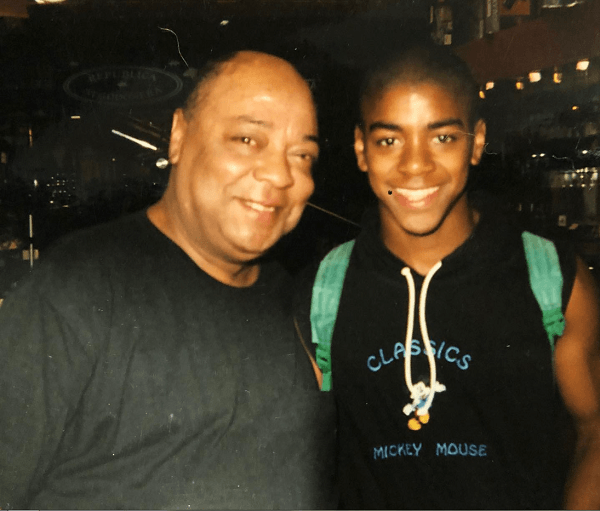
In 2005, at just 21 years old, Sebastián joined the Sonora Borinquen, which was the most popular orchestra at the time. Thanks to them, he had the opportunity to tour the United States and Canada, where he could see environments and ways of working that were completely different from what he was used to. Two years later, he toured the United States again, but by then he already saw the country as a new destination to advance his career.
Unfortunately, Uruguay was becoming too small for the plans he had for his development in salsa, which sparked his curiosity about the Big Apple and all it had to offer him musically speaking.
By 2008, he decided to move to New York for a few months, but so many doors opened for him that he never left and continues to live there to this very day.
The first instrument Sebastián came in contact with was the piano, which he started playing it at age four and from which he graduated at age 11. Since he had not attended high school yet, he could not study a master’s degree to continue his musical education. In addition, he was a child who wanted to play football and do the usual things for his age, so a few years later, his father made him join an Afro-Uruguayan music group. In that orchestra Sebastián played piano and bass, which allowed him to further develop his skills with those instruments.
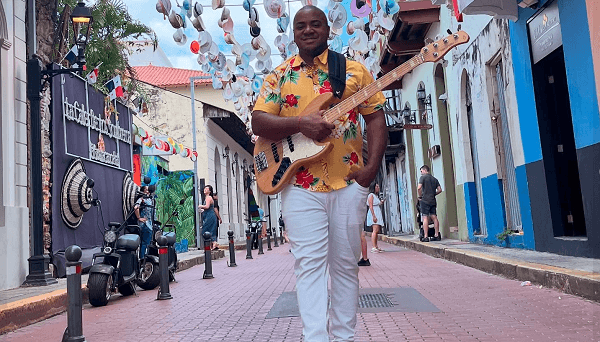
After that, he began to create his own tropical music band, inspired by the Venezuelan orchestra Los Adolescentes. All the members were minors, and, as well as in the previous group, Sebastián also played piano and bass.
Regarding his role as a producer and composer, Sebastián confessed that he has no idea how he came to learn these areas of music. He did emphasize that he always lets his music and his feelings flow to deliver the message he wants to convey in each of his pieces. After that, he defines the ideas and adds the music.
He says he greatly admires professional lyricists and composers. He admits he is neither the best nor the worst composer, but he always tries to reach his own heart to convey what he feels.
The idea of Grupo Sensación started with the orchestra of the same name where his father worked in 1982, but unfortunately the group did not have much impact due to how closed that environment was at the time. There were a number of orchestras that got the best contracts, and it was very difficult for the rest to achieve. Over time, Yeneca left Grupo Sensación and managed to join several of these more established orchestras to gain more reputation.
Soon after, when Sebastián moved to the United States, he almost immediately noted that the Uruguayan community needed a tropical orchestra, but he did not know what name give it. With the passing of his father on October 19, 2010, he chose to use the name “Grupo Sensación” as a way to continue the legacy of his father and the tropical movement born in his country so many years ago.
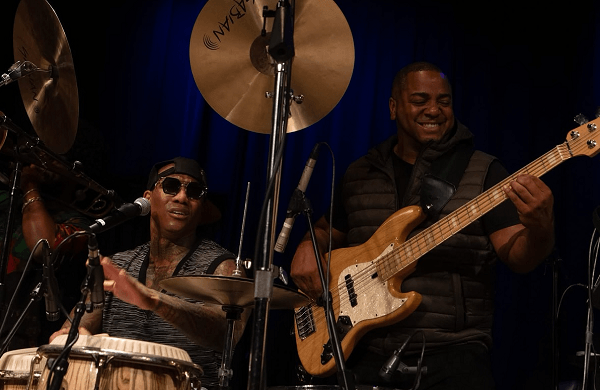
Sebastián has had the opportunity to collaborate with artists of the stature of Nino Cegarra, Oscar D’León, José Alberto “El Canario,” Domingo Quiñones, Tony Vega, Roberto Blades, Cheo Feliciano, Tito Nieves, Viti Ruiz, and many more. However, few were the ones with whom he has truly been able to have a conversation or a close connection beyond purely profesional relationships.
“You can only say you played with someone if you’ve had a connection with that person. I’ve been able to play with great artists, but many times they don’t even know who I am. That’s why I don’t include them on my resume. Now if they call you back, then you can say you did things very well and that there’s someone really interested in you,” said Sebastián on this interesting subject.
The cases of Bill Murray and Camila Cabello were completely different, as he managed to record songs with them through his friend and fellow musician, Pedrito Martínez, whom he describes as “the best percussionist in the world”. It was also Martínez who connected him with the world-famous composer and guitarist Eric Clapton, with whom he performed at the American Airlines Center in Dallas—one of the most beautiful experiences he has had in his career and his life in general.
Read also: Bandleader and conga player Tony Rosa tells us how he built his career